
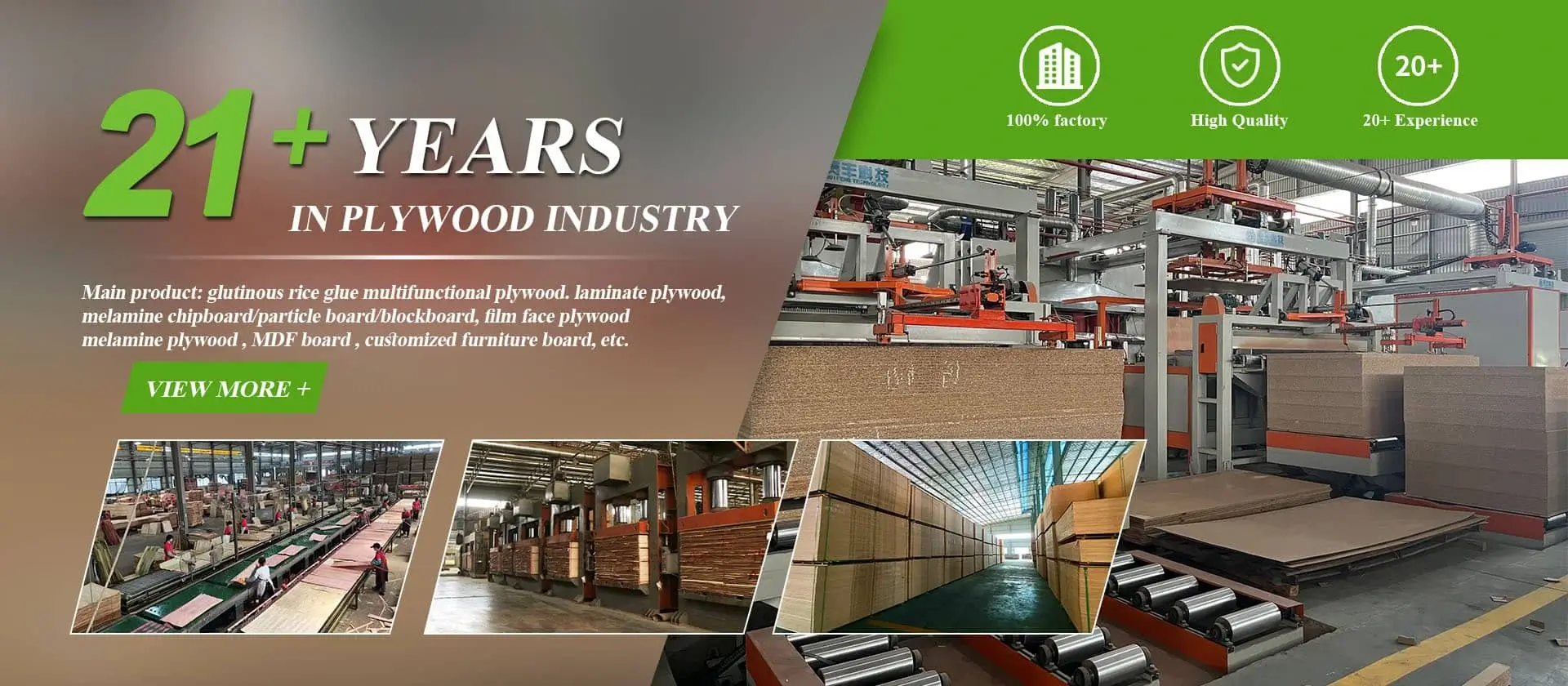
Produttore di compensato da 21 anni, servizio OEM, soluzione completa per l'approvvigionamento di compensato, al miglior prezzo e con il miglior servizio.
casa
Main products: Marine plywood, Melamine plywood, Melamine blockboard, Melamine Chipboard, Melamine MDF board, Film face plywood, Edge banding, Furniture accessories
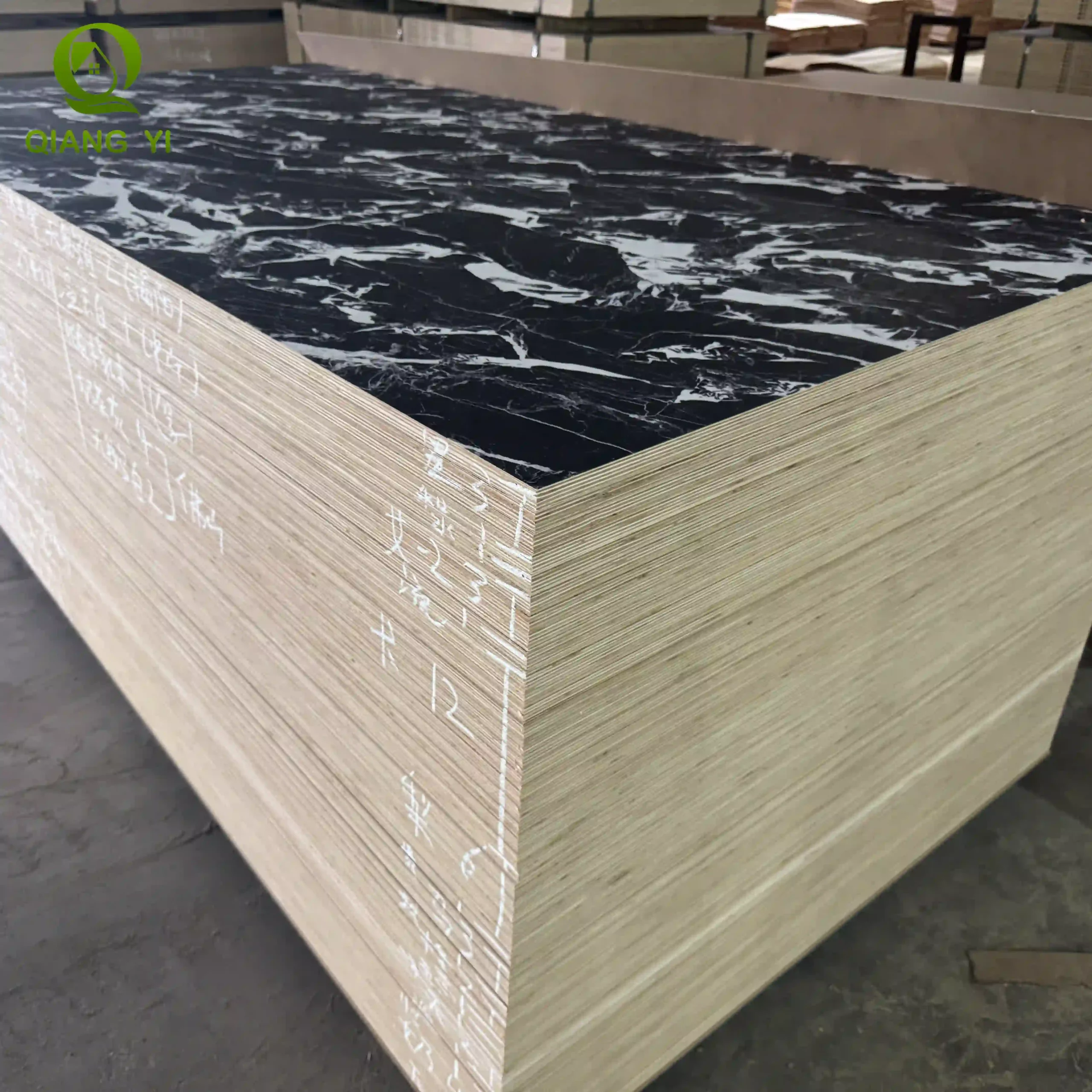
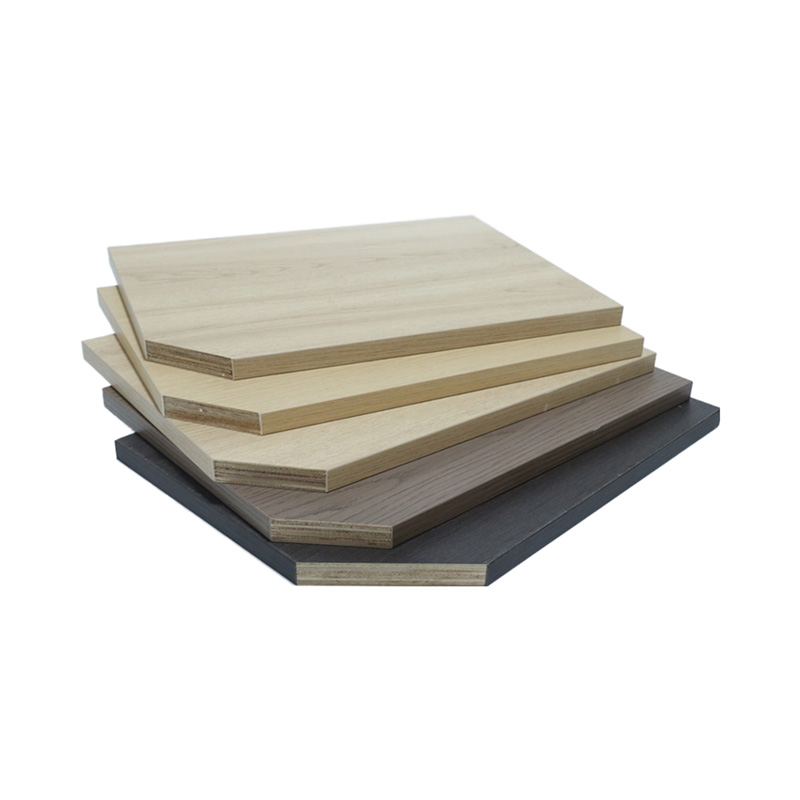
Compensato melaminico impermeabile di tutti i colori
Dimensioni: 5-25 mm (4*8 piedi)Caratteristiche: Resistenza al fuoco, Anticorrosione, Ecologico, Resistente all'acqua
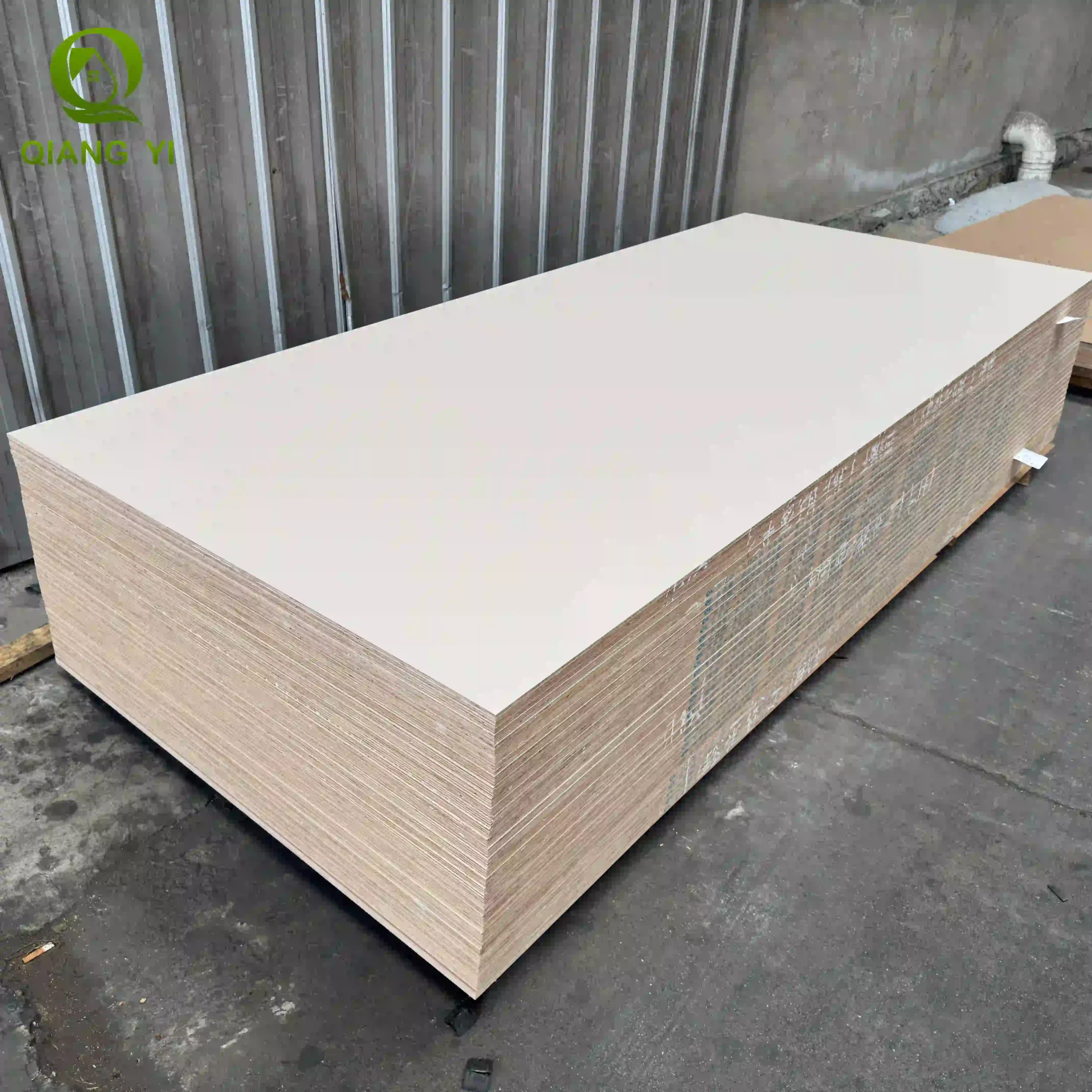
Compensato marino di riso glutinoso da 18 mm
Dimensioni: 5-25 mm (4 * 8 piedi e 4 * 9 piedi)Caratteristiche: resistente alle termiti, impermeabile, ignifugo, antideformazione, antimuffa, basse emissioni di formaldeide, resistenza alla corrosione, resistenza chimica e resistenza alle macchie.
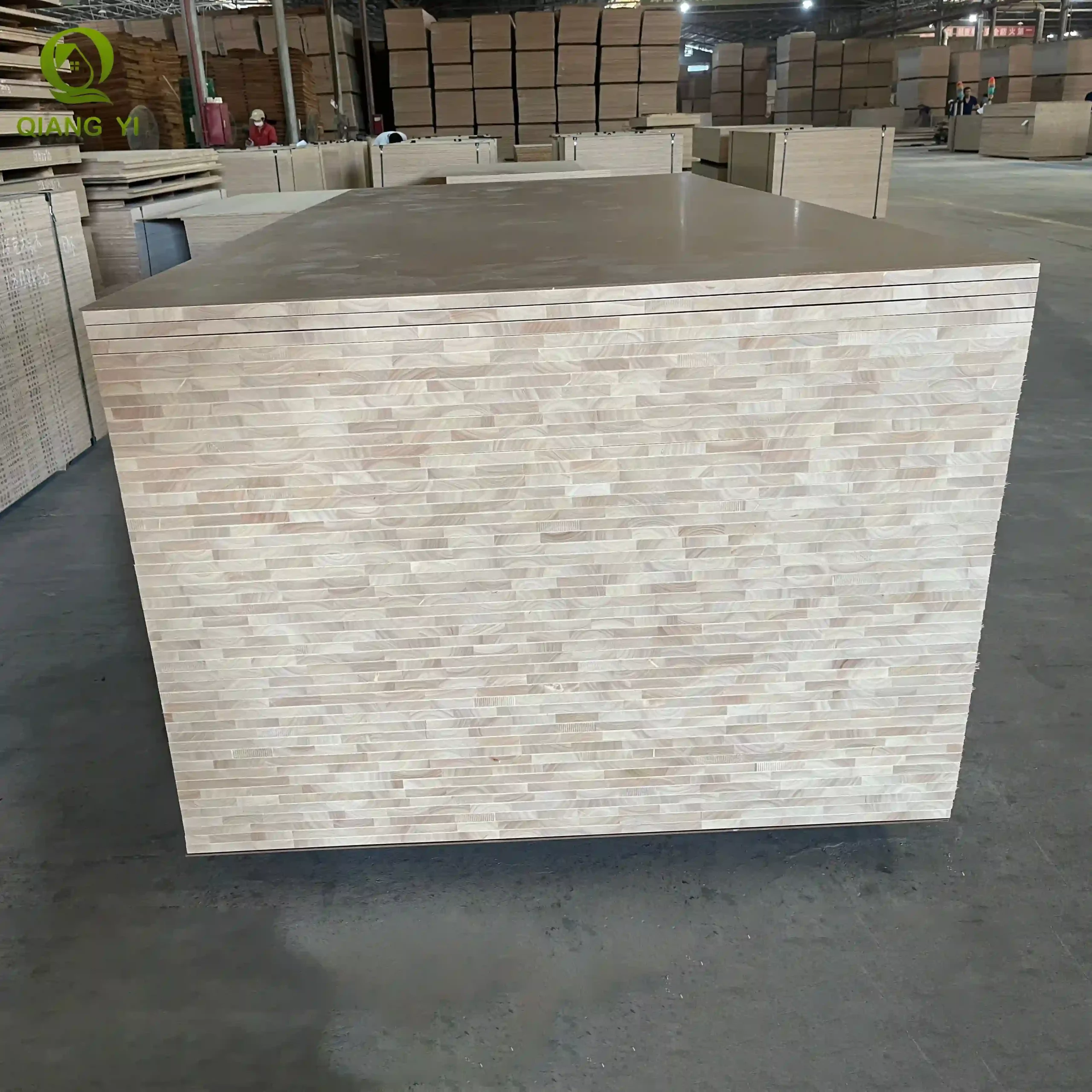
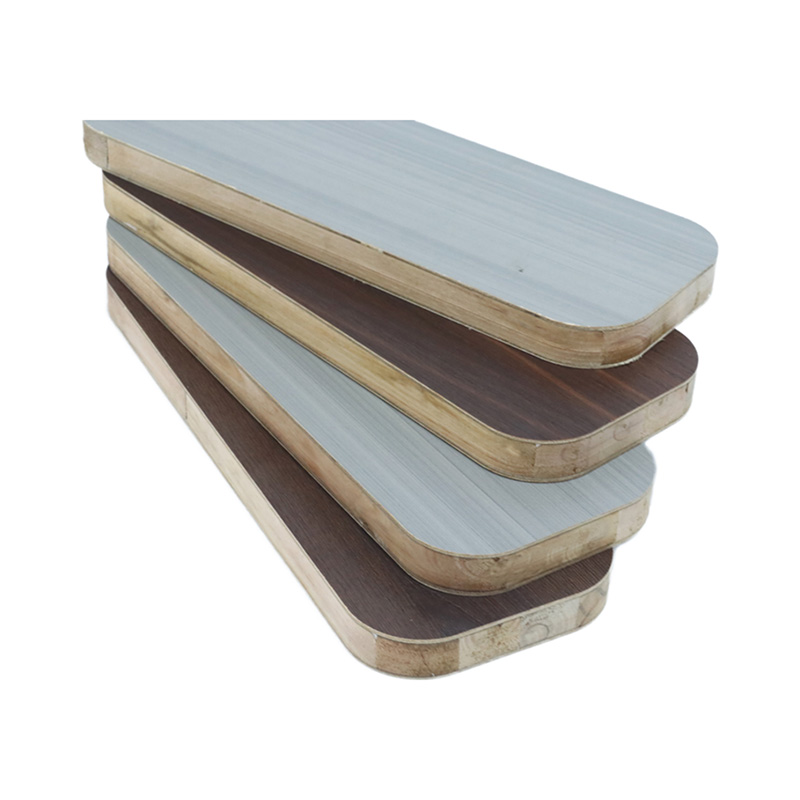
Pannello in melaminico con anima in eucalipto/abete/quercia
Dimensioni: 18 mm (4 * 8 piedi e 4 * 9 piedi)Caratteristiche: basso contenuto di formaldeide, resistenza alla flessione e alla fessurazione, elevata stabilità meccanica, elevata capacità di carico.
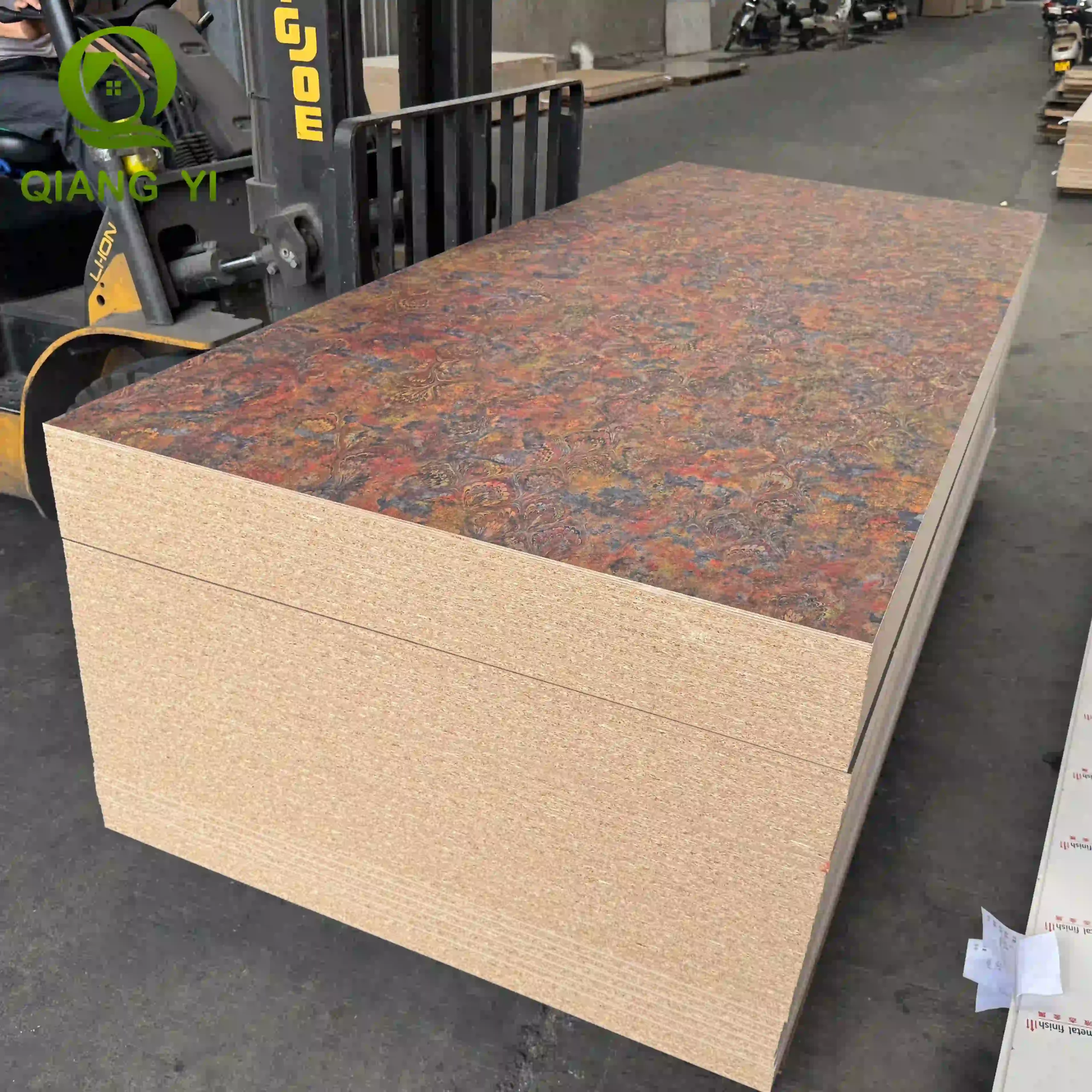
Truciolato melaminico di alta qualità
Dimensioni: 18 mm (4 * 8 piedi e 4 * 9 piedi)Caratteristiche: protezione ambientale, resistenza all'abrasione, resistenza alle alte temperature, diversi modelli e colori
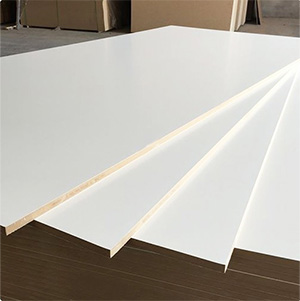
Pannello in MDF melaminico di grado E0/E1
Dimensioni: 9-30 mm (4 * 8/9/10 piedi)Caratteristiche: Resistenza alle alte temperature, resistenza alla corrosione, facile lavorazione, superficie liscia, con lavorazione relativamente semplice, e l'effetto decorativo presenta un aspetto più bello e appropriato.
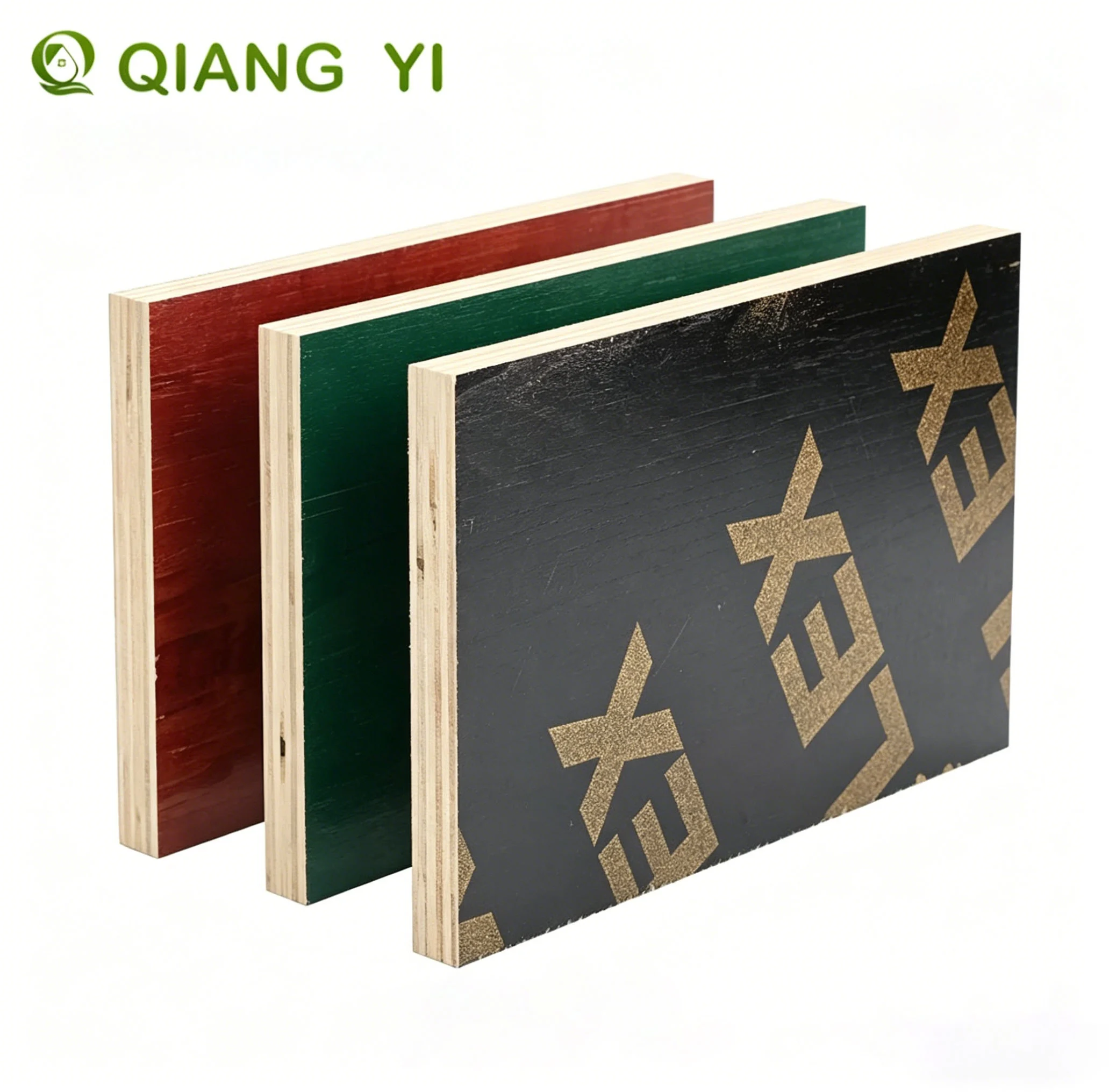
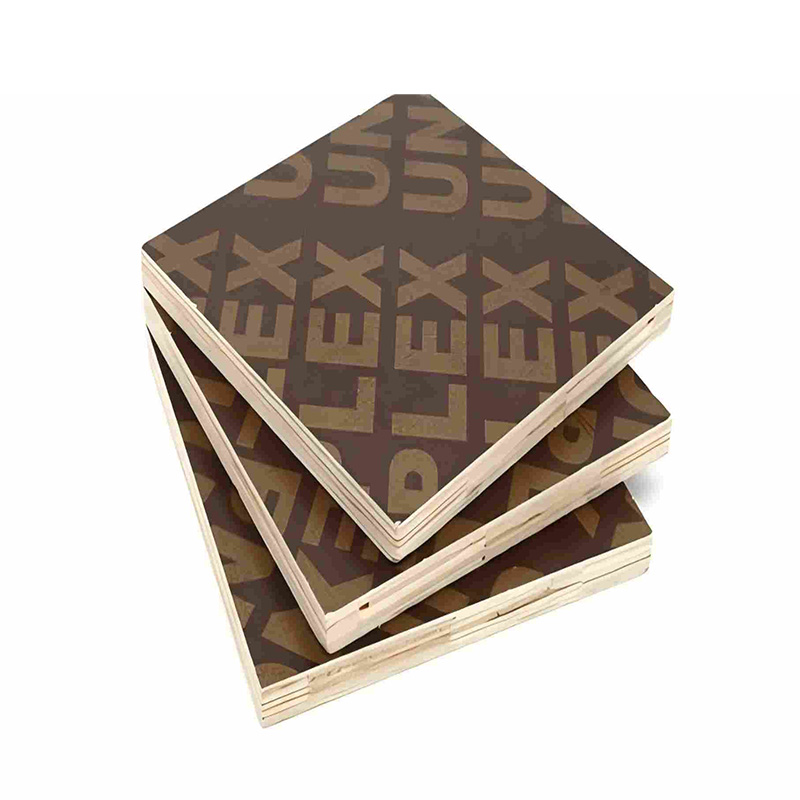
Compensato con pellicola rossa/verde/nera/marrone
Dimensioni: 10-21 mm (3*6 piedi e 4*8 piedi)Caratteristiche: Resistente all'usura, impermeabile, elevata capacità di carico, non si deforma facilmente, liscio e piatto, facile da sformare, antiscivolo, lunga durata.
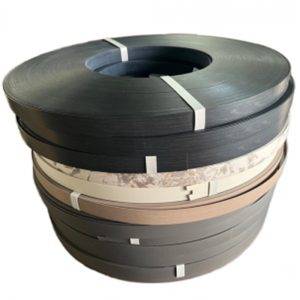
Bordatura in PVC di tutte le dimensioni e spessori
Materiale in PVC, resistente all'acqua, disponibile in tutti i colori, in tutte le dimensioni e spessori per diverse applicazioni, con una superficie perfetta.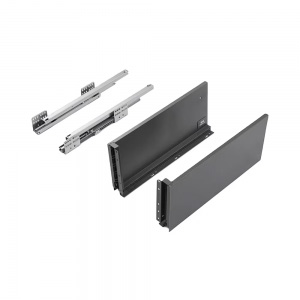
Accessori per mobili di ogni genere
Maniglie per armadi, guide per cassetti, cerniere, cassetti, ecc.Qiangyi Commercio (Guangxi) Co., Ltd.
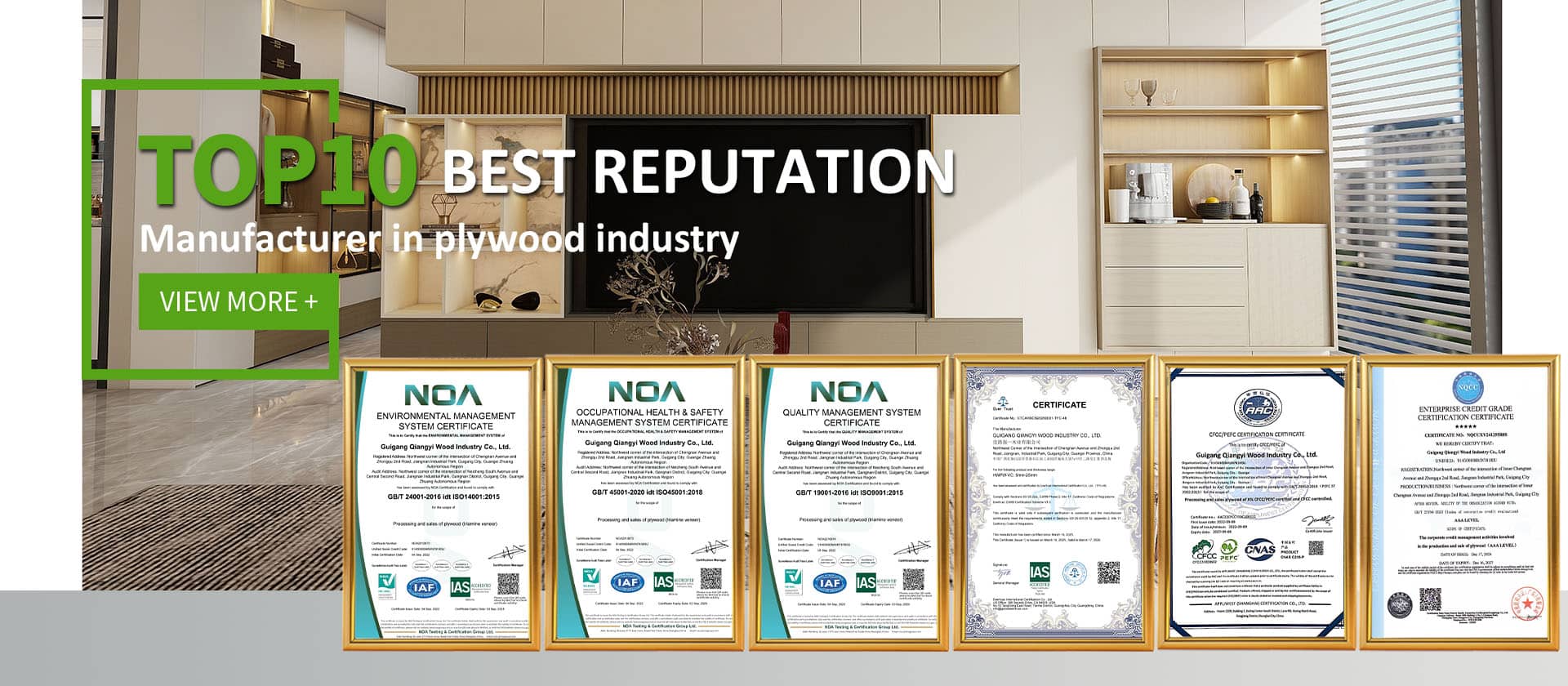
Fondata nel 2004, QIANGYI è una moderna impresa di grandi dimensioni specializzata nella produzione di compensato impiallacciato preverniciato e non rifinito di alta qualità, compensato marino laminato, compensato melaminico, pannelli truciolari melaminici e compensato commerciale, ecc. Con oltre 500 dipendenti e più di 100 stabilimenti produttivi, che coprono una superficie di oltre 110.000 metri quadrati, la nostra produzione annua supera i 5,4 milioni di pannelli di compensato. Inoltre, siamo specializzati nella lavorazione di compensato marino, compensato/pannelli truciolari melaminici e pannelli di particelle con la nostra finitura in carta melaminica. Disponiamo delle certificazioni CE/CARB/ISO/CFCC, in quanto tutti i nostri modelli sono conformi ai requisiti di sicurezza dell'Unione Europea e degli Stati Uniti per i materiali da costruzione e l'arredamento.
Inoltre, offriamo servizi OEM per soddisfare esigenze specifiche e rispondere alle diverse necessità di mercato.

Anni Produttore

Zone industriali

Contenitori/Anno

Paesi/Mercati
Senza formaldeide, impermeabile, ignifugo, resistente alle termiti, antimuffa, indeformabile, resistente all'invecchiamento e insonorizzato.
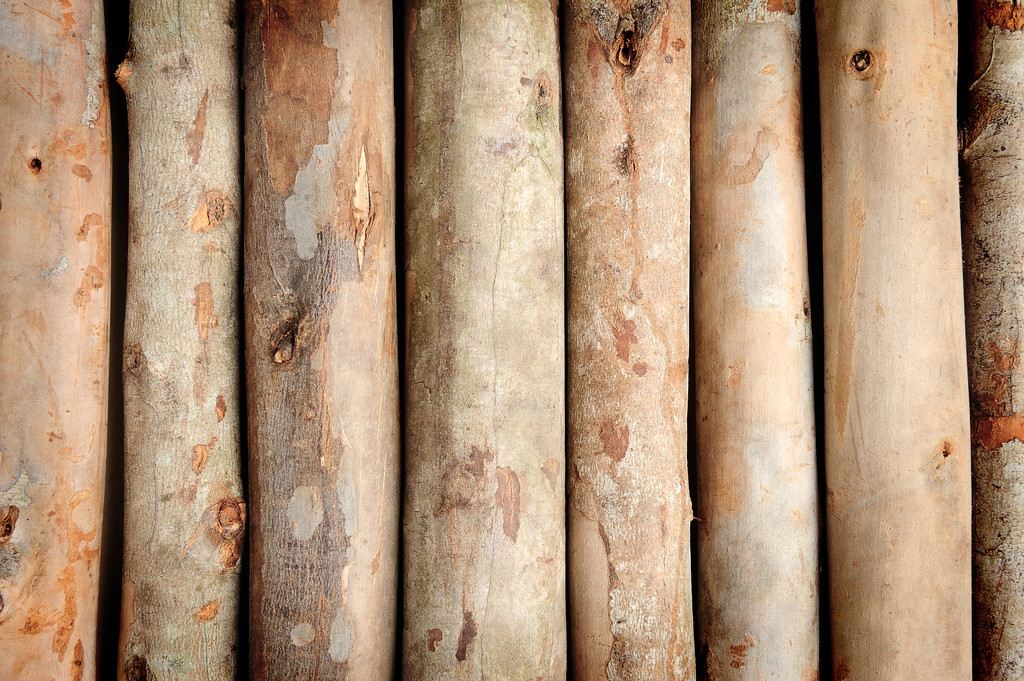
Panoramica del compensato di Qiangyi realizzato con colla di riso glutinoso
Le origini storiche del compensato di Qiangyi realizzato con colla di riso glutinoso
La Grande Muraglia è rimasta in piedi per migliaia di anni non solo grazie ai suoi spessi mattoni e pietre, ma anche grazie agli adesivi (colla) utilizzati nella sua costruzione. In termini di materiali edili, gli artigiani della dinastia Ming utilizzarono in modo creativo un magico "adesivo biologico": la malta di riso glutinoso. Mescolavano la colla di riso glutinoso cotta con calce spenta e sabbia per creare una pasta. L'amilopectina contenuta nel riso glutinoso reagiva chimicamente con la calce, producendo un materiale composito organico-inorganico eccezionalmente resistente, durevole e impermeabile. Questa è la chiave del perché molte sezioni della Grande Muraglia rimangono saldamente unite anche dopo secoli di erosione da vento e pioggia. Oggi, questa antica saggezza è rinata grazie alla tecnologia moderna. Il nuovo "compensato con colla di riso glutinoso" utilizza la stessa tecnologia adesiva a base di riso glutinoso impiegata per la Grande Muraglia.

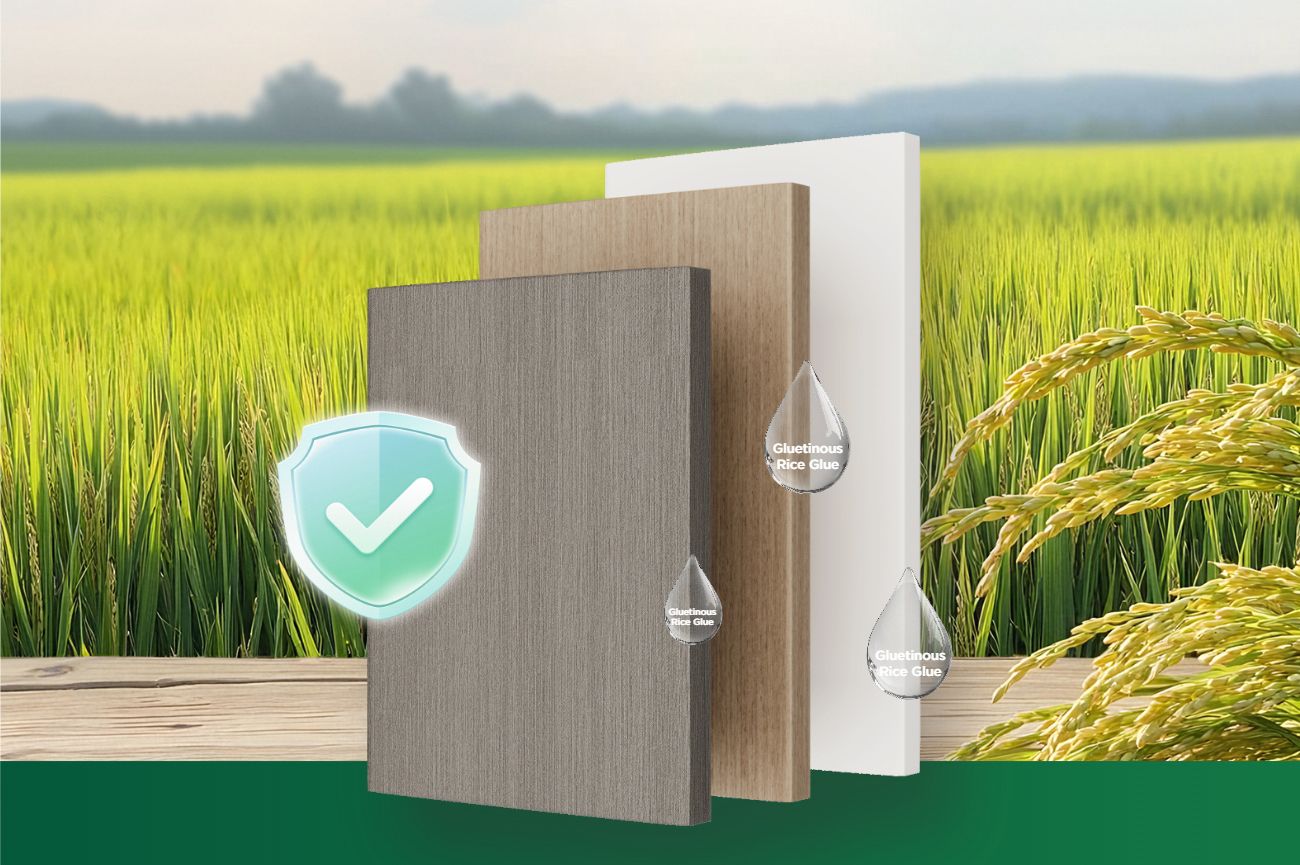
Panoramica del compensato di Qiangyi realizzato con colla di riso glutinoso:
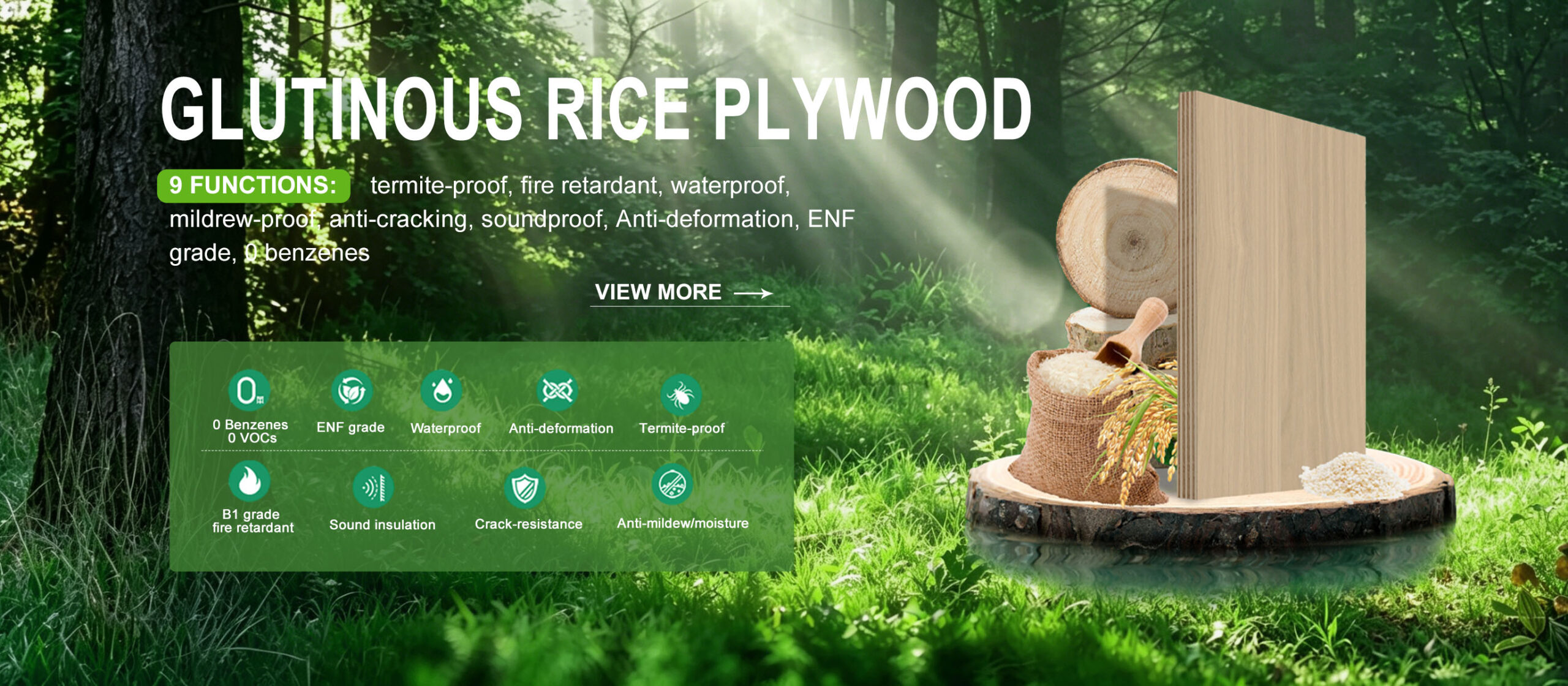
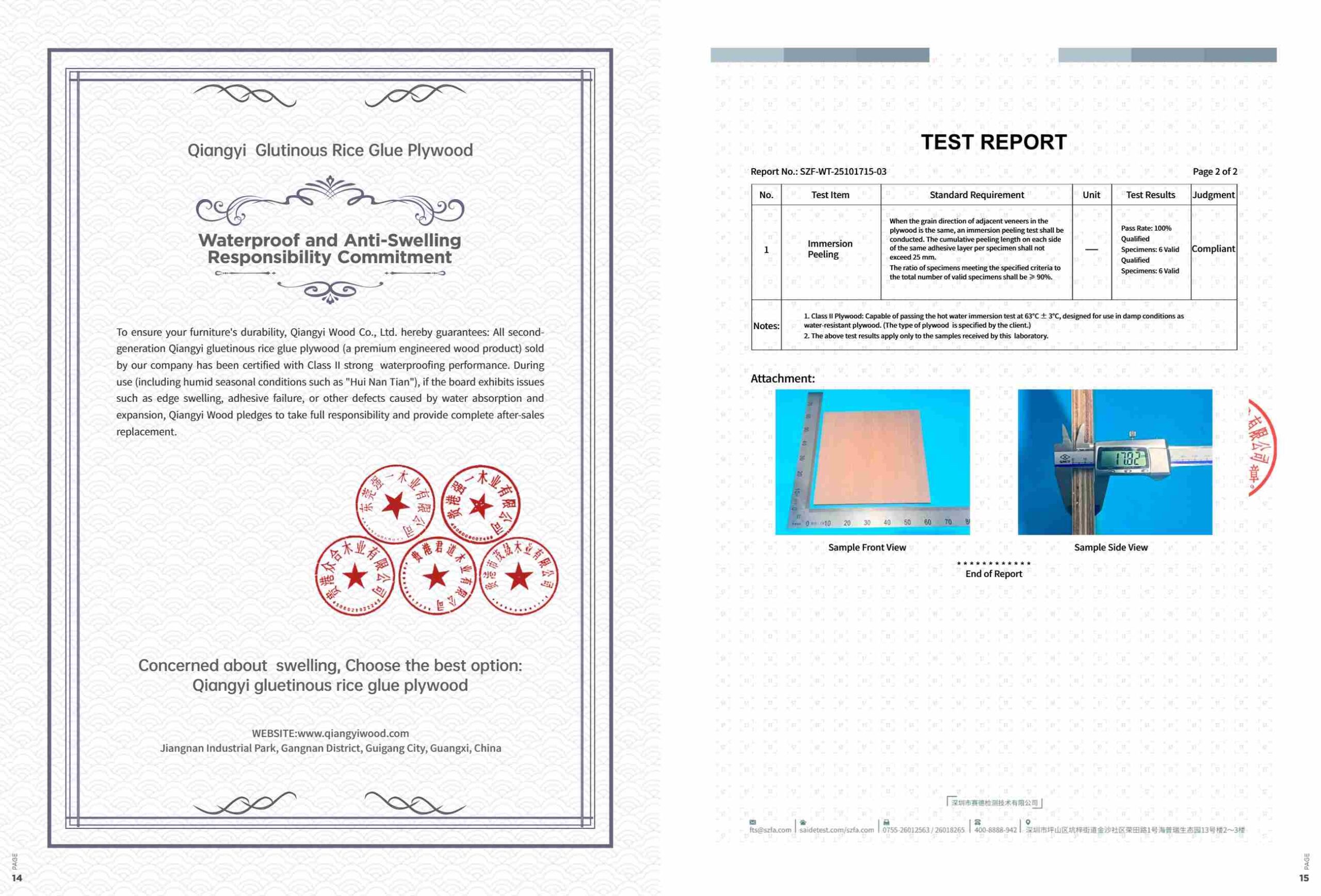
L'innovazione alla base del compensato di riso glutinoso risiede nell'ispirazione tratta dai principi dell'antica Grande Muraglia. Il compensato di riso glutinoso Qiangyi, noto anche come compensato di seconda generazione, rappresenta un secolo di innovazione. Ha raggiunto il primo posto nelle vendite e gode di un'ottima reputazione in Cina. È ampiamente apprezzato da imprese di ristrutturazione, produttori di mobili e privati. Utilizza colla di riso glutinoso Lingmei senza formaldeide e senza benzene come adesivo, impiallacciatura di eucalipto di grado AA come materiale di base, con aggiunta di cloruro di magnesio, acqua e ossido di magnesio. L'ossido di magnesio è un super ritardante di fiamma e agente isolante termico, con un punto di accensione di 2852 °C, che consente al compensato di riso glutinoso Qiangyi di raggiungere lo standard di resistenza al fuoco B1 (B3: Materiali infiammabili; B2: Materiali combustibili). Dopo la polimerizzazione, la colla di riso glutinoso crea un ambiente alcalino, mentre termiti e insetti prediligono un ambiente acido. Grazie alla sua elevata permeabilità, le termiti ingeriscono parte della colla di riso glutinoso insieme alle fibre di legno. La natura alcalina della colla è indigeribile, causandone la morte. Questa colla di riso glutinoso è prodotta con estratti vegetali/minerali puri, garantendo sicurezza e stabilità. Non prevede reazioni chimiche con aldeidi, eliminando così l'introduzione di formaldeide alla fonte e offrendo prestazioni ambientali eccezionali, raggiungendo il livello di protezione ambientale Super ENF. La pressatura a freddo e lo stampaggio autoriscaldante consentono l'immediata occupazione dopo l'installazione. In termini di prestazioni, la combinazione di impiallacciatura primaria e colla di riso glutinoso, lavorata attraverso più strati, conferisce al compensato un'elevata capacità di tenuta dei chiodi, resistenza alla deformazione, ignifugazione, resistenza all'acqua, all'umidità, alla muffa, proprietà antibatteriche e resistenza alle termiti, rendendolo un compensato multistrato di seconda generazione e un "guerriero a nove lati" nel settore del compensato.
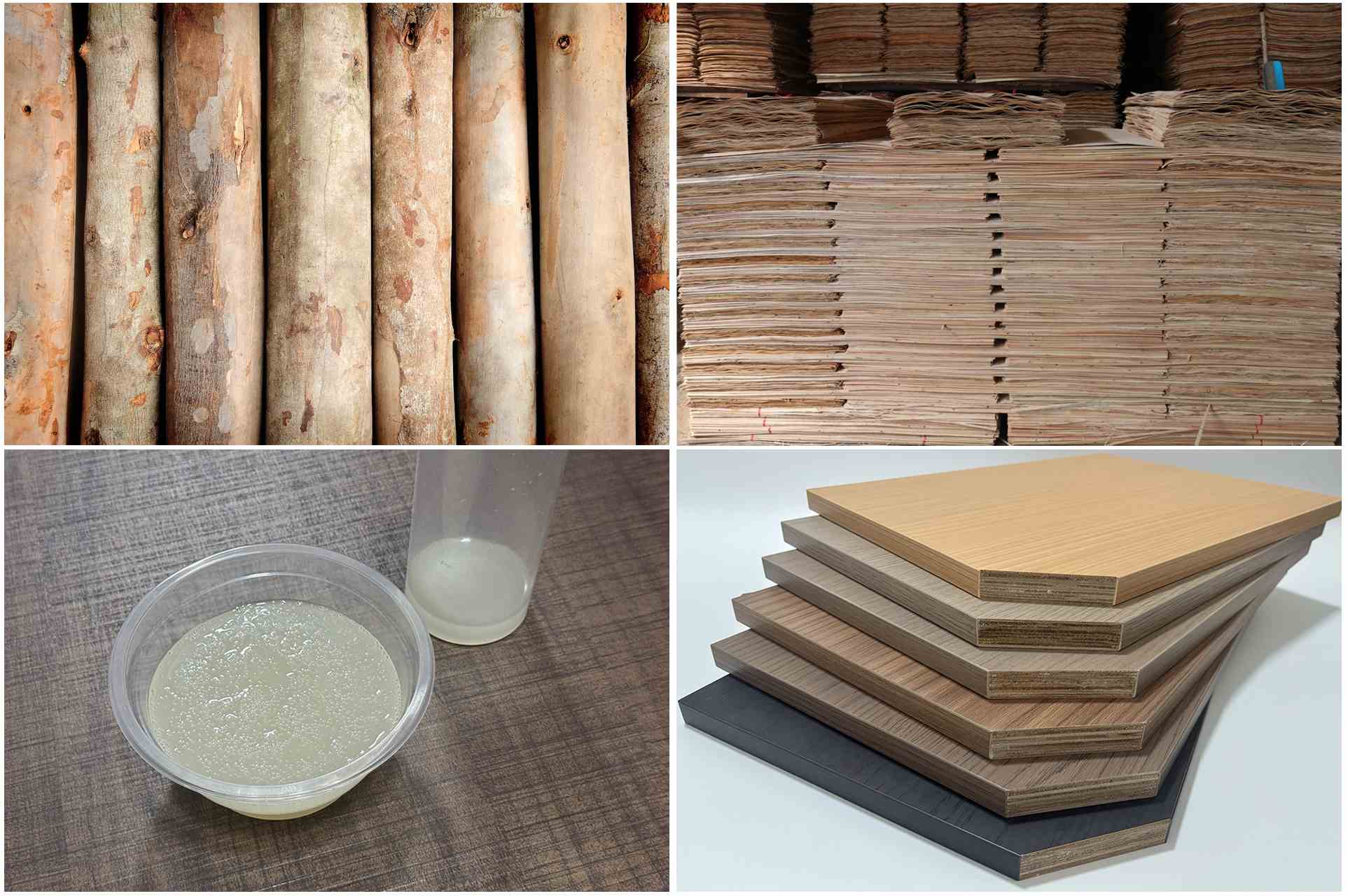
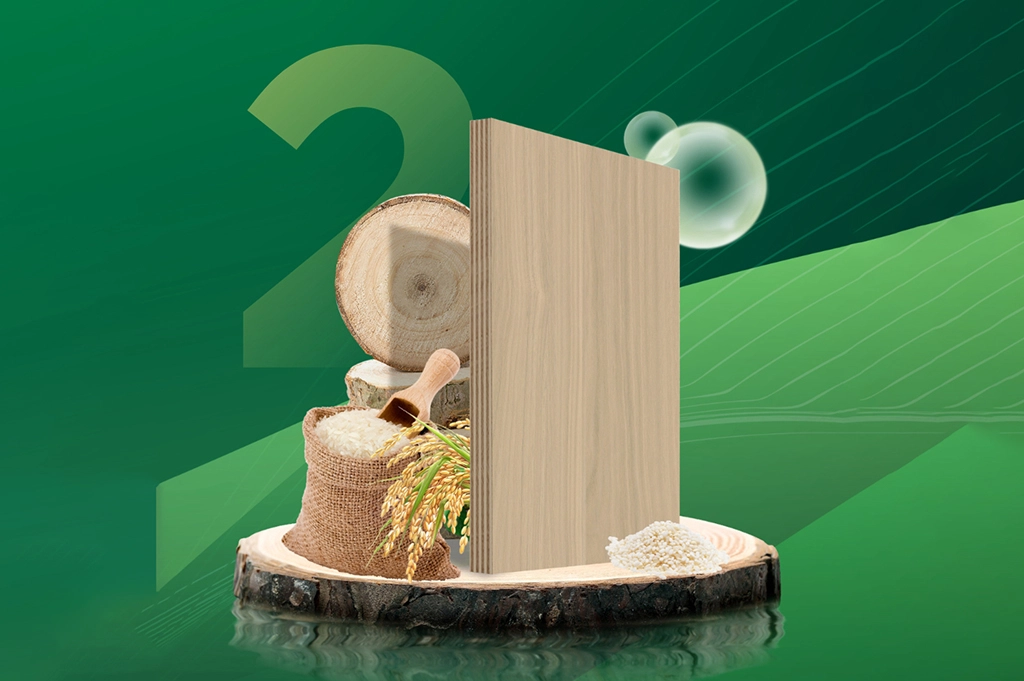
Funzioni del compensato di colla di riso glutinoso
Spiegazione delle funzioni del compensato di colla di riso glutinoso Qiangyi
- 1. Super ENF-grade-Salute e Ambiente
Colla di riso glutinoso Lingmei: Farina di riso glutinoso + cloruro di magnesio + acqua + ossido di magnesio. Questa colla di riso glutinoso è prodotta con estratti vegetali/minerali puri, garantendo sicurezza e stabilità. Non prevede reazioni chimiche con aldeidi, eliminando così l'introduzione di formaldeide alla fonte.
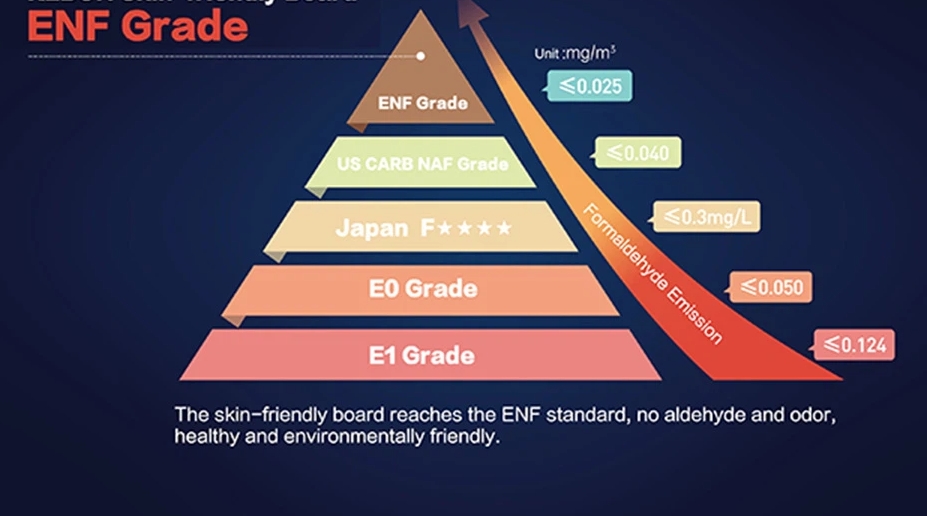
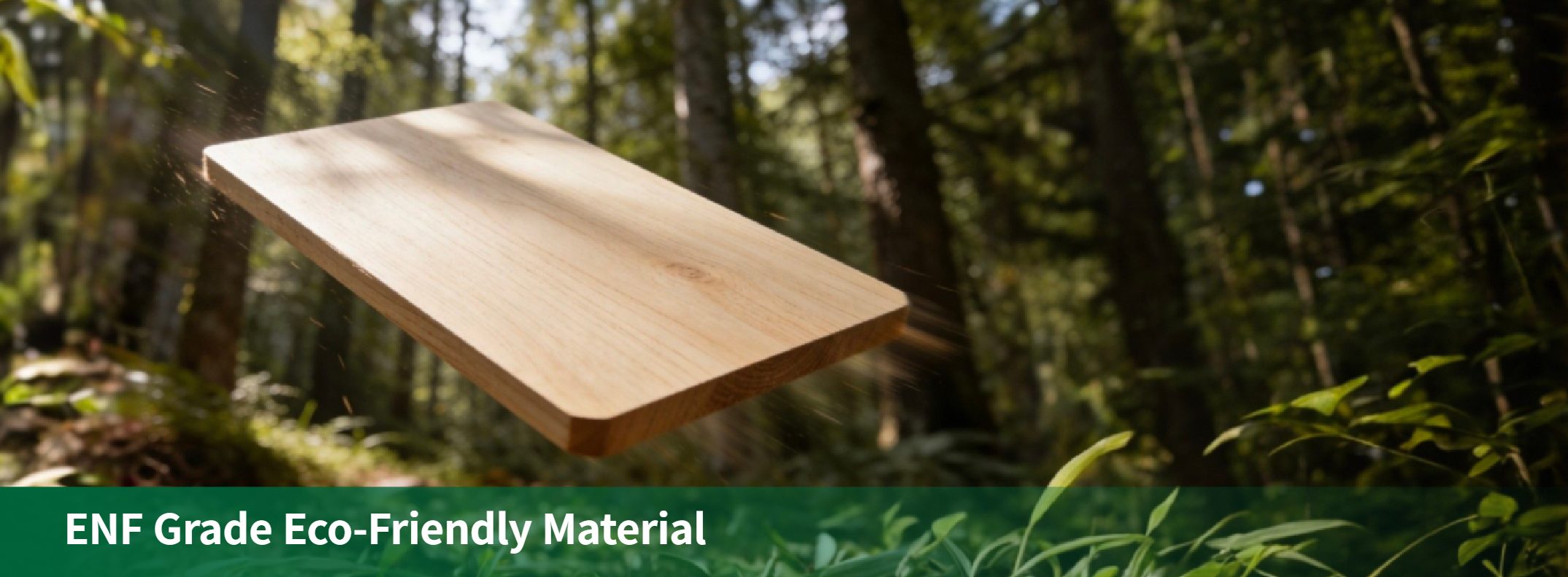
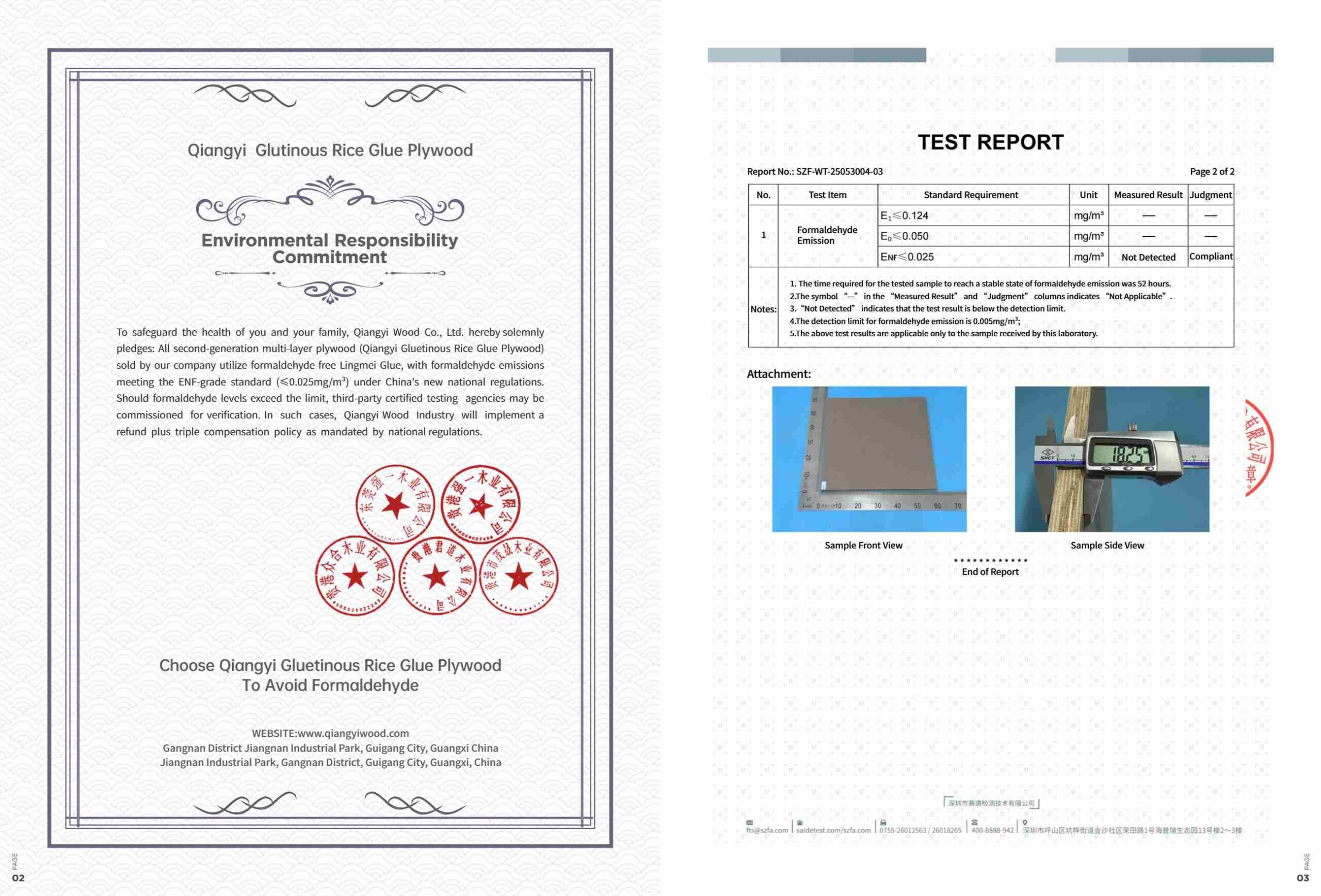
Protezione ambientale di livello Super ENF: il compensato con colla di riso glutinoso utilizza la colla di riso glutinoso Lingmei, priva di formaldeide, raggiungendo un livello di protezione ambientale di livello Super ENF con zero benzene. Rispetto alle tradizionali colle a base di resina urea-formaldeide (classi E0, E1 ed E2), il compensato con colla di riso glutinoso non solo presenta una normativa più rigorosa in materia di emissioni di formaldeide, ma mostra anche una minore variabilità e una struttura più stabile in diverse condizioni climatiche e di temperatura.
- 2. Inodore–Pronto per il trasloco
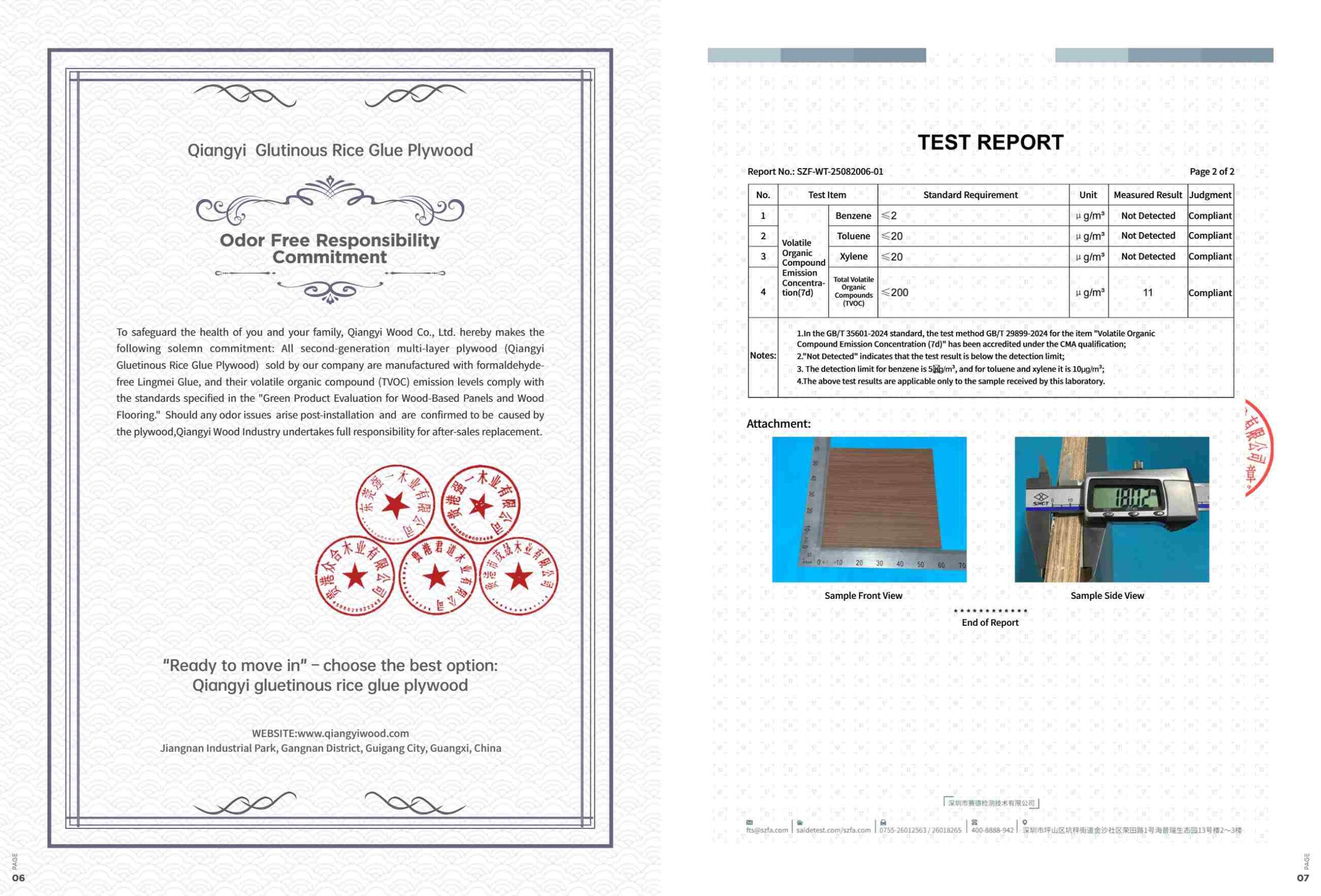
Eliminazione del problema alla fonte: durante il processo di produzione dell'adesivo non vengono aggiunte sostanze nocive come formaldeide, benzene o fenolo. Poiché la colla è completamente priva di formaldeide, la principale fonte di odori e inquinamento derivanti dai lavori di ristrutturazione viene eliminata alla radice.
Blocco degli odori estremamente efficace: dopo l'indurimento, la colla di riso glutinoso Lingmei forma una struttura reticolata stabile con le fibre del legno. Possiede proprietà chimiche stabili, una buona resistenza all'acqua e penetra rapidamente all'interno del legno. Allo stesso tempo, dopo l'indurimento, forma una struttura cristallina densa che trattiene saldamente l'odore del legno stesso. Inoltre, non si decompone facilmente in sostanze gassose, quindi è possibile abitare immediatamente dopo l'installazione.
- 3. Antimuffa(anti-deformazione)e antibatterico
Resistenza alla muffa di grado 0, tasso antibatterico >99%: il cloruro di magnesio e l'ossido di magnesio contenuti nella colla di riso glutinoso Lingmei reagiscono creando un ambiente alcalino. In combinazione con il rigoroso processo di essiccazione a temperatura controllata di 60 ore, il contenuto di umidità del pannello viene controllato con precisione entro l'intervallo ottimale dell'8-12%. Allo stesso tempo, le sue eccellenti proprietà impermeabili e anti-umidità distruggono virtualmente l'ambiente di sopravvivenza di qualsiasi muffa. Cosa significa resistenza alla muffa di grado 0?
Offre una protezione superiore e di lunga durata: anche in ambienti estremi con temperature e umidità costantemente elevate, è in grado di inibire efficacemente la colonizzazione e la crescita delle spore di muffa per lungo tempo.
L'effetto è visibile a occhio nudo: la superficie è pulita e priva di macchie batteriche, non solo al microscopio ma anche osservandola durante l'uso quotidiano.
- 4. Capacità di tenuta dei chiodi e di carico superiori
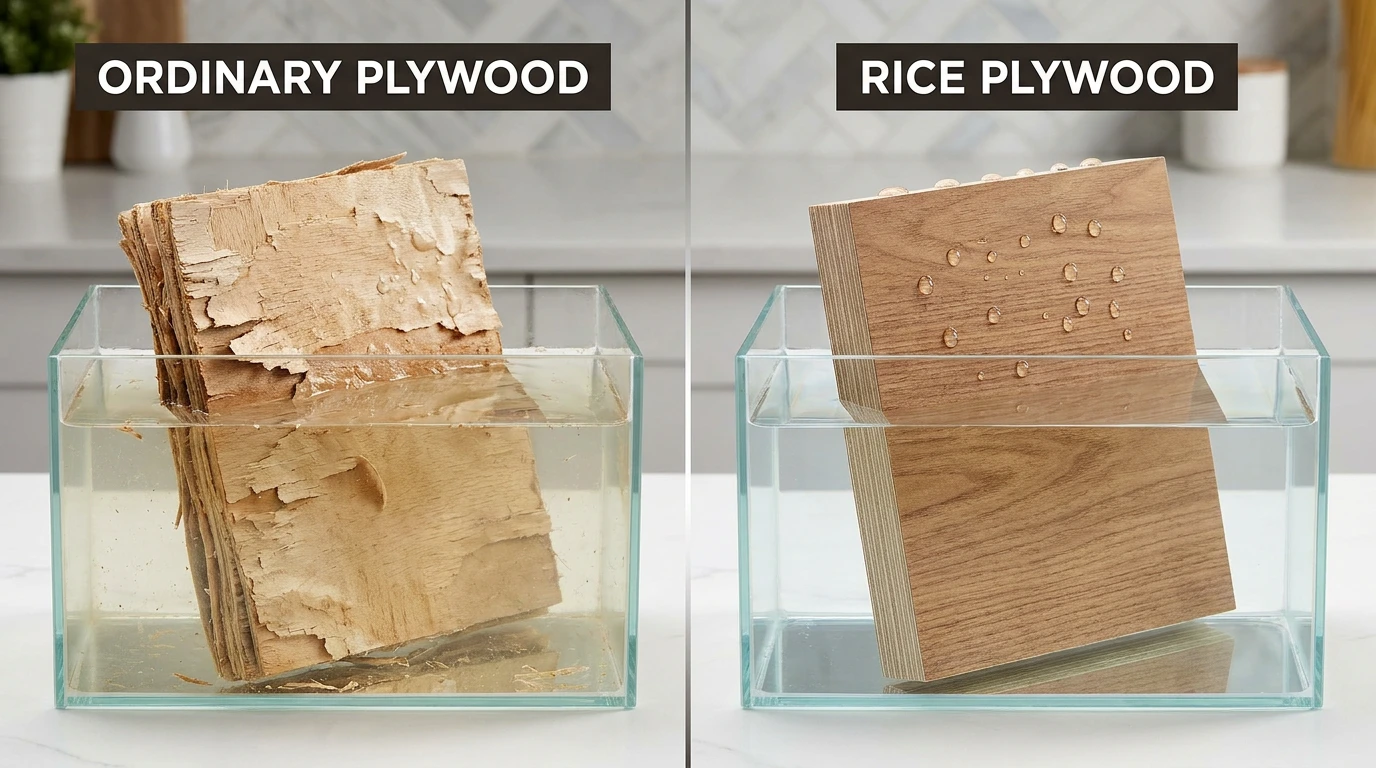
Capacità di tenuta dei chiodi superiore e maggiore resistenza alla deformazione: il truciolato è il materiale più diffuso sul mercato per le ante dei mobili, principalmente perché non si deforma facilmente. Tuttavia, la sua capacità di tenuta dei chiodi è molto scarsa e le ante tendono ad allentarsi dopo essere state aperte e chiuse ripetutamente. Il compensato di Qiangyi, realizzato con colla di riso glutinoso Lingmei, forma una struttura cristallina densa dopo la polimerizzazione. Questo materiale presenta un'elevata rigidità e non assorbe facilmente acqua né si gonfia. Pertanto, la sua resistenza alla deformazione è paragonabile a quella del truciolato. Allo stesso tempo, offre una capacità di tenuta dei chiodi e una capacità di carico superiori.
- 5. Inimpermeabile, resistente all'umidità e all'espansione
Impermeabile, resistente all'umidità e anti-rigonfiamento: la colla di riso glutinoso Lingmei ha una straordinaria capacità di penetrazione. Una volta applicata al nucleo del pannello, penetra rapidamente nella struttura interna, avvolgendo saldamente le fibre del legno e impedendo alle molecole d'acqua presenti nell'aria di entrare in contatto con esse, prevenendo così l'assorbimento di umidità e il conseguente rigonfiamento.
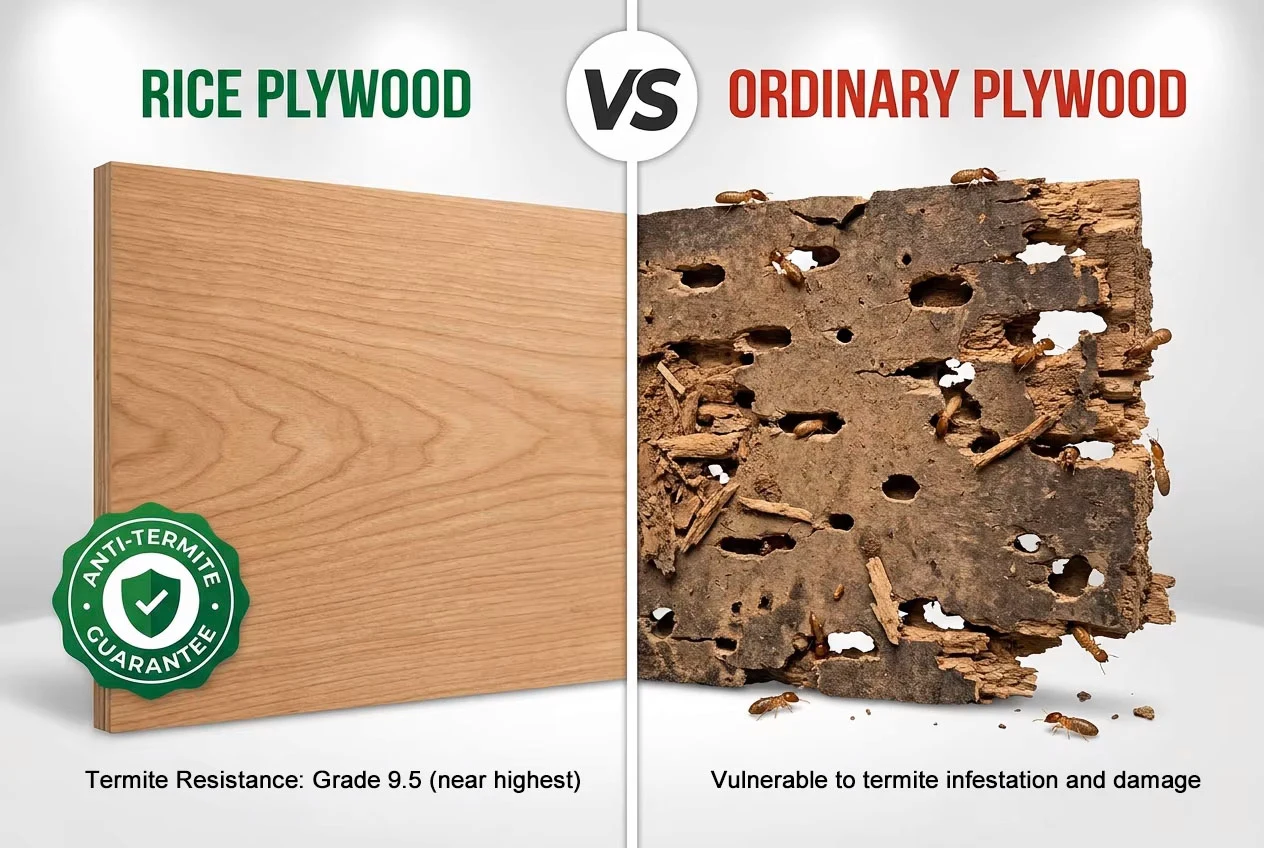
- 6. 9.5 grado resistenza alle termiti
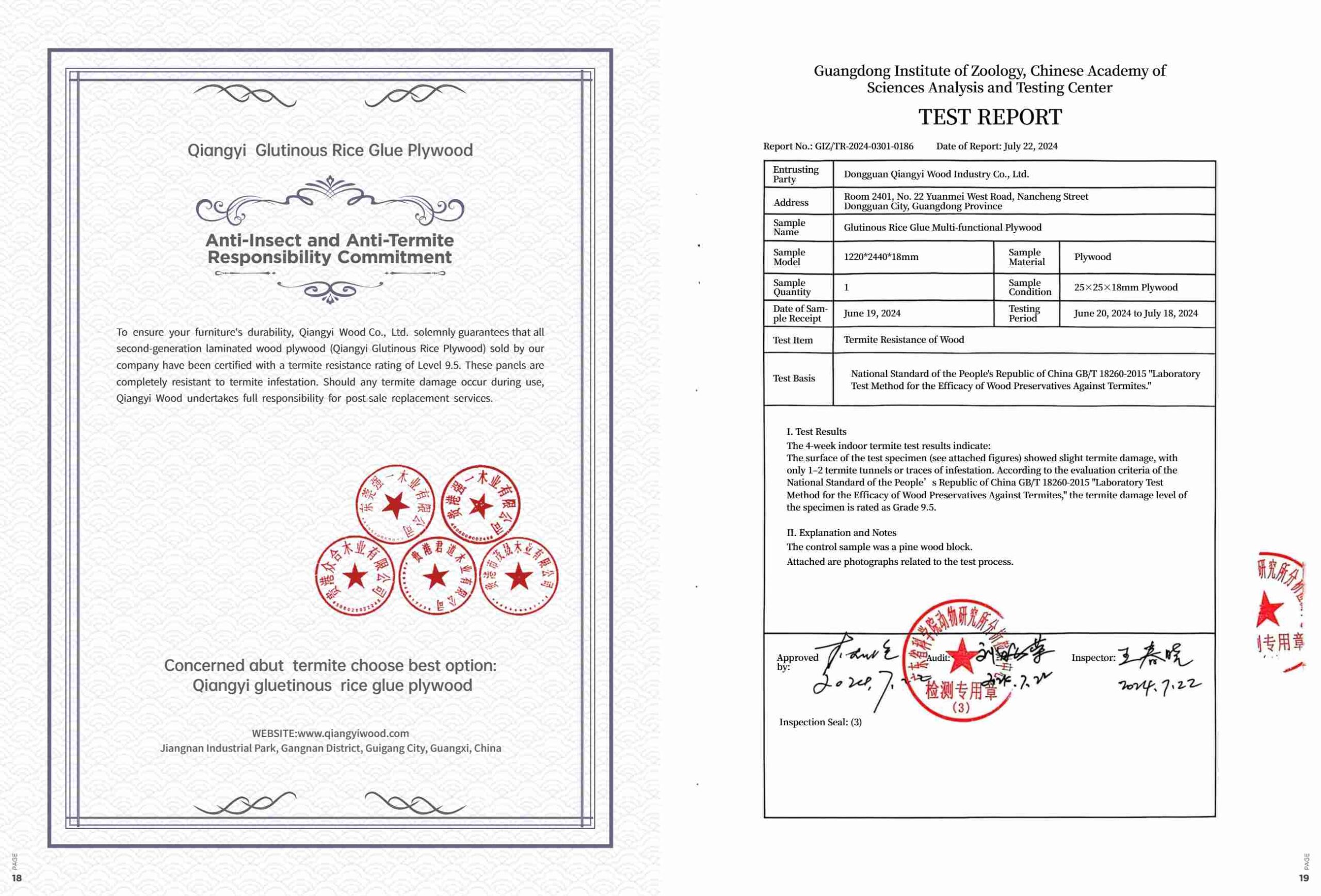
Resistenza alle termiti di grado 9.5: i tradizionali pannelli in resina urea-formaldeide sono leggermente acidi, il che li rende ideali per le termiti. Le fibre di legno forniscono inoltre un'ampia fonte di cibo per le termiti, aumentando significativamente la probabilità di infestazione. Tuttavia, la colla di riso glutinoso, dopo l'indurimento, crea un ambiente alcalino, mentre le termiti e gli insetti preferiscono un ambiente acido. In combinazione con la sua elevata permeabilità, le termiti ingeriscono parte della colla di riso glutinoso insieme alle fibre di legno. La natura alcalina della colla è indigeribile, causando la morte.
- 7. Aanti-invecchiamento, resistente alle crepe
Resistenza alle crepe e anti-invecchiamento di Classe V: il tradizionale adesivo a base di resina urea-formaldeide, derivante dalla reazione chimica tra urea e formaldeide, ha una struttura altamente instabile. Indipendentemente dalle condizioni ambientali, subisce una reazione inversa e si decompone (questa reazione è aggravata da temperature e umidità elevate), rilasciando formaldeide nell'adesivo. Pertanto, i pannelli in urea-formaldeide invecchiano continuamente e sono soggetti a crepe. Al contrario, l'adesivo a base di riso glutinoso è estremamente stabile dopo la polimerizzazione. La sua struttura cristallina polimerizzata è eccezionalmente resistente e indeformabile; la Grande Muraglia, rimasta in piedi per un anno intero, ne è la migliore dimostrazione. In combinazione con un periodo di polimerizzazione prolungato di 15 giorni, il compensato con colla di riso glutinoso presenta un coefficiente di dilatazione e contrazione termica molto basso, con conseguente resistenza alle crepe e proprietà anti-invecchiamento superiori.
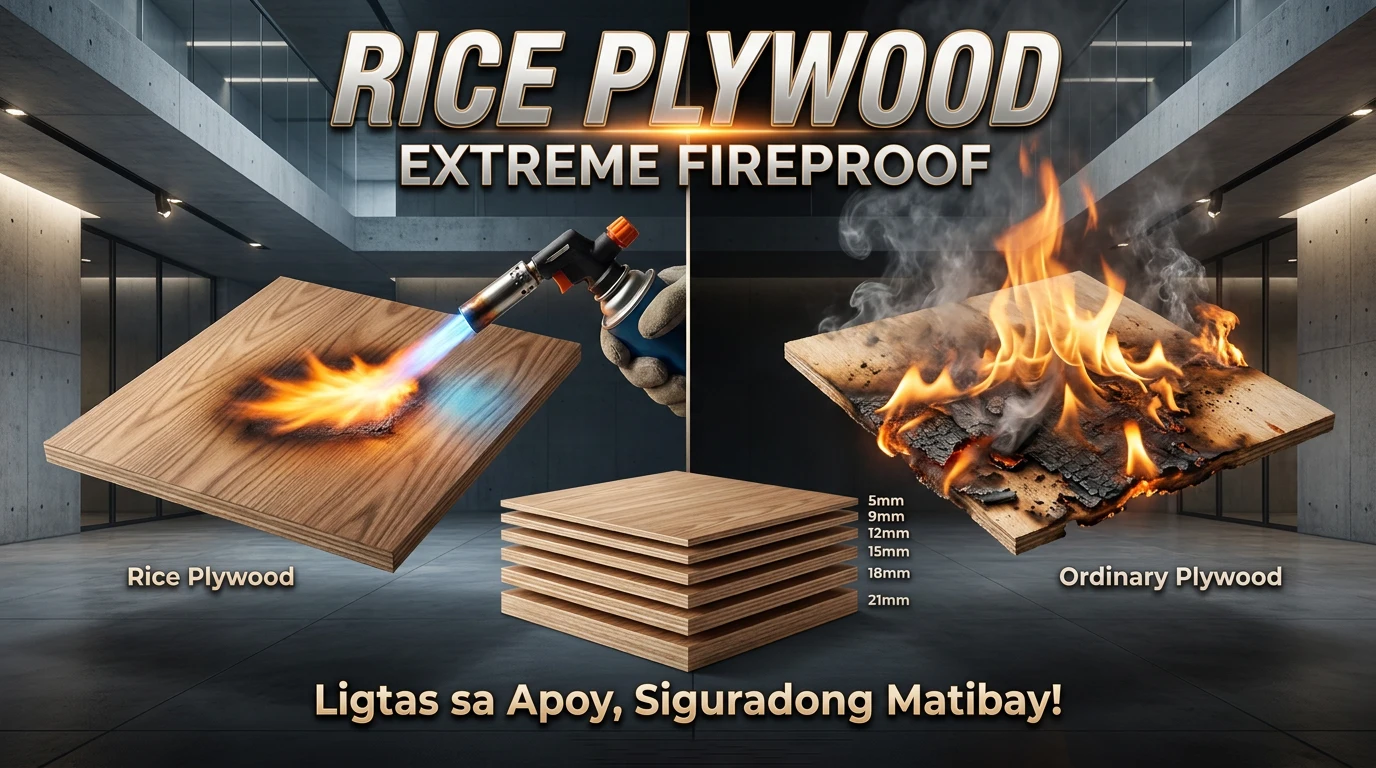
- 8. B1 Ritardante di fiamma
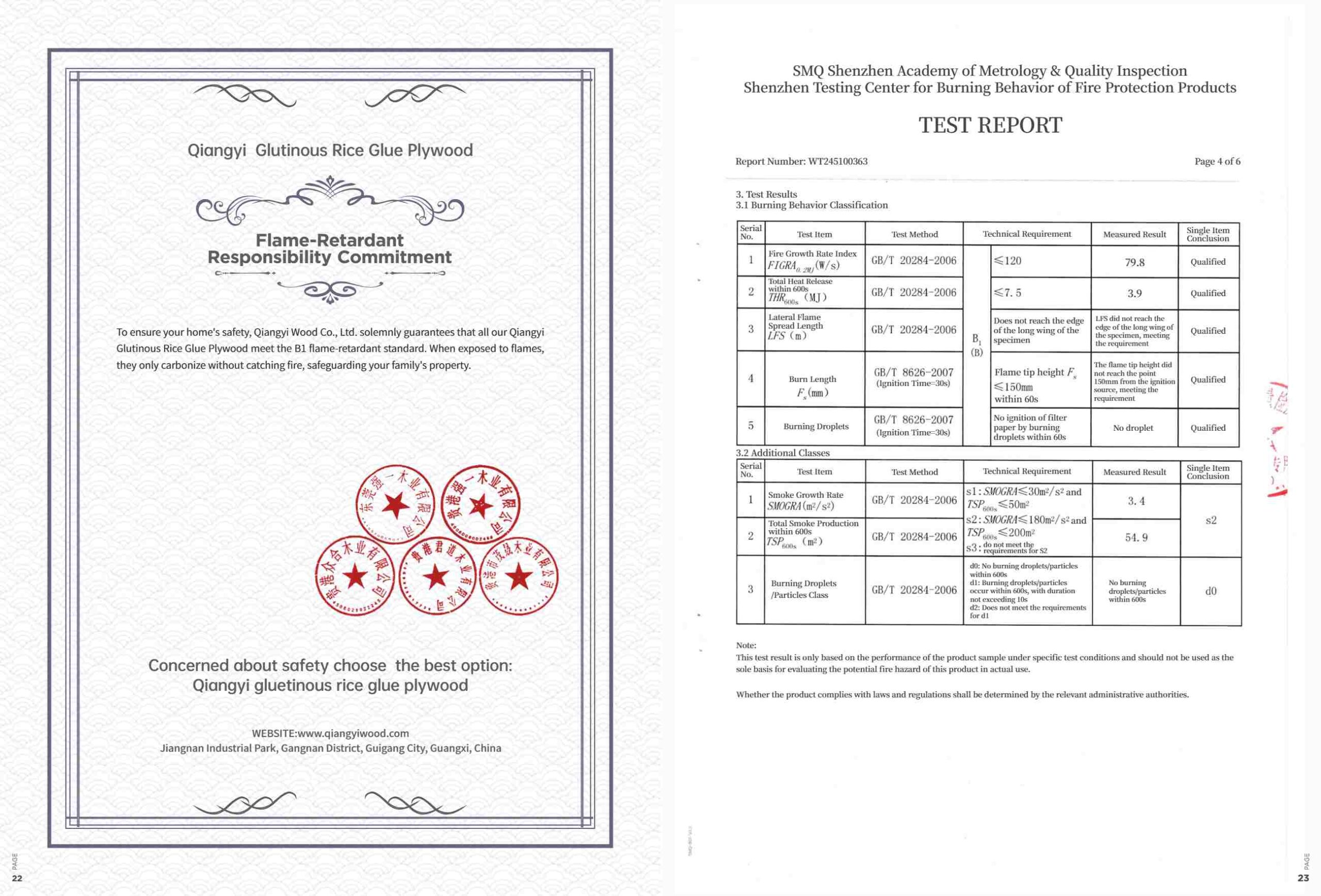
Poiché l'ossido di magnesio è un agente super ignifugo e termoisolante, con un punto di accensione che raggiunge i 2852℃, l'aggiunta di ossido di magnesio alla colla di riso glutinoso Lingmei, insieme alla densa struttura cristallina che si forma dopo l'indurimento della colla, impedisce all'aria di entrare in contatto con le fibre di legno. Anche se bruciata per diverse ore, si carbonizzerà soltanto e non brucerà.
- 9. Hcibo e isolamento acustico
L'ossido di magnesio è un eccellente agente isolante termico e acustico. La sua aggiunta conferisce al pannello prestazioni di isolamento termico estremamente elevate. Allo stesso tempo, fa sì che la colla di riso, dopo la polimerizzazione, formi una struttura cristallina densa, che migliora notevolmente le prestazioni di isolamento acustico del pannello multistrato e soddisfa persino gli standard dei materiali compositi fonoassorbenti. Le sue prestazioni di isolamento termico e acustico offrono ai clienti un'esperienza di risparmio energetico ottimale. Non ci sono zone morte calde o fredde all'interno e la temperatura percepita è più costante e confortevole. Allo stesso tempo, l'efficace strato isolante mantiene la temperatura della parete interna più vicina alla temperatura ambiente, evitando così problemi di condensa e muffa causati dalle pareti fredde.
Scenari applicativi del compensato di Qiangyi realizzato con colla di riso glutinoso.
- 1. Camere dei bambini/Sale per l'allattamento
Prodotti adatti: armadi, scrivanie, tatami, mobili per giocattoli.
Rispondere alle principali problematiche: i bambini hanno un sistema immunitario debole, sono sensibili alla formaldeide, sono spesso attivi e le superfici e i tavoli sono soggetti a versamenti d'acqua.
Corrispondenza delle prestazioni: Livello 2 impermeabile, le macchie d'acqua possono essere pulite con una semplice passata; Livello 0 antimuffa e antibatterico, aiuta gli spazi puliti a resistere ad ambienti umidi, antimuffa e antibatterico > 99%; Super ENF Grade senza formaldeide aggiunta, rilascio di formaldeide inferiore a 0,005 mg/m³

- 2. Soluzione completa per la cucina
Prodotti applicabili: mobili da cucina, pensili, banconi da bar
Rispondere alle principali problematiche: predisposizione alla formazione di muffa, scarsa capacità portante dei pensili, aree soggette a macchie d'olio, suscettibilità all'umidità e tendenza a creparsi.
Corrispondenza delle prestazioni: la colla di riso glutinoso forma uno strato naturale impermeabile all'umidità, prevenendo la formazione di muffa sul pannello posteriore del mobile; Capacità di tenuta dei chiodi: il compensato di colla di riso glutinoso ha una resistenza di 2040 MPa, superando di gran lunga i normali pannelli multistrato e i pannelli di particelle; Proprietà antibatteriche: la struttura antimuffa e antibatterica di grado 0 contribuisce a creare uno spazio pulito non influenzato da ambienti umidi, con proprietà antimuffa e antibatteriche > 99%.
- 3. Camera da letto Mobilia
Prodotti applicabili: armadi, testiere del letto, pannelli a parete, comodini, ecc.
Rispondere alle principali problematiche: predisposizione alla formazione di muffa, scarsa capacità di carico dei ripiani, sensibilità all'umidità, scarsa tenuta dei chiodi e facile deformazione.
Resistenza alla deformazione: compensato di colla di riso glutinoso > pannelli di particelle > pannelli multistrato ordinari;
Capacità di tenuta dei chiodi: il compensato di colla di riso glutinoso ha una capacità di tenuta dei chiodi pari a 2040 MPa;
Proprietà antibatteriche: le proprietà antimuffa e antibatteriche di grado 0 aiutano gli spazi puliti a resistere agli ambienti umidi, con attività antimuffa e antibatterica >99%;
Grado Super ENF: la colla di riso glutinoso non contiene formaldeide e le emissioni di formaldeide sono inferiori a 0,005 mg/m³.
- 4. Camera per anziani Mobilia
Prodotti applicabili: armadi, testiere del letto, pannelli a parete, comodini, ecc. Problemi principali risolti: suscettibilità alla muffa, scarsa capacità di carico dei ripiani, sensibilità all'umidità, scarsa tenuta dei chiodi, rigonfiamento a contatto con l'acqua e rumorosità.
Prestazioni ottimali: il robusto isolamento acustico del compensato di colla di riso glutinoso protegge il sonno degli anziani; Grado Super ENF: la colla di riso glutinoso non contiene formaldeide e il rilascio di formaldeide è inferiore a 0,005 mg/m³.
- 5. Mistituzioni mediche e di assistenza agli anziani
Prodotti applicabili: armadi, pareti con testiera del letto, pannelli a parete, comodini, banconi reception, banconi bar, ecc.
Rispondere alle principali problematiche: reparti ospedalieri, dove i pazienti presentano le minori difese immunitarie; case di riposo, dove gli anziani risiedono a lungo termine. La scelta del compensato di colla di riso glutinoso dimostra il rispetto dell'organizzazione per la vita ed è una scelta saggia in termini di gestione del rischio.
Corrispondenza delle prestazioni: Resistenza alla muffa di grado 0, tasso antibatterico > 99%; Sicurezza al primo posto: Ritardante di fiamma di grado B1, tempo di evacuazione prezioso in caso di calamità; Super ENF Grado
- 6. Freddo estremo spazio meteorologico
Scenari di applicazione: riscaldamento a pavimento per ambienti, rivestimenti per celle frigorifere, imballaggi per la logistica della catena del freddo, hotel e pensioni in regioni ad alta quota e fredde.
Affrontare le problematiche principali: Fragilità a bassa temperatura: i pannelli ordinari diventano fragili e soggetti a crepe al di sotto di -5℃; Dilatazione e contrazione termica: gli interruttori del riscaldamento a pavimento causano forti sollecitazioni termiche a causa delle differenze di temperatura; Fessurazioni da essiccazione: in inverno, quando l'umidità è inferiore al 20%, i pannelli perdono umidità e si restringono.
Corrispondenza delle prestazioni: Stabilità: Dopo la polimerizzazione, la colla di riso glutinoso al magnesio forma una struttura cristallina densa che organizza efficacemente il contatto tra le molecole d'acqua e l'ambiente esterno, mantenendo il contenuto di umidità interno del pannello entro i limiti ottimali e riservando uno spazio tampone per l'asciugatura; Resistenza alla deformazione: La posa simmetrica multistrato consente un rilascio uniforme delle tensioni interne.
- 7. Spazio ad alta temperatura
Scenari di applicazione: verande, armadi per finestre a bovindo, balconi su misura, mobili che circondano i fornelli della cucina, magazzini nelle regioni meridionali senza aria condizionata, officine.
Rispondere alle principali problematiche: Ammorbidimento ad alta temperatura: lo strato adesivo si ammorbidisce a temperature superiori a 40℃, riducendo la capacità di carico; Rilascio accelerato di formaldeide: il rilascio di formaldeide raddoppia per ogni aumento di 10℃ della temperatura; Fessurazione ad alta temperatura: la superficie del pannello si fessura ad alte temperature.
Corrispondenza delle prestazioni: Resistenza alle crepe: la resistenza alle crepe superficiali raggiunge il livello 5; Rilascio stabile di livello Super ENF: in condizioni di alta temperatura e alta umidità, il rilascio di formaldeide dal circuito stampato non aumenterà quasi per nulla.
- 8. Sfida di asciugatura
Scenari di applicazione: soluzioni personalizzate per l'intera abitazione in regioni aride, ambienti d'ufficio climatizzati con umidità costante durante tutto l'anno (30-40%) e ambienti a bassa umidità come officine e laboratori di elettronica.
Affrontare le problematiche principali: Contenuto di umidità sbilanciato: le variazioni del contenuto di umidità del pannello provocano restringimento e fessurazioni; Fessurazioni delle giunzioni: le fessure si formano facilmente tra i pannelli.
Corrispondenza delle prestazioni: Controllo dell'acqua: Dopo la polimerizzazione, la colla di riso glutinoso al magnesio forma una struttura cristallina densa, che impedisce efficacemente alle molecole d'acqua di entrare in contatto con l'ambiente esterno, mantenendo il contenuto di umidità interna del pannello entro l'intervallo ottimale; Resistenza alle crepe: La resistenza alle crepe superficiali raggiunge un livello elevato.
Rapporto di prova di compensato di colla di riso glutinoso Qiangyi
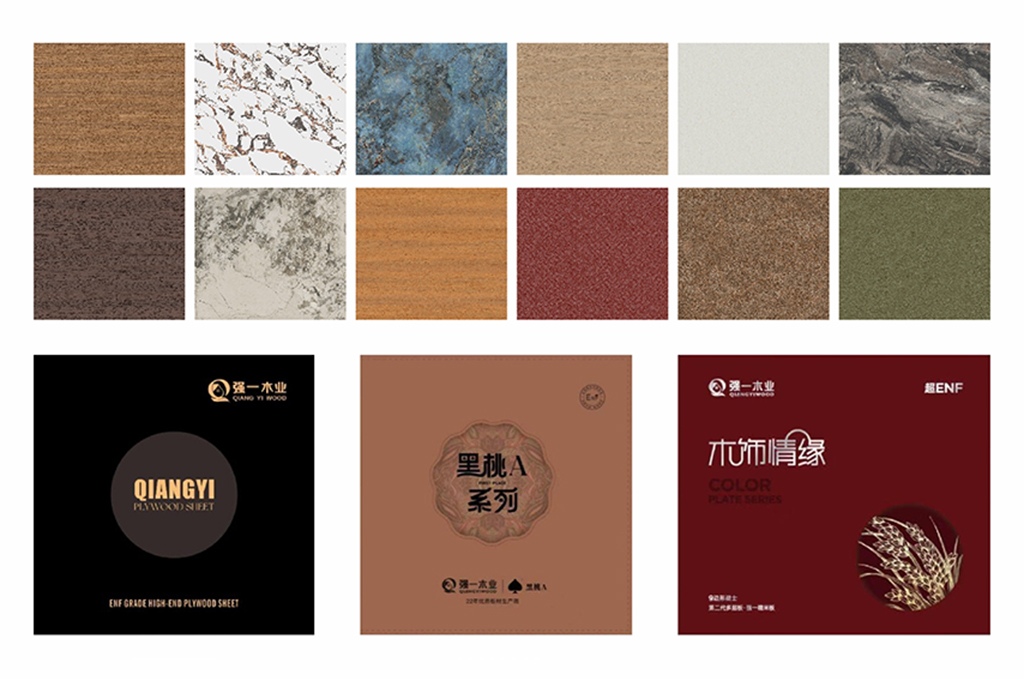
Oltre 1.000 colori tra cui scegliere
superficie in compensato
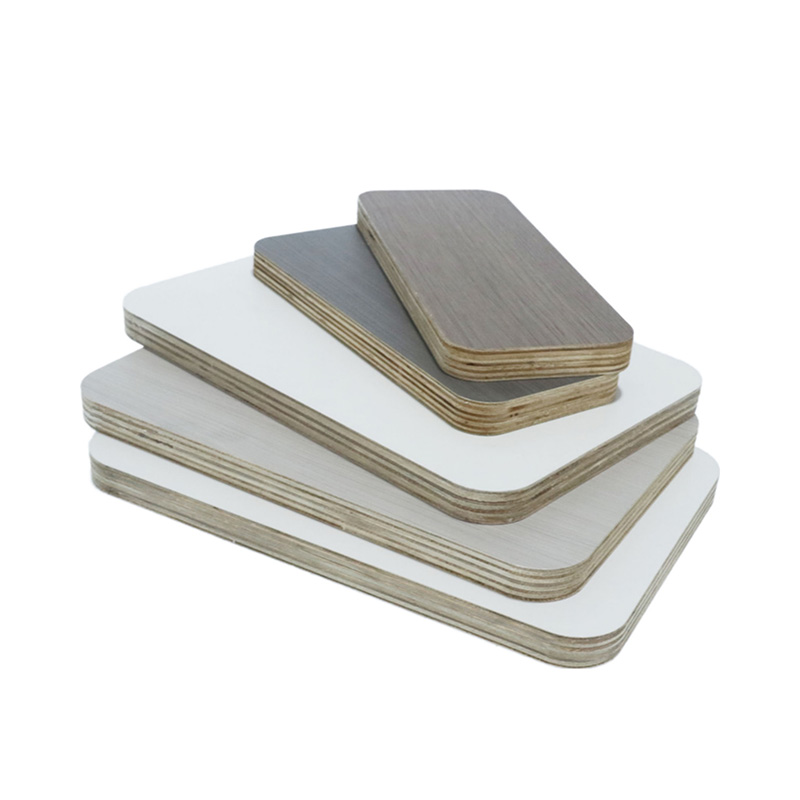
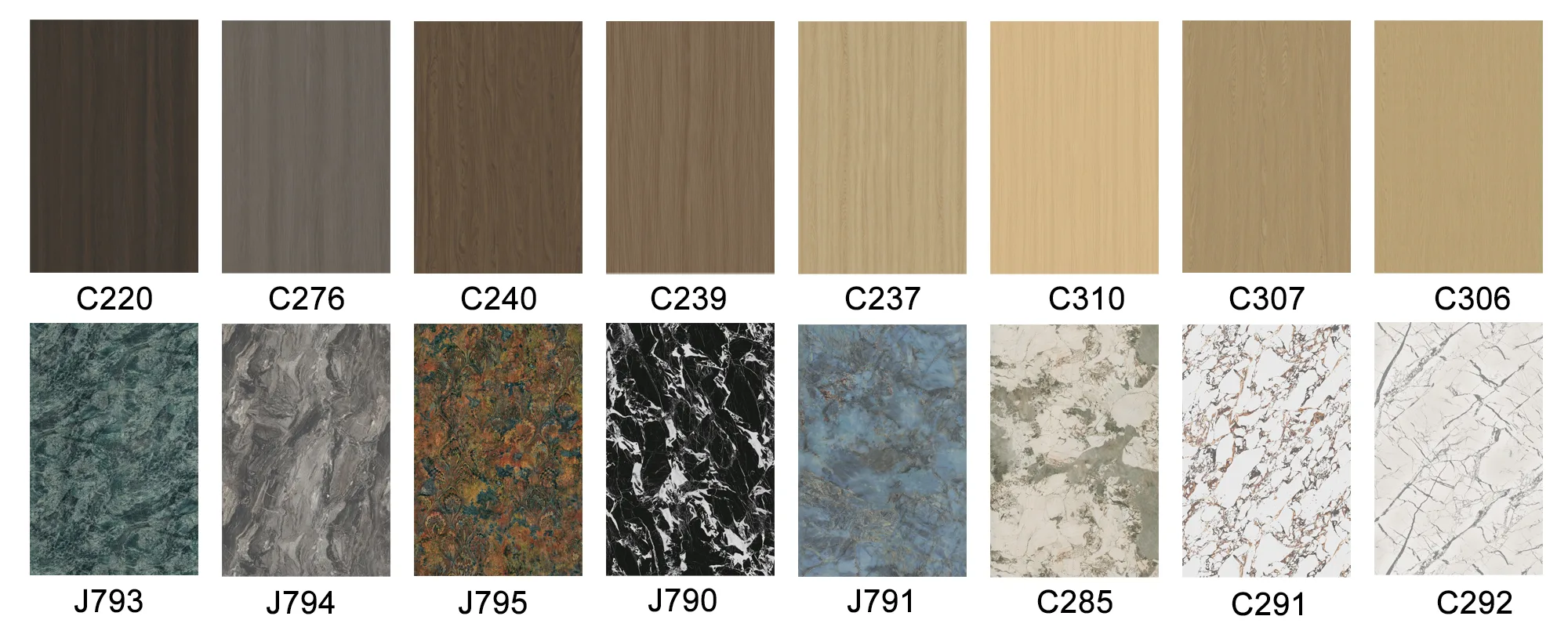
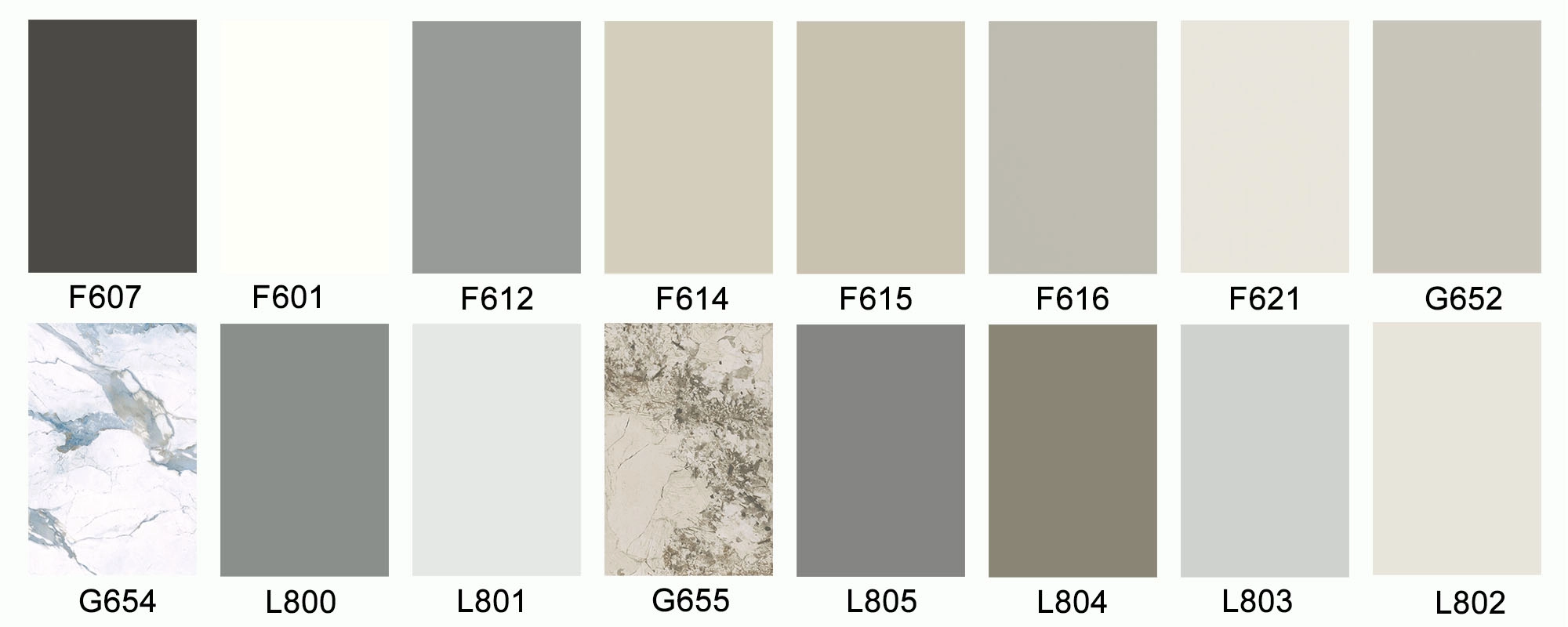
Il rivestimento superficiale del compensato isola efficacemente dall'umidità, prevenendo deformazioni, delaminazione e formazione di muffa. Migliora inoltre la resistenza all'usura, ai graffi e alla corrosione, proteggendo da insetti e danni ambientali. Il rivestimento migliora l'aspetto, stabilizza il colore e rallenta l'invecchiamento, prolungando complessivamente la durata e le prestazioni. Noi di Qiangyi possiamo fornire diversi materiali (rivestimento in PET e superficie melaminica) e una varietà di colori per adattarsi a diversi stili.
Viso melaminico
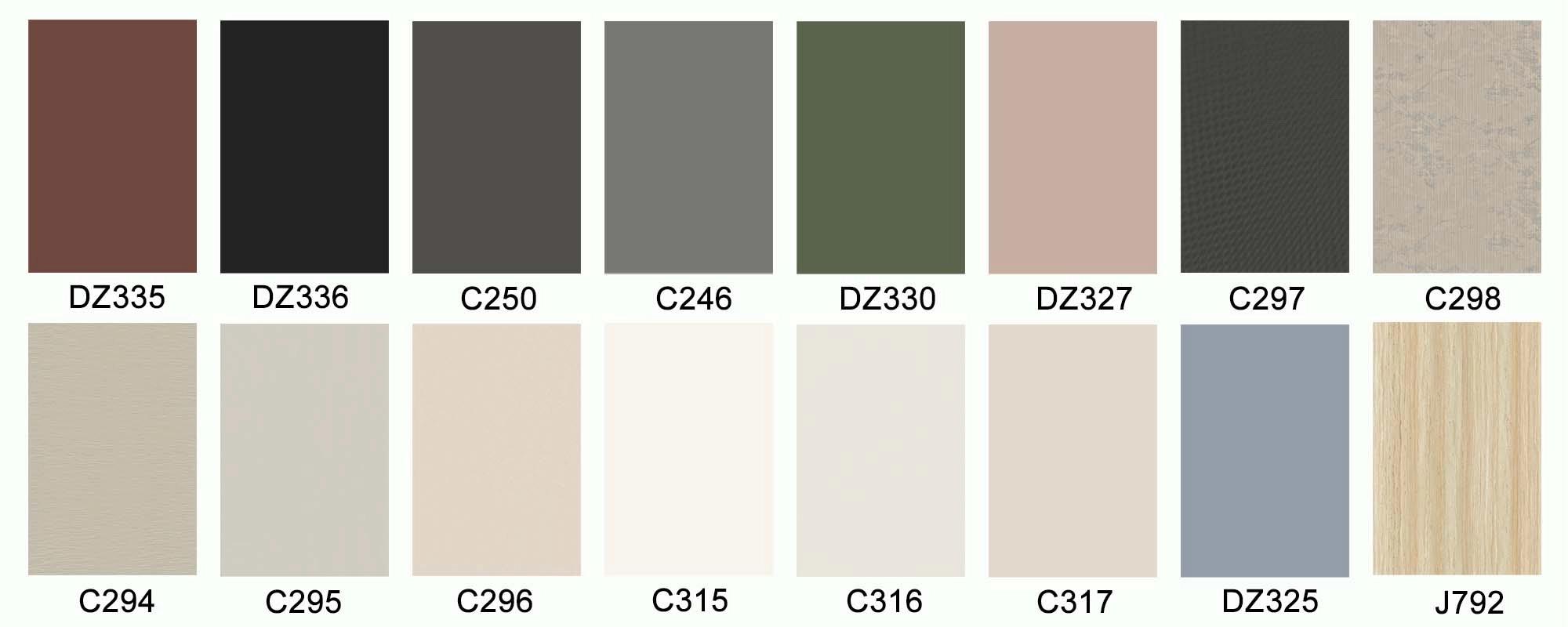
rivestito in PET
Get more information about the plywood
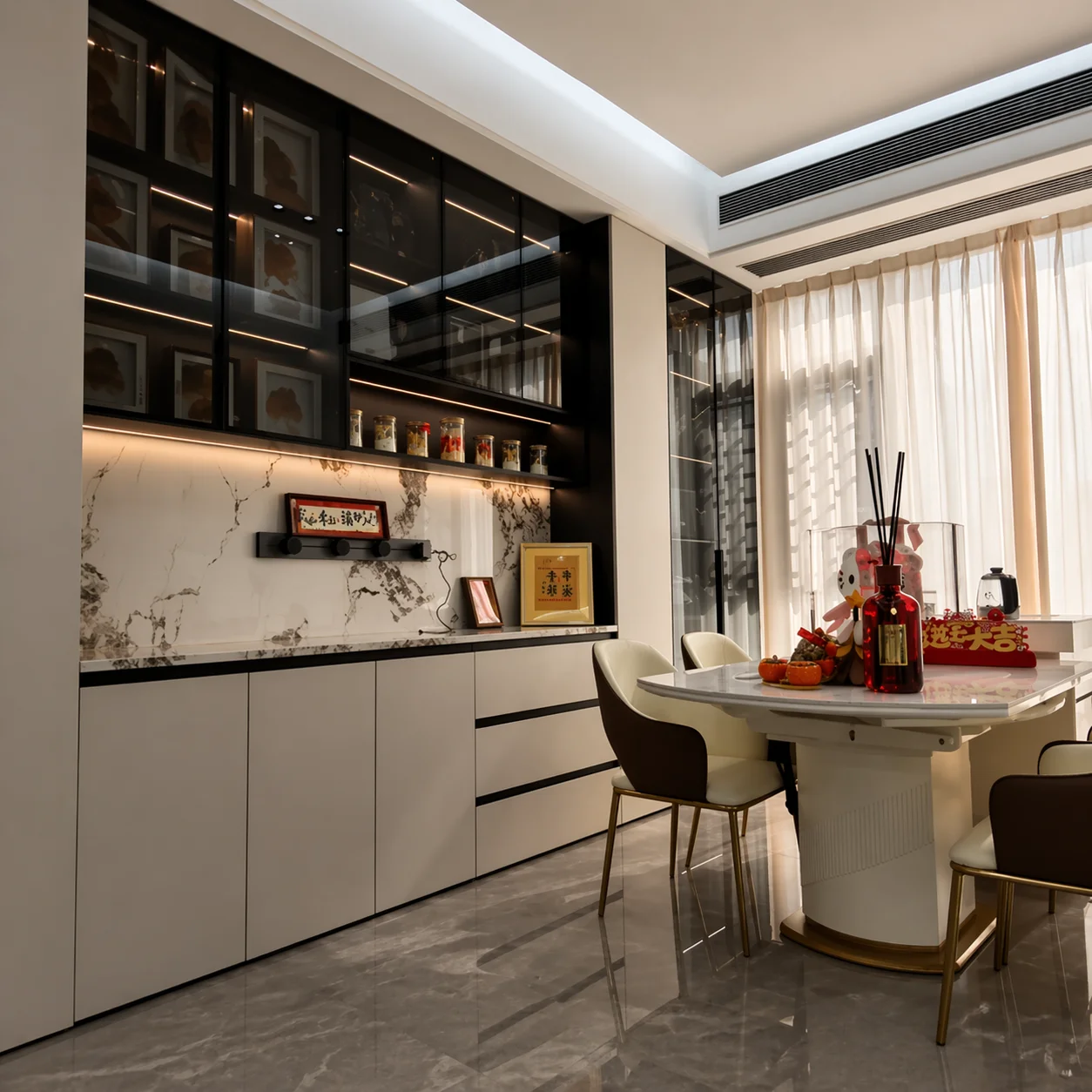
Deformation-Resistant Plywood Guide for Humid Interiors
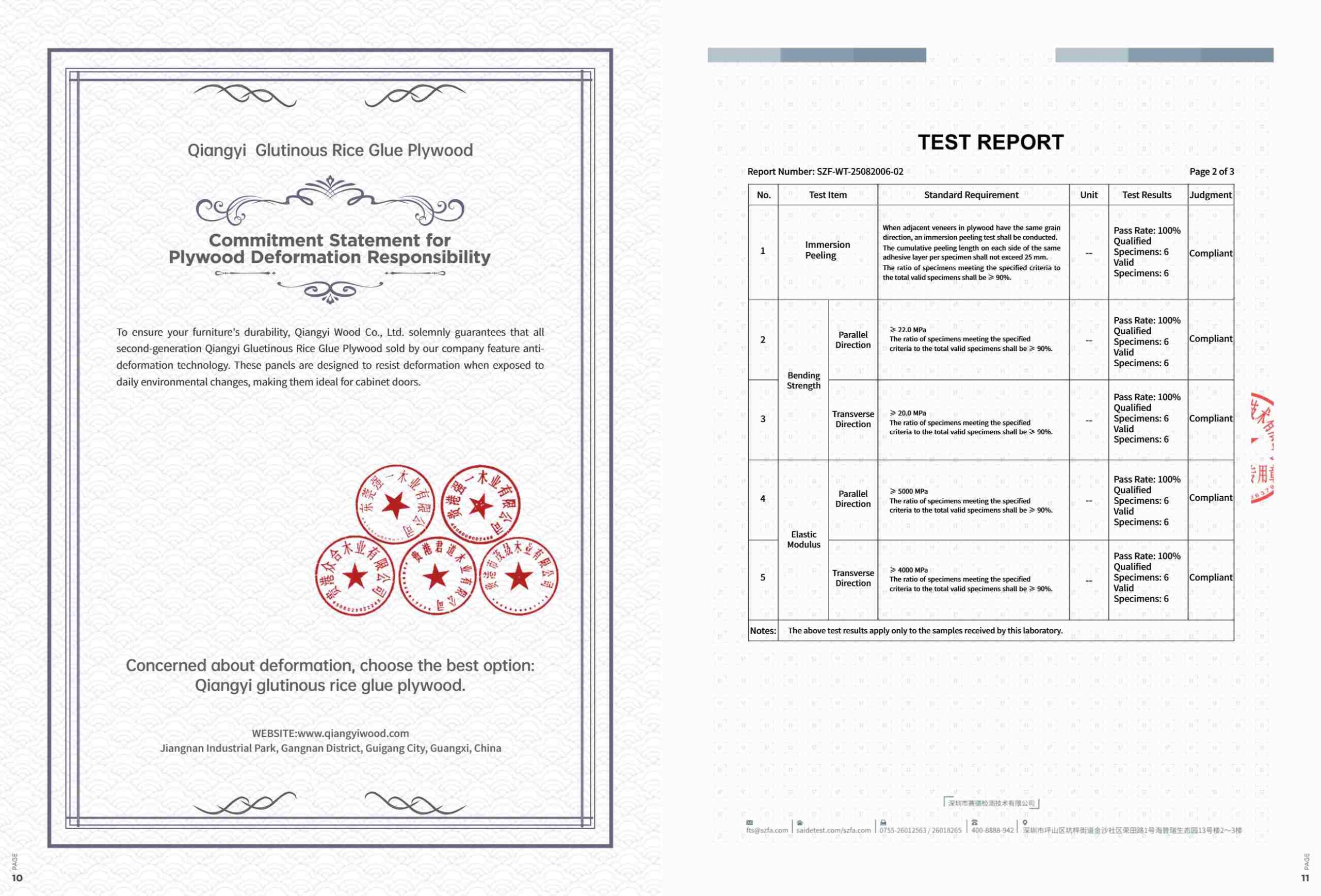
A cabinet door can leave the workshop flat and warp months later. In humid apartments, coastal hotels, kitchens, vanities, and wardrobes beside damp walls, plywood faces repeated moisture changes. For interior contractors, that can mean rework, delayed handover, and warranty calls. The key question is how to specify deformation-resistant plywood. Why Plywood Deformation Becomes a Costly Problem in Humid Interior Fit-Outs Where Humidity-Related Deformation Shows Up After Installation Deformation is common where panels are wide, frequently used, or exposed unevenly. Kitchen cabinet doors may bow, bathroom vanities can cup near damp walls, tall wardrobe doors may develop uneven gaps, and hotel casework near exterior walls can experience repeated moisture cycling. Early signs are small: an edge no longer sits flush, a drawer front twists, or edge banding lifts. Once fittings are affected, a visual defect becomes a functional one. From a Warped Panel to Rework, Delays and Warranty Callbacks A replacement panel may require another site visit, refinishing, hinge adjustment, and client coordination. On multi-room projects, costs multiply. Panel movement causes poor alignment; poor alignment creates correction work; correction work consumes labor, material, and schedule. Dimensional stability therefore belongs in the procurement specification. Why Plywood Warps, Cups or Delaminates in Humid Interiors Moisture Cycling Creates Uneven Swelling and Shrinkage Plywood is cross-laminated, which helps restrain wood movement, but its veneers still absorb and release moisture as humidity changes. Trouble begins when that movement is uneven. A cabinet door beside a sink may take up more moisture at its edges than on its decorative face. A wardrobe against a cool wall may face different conditions on the back and front. The resulting stress can appear as bowing, cupping, twisting, or local bond failure. Unbalanced Core Construction and Residual Stress Magnify the Problem Humidity is often the trigger, not the only cause. Core gaps, uneven veneer moisture, poor symmetry, or residual stress can make a panel more sensitive. A balanced lay-up distributes forces across the sheet. An irregular core can react unevenly, making hidden instability more obvious after cutting. Why Thicker Panels, Surface Laminates or Hardware Fixes Alone Are Not Enough Thickness improves stiffness but does not correct an unstable core. A surface laminate can slow moisture entry, yet cut edges, drilled holes, and unsealed backs remain exposed. More hinges can control movement mechanically, but they cannot repair weak bonding. These measures work best when the base panel already suits the environment. What Deformation-Resistant Plywood Should Prove Before You Specify It Look for Balanced Core Construction and Controlled Moisture Movement Before specifying plywood for a humid interior, check three fundamentals: 1.Core consistency: closely fitted veneers and balanced layers reduce local weak points. Regarding core material selection, using hardwoods like large-diameter eucalyptus can significantly enhance the panel’s deformation resistance due to advantages such as being knot-free, having high strength, and maintaining stable quality. 2.Moisture control: internal moisture should be controlled before the panel leaves production. 3.Edge and surface strategy: finishing, drilling, sealing, and installation should limit uneven exposure after cutting. A suitable panel is not simply “waterproof.” Core structure, bonding, conditioning, and installation need to work together. Demand Bond Integrity, Stiffness Data and Application-Matched Test Evidence Buyers should ask what was tested, which requirement applied, and whether the tested construction matches the quoted panel. What to verify Why it matters Immersion peeling Checks glue-line integrity after moisture exposure Bending strength Indicates resistance to bending failure Modulus of elasticity Helps assess stiffness and deflection Core, thickness and face Confirms the evidence matches the order This matters for cabinet doors, long shelves, and vanities where modest movement becomes visible quickly. How QIANGYI PLYWOOD Targets Humidity-Driven Deformation At QIANGYI PLYWOOD, we address deformation by controlling the panel from the core outward rather than relying on a surface claim alone. Balanced Multilayer Construction and Controlled Conditioning Reduce Internal Stress Our glutinous-rice glue plywood uses a full-core lay-up with layer-by-layer gluing. Production includes more than 24 hours of slow cold pressing, about 60 hours of drying, and over 15 days of curing and conditioning. The longer cycle is intended to improve bonding, equalize internal moisture, and allow residual stress to settle before fabrication. Deformation often appears after cutting and installation. More uniform moisture and a balanced structure help reduce stress concentration within the panel. Penetrating Glutinous-Rice Adhesive Helps Limit Moisture-Driven Swelling The adhesive system uses glutinous rice starch with magnesium chloride, magnesium oxide, and water. After curing, it is designed to penetrate the wood structure and form a dense bonded network. The glutinous-rice board range is controlled at 8–12% moisture content, while its Class II water-resistance positioning is intended for humid environments rather than long-term immersion. In kitchens, wardrobes, and vanities, the objective is to limit rapid moisture uptake and swelling. Anti-Mold and Antibacterial Performance Adds Secondary Protection in Humid Interiors Humidity can create biological problems even before visible warping occurs. All QIANGYI PLYWOOD glutinous-rice glue plywood is made from large-diameter eucalyptus, which possesses natural antibacterial properties. In our glutinous-rice board system, mildew resistance is Grade 0 and the antibacterial rate is above 99%. The process combines the adhesive system with 60-hour controlled drying and moisture control in the 8–12% range. These properties support dimensional stability; they do not replace it. They are useful in kitchens, bathroom furniture, cloakrooms, and coastal interiors where warm, damp conditions may persist. Test Evidence, the Mauritius Case and the Procurement Value of Dimensional Stability Test Report SZF-WT-25082006-02 provides evidence for bond integrity and structural performance. The report page shows six valid specimens for each item and a 100% pass rate. Test item Requirement shown Result Immersion peeling Specified peeling criteria 6/6 qualified Bending strength, parallel ≥22.0 MPa 6/6 qualified Bending strength, transverse ≥20.0 MPa 6/6 qualified Elastic modulus, parallel ≥5000 MPa 6/6 qualified Elastic modulus, transverse ≥4000 MPa 6/6 qualified Case Study: Why a Mauritius Furniture Factory Kept Reordering A long-term furniture manufacturing customer in Mauritius was receiving its third full-container replenishment of the year. The product was furniture-grade plywood with a 100% eucalyptus core. Mauritius has a hot, humid island climate, where ordinary panels may face peeling, deformation, and termite damage over time. For this customer, we supplied plywood using a full eucalyptus core, glutinous-rice adhesive, and temperature-controlled processing to improve stability under humid conditions. The product was also supported by a 9.5-grade termite-resistance test result. The customer commented that using our plywood for cabinets helped reduce concerns about after-sales problems. Repeat purchasing was also driven by consistency. Stable nail-holding performance and clean cutting edges helped the factory avoid frequent production adjustments and reduce material loss between batches. Long-distance delivery was another consideration. For sea freight, we reinforced pallet edges and used multiple layers of moisture-resistant wrapping. The customer reported that the pallets arrived intact and the plywood remained dry after unpacking. As a direct manufacturer, we can also respond quickly to requirements such as specific sizes or environmental grades, helping repeat buyers maintain a more predictable supply schedule. For contractors and furniture manufacturers, this case shows that plywood selection is not only about deformation resistance. Batch consistency, transport protection, and supply reliability also affect production loss, after-sales risk, and project delivery. Experience Our Deformation-Resistant Plywood in Person Curious to see the dimensional stability and core quality of our plywood firsthand? We invite you to connect with our team and discuss how our products can secure your next humid interior fit-out project. *Event Name:THE 2026 GUANGXI INTERNATIONAL FOREST PRODUCTS AND WOOD PRODUCTS EXHIBITION *Company Name:QIANGYI PLYWOOD *Booth Number:D5T-06 *Date:November 21-23, 2026 *Location/Address:Nanning International Convention & Exhibition Center FAQ Q: What causes plywood to deform in humid interiors? A: Uneven moisture movement is the main mechanism. Different faces, edges, or core areas absorb and release moisture at different rates. Core imbalance, residual stress, weak glue lines, and poor edge protection can make the movement worse. Q: What should contractors check when buying deformation-resistant plywood? A: You should always check the core quality and look for a balanced construction. Also, verify the moisture control, bond strength, bending performance, and stiffness. Finally, make sure the provided test documents truly match the actual thickness and structure of your order. Q: Which test results matter when evaluating deformation-resistant plywood? A: Immersion peeling helps assess glue-line integrity after moisture exposure. Bending strength indicates resistance to bending failure, while modulus of elasticity relates to stiffness and deflection. Results are most useful when the tested sample matches the specified product. Q: Does deformation-resistant plywood still need edge sealing and correct installation? A: Yes. Cut edges, drilled holes, uneven finishing, wet substrates, poor storage, and incorrect hardware layout can still create localized moisture entry or stress. A stable panel reduces risk, but fabrication and installation remain part of the solution.
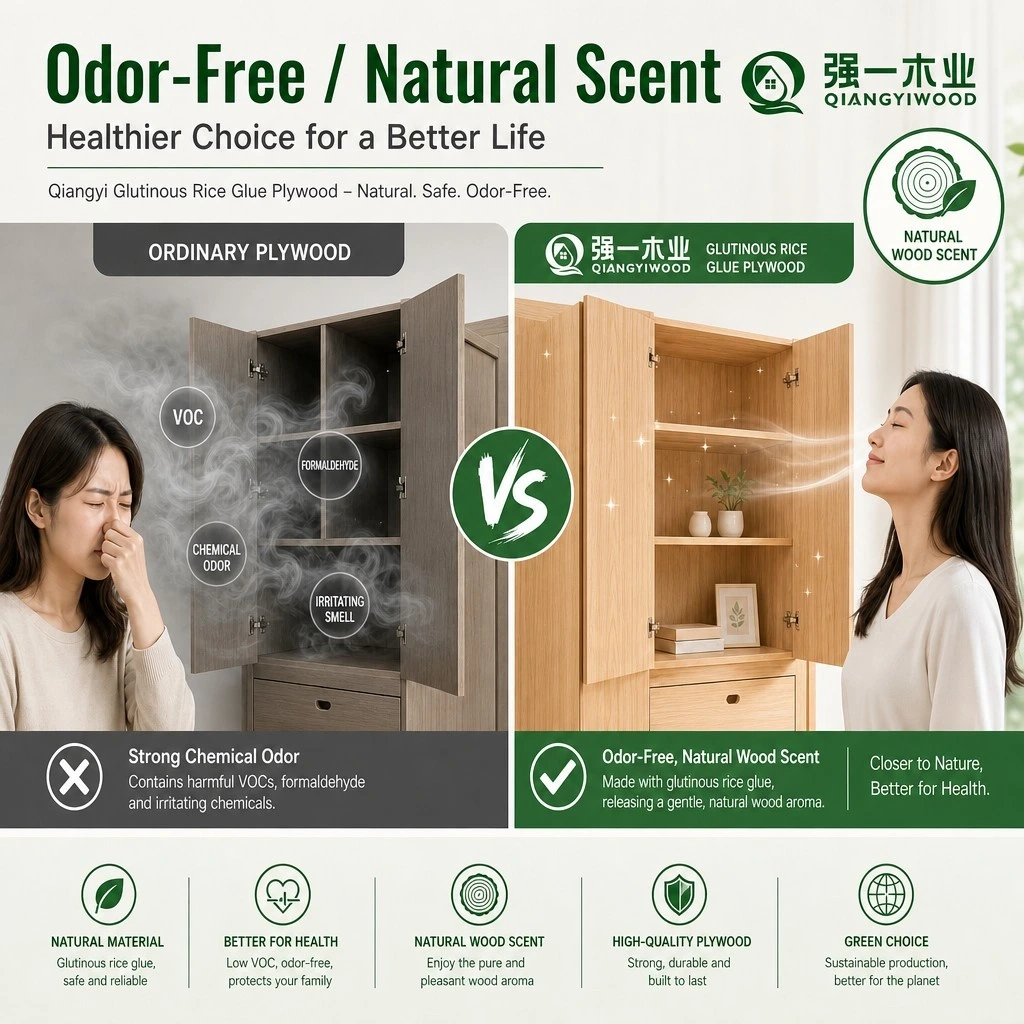
Low-Odor Plywood Sourcing Guide for Fast Project Handover
The Hidden Cost of Plywood Odors in Interior Contracting In enclosed spaces and projects with insufficient ventilation, material odors may increase the risk of acceptance communication issues and rework, thereby affecting the delivery schedule. The actual impact depends on the materials used, construction techniques, ventilation conditions, and on-site testing results. Consider a scenario where a boutique hotel or a premium retail store is undergoing a rapid renovation. Every single day spent ventilating an odorous room translates directly to lost operating revenue for your client. Furthermore, post-installation complaints regarding indoor air quality can severely damage your professional reputation. Dealing with unhappy clients consumes valuable time and human resources, leading to lost referrals and putting future construction contracts at serious risk. Why Ordinary Plywood Fails the “Immediate Handover” Test To solve this issue, we must understand the root cause of these persistent smells. The primary source of odors in standard custom furniture panels is volatile organic compounds. These emissions predominantly originate from the traditional adhesives used during manufacturing, such as urea-formaldehyde resin, as well as the natural decay odors produced during wood processing. Urea-formaldehyde resin adhesives are inherently unstable and volatile. When standard multi-layer boards are exposed to fluctuations in temperature and humidity, the chemical bonds in these resins undergo a reverse reaction, decomposing and releasing trapped gases continuously into the environment for over a decade. Because the permeability of traditional chemical glue is limited, it only bonds the surfaces between individual veneers. This leaves microscopic gaps between the wood fibers, allowing both the chemical off-gassing and the natural smells of the wood to escape freely into the newly renovated room. Relying on aggressive site ventilation or temporary surface treatments only masks this structural off-gassing temporarily, completely failing the strict requirement for an immediate, safe handover. Key Criteria for Selecting Low-Odor Plywood Professionals must upgrade their sourcing standards to eliminate these procurement risks. Relying on generic eco-friendly labels is no longer sufficient for demanding project timelines. When sourcing materials for fast turnarounds, contractors should evaluate suppliers based on strict, measurable criteria to ensure long-term stability. A reliable sourcing framework should include the following core parameters: First, evaluate the adhesive formulation. Traditional boards use urea-formaldehyde resins that continuously introduce chemicals into the environment. A professional-grade board must utilize plant-based or mineral-based non-toxic adhesives to eliminate chemical introduction at the source. Second, verify the emission thresholds. Meeting basic E1 or E0 limits is often inadequate for enclosed commercial spaces. Contractors should demand Super ENF plywood with zero added formaldehyde and zero benzene to ensure complete occupant safety. Third, investigate the odor control mechanism. Standard options rely heavily on surface edge banding to temporarily block smells. A truly effective material features a dense internal crystalline structure that structurally locks in odors permanently regardless of the surface treatment. Finally, demand concrete supplier guarantees. Verbal assurances offer no protection for your business. Procurement teams must require written responsibility commitments for odor-free performance to transfer the risk away from the installation team. By strictly adhering to these elevated standards, project managers can shift from hoping a room will air out quickly to mathematically guaranteeing a clean handover. How QIANGYI PLYWOOD Glutinous Rice Glue Plywood Guarantees an Odorless Space Understanding these strict requirements, QIANGYI PLYWOOD engineered a structural solution designed specifically for contractors who cannot afford delays. We replaced traditional chemical resins entirely to create our Second Generation Multi-Layer Plywood, providing a one-stop solution for fast and safe project completions. Plant-Based Lingmei Glue Technology The core of our odorless performance lies in our proprietary adhesive technology. Our glutinous rice glue plywood utilizes Lingmei glutinous rice glue, which is formulated from food-grade glutinous rice starch, magnesium chloride, magnesium oxide, and water. This pure plant and mineral composition ensures that the entire manufacturing process remains entirely free of formaldehyde additives. By eliminating urea-formaldehyde from the equation, we cut off the most significant source of renovation pollution and unpleasant odors at its absolute root. Achieving the “Ready to Move In” Standard Our unique adhesive does more than just remove chemicals; it actively seals the substrate. During the high-pressure manufacturing process, our Lingmei glutinous rice glue rapidly penetrates deep into the wood fibers. After curing, the glue forms a highly stable, interlocking crystalline network structure. This dense encapsulation layer firmly locks in the natural scent of the wood itself and prevents any internal decay odors from volatilizing into the air. For interior contractors, this means you can install custom wardrobes, hotel wall panels, and commercial displays that are genuinely ready to move in, achieving visible and detectable freshness immediately upon installation. Verified Test Data and the Odor-Free Commitment In the B2B procurement sector, claims must be backed by verifiable evidence. We provide the concrete data and written assurances required to protect your profit margins and professional reputation. TVOC Emissions Far Below Industry Limits Our manufacturing standards are strictly validated by authoritative testing. You can review the visual evidence in the Test report of SZF-WT-25082006-01. According to the laboratory results, harmful substances such as Benzene, Toluene, and Xylene were not detected. Furthermore, the Total Volatile Organic Compounds concentration was measured at an exceptionally low 11 μg/m³. This result drastically outperforms the standard requirement of less than or equal to 200 μg/m³, proving that our boards deliver an ultra-clean air environment from day one. The QIANGYI PLYWOOD After-Sales Replacement Guarantee We back our scientific data with a powerful market promise. We offer a formal Odor-Free Responsibility Commitment for our second-generation glutinous rice glue plywood. If custom furniture is built using our boards and odor issues arise after installation, and it is confirmed that the odor is caused by our plywood, we commit to taking full responsibility for all after-sales replacement with new materials. This written guarantee completely transfers the procurement risk away from the contractor, ensuring your business is never left bearing the cost of material failures. FAQ on Sourcing Low-Odor Plywood Q: What is the main cause of strong odors in new plywood installations? A: The top cause of bad smells in fresh boards is volatile organic compounds. Older glues like urea-formaldehyde resin release these gases. Also, raw wood rot smells can escape through tiny holes in the wood grain. Q: How does the odor level compare when evaluating marine plywood vs ordinary plywood? A: Both traditional marine plywood and ordinary plywood typically rely on chemical adhesives that release volatile organic compounds (VOCs). While marine grade offers high water resistance, neither is inherently odor-free. For immediate handover projects, contractors should always choose specifically engineered low-odor panels. Q: How does glutinous rice glue plywood differ from standard low-formaldehyde boards? A: Normal boards still rely on chemical resins. They just try to lower the gas output. However, our fix uses Lingmei glutinous rice glue. This glue comes from pure starch and earth minerals. It fully eliminates added formaldehyde and benzene right at the start. Q: Can low-odor plywood truly allow for immediate project handover? A: Yes, it can. Our unique glue builds a dense crystal web. This web traps natural wood scents and stops chemical off-gassing. The finished room reaches a safe and ready state right after the work ends. Q: What TVOC emission levels should I look for when sourcing low-odor plywood? A: Buyers should demand verifiable laboratory reports demonstrating TVOC levels significantly below the 200 μg/m³ limit. Our tested panels achieve an outstandingly low concentration of just 11 μg/m³. Q: Does odorless plywood maintain the required structural strength for commercial fit-outs? A: Absolutely. Our second-generation multi-layer plywood utilizes a fully interlocked primary core veneer and layer-by-layer glue application, resulting in exceptional rigidity, strong nail-holding power, and high resistance to deformation for heavy-duty applications.
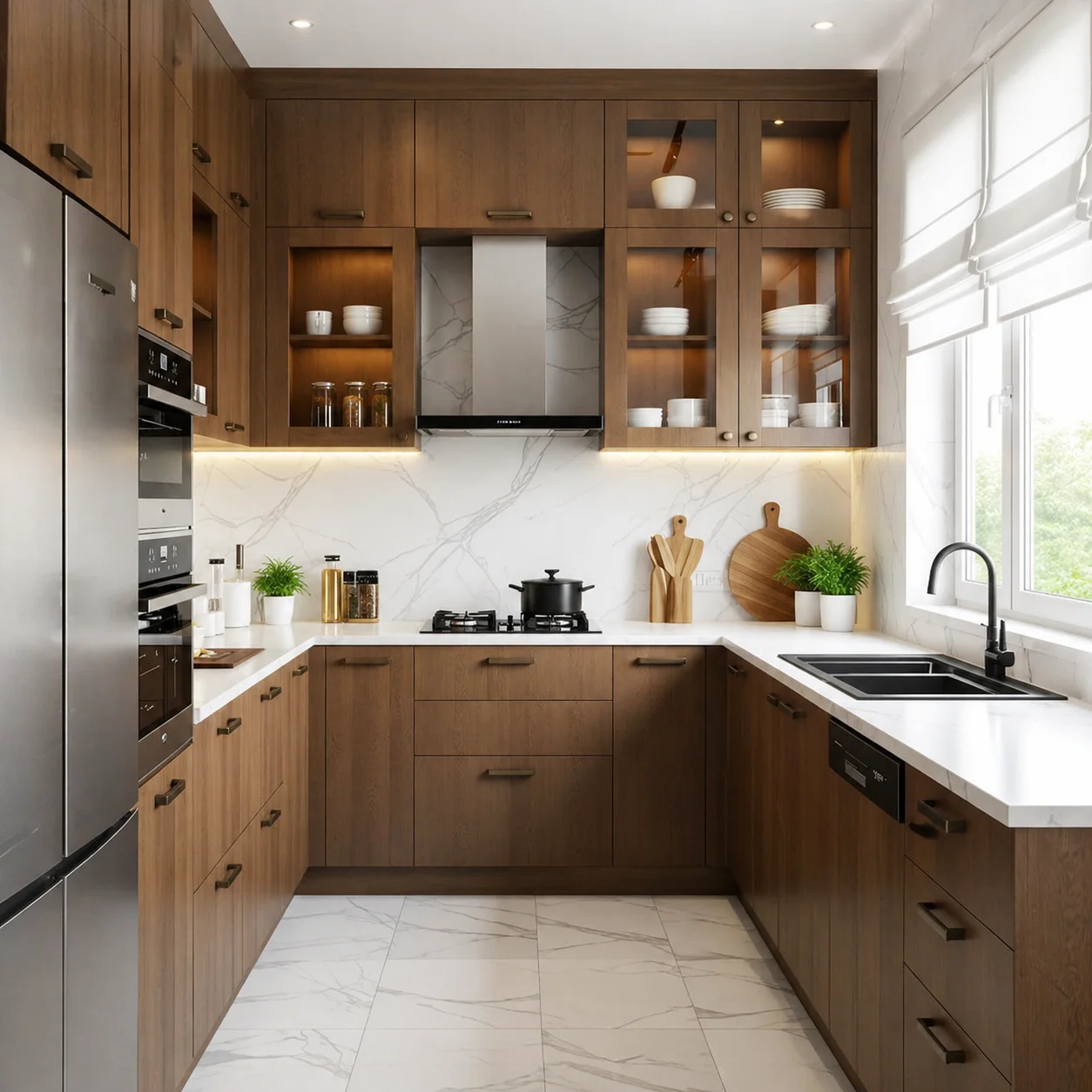
Termite-Resistant Plywood Sourcing Guide for Humid Climates
The Hidden Cost of Termite Damage in Humid Climate Cabinetry Operational Disruptions and Brand Reputation Operating a cabinetry manufacturing business in tropical regions presents unique environmental challenges. High moisture levels combined with aggressive pest populations create a perfect storm for material failure. Manufacturers often face a relentless cycle of frequent after-sales complaints and expensive maintenance requests when standard boards fail in these harsh conditions. These money problems go beyond simply swapping out ruined doors or cabinet bases. Custom furniture builders get calls about bending shelves or bug-eaten bases. When this happens, the whole team must stop their normal work and have to fix these sudden problems instead. This reactive workflow damages employee morale and drastically reduces the overall output capacity of the factory. Every month spent dealing with customer complaints about ruined cabinets is a month of lost revenue and damaged brand reputation. Word of mouth travels fast in local markets, and a history of failing cabinetry can easily lock a manufacturer out of lucrative commercial project bids. The Financial Drain of Chemical Pre-treatments To mitigate these risks, many businesses resort to chemical sprays before processing the boards. This extra step drives up production costs, slows down manufacturing timelines, and ultimately eats into profit margins. Consequently, finding a reliable anti termite wood board becomes a critical profitability issue rather than just a simple procurement task. Why Standard Plywood Fails Against Termites and Moisture Acidic Environments Attract Wood-Boring Pests Standard wood structures are inherently attractive to wood-boring insects because cellulose provides an abundant food source. In humid climates, the situation worsens significantly. Traditional materials often utilize urea-formaldehyde resin adhesives, which produce a slightly acidic or neutral environment after curing. This specific pH level creates an ideal living condition for pests to thrive and multiply. Urea-formaldehyde resin adhesives are also notorious for their continuous release of harmful volatile compounds, which exponentially worsens as ambient temperatures rise in tropical environments. Exposed Wood Fibers Lead to Moisture Swelling Furthermore, these conventional adhesives have limited permeability, meaning they only sit between the wood veneers without filling the internal fiber gaps. When wood fibers are left exposed internally, they act like microscopic sponges. In a kitchen environment where steam from cooking and ambient tropical humidity are constant, these sponge-like fibers absorb moisture rapidly. The resulting volumetric expansion pushes against the laminate surface, leading to ugly peeling, warping, and structural weakness over time. While surface-level chemical treatments might offer a temporary fix for the insect issue, they are costly to apply regularly and wear off, leaving the core vulnerable to structural collapse. They also completely fail to address the simultaneous moisture swelling problem that plagues tropical installations. Essential Criteria for Sourcing Termite-Resistant Plywood Built-in Structural Defense Mechanisms To permanently eradicate these profit-draining after-sales issues, cabinet manufacturers must establish strict criteria for sourcing core materials. A truly suitable board for humid kitchens must possess native defense mechanisms built directly into its structure, eliminating the need for secondary chemical treatments. The internal chemical environment of the board must be naturally hostile to pests. Termites rely on symbiotic microorganisms to digest cellulose, and these microorganisms can only survive in specific pH conditions. Altering this internal pH is the most effective way to neutralize the threat without relying on toxic sprays. Core Density and Safety Standards Beyond pest defense, the board requires an exceptional core density achieved through advanced adhesive penetration. This physical barrier blocks water molecules and prevents the swelling that ruins cabinet doors in humid areas. The best termite proof plywood should also come with verifiable industry testing data, proving its capability to withstand tropical challenges over the long term. Finally, the ideal board should prioritize human health. It should be entirely free of toxic additives, ensuring that indoor air quality remains pristine and safe for families even in poorly ventilated kitchen spaces. Evaluation Factor Standard Wood Panels Ideal Anti Termite Board Internal Environment Acidic or neutral pH Highly alkaline pH Core Density Porous with air gaps Highly compact and dense Pest Defense Relies on surface sprays Built-in structural defense Moisture Response Rapid water absorption Strong anti-swelling capability How QIANGYI PLYWOOD Achieves Targeted Protection The Role of Glutinous Rice Glue in Structural Defense Meeting these stringent criteria requires a fundamental shift in material engineering. We spent years analyzing the precise failure points of traditional boards in Southeast Asian markets. We developed our second-generation multi-layer boards to natively survive in tropical environments without requiring extra processing steps on your end. The core of our defense mechanism lies in our proprietary Lingmei glutinous rice glue. This unique adhesive is carefully formulated from food-grade glutinous rice starch, water, magnesium chloride, and magnesium oxide. Unlike traditional resins, our glue exhibits exceptional permeability during the manufacturing process. It penetrates deeply into the wood fibers, and upon curing, it forms a dense, interlocking crystalline network structure. This compact core provides strong water resistance, firmly blocking water molecules from entering the wood gaps and preventing the board from swelling in humid kitchens. More importantly, the reaction between magnesium chloride and magnesium oxide creates a highly alkaline environment within the board. When pests attempt to consume the wood fibers, they also ingest this alkaline adhesive, which destroys their digestive symbiotic microorganisms, effectively neutralizing the threat from within. Grade 9.5 Resistance Certification We understand that B2B buyers need measurable proof rather than just verbal assurances. Through rigorous testing, our material has officially achieved a Grade 9.5 termite resistance rating. According to the official test report GIZ/TR-2024-0301-0186, our product underwent a stringent evaluation. Based on the National Standard of the People’s Republic of China GB/T 18260-2015 for testing the efficacy of wood preservatives against termites, a 4-week indoor termite test was conducted on our sample. The results indicated that the surface of the test specimen showed only slight damage, with a mere 1-2 termite tunnels or traces of infestation. This official document confirms that the material provides superior native defense without relying on toxic surface sprays. By securing this certification, we give our B2B partners the ultimate tool to reassure their own end-consumers about the lifespan of their custom furniture. To ensure this consistent performance across all orders, we enforce a strict 24-hour cold pressing cycle and a 60-hour drying process, securing unmatched structural stability across every batch of our plywood for humid climates. Real-World Business Value: Eliminating Monthly After-Sales Costs Overcoming Frequent Maintenance Cycles Transitioning to structurally sound materials directly impacts your bottom line by drastically reducing maintenance and replacement expenses. A practical example of this value comes from one of our custom furniture clients based in the Philippines. Before upgrading their materials, they had to handle multiple pest-related after-sales issues every single month. To combat this, they were forced to apply chemical pest control treatments to all incoming boards, which significantly increased their operational costs and labor time. Securing Higher Profit Margins and Trust After switching to our glutinous rice glue multi-functional plywood for their high-end melamine laminated cabinet projects, the results were immediate and highly profitable. Their customers provided overwhelmingly positive feedback, reporting zero traces of pest erosion and absolutely no swelling phenomena in their kitchen installations. They experienced seamless integration into their manufacturing line because our panels cut cleanly without excessive wear on their machinery, further proving the comprehensive value of our product. By integrating our termite resistant plywood into their supply chain, we helped them successfully eliminate their chemical treatment overhead and stop losing money on constant repairs. This manufacturer now confidently uses our promotional materials on their own website to educate consumers about the benefits of advanced core materials. They drastically lowered their procurement risks and secured higher profit margins on every customized project. Are you ready to eliminate after-sales maintenance costs and upgrade your custom cabinetry projects? Contact QIANGYI PLYWOOD today to learn how our advanced panel solutions can protect your profitability in humid climates and request a sample for your next project. FAQ Q: Is laminated plywood termite resistant by default? A: Standard laminated plywood is not naturally resistant to pests and typically requires supplementary chemical sprays to survive in tropical regions. To secure true protection without these costly extra processing steps, buyers should source boards engineered with built-in defense mechanisms, such as our material featuring a Grade 9.5 resistance rating. Q: What is the best termite proof plywood for kitchen cabinets? A: The optimal choice combines high pest deterrence with strong anti-swelling properties. Because tropical kitchens face both severe moisture and insect threats, a core bonded with advanced adhesives like glutinous rice glue delivers the precise structural stability and water resistance necessary for long-lasting cabinet installations. Q: How does anti termite wood board reduce manufacturing costs? A: Natively resistant boards completely remove the labor and material expenses tied to chemical pre-treatments. More critically, utilizing reliable plywood for humid climates drastically cuts down the financial drain of monthly after-sales repairs, door replacements, and customer compensation payouts. Q: Does glutinous rice glue plywood prevent moisture swelling? A: Yes, our proprietary glutinous rice glue delivers exceptional water resistance by filling the internal fiber gaps. This ensures that even in highly humid environments, the core remains exceptionally compact and stable, effectively preventing long wardrobe doors and kitchen cabinet bases from warping or swelling. Q: How can I verify if plywood will survive in tropical climates? A: Buyers should evaluate official performance metrics, such as test report which confirms a Grade 9.5 resistance certification, alongside real-world supplier case studies. Demonstrable success in challenging environments serves as reliable proof that the material will perform as required without degrading over time.
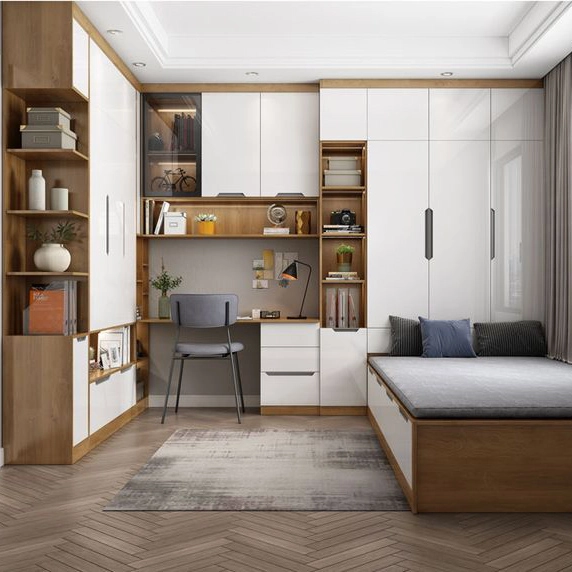
ENF Plywood Sourcing Guide for Low-Emission Cabinetry
For cabinet manufacturers, low-emission sourcing is not only an environmental consideration. A panel may be described as ENF, E0, eco-friendly, or made with a no-added-formaldehyde adhesive, yet those phrases do not prove the same thing. Once material enters cutting, drilling, edge-banding, finishing, and assembly, discovering that it does not match a project requirement can mean rework, delay, and margin loss. The practical question is simple: how do you verify that plywood for cabinetry is supported by finished-panel evidence, not only a supplier claim? Why an “ENF” Label Alone Is Not Enough for Cabinet Manufacturers An emission grade is meaningful only when it is connected to a defined standard, test method, sample and report. A quotation that simply says “ENF plywood” does not by itself show which panel construction was tested or whether the offered material matches that sample. The same principle applies to environmental language. “Eco-friendly” is a broad marketing term, while “no-added-formaldehyde adhesive” generally describes an adhesive formulation or manufacturing approach. Neither statement should replace testing of the finished panel. Where Low-Emission Plywood Sourcing Risk Appears in Cabinet Production Sourcing risk often appears before the panels reach production. A purchasing team may approve a purchase simply because “ENF grade” appears on the quotation, without actually reviewing the complete laboratory test report, creating a serious compliance risk. For custom projects such as kitchen cabinets, wardrobes, and whole-house cabinetry, the problem may not become apparent until a client acceptance check or quality inspection requires traceability evidence. By then, the material may already have entered production, resulting in substantial rework losses. The Business Cost of Choosing the Wrong Low-Emission Panel A failed verification can create a chain reaction: 1.Production pauses while the material is rechecked. 2.Processed components may need replacement. 3.Installation or handover moves. 4.After-sales and claim risk increases. Procurement advice: A lower panel price does not necessarily mean a lower sourcing cost. Low-priced panels without reliable compliance test reports may fail client or project audits, and the resulting rework, delays, and after-sales losses can far exceed the initial material savings. Why Low-Emission Cabinetry Can Still Fail the Buyer’s Verification Process Adhesive Chemistry Is Not the Same as Finished-Panel Emission Adhesive selection matters because bonding systems are part of engineered-wood manufacturing. However, an adhesive statement and a finished-board result answer different questions. “No added formaldehyde” describes what is intentionally introduced through a formulation. It should not automatically be interpreted as proof that a finished panel has zero measurable emissions. The finished board combines wood, adhesive, face materials, manufacturing conditions, and moisture conditions. The safer procurement approach is therefore to evaluate the adhesive concept and then verify the actual finished panel. Why E1, E0, ENF and “Eco-Friendly” Should Not Be Treated as Interchangeable Claims Different emission grades and environmental claims require different forms of verification. The E1 emission limit is ≤0.124 mg/m³, which represents the mandatory baseline for plywood. Finished cabinetry meeting only this level may still release considerable formaldehyde and other harmful gases that can affect human health. The E0 emission limit is ≤0.050 mg/m³, approximately 60% lower than E1, and E0 plywood can meet the requirements of some general furniture applications. The ENF emission limit is ≤0.025 mg/m³, a level approaching the natural background formaldehyde emission of wood itself. Panels meeting ENF requirements are suitable for furniture used in mother-and-baby rooms, hospitals, and other environments with stringent indoor-air-quality requirements, helping minimize the impact of harmful gases on human health. “Eco-friendly” claims should be supported by specific numerical test evidence, while “no-added-formaldehyde adhesive” still requires finished-panel emission testing. This distinction matters during supplier comparison. Two quotations may use similar environmental language while providing very different levels of technical verification What Cabinet Manufacturers Should Require When Sourcing ENF Plywood Require a Finished-Panel ENF Test, Not Only an Adhesive Claim Start with the finished panel. Ask for the test standard, report number, sample identity, measured emission value, verdict, and test date. A report showing an actual number is more useful than a “Pass” statement alone when comparing suppliers, preparing project submittals, or setting an incoming-quality benchmark. For projects involving large cabinet quantities, this check should take place before bulk cutting begins. It is easier to resolve a specification mismatch at sample approval than after hundreds of cabinet components have entered production. How QIANGYI PLYWOOD Targets the Emission Risk at the Adhesive Level A Glutinous Rice–Mineral Adhesive System Designed Without Aldehyde Chemistry At QIANGYI PLYWOOD, we approach low-emission cabinetry from the adhesive system first. Our glutinous rice glue plywood uses Lingmei glutinous rice adhesive made from glutinous rice flour, magnesium chloride, water, and magnesium oxide. Because this adhesive system does not involve aldehyde chemical reactions, it addresses one potential source of formaldehyde introduction at the bonding stage. For cabinet programs, our glutinous rice glue plywood is available in functional laminated configurations for different cabinet specifications. These configurations can be supplied in 1220 × 2440 mm and 1220 × 2800 mm sizes, with thicknesses from 5 to 25 mm, as well as eucalyptus core and melamine or PET-faced surface options. This allows cabinet manufacturers to consider emission performance together with the actual panel dimensions, core, finish, and processing requirements. Why the Adhesive Mechanism Matters More Than an “Eco” Label The purpose is not to create a stronger marketing phrase. It is to reduce reliance on a formaldehyde-containing adhesive route at the bonding stage and then build the finished panel through a controlled process. Our production process includes layer-by-layer gluing, 24-hour slow cold pressing, approximately 60 hours of drying to improve internal moisture uniformity, and an extended curing period of more than 15 days. These processing steps allow cabinet manufacturers to consider emission performance together with the panel’s actual dimensions, core, finish, and processing requirements. From Adhesive Design to Finished-Panel ENF Proof The proof must ultimately return to the finished board. In the report of SZF-WT-26063006-02, the tested QIANGYI PLYWOOD sample recorded formaldehyde emission of 0.013 mg/m³ against the ENF limit of 0.025 mg/m³ and received a Pass verdict. The measured result is approximately 48% below the ENF limit. For a cabinet manufacturer, this provides a numerical reference instead of relying only on terms such as “green” or “low formaldehyde.” How to Use ENF Test Evidence in a Real Cabinet-Plywood Purchasing Decision Before a bulk order, cabinet manufacturers can use a five-step verification process: 1.Confirm the cabinet application and required emission grade. 2.Match the proposed plywood construction to the tested sample. 3.Review the test standard and actual emission result. 4.Approve a representative sample when the project requires it. 5.Define how batch consistency will be checked before production or shipment. QIANGYI PLYWOOD conducts inspections for each batch before products leave the factory. This becomes more useful to a B2B buyer when batch checks are combined with clear product specifications and traceable test evidence. Consider an illustrative sourcing case. A kitchen cabinet factory receives two ENF quotations. Supplier A provides only a brochure claim. Supplier B provides an identifiable finished-panel report, an actual emission value, and a sample matching the intended 18 mm cabinet panel. Both quotations may say “ENF,” but the second gives the purchasing team a stronger basis for internal approval, project submission, and risk control. That is the real purpose of ENF plywood sourcing verification: reducing uncertainty before material value is multiplied through machining, finishing, assembly, installation, and after-sales service. FAQ Q: What formaldehyde emission level qualifies plywood as ENF? A: In the referenced test report, the ENF requirement is ≤0.025 mg/m³. Buyers should also check the measured result, test method, sample identity, and report scope rather than relying on the grade name alone. Q: Is ENF plywood the same as no-added-formaldehyde plywood? A: No. ENF refers to finished-panel formaldehyde emission under the applicable testing standard. No-added-formaldehyde usually describes an adhesive formulation or manufacturing approach. Plywood buyers should verify both separately. Q: How can cabinet manufacturers verify an ENF plywood supplier? A: Review the test standard, laboratory, report number, sample identification, panel thickness, test date, measured value, and verdict. Then confirm that the plywood being offered matches the tested construction. Q: ENF vs E0 plywood for cabinets: what should buyers check? A: Under the referenced grading limits, ENF has a lower formaldehyde-emission threshold than E0. The final sourcing decision should still follow the project specification, applicable test method, actual measured result, and intended cabinet application. Q: What should I request before placing a bulk ENF plywood order for cabinetry? A: Request the complete product specification, finished-panel formaldehyde test report, representative sample, actual emission value, and confirmation that the ordered configuration corresponds to the tested material. For larger cabinet programs, also agree on batch-quality checks before production or shipment. Request a Report, Sample or Quote If you are evaluating low-emission plywood for kitchen cabinets, wardrobes or whole-home cabinetry, request the complete test report and a representative sample before bulk cutting. Share with us your required thickness, core material, face finish, dimensions and target market so the proposed panel can be checked against your project requirements.
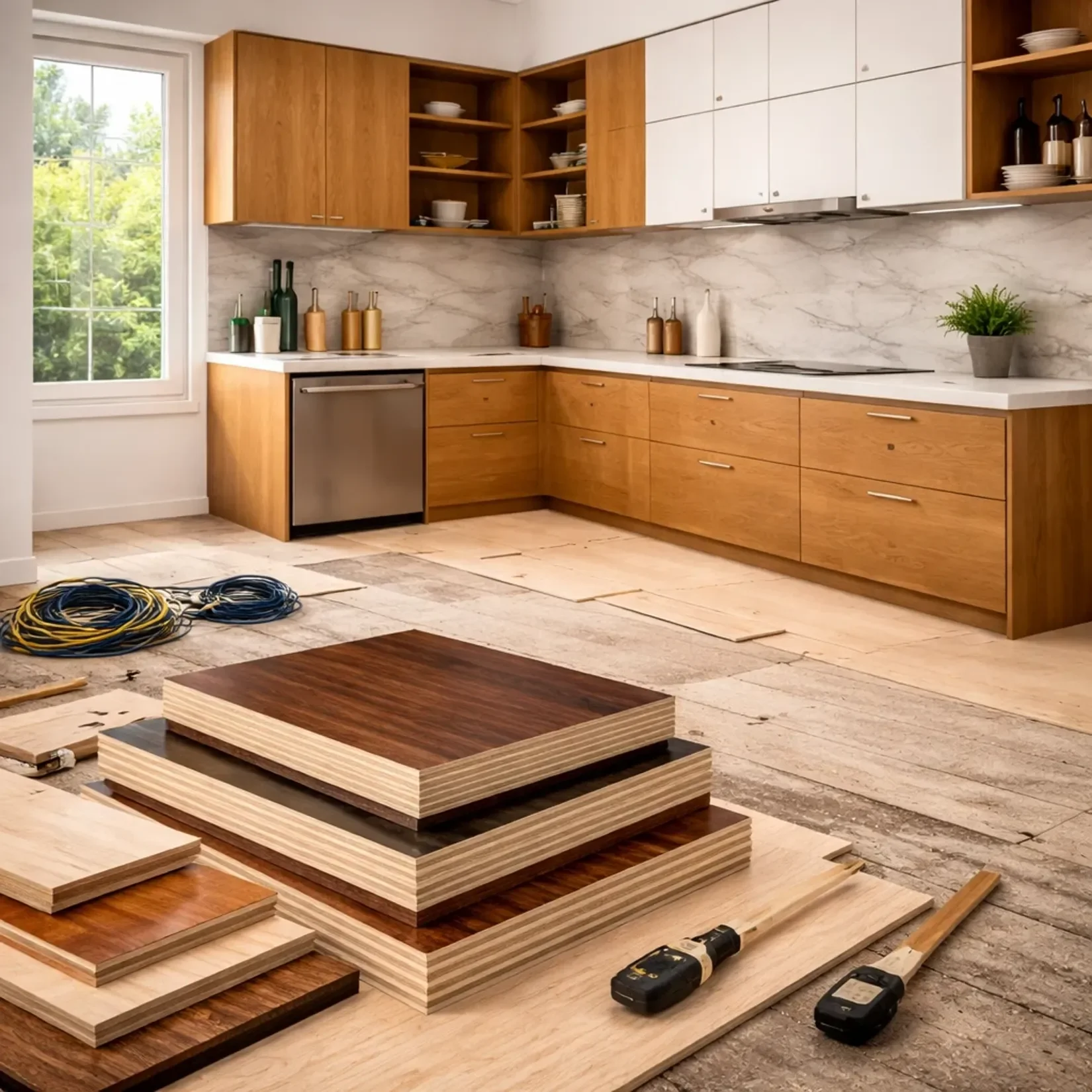
The “Terminator” of Cabinet Door Warping: A Deep Dive into the Anti-Warp Technology Behind Glutinous Rice Plywood
In the high-end custom furniture industry, 2.4-meter and even 2.8-meter single-piece, full-height cabinet doors have become mainstream. Yet cabinet door warping remains a persistent industry pain point. Starting from first principles, this article examines the root causes of cabinet door deformation and explains how QIANGYI PLYWOOD Glutinous Rice Plywood addresses the problem through advances in manufacturing processes. Why Are Tall Cabinet Doors Prone to Warping? Three “Structural Traps” Explained At its core, cabinet door warping is caused by an imbalance of forces within the panel. In large-format doors, even slight physical changes can be magnified many times over. The “Hidden Release” of Internal Stress If the arrangement of core layers, bonding quality, or density distribution inside a wood-based panel is uneven, internal stress can accumulate. Like a compressed spring, once a change in moisture content disrupts the balance, the stress is released unevenly. For wardrobe doors more than two meters tall, this “conflict of internal forces” caused by structural imbalance is a fundamental internal cause of twisting and bowing. Uneven Moisture Intrusion from the Environment Wood fibers naturally absorb moisture and swell. Warping often begins with localized moisture exposure: water enters through poorly sealed edges, handle holes, or panel surfaces, causing the two faces of the panel to expand at different rates. Conventional particleboard has a relatively loose internal structure and more pathways for moisture ingress. In coastal or seasonally humid environments, this out-of-sync dimensional movement between the front and back faces can readily lead to cupping. The Combined Effects of Physical Loads and Installation Stress Beyond the natural behavior of wood, a 2.8-meter-tall cabinet door also faces physical challenges. The panel’s own weight, hinge spacing and layout, and improper stacking during transportation all impose sustained external stress on the panel. If the panel lacks sufficient rigidity, temporary physical bending can develop into irreversible permanent deformation. QIANGYI PLYWOOD Glutinous Rice Plywood: Three Core Technologies That Tackle Cabinet Door Warping at Its Source Neutralizing Internal Stress Through a “Slow Process” Unlike the rapid production turnaround of ordinary panels, QIANGYI PLYWOOD Glutinous Rice Plywood emphasizes structural balance. We use a continuous-core arrangement and a rigorous conditioning process: about 24 hours of slow cold pressing, 60 hours of balanced drying, and more than 15 days of finished-panel conditioning. This allows the panel to “resolve” its internal stresses naturally before leaving the factory, greatly reducing the likelihood of deformation in end-use environments and providing the stability required for extra-tall cabinet doors up to 2.8 meters. Glutinous Rice Glue Penetration Helps Control Moisture-Related Swelling The plant-derived long-chain molecules in glutinous rice adhesive form a more resilient, flexible bond with wood fibers than conventional chemical adhesives. This resilience is key to absorbing internal stress rather than simply resisting it. After curing, the adhesive forms a dense protective network that limits moisture movement into and out of the fibers, thereby reducing the risk of water absorption, swelling, cracking, and humidity-induced deformation. The panel achieves Class II water resistance and a 24-hour thickness-swelling rate of about 2.4%. This means that it can maintain a high degree of dimensional stability even in humid spaces such as kitchens and bathrooms. Higher Panel Rigidity Helps Resist Bending in Tall Cabinet Doors After curing, the glutinous rice adhesive forms a highly rigid bonding structure. Combined with QIANGYI PLYWOOD’s proprietary anti-warp production process and multilayer core construction, it significantly improves the panel’s resistance to bending and deformation, especially in tall and wide cabinet doors. Cabinet-door challenge Performance to evaluate Practical value Tall or wide door Bending strength and elastic modulus Reduces deflection risk Humid room Water resistance and swelling rate Limits moisture movement Frequent opening Core integrity and screw holding Supports hinge stability Large flat front Flatness and balanced construction Helps maintain even gaps Authoritative Test Data: Proven Performance Under Laboratory Testing Delamination and Moisture Tests: Why Bond Integrity Matters A weak glue line can allow veneers to separate under moisture exposure, changing local thickness and reducing stiffness. Glutinous rice glue plywood doesn’t just have verbal promises; it’s backed by solid testing data. According to report SZF-WT-25082006-02, the immersion-delamination test achieved a 100% pass rate among valid specimens. This means that even under extreme fluctuations in temperature and humidity, the panel’s layers remain tightly bonded, avoiding uneven stress caused by localized delamination. Static Bending Strength and Modulus of Elasticity: What the Numbers Mean Static bending strength indicates resistance to bending stress, while modulus of elasticity indicates stiffness and resistance to deflection. For report SZF-WT-25082006-02, the relevant requirements are: 1.Parallel static bending strength: ≥22.0 MPa. 2.Perpendicular static bending strength: ≥20.0 MPa. 3.Parallel modulus of elasticity: ≥5,000 MPa. 4.Perpendicular modulus of elasticity: ≥4,000 MPa. The tested material met these requirements, confirming its good stiffness and bending resistance. This means that even when a cabinet door reaches 2.8 meters in height, the panel’s own rigidity can effectively resist sagging caused by its own weight without a door straightener. How B2B Buyers Should Specify Plywood for Cabinet Doors Match the Board to Door Height, Humidity, Thickness, and Application A bedside cabinet, a 2.4-meter wardrobe door, and a bathroom vanity do not need identical specifications. For dry interiors, flatness and machining quality may dominate. In kitchens, moisture resistance and edge sealing become more important. Tall doors require closer attention to stiffness, balanced construction, hinge layout, and panel weight. We offer glutinous rice glue functional plywood in sizes including 1220 × 2440 mm and 1220 × 2800 mm, with thickness options from 5 to 25 mm, eucalyptus and other core options, plus melamine or PET-faced finishes for different furniture requirements. Check Core Quality, Moisture Resistance, Test Reports, and Manufacturing Consistency Before a bulk order, B2B buyers should check more than face color and sheet price: 1.Core construction: verify a closely fitted, continuous core with minimal gaps. 2.Moisture control: confirm board moisture range and production control. 3.Mechanical performance: review bending, elasticity, bonding, and screw-holding data. 4.Water resistance: distinguish humid-use resistance from permanent waterproof use. 5.Tolerances: confirm thickness and size control for CNC machining and edge banding. 6.Customization: match core, thickness, finish, color, and surface to the furniture system. For importers and cabinet factories, batch consistency matters as much as sample performance. We support OEM requirements for different core materials, veneers, thicknesses, colors, and specifications, backed by production, testing, and quality-control capabilities. Brand Commitment: Confidence Behind Every Choice QIANGYI PLYWOOD’s second-generation multilayer plywood—Glutinous Rice Plywood—is more than a material upgrade; it represents a deep integration of anti-warp manufacturing processes. We are committed to helping furniture manufacturers worldwide reduce after-sales costs, so every finished piece can stand the test of time and humidity. FAQ Q: Why is glutinous rice plywood more suitable than ordinary particleboard for tall cabinet doors? A: Tall cabinet doors require a high degree of structural symmetry and rigidity. Glutinous Rice Plywood uses cross-laminated continuous core layers to counteract wood’s directional stresses, while the penetrating action of the glutinous rice adhesive provides a better moisture barrier. These structural advantages make it fundamentally better suited to tall cabinet doors than particleboard with a particulate core. Q: Since glutinous rice adhesive contains bio-based ingredients, can it develop mold or attract insects in humid environments? A: No. QIANGYI PLYWOOD’s glutinous rice adhesive undergoes high-temperature modification to remove sugars and other nutrients. After curing, it creates an alkaline environment that naturally inhibits microbial growth and insect infestation while retaining its environmentally friendly, formaldehyde-free properties. Q: Do cabinet doors still need straighteners when made with QIANGYI PLYWOOD Glutinous Rice Plywood? A: Although QIANGYI PLYWOOD panels significantly improve resistance to deformation, we still recommend a well-designed hardware layout for cabinet doors over 2.4 meters tall. The combination of a high-quality panel and sound engineering is the ultimate solution to cabinet door warping.
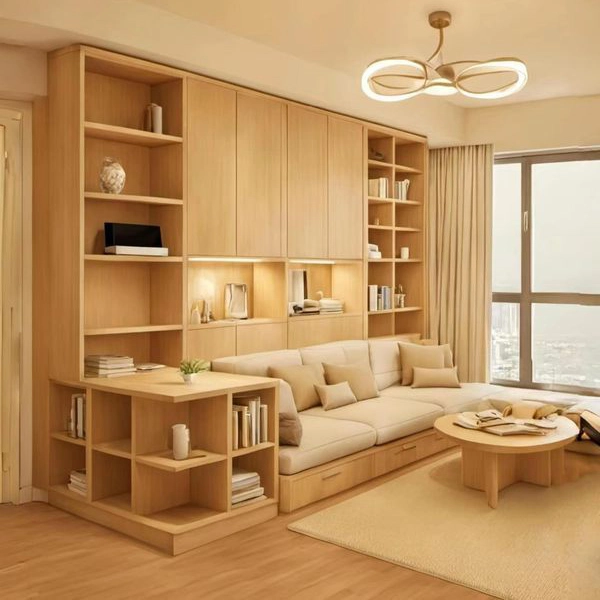
Eco-Friendly Multi-Layer Plywood: A Buyer’s Guide to Healthier, Longer-Lasting Interiors
Choosing an eco-friendly panel is no longer only about finding a low-emission label. Buyers must also consider cutting, edge banding, hardware installation, moisture exposure, and long-term use. A panel that looks reliable in a sample room may still swell under a sink, loosen around hinges, or deform in a humid hotel. Eco-Friendly Multi-Layer Plywood should be evaluated as a complete system: veneer structure, adhesive, moisture control, finish, test evidence, and application suitability. This guide covers homes, custom furniture, hospitality projects, and commercial interiors. What Makes Multi-Layer Plywood Truly Eco-Friendly? Cross-Laminated Construction and Material Efficiency Multi-layer plywood is built from veneers arranged with alternating grain directions. This cross-laminated structure distributes stress and limits movement in one direction, improving dimensional stability. Ply count alone does not determine quality. Buyers should inspect veneer continuity, internal gaps, core grade, moisture content, tolerance, and bonding consistency. Good construction reduces cutting waste, improves CNC accuracy, produces cleaner edges, and limits premature replacement. Adhesives, Formaldehyde Emissions, and Indoor Air Quality Adhesive is critical in engineered wood. Buyers should distinguish between an adhesive formulation and the measured emissions of the finished board. “No added formaldehyde” describes what is not intentionally introduced through the glue. It generally should not be equated with “zero formaldehyde” or “completely formaldehyde-free,” because natural wood and other components may affect results. For wardrobes, wall panels, children’s furniture, and hotel fit-outs, request a finished-panel test report identifying the sample construction, batch, conditioning and test conditions, test method, emission value, laboratory name, report number, and date, and confirm that the report applies to the final quoted product. Certifications and Test Reports Buyers Should Verify A certificate should answer a specific purchasing question. Management-system certificates do not replace performance reports, while sourcing certificates do not prove water or fire resistance. Supplier claim Evidence to request Low-emission plywood Finished-panel emission report Moisture-resistant plywood Water absorption rate, thickness swelling rate after water absorption, or an applicable water-resistance test Flame-retardant panel Fire performance report stating the test standard, specimen thickness, and classification Termite- or mold-resistant board Dedicated resistance test Confirm that the tested construction matches the quoted panel. Changes in core, adhesive, thickness, surface layer, or process may affect performance. Why Eco-Friendly Multi-Layer Plywood Solves More Than an Emission Problem Healthier Indoor Spaces for Children and Older Adults Bedrooms and storage areas are long-occupancy spaces. In homes with children or older adults, materials should reduce avoidable pollutants while supporting cleaning and moisture control. A practical specification combines a verified low-emission substrate with compatible finishes, sealed edges, suitable installation adhesives, and ventilation. Final indoor air quality also depends on the finishes, edge sealing, installation materials, total installed surface area, ventilation, and other interior materials; it cannot be guaranteed by any single panel. Families living with multiple generations should pick low-emission plywood. Use it for tall closets, study desks, bed frames, and fixed storage. Moisture, Mold, and Termite Risks in Demanding Environments Moisture exposure also occurs around sink cabinets, plumbing cutouts, exterior-facing walls, enclosed walk-in closets, coastal hotels, and tropical commercial projects. A Class II water-resistant panel can suit humid indoor conditions and limited water exposure, but it is not a permanent-immersion material. A sound solution includes: 1.Selecting a panel tested for the expected exposure. 2.Sealing cut edges, drilled holes, and plumbing openings. 3.Repairing leaks before they reach the substrate. 4.Providing ventilation where condensation is likely. Where termites are a regional risk, ask for a dedicated termite-resistance report and verify the tested product, validity period, applicable region, and actual panel construction rather than accepting a general “durable plywood” claim. Structural Stability, Screw Holding, and Lifecycle Value Cabinet failures often start small: a hinge screw loosens, a shelf bends, or a tall door changes shape. Core continuity, bonding strength, density, and moisture balance influence these outcomes. The lowest panel price may not deliver the lowest project cost. Compare it with machining waste, rejected parts, adjustments, maintenance, downtime, and replacement. In a hotel, replacing a vanity or wardrobe may also remove a room from service. Where Does Eco-Friendly Multi-Layer Plywood Perform Best? Family Homes with Children or Elderly Residents Consider a home shared by grandparents, parents, and young children. The children’s room needs low-emission wardrobes and desks; the older adults’ bedroom needs stable, cleanable storage; the kitchen requires stronger moisture protection. At QIANGYI PLYWOOD, we can match panel configurations to the emission, moisture, cleaning, and load-bearing risks in different areas rather than treating the entire home as one specification. Our glutinous rice glue functional plywood uses an adhesive system made from glutinous rice starch, magnesium chloride, magnesium oxide, and water. Available reports cover formaldehyde emissions, benzene-series compounds, Class II waterproofing, mold and termite resistance, flame retardancy, deformation, and cracking. Kitchens, Bathrooms, and Custom Furniture Kitchen and bathroom components should be specified by risk. Sink bases need moisture-resistant cores, sealed plumbing cutouts, and reliable edge banding. Wall cabinets need dependable screw holding, while tall wardrobe doors require flatness and deformation resistance. For custom production, core options include eucalyptus, fir, rubberwood, pine, and poplar, depending on the product. Relevant plywood lines offer 5–25 mm thicknesses and 5-, 9-, or 11-ply structures. Melamine or PET surfaces may be supplied on one or both sides in matte, glossy, textured, embossed, wood-grain, marble-pattern, or solid-color finishes. Hotels, Retail Stores, and Commercial Interiors Hotel wardrobes, vanities, retail displays, counters, wall systems, and office storage must remain presentable under frequent cleaning and hardware movement. A hotel can use a moisture-resistant specification for vanities, stable decorative plywood for guest-room wardrobes, and a different panel for dry storage. This zoning approach controls cost without under-specifying high-risk areas. Batch consistency, surface matching, packaging, replenishment capability, and destination-market documents should be agreed before production. How to Compare and Specify Eco-Friendly Multi-Layer Plywood A Practical Specification Checklist for B2B Buyers Before requesting a quotation, define: 1.Application and moisture exposure. 2.Size, thickness, tolerance, core, and ply count. 3.Adhesive type and required emission grade. 4.Surface finish and one- or two-sided lamination. 5.Fire, mold, termite, or water-resistance requirements. 6.CNC, drilling, edge-banding, and hardware tests. 7.Destination-market certificates. 8.Sample approval, batch control, packaging, and lead time. Relevant QIANGYI PLYWOOD products include 1220 × 2440 mm and longer 1220 × 2745 mm or 1220 × 2800 mm formats. Customized dimensions may be discussed. Test samples with the project’s planned machining and hardware. Why Work with QIANGYI PLYWOOD for Custom and Commercial Projects? We have manufactured wood panels since 2004 and operate four production bases. Our range includes plywood, blockboard, particleboard, MDF, decorative panels, construction panels, edge banding, and glutinous rice glue functional plywood. We support OEM requirements for core material, veneer, color, size, thickness, grade, and surface treatment. Our functional plywood has reported performance including Class II waterproofing, B1 flame retardancy, and a formaldehyde test value of 0.025 mg/m³ under the stated test conditions. Buyers should request the applicable report for the exact construction ordered. For a useful recommendation, send us the destination market, application, dimensions, finish, processing method, required tests, and quantity. We can then help define a sample and specification instead of offering a one-size-fits-all board. FAQ Q: What is eco-friendly multi-layer plywood? A: It is a cross-laminated wood panel designed to combine material efficiency, dimensional stability, and controlled emissions. Shoppers must check the glue type and the final board gas test. They should also inspect the inner wood quality and any special project tests. Q: Is eco-friendly multi-layer plywood completely formaldehyde-free? A: Not necessarily. “No added formaldehyde” usually refers to the adhesive formulation. The finished panel should still be evaluated through a recognized emission test with a clearly identified sample and method. Q: Is eco-friendly multi-layer plywood suitable for children’s rooms and elderly homes? A: It can be suitable when verified low emissions are combined with sealed edges, compatible finishes, moisture control, and ventilation. Wardrobes, desks, wall panels, and storage should be specified according to exposure and cleaning needs. Q: Can eco-friendly multi-layer plywood be used for kitchen cabinets and bathroom vanities? A: Yes, when the selected panel has suitable moisture resistance and the finished component includes sealed edges, protected cutouts, and correct installation. Moisture-resistant plywood is not automatically suitable for permanent immersion. Sink bases and plumbing areas require stricter detailing. Q: How should B2B buyers choose an eco-friendly multi-layer plywood supplier? A: Compare test reports, adhesive type, core construction, thickness tolerance, surface options, machining performance, certifications, batch consistency, customization, packaging, and delivery capability. Approve a sample that represents the final order construction before bulk production.
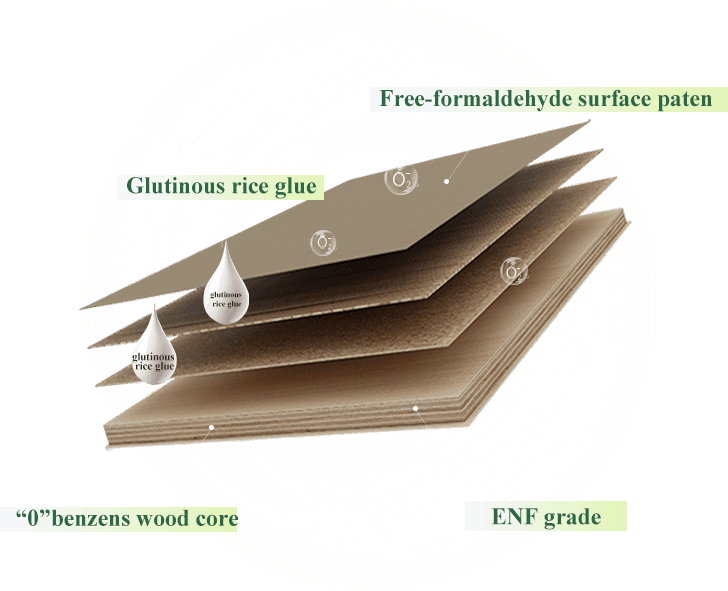
CERTIFICAZIONE
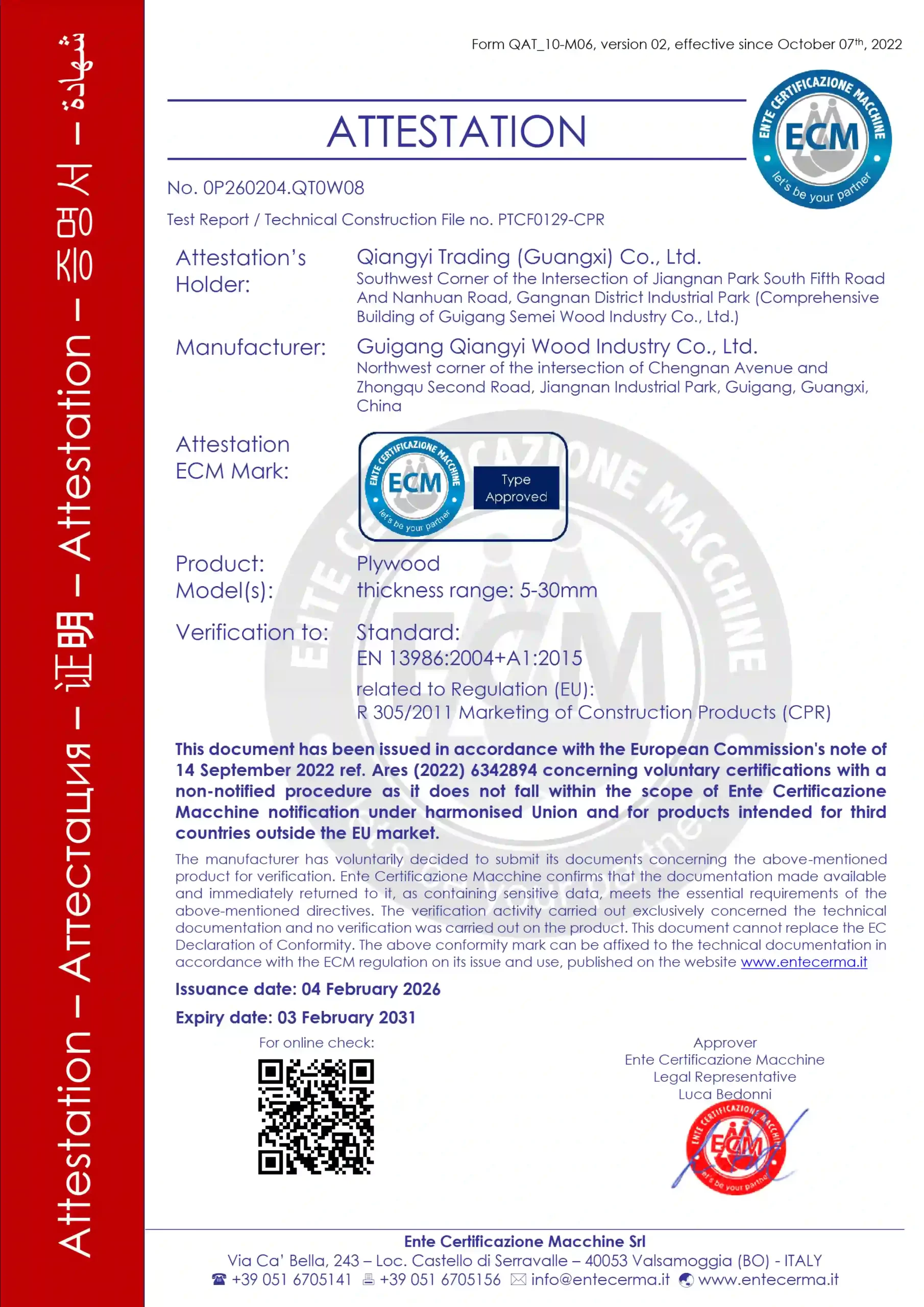
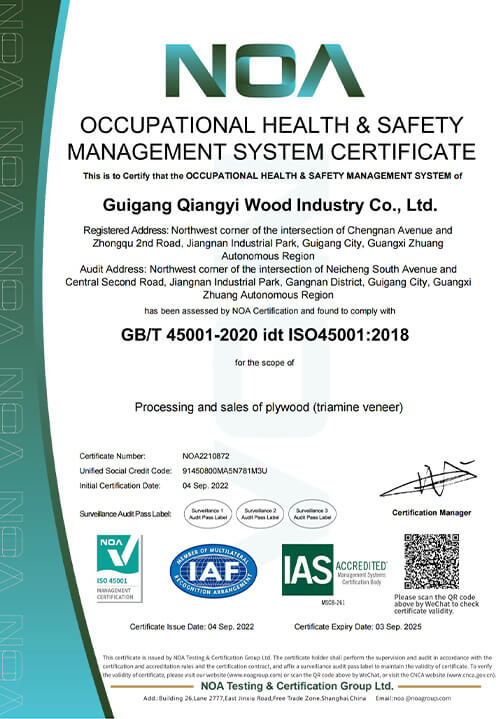
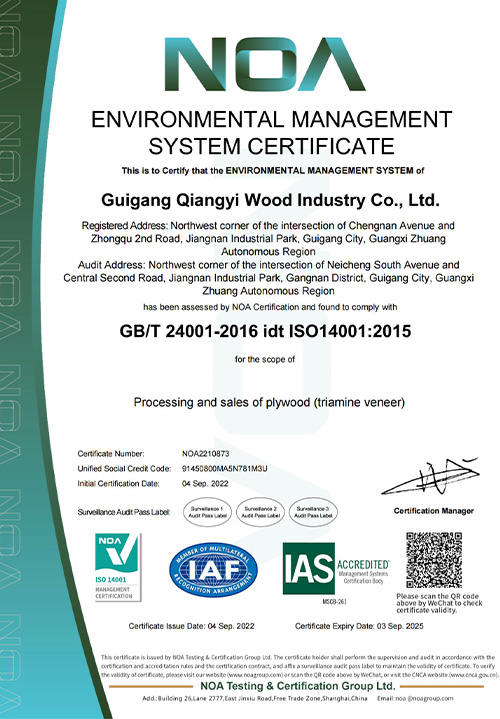
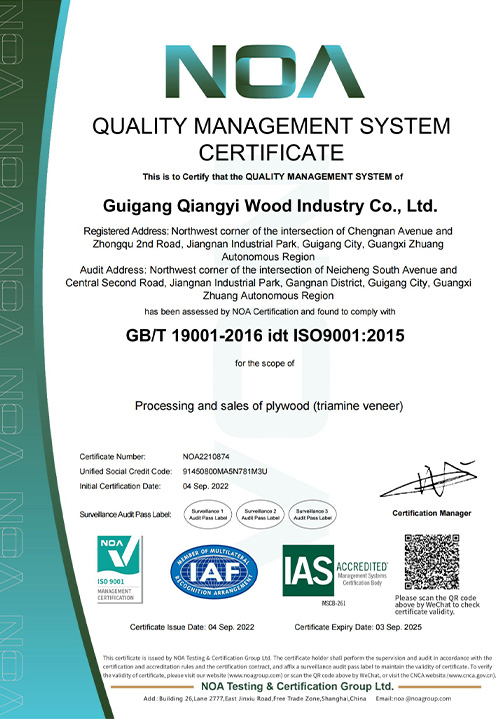
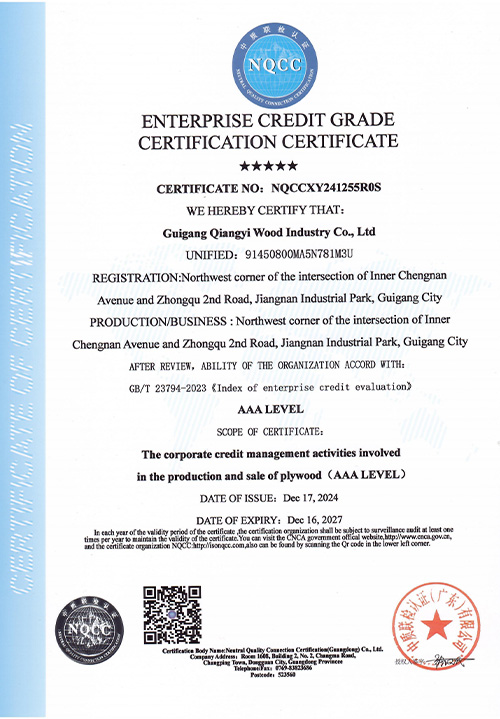
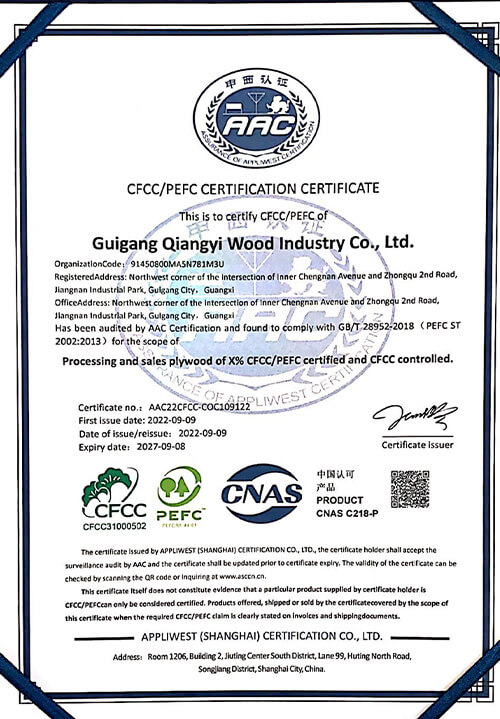
Please fill out the form below and we will get back to you as soon as possible.