
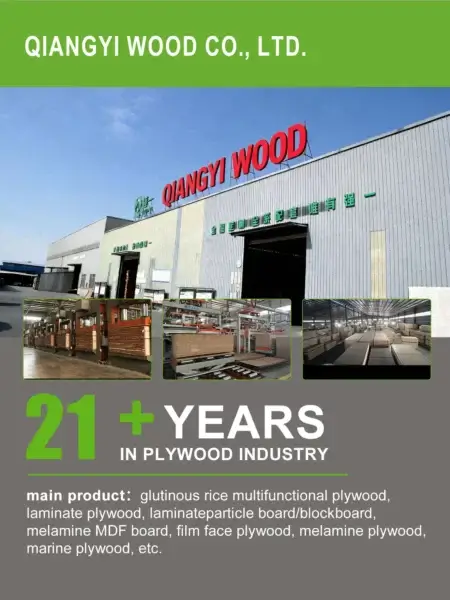

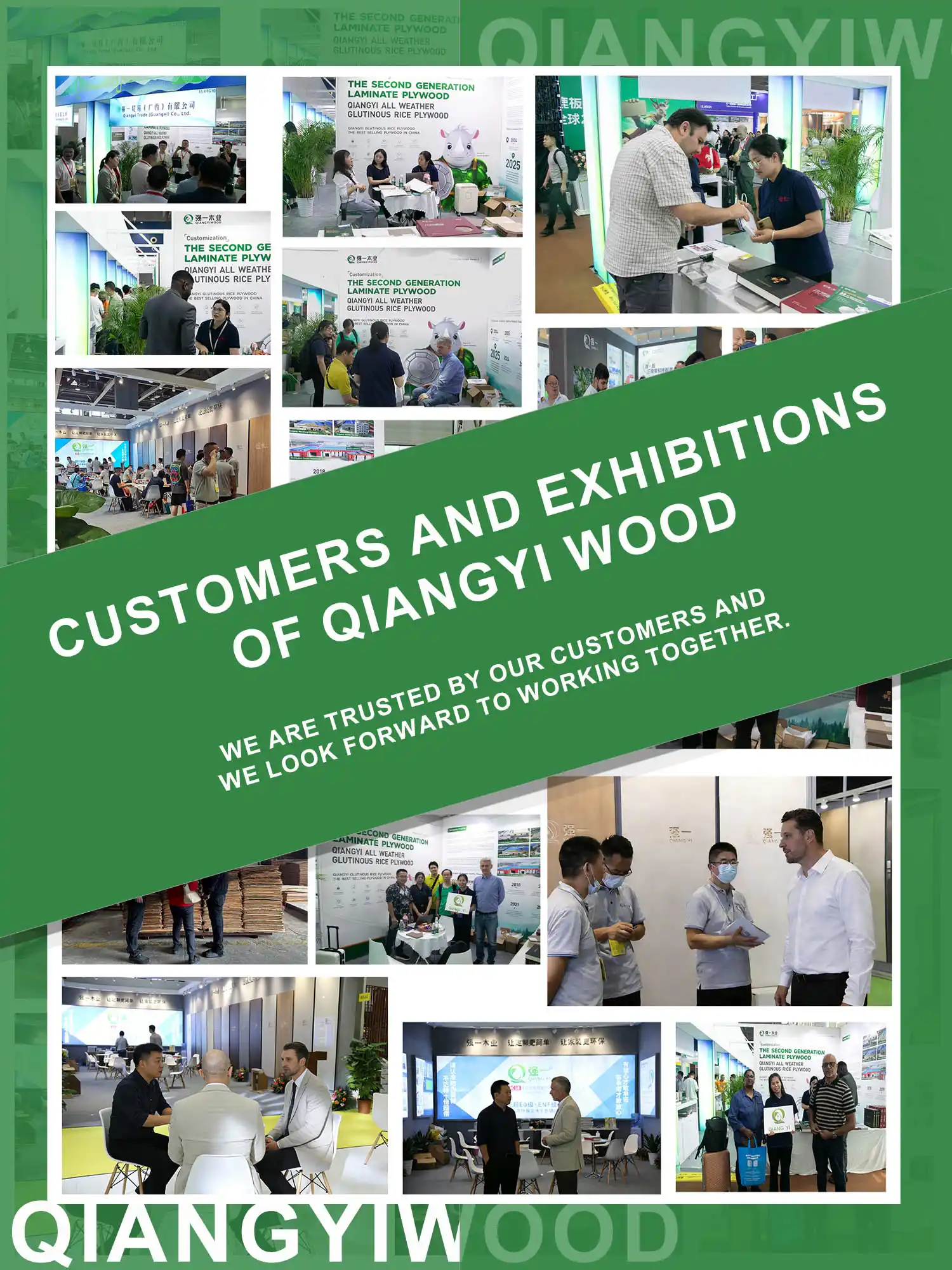
Produsen kayu lapis berpengalaman selama 21 tahun, layanan OEM, solusi pengadaan kayu lapis satu atap, memberikan Anda harga dan layanan terbaik.
rumah
Main products: Marine plywood, Melamine plywood, Melamine blockboard, Melamine Chipboard, Melamine MDF board, Film face plywood, Edge banding, Furniture accessories
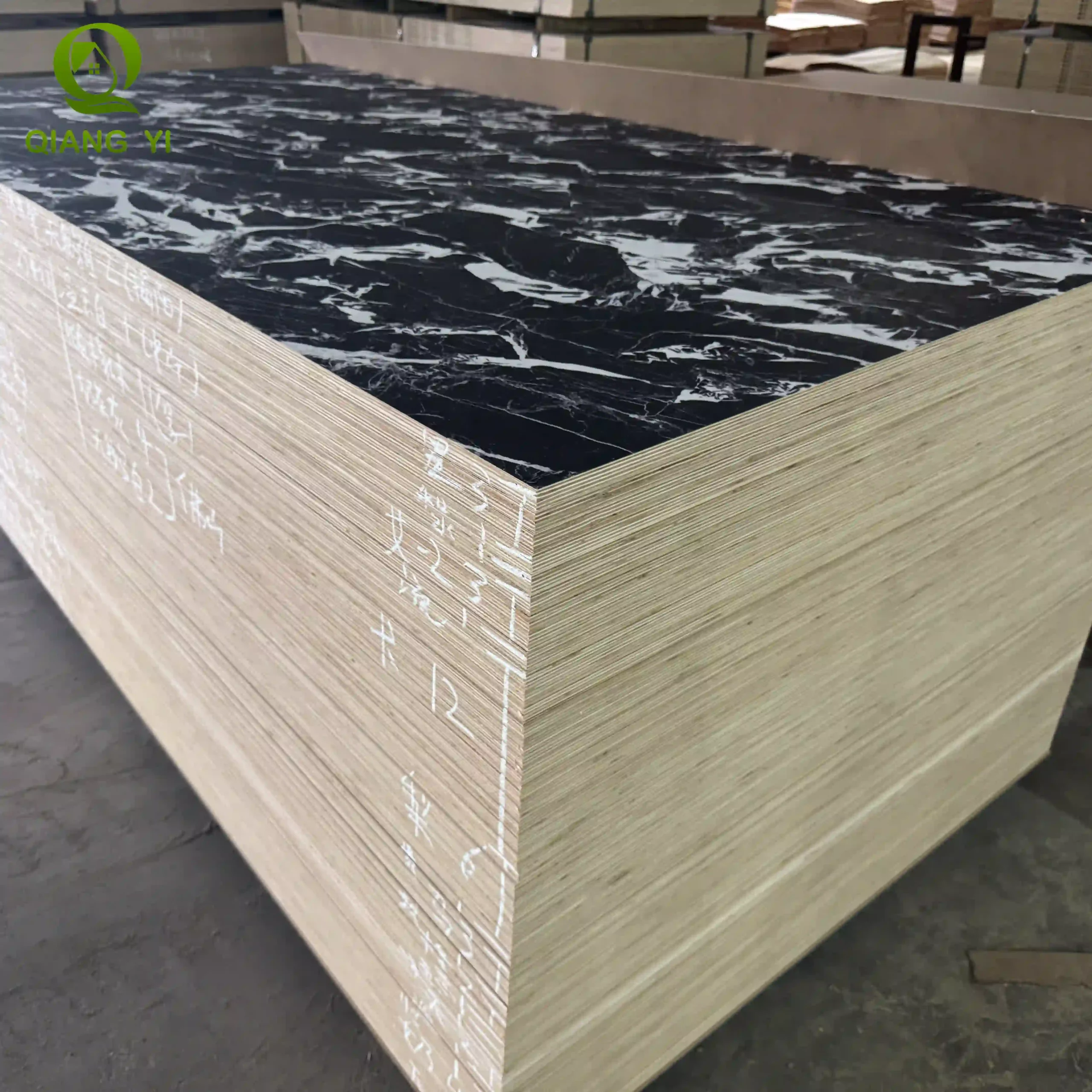
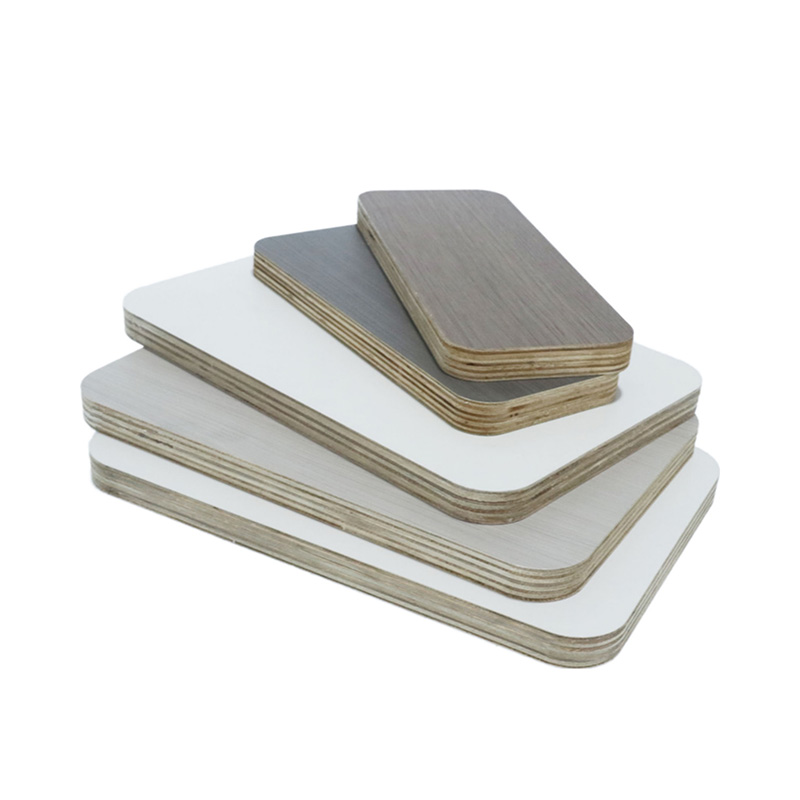
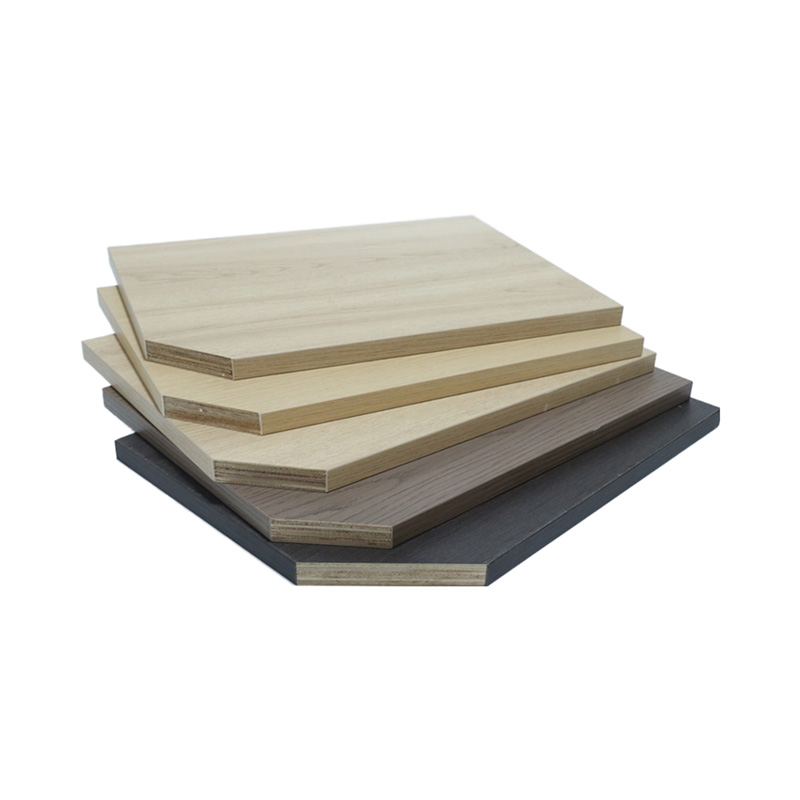
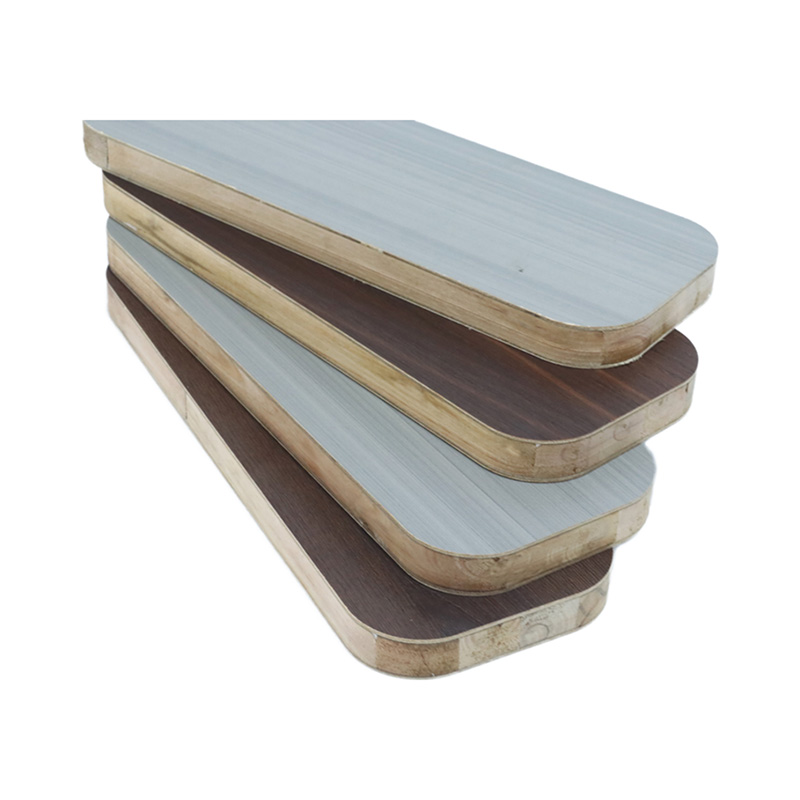
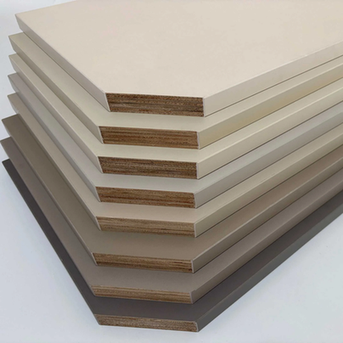
Semua warna Plywood Melamin Tahan Air
Ukuran: 5-25mm (4*8 kaki)Fitur: Tahan Api, Anti Korosi, Ramah Lingkungan, Tahan Air
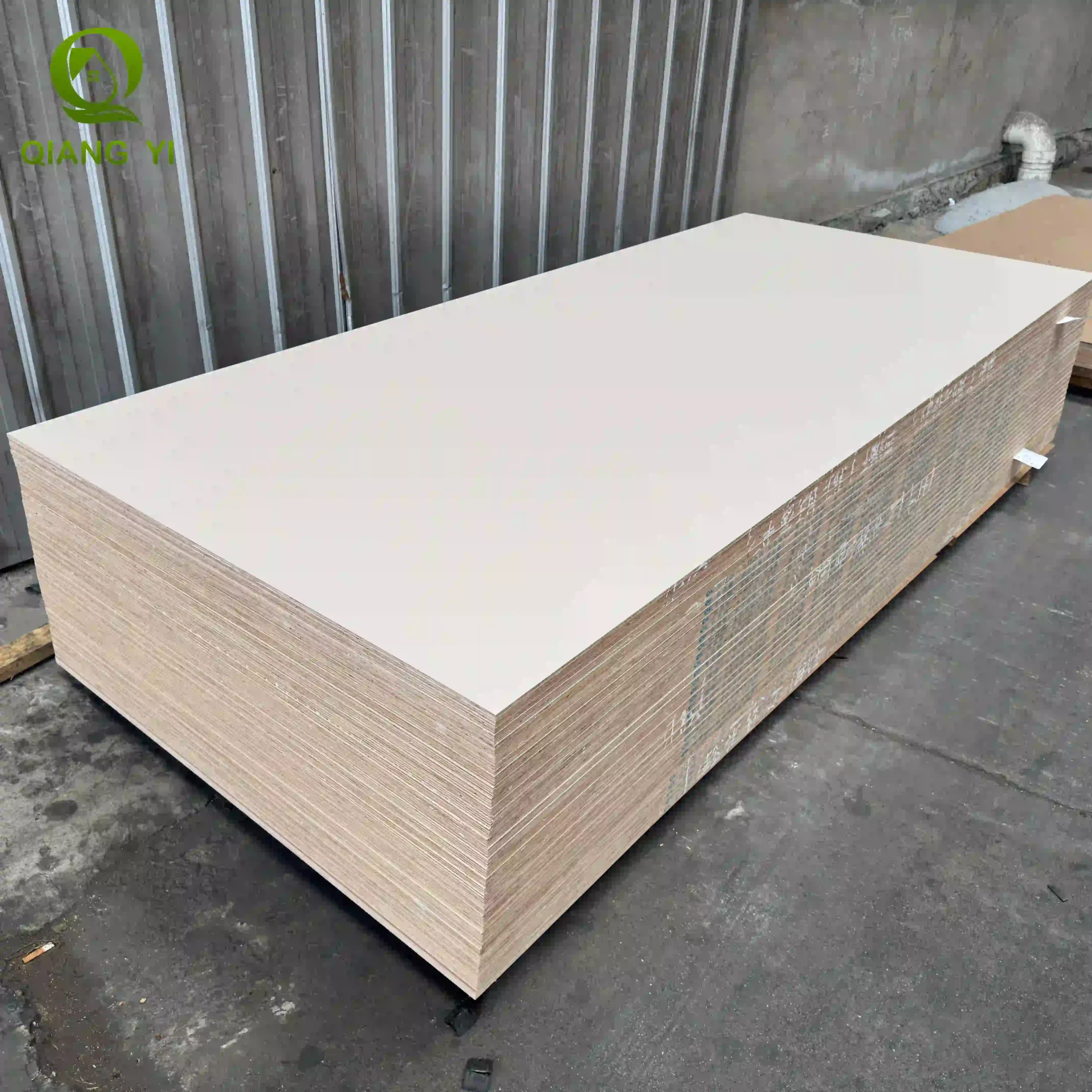
Kayu Lapis Laut Beras Ketan 18mm
Ukuran: 5-25mm (4 * 8 kaki & 4 * 9 kaki)Fitur: tahan rayap, tahan air, tahan api, anti deformasi, tahan jamur, emisi formaldehida rendah, tahan korosi, tahan bahan kimia, dan tahan noda.
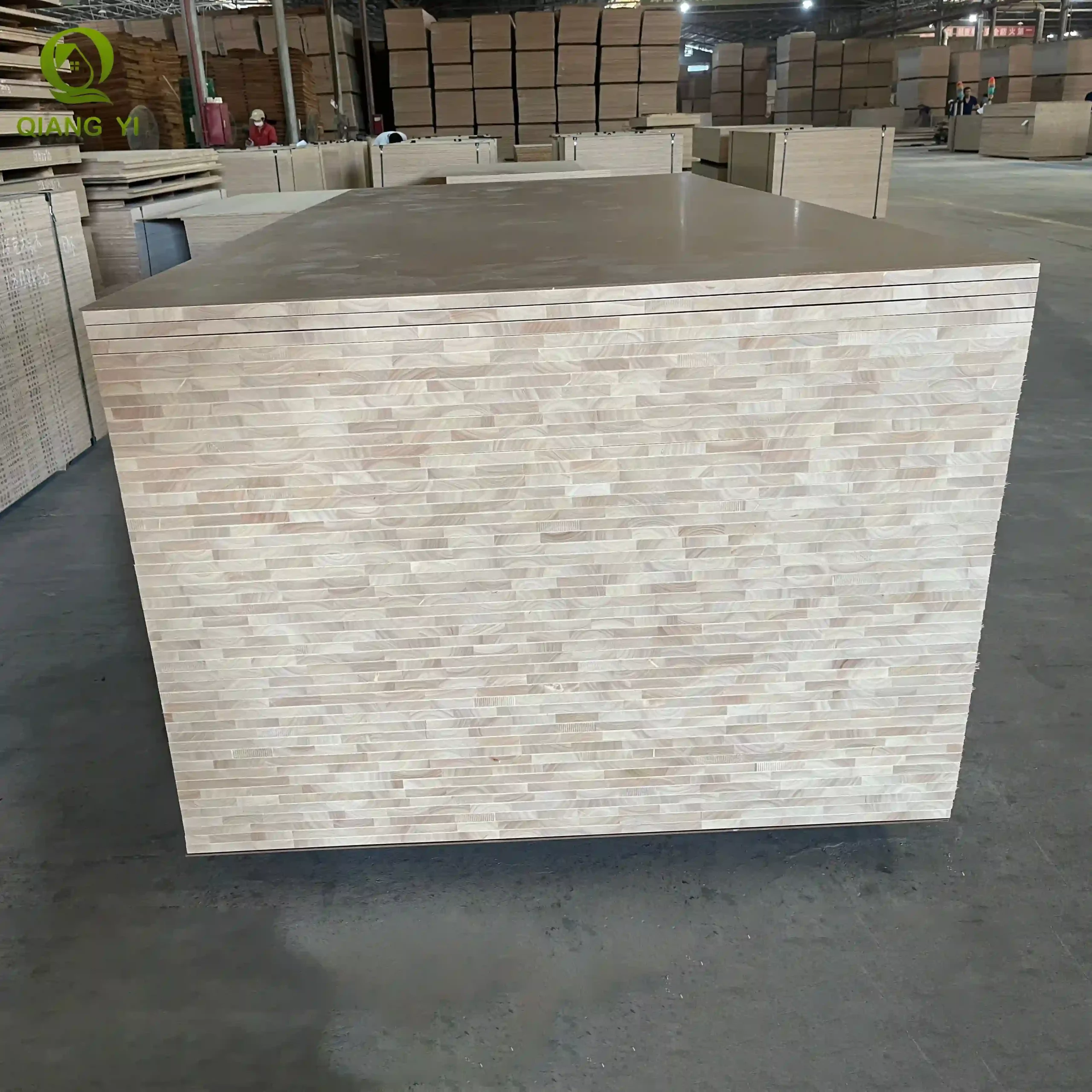
Inti kayu putih/cemara/ek, papan blok melamin
Ukuran: 18mm (4 * 8 kaki & 4 * 9 kaki)Fitur: Kadar formaldehida rendah, tahan terhadap tekukan dan retak, stabilitas kekuatan tinggi, kapasitas menahan beban yang kuat.
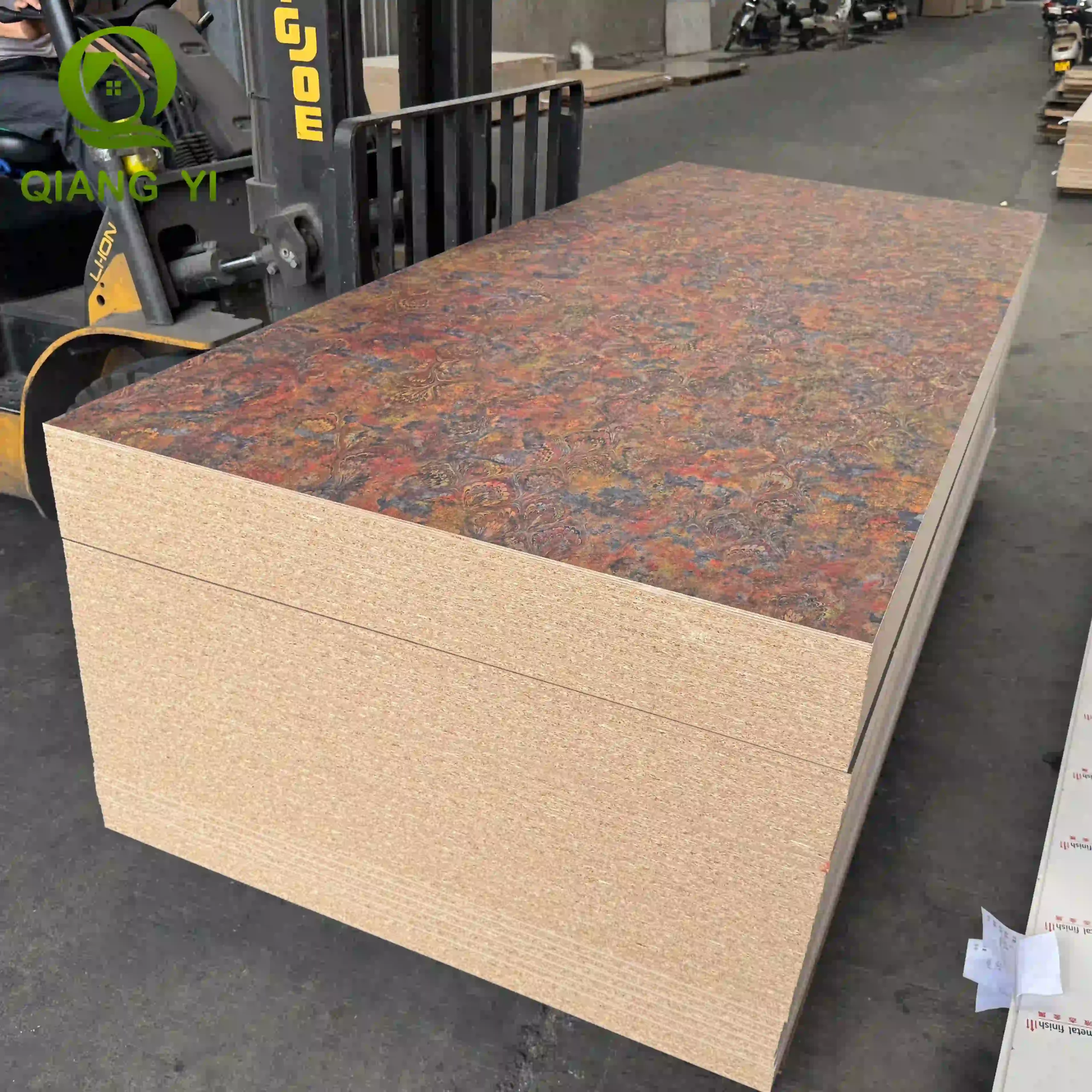
Papan Partikel Melamin Berkualitas Tinggi
Ukuran: 18mm (4 * 8 kaki & 4 * 9 kaki)Fitur: Ramah lingkungan, tahan abrasi, tahan suhu tinggi, beragam pola dan warna
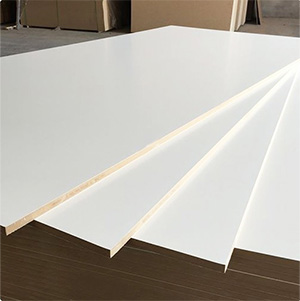
Papan MDF Melamin kelas E0/E1
Ukuran: 9-30mm (4 * 8/9/10 kaki)Fitur: Tahan suhu tinggi, tahan korosi, mudah diproses, permukaan halus, dengan pemrosesan yang relatif sederhana, dan efek dekoratif menghadirkan tampilan yang lebih indah dan sesuai.
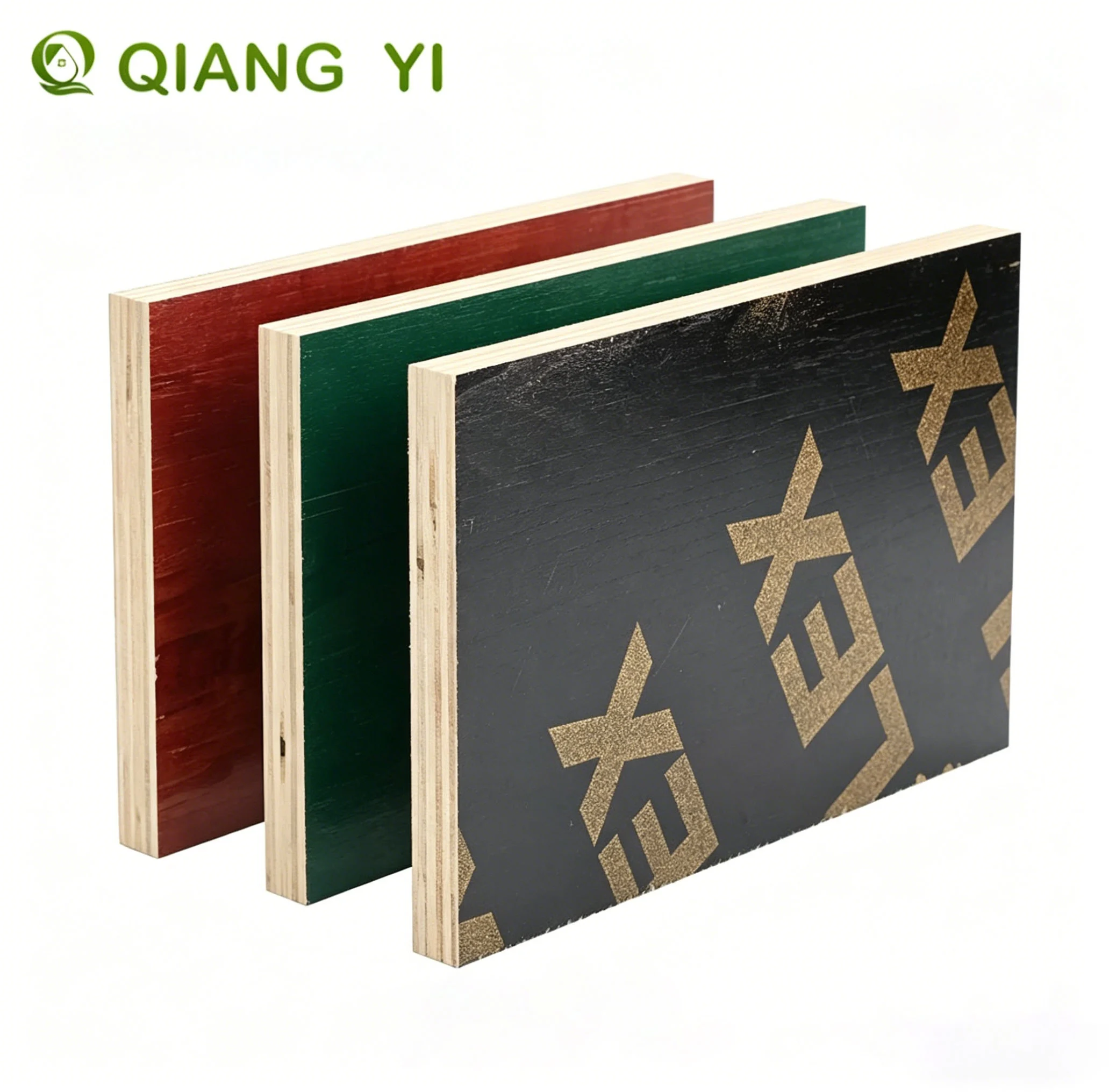
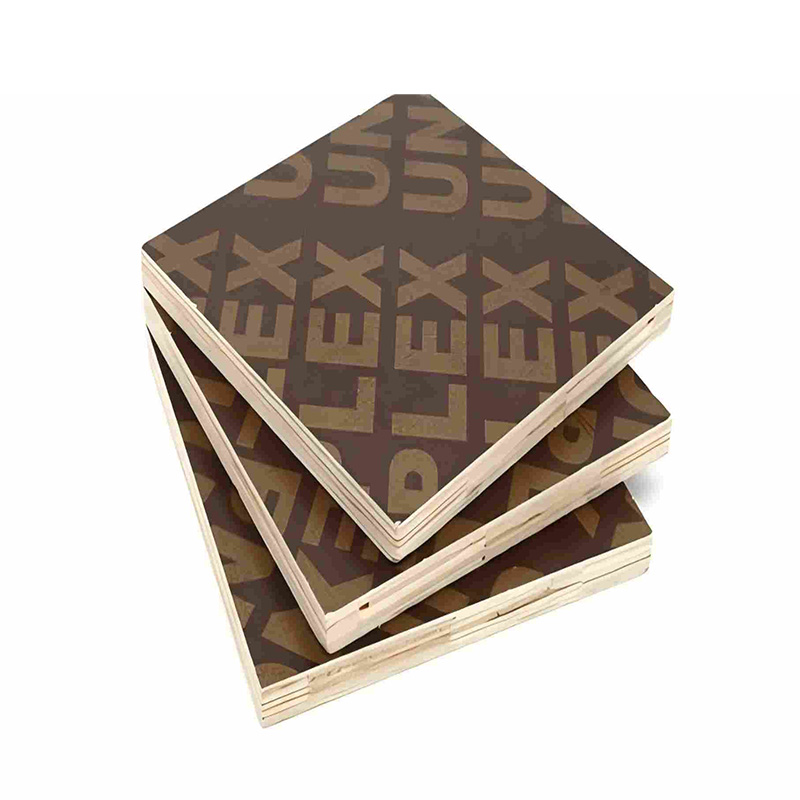
Kayu lapis berpermukaan film merah/hijau/hitam/coklat
Ukuran: 10-21mm (3*6ft & 4 * 8ft)Fitur: Tahan aus, tahan air, daya tampung beban kuat, tidak mudah berubah bentuk, halus dan rata, mudah dilepas dari cetakan, anti selip, masa pakai lama
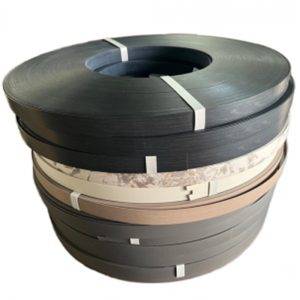
Pita Pinggir PVC Berbagai Ukuran dan Ketebalan
Bahan PVC, tahan air, pilihan desain semua warna, semua ukuran dan ketebalan untuk berbagai aplikasi, permukaan sempurna.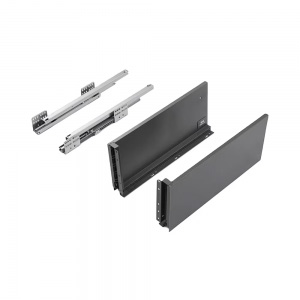
Segala Macam Aksesoris Furnitur
Gagang kabinet, rel laci, engsel, laci, dll.Perdagangan Qiangyi (Guangxi) Co., Ltd.
QIANGYI didirikan pada tahun 2004, dan merupakan perusahaan modern berskala besar yang mengkhususkan diri dalam pembuatan kayu lapis veneer pra-finishing dan belum difinishing berkualitas tinggi, kayu lapis laminasi laut, kayu lapis melamin, dan papan blok/papan partikel melamin serta kayu lapis komersial, dll. Dengan lebih dari 500+ karyawan dan 100+ fasilitas pabrik, yang mencakup lebih dari 110.000 meter persegi, kami memiliki produksi tahunan lebih dari 5,4 juta lembar kayu lapis. Selain itu, kami mahir dalam pengolahan kayu lapis laut, kayu lapis/papan blok melamin, dan papan partikel dengan lapisan kertas melamin kami. Saat ini kami memiliki sertifikat CE/CARB/ISO/CFCC karena semua model kami sesuai dengan persyaratan keselamatan Uni Eropa dan AS untuk bahan bangunan dan furnitur.
Selain itu, kami mendukung layanan OEM untuk kebutuhan spesifik guna memenuhi kebutuhan pasar yang berbeda.

Tahun Pembuatan

Area Pabrik

Kontainer/Tahun

Negara/Pasar
Bebas formaldehida, tahan air, tahan api, tahan rayap, tahan jamur, tahan deformasi, tahan penuaan, dan kedap suara.
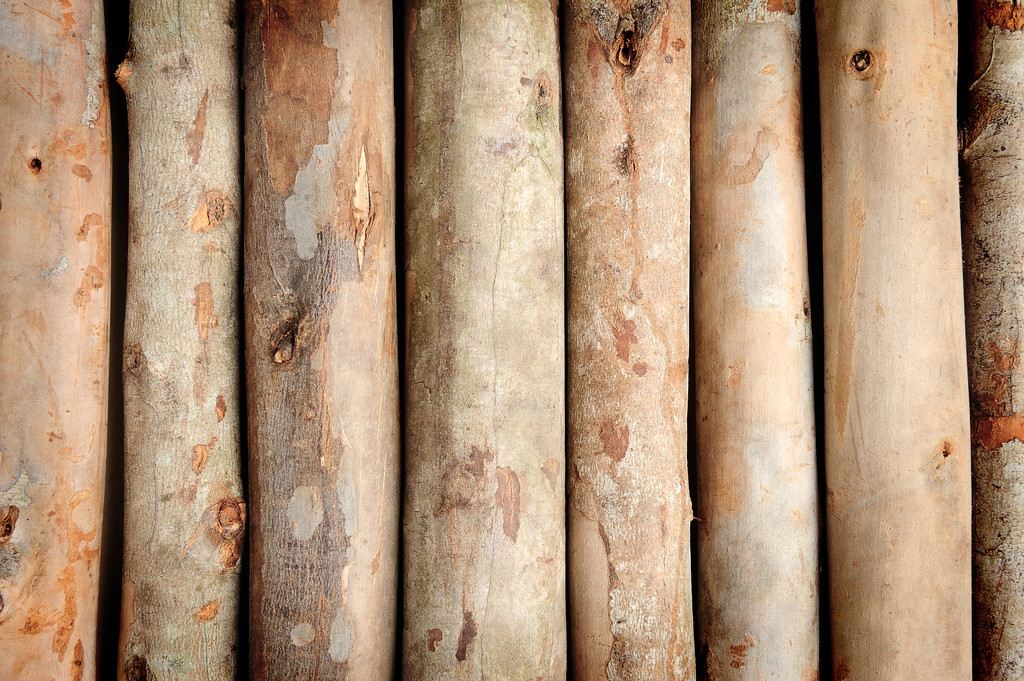
Gambaran umum kayu lapis lem beras ketan Qiangyi
Asal-usul Sejarah Kayu Lapis Lem Beras Ketan Qiangyi
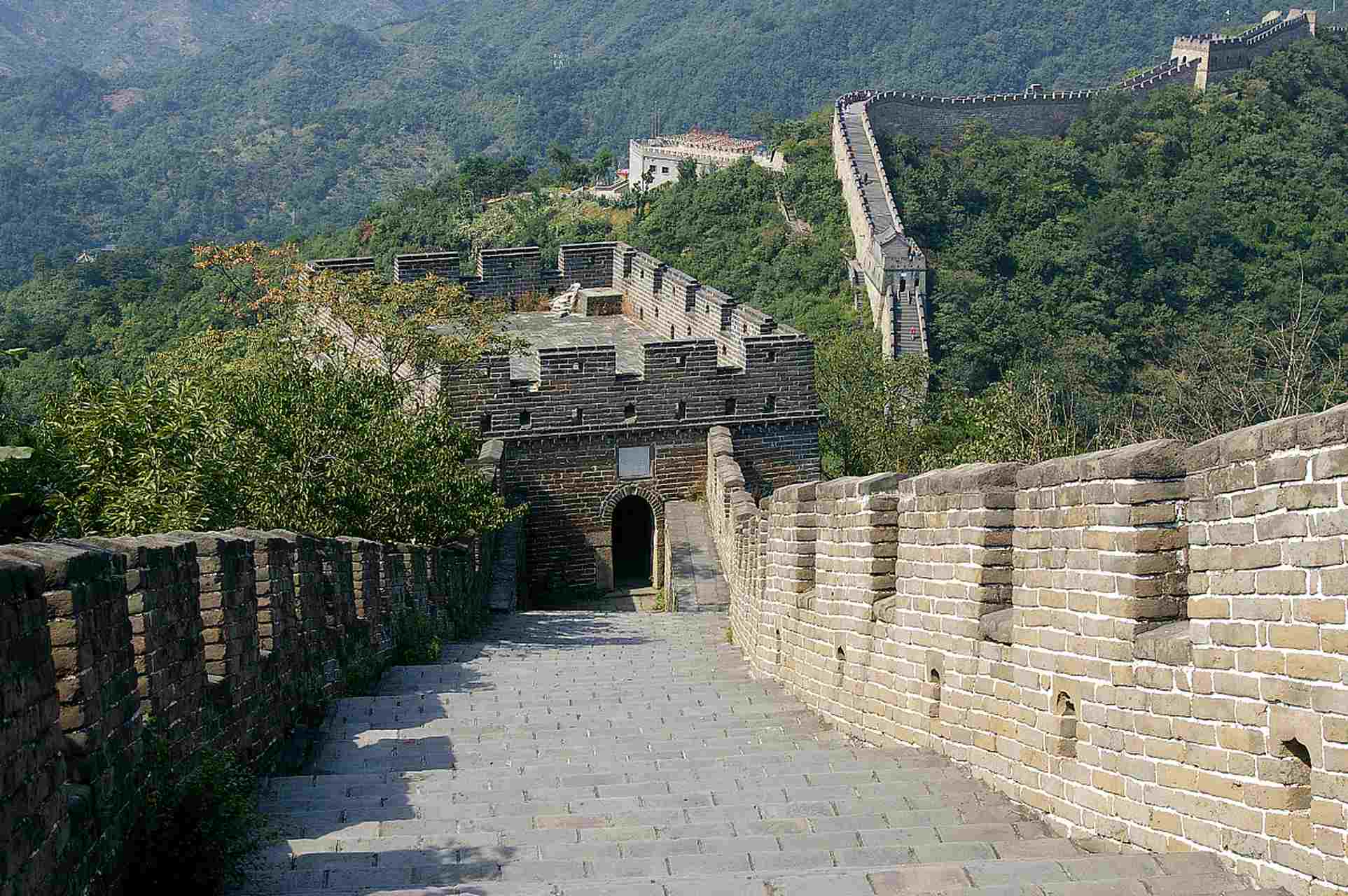
Tembok Besar telah berdiri selama ribuan tahun bukan hanya karena batu bata dan batunya yang tebal, tetapi juga karena perekat (lem) yang digunakan dalam pembangunannya. Dalam hal bahan bangunan, para pengrajin Dinasti Ming secara kreatif menggunakan 'perekat biologis' ajaib—mortar beras ketan. Mereka mencampur lem beras ketan yang dimasak dengan kapur sirih dan pasir untuk membuat pasta. Amilopektin dalam beras ketan bereaksi secara kimia dengan kapur, menghasilkan material komposit organik-anorganik yang sangat kuat, tahan lama, dan kedap air. Inilah kunci mengapa banyak bagian Tembok Besar tetap terikat erat bahkan setelah berabad-abad terkikis angin dan hujan. Saat ini, kearifan kuno ini telah terlahir kembali melalui teknologi modern. 'Plywood lem beras ketan' yang baru menggunakan teknologi perekat beras ketan yang sama seperti Tembok Besar.
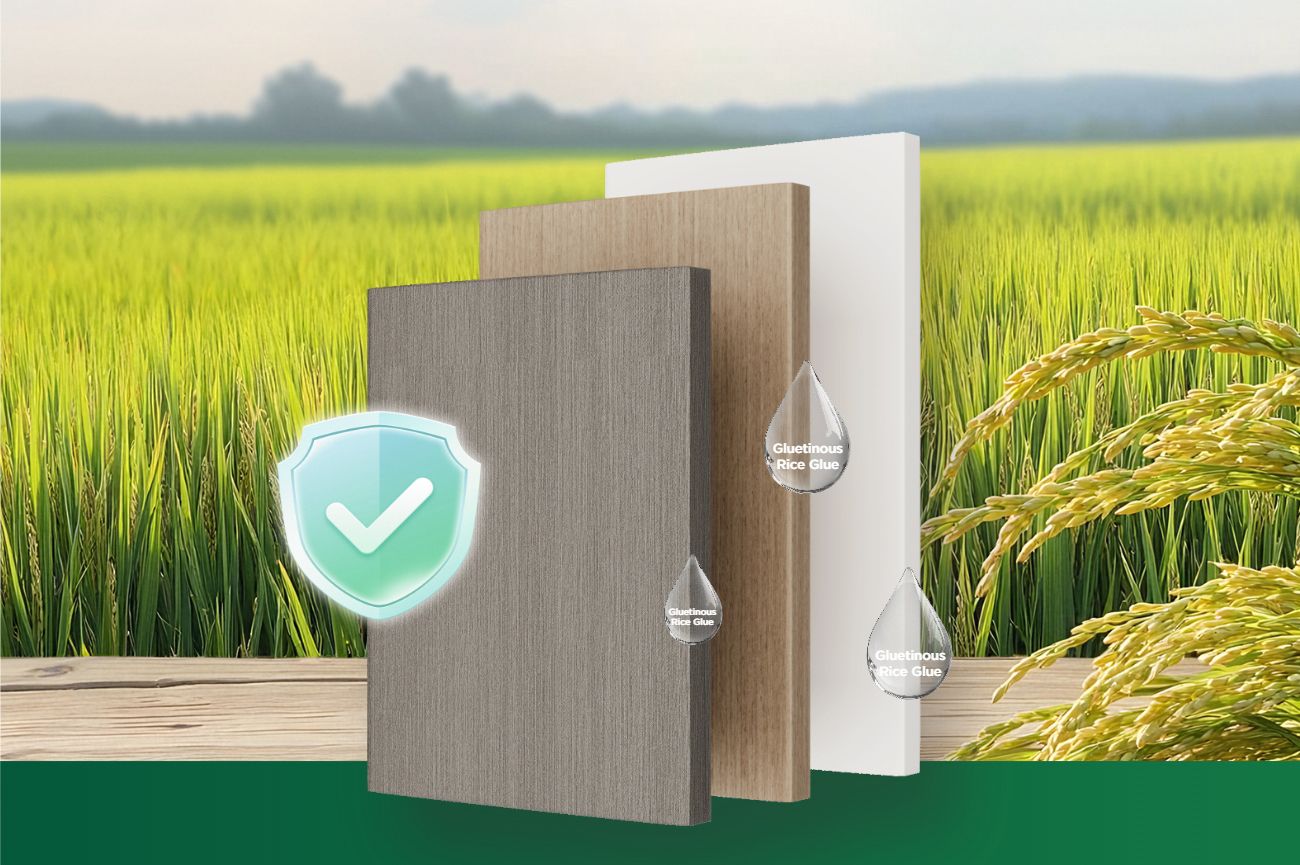
Gambaran umum kayu lapis lem beras ketan Qiangyi:
Inovasi di balik kayu lapis ketan terletak pada inspirasi dari prinsip-prinsip Tembok Besar kuno. Kayu lapis ketan Qiangyi juga disebut sebagai kayu lapis generasi kedua yang mewakili inovasi selama satu abad. Produk ini telah mencapai peringkat No. 1 dalam penjualan dan reputasi terbaik di Tiongkok. Sangat disukai oleh perusahaan renovasi, produsen kabinet, dan pemilik rumah. Kayu lapis ini menggunakan lem ketan Lingmei 0-formaldehida dan 0-benzena sebagai perekat, memilih veneer kayu putih kelas AA sebagai bahan inti, menambahkan magnesium klorida, air, dan magnesium oksida. Magnesium oksida adalah bahan tahan api dan isolasi panas super, dengan titik nyala sendiri mencapai 2852℃, sehingga kayu lapis ketan Qiangyi mencapai standar tahan api kelas B1 (B3: Bahan Mudah Terbakar; B2: Bahan Mudah Meledak). Lem ketan setelah mengering menciptakan lingkungan basa, sementara rayap dan serangga lebih menyukai lingkungan asam. Dikombinasikan dengan permeabilitasnya yang kuat, rayap akan memakan sebagian lem ketan bersama dengan serat kayu. Sifat basa lem tersebut tidak dapat dicerna, yang dapat menyebabkan kematian. Lem beras ketan ini terbuat dari ekstrak tumbuhan/mineral murni, sehingga menjamin keamanan dan stabilitas. Lem ini tidak melibatkan reaksi kimia aldehida, sehingga menghilangkan masuknya formaldehida di sumbernya, menghasilkan kinerja lingkungan yang luar biasa, mencapai tingkat perlindungan lingkungan super ENF. Pencetakan dengan pengepresan dingin dan pemanasan sendiri memungkinkan hunian langsung setelah pemasangan. Dari segi kinerja, kombinasi veneer utama dan lem beras ketan, yang diproses melalui beberapa lapisan, memberikannya daya rekat paku yang kuat, ketahanan terhadap deformasi, tahan api, tahan air, tahan lembap, tahan jamur, sifat antibakteri, dan tahan rayap, menjadikannya kayu lapis multi-lapisan generasi kedua dan 'pejuang sembilan sisi' di industri kayu lapis.
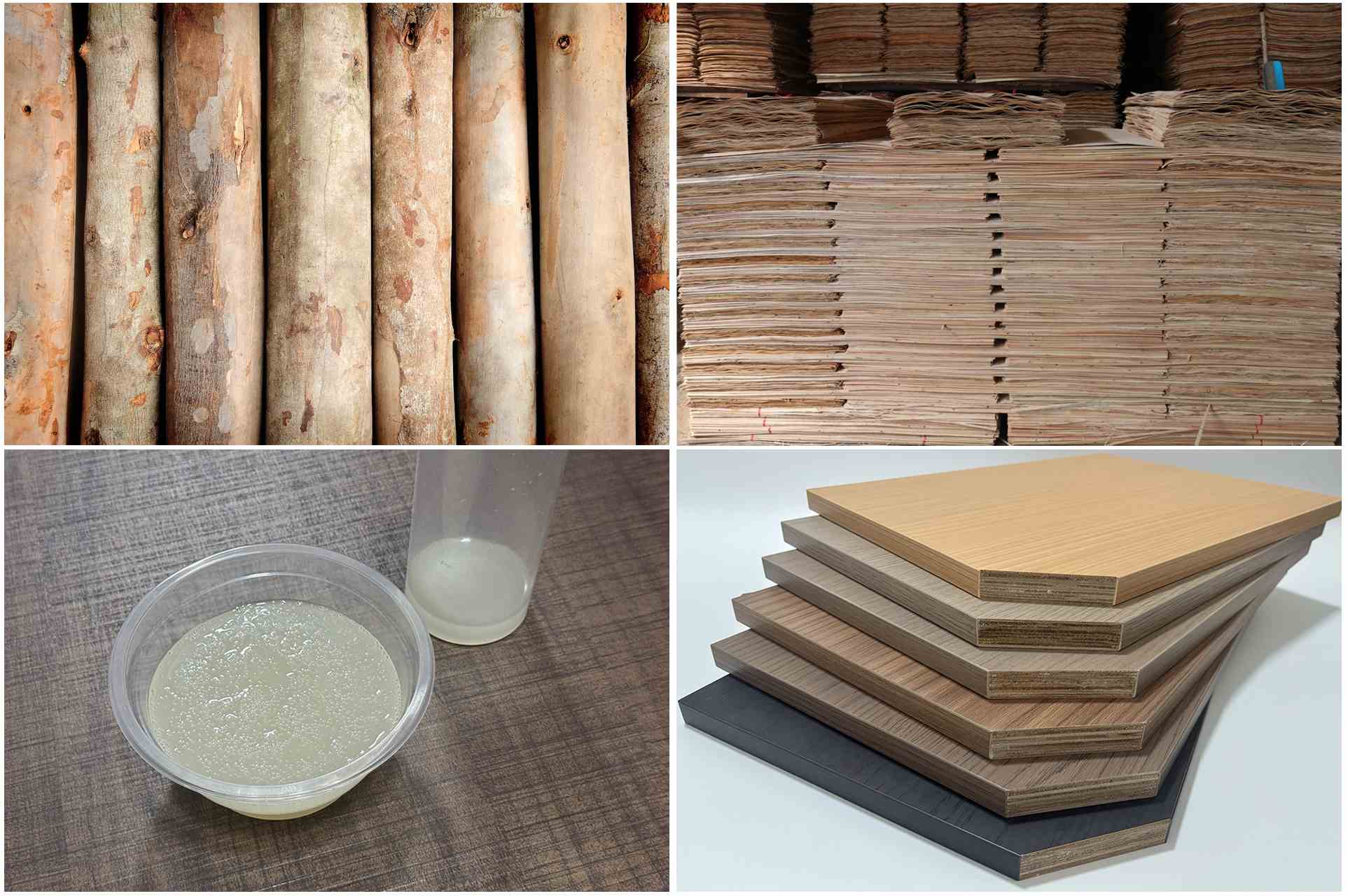
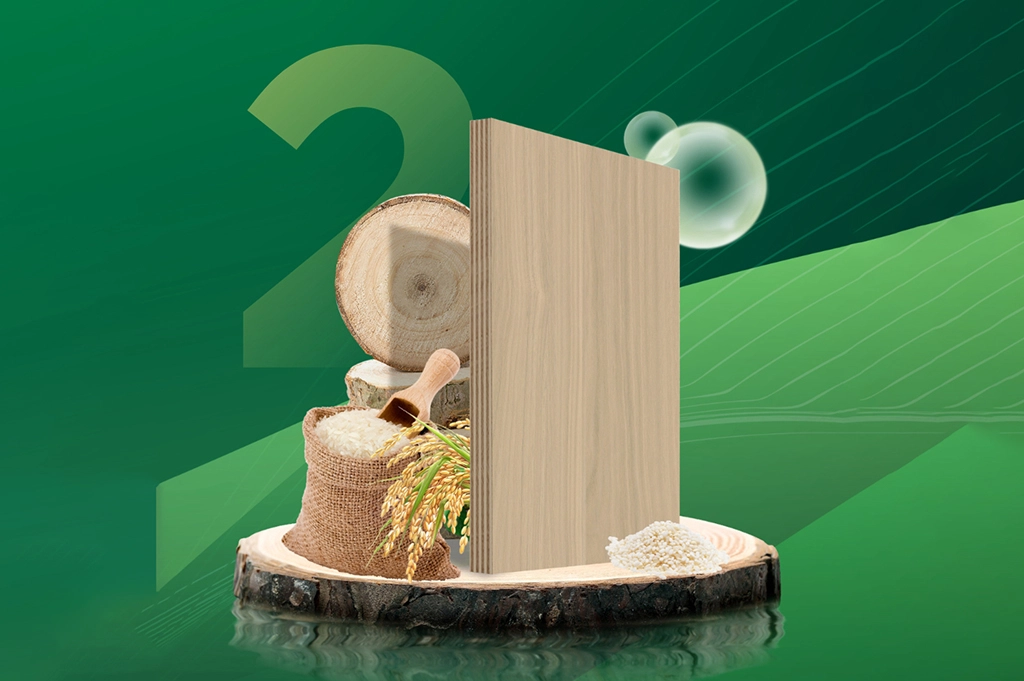
Fungsi lem beras ketan pada kayu lapis
Penjelasan fungsi-fungsi kayu lapis lem beras ketan Qiangyi
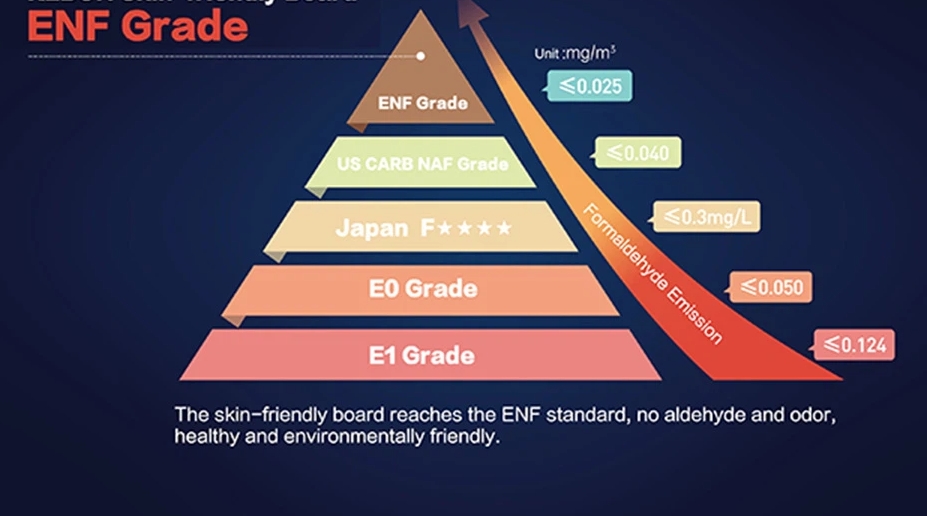
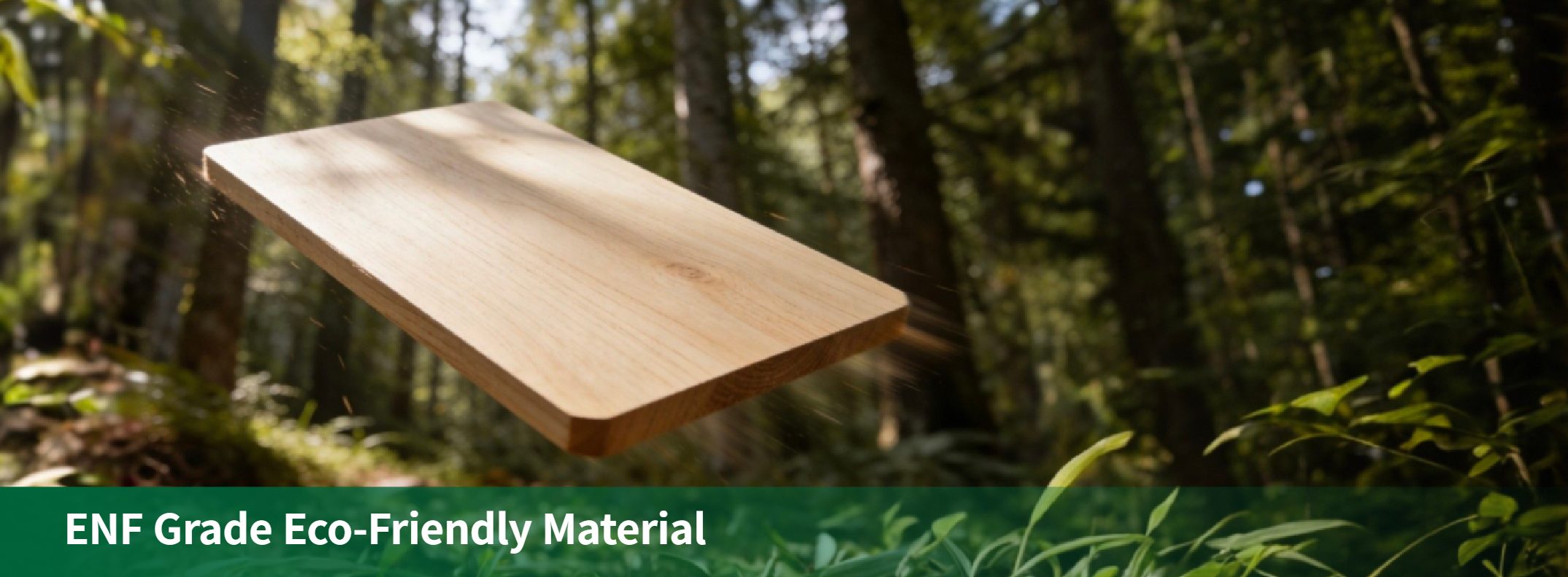
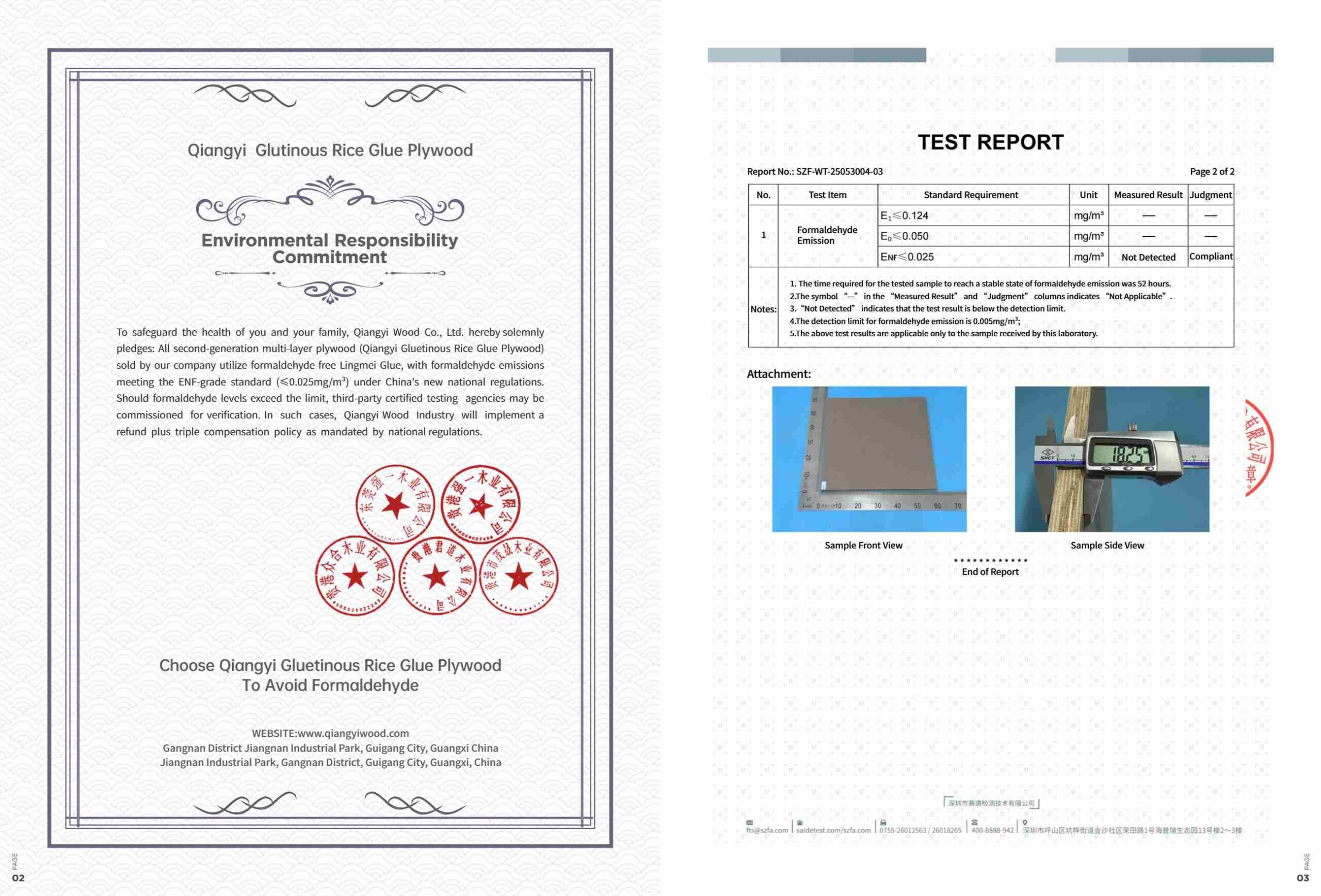
- 1. Super ENF-grade-Kesehatan & Ramah Lingkungan
Lem Ketan Lingmei: Tepung beras ketan + magnesium klorida + air + magnesium oksida. Lem ketan ini terbuat dari ekstrak tumbuhan/mineral murni, sehingga menjamin keamanan dan stabilitas. Proses pembuatannya tidak melibatkan reaksi kimia aldehida, sehingga menghilangkan masuknya formaldehida dari sumbernya.
Perlindungan Lingkungan Kelas Super ENF: kayu lapis lem beras ketan menggunakan lem beras ketan Lingmei bebas formaldehida, mencapai tingkat perlindungan lingkungan kelas super ENF dengan nol benzena. Dibandingkan dengan lem resin urea-formaldehida tradisional (kelas E0, E1, dan E2), kayu lapis lem beras ketan tidak hanya memiliki regulasi yang lebih tinggi untuk emisi formaldehida tetapi juga menunjukkan lebih sedikit variasi dan memiliki struktur yang lebih stabil di berbagai iklim dan suhu lingkungan.
- 2. Tidak berbau–Siap untuk Ditempati
Menghilangkan masalah dari akarnya: Tidak ada zat berbahaya seperti formaldehida, benzena, atau fenol yang ditambahkan selama proses produksi perekat. Karena sama sekali tidak ada formaldehida dalam lem, sumber bau dan polusi terbesar dari renovasi dihilangkan dari sumbernya.
Daya rekat super kuat untuk mengunci bau: Setelah lem beras ketan Lingmei mengering, daya rekatnya membentuk struktur jaringan silang yang stabil dengan serat kayu. Lem ini memiliki sifat kimia yang stabil, ketahanan air yang baik, dan dapat dengan cepat menembus ke dalam kayu. Pada saat yang sama, setelah mengering, lem ini membentuk struktur kristal yang padat, yang secara kuat mengunci bau kayu itu sendiri. Lem ini juga tidak mudah terurai menjadi zat gas, sehingga Anda dapat langsung menempati rumah setelah pemasangan.
- 3. Anti jamur(anti-deformasi)dan antibakteri
Ketahanan terhadap jamur tingkat 0, tingkat antibakteri >99%: Magnesium klorida dan magnesium oksida dalam lem beras ketan Lingmei bereaksi menciptakan lingkungan basa. Dikombinasikan dengan proses pengeringan terkontrol suhu 60 jam yang kuat, kadar air papan dikontrol secara tepat dalam kisaran ideal 8-12%. Secara bersamaan, sifat tahan air dan tahan lembapnya yang sangat baik hampir menghancurkan lingkungan hidup semua jamur. Apa arti ketahanan terhadap jamur tingkat 0?
Produk ini memberikan perlindungan yang unggul dan tahan lama: Bahkan dalam lingkungan ekstrem dengan suhu dan kelembapan tinggi secara terus menerus, produk ini dapat secara efektif menghambat kolonisasi dan pertumbuhan spora jamur dalam jangka waktu yang lama.
Efeknya terlihat jelas dengan mata telanjang: permukaannya bersih dan bebas dari noda bakteri, tidak hanya di bawah mikroskop tetapi juga dalam pengamatan penggunaan sehari-hari.
- 4. Kapasitas penahan paku dan beban yang unggul
Daya rekat paku yang unggul dan ketahanan terhadap deformasi yang lebih besar: Particleboard adalah material utama untuk pintu kabinet di pasaran, terutama karena tidak mudah berubah bentuk. Namun, daya rekat pakunya sangat buruk, dan pintu kabinet cenderung longgar setelah dibuka dan ditutup dalam waktu lama. Plywood lem beras ketan Qiangyi menggunakan lem beras ketan Lingmei, yang membentuk struktur kristal padat setelah pengeringan. Ia memiliki kekakuan yang sangat kuat dan tidak mudah menyerap air dan mengembang. Oleh karena itu, ketahanannya terhadap deformasi sebanding dengan particleboard. Pada saat yang sama, ia memiliki daya rekat paku dan kapasitas menahan beban yang unggul.
- 5. Ditahan air, tahan lembap, dan tahan terhadap pemuaian
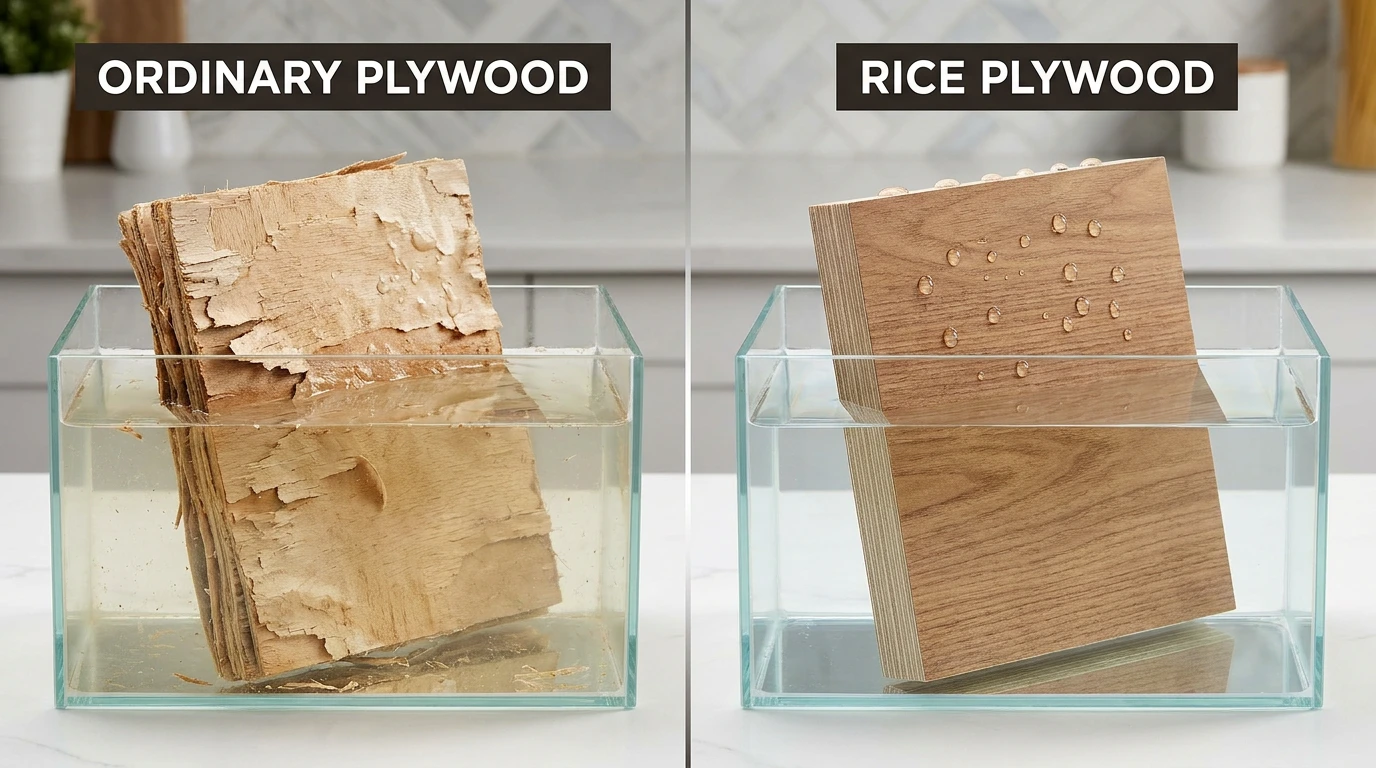
Tahan air, tahan lembap, dan anti-bengkak: Lem beras ketan Lingmei memiliki daya tembus super. Setelah dioleskan ke inti papan, lem ini dengan cepat meresap ke dalam struktur internal, membungkus serat kayu dengan rapat dan mencegah molekul air di udara bersentuhan dengan serat kayu, sehingga mencegahnya menyerap air dan membengkak.
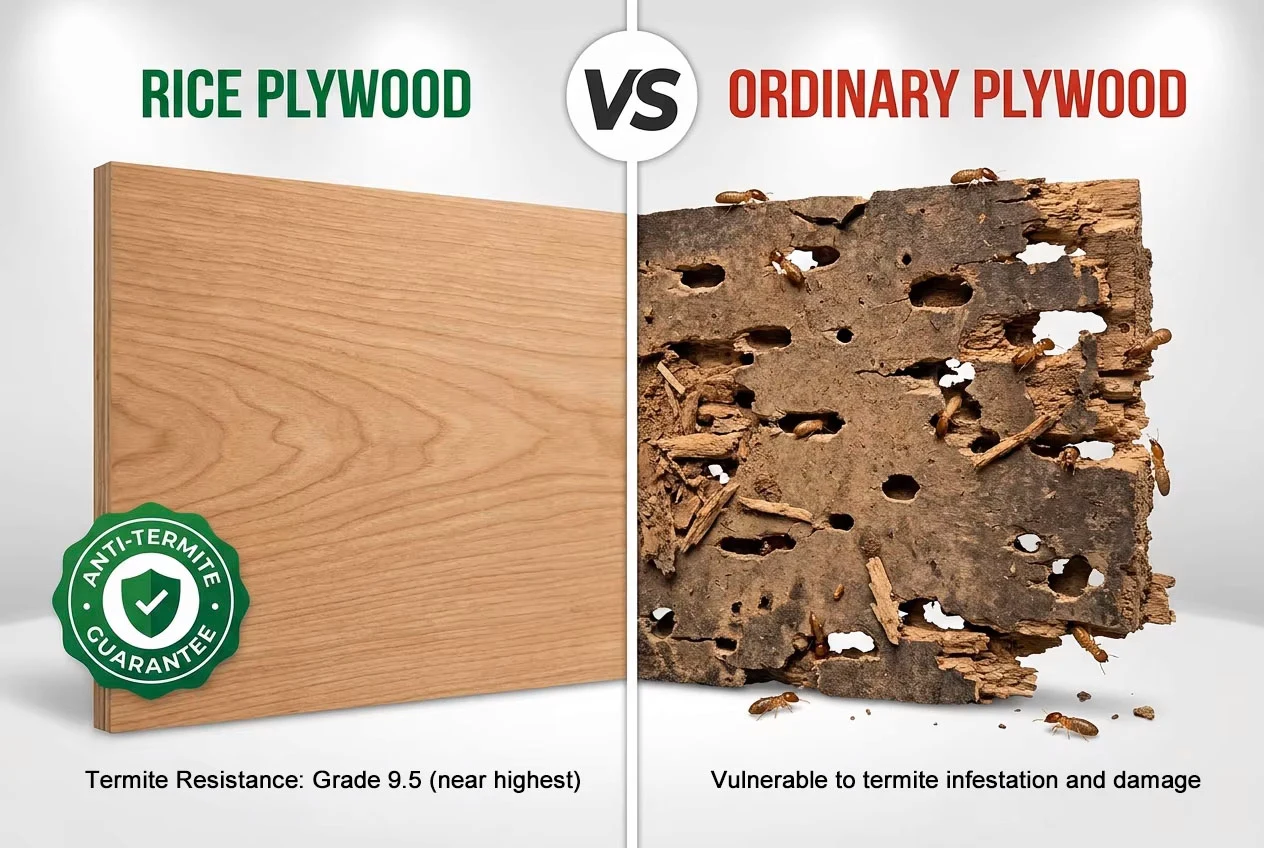
- 6. 9.5 nilai ketahanan rayap
Ketahanan terhadap rayap kelas 9,5: Papan resin urea-formaldehida tradisional sedikit asam, sehingga ideal untuk rayap. Serat kayu juga menyediakan makanan yang melimpah bagi rayap, secara signifikan meningkatkan kemungkinan infestasi rayap. Namun, lem beras ketan setelah mengering, menciptakan lingkungan basa, sementara rayap dan serangga lebih menyukai lingkungan asam. Dikombinasikan dengan permeabilitasnya yang kuat, rayap menelan sebagian lem beras ketan bersama dengan serat kayu. Sifat basa lem tersebut tidak dapat dicerna, yang menyebabkan kematian.
- 7. Aanti-penuaan, tahan retak
Ketahanan Retak dan Anti-penuaan Kelas V: Perekat resin urea-formaldehida tradisional, yang dihasilkan dari reaksi kimia antara urea dan formaldehida, memiliki struktur yang sangat tidak stabil. Terlepas dari kondisi lingkungan, perekat ini mengalami reaksi balik dan terurai (reaksi ini diperparah pada suhu dan kelembapan tinggi), melepaskan formaldehida kembali ke dalam perekat. Oleh karena itu, papan urea-formaldehida terus menua dan rentan terhadap retak. Sebaliknya, perekat beras ketan sangat stabil setelah pengeringan. Struktur kristalnya yang telah mengering sangat kuat dan tahan terhadap dekomposisi; Tembok Besar yang berdiri selama setahun penuh adalah bukti terbaiknya. Dikombinasikan dengan periode pengeringan yang diperpanjang selama 15 hari, kayu lapis yang direkatkan dengan lem beras ketan menunjukkan koefisien ekspansi dan kontraksi termal yang sangat rendah, sehingga menghasilkan ketahanan retak dan sifat anti-penuaan yang unggul.
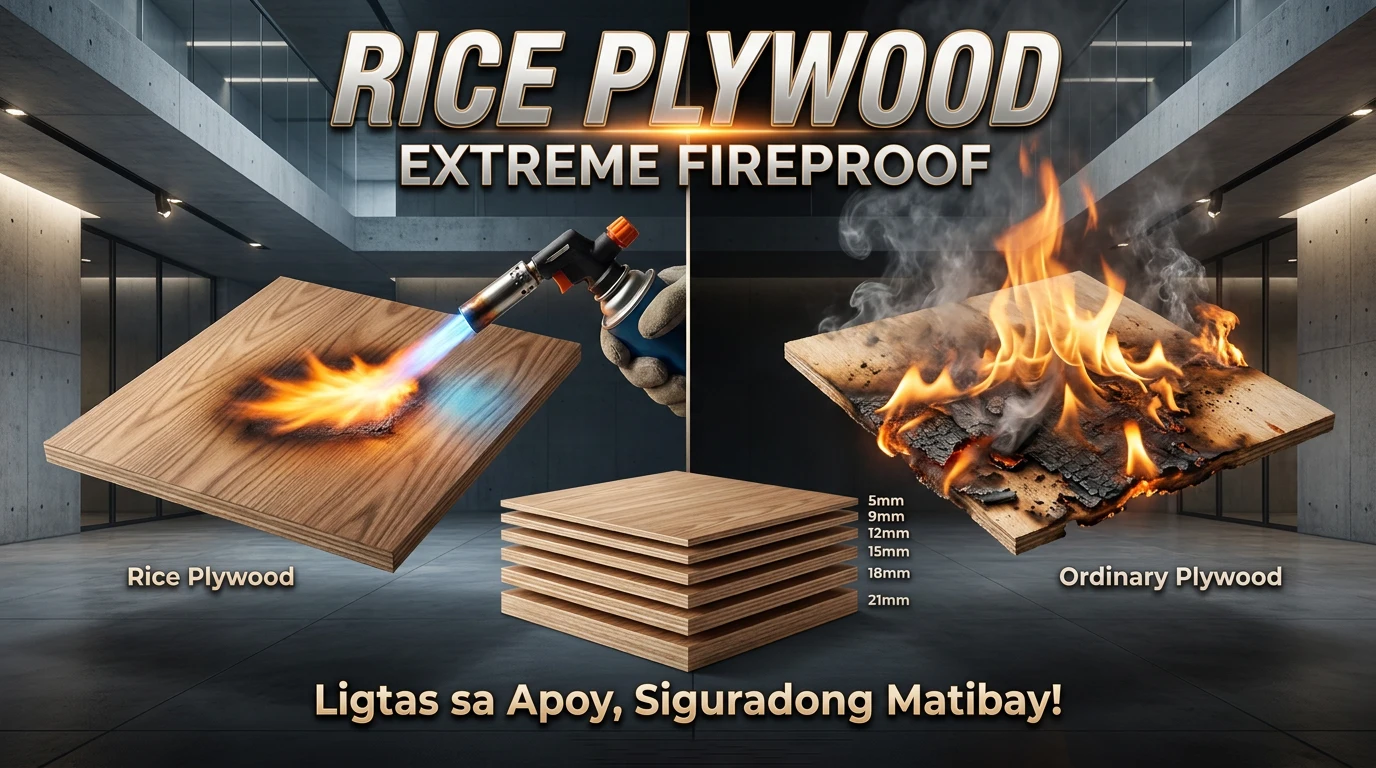
- 8. B1 Tahan Api
Karena magnesium oksida merupakan zat penghambat api dan isolasi panas yang sangat baik, dengan titik nyala sendiri mencapai 2852℃, penambahan magnesium oksida pada lem beras ketan Lingmei, bersama dengan struktur kristal padat yang terbentuk setelah lem mengering, mencegah udara bersentuhan dengan serat kayu. Bahkan jika terbakar selama beberapa jam, lem hanya akan mengalami karbonisasi dan tidak akan terbakar.
- 9. Hmakan dan isolasi suara
Magnesium oksida merupakan bahan isolasi panas dan suara yang sangat baik. Penambahannya memberikan papan tersebut kinerja isolasi panas yang sangat kuat. Pada saat yang sama, ia menyebabkan lem beras membentuk struktur kristal yang padat setelah pengeringan, yang sangat meningkatkan kinerja isolasi suara papan multi-lapisan dan bahkan memenuhi standar bahan komposit isolasi suara. Kinerja isolasi panas dan suaranya memberikan pengalaman hemat energi yang optimal bagi pelanggan. Tidak ada sudut mati yang panas dan dingin di dalam ruangan, dan suhu yang dirasakan lebih konstan dan nyaman. Pada saat yang sama, lapisan isolasi yang baik membuat suhu dinding dalam ruangan lebih dekat dengan suhu ruangan, sehingga menghindari masalah kondensasi dan jamur yang disebabkan oleh dinding dingin.
Skenario aplikasi kayu lapis lem beras ketan Qiangyi
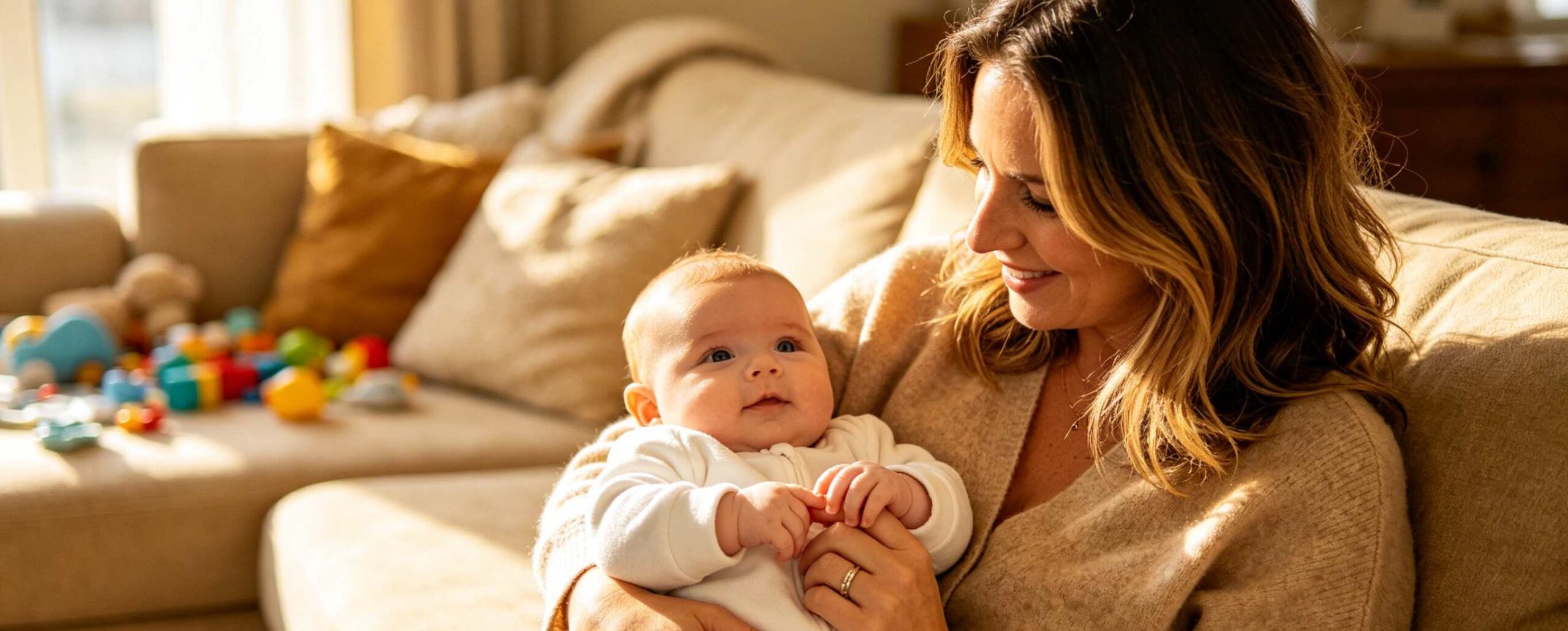
- 1. Ruang Anak/Ruang Perawatan Bayi
Produk yang cocok: lemari pakaian, meja, tikar tatami, lemari mainan.
Menangani kekhawatiran utama: Anak-anak memiliki sistem kekebalan tubuh yang lemah, sensitif terhadap formaldehida, seringkali aktif, dan permukaan serta meja rentan terhadap tumpahan air.
Kesesuaian Kinerja: Tahan air Level 2, noda air dapat dibersihkan hanya dengan sekali usap; Anti jamur dan antibakteri Level 0, membantu ruangan tetap bersih di lingkungan lembap, anti jamur dan antibakteri >99%; Kelas Super ENF tanpa tambahan formaldehida, pelepasan formaldehida kurang dari 0,005 mg/m³
- 2. Solusi Dapur Lengkap
Produk yang dapat diaplikasikan: lemari dapur, lemari dinding, meja bar.
Menangani masalah utama: rentan terhadap pertumbuhan jamur, daya dukung beban lemari dinding yang lemah, area yang rentan terhadap noda minyak, rentan terhadap kelembapan, dan rentan terhadap retak.
Pencocokan Kinerja: Lem beras ketan membentuk lapisan kedap air alami, mencegah pertumbuhan jamur pada panel belakang kabinet; Kapasitas Penahan Paku: kayu lapis lem beras ketan memiliki kekuatan 2040MPa, jauh melebihi papan multi-lapisan dan papan partikel biasa; Sifat Antibakteri: Struktur anti jamur dan antibakteri kelas 0 membantu menciptakan ruang bersih yang tidak terpengaruh oleh lingkungan lembap, dengan sifat anti jamur dan antibakteri >99%.
- 3. Kamar Tidur Mebel
Produk yang dapat diaplikasikan: lemari pakaian, dinding sandaran kepala tempat tidur, panel dinding, meja samping tempat tidur, dll.
Menangani masalah utama: rentan terhadap pertumbuhan jamur, daya dukung rak yang lemah, rentan terhadap kelembapan, daya cengkeram paku yang buruk, dan mudah berubah bentuk.
Ketahanan Deformasi: kayu lapis lem beras ketan > Partikelboard > Papan Multilayer Biasa;
Kapasitas Penahan Paku: kayu lapis yang direkatkan dengan lem beras ketan memiliki daya tahan paku sebesar 2040MPa;
Sifat Antibakteri: Sifat antijamur dan antibakteri tingkat 0 membantu ruangan bersih tahan terhadap lingkungan lembap, dengan aktivitas antijamur dan antibakteri >99%;
Kelas Super ENF: Lem beras ketan tidak mengandung formaldehida, dan emisi formaldehida kurang dari 0,005 mg/m³.
- 4. Ruang Lansia Mebel
Produk yang dapat diaplikasikan: lemari pakaian, dinding sandaran kepala tempat tidur, panel dinding, meja samping tempat tidur, dll. Mengatasi masalah utama: Rentan terhadap jamur, daya dukung rak yang lemah, rentan terhadap kelembapan, daya cengkeram paku yang buruk, pembengkakan saat terkena air, dan kebisingan.
Kesesuaian Kinerja: isolasi suara yang kuat dari kayu lapis lem beras ketan melindungi tidur para lansia; Kelas ENF Super: Lem beras ketan tidak mengandung formaldehida, dan pelepasan formaldehida kurang dari 0,005 mg/m³.
- 5. Mlembaga perawatan medis dan lansia
Produk yang dapat diaplikasikan: lemari pakaian, dinding sandaran kepala tempat tidur, panel dinding, meja samping tempat tidur, meja resepsionis, meja bar, dll.
Menangani masalah utama: Ruang perawatan rumah sakit, tempat pasien memiliki daya tahan paling rendah; panti jompo, tempat para lansia tinggal dalam jangka panjang. Memilih kayu lapis yang direkatkan dengan lem beras ketan menunjukkan rasa hormat organisasi terhadap kehidupan dan merupakan pilihan bijak untuk manajemen risiko.
Performa yang Sesuai: Ketahanan terhadap jamur Grade 0, tingkat antibakteri >99%; Keselamatan Utama: Tahan api Grade B1, waktu evakuasi yang berharga dalam bencana; Grade Super ENF
- 6. Dingin ekstrem ruang cuaca
Skenario aplikasi: ruangan dengan pemanas lantai, lapisan penyimpanan dingin, kemasan logistik rantai dingin, hotel dan wisma di daerah dataran tinggi dan dingin.
Menangani masalah utama: Kerapuhan suhu rendah: Papan biasa menjadi rapuh dan mudah retak di bawah -5℃; Ekspansi dan kontraksi termal: Sakelar pemanas lantai menyebabkan tekanan suhu yang parah karena perbedaan suhu; Retak akibat pengeringan: Di musim dingin, ketika kelembapan kurang dari 20%, papan kehilangan kelembapan dan menyusut.
Kesesuaian kinerja: Stabilitas: Setelah pengeringan, lem beras ketan magnesium membentuk struktur kristal yang padat, yang secara efektif mengatur kontak antara molekul air dan dunia luar, menjaga kadar kelembapan internal papan dalam kisaran ideal dan menyediakan ruang penyangga pengeringan; Ketahanan deformasi: Penempatan simetris multi-lapisan memungkinkan pelepasan tegangan internal yang seragam.
- 7. Ruang suhu tinggi
Skenario aplikasi: Ruang berjemur, lemari jendela teluk, balkon yang dibuat khusus, lemari di sekitar kompor dapur, gudang di wilayah selatan tanpa pendingin udara, bengkel.
Menangani masalah utama: Pelunakan suhu tinggi: Lapisan perekat melunak pada suhu di atas 40℃, mengurangi kapasitas menahan beban; Pelepasan formaldehida yang dipercepat: Pelepasan formaldehida berlipat ganda untuk setiap kenaikan suhu 10℃; Keretakan suhu tinggi: Permukaan papan retak pada suhu tinggi.
Pencocokan kinerja: Ketahanan terhadap retak: Ketahanan retak permukaan mencapai level 5; Pelepasan stabil tingkat Super ENF: Dalam kondisi suhu tinggi dan kelembaban tinggi, pelepasan formaldehida dari papan hampir tidak akan meningkat.
- 8. Tantangan Pengeringan
Skenario aplikasi: Solusi khusus untuk seluruh rumah di daerah kering, lingkungan kantor ber-AC dengan kelembapan sepanjang tahun (30-40%), dan lingkungan dengan kelembapan rendah seperti bengkel elektronik dan laboratorium.
Menangani masalah utama: Ketidakseimbangan kadar air: Perubahan kadar air pada papan menyebabkan penyusutan dan retak; Retak pada sambungan: Keretakan mudah terjadi di antara papan.
Pencocokan kinerja: Pengendalian air: Setelah pengeringan, lem beras ketan magnesium membentuk struktur kristal yang padat, yang secara efektif mencegah molekul air bersentuhan dengan dunia luar, menjaga kadar kelembapan internal papan dalam kisaran ideal; Ketahanan terhadap retak: Ketahanan retak permukaan mencapai tingkat yang optimal.
Laporan pengujian dari kayu lapis lem beras ketan Qiangyi
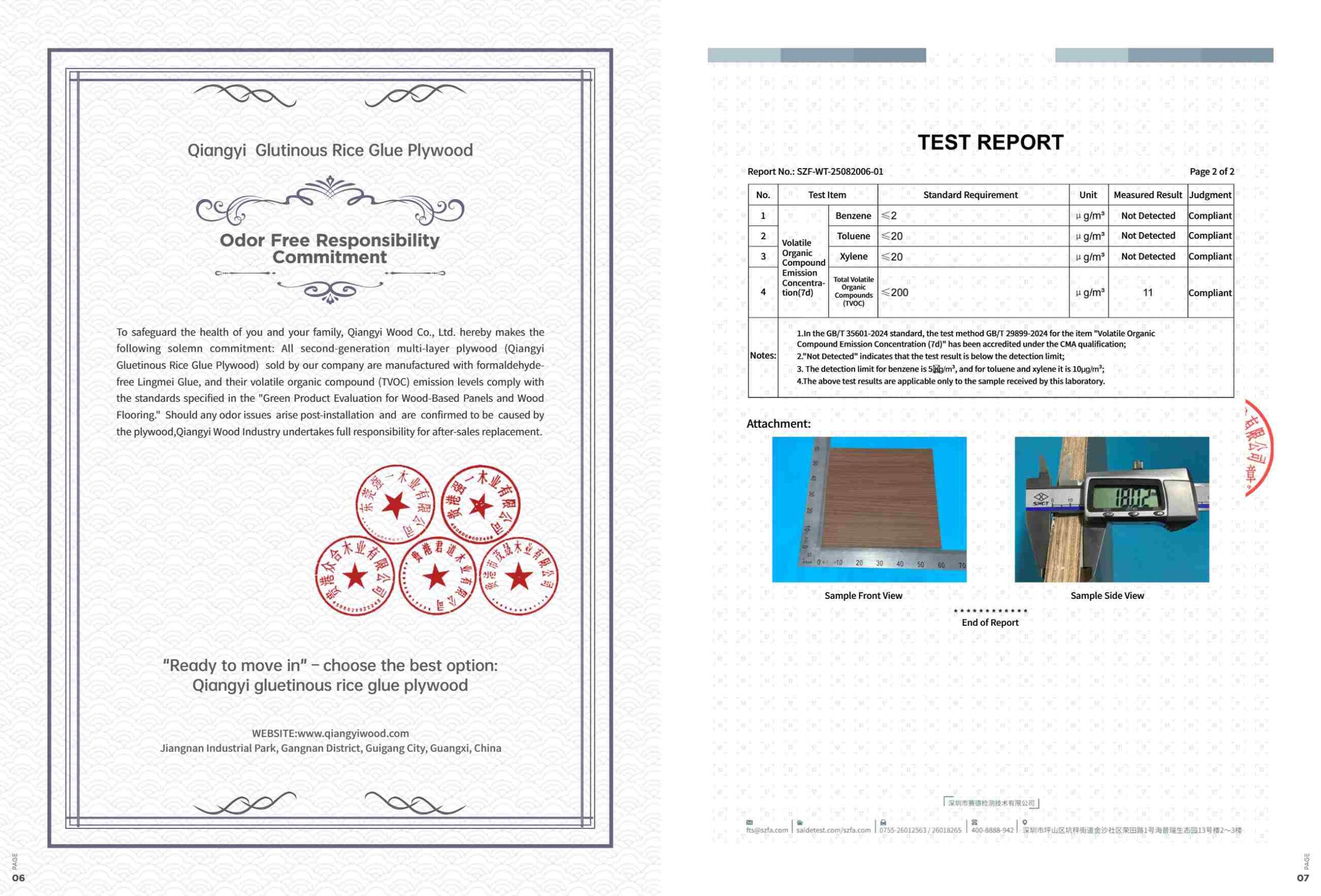
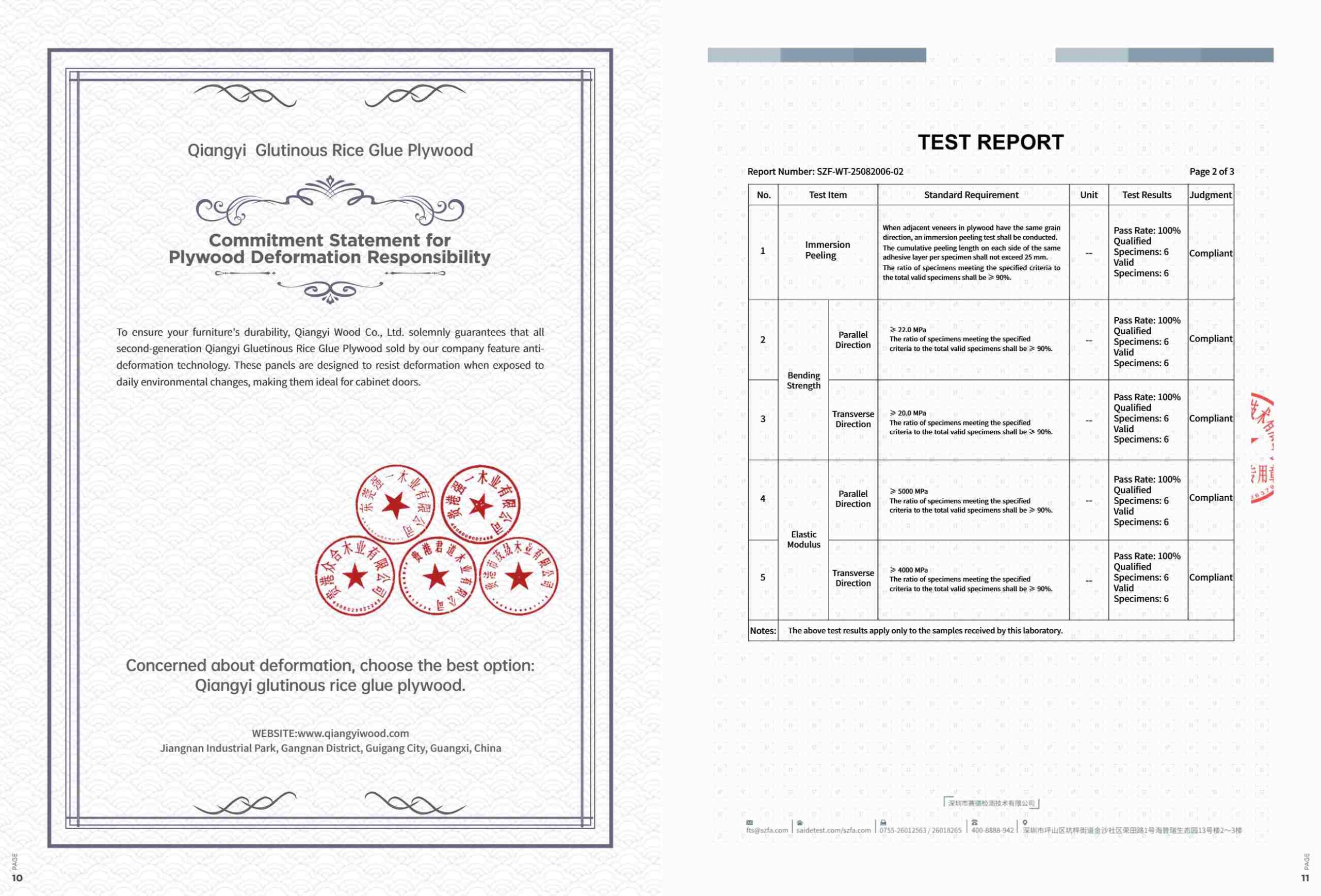
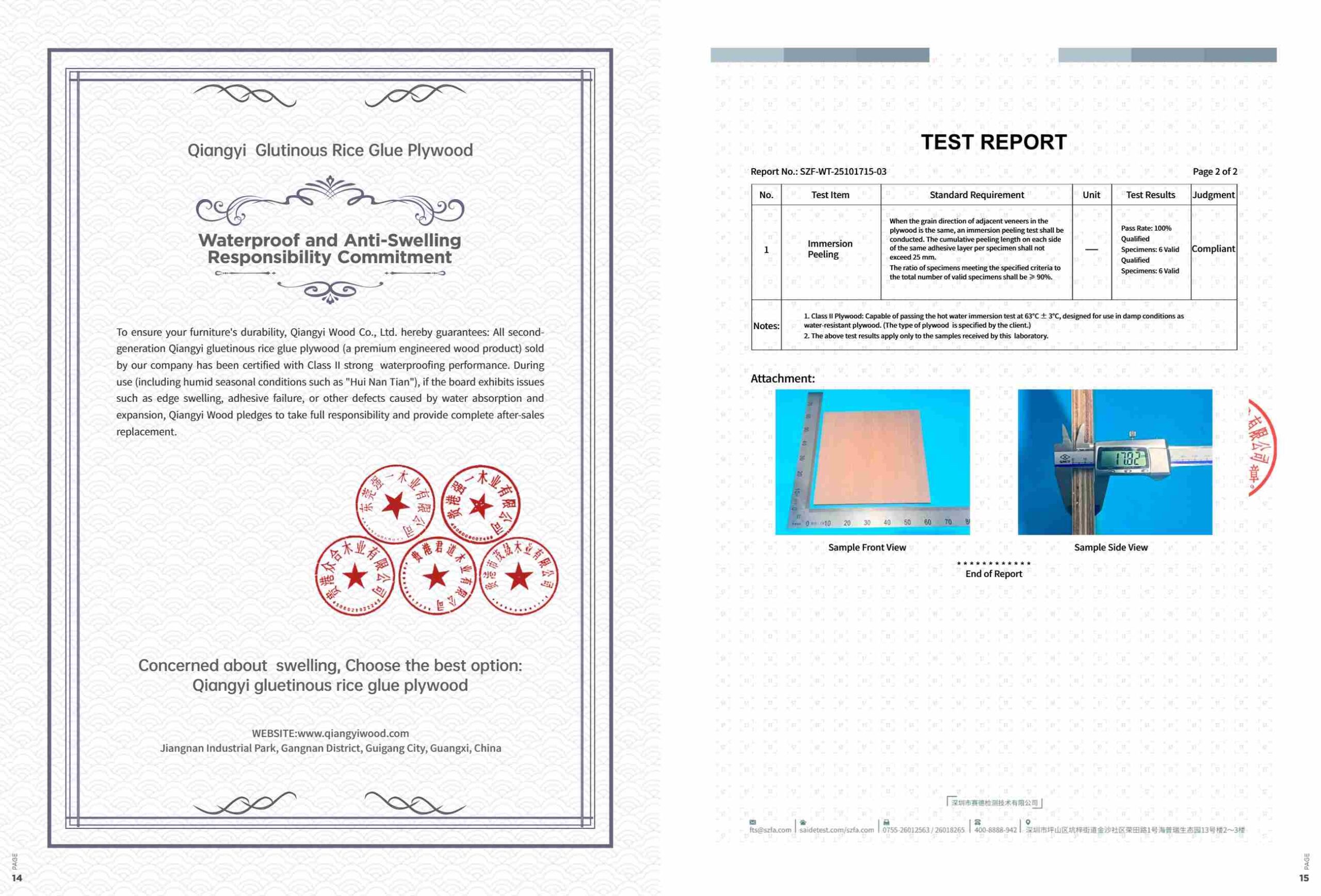
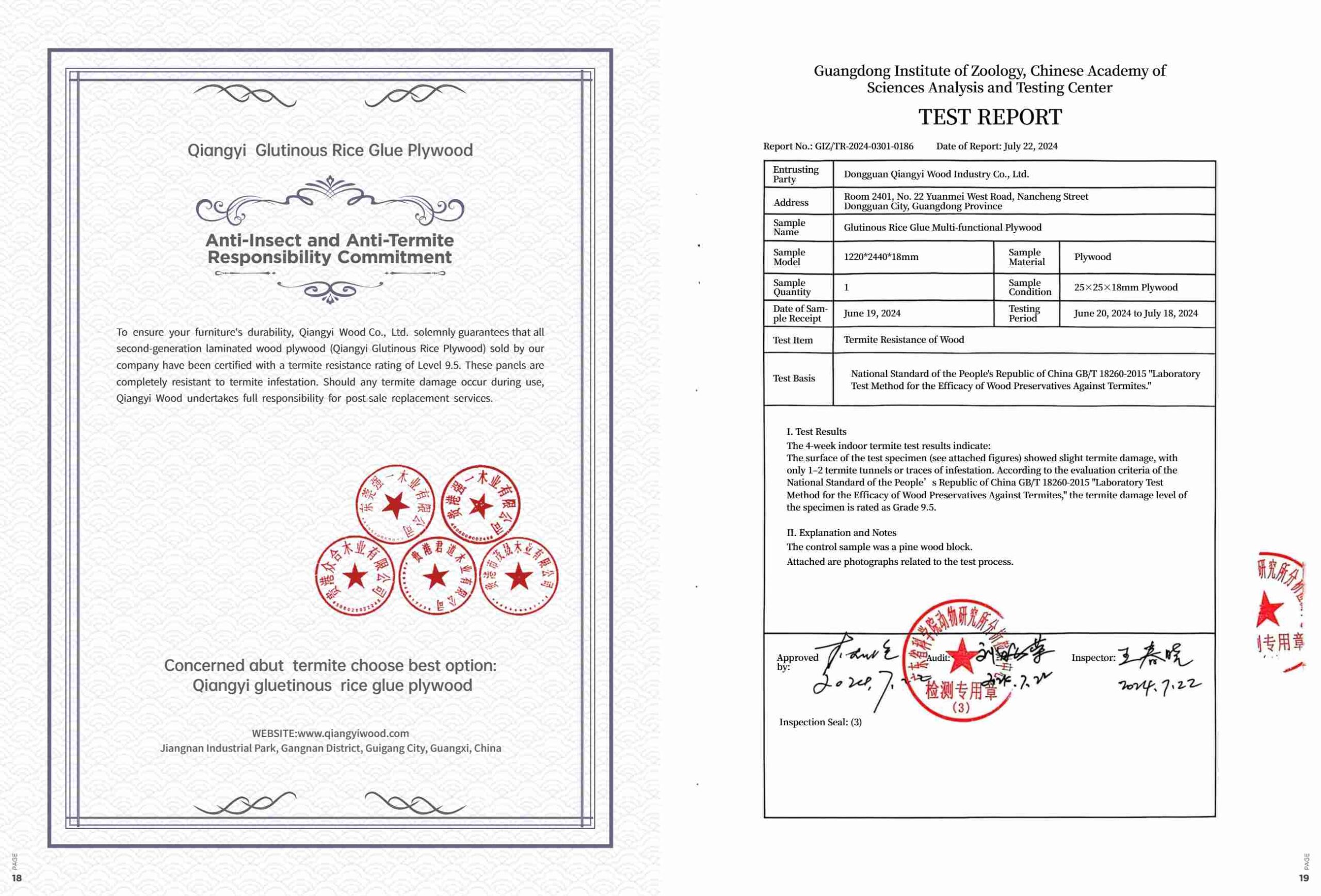
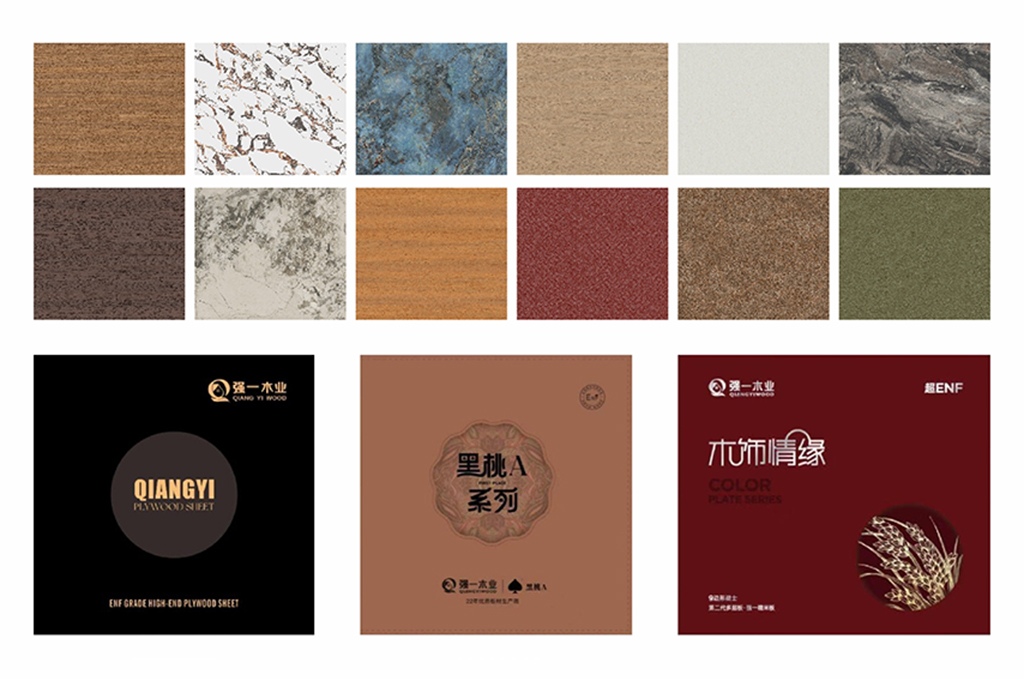
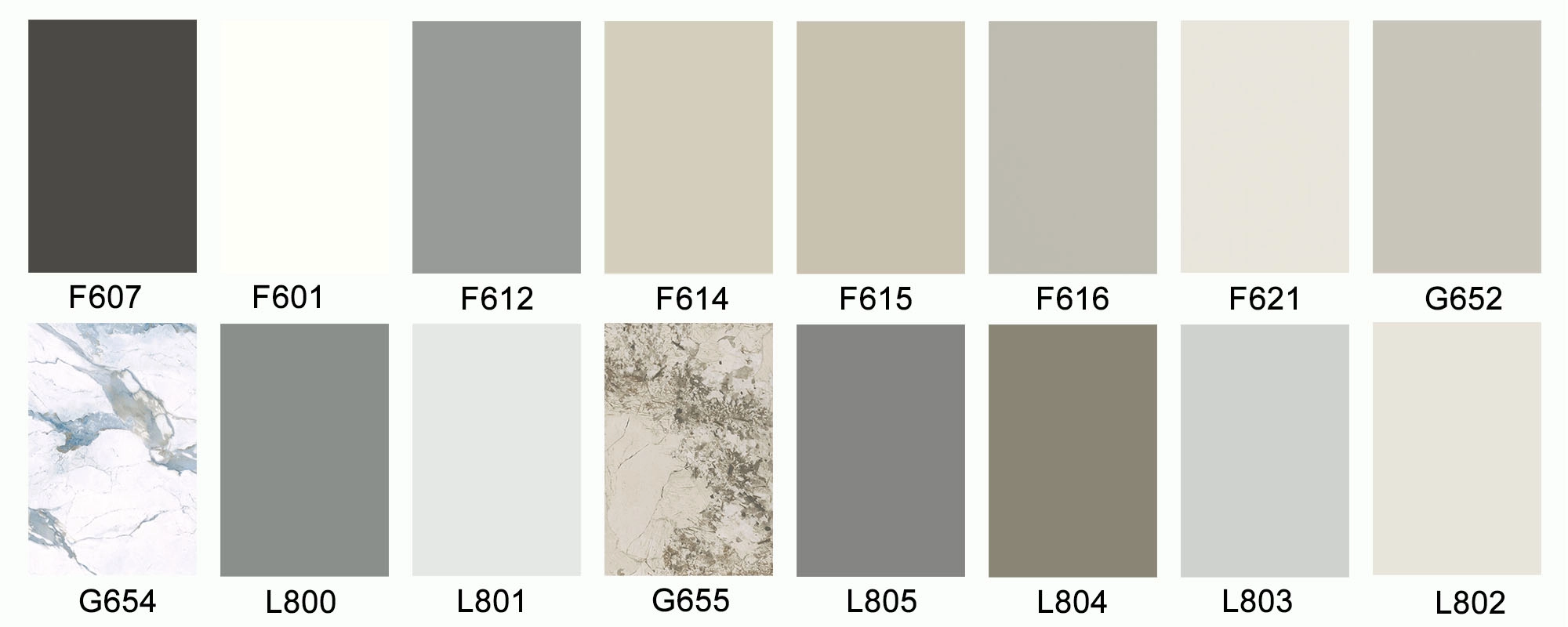
Lebih dari 1.000 pilihan warna
permukaan kayu lapis
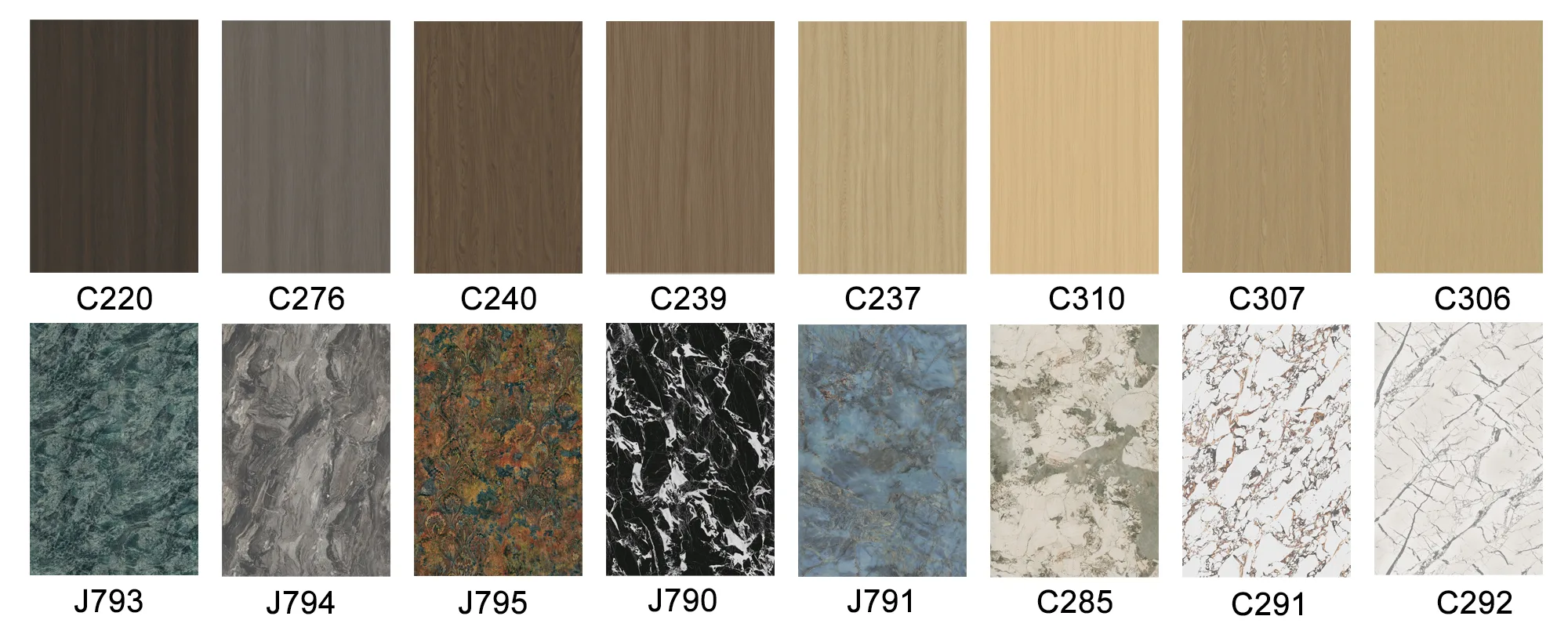
Lapisan permukaan kayu lapis secara efektif mengisolasi kelembapan dan uap air, mencegah deformasi, delaminasi, dan pertumbuhan jamur. Lapisan ini juga meningkatkan ketahanan aus, ketahanan gores, dan ketahanan korosi, melindungi dari serangga dan kerusakan lingkungan. Lapisan ini memperbaiki penampilan, menstabilkan warna, dan memperlambat penuaan, secara komprehensif memperpanjang masa pakai dan kinerja keseluruhan. Di Qiangyi, kami dapat menyediakan berbagai material (dilapisi PET & permukaan melamin) dan berbagai warna untuk menyesuaikan berbagai gaya.
Permukaan melamin
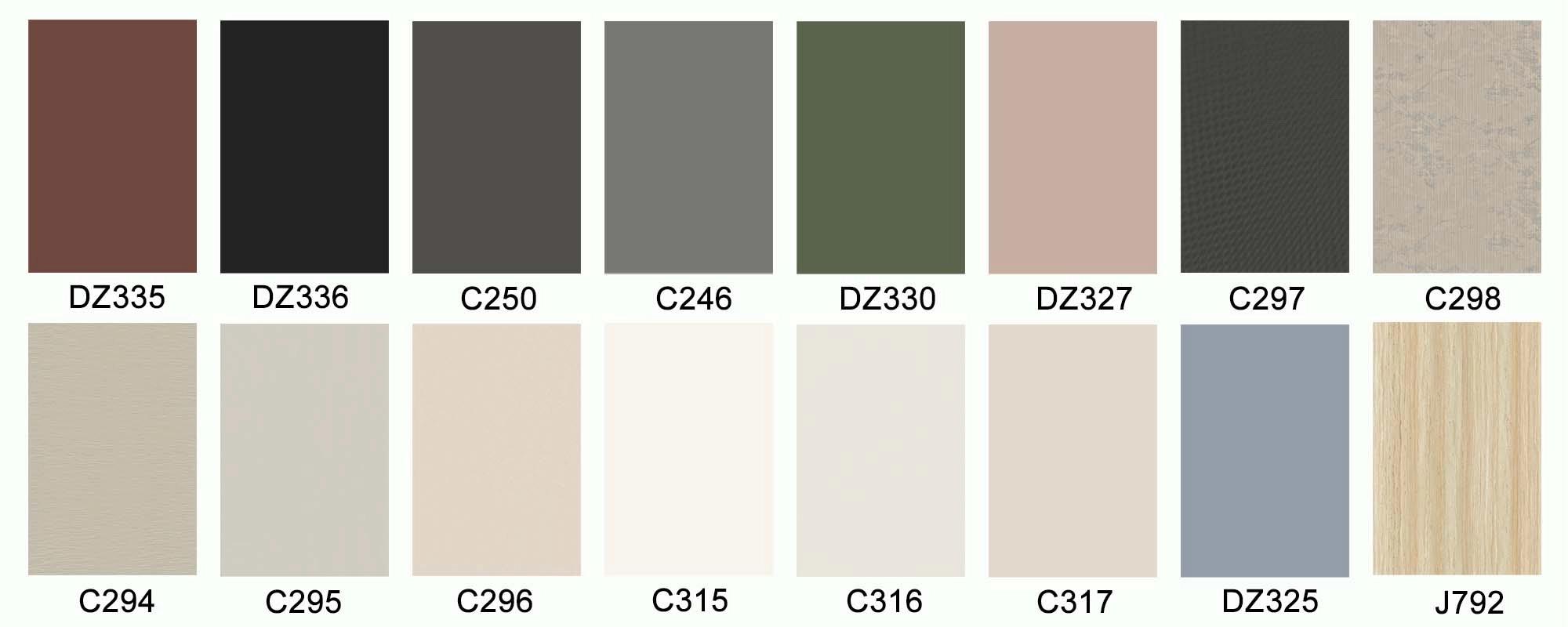
dilapisi PET
Get more information about the plywood
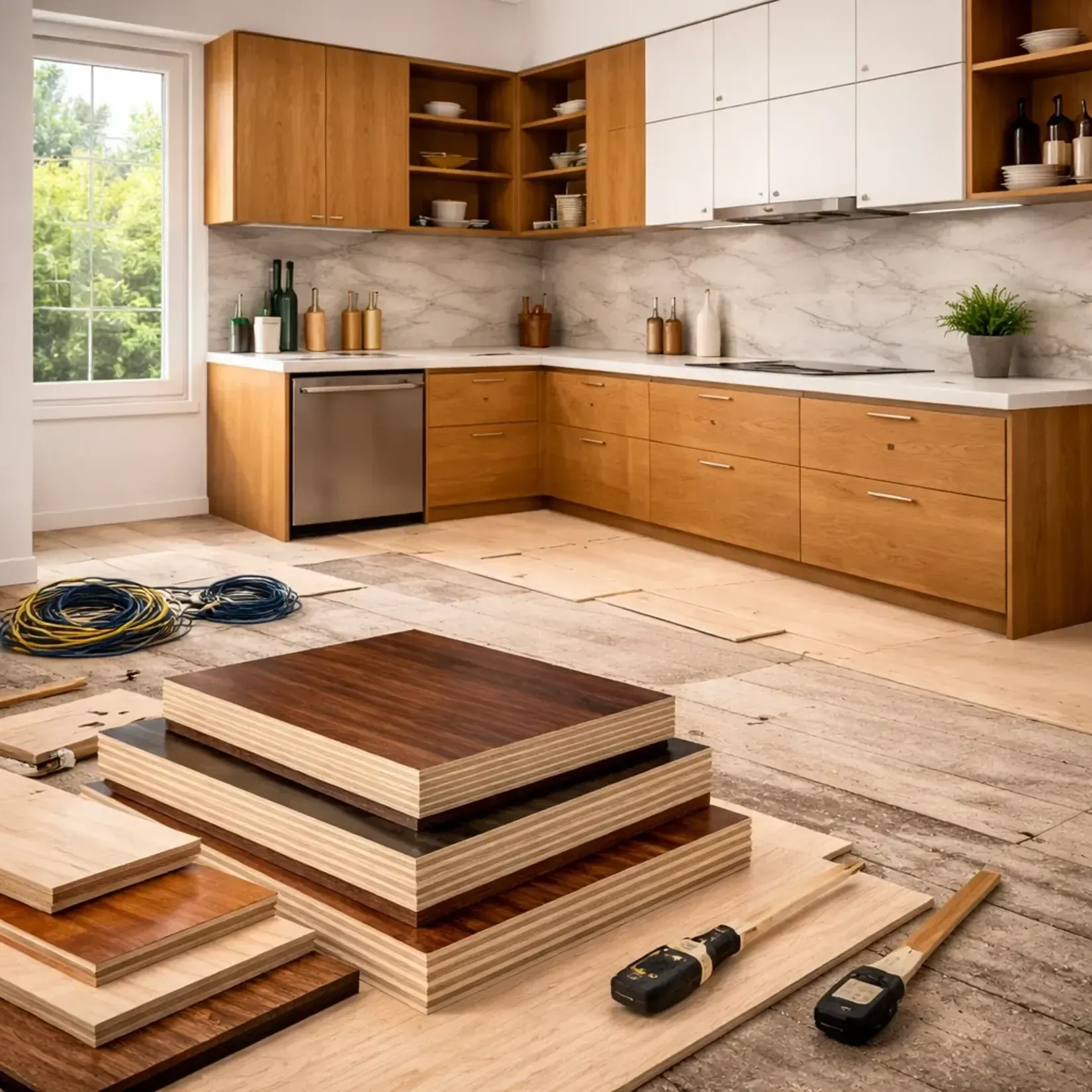
Moisture-Resistant Plywood Sourcing Guide for Sink Cabinets
A sink cabinet might leave the factory looking perfect. However, it can become a warranty issue just a few months later. A tiny plumbing leak or frequent wet cleaning can make the bottom swell. This causes the edge banding to peel up. Then, the installer has to deal with a difficult repair job. Kitchen cabinet manufacturers need to protect their finished products. They also want to avoid expensive return visits. Therefore, picking moisture-resistant plywood is not just about finding a board with a waterproof sticker. It is about true material performance. Why Sink Cabinet Swelling Creates Costly Problems for Manufacturers Below a sink, the area is exposed to a different level of moisture than a kitchen shelf. Leaks from pipes, condensation on pipes, and cleaning with wet cloths can cause panels to swell, resulting in unsightly cabinets and poorly fitting parts that need to be reworked and after-sales claims. Instead of relying on a “waterproof” label, when you select materials for projects, you should test how a panel’s bonding and core will react to moisture-related swelling. Problems with cabinets often start where you can’t see. Where Moisture Damage First Appears in Sink Cabinets Picture a rental unit where a loose drain drips water onto the bottom board. The puddles hide behind tall cleaning bottles. They stay there unnoticed for many weeks. In a different house, sweat builds up on a cold water pipe. That moisture soon trickles down into a bare, unsealed hole. The weakest spots are normally the bottom floor, the pipe cutouts, the back corners, and the seams by the floor base. Once a cut side gets thicker from water, problems happen. Even a perfectly fine surface layer will not sit flat anymore. How Swollen Panels Lead to Rework and Warranty Claims Fixing a puffed-up bottom board is rarely an easy swap. The repair worker might have to detach the pipes first. They also need to pull out shelves and cut down nearby parts. This means planning a whole new trip to the house. In custom kitchens, close cabinets and heavy countertops block easy access. The factory ends up paying for the extra labor, travel, and time. Meanwhile, the homeowner only sees a poorly made product. Just one bad piece of wood can change a good sale into a messy warranty fight. Why Ordinary Sink Cabinet Panels Swell Despite Surface Protection A shiny top layer can block normal water splashes. However, that surface is just one piece of the whole cabinet board. Water can still find a way inside the wood. Water Enters Through Cut Edges and Plumbing Openings Workers must cut holes in the sheet for a sink waste pipe. That newly exposed inner wood does not have the original factory coating. If the hole stays bare, water will soak right into the wood fibers. This makes the board swell up and get thicker. Loose edge strips, badly covered screw holes, and trapped water on the bottom floor create similar trouble. Adding a plastic drip pan and sealing every gap helps a lot. Still, those steps cannot make up for bad glue inside the actual board. Why Ordinary Plywood and MDF Respond Differently to Moisture MDF is made from tightly pressed wood dust. It gives a very smooth painted finish. However, the open sides can puff up terribly when they get wet. Plywood uses glued layers of real wood. Its reaction to water depends largely on the wood type, the chosen glue, and how it was pressed together. This fact is vital when you compare marine plywood vs ordinary plywood. The simple name tag cannot prove how a specific panel will act after getting wet. Buyers need to look at actual testing facts and the building method. They should never guess that every plywood or MDF item will perform the same way. How to Select Moisture-Resistant Plywood for Sink Cabinets A good sink-base plan must look at the inside of the board. It also needs to protect the fresh cuts made during the building process. Prioritize Water-Resistant Bonding and Core Integrity Always ask your sellers about the glue used on the wood layers. Find out if the middle part has overlapping bits, empty holes, or weak joints. A solid, smooth core makes cutting and screwing much more reliable. An immersion-peeling test reveals if the glue holds up under specific wet situations. Meanwhile, a thickness-swelling test checks a totally different factor. For a massive kitchen project, try using a basic checking method: *Look closely at the cut sides to spot any empty core gaps. *Make sure the immersion-peeling report matches the exact board you buy. *Do a quick test run to seal the edges around pipe holes. Check Thickness, Edge Protection, and Purchase Specifications People looking for plywood thickness for cabinets usually want 18 mm boards. Yet, the best size truly depends on the cabinet shape, the total weight, and the metal hinges. The kitchen cabinet plywood thickness must be chosen along with the core style, layer setup, top color, and edge tape. Clearly demand waterproof sealant around pipe gaps, the bottom borders, and any fresh cuts. Think about homes near the sea or floors that get mopped daily. For these spots, you must also check airflow and ways to reach leaks easily. No thick board can ever replace smart building designs. How QIANGYI PLYWOOD Helps Reduce Sink Cabinet Swelling At QIANGYI PLYWOOD, we tackle water threats using a clean, water-blocking glue mix. We also use a full-eucalyptus core layout. This special design stops empty pockets inside the wood. We do not just count on a pretty top color for protection. Glutinous Rice Glue Supports Moisture-Resistant Bonding Our glutinous rice glue plywood relies on Lingmei adhesive. This unique glue is mixed from glutinous rice starch, magnesium chloride, magnesium oxide, and pure water. The wet glue sinks deep into the tiny holes of the wood fibers. Once it dries, it builds a tight, super-strong connecting web. The final plywood is built to reach ENF-grade ultra-low formaldehyde emissions. At the same time, it keeps its tough, water-resistant bond. We spread the glue smoothly on every single layer. Next, we apply 24 hours of cold pressing at normal room temperature. We dry it carefully to hit the right moisture level. Finally, we let it rest and settle properly. This careful routine keeps the glue quality steady across all factory runs. It fights off swelling from random spills or damp room air. It also greatly lowers the chance of the wood layers peeling apart from water damage. Eucalyptus Core and Fully Core-Connected Construction Improve Panel Stability Picking the right middle wood is just as crucial. We use a full eucalyptus core for this special glutinous rice plywood. We never use a random mixed-wood core. The inner sheets are laid out using fully core-connected construction. This means the middle pieces fit tightly together to stay solid. It prevents silly gaps inside the board. This detail is huge when workers drill pipe holes or screw the cabinet walls together. Hidden weak spots can easily break a cabinet. Using strong eucalyptus wood and smooth glue layers ensures a steady, tough product. Even with this strong build, you still must seal the cut edges. Test Evidence and Procurement Value for Sink Cabinet Manufacturers Smart buyers require real proof of strong glue, anti-swelling power, and good factory support. Class II Water Resistance and Immersion-Peeling Test Results An official immersion-peeling test report, No. SZF-WT-25101715-03, shows six tested pieces. It confirms a perfect 100% pass rate and a fully compliant score. The Class II test rules demand soaking the wood in hot water at 63°C ± 3°C. This great score proves it handles wet conditions well. However, it is not meant to stay underwater forever. We also provide a Waterproof and Anti-Swelling Responsibility Commitment. This paper covers valid edge-swelling and glue-failure problems after the setup is done. Buyers should always check these rules to match their specific orders and plans. Hour Immersion Results and Real-World Sourcing Value A different 72-hour soaking test looks at three distinct boards side by side. The recorded thickness shifts are: Material Before soaking After 72 hours Increase Glutinous rice glue plywood 18.20 mm 18.35 mm 0.15 mm Ordinary plywood 18.13 mm 19.05 mm 0.92 mm MDF 18.30 mm 20.66 mm 2.36 mm The tiny size change shows the true worth of a stable board. Puffed-up edges make fixing cabinets very hard. Of course, this basic test does not replace official batch checks. In the very damp Philippine market, a wood panel seller first tried one color of our glutinous rice glue plywood. They loved it, bought much more, and added new colors later. This story shows strong buyer interest. It does not measure exact sink-cabinet lifespans, though. Before you order a massive batch, always check the samples, exact rules, test papers, and return policies. We can chat about all these facts at THE 2026 GUANGXI INTERNATIONAL FOREST PRODUCTS AND WOOD PRODUCTS EXHIBITION. Find us at Booth D5T-06, Nanning International Convention & Exhibition Center, from November 21–23, 2026. FAQ Q: Is your plywood made with a full eucalyptus core or a combi core? A: Our glutinous rice glue plywood relies on a full eucalyptus core. It features fully core-connected veneer construction. Cabinet makers should double-check the exact core details when asking for samples or price lists. Q: Why does plywood swell around kitchen sink plumbing cutouts? A: Drilling pipe holes chops up the wood fibers. It strips away the safe outer layer. Tiny pipe drips, or cold-water sweat can easily soak into those raw cut walls. When the wood drinks that water, the edges puff up. This pushes against the edge tape and can ruin the nice outer finish. Q: Is your glutinous rice glue plywood waterproof or marine grade? A: Our board has passed the Class II water-resistance tests under strict national rules. It is built for very damp indoor rooms. This includes kitchen sink cabinets, bathroom units, and beachside houses. It fights off daily splashes and damp swelling brilliantly. Still, you must never leave it sitting deep underwater for long periods. Q: How can cabinet manufacturers verify anti-swelling performance before bulk purchasing? A: You should look at a real sample. Check the immersion-peeling scores and the thickness-swelling proof. Review the inner core style and the promised inspection rules. The test papers must clearly match the exact wood you are buying. Q: Does moisture-resistant plywood still require edge sealing in sink cabinets? A: Yes, it absolutely does. You must seal all fresh cuts, pipe gaps, and weak joints. Also, fix any water leaks right away. Tough glue and smart building habits work perfectly together. They stop silly cabinet failures from happening.
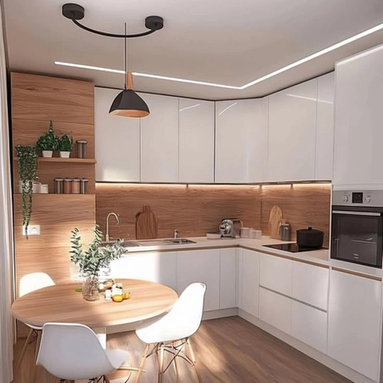
Anti-Mold Plywood Checklist for Hotel Furniture Buyers
Mold in hotel furniture rarely begins as a dramatic leak. More often, it starts behind a wardrobe, under a vanity, beside a cold wall, or along an exposed panel edge that stays damp. The board may look fine at delivery, while moisture-related defects appear months later. A useful anti-mold plywood checklist therefore has to look beyond one label. Buyers need to evaluate the environment, core structure, bonding system, moisture control, and test evidence before approving a bulk order. Where Do Mold Problems Start in Hotel Furniture Projects? Hidden Moisture Zones in Guestroom Furniture Hotel rooms create several moisture conditions in one small space. A wardrobe fixed against an exterior wall may receive little airflow. A bathroom vanity sees splashes, steam, and repeated cleaning. A minibar cabinet can sit near cool surfaces where condensation forms. In tropical or coastal hotels, rooms closed between guests may also stay humid for long periods. Panel edges, drilled holes, backs, joints, and internal layers can take in moisture before the decorative face shows obvious damage. Why a Small Mold Spot Can Become a Project Cost In a hotel, one material specification may be repeated across dozens or hundreds of rooms. A local defect can therefore become room downtime, replacement furniture, another installation visit, delayed handover, warranty claims, and complaints from the operator. Anti-mold performance is not only an appearance issue. For a hotel furniture buyer, it is part of project risk control. Why Does Plywood Develop Mold and Moisture-Related Damage? Humidity, Condensation, and Slow Drying Create the Risk Mold needs favorable moisture conditions. Furniture becomes more vulnerable when humidity remains high, water enters through unfinished edges, or condensation repeatedly wets a cold surface. The problem is often cumulative. A panel takes in some moisture, dries slowly, then repeats the cycle. Poor airflow behind fixed furniture can make this worse. Anti-mold material cannot replace leak repair, ventilation, or humidity control, but it can give the furniture assembly a better margin against these conditions. Moisture Can Also Lead to Swelling and Deformation Moisture can also stress the glue line, swell wood fibers, loosen fastening areas, or change panel flatness. A board used for wardrobes, vanity units, headboards, or built-in cabinets therefore needs a stable core and reliable bonding. Even when buyers search for plywood thickness for cabinets, thickness alone cannot compensate for internal gaps, weak veneers, or a moisture-sensitive structure. What Should Hotel Buyers Check Before Approving Anti-Mold Plywood? The supplier should be able to explain how the panel is built and how it performs. The phrase waterproof plywood is not enough, and neither is a general “mold resistant” claim. Buyer Check Why It Matters Mold or mildew resistance evidence Confirms the anti-mold claim Antibacterial performance Adds hygiene-related evidence Core species and grade Affects stability and fastening Full-connected core structure Reduces internal weak points Panel moisture content Checks moisture control before shipment Water-resistance and bond test Checks glue-line integrity after moisture exposure Edge sealing plan Helps limit moisture entry after fabrication Verify the Structure, Not Just the Surface For hotel furniture, eucalyptus core board construction is worth checking at the exposed edge or approved sample. A hardwood core can support repeated fastening and daily use, but the species name alone is not enough. Buyers should ask whether the core is continuous and whether gaps, overlaps, or filler veneers are present. Cabinet grade plywood should be judged as a complete structure, not only by face appearance. Match the Board to the Furniture Location The risk level differs by application. A wardrobe on an internal dry wall is not exposed like a vanity beside a shower area. A tall cabinet door also places more emphasis on flatness and deformation control. For bulk hotel projects, approve the panel by application: wardrobe, vanity, minibar, wall panel, or other built-in furniture. How Does QIANGYI PLYWOOD Target Moisture-Driven Mold Risk? At QIANGYI PLYWOOD, we approach the problem through the core, adhesive system, and moisture-control process rather than relying on a surface claim alone. Full Eucalyptus Core and Full-Connected Core Construction We use full eucalyptus core options built with continuous eucalyptus veneers. In this structure, full-connected core means the internal veneers are arranged without voids, overlaps, or dead joints. The aim is a more uniform panel with fewer internal weak points. We use 100% eucalyptus core solutions for cabinet and furniture applications. For hotel wardrobes and tall cabinet panels, this matters because core continuity supports more consistent machining, fastening, and dimensional stability. It also gives buyers something practical to inspect on a cut edge before bulk approval. Glutinous Rice Glue Helps Create Less Favorable Conditions for Mold Our Lingmei glutinous rice glue uses glutinous rice flour, magnesium chloride, water, and magnesium oxide. The magnesium components react to create an alkaline environment. More importantly for hotel furniture buyers, an antibacterial and mildew-proof test conducted according to JC/T 2039-2010 on an 18 mm glutinous rice glue multifunctional board recorded an antibacterial rate above 99% and a Grade 0 mildew-proof rating. Under the test rating criteria, Grade 0 means no mold growth was observed. For buyers, this provides direct test evidence for evaluating mold and bacterial resistance instead of relying only on a general anti-mold claim. The adhesive system, moisture control, and tested resistance work together to reduce mold-related risks in furniture exposed to humid conditions. Controlled Drying Keeps Panel Moisture in the 8–12% Range We use a 60-hour temperature-controlled drying process and control board moisture content within 8–12%. This reduces excess moisture before furniture production and supports more stable use in humid conditions. For projects involving humid storage, long shipping routes, or air-conditioned guest rooms, starting with controlled panel moisture is more practical than correcting unstable boards after machining. What Evidence Should Hotel Buyers Put in the Approval File? Testing should support the purchase decision, especially when anti-mold performance is part of the hotel furniture specification. Report No. HJ-RD-26150 covers antibacterial and mildew-proof testing of an 18 mm glutinous rice glue multifunctional board according to JC/T 2039-2010. The tested sample achieved an antibacterial rate above 99% and a Grade 0 mildew-proof rating. The report defines Grade 0 as no mold growth. The antibacterial test used Escherichia coli AS1.90, while the mildew-resistance evaluation included multiple fungal species. For a hotel furniture buyer, this provides direct evidence related to the actual risk being evaluated: whether the panel can resist bacterial growth and mold development under the specified test conditions. For a hotel project, the approval file should include: Core species and full-connected-core confirmation. Antibacterial and mildew-proof test results. The applicable test standard and tested panel specification. Panel moisture specification and moisture-resistance information. Approved thickness, face finish, and edge treatment. A production sample matching the bulk order. These checks make later quality discussions easier because the approved panel has a defined structure and performance basis. Practical Case: Plywood Sourcing for a Humid Philippine Market In early 2026, a Philippine decorative panel and furniture-material distributor contacted us while comparing suppliers for a hot, humid market. The buyer was particularly concerned about environmental performance, moisture resistance, and durability. After seeing our glutinous rice glue plywood in person, the distributor placed a trial order in April with one color. The first shipment received positive market feedback for its ENF grade, surface texture, waterproof performance, and termite resistance. Demand soon expanded beyond the original color, so we developed a customized color sample book for the buyer. The distributor later introduced more finishes through its offline showroom and positioned the glutinous rice glue plywood as a premium product line. For hotel and furniture buyers, this case shows why humid-market sourcing should consider moisture-related performance, structural stability, and consistent product presentation. Meet Us in Guangxi International Forest Products and Wood Products Exhibition For buyers currently sourcing plywood for hotel furniture or other commercial projects, we will attend THE 2026 GUANGXI INTERNATIONAL FOREST PRODUCTS AND WOOD PRODUCTS EXHIBITION from November 21–23, 2026. Visitors can meet our team at Booth D5T-06 at the Nanning International Convention & Exhibition Center to discuss anti-mold plywood, eucalyptus core, full-connected core construction, and project-specific panel requirements. FAQ Q: What is anti-mold plywood for hotel furniture? A: It is plywood selected to reduce mold-related risk in humid interior furniture. Buyers should check mold resistance together with moisture control, bond quality, core continuity, and dimensional stability rather than relying on one anti-mold label. Q: Is anti-mold plywood the same as waterproof plywood? A: No. Water resistance focuses on moisture exposure, bonding, and swelling. Anti-mold performance focuses on resistance to fungal growth. The two properties support each other, but they are not the same test. Q: Why is a full eucalyptus core important for hotel cabinets? A: A full eucalyptus hardwood core provides a dense, consistent base for furniture use. When combined with a full-connected core structure, it also reduces concerns about internal voids, overlaps, and weak joints. Q: Where should mold-resistant plywood be prioritized in a hotel? A: High-risk locations include bathroom vanities, wardrobes against exterior walls, minibar cabinets, lower cabinet panels, and furniture in tropical, coastal, or poorly ventilated rooms. Q: What should buyers request before placing a bulk anti-mold plywood order? A: Request the approved core structure, panel moisture range, antibacterial and mildew-proof test results, applicable test standard, tested panel specification, thickness and surface requirements, and a production sample that matches the final order.
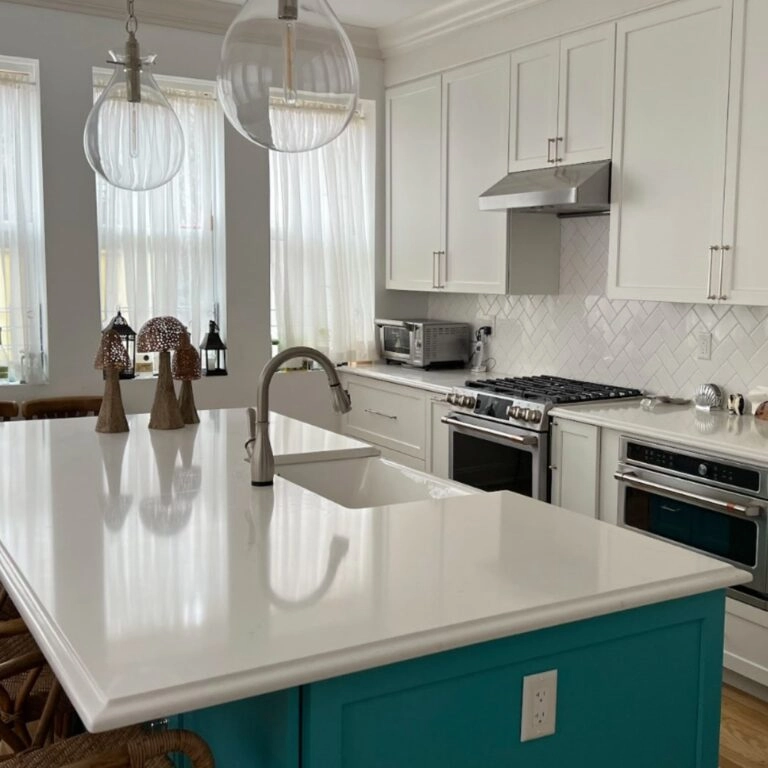
Panduan Plywood Tahan Rayap untuk Mengurangi Klaim Garansi
Masalah rayap pada lemari yang sudah jadi jarang hanya berupa masalah material kecil. Setelah lemari pakaian, lemari dapur, atau unit built-in terpasang, kerusakan dapat memicu inspeksi lokasi, penggantian panel, biaya tenaga kerja, biaya transportasi, dan sengketa garansi. Itulah mengapa kayu lapis tahan rayap harus dievaluasi sebelum pemotongan dimulai. Bagi produsen kabinet, pertanyaan sebenarnya bukanlah apakah lembaran tersebut memiliki label anti-rayap. Melainkan apakah inti, sistem perekat, konstruksi panel, dan bukti pengujian mendukung strategi garansi dengan risiko lebih rendah. Mengapa Kerusakan Akibat Rayap Berujung pada Klaim Garansi Kabinet yang Mahal? Kerusakan tersembunyi seringkali muncul setelah pemasangan. Rayap dapat masuk melalui jalur tanah, retakan dinding, pipa, atau kayu dan kemasan yang terinfestasi. Dalam proyek pembuatan kabinet, area yang sulit dilihat meliputi panel belakang di dekat dinding, alas kabinet, dasar lemari pakaian, dan kabinet wastafel. Plywood mungkin terlihat normal selama proses produksi. Kerusakan mungkin baru terlihat setelah furnitur dipasang, ketika produsen perlu memeriksa lokasi, membongkar kabinet, membuat ulang panel, mengirimkan pengganti, dan mengatur pemasangan kembali. Biayanya dapat dengan mudah membengkak jauh melebihi satu lembar plywood yang rusak. Skenario dapur yang umum adalah kabinet dasar yang dipasang di dekat pipa ledeng di proyek apartemen yang lembap. Jika aktivitas rayap tersembunyi mencapai substrat, penggantian satu panel internal mungkin memerlukan pelepasan perangkat keras, pintu, meja dapur, atau unit yang berdekatan. Dalam proyek lemari pakaian, kerusakan di balik panel belakang yang tetap dapat tetap tidak terlihat sampai pelanggan melihat debu, area berongga, atau bagian yang melemah. Risiko garansi dimulai dari pemilihan material. Permukaan dekoratif tidak boleh disamakan dengan perlindungan terhadap rayap. Plywood melamin mungkin menawarkan hasil akhir yang praktis, tetapi permukaan saja tidak membuktikan bahwa substrat tersebut tahan terhadap rayap. Hal yang sama berlaku untuk kayu lapis laut laminasi atau papan laut. Kinerja terhadap kelembaban dan ketahanan terhadap rayap adalah pertanyaan yang terpisah. Pertanyaan umum dari pembeli adalah “Apakah kayu lapis laut laminasi tahan rayap?” Jawabannya bergantung pada inti, sistem perekat, dan hasil pengujian, bukan pada nama produk. Mengapa Kayu Lapis Masih Rentan Terhadap Serangan Rayap? Plywood terbuat dari veneer kayu, sehingga selulosa tetap berada di dalam panel. Lapisan dekoratif mungkin melindungi permukaan selama penggunaan sehari-hari, tetapi tepi yang dipotong, lubang yang dibor, titik pemasangan perangkat keras, dan veneer bagian dalam tetap penting di lingkungan yang rawan rayap. Kondisi proyek menambah lapisan risiko lain. Unit dapur mungkin terletak dekat dengan saluran air, sementara lemari pakaian dapat dipasang menempel di dinding selama bertahun-tahun. Di pasar tropis atau lembap, akses tersembunyi dan masa pakai yang lama dapat mengubah serangan hama kecil menjadi masalah purna jual yang mahal. Oleh karena itu, "anti rayap" tidak boleh dianggap sebagai janji tanpa batas. Pendekatan yang lebih baik menggabungkan pemilihan panel yang sesuai dengan pemasangan, penyegelan, inspeksi, dan tindakan pengendalian hama lokal yang tepat. Apa yang Seharusnya Dipersyaratkan Produsen Kabinet dari Kayu Lapis Tahan Rayap? Sebelum membandingkan harga, pembeli harus memverifikasi apa yang sebenarnya dipasok. Cek pembelian Apa yang perlu dikonfirmasi Bukti rayap Metode pengujian, sampel, tanggal, nomor laporan, peringkat Bahan inti Jenis kayu dan kualitas veneer Konstruksi inti Inti yang terhubung sepenuhnya, bukan susunan sebagian yang longgar. Spesifikasi kabinet Ketebalan, permukaan, perlakuan tepi, tujuan penggunaan Tanggung jawab pemasok Prosedur purna jual yang jelas Kualitas inti kayu patut mendapat perhatian khusus. Inti kayu eukaliptus sangat berharga untuk pembuatan lemari karena memberikan dasar kayu keras yang kuat dan stabil. Kayu eukaliptus berdiameter besar digambarkan sebagai bahan baku kayu lapis yang dihargai karena kekuatan dan kualitasnya yang stabil. Inti yang terhubung sepenuhnya, atau susunan inti penuh, juga menciptakan struktur internal yang lebih terkontrol daripada inti yang terhubung sebagian. Dalam konstruksi ini, lapisan inti disusun secara kontinu, sementara perekat diaplikasikan lapis demi lapis. Kedua poin tersebut tidak boleh digunakan sebagai pengganti pengujian rayap. Sebaliknya, keduanya membantu pembeli menentukan substrat yang lebih konsisten. Ketebalan kayu lapis untuk kabinet juga perlu sesuai dengan desain sebenarnya. Panel yang telah diuji dengan ketebalan 18 mm tidak boleh secara otomatis dianggap sebagai bukti untuk setiap ketebalan atau konstruksi. Bagaimana QIANGYI PLYWOOD Mengatasi Risiko yang Berkaitan dengan Rayap pada Panel Kayu Lapis? Di QIANGYI PLYWOOD, kami mengatasi masalah ini melalui sistem perekat, pemilihan inti kayu eukaliptus, dan konstruksi inti yang terhubung sepenuhnya, alih-alih hanya mengandalkan klaim permukaan. Lem beras ketan Lingmei bekerja melalui struktur yang terikat. Plywood Lem Beras Ketan kami menggunakan Lem Beras Ketan Lingmei yang terbuat dari tepung beras ketan, magnesium klorida, magnesium oksida, dan air. Setelah pengeringan, magnesium klorida dan magnesium oksida menciptakan lingkungan perekat basa. Pendekatan teknis kami adalah mengubah lingkungan asam-basa di dalam kayu melalui lingkungan perekat basa ini, menciptakan kondisi yang tidak menguntungkan bagi aktivitas rayap. Hal ini penting karena produksi kabinet melibatkan pemotongan, pengeboran, pemasangan engsel, dan pemrosesan tepi. ProteTindakan yang terkait dengan sistem pengikatan internal lebih relevan untuk operasi tersebut daripada klaim yang hanya didasarkan pada permukaan akhir. Inti kayu putih dan susunan inti penuh mendukung konsistensi. Untuk aplikasi kabinet, kami menekankan penggunaan inti kayu eukaliptus kelas satu. Kayu eukaliptus memberikan dasar struktural yang kuat, sementara peringkat ketahanan terhadap rayap berasal dari sistem panel yang telah diuji secara menyeluruh, bukan hanya dari jenis kayunya saja. Lapisan veneer juga disusun sebagai inti yang terhubung sepenuhnya dan direkatkan lapis demi lapis. Konstruksi ini membutuhkan pemilihan inti yang lebih cermat dan memberikan panel susunan internal yang lebih seragam. Proses selanjutnya dilanjutkan dengan pengepresan dingin yang diperpanjang, pengeringan terkontrol, dan pengawetan. Urutan produksi meliputi pengepresan dingin pemanasan sendiri selama 24 jam, pengeringan selama 60 jam, dan pengkondisian selama lebih dari 15 hari. Bagi pabrik kabinet, nilai praktisnya adalah konsistensi di seluruh sisi kabinet, rak, pintu, lemari pakaian, dan komponen lainnya. Studi Kasus: Mengurangi Risiko Rayap dan Risiko Purna Jual di Mauritius Pelanggan lama kami di bidang manufaktur furnitur di Mauritius terus memesan ulang kontainer penuh kayu lapis inti kayu putih 100% berkualitas furnitur. Iklim pulau setempat lembap dan menantang, di mana panel biasa mungkin mengalami pengelupasan, deformasi, dan serangan rayap seiring waktu. Untuk pelanggan ini, kami menyediakan kayu lapis yang terbuat dari inti kayu putih 100% yang terhubung penuh dan lem beras ketan, dikombinasikan dengan pemrosesan terkontrol untuk stabilitas panel yang lebih baik. Uji ketahanan rayap Grade 9.5 juga memberikan bukti yang lebih jelas kepada pembeli saat memilih material untuk produksi kabinet. Menurut pelanggan, penggunaan kayu lapis kami untuk kabinet telah mengurangi kekhawatiran tentang masalah purna jual. Kualitas batch yang konsisten juga membantu pabrik mempertahankan kinerja pemotongan, perilaku penahan sekrup, dan pengaturan produksi yang serupa di seluruh pesanan berulang. Apa Arti Ujian Tingkat 9.5 bagi Risiko Pengadaan dan Garansi? Klaim ketahanan terhadap rayap didukung oleh Laporan Uji GIZ/TR-2024-0301-0186, yang dikeluarkan oleh Institut Zoologi Guangdong, Pusat Analisis dan Pengujian Akademi Ilmu Pengetahuan Tiongkok. Sampel yang diuji adalah Kayu Lapis Multifungsi Lem Beras Ketan, 1220 × 2440 × 18 mm, dan dasar pengujiannya adalah GB/T 18260-2015. Nomor laporan uji rayap yang terkait juga tercantum dalam catatan pengujian produk. Selama pengujian rayap dalam ruangan selama empat minggu, laporan mencatat kerusakan rayap yang ringan, hanya dengan satu hingga dua terowongan rayap atau jejak infestasi. Spesimen tersebut menerima peringkat kerusakan rayap Grade 9,5. Hasil ketahanan rayap Grade 9,5 juga disertakan dalam informasi kinerja panel. Bagi pembeli, nilai kuncinya adalah ketertelusuran, bukan janji mutlak. Nomor laporan, konstruksi sampel, ketebalan, metode pengujian, dan hasilnya dapat diperiksa terhadap material yang dipesan. Hal ini juga membantu importir dan pabrik kabinet menjawab pelanggan hilir dengan bukti spesifik, alih-alih hanya mengandalkan deskripsi produk umum. Urutan pembelian yang praktis adalah: 1. Identifikasi apakah proyek tersebut memiliki risiko serangan rayap yang signifikan. 2. Sesuaikan ketebalan dan permukaan panel dengan desain kabinet. 3. Konfirmasikan inti kayu eukaliptus dan konstruksi inti yang terhubung sepenuhnya di tempat yang ditentukan. 4. Mintalah laporan ketahanan terhadap rayap untuk panel yang bersangkutan. 5. Simpan laporan dan spesifikasi pembelian bersama dengan catatan mutu proyek. Untuk proyek yang menggunakan kayu lapis lem beras ketan generasi kedua kami, kami juga memberikan komitmen tanggung jawab anti-serangga dan anti-rayap. Jika terjadi kerusakan akibat rayap atau serangga penggerek kayu dalam kondisi yang berlaku, kami akan bertanggung jawab atas penggantian setelah penjualan. Bagi produsen kabinet, hal ini menciptakan jalur penanganan risiko yang lebih jelas daripada label "anti-rayap" yang samar. Temui Kami di Pameran Produk Hutan dan Kayu Internasional Guangxi 2026 Jika Anda mencari plywood tahan rayap, plywood inti kayu putih, atau panel inti yang terhubung sepenuhnya untuk proyek kabinet dan furnitur, Anda dapat bertemu tim kami di PAMERAN PRODUK HUTAN DAN PRODUK KAYU INTERNASIONAL GUANGXI 2026. Kami menyambut produsen kabinet, importir plywood, distributor, dan pembeli proyek untuk mendiskusikan spesifikasi panel, persyaratan ketahanan terhadap rayap, konstruksi inti, dan kebutuhan pengadaan dengan kami secara langsung. Nama Acara: PAMERAN PRODUK HUTAN DAN PRODUK KAYU INTERNASIONAL GUANGXI 2026 Nomor Stan: D5T-06 Tanggal: 21-23 November 2026 Lokasi: Pusat Konvensi & Pameran Internasional Nanning Pertanyaan yang Sering Diajukan (FAQ) T: Apakah plywood laminasi untuk keperluan kelautan tahan terhadap rayap? A: Tidak secara otomatis. Kinerja terkait kelembapan dan ketahanan terhadap rayap harus diperiksa secara terpisah. Konfirmasikan substrat, sistem perekat, dan laporan uji rayap. T: Apakah plywood melamin tahan rayap? A: Permukaan melamin saja tidak membuat substrat tahan rayap. Inti dan sistem perekat internal masih perlu dievaluasi. T: Mengapa menggunakan inti kayu eukaliptus pada kayu lapis kabinet tahan rayap? A: Inti kayu eukaliptus memberikan dasar struktural yang kuat dan stabil.Pada sistem panel ini, ketahanan terhadap rayap berasal dari konstruksi dan sistem perekat yang lengkap dan telah teruji. T: Apa yang dimaksud dengan inti yang terhubung sepenuhnya? A: Artinya, lapisan veneer bagian dalam membentuk inti yang kontinu dan terpasang rapat, bukan susunan yang terhubung sebagian. Hal ini mendukung struktur internal yang lebih konsisten untuk proses pembuatan kabinet. T: Apakah plywood tahan rayap Grade 9.5 dapat menghilangkan semua klaim garansi? A: Tidak. Bukti pengujian Grade 9.5 dapat mengurangi ketidakpastian pemilihan material, tetapi spesifikasi yang benar, pemasangan, pengelolaan kelembaban, inspeksi, dan pengendalian rayap di lokasi tetap penting.
Panduan Plywood Tahan Api B1 untuk Mengurangi Risiko
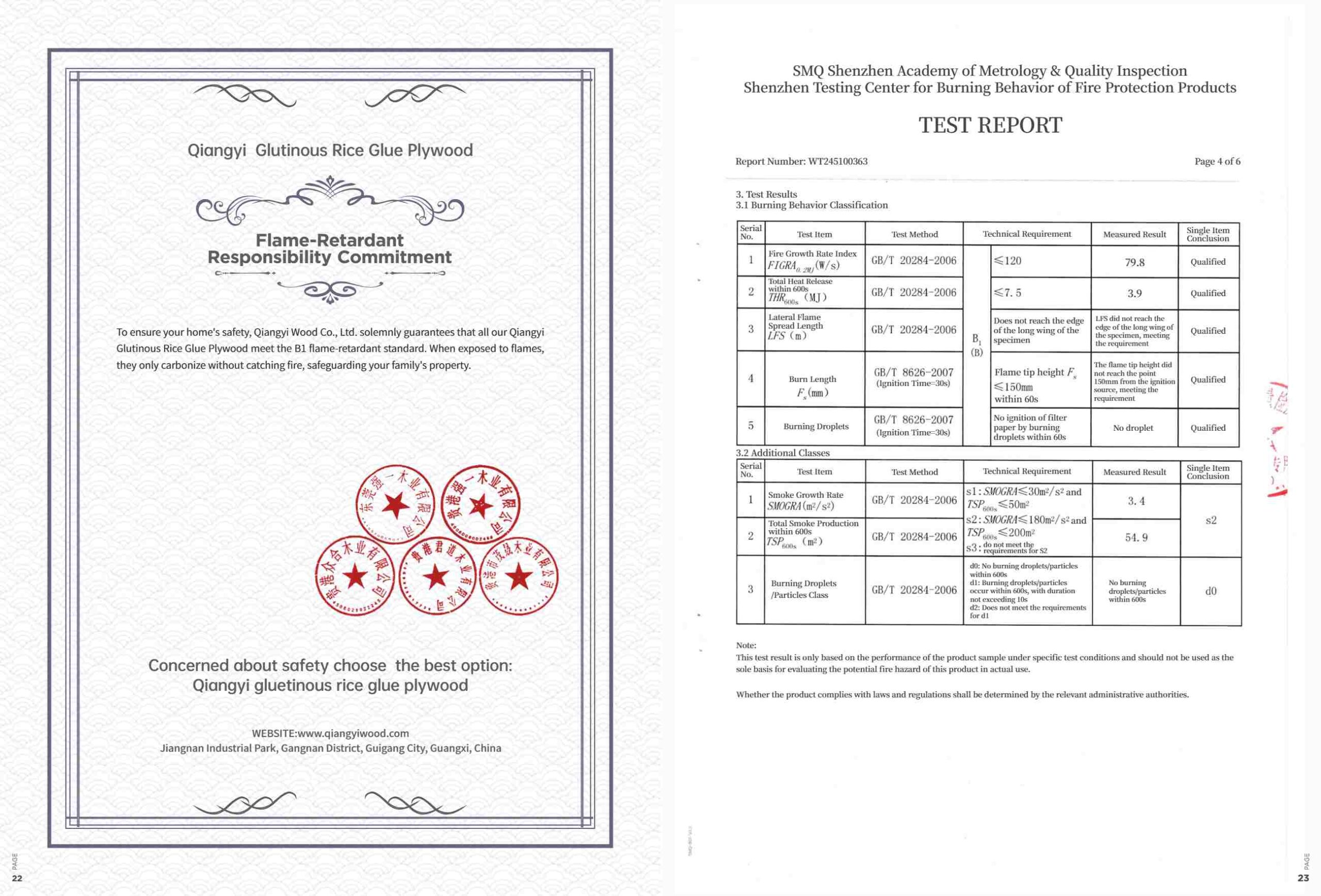
Biaya Tinggi Akibat Kegagalan Kepatuhan Pencegahan Kebakaran pada Proyek Komersial Memperoleh izin untuk ruang komersial seperti hotel, gedung publik, dan toko ritel besar melibatkan peraturan keselamatan yang ketat. Di antara peraturan yang paling penting adalah kode kebakaran bangunan. Ketika kontraktor interior atau pembeli proyek mencari material untuk furnitur khusus, panel dinding, atau dekorasi interior, bahaya tersembunyi seringkali terletak pada inti panel kayu yang digunakan. Gagal dalam audit kepatuhan kebakaran karena panel kayu yang tidak sesuai standar adalah skenario yang menyebabkan kecemasan yang signifikan bagi manajer proyek. Oleh karena itu, memahami nuansa kayu lapis tahan api bukan hanya kebutuhan teknis tetapi juga strategi penting untuk kelangsungan bisnis. Mengapa Kayu Lapis Standar atau di Bawah Standar Gagal dalam Kondisi Kebakaran? Kerentanan banyak panel konstruksi selama insiden kebakaran berasal langsung dari komposisi internal dan proses pembuatannya. Panel kayu standar atau panel kayu tahan api yang diproduksi dengan buruk seringkali memiliki kelemahan struktural tersembunyi yang menjadi fatal di bawah panas ekstrem. Masalah utamanya adalah ruang kosong atau celah di dalam lapisan inti panel standar. Panas tinggi mengenai kantong udara kecil ini. Kemudian, kantong udara tersebut melepaskan oksigen yang mempercepat pembakaran. Material tersebut malah memperparah api alih-alih melawan panas. Hal ini memungkinkan api menyebar dengan cepat melalui struktur bangunan di dalam ruangan. Selain itu, lem yang digunakan dalam proses pembuatan normal juga menimbulkan masalah besar. Banyak panel lama menggunakan resin urea-formaldehida. Lem umum ini tidak memiliki kekuatan kimia yang dibutuhkan untuk bertahan pada suhu tinggi. Ketika terjadi kebakaran, lem ini cepat rusak. Hal ini merusak kekuatan struktural panel. Kemudian, panel akan hancur. Lebih buruk lagi, peleburan resin biasa ini menghasilkan asap yang sangat beracun. Asap ini lebih berbahaya bagi manusia dan petugas pemadam kebakaran daripada api itu sendiri. Kriteria Esensial untuk Kayu Lapis Tahan Api B1 Sejati Pembeli B2B ingin mengurangi risiko besar ini dan melewati audit proyek dengan mudah. Untuk melakukan ini, mereka harus menetapkan aturan ketat saat memilih material interior. Panel tahan api yang sesungguhnya jauh lebih dari sekadar lapisan permukaan. Panel tersebut membutuhkan inti yang dirancang khusus untuk kondisi ekstrem. Aturan pertama adalah struktur bagian dalam yang halus dan berdensitas tinggi. Inti harus benar-benar padat. Ini menghilangkan kantong udara yang memicu api. Struktur tebal ini menghentikan panas dan api agar tidak cepat masuk. Kedua, sistem perekat harus tahan panas dan aman secara alami. Perekat yang menyatukan lapisan-lapisan tersebut harus tetap merekat pada suhu yang sangat tinggi. Perekat tersebut tidak boleh terurai menjadi gas berbahaya. Terakhir, material tersebut harus melewati pengujian yang ketat dan jelas untuk mendapatkan peringkat keamanan yang diketahui, seperti peringkat B1. Peringkat B1 menunjukkan bahwa material tersebut sulit terbakar. Material ini memperlambat penyebaran api. Material ini juga memadamkan api sendiri ketika sumber panas hilang. Untuk proyek komersial, meminta bukti tertulis atas fakta-fakta ini adalah suatu keharusan untuk mengelola risiko. Bagaimana QIANGYI PLYWOOD Mengurangi Risiko Kebakaran dalam Konstruksi Menanggapi kebutuhan kritis akan material keselamatan yang andal, QIANGYI PLYWOOD telah merekayasa solusi yang secara langsung menargetkan kerentanan struktural material konvensional. Dengan menciptakan kembali pendekatan manufaktur, papan multi-lapisan generasi kedua ini memberikan perlindungan yang kuat terhadap bahaya kebakaran, menjaga properti dan kelangsungan bisnis. Inti Kayu Eukaliptus & Struktur yang Terhubung Sepenuhnya dengan Inti untuk Integritas Struktural Landasan kemampuan pertahanan ini terletak pada pemilihan material dan teknik perakitan. Plywood canggih ini menggunakan inti kayu eucalyptus premium, spesies kayu yang terkenal karena kepadatan dan kekuatannya yang tinggi secara alami. Untuk menghilangkan rongga internal, digunakan proses manufaktur yang terhubung sepenuhnya dengan inti. Selama proses ini, setiap lapisan veneer kayu putih berkualitas tinggi disejajarkan dan direkatkan dengan cermat. Ini menciptakan arsitektur internal yang kokoh dan tanpa celah. Ketika terkena panas yang intens, kepadatan tanpa sambungan ini bertindak sebagai penghalang fisik, mencegah material tersebut kekurangan oksigen yang diperlukan untuk pembakaran cepat. Akibatnya, panel mempertahankan integritas strukturalnya untuk jangka waktu yang lama, mencegah runtuhnya lapisan dinding atau furnitur hotel khusus secara tiba-tiba, sehingga memperlambat perkembangan kebakaran secara keseluruhan. Teknologi Tahan Api B1 & Lem Beras Ketan Ramah Lingkungan Penghalang fisik inti kayu putih diperkuat oleh sistem pertahanan kimia yang revolusioner. Alih-alih mengandalkan resin sintetis yang mudah menguap, proses pembuatannya menggunakan lem beras ketan Lingmei yang dipatenkan. Perekat inovatif ini diformulasikan dari pati beras ketan alami yang dikombinasikan dengan magnesium klorida dan magnesium oksida. Magnesium oksida adalah penghalang panas alami yang kuat. Ia memiliki titik leleh yang sangat tinggi. Mencampurnya ke dalam lem beras ketan memberikan ketahanan panas yang tinggi pada seluruh panel. Di bawah panas ekstrem, panel mengalami proses karbonisasi yang stabil. Panel tersebut tidak terbakar secara aktif. Sebaliknya, ia bertindak seperti arang yang terbakar.Selain itu, lem ini tidak mengandung formaldehida atau benzena tambahan. Karena itu, lem ini tidak mengeluarkan asap beracun saat panas. Aksi ganda dari karbonisasi fisik dan tidak adanya asap beracun memastikan lem ini memenuhi peraturan keselamatan dan lingkungan yang paling ketat. Hal ini sangat mengurangi risiko hukum bagi kontraktor proyek. Bukti Terverifikasi: Keamanan Terbukti untuk Pembeli B2B Bagi manajer pengadaan dan kontraktor interior, klaim pemasaran harus didukung oleh bukti konkret. Nilai sebenarnya dari suatu produk keselamatan ditunjukkan melalui kinerjanya di bawah pengujian yang ketat dan validasinya oleh badan pengatur yang berwenang. Uji Paparan Api Langsung: Kayu Lapis Beras Ketan vs. Kayu Lapis Biasa Bukti visual memberikan bukti yang meyakinkan tentang kinerja material. Dalam uji paparan api langsung komparatif, perbedaan perilaku antara kayu lapis biasa dan kayu lapis beras ketan sangat mencolok. Ketika terpapar api terbuka terus-menerus, kayu lapis biasa cepat terbakar, mempertahankan api, dan cepat terurai menjadi abu. Sebaliknya, ketika panel beras ketan generasi kedua menghadapi nyala api langsung yang sama persis, panel tersebut menunjukkan ketahanan yang luar biasa. Permukaannya perlahan menghangus, menciptakan lapisan karbonisasi pelindung, tetapi tidak mudah terbakar atau menyala terus-menerus. Setelah bahan bakar di dalamnya habis terbakar, bara api yang tersisa akan padam dengan sendirinya. Kinerja yang dapat diamati ini memberikan jaminan langsung akan kemampuan material tersebut untuk menahan bahaya kebakaran dalam skenario dunia nyata. Sertifikasi Resmi & Kepatuhan untuk Audit Proyek yang Lancar Untuk menjamin audit bangunan yang lancar, kepatuhan yang terdokumentasi sangat penting. Produk ini didukung oleh pengujian komprehensif dari Akademi Metrologi & Inspeksi Mutu Shenzhen (SMQ), sebuah lembaga pengujian yang diakui. Menurut Laporan Uji resmi WT245100363, produk ini sepenuhnya memenuhi persyaratan klasifikasi B1 (B) yang ketat. Data dari laporan ini memberikan jaminan konkret bagi pembeli B2B. Indeks Laju Pertumbuhan Api (FIGRA) diukur pada angka yang sangat rendah yaitu 79,8 W/s, jauh di bawah batas ketat ≤ 120 W/s. Lebih lanjut, Total Pelepasan Panas dalam 600 detik (THR) tercatat hanya sebesar 3,9 MJ, dengan mudah melampaui persyaratan ≤ 7,5 MJ. Laporan ini juga menegaskan kinerja yang sangat baik dalam kelas keselamatan tambahan, mencapai peringkat s2 untuk produksi asap dan peringkat d0, yang menandakan tidak ada tetesan atau partikel yang terbakar selama pengujian. Metrik bersertifikat ini secara hukum memvalidasi komitmen bahwa material tersebut hanya mengalami karbonisasi tanpa terbakar, memberikan kontraktor dokumentasi yang tak terbantahkan yang dibutuhkan untuk melewati inspeksi keselamatan komersial yang ketat dan sepenuhnya menghindari biaya besar akibat pengerjaan ulang. Temui QIANGYI PLYWOOD di Pameran Produk Hutan dan Kayu Internasional Guangxi 2026 Bagi para pembeli, distributor, kontraktor, dan tim pengadaan proyek yang mencari solusi kayu lapis yang andal, QIANGYI PLYWOOD menyambut para pengunjung untuk bertemu langsung dengan kami. Di pameran ini, pengunjung dapat mempelajari lebih lanjut tentang produk kayu lapis kami, mendiskusikan persyaratan proyek, dan berkomunikasi langsung dengan tim kami tentang pemilihan material dan potensi kerja sama. Nama Acara: PAMERAN PRODUK HUTAN DAN PRODUK KAYU INTERNASIONAL GUANGXI 2026 Nomor Stan: D5T-06 Lokasi: Pusat Konvensi & Pameran Internasional Nanning Tanggal: 21–23 November 2026 Pertanyaan yang Sering Diajukan (FAQ) T: Apa arti plywood tahan api B1 untuk proyek komersial? A: Dalam konteks konstruksi komersial, peringkat B1 menandakan material yang sulit terbakar dan diklasifikasikan sebagai tidak mudah terbakar dalam kondisi standar. Untuk hotel, pusat perbelanjaan, dan bangunan publik, penggunaan material bersertifikat B1 bukanlah pilihan; ini adalah persyaratan wajib untuk mematuhi kode bangunan setempat. Menggunakan material yang memenuhi standar ini adalah metode utama bagi kontraktor untuk memastikan mereka lulus audit keselamatan, sehingga mengurangi tanggung jawab hukum dan menghindari penundaan proyek. T: Bagaimana kayu lapis tahan api mengurangi risiko pengerjaan ulang proyek? A: Membeli panel kayu tahan api bersertifikat asli di awal proyek merupakan keputusan manajemen risiko strategis. Hal ini menjamin bahwa instalasi interior akan lolos inspeksi keselamatan wajib pada percobaan pertama. Kegagalan inspeksi ini karena material yang tidak sesuai standar akan mengakibatkan skenario buruk berupa pembongkaran pekerjaan yang telah selesai, pembelian material baru, dan pembayaran tenaga kerja tambahan untuk instalasi. Investasi awal pada material yang sesuai standar sepenuhnya menghilangkan biaya pengerjaan ulang yang besar ini. T: Mengapa inti kayu eucalyptus yang terhubung sepenuhnya penting untuk ketahanan terhadap api? A: Struktur fisik panel sangat penting untuk kinerjanya di bawah panas. Proses yang sepenuhnya terhubung ke inti menghilangkan celah dan rongga mikroskopis yang secara alami ada di antara lapisan material yang kurang halus. Dengan menghilangkan celah-celah ini, jalur oksigen untuk menyulut api terputus. Selain itu, kayu eukaliptus adalah kayu dengan kepadatan alami yang tinggi. T: Apakah B1 tahan api?Apakah kayu lapis bisa digunakan untuk furnitur khusus hotel? A: Ya, ini adalah material yang ideal untuk aplikasi tersebut. Lemari pakaian hotel, lemari khusus, dan pelapis dinding dekoratif harus mematuhi standar keselamatan publik yang ketat. Material generasi kedua khusus ini tidak hanya memenuhi persyaratan ketahanan api B1 yang ketat, tetapi juga menggunakan perekat beras ketan yang unik. Ini memastikan bahwa furnitur khusus tetap sepenuhnya bebas dari emisi formaldehida, memenuhi peraturan keselamatan yang ketat dan standar kualitas udara dalam ruangan yang tinggi secara bersamaan. T: Bagaimana cara memilih kayu lapis terbaik untuk mengurangi risiko kebakaran di gedung-gedung publik? A: Saat memilih material untuk meminimalkan risiko, pembeli komersial harus menetapkan kriteria pengadaan yang ketat. Pertama, mintalah dokumentasi resmi yang terverifikasi, seperti laporan uji SMQ, yang membuktikan klasifikasi B1 dan skor FIGRA yang sangat baik. Kedua, tanyakan tentang komposisi internal; prioritaskan material yang memiliki spesies dengan kepadatan tinggi seperti kayu putih dan struktur inti yang mulus dan terhubung sepenuhnya.
Tips Membeli Plywood Tahan Lembap untuk Meja Rias Kamar Mandi
The Hidden Cost of Bathroom Vanity Delamination When manufacturing cabinets for wet environments, the commercial stakes are incredibly high. Bathrooms experience constant humidity, steam from daily showers, and frequent water splashes around the washbasin. If you supply vanities made from inadequate materials, moisture will inevitably penetrate the exposed edges. This intrusion leads directly to edge swelling, adhesive failure, and severe veneer delamination. For cabinet manufacturers and interior contractors, these material failures are not just minor inconveniences. They translate into expensive after-sales claims, free part replacements, and wasted manual labor hours. Furthermore, delivering failing products destroys your brand reputation, leading to negative reviews and drastically reduced profit margins. Finding a truly reliable waterproof material for kitchen cabinets and bathroom furniture is essential to eliminating these hidden financial drains, protecting your business, and keeping your end-user clients fully satisfied over the long term. Why Standard Plywood Fails in High-Humidity Bathrooms Many normal waterproof plywood choices sold today just cannot handle steady bathroom dampness. The main reason usually comes down to two basic things. These are the wood type and the adhesive structure. Most regular boards use softwood cores or medium-density fiberboard. Softwood has a low physical density. It also has wide, open cell pores. These pores pull in water drops from the damp air. After the water gets inside, the inner wood fibers swell fast. Also, normal moisture-resistant boards use standard urea-formaldehyde resin glue. This common chemical glue is not stable when it faces steady wetness and heat changes. It goes through bad chemical reactions. It breaks down over time and loses its main grip strength. This breakdown surely makes the surface layers peel off from the center. To fix this endless loop of failure, we must look past normal making methods. We must avoid weak material pairings. Key Criteria: How to Choose Plywood for Bathroom Furniture Selecting the best plywood for high humidity areas requires moving past basic marketing claims and focusing strictly on material science. A truly good board must have a high-density core. This core physically stops fast water entry before it begins. Also, it requires a highly stable, water-resistant adhesive that will not chemically break down under extreme moisture stress. You must also think about the full cost of ownership. Do not just look at the first buying price. High-quality anti-swelling plywood for cabinets might cost a bit more at the start. However, it strongly guards your long-term profits. It does this by wiping out warranty claims and repair visits. It also stops bad buyer feedback. How QIANGYI PLYWOOD Solves Vanity Swelling To completely resolve the commercial pain points of edge swelling and delamination, we completely reengineered our board structure from the inside out. We eliminated the conventional materials that cause typical industry failures and developed a targeted solution specifically tailored for high-humidity applications, that is glutinous rice glue plywood. Our approach combines a premium hardwood substrate with an innovative natural adhesive to deliver unmatched stability. 100% Eucalyptus Core for Superior Density The base of our moisture-resistant board is a full eucalyptus core. Eucalyptus is a fine hardwood. It acts very differently from the softwood that other brands use. Eucalyptus has a much higher physical density. Because of this, its inner cell layout has much fewer open spaces. This thick hardwood makeup builds a strong physical wall. This wall greatly slows down water entry. We use a 100% eucalyptus plywood build with Grade 1 core layers. Because of this, the glutinous rice glue plywood stops the fast water intake that usually ruins bathroom vanities. This keeps the shape very stable, even in the wettest rooms. It protects the physical strength of your finished cabinets. Glutinous Rice Glue for Waterproof Bonding To complement our dense hardwood core, we utilize an advanced glutinous rice glue. This specialized, formaldehyde-free adhesive is formulated from glutinous rice starch, magnesium chloride, water, and magnesium oxide. Unlike traditional adhesives that weaken when wet, our glutinous rice glue features strong penetration capabilities. We apply this glue layer by layer, allowing it to completely fill the microscopic gaps between the eucalyptus wood fibers. Once cured, it forms a dense, water-resistant crystalline network that physically blocks water molecules from touching the wood fibers. Compared to traditional urea-formaldehyde resin adhesives, the glutinous rice glue structure exhibits higher stability in humid environments, significantly reducing the risk of ungluing and delamination caused by moisture. Proven Evidence: Will It Survive the Bathroom Environment? B2B buyers need more than just promises; they need verifiable data to mitigate procurement risks. Class II Waterproof Certification & Boiling Test QIANGYI PLYWOOD’s manufacturing standards are validated by rigorous third-party evaluations. As detailed in our Test report, our glutinous rice glue plywood has officially achieved Class II waterproofing certification. This strict classification means the board is specially designed to endure damp conditions and short-term hot water immersion. During the mandatory immersion peeling tests, our samples were submerged in 63 degrees Celsius hot water. The test results demonstrated a flawless 100% pass rate with zero delamination. This official testing guarantees that our boards possess the structural integrity necessary to survive the harsh realities of a bathroom environment without compromising your finished product. 72-Hour Immersion Test vs. Ordinary Plywood Real-world testing visually demonstrates our board’s superiority. In a recent video test demonstrating our plywood’s true waterproof capabilities, we conducted a direct immersion comparison. We submerged our glutinous rice board alongside ordinary boards in water for an extended 72-hour period. The results were undeniable. While the standard materials exhibited significant, visible swelling, our board remained remarkably stable. The thickness of our plywood only changed microscopically, moving from 18.20mm to 18.39mm after 72 hours underwater. In stark contrast, the ordinary plywood swelled significantly from 18.13mm to 19.05mm, and the MDF board expanded even more drastically from 18.30mm to 20.66mm. The test results demonstrate that under the same immersion conditions, the thickness variation of our eucalyptus core glutinous rice glue plywood is significantly lower than that of ordinary plywood and MDF. For bathroom vanity manufacturers, this lower expansion risk helps reduce cabinet deformation, edge cracking, veneer delamination, and after-sales claims, thereby improving project delivery stability and long-term profit margins. Real-World Case Study: Success in the Humid Philippines A leading furniture materials distributor in the Philippines faced challenges with the country’s hot, humid climate. Seeking a durable solution, they partnered with us after discovering our Glutinous Rice Glue plywood. The results were exceptional. The plywood’s natural adhesive, ENF grade, and superior waterproof and termite-proof capabilities perfectly addressed local market needs. These features significantly reduced their clients’ maintenance and rework costs caused by moisture swelling and severe termite damage. Starting with a conservative single-color trial order, the overwhelming positive market response led the distributor to quickly expand their range. Today, they feature a fully customized color palette and successfully promote our glutinous rice plywood as their flagship premium series. Experience Our Waterproof Technology in Person If you are looking to completely resolve the commercial pain points of edge swelling and delamination, we invite you to inspect our premium moisture-resistant plywood firsthand. Come meet our experts and see the physical proof of our material stability. *Event Name:THE 2026 GUANGXI INTERNATIONAL FOREST PRODUCTS AND WOOD PRODUCTS EXHIBITION *Booth Number:D5T-06 *Location/Address:Nanning International Convention & Exhibition Center *Date:November 21-23, 2026 FAQ Q: What is the best waterproof plywood for bathroom cabinets? A: While no wood product is entirely impervious to water forever, the most reliable commercial solution is a combination of a dense hardwood core and a highly water-resistant adhesive. A full eucalyptus core combined with glutinous rice glue currently offers the absolute best defense against edge swelling and delamination in humid bathroom conditions, making it ideal for professional vanity manufacturing. Q: Does full eucalyptus core plywood prevent edge swelling? A: Yes, it significantly reduces the risk. Eucalyptus is a dense hardwood, which means its internal cellular structure is much tighter than that of typical softwood. This high density naturally minimizes the empty pores where water can accumulate, physically restricting moisture penetration and preventing the vanity edges from expanding when exposed to bathroom humidity. Q: Why should cabinet manufacturers choose glutinous rice plywood over standard moisture-resistant boards? A: Standard boards rely on conventional chemical adhesives that gradually degrade when exposed to continuous moisture. Our glutinous rice glue creates a stable crystalline structure that locks out water molecules and maintains its strong bond even after severe water exposure. This directly translates to fewer customer complaints, zero rework, and a heavily protected brand reputation. Q: How can I verify the waterproof performance of plywood before buying? A: You should always request official laboratory testing data from your supplier. Look for documents like our test report, which confirms a 100% pass rate in Class II hot water immersion peeling tests. Additionally, seek out visual proof, such as our 72-hour water submersion videos, to directly compare material expansion rates before committing to a purchase. Q: Will using moisture-resistant plywood increase my manufacturing costs? A: You must evaluate this through the precise lens of total cost of ownership. While a premium full eucalyptus board might have a marginally different upfront purchase price, it completely eliminates the hidden costs of vanity failures. By preventing expensive after-sales repairs, free replacement parts, and lost future business due to bad reviews, it ultimately increases your overall profitability and business growth.
Panduan Plywood Tahan Deformasi untuk Interior Lembap
Pintu kabinet bisa saja keluar dari bengkel dalam keadaan rata dan melengkung beberapa bulan kemudian. Di apartemen yang lembap, hotel di tepi pantai, dapur, meja rias, dan lemari pakaian di samping dinding yang lembap, kayu lapis menghadapi perubahan kelembapan yang berulang. Bagi kontraktor interior, hal itu dapat berarti pengerjaan ulang, penundaan penyerahan proyek, dan klaim garansi. Pertanyaan kuncinya adalah bagaimana menentukan spesifikasi kayu lapis yang tahan terhadap deformasi. Mengapa Deformasi Kayu Lapis Menjadi Masalah yang Mahal dalam Pemasangan Interior di Lingkungan yang Lembap? Di mana Deformasi Akibat Kelembapan Muncul Setelah Pemasangan Deformasi sering terjadi pada panel yang lebar, sering digunakan, atau terpapar secara tidak merata. Pintu lemari dapur dapat melengkung, meja rias kamar mandi dapat cekung di dekat dinding yang lembap, pintu lemari pakaian yang tinggi dapat mengalami celah yang tidak rata, dan perabot hotel di dekat dinding eksterior dapat mengalami siklus kelembapan berulang. Tanda-tanda awalnya kecil: tepi tidak lagi rata, bagian depan laci melengkung, atau lapisan tepi terangkat. Setelah perlengkapan terpengaruh, cacat visual berubah menjadi cacat fungsional. Dari Panel yang Melengkung hingga Pengerjaan Ulang, Penundaan, dan Panggilan Balik Garansi Penggantian panel mungkin memerlukan kunjungan lokasi lain, pengecatan ulang, penyesuaian engsel, dan koordinasi dengan klien. Pada proyek multi-ruangan, biayanya akan berlipat ganda. Pergeseran panel menyebabkan ketidaksejajaran; ketidaksejajaran menimbulkan pekerjaan koreksi; pekerjaan koreksi menghabiskan tenaga kerja, material, dan jadwal. Oleh karena itu, stabilitas dimensi harus dicantumkan dalam spesifikasi pengadaan. Mengapa Kayu Lapis Melengkung, Terlipat, atau Terkelupas di Dalam Ruangan yang Lembap? Siklus Kelembapan Menyebabkan Pembengkakan dan Penyusutan yang Tidak Merata Plywood dilaminasi silang, yang membantu menahan pergerakan kayu, tetapi lapisan veneer-nya tetap menyerap dan melepaskan kelembapan seiring perubahan kelembaban. Masalah mulai muncul ketika pergerakan tersebut tidak merata. Pintu lemari di samping wastafel mungkin menyerap lebih banyak kelembapan di bagian tepinya daripada di bagian depannya yang dekoratif. Lemari pakaian yang diletakkan di dinding yang dingin mungkin menghadapi kondisi yang berbeda di bagian belakang dan depan. Tekanan yang dihasilkan dapat muncul sebagai pembengkokan, cekungan, puntiran, atau kegagalan ikatan lokal. Konstruksi Inti yang Tidak Seimbang dan Tegangan Sisa Memperparah Masalah Kelembapan seringkali menjadi pemicu, bukan satu-satunya penyebab. Celah inti, kelembapan veneer yang tidak merata, simetri yang buruk, atau tegangan sisa dapat membuat panel lebih sensitif. Susunan lapisan yang seimbang mendistribusikan gaya secara merata di seluruh lembaran. Inti yang tidak beraturan dapat bereaksi tidak merata, membuat ketidakstabilan yang tersembunyi menjadi lebih jelas setelah pemotongan. Mengapa Panel yang Lebih Tebal, Laminasi Permukaan, atau Perbaikan Perangkat Keras Saja Tidak Cukup Ketebalan meningkatkan kekakuan tetapi tidak memperbaiki inti yang tidak stabil. Laminasi permukaan dapat memperlambat masuknya kelembapan, namun tepi yang dipotong, lubang yang dibor, dan bagian belakang yang tidak tertutup rapat tetap terbuka. Engsel yang lebih banyak dapat mengontrol pergerakan secara mekanis, tetapi tidak dapat memperbaiki ikatan yang lemah. Langkah-langkah ini paling efektif jika panel dasar sudah sesuai dengan lingkungan. Apa yang Harus Dibuktikan Plywood Tahan Deformasi Sebelum Anda Memilihnya? Carilah Konstruksi Inti yang Seimbang dan Pergerakan Kelembapan yang Terkendali. Sebelum menentukan pilihan kayu lapis untuk interior yang lembap, periksa tiga hal mendasar berikut: 1. Konsistensi inti: lapisan veneer yang terpasang rapat dan lapisan yang seimbang mengurangi titik lemah lokal. Mengenai pemilihan material inti, penggunaan kayu keras seperti kayu eukaliptus berdiameter besar dapat secara signifikan meningkatkan ketahanan deformasi panel karena keunggulan seperti bebas simpul, memiliki kekuatan tinggi, dan mempertahankan kualitas yang stabil. 2. Pengendalian kelembapan: kelembapan internal harus dikendalikan sebelum panel meninggalkan pabrik. 3. Strategi tepi dan permukaan: penyelesaian, pengeboran, penyegelan, dan pemasangan harus membatasi paparan yang tidak merata setelah pemotongan. Panel yang baik bukan hanya sekadar "kedap air". Struktur inti, perekat, pengkondisian, dan pemasangan perlu bekerja sama. Integritas Obligasi Permintaan, Data Kekakuan, dan Bukti Uji yang Sesuai dengan Aplikasi Pembeli harus menanyakan apa yang diuji, persyaratan apa yang diterapkan, dan apakah konstruksi yang diuji sesuai dengan panel yang ditawarkan. Apa yang perlu diverifikasi Mengapa ini penting Pengelupasan dengan perendaman Memeriksa integritas garis lem setelah terpapar kelembapan. Kekuatan lentur Menunjukkan ketahanan terhadap kegagalan akibat tekukan. Modulus elastisitas Membantu menilai kekakuan dan defleksi Inti, ketebalan, dan permukaan Memastikan bukti sesuai dengan pesanan Hal ini penting untuk pintu lemari, rak panjang, dan meja rias di mana pergerakan kecil pun dapat terlihat dengan cepat. Bagaimana QIANGYI PLYWOOD Mengatasi Deformasi Akibat Kelembapan Di QIANGYI PLYWOOD, kami mengatasi deformasi dengan mengendalikan panel dari inti ke luar, bukan hanya mengandalkan klaim permukaan saja. Konstruksi Multilayer yang Seimbang dan Pengkondisian Terkendali Mengurangi Tekanan Internal Plywood lem beras ketan kami menggunakan susunan inti penuh dengan perekatan lapis demi lapis. Proses produksinya meliputi lebih dari 24 jam pengepresan dingin lambat, sekitar 60 jam pengeringan, dan lebih dari 15 hari pengerasan dan pengkondisian. Siklus yang lebih panjang ini bertujuan untuk meningkatkan daya rekat, menyeimbangkan kelembapan internal, dan memungkinkan tegangan sisa mereda sebelum fabrikasi. Deformasi sering muncul setelah pemotongan dan pemasangan. Kelembapan yang lebih seragam dan struktur yang seimbang membantu mengurangi konsentrasi tegangan di dalam panel. Adh Beras Ketan yang Menembusesive Membantu Membatasi Pembengkakan Akibat Kelembapan Sistem perekat ini menggunakan pati beras ketan dengan magnesium klorida, magnesium oksida, dan air. Setelah mengering, perekat ini dirancang untuk menembus struktur kayu dan membentuk jaringan ikatan yang padat. Rentang papan beras ketan ini dikontrol pada kadar air 8–12%, sementara penempatan ketahanan air Kelas II ditujukan untuk lingkungan lembap dan bukan untuk perendaman jangka panjang. Di dapur, lemari pakaian, dan meja rias, tujuannya adalah untuk membatasi penyerapan kelembapan dan pembengkakan yang cepat. Performa Anti Jamur dan Antibakteri Memberikan Perlindungan Tambahan di Ruangan yang Lembap Kelembapan dapat menimbulkan masalah biologis bahkan sebelum terjadi perubahan bentuk yang terlihat. Semua kayu lapis lem beras ketan QIANGYI PLYWOOD terbuat dari kayu eukaliptus berdiameter besar, yang memiliki sifat antibakteri alami. Dalam sistem papan beras ketan kami, ketahanan terhadap jamur adalah Grade 0 dan tingkat antibakterinya di atas 99%. Proses ini menggabungkan sistem perekat dengan pengeringan terkontrol selama 60 jam dan pengendalian kelembapan dalam kisaran 8–12%. Sifat-sifat ini mendukung stabilitas dimensi; bukan menggantikannya. Sifat-sifat ini berguna di dapur, furnitur kamar mandi, ruang ganti, dan interior pesisir di mana kondisi hangat dan lembap mungkin terus berlanjut. Bukti Pengujian, Kasus Mauritius, dan Nilai Pengadaan Stabilitas Dimensi Laporan Uji SZF-WT-25082006-02 memberikan bukti integritas ikatan dan kinerja struktural. Halaman laporan menunjukkan enam spesimen valid untuk setiap item dan tingkat kelulusan 100%. Butir tes Persyaratan yang ditampilkan Hasil Pengelupasan dengan perendaman Kriteria pengelupasan yang ditentukan 6/6 memenuhi syarat Kekuatan lentur, sejajar ≥22,0 MPa 6/6 memenuhi syarat Kekuatan lentur, melintang ≥20,0 MPa 6/6 memenuhi syarat Modulus elastis, paralel ≥5000 MPa 6/6 memenuhi syarat Modulus elastisitas, transversal ≥4000 MPa 6/6 memenuhi syarat Studi Kasus: Mengapa Pabrik Furnitur di Mauritius Terus Melakukan Pemesanan Ulang Seorang pelanggan lama di bidang manufaktur furnitur di Mauritius menerima pengiriman kontainer penuh ketiga kalinya tahun ini. Produk tersebut adalah kayu lapis berkualitas furnitur dengan inti 100% kayu eukaliptus. Mauritius memiliki iklim pulau yang panas dan lembap, di mana panel biasa mungkin mengalami pengelupasan, deformasi, dan kerusakan akibat rayap seiring waktu. Untuk pelanggan ini, kami menyediakan kayu lapis dengan inti kayu putih utuh, perekat beras ketan, dan pemrosesan terkontrol suhu untuk meningkatkan stabilitas dalam kondisi lembap. Produk ini juga didukung oleh hasil uji ketahanan rayap grade 9,5. Pelanggan berkomentar bahwa penggunaan kayu lapis kami untuk kabinet membantu mengurangi kekhawatiran tentang masalah purna jual. Pembelian berulang juga didorong oleh konsistensi. Kinerja penahan paku yang stabil dan tepi pemotongan yang bersih membantu pabrik menghindari penyesuaian produksi yang sering dan mengurangi kehilangan material antar batch. Pengiriman jarak jauh juga menjadi pertimbangan lain. Untuk pengiriman melalui laut, kami memperkuat tepi palet dan menggunakan beberapa lapisan pembungkus tahan lembap. Pelanggan melaporkan bahwa palet tiba dalam keadaan utuh dan kayu lapis tetap kering setelah dibuka. Sebagai produsen langsung, kami juga dapat merespons dengan cepat terhadap kebutuhan seperti ukuran spesifik atau standar lingkungan, sehingga membantu pembeli tetap untuk mempertahankan jadwal pasokan yang lebih dapat diprediksi. Bagi kontraktor dan produsen furnitur, kasus ini menunjukkan bahwa pemilihan kayu lapis bukan hanya tentang ketahanan terhadap deformasi. Konsistensi antar batch, perlindungan selama transportasi, dan keandalan pasokan juga memengaruhi kerugian produksi, risiko purna jual, dan penyelesaian proyek. Rasakan Sendiri Kualitas Plywood Tahan Deformasi Kami Ingin melihat langsung stabilitas dimensi dan kualitas inti kayu lapis kami? Kami mengundang Anda untuk terhubung dengan tim kami dan mendiskusikan bagaimana produk kami dapat mengamankan proyek pemasangan interior di lingkungan lembap Anda berikutnya. *Nama Acara: PAMERAN PRODUK HUTAN DAN PRODUK KAYU INTERNASIONAL GUANGXI 2026 *Nama Perusahaan:QIANGYI PLYWOOD *Nomor Stan: D5T-06 *Tanggal: 21-23 November 2026 *Lokasi/Alamat: Pusat Konvensi & Pameran Internasional Nanning Pertanyaan yang Sering Diajukan (FAQ) T: Apa yang menyebabkan kayu lapis berubah bentuk di dalam ruangan yang lembap? A: Pergerakan kelembapan yang tidak merata adalah mekanisme utamanya. Permukaan, tepi, atau area inti yang berbeda menyerap dan melepaskan kelembapan dengan kecepatan yang berbeda. Ketidakseimbangan inti, tegangan sisa, garis lem yang lemah, dan perlindungan tepi yang buruk dapat memperburuk pergerakan tersebut. T: Apa yang harus diperiksa kontraktor saat membeli kayu lapis tahan deformasi? A: Anda harus selalu memeriksa kualitas inti dan mencari konstruksi yang seimbang. Selain itu, verifikasi pengendalian kelembaban, kekuatan ikatan, kinerja lentur, dan kekakuan. Terakhir, pastikan dokumen uji yang diberikan benar-benar sesuai dengan ketebalan dan struktur sebenarnya dari pesanan Anda. T: Hasil pengujian mana yang penting dalam mengevaluasi kayu lapis tahan deformasi? A: Pengujian pengelupasan dengan perendaman membantu menilai integritas garis lem setelah terpapar kelembapan. Kekuatan lentur menunjukkan ketahanan terhadap kegagalan lentur, sedangkan modulus elastisitas berkaitan dengan kekakuan dan defleksi. Hasil paling bermanfaat jika sampel yang diuji sesuai dengan produk yang ditentukan. T: Apakah deformasi-resistansiApakah plywood NT masih memerlukan penyegelan tepi dan pemasangan yang benar? A: Ya. Tepi yang terpotong, lubang yang dibor, penyelesaian yang tidak rata, substrat yang basah, penyimpanan yang buruk, dan tata letak perangkat keras yang salah masih dapat menyebabkan masuknya kelembapan atau tekanan lokal. Panel yang stabil mengurangi risiko, tetapi fabrikasi dan pemasangan tetap menjadi bagian dari solusi.
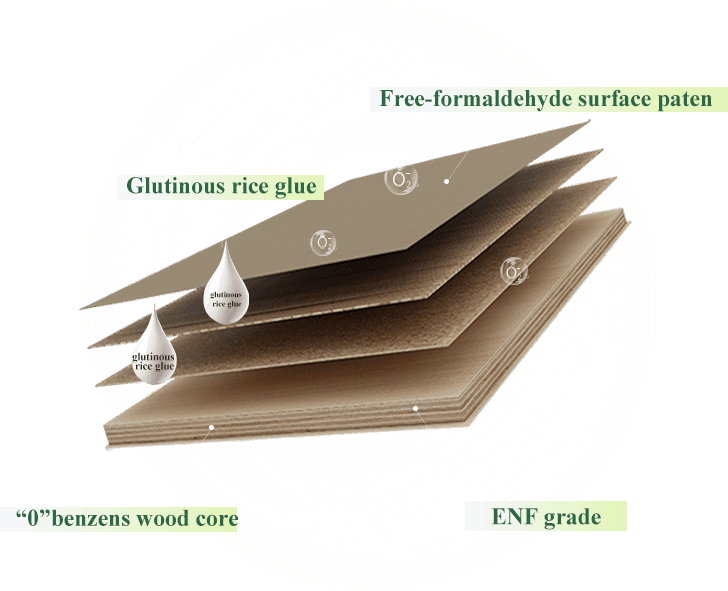
SERTIFIKASI
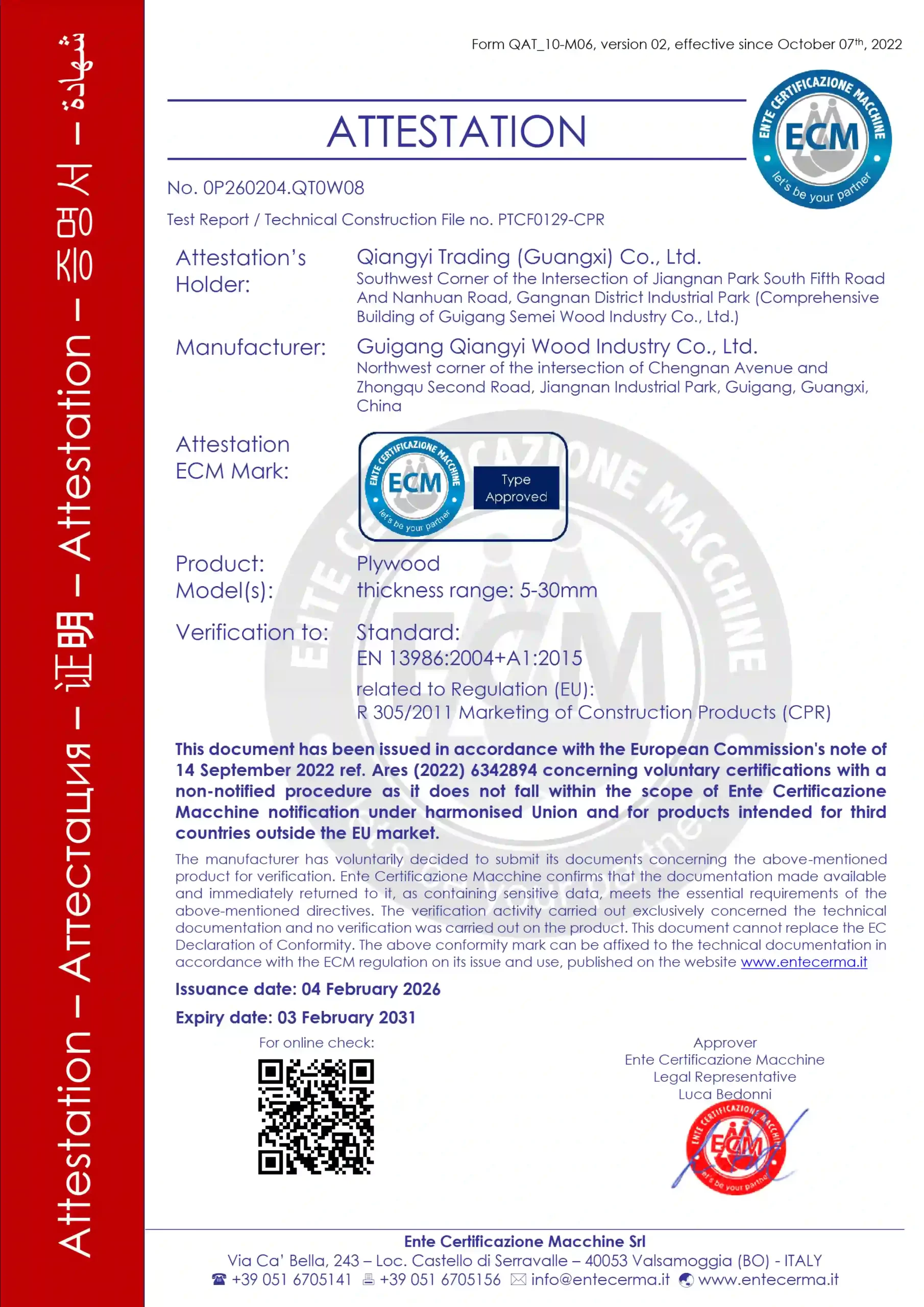
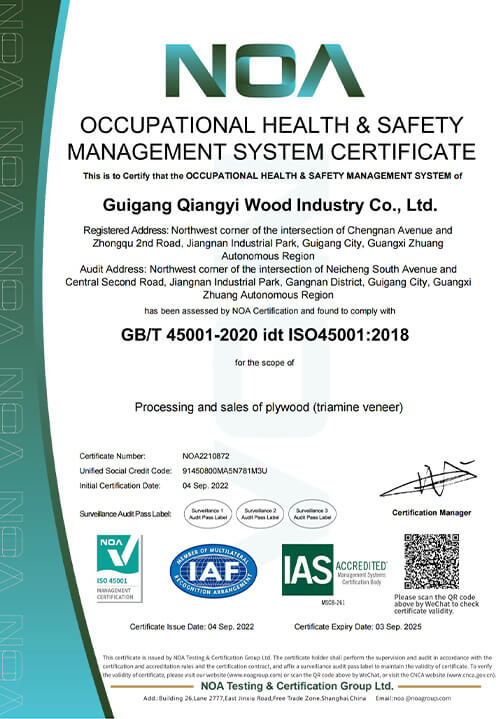
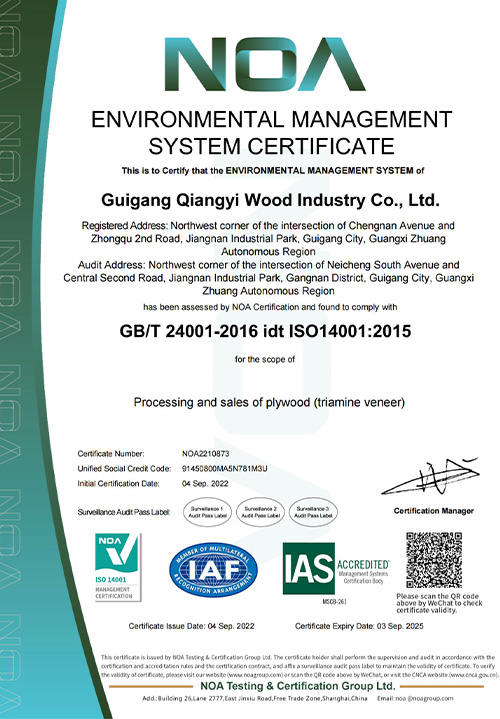
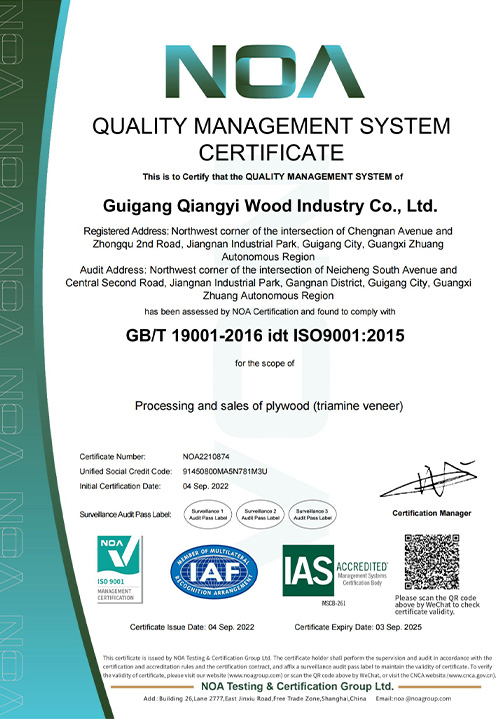
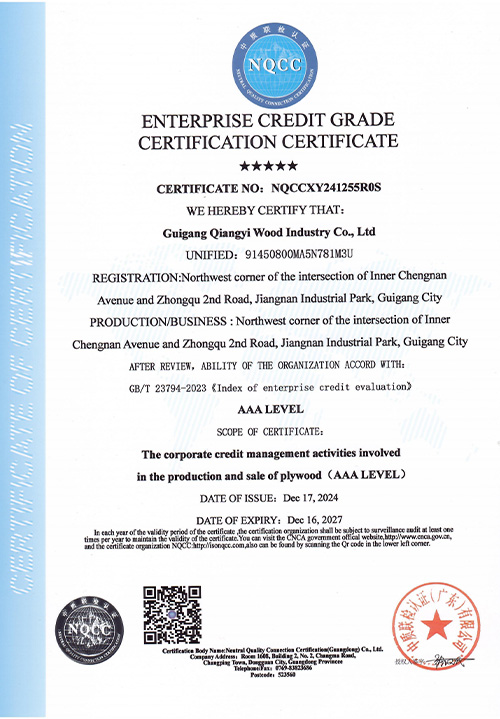
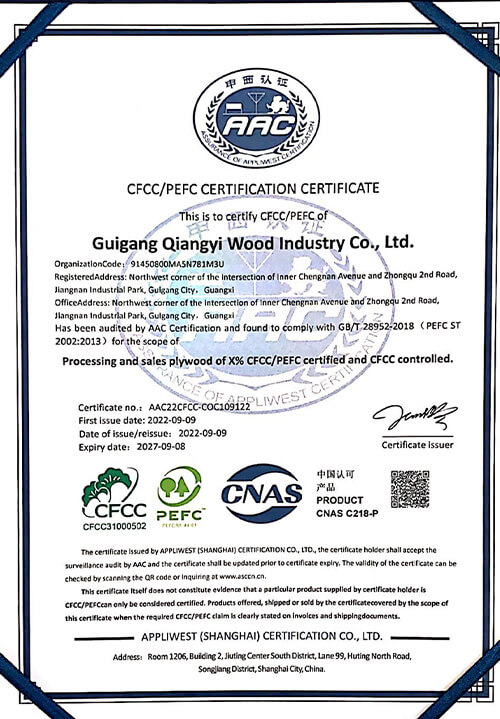
Please fill out the form below and we will get back to you as soon as possible.