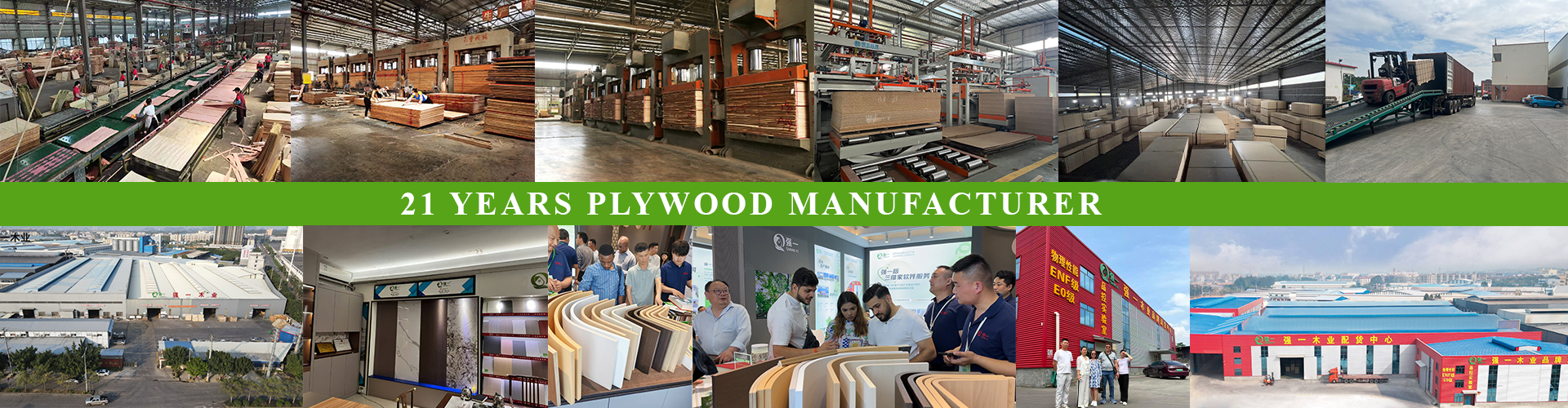
Yes ,We are manufacturer which locate in Guigang, Guangxi, also in Dongguang, Guangdong. Factory is started in the year of 2004 with more than 20 years experience for plywood production.

 Qiangyi
A cabinet may look perfect when installed and still fail months later. Hidden leaks can swell a sink base. Shower humidity or dishwasher steam can damage nearby panels. These failures often begin with the wrong board specification. Poor core quality or exposed edges also cause problems.
Choosing waterproof plywood for cabinets involves more than checking a label. Buyers should evaluate the glue bond. Buyers should also check core construction, thickness, surface finish, edge treatment, and installation environment.
“Waterproof” is used broadly in the panel industry. A board that tolerates humid air may not withstand a plumbing leak. A panel that survives occasional splashes may fail if its cut edges remain wet.
Moisture-resistant plywood is generally suitable for indoor humidity and occasional water contact. Moisture-resistant plywood can work for upper cabinets, ventilated wardrobes, and storage units away from plumbing.
Water-resistant or waterproof cabinet plywood is intended for more demanding locations. These locations include sink bases, bathroom vanities, dishwasher surrounds, and cabinets exposed to frequent cleaning. Buyers should not assume the panel is suitable for permanent immersion unless test data supports that use.
Cabinet exposure can be divided into four levels:
1.Low exposure in dry, ventilated rooms
2.Moderate exposure to humidity and occasional splashes
3.High exposure to leaks, steam, condensation, or wet cleaning
4.Severe exposure to standing water, weather, or continuous immersion
Most kitchen and bathroom cabinets fall between moderate and high exposure.
The adhesive helps veneers remain joined when moisture reaches the panel. Voids, overlapping veneers, uneven density, and uncontrolled moisture content can still create weak points.
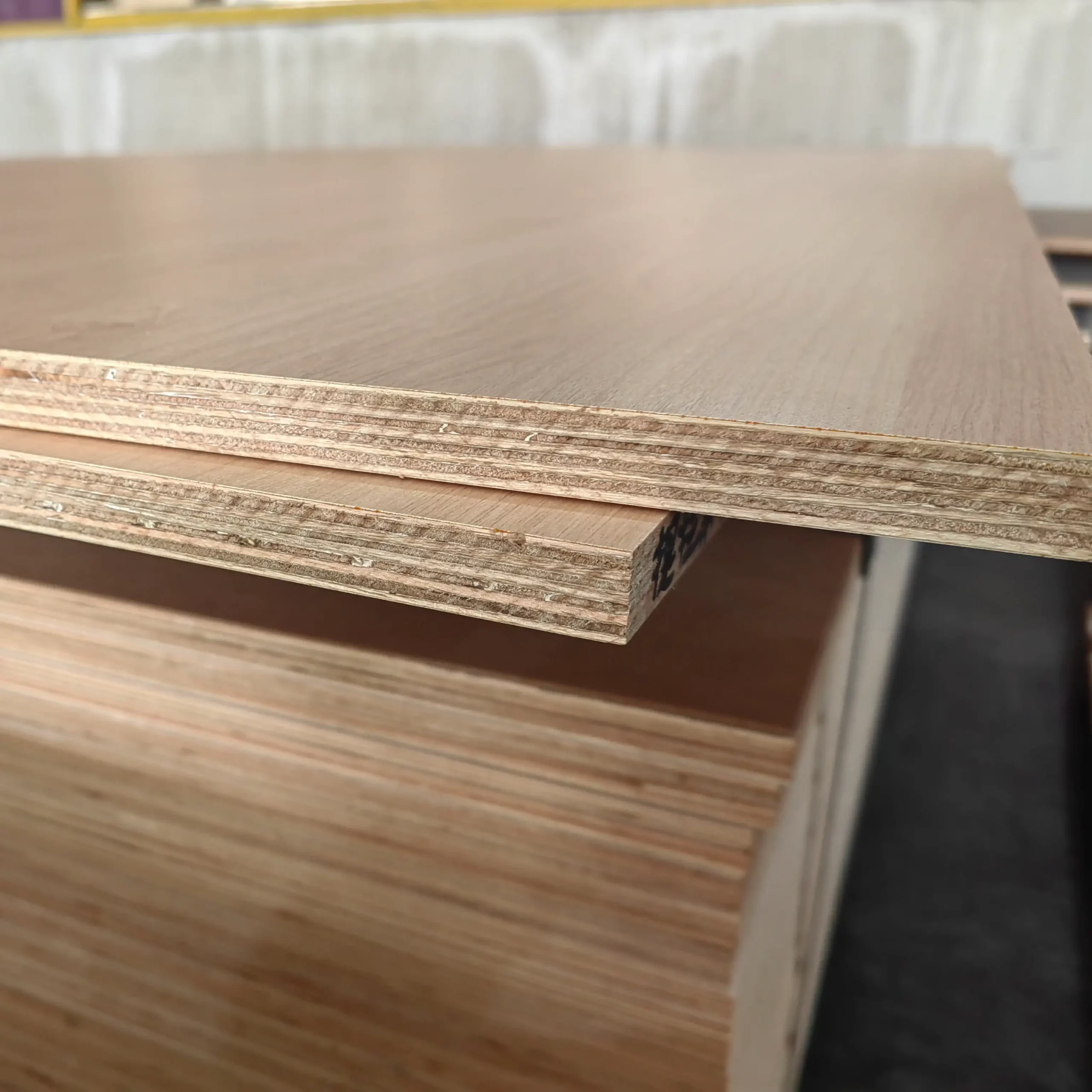
A suitable cabinet panel should have consistent layers. The panel needs a compact core, stable thickness, good screw holding, and resistance to swelling or delamination.
Moisture conditions vary within the same room. A wall cabinet above a dry worktop does not face the same risk as a cabinet containing water pipes.
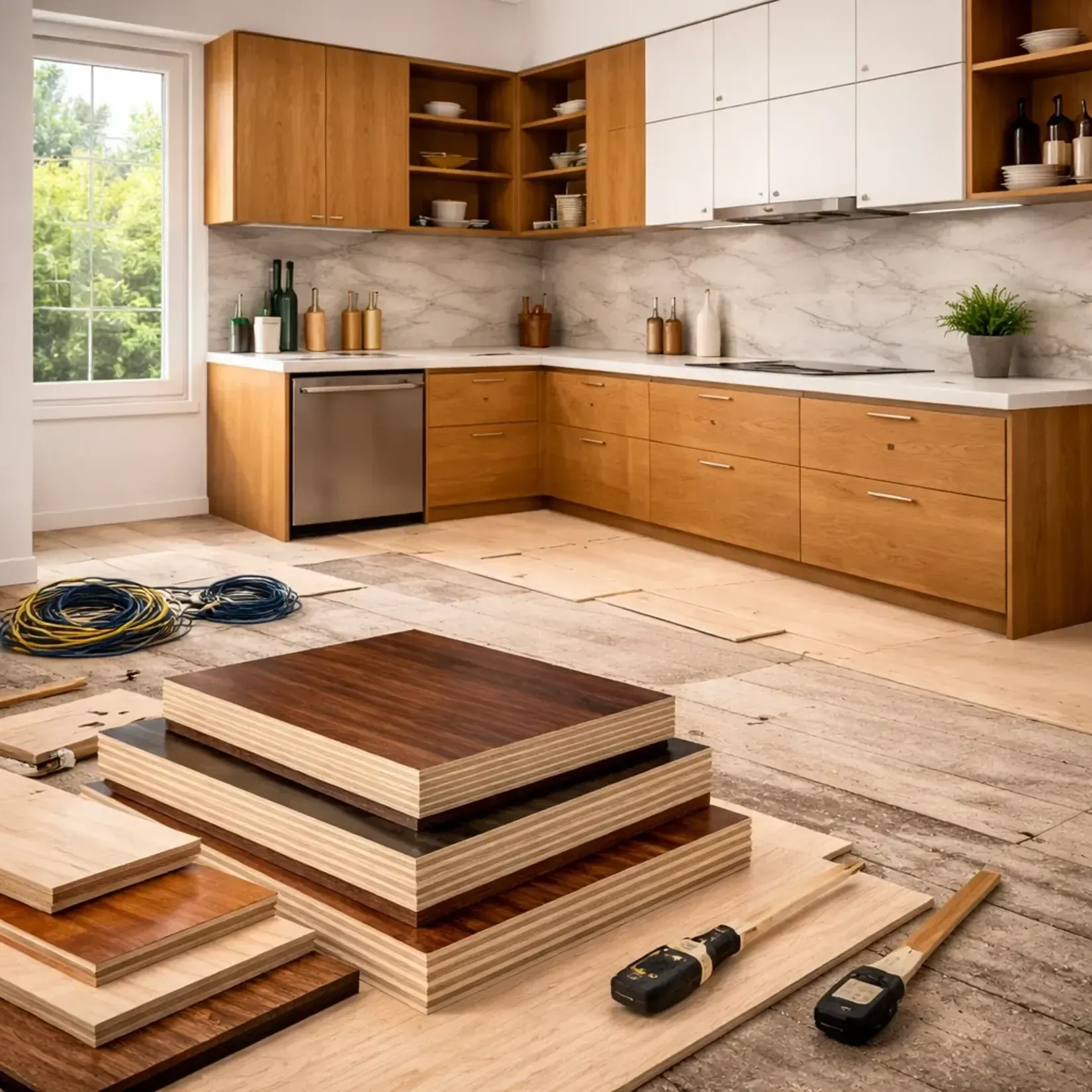
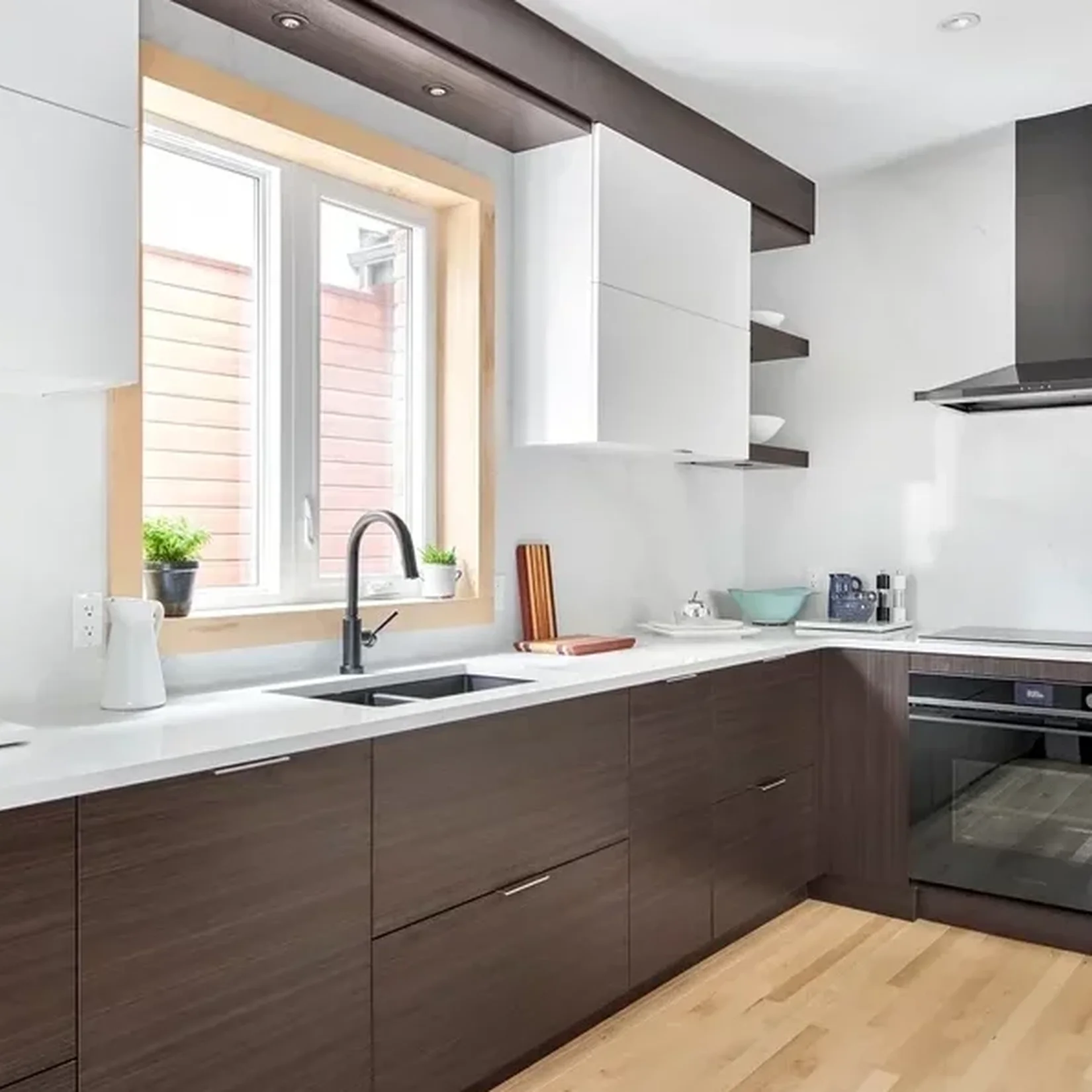
Kitchen cabinet plywood is most vulnerable around sinks, dishwashers, floor-level units, and water appliances. Small leaks may remain hidden. Steam repeatedly heats and cools nearby panels.
For a sink base, specify a stable multilayer core. The core should have moisture-resistant bonding. Installers must seal drilling points and protect the bottom panel. Dishwasher side panels should also tolerate changing heat and humidity.
Consider a hotel kitchenette where upper cabinets remain dry but the sink base is cleaned daily. Using the same low-specification panel throughout simplifies purchasing but raises failure risk in the wet zone. A better solution is waterproof plywood for kitchen cabinets around plumbing. Standard moisture-resistant plywood works in lower-risk positions.
Bathroom cabinets face shower steam, condensation, wet towels, plumbing leaks, and poor ventilation. Vanity bases, basin cutouts, drawer openings, and back panels installed against cold walls are highly prone to moisture damage and mold growth.
Plywood for bathroom cabinets should combine moisture resistance, dimensional stability, and strong fastener holding. Installers should seal basin cutouts and drilled holes. Installers must apply edge banding to exposed panel edges. A ventilation gap behind the back panel helps. Prevention of long-term water accumulation beneath the cabinet is also important. These details remain necessary even with a water-resistant substrate.
Hotels require frequent cleaning. Utility rooms combine plumbing with vibration. RV and yacht interiors are exposed to persistent condensation and vibration during movement.
Each application needs a separate specification. Hotel cabinets may prioritize easy-clean surfaces. Mobile interiors may require lower weight and strong hardware retention.
A practical specification begins with the installation conditions. The process then considers structure, thickness, finish, processing, and quality inspection reports.
Divide the project into zones:
1.Dry zone: upper cabinets and shelves away from water
2.Humid zone: bathroom storage and kitchen units exposed to steam
3.Wet-risk zone: sink bases, vanities, and plumbing cabinets
4.Special zone: RV, marine, hotel, and commercial interiors
This zoned approach maintains the required standard in critical areas. The approach also controls costs reasonably. The approach allows the supplier to provide a complete solution covering the appropriate core, finish, and edge banding for each zone.
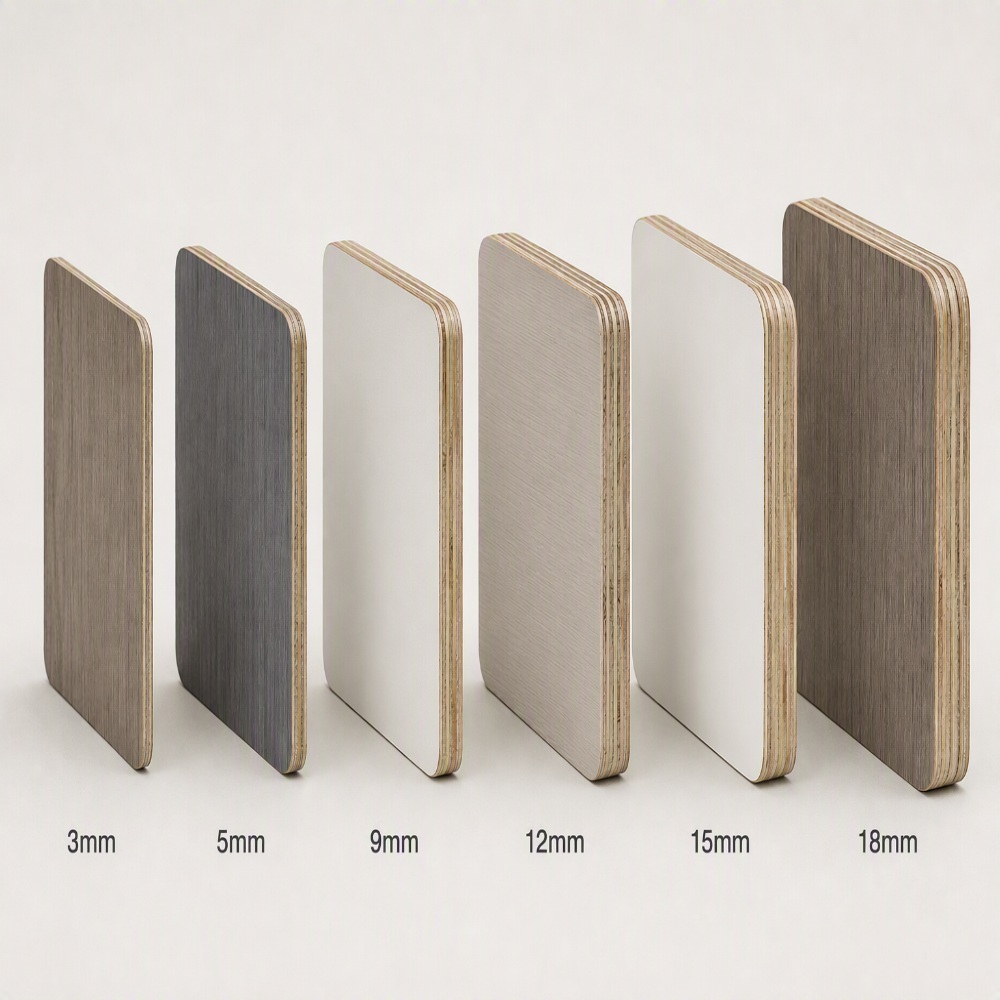
Thickness alone does not determine strength. An 18 mm board with a uniform, tightly bonded core may perform better than a thicker panel containing gaps.
For many cabinet carcasses and doors, 18 mm is a common starting point. Thinner panels may be used for backs and drawer bottoms. Long shelves or heavy doors may need additional support.
Buyers should ask about veneer count, core species, density consistency, bending performance, and screw-holding ability. These details matter especially where hinges are adjusted repeatedly.
Moisture usually enters through cut edges and drilled openings rather than through an intact board face. Check these items:
A durable face cannot protect an exposed cut edge. Proper edge banding limits moisture entry and cleaning damage.
No material is best for every cabinet. The right choice depends on exposure, finish, strength, and service life.
| Material | Moisture performance | Fastener holding | Typical use |
| Waterproof plywood | Strong in humid areas when sealed correctly | Strong | Sink cabinets, vanities, project cabinetry |
| Moisture resistant plywood | Suitable for humidity and occasional splashes | Good | Upper cabinets and lower-risk interiors |
| Moisture resistant MDF | Smooth finish, but edges need protection | Moderate | Painted doors and decorative fronts |
| Melamine particleboard | Performs while the surface remains intact | Moderate to low | Budget cabinetry in controlled interiors |
Plywood generally provides better screw holding and impact tolerance than fiberboard-based panels. Moisture-resistant MDF offers a smooth painted finish. Machined edges need thorough sealing. Particleboard is economical and consistent. Damaged edges may absorb water quickly.
A decorative door in a ventilated area may use MDF successfully. A sink base usually benefits more from a strong plywood core.
Moisture-resistant plywood may be sufficient for upper kitchen units, ventilated wardrobes, hotel storage away from plumbing, and decorative panels with little water contact.
Use a higher water-resistance specification where cabinets face hidden leaks, repeated steam, condensation, standing water, or wet cleaning. The higher specification is especially important when replacement would disturb countertops, plumbing, or tiles.
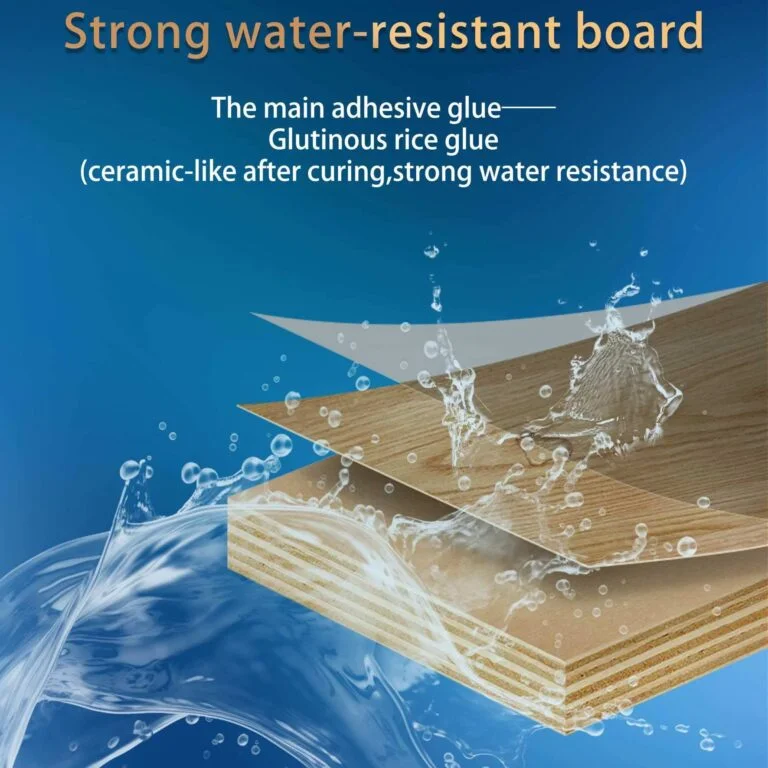
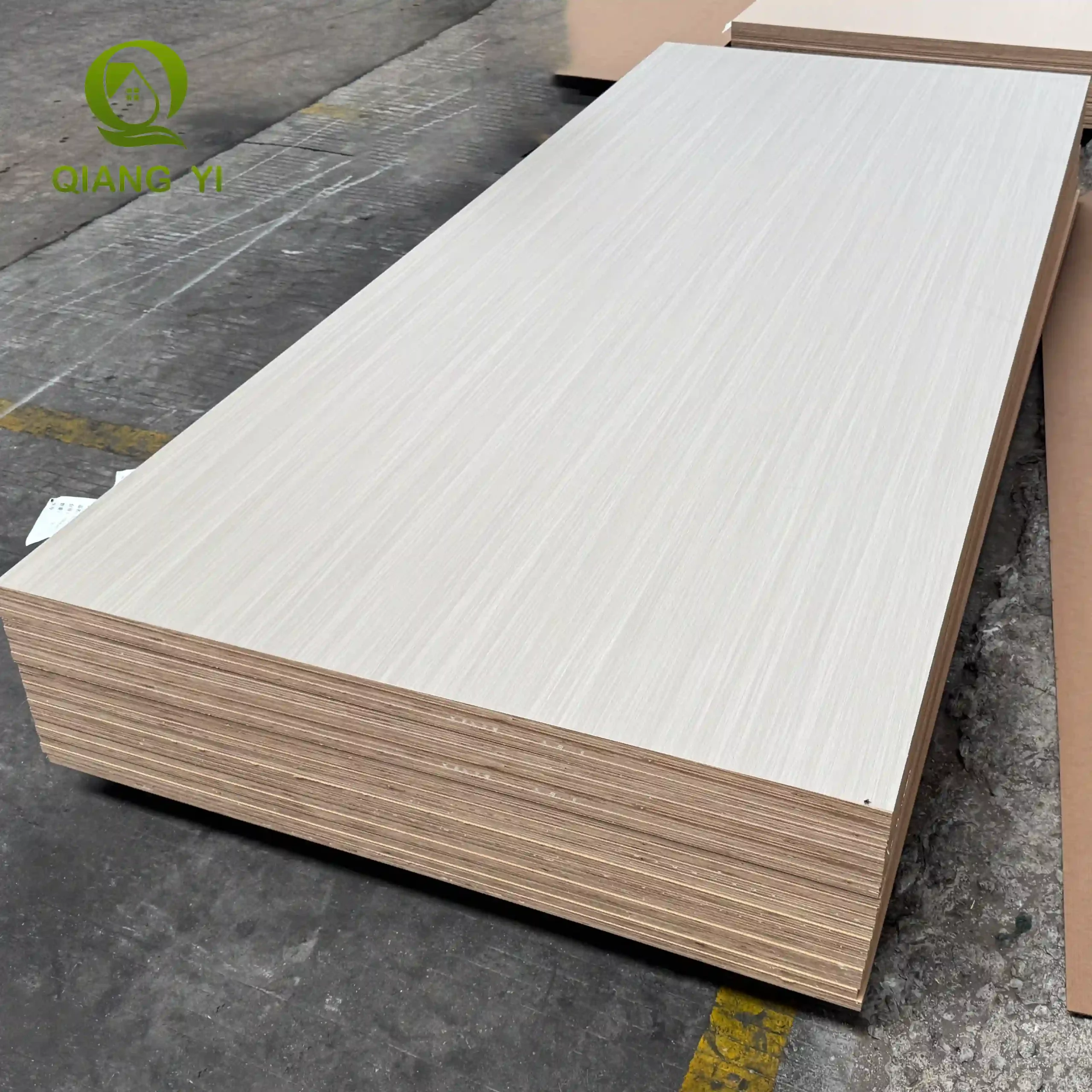
QIANGYI PLYWOOD has long supplied eco-friendly, water-resistant panels for custom cabinetry, furniture, and interior fit-out projects. Our glutinous rice glue plywood is designed for humid kitchen and bathroom cabinetry.
Glutinous rice glue plywood has Class II water resistance. This level is intended for cold-water exposure and short-term hot-water contact up to 63°C, not permanent immersion. The reported 24-hour thickness swelling rate is 2.4%. Options also include eucalyptus and other cores, multiple veneer-layer configurations, controlled moisture content, and HENF or ENF grades.
The production process includes layer-by-layer adhesive application. An interlocked core, extended drying, and a conditioning period improve stability. These features are relevant where dimensional stability and hardware retention matter.
Project buyers can request different thicknesses, surfaces, colors, cores, and OEM specifications. A useful inquiry should state:
This information helps QIANGYI PLYWOOD match the panel specification to the actual project.
A:The most critical applications for waterproof plywood would be sink bases, dishwasher surrounds, floor cabinets, and other applications near plumbing. Upper wall applications in dry conditions could also utilizemoisture-resistant, depending on the amount of ventilation and potential for leaks.
A: The moisture-resistant plywood is designed for humid air and occasional splashes. Waterproof plywood for use in cabinets is designed for more demanding exposure. Always check the water-resistance class that has been tested and the limits of use.
A: Choose a panel with a consistent multilayer core. The panel needs reliable moisture-resistant bonding, controlled moisture content, strong screw holding, and protected faces and edges. Vanity bases usually need a higher specification than wall cabinets.
A: An 18 mm panel is commonly used for carcasses, shelves, and doors. The final thickness should depend on shelf span, load, door dimensions, hardware, core quality, and cabinet design.
A: Yes – cut edges, holes drilled, joints and the opening of the basin are typical points of moisture entry. Protecting the core of the cabinet with proper edge banding, appropriate sealants, and careful assembly will extend the life of the cabinets.
Please fill out the form below and we will get back to you as soon as possible.




Leave a Comments