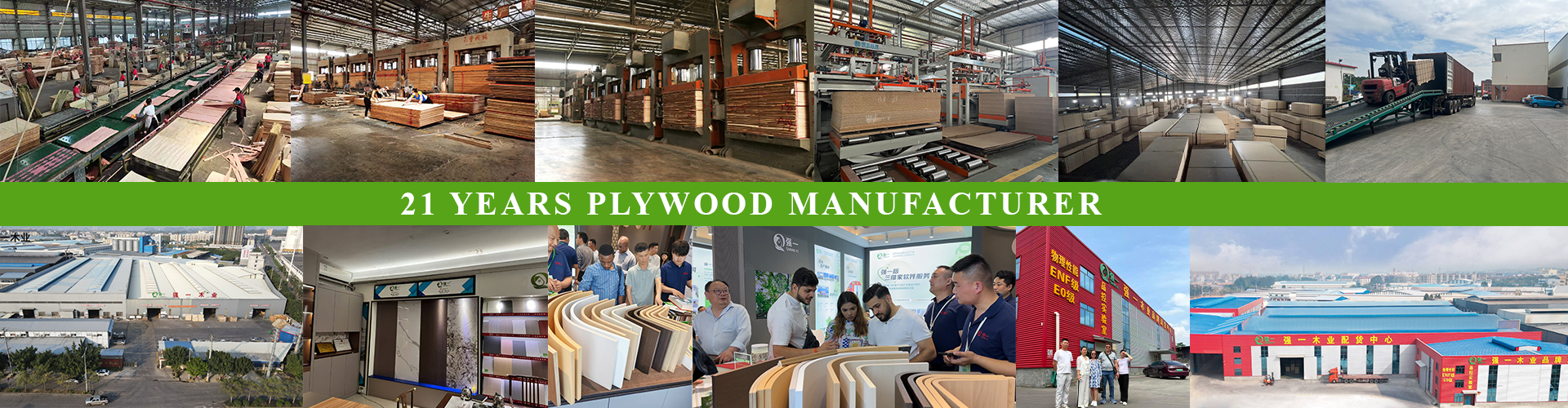
Yes ,We are manufacturer which locate in Guigang, Guangxi, also in Dongguang, Guangdong. Factory is started in the year of 2004 with more than 20 years experience for plywood production.

 Qiangyi
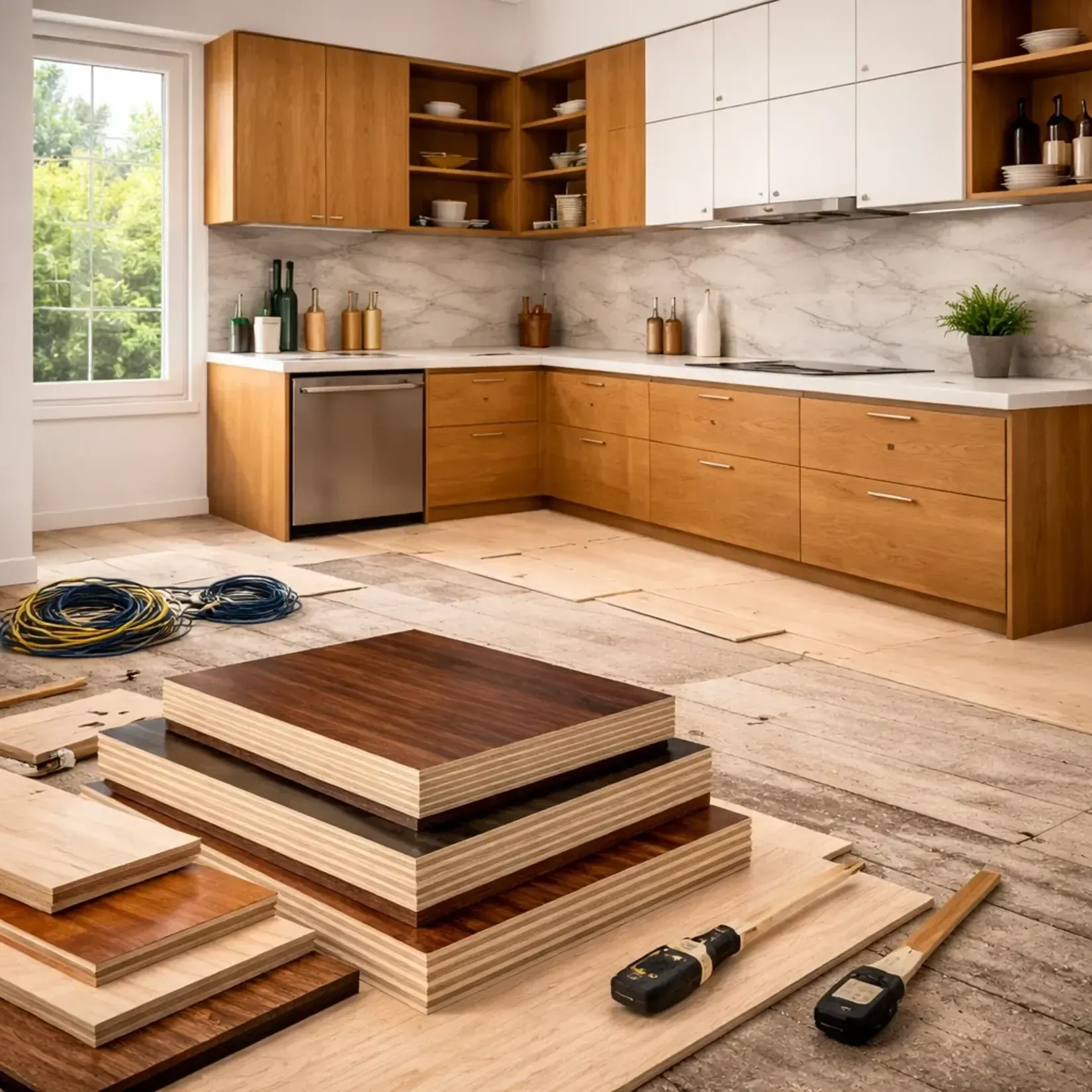
Many buyers are familiar with the layer count of plywood and frequently use this as a basis for judging the quality of the wood. However, more layers do not necessarily equal greater strength. Several important factors affect the plywood’s strength, including the quality of the veneers, the core gaps, the types of wood used, the adhesives, the moisture content and the pressing.
From the point of view of furniture manufacturers, hotel contractors, as well as producers of interior work, the crucial question is which type of construction provides the necessary bending strength, hold of screws, stability, workability, and resistance to moisture.
Plywood is made by bonding several wood veneers, normally with adjacent grain directions arranged across one another. This cross-laminated structure distributes stress in different directions and limits the movement found in solid wood.
Therefore, ordinary plywood is already a multilayer panel. “Multilayer plywood” is often a commercial description for plywood with more thin veneers, a denser core, or a specification developed for furniture and decorative applications. Buyers should compare actual constructions rather than assuming the names represent two completely separate materials.
Suppliers use the term to distinguish a dense structure from panels made with fewer, thicker core layers. Naming still varies. One supplier may call a 9-ply panel multilayer plywood, while another sells a similar board simply as plywood.
A useful quotation should state the total thickness, ply count, core species, face and back veneer, adhesive grade, moisture content, tolerance, surface finish, and intended application.
Under qualified manufacturing conditions, increasing ply count can improve load-bearing capacity, edge machinability, screw-holding performance, and dimensional stability. These advantages depend on even veneer thickness, a gap-free core, sufficient core density, balanced moisture content, and reliable bonding.
Yet a 13-ply board with open joints, soft core veneers, or uneven adhesive application can perform worse than a process-controlled 9-ply panel. Ply count is one quality indicator, not a final conclusion.
| Factor | Possible benefit of more plies | Main quality risk |
| Stress distribution | Load passes through more cross-laminated layers | Irregular veneers create weak points |
| Edge quality | Dense layers support cleaner machining | Core gaps appear during routing |
| Fastener support | More bonded interfaces may support hardware | Soft cores reduce screw holding |
| Stability | Balanced layers can resist movement | Uneven moisture causes warping |
Cross-lamination works best when the lay-up is balanced. Veneers on opposite sides of the center layer should have compatible thickness, grain direction, density, and moisture condition. If one side responds differently to humidity, internal stress can pull the board out of flatness.
Thin, uniform veneers can suit cabinet doors, shelves, decorative panels, and machined parts. Thicker veneers may suit general furniture carcasses. Extra plies cannot correct an undersized component.
Core gaps reduce the material supporting hinges and screws. Veneer overlaps create uneven thickness, while open joints near the edge may become visible after routing or edge banding.
Wood species also changes performance. Dense eucalyptus can provide firm fastener support, while fir, poplar, pine, and other cores offer different balances of weight, machinability, stability, and cost.
Bond quality connects these factors. Poorly bonded veneers may separate during machining, moisture changes, or repeated loading. A high ply count only adds value when all layers act as one panel.
Strength should be divided into practical requirements:
1.Bending strength for shelves, tables, beds, and long cabinet spans
2.Screw holding for hinges, runners, handles, and repeated opening
3.Edge strength for drilling, routing, and concealed connectors
4.Impact resistance for hotels, shops, and transport interiors
A dense multilayer construction may provide better edge consistency and fastener support, but results still depend on the core species and gap control. On the wardrobe side, flatness may matter more than maximum ply count. For a loaded shelf, thickness and support spacing may be more important.
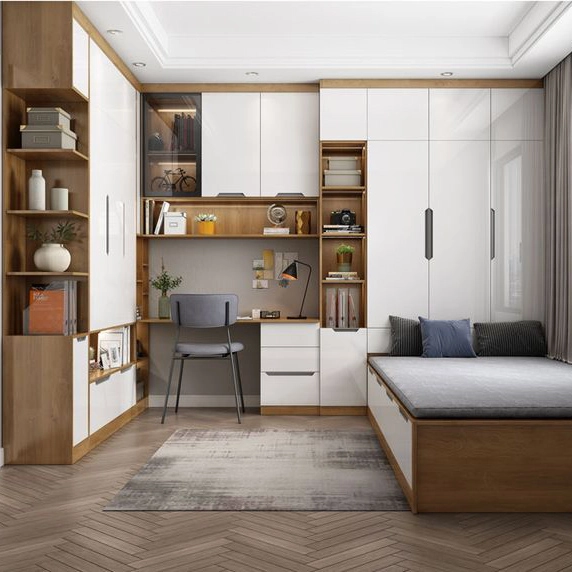
Warping can result from unbalanced construction, uneven moisture, poor storage, or different finishes on the two faces. Large cabinet doors are especially sensitive because small movement becomes visible and can affect closing.
Moisture resistance is not the same as permanent waterproofing. Panels used in kitchens, hotel bathrooms, RV interiors, or yacht cabins still need sealed edges, suitable surface protection, and correct installation.
Delamination resistance depends on veneer preparation, uniform adhesive application, and the hot-pressing process. When moisture exposure is expected, buyers should request an appropriate bonding test rather than relying on the product name.
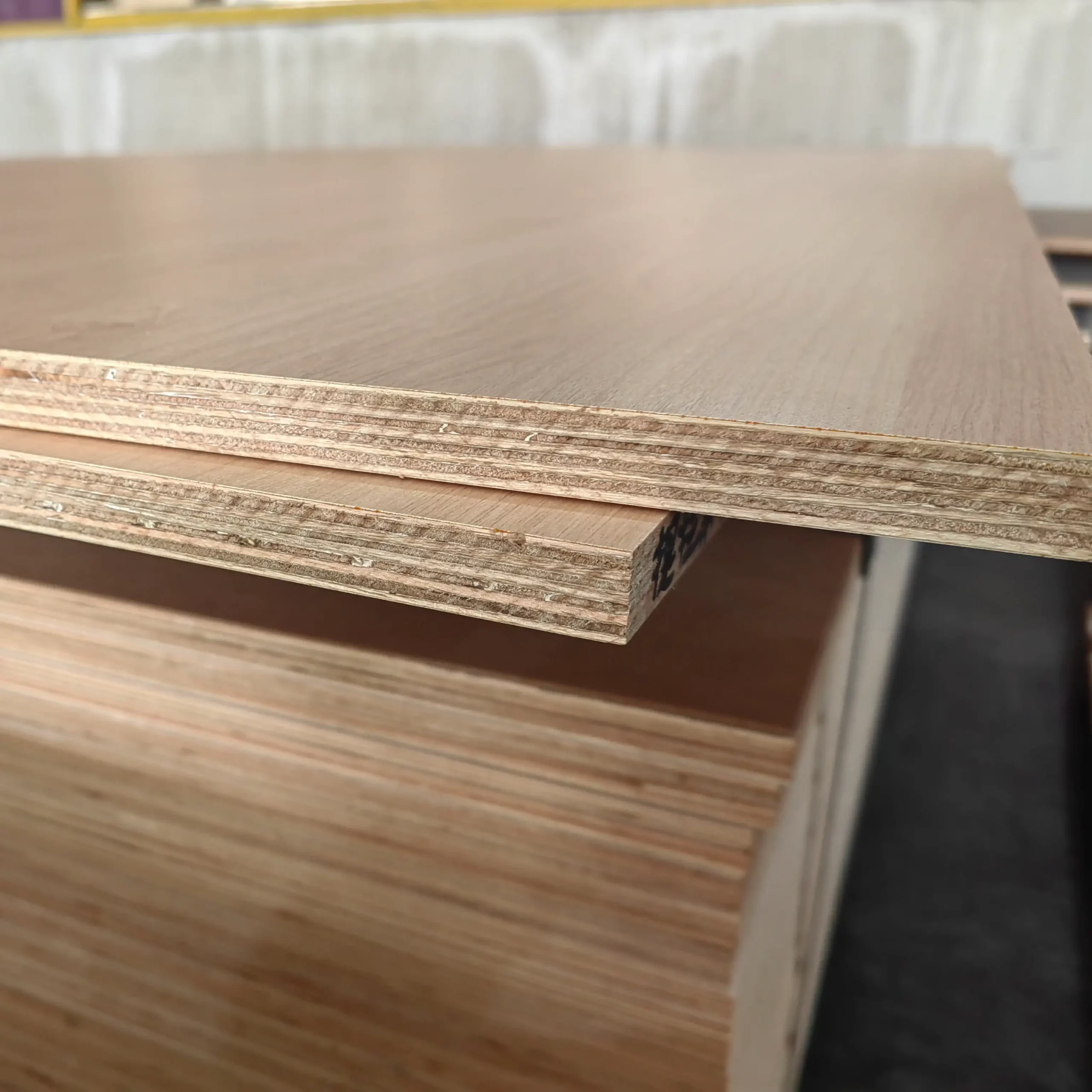
Start with a cut sample. Count the layers, inspect several edges, check whether core joints are tight, and measure thickness at multiple points.
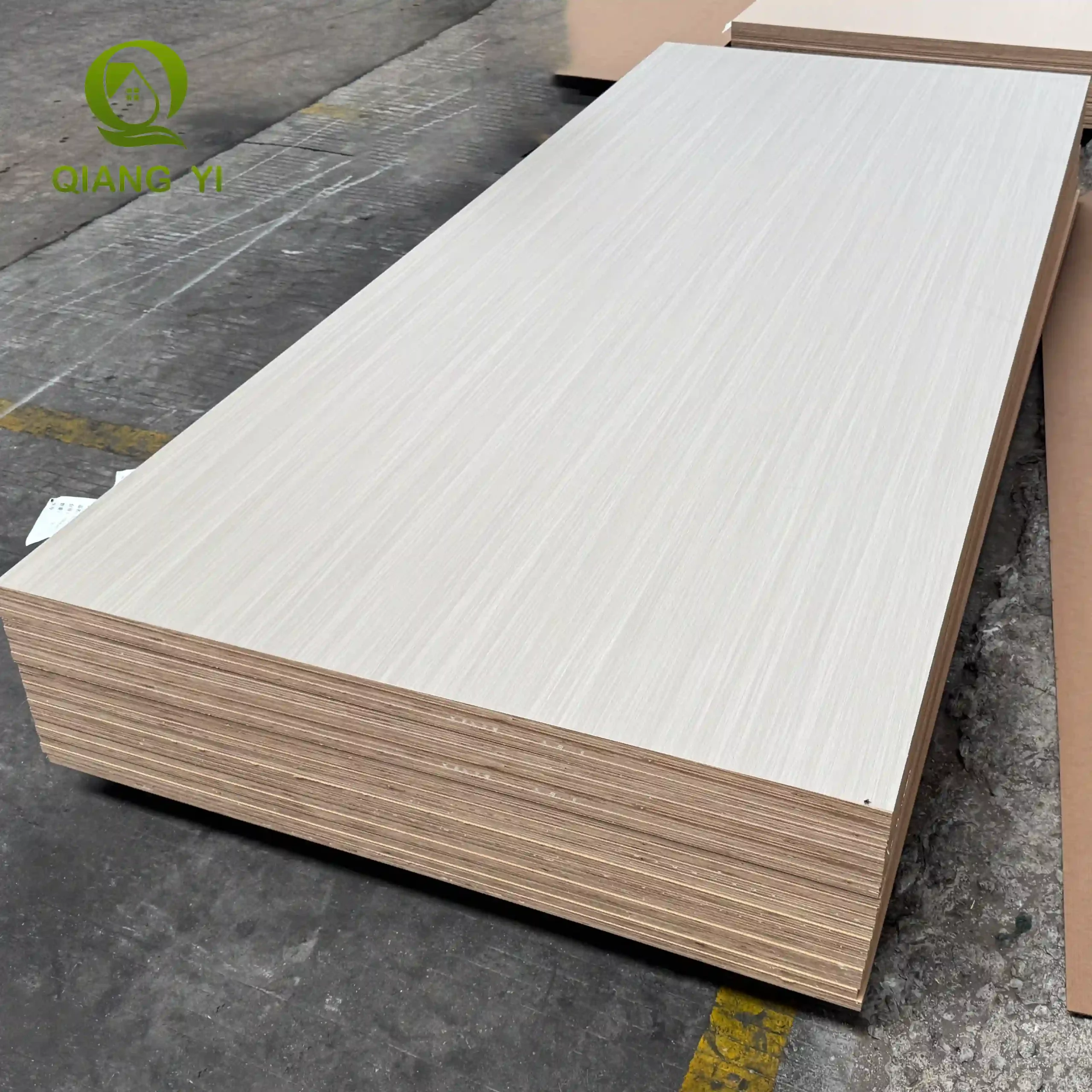
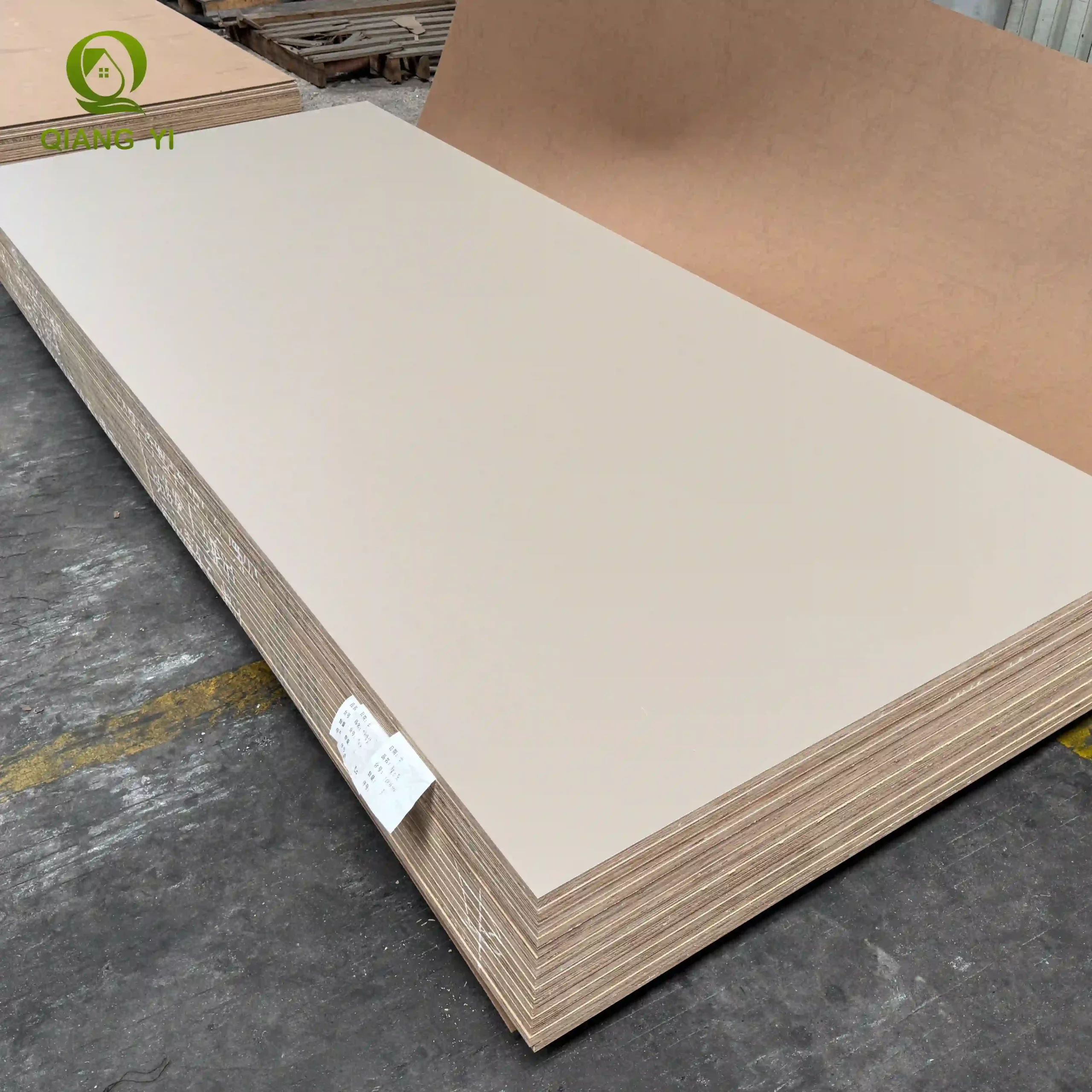
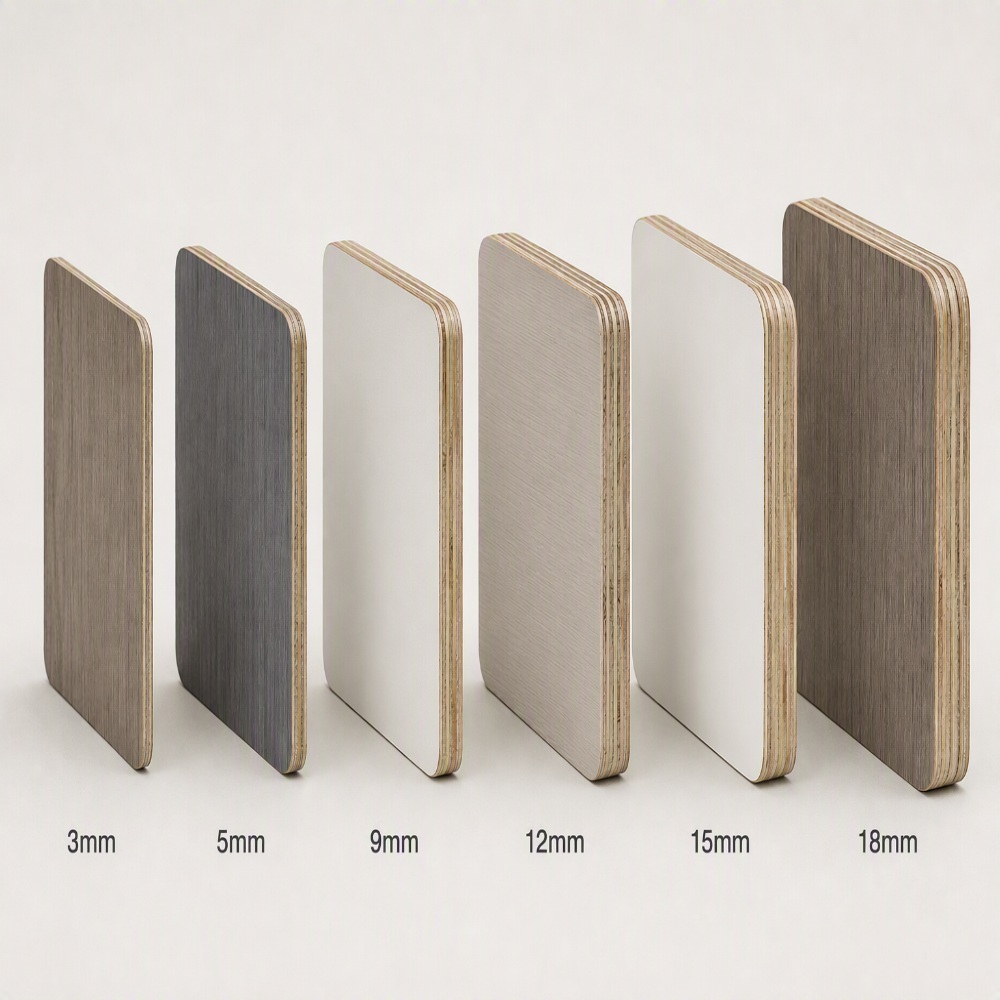
QIANGYI PLYWOOD offers configurations such as 5, 9, and 11 plies, with customizable cores, surfaces, sizes, and thicknesses. Listed options include 5 to 25 mm panels, moisture content commonly ranging from 8% to 14%, and melamine or PET finishes.
Buyers should verify:
1.Bonding or moisture-resistance results for the required grade
2.Formaldehyde-emission documents for the destination market
3.Moisture content and thickness tolerance
4.Bending or screw-holding data when structural performance matters
5.Sample identification and batch inspection rules
QIANGYI PLYWOOD offers certifications including CARB P2, EPA, ISO, FSC, CE, ENF, E0, and E1 across relevant product categories. Certifications should be checked against the exact product, not treated as general company labels.
Cabinet and wardrobe production requires flatness, clean machining, and reliable hardware retention. Long shelves need suitable thickness and support spacing. Hotel furniture also requires repeatable finishes and stable batch quality, while commercial wall panels need accurate dimensions and a substrate compatible with the decorative surface.
RV and yacht interiors add weight, vibration, and humidity concerns. A lighter core must still retain fasteners and resist movement. Buyers should define the operating environment instead of requesting the “strongest plywood” without context.
Glutinous rice glue plywood should be evaluated as a specific multilayer construction. QIANGYI PLYWOOD uses selected core veneers, layer-by-layer adhesive application, and a continuous-core layout. Our documented process includes extended cold pressing, controlled drying, and curing intended to improve bonding and stability.

This option is relevant when a project needs cabinet-door stability, moisture resistance, fastener retention, and lower-emission specifications.
A: It can be when it uses uniform veneers, a continuous core, and reliable bonding. For shelves, also check thickness, span, load, and supports. For cabinets, examine screw holding, edge quality, and flatness.
A:There is no single “magic number” that fits all situations. Typically, 9-ply or 11-ply laminates are used, but it really depends on the thickness of the veneer, the species of the core, the acceptable tolerances, the intended finish, and the actual test results.
A: Yes, when the grade balances weight, fastener retention, moisture resistance, and stability. Cut edges and drilled holes should be sealed, and the board must match the expected exposure.
A: Request cut samples, inspect several edges, count the layers, measure thickness at multiple points, and perform drilling and screw tests. Agree on tolerances before production.
A: No. More plies can improve stress distribution, but only when veneer quality, core continuity, moisture control, bonding, and pressing are consistent.
Please fill out the form below and we will get back to you as soon as possible.




Leave a Comments