
منتجات
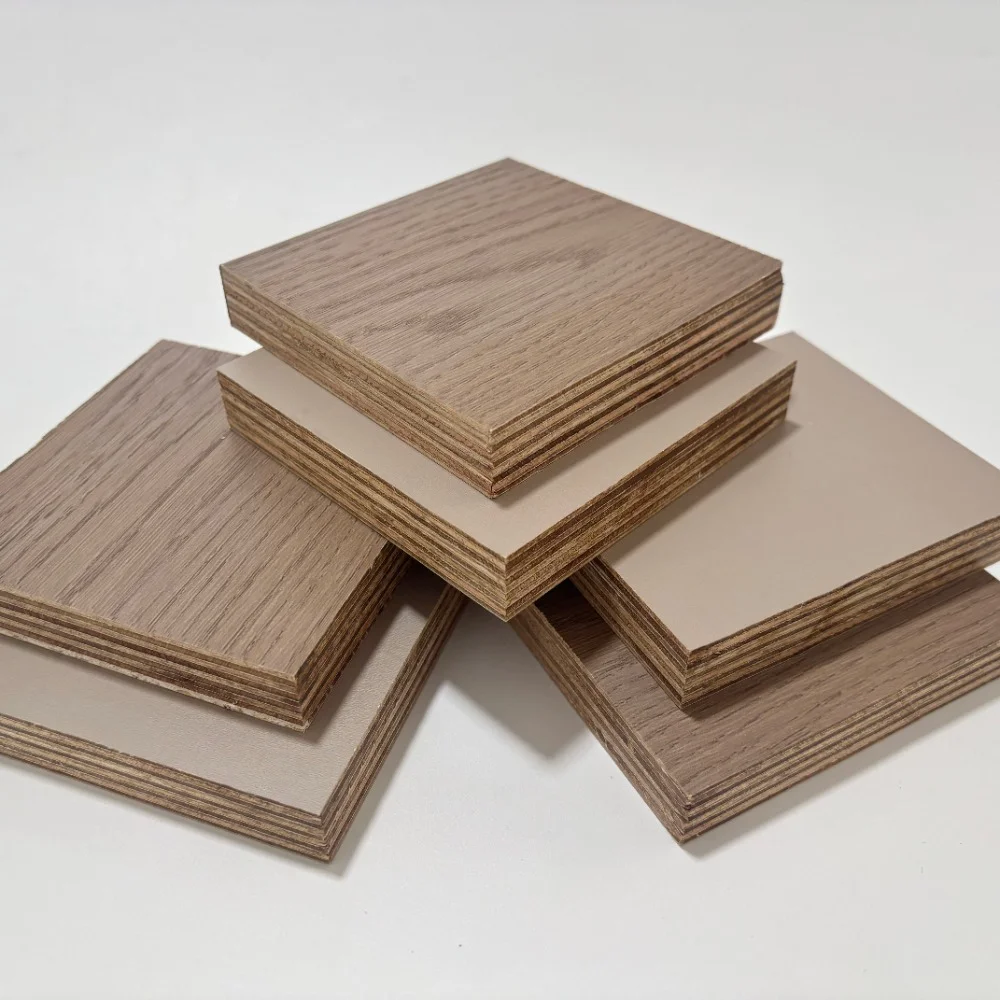

100% Eucalyptus Core Marine Grade Plywood 18mm Waterproof Plywood for Cabinet Doors & Kitchen Cabinets
Full Eucalyptus Core Marine Board Suitable for Modular Cabinet Making
Ship one container of cabinets to Manila, and you’ll hear the same complaint within 18 months. Doors have started to bow. Edge banding is peeling back at the bottom of the kitchen cabinet. Open the wardrobe and there’s that damp, sweet smell — the one every furniture guy knows means mold got into the core. Somebody in Cebu already texted us a photo last month of a particleboard wardrobe eaten through by termites; you can see the mud tubes running up the side of the unit.
We’ve been making plywood in Guangxi since 2004. We’re not traders. We run four factories up in Guigang. Over the years we’ve shipped to the Middle East, to Africa, to India, and more and more to the Philippines. The question we get asked most often now isn’t “how much” — it’s “what board won’t come back.”
This is that board. It’s an 18mm marine-grade plywood, full eucalyptus core, glued with what we call glutinous rice glue instead of urea resin. Below is what it actually does on a cabinet job, with the lab numbers to back it up.
Why “marine grade” on a cabinet, anyway?
Walk into any lumber yard in Manila and the plywood stacked there is urea-formaldehyde resin. It’s been the industry standard for over a century. Cheap, presses in half an hour, looks fine coming off the line. The catch is urea glue breaks down in heat and humidity. Put an E0-rated board in a Cebu condo in April with the AC off during work hours, and the formaldehyde numbers climb. The bond goes brittle, the veneer drinks water, and in 12 to 24 months the seams start popping.
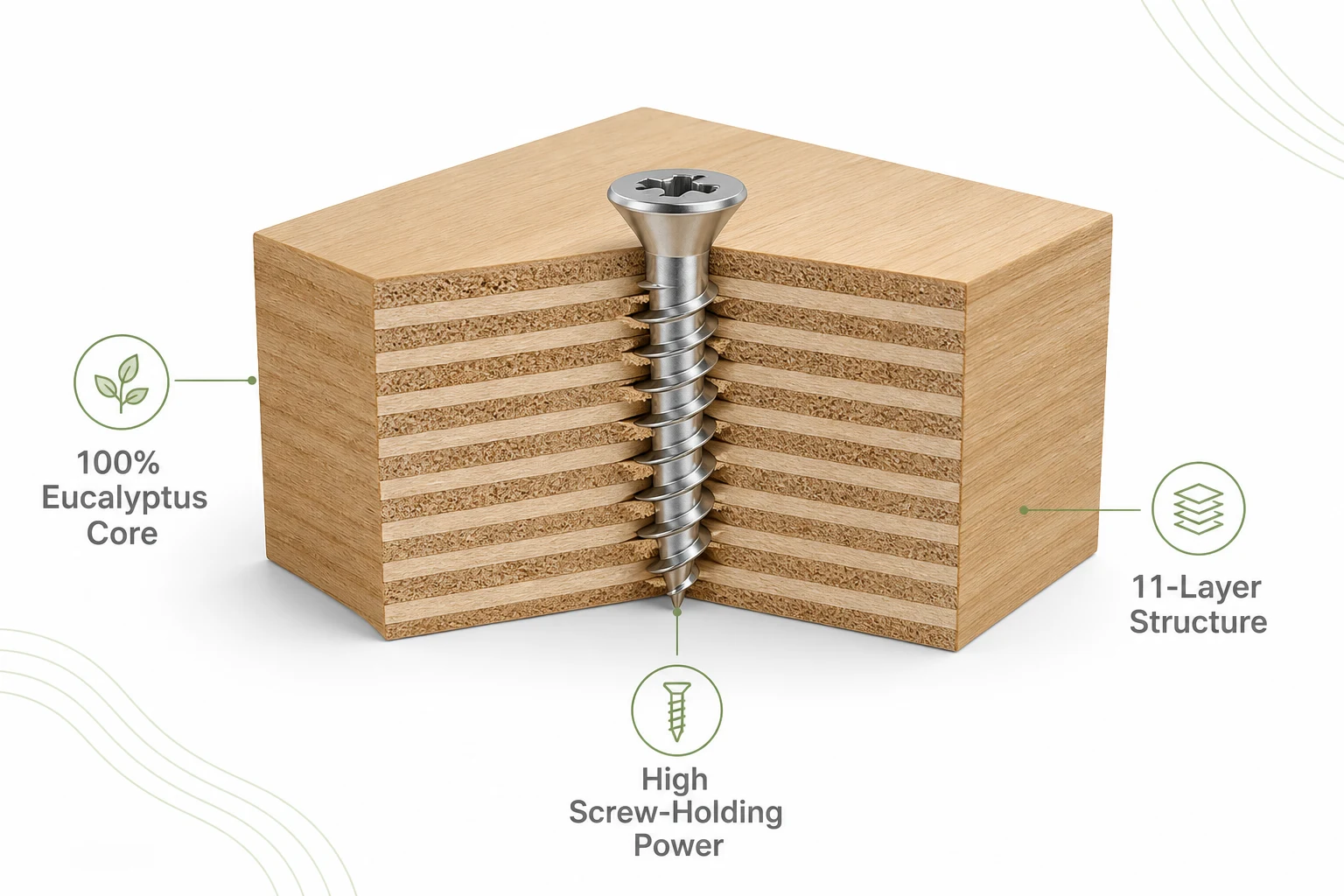
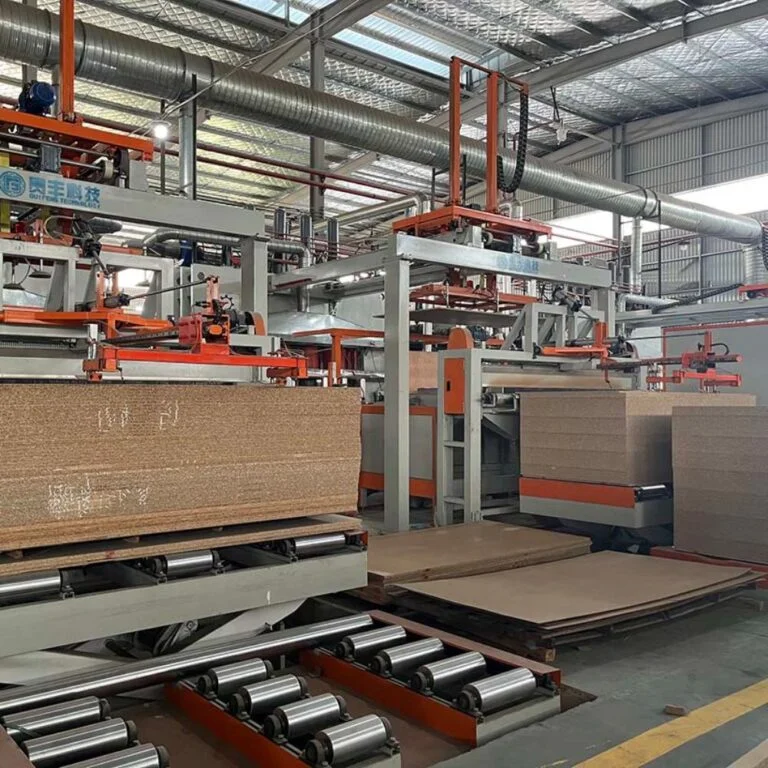
We took urea glue out of this product line entirely. What’s in there instead is Lingmei glutinous rice glue — rice flour, magnesium chloride, magnesium oxide, water. Nothing else. No formaldehyde, no benzene. The press cycle is 24 hours cold press, not half an hour hot press, then 60 hours in the kiln, then a minimum 15-day rest in our conditioning yard before it ships. Most competitors skip the rest period because it ties up warehouse space. We don’t, because that’s what keeps the door flat.
Every veneer in the stack here is first-grade eucalyptus, cross-laid, with glue between every single layer. No filler strips. No short-core patches. No back-grade veneer hidden under the face. Eucalyptus takes screws cleanly, doesn’t seasonally move the way rubberwood does, and it’s the wood Southeast Asian cabinet shops already know how to machine.
What it does on a real cabinet job
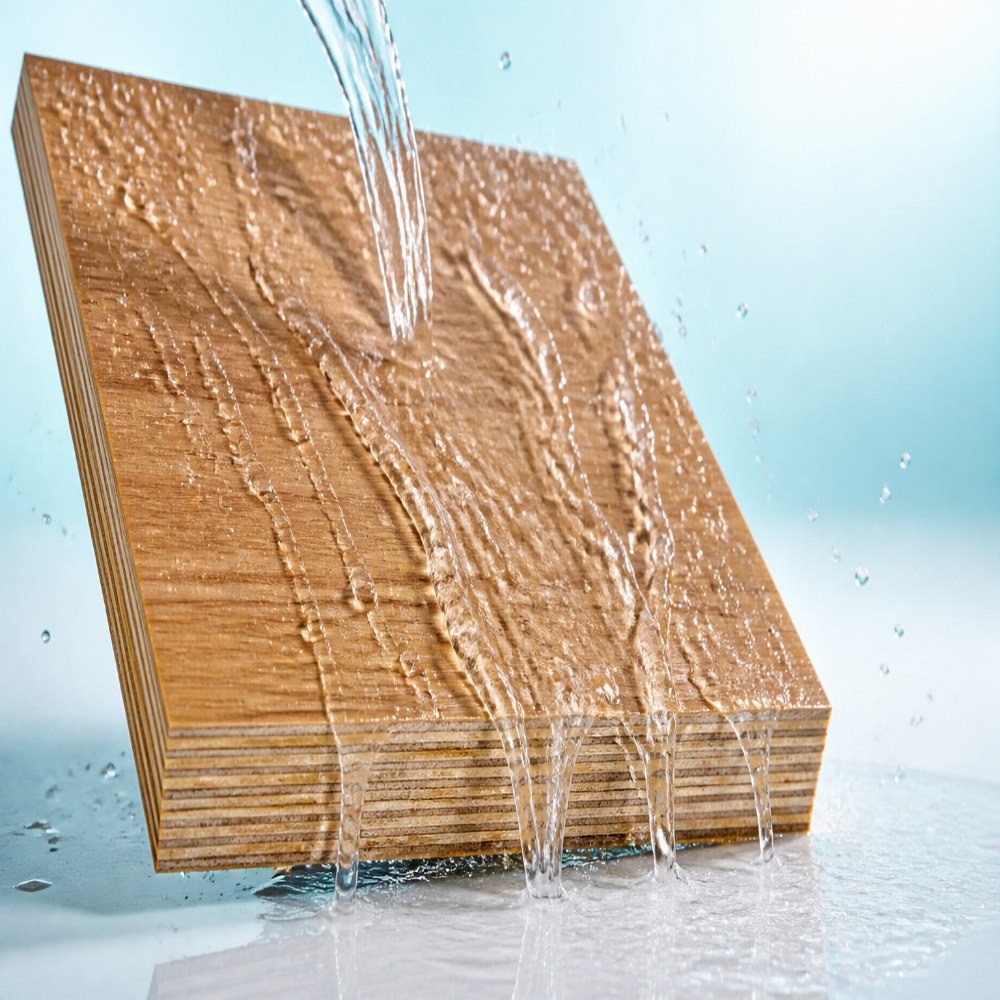
Water: 2.4% swelling after 24 hours in the sink
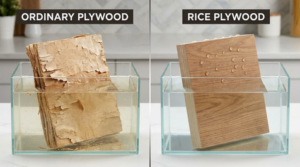
This board hits Class II water resistance — cold water immersion, plus short dips in 63°C hot water. The industry cutoff for acceptable swelling is 8%. Particleboard runs closer to 12%. When we soaked our own samples in the lab for 24 hours, thickness swelling came in at 2.4%.
That number matters when you’re cutting the board on site and edging it with local banding. End grain is never sealed perfectly; there’s always a sliver gap at the saw cut. When the monsoon rolls in, water walks right through that gap. Ordinary plywood absorbs it, swells, and the edge band lifts. We’ve had buyers drop test pieces into buckets for weeks — the edges stayed tight, no swelling at the band line.
Termites: grade 9.5 out of 10
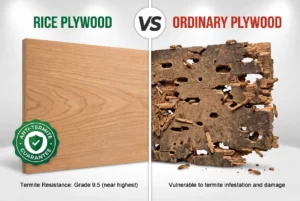
You don’t need us to tell you termites are a real problem in the Philippines. We tested this board through the Guangdong Academy of Sciences over a 4-week live termite trial. Result: grade 9.5. On that scale, 10 is no attack at all, and 0 means the block is gone. We saw 1 to 2 tiny feeding traces on the surface — that’s it.
Urea resin cures near neutral pH, which is exactly the environment termites and mold thrive in. Our rice glue comes out alkaline once cured — pH above 9. A termite that chews through a veneer ingests some of the glue along the way, the gut bacteria it needs to digest wood die off, and the insect dies. No surface dip, no chemical treatment that sands off or washes away. The protection is mixed into the glue, so it stays there for the life of the board.
Doors: stays flat even on 2.4m tall units
This is where we lose most competitors. Particleboard bows on tall doors. Ordinary urea plywood bows too, because the core is inconsistent and the glue bond is brittle. Walk into any furniture mall in Manila and you’ll see the telltale gap at the bottom of a 2-door wardrobe — that’s a warped door.
Our MOR (modulus of rupture) reads over 60 MPa on the lab report. The Chinese national standard asks for 30. We’re double that. MOE is 5000 MPa parallel, 4000 MPa perpendicular. Combined with the full first-grade core and the 15-day conditioning, we’ve had cabinet makers run this on handle-less, floor-to-ceiling doors for years without callbacks. We don’t get warped-door complaints back on this line. That’s not marketing — that’s what a 15-year structural warranty actually means.
Indoor air: formaldehyde not detected
CMA lab report says formaldehyde emission is “not detected” — under 0.025 mg/m³, which is the super-ENF threshold. Benzene, toluene, xylene: all not detected. TVOC came in at 11 µg/m³.
Here’s what most suppliers don’t put in their spec sheet. Urea-formaldehyde boards don’t release formaldehyde at a steady rate. The number goes up as the room heats up. At 35°C and 70% relative humidity, that release can jump several times — sometimes tenfold. A board that passed in a Shenzhen lab can behave very differently once it’s installed in a tropical kitchen. Our board’s emission barely moves with temperature. That’s what “good for Philippine climate” actually means in practice.
Bonus stuff
Mold testing came back grade 0, the top level on that scale. E. coli and Staphylococcus aureus kill rate is over 99%. In a bathroom cabinet during the wet season, you won’t see black spots creeping along the edges. Fire rating is B1, difficult to burn; the magnesium oxide in the glue means the board chars rather than catches flame, and smoke density stays low. Acoustically it measures around 35 dB sound reduction, which is why some buyers run it as wall paneling between bedrooms.
What we actually stock
We don’t hand you a spec sheet to memorize. Here’s what’s in the warehouse right now:
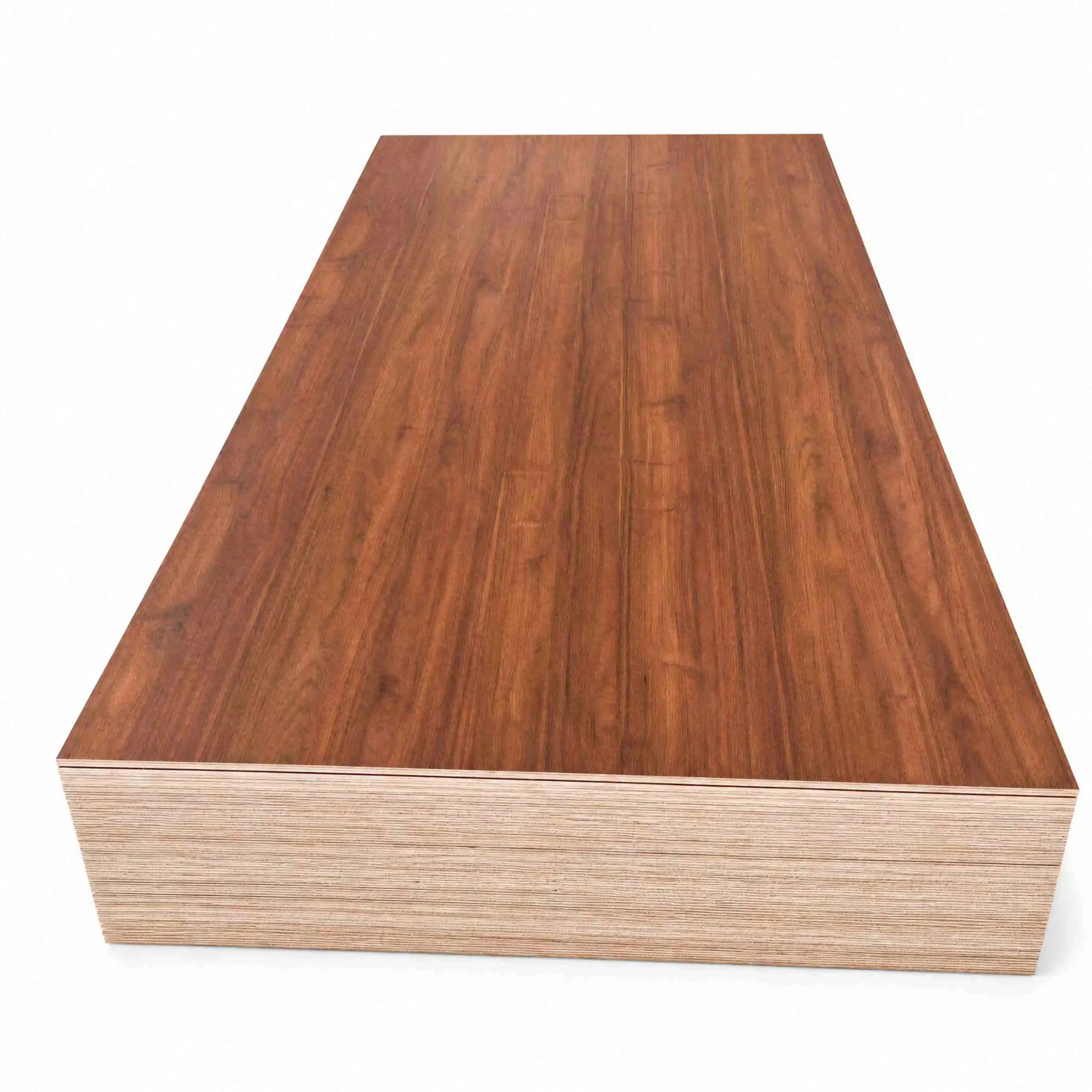
The workhorse is 18mm. Calipers read 17.7 to 18.0mm — not 17.0, which is what some suppliers quietly call “18mm.” We also stock 3, 5, 9, 12, 15, and 25mm, which covers the 1/4″, 3/8″, 1/2″, and 3/4″ sizes the Philippine retail market regularly asks for. Standard sheet size is 1220 × 2440mm, the familiar 4×8. If you send us a cutting list in advance, we shear the sheets for you at the factory rather than you doing it on the floor.
The core is first-grade eucalyptus all the way through, glued with Lingmei rice glue and zero added formaldehyde. Water resistance is Class II, 24-hour swelling under 2.4%, termite rating 9.5, fire rating B1. Bare veneer is the standard face, but if you need melamine, film-faced, or PET high-gloss to match your existing door program, we run those too — send the color code.
Straight talk about the factory
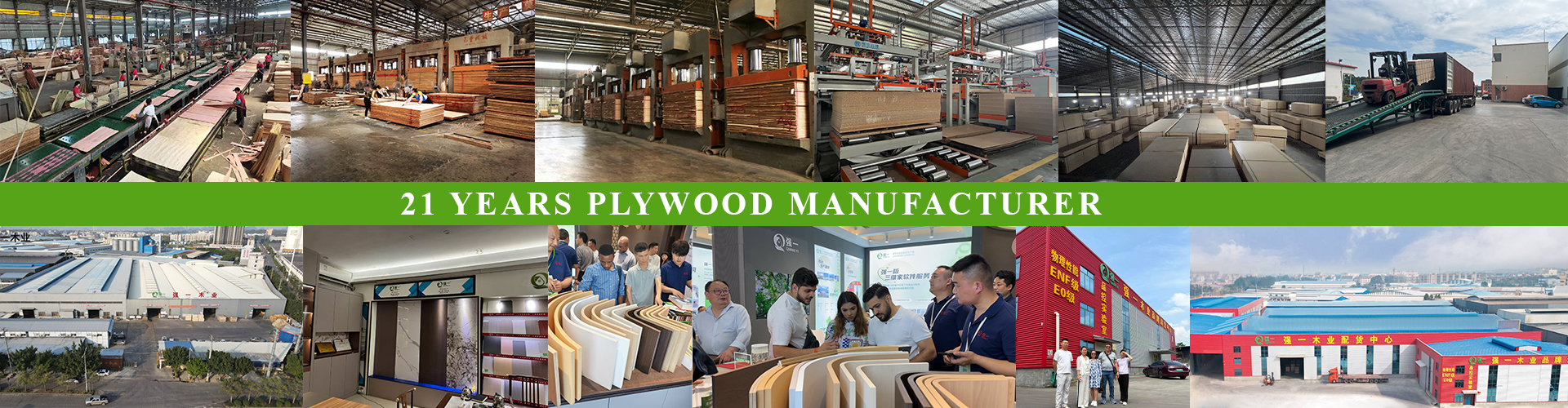
We’re not a trading company with a nice website. Qiangyi Wood has been around since 2004. We run four plants in Guigang — Qiangyi, Zhonghe, Maosheng, Jundao — around 100,000 m² of workshop combined. There’s a 16,000 m² warehouse in Gangnan district holding 100,000+ sheets ready to ship. Since 2019 we’ve run a joint lab with the Guangxi Product Quality Inspection Research Institute; every batch gets pulled and tested before the container gets sealed.
When something goes wrong on a job — and sometimes it does — you talk to us, not to some middleman. We back this board with written warranties: formaldehyde over the limit and we refund 3×; odor, warping, edge swelling, or termite damage and we replace. Structural issues covered for 15 years. That’s the kind of promise you only make when you’re running the line yourself.
Questions we actually get from importers
“Is this the same marine plywood I buy from Indonesia?”
Indonesian marine ply is usually phenolic glue, usually hardwood core, built for boat building or concrete forms. Ours is a different animal. We’re not selling it for docks. We’re selling it because in a tropical cabinet, you need water resistance و مقاومة النمل الأبيض و door stability و clean air — one board, not three different ones.
“Can you do 3/4, 1/2, 1/4 for the local market?”
Yes. 18mm (3/4″) goes into doors and boxes. 12mm (1/2″) goes onto shelves and partitions. 6–9mm is backs and drawer bottoms. All three are in regular production, no lead-time penalty.
“Will you provide English reports?”
CMA reports on formaldehyde, TVOC, water soak, termites, fire, and strength. Plus CIQ, FORM E, packing list, commercial invoice — whatever your Manila forwarder asks for.
“MOQ?”
One 20ft container is the standard. For samples, we cut A4 pieces or 300×300mm squares; you cover the international courier, and the sample charge gets credited back against your first container.
“Which port?”
FOB Qinzhou. The factory sits about two hours’ trucking from Qinzhou port in Guangxi. Manila North and South Harbor run 7–10 days on the water. Cebu adds another day or two.
Working with us
If you’re tired of boards that come back after one monsoon season, send us a message on WhatsApp. Tell us what you’re making — kitchen cabinets, wardrobes, vanity units, whatever — and which Philippine port you usually clear. We’ll send over the current price list for the thicknesses you need, and cut you a sample pack so your shop can edge it, screw it, and soak a corner in a bucket for a week before you commit to anything.
WhatsApp / WeChat: +86 19321509580
Web: www.qiangyiwood.com
Factory: Jiangnan Industrial Park, Gangnan, Guigang, Guangxi, China
Main products: Marine plywood, Melamine plywood, Melamine blockboard, Melamine Chipboard, Melamine MDF board, Film face plywood, Edge banding, Furniture accessories
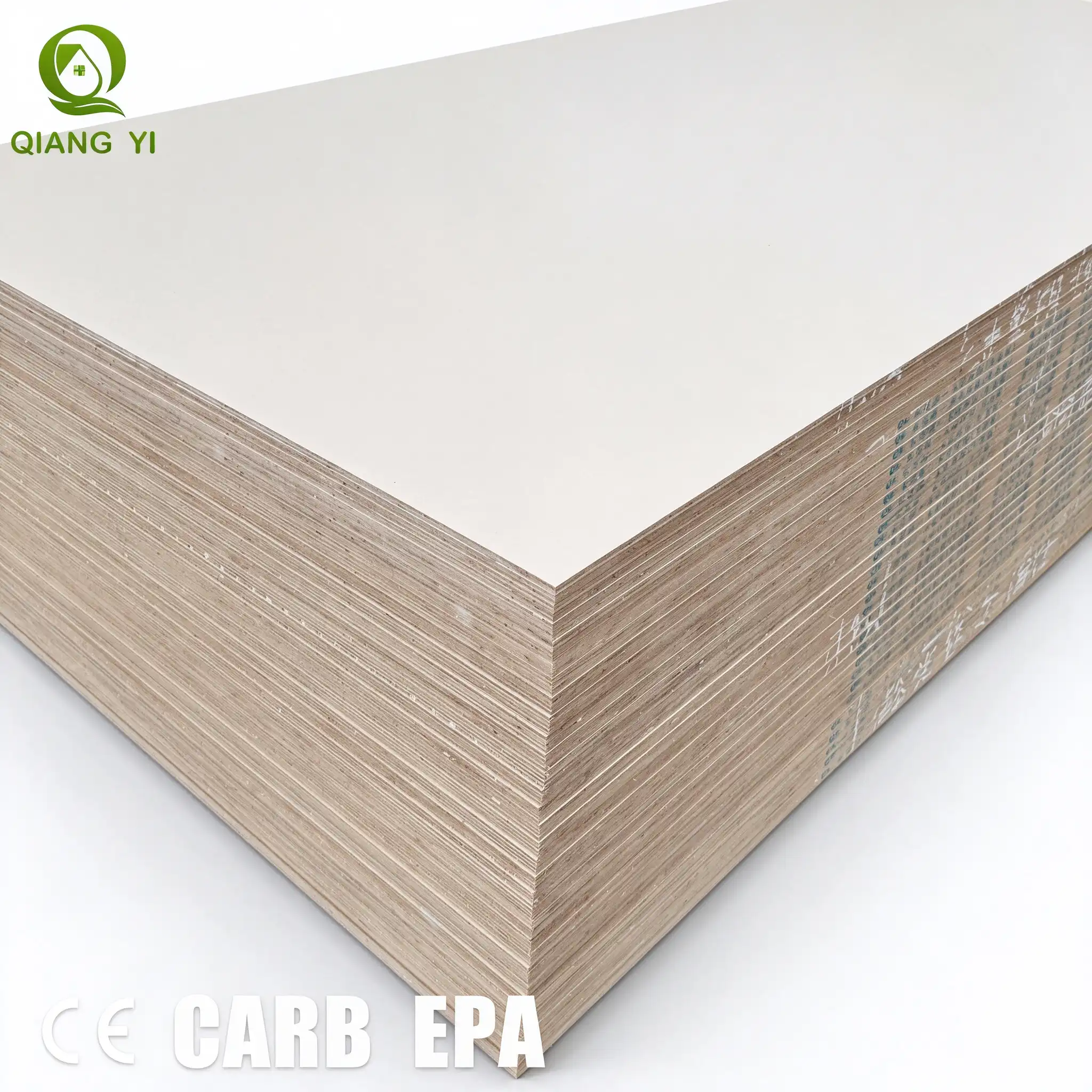
Qiangyi Glutinous Rice Glue Multifunctional Plywood with 9-in-1 Protection
Discover Qiangyi Multifunctional Plywood, a Glutinous Rice Glue Multi Purpose Board designed for moisture resistance, anti-mold performance, dimensional stability, fire resistance, and comfortable interiors.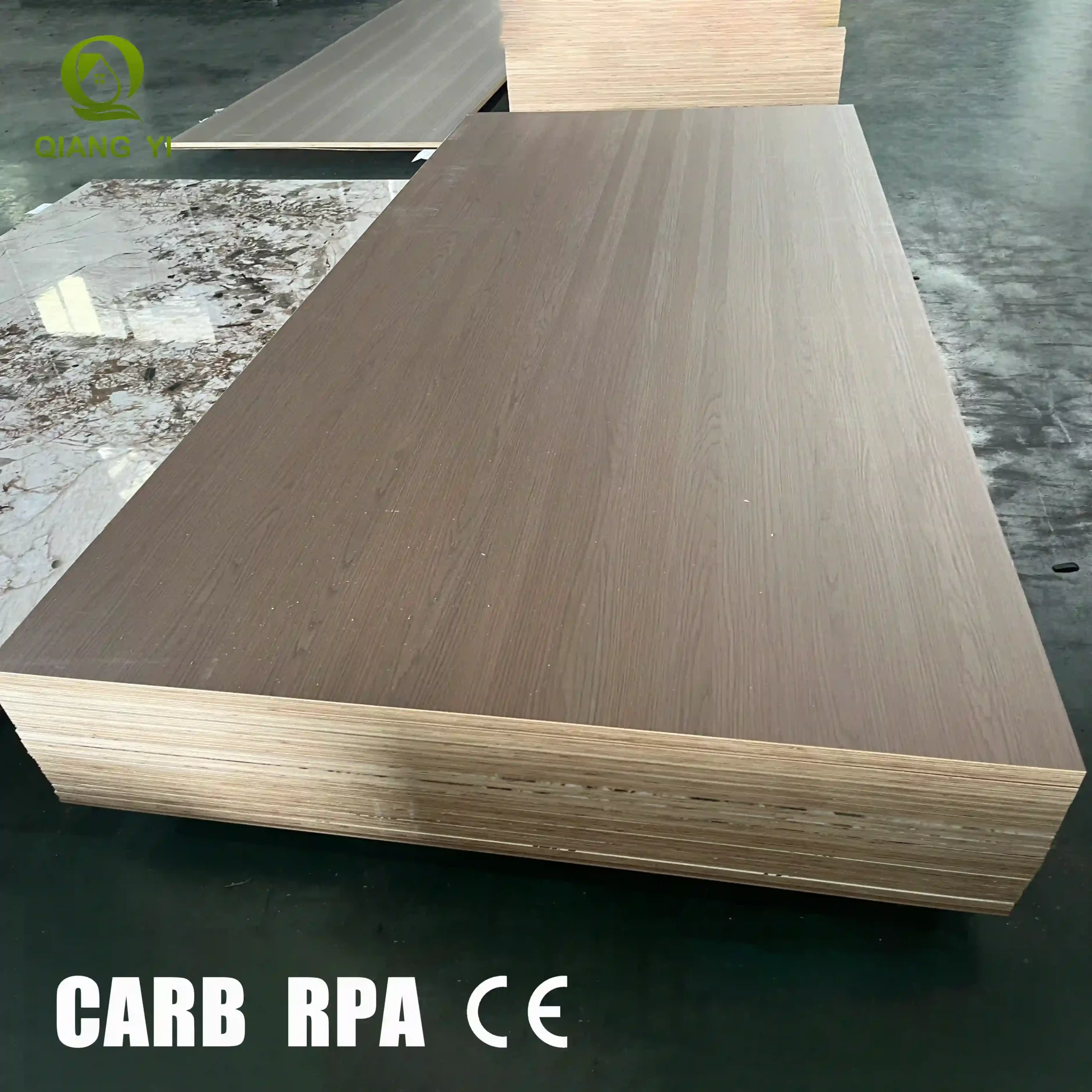
18mm All-Weather Plywood for Kitchen Cabinets Ultra-ENF Grade 0 Mold Level 9.5 Anti-Termite Class B1 Fire
An 18mm eucalyptus-core panel built for wet kitchen interiors: 24-hour thickness swelling of 2.4% or less, zero-added formaldehyde to Ultra-ENF, Grade 0 mold resistance, Level 9.5 termite defense and a Class B1 fire rating — all in one sheet. Thickness is held at 17.7–18.0mm so CNC bits and edge-banders run without offset resets, backed by SGS/Intertek reports and written warranty terms on delamination, warping and termite damage.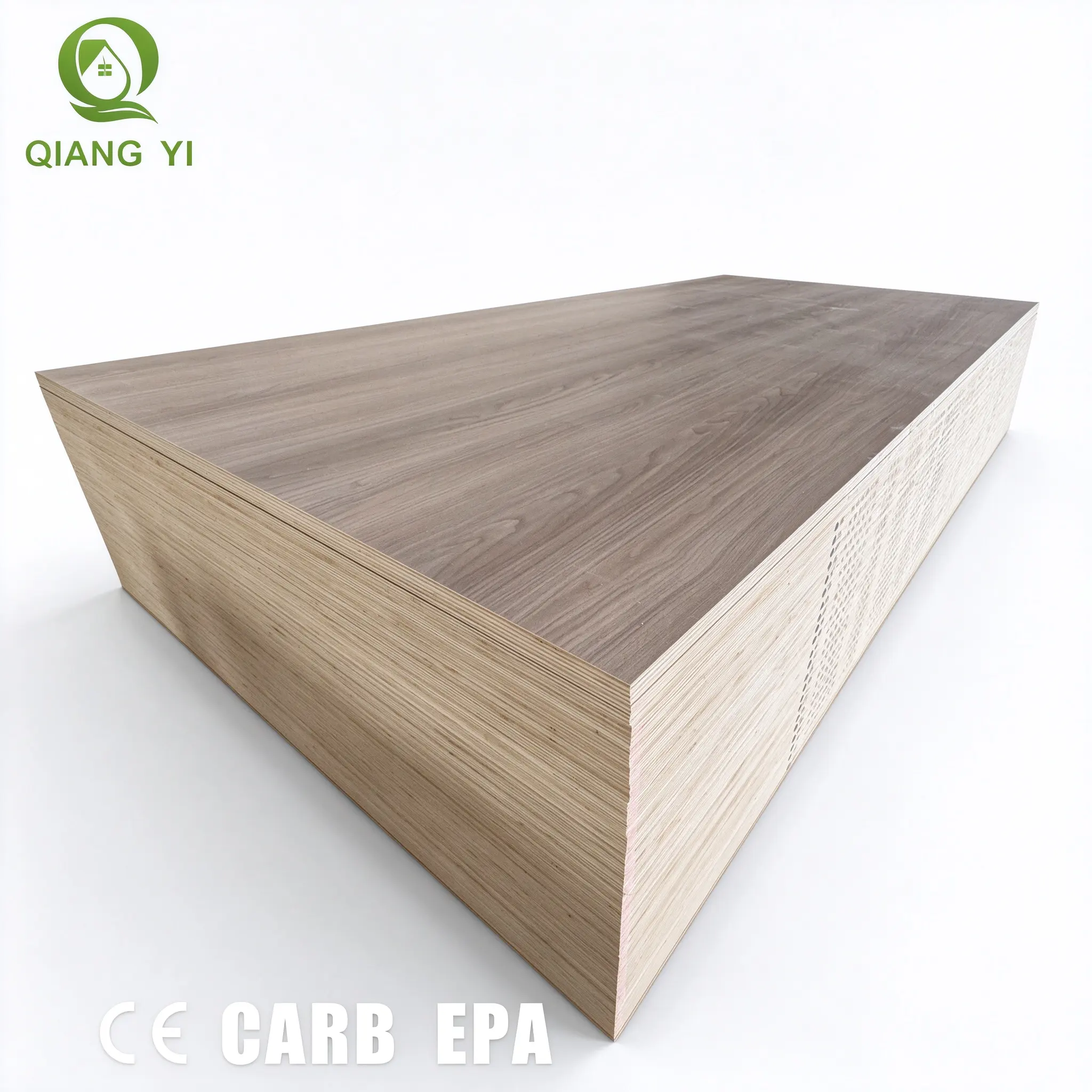
Eco-Friendly Eucalyptus Multi Purpose Board Waterproof Fire-Resistant Termite Mold & Warp Resistant
Explore how qiangyi glutinous rice glue Multi Purpose Board balances environmental protection, moisture resistance, and deformation resistance requirements. Understand the manufacturing process, size specifications, and applications of wardrobes, cabinets, wall panels, etc., and choose the appropriate plywood solution for customized home furnishings.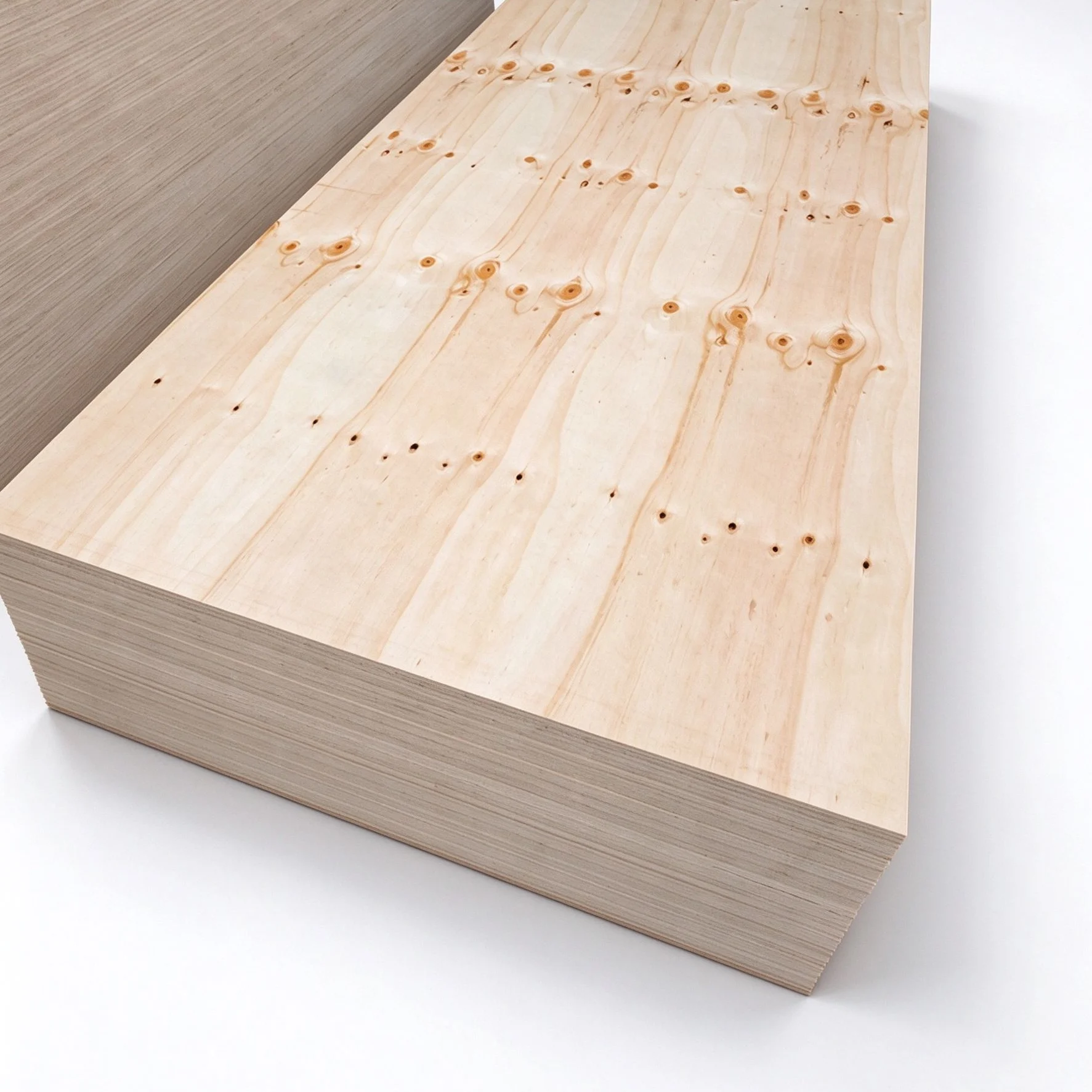
CDX plywood eucalyptus core for high-strength structures
Ultra high strength and environmentally friendly CDX plywood? Qiangyiplywood adopts a 100% eucalyptus core material and glutinous rice glue bonding system, which has ultra-high deformation resistance and load-bearing capacity. It is suitable for use in structures such as wardrobes, cabinets, and customized indoor furniture, and is a safe choice for indoor decoration applications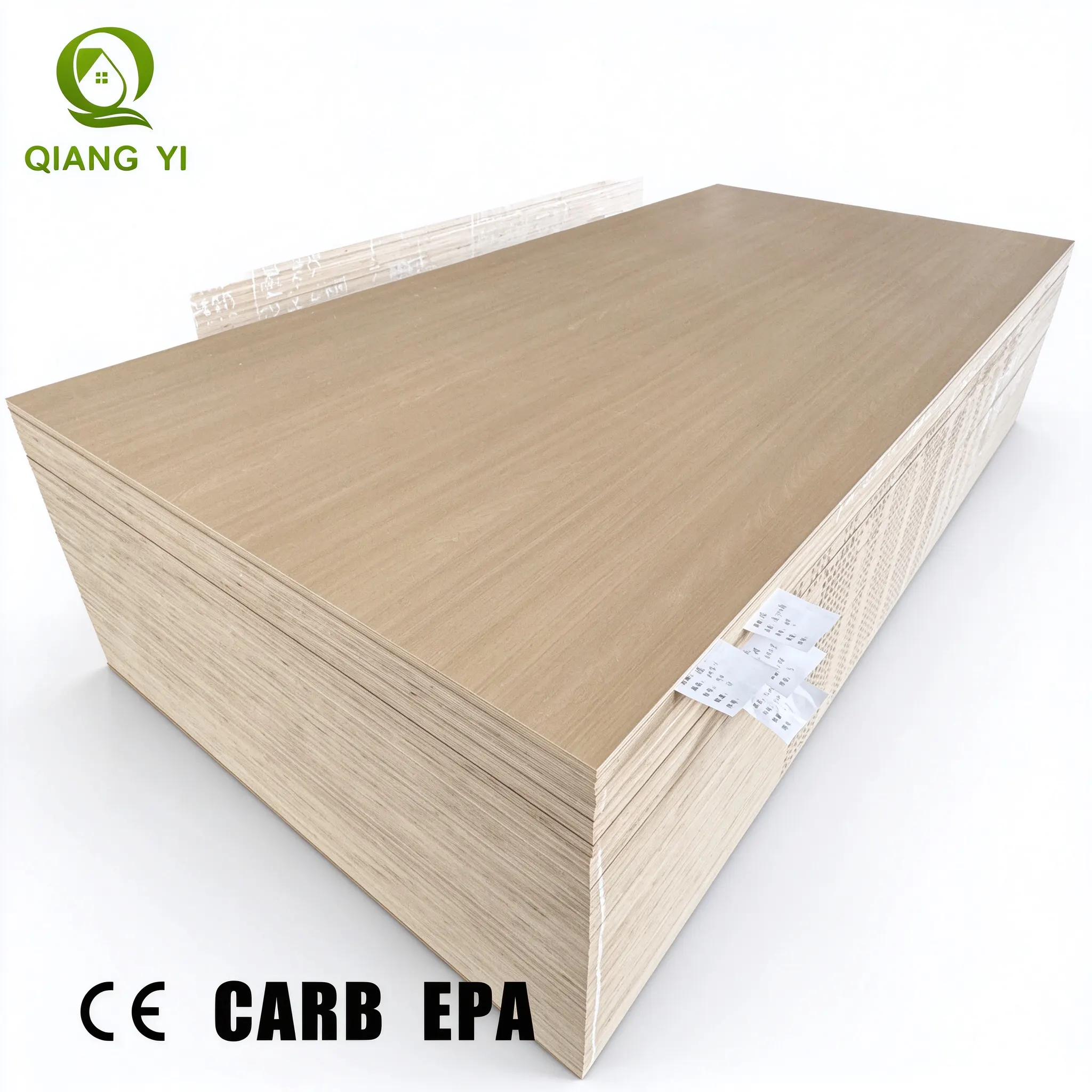
خشب رقائقي مغلف بطبقة ميلامين من خشب الأوكالبتوس بنسبة 100%، مناسب للخزائن
ما هو خشب الأوكالبتوس الرقائقي؟ يُعدّ خشب الأوكالبتوس من الأخشاب الصلبة التي تتميز بكثافته العالية وثباته الممتاز. فهو يوفر قوة تثبيت مسامير فائقة وقدرة تحمل عالية مقارنةً بخشب الحور، كما يتمتع بمقاومة طبيعية للنمل الأبيض والرطوبة. وهو مناسب للاستخدام في صناعة الأثاث الداخلي والإنشاءات الخارجية. يتوفر عادةً بأبعاد 1220×2440 مم و1220×2800 مم، ويمكن تصنيعه بسماكات مختلفة، بما في ذلك المواصفات حسب الطلب. وبغض النظر عن السماكة الإجمالية، يُصنع الخشب الرقائقي باستخدام عدد فردي من طبقات القشرة؛ مما يُعزز من متانة المادة الهيكلية وثباتها العام.
خشب معاكس بحري مقاوم للماء مصنوع من غراء الأرز اللزج، ذو لب من خشب الأوكالبتوس بنسبة 100%، مناسب للخزائن والدواليب.
كيف يساهم الخشب الرقائقي المصنوع من غراء الأرز اللزج في حل مشكلة النمل الأبيض مع خفض تكاليف المشروع بنسبة 30%؟ انقر هنا لمعرفة المزيد عن الاختلافات التقنية بين الخشب الرقائقي المصنوع من غراء الأرز اللزج والخشب الرقائقي البحري.Get more information about the plywood
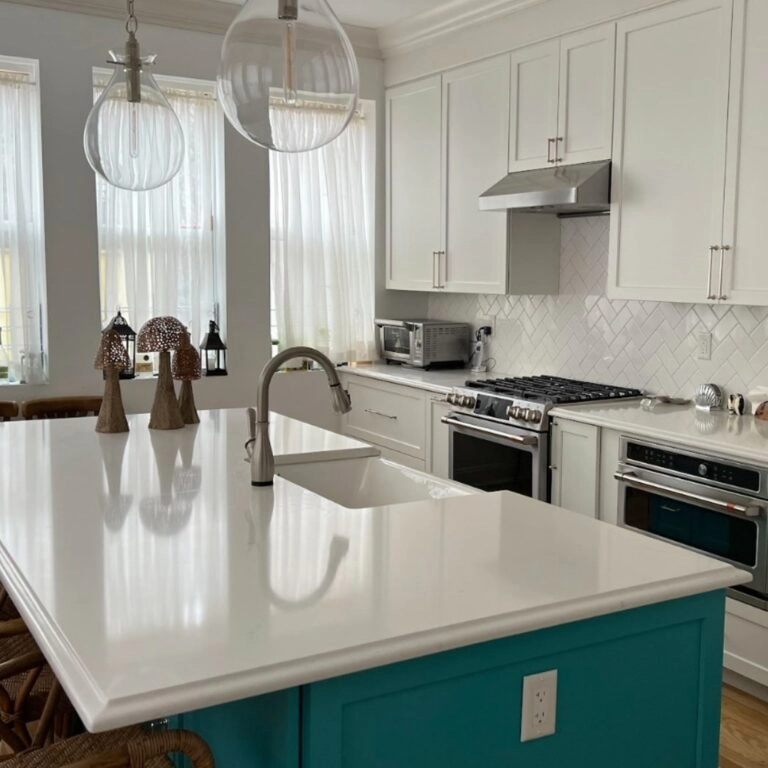
Mold-Resistant Plywood Sourcing Guide for Cabinet Manufacturing in Humid and Coastal Regions
1. Where Cabinet Manufacturers Face Mold-Related Board Problems Kitchens, bathrooms, and coastal interiors Tropical and coastal areas often have warm air and poor airflow. Wet cleaning routines, plumbing leaks, and daily condensation easily make cabinets damp. Sink units and bathroom vanities face high moisture risks. Laundry storage and base cabinets are also highly vulnerable. Wardrobes placed against poorly ventilated walls face similar threats. A panel might look perfect when it leaves the factory. However, it can still develop dark spots and musty odors after installation. Swollen edges are another common issue. Back panels and cut edges remain particularly vulnerable. These areas usually lack the strong protection found on the decorative face. The cost is higher than a stained panel Moisture damage often forces builders to replace cabinet sides and doors. This means repeating the installation process. It also requires paying for extra transport and labor. Such delays can seriously disrupt project handovers. Consequently, homeowners, developers, and distributors will likely complain. The real business risk involves heavy warranty costs and lost production time. Damaged client referrals hurt much more than just a ruined appearance. 2. Why Mold Develops in Plywood in Humid Markets Moisture reaches exposed edges and the core Wood fibers naturally absorb moisture from humid indoor air. They also take in water from direct contact. If a panel remains damp, mold will likely grow. Swelling can easily open up joints. It might also weaken the internal layer bonds. This allows trapped moisture to stay inside the wood. The overall risk depends heavily on the chosen adhesive and core quality. Moisture conditions, edge sealing, proper installation, and regular maintenance also play vital roles. Surface protection cannot compensate for weak construction Melamine facing only offers surface-level water resistance. It cannot stop moisture from entering through edge-banding gaps. Hardware mounting holes and cut surfaces on back panels are also weak points. You might compare marine board, laminated marine plywood, and ordinary plywood. Always check the waterproof classification carefully. You should also demand independent anti-mold evidence. Standard marine-board testing focuses mostly on bond strength during boiling-water exposure. These tests do not automatically require specific anti-mold or antibacterial treatments. Surface mold can still grow quickly in stagnant, highly humid rooms. Never assume that the word “marine” guarantees a mold-proof product. 3. What to Look for in Mold-Resistant Plywood Check core quality and continuity Cabinet carcasses, shelves, and doors require careful inspection. Check if the core uses a single wood species or a mixed blend. You must also see if the veneers are tightly arranged. A full eucalyptus core offers good strength and density. However, the wood species alone does not guarantee mold resistance. Always inspect the panel cross-section. Look closely for hidden gaps, empty voids, and weak bonding. Evaluate adhesive, moisture resistance, and test evidence Before buying, you should confirm these details: The specific core material and the exact construction method. Actual waterproof or moisture-resistance test results for your intended use. A separate anti-mold test report, which must include the sample description and performance grade. Consistent board thickness, overall flatness, and stable moisture content. Clear guidance for properly sealing edges, joints, and installation penetrations. The term “waterproof plywood for kitchen” does not represent a single universal grade. Class II waterproof performance often suits humid furniture applications well. However, this rating does not mean a cabinet can sit in standing water. It also cannot survive indefinite immersion. 4. How QIANGYI PLYWOOD Addresses the Risk Full eucalyptus core and fully interlocked construction Our glutinous rice glue plywood features a 100% full eucalyptus core. We do not use a cheaper poplar-eucalyptus combi core. Our factory selects premium Grade A material for production. We apply a fully interlocked core construction method. This involves a continuous cold- and hot-pressing process. As a result, the core contains no empty voids or overlapping gaps. Its cross-section remains tightly packed, much like solid wood. This solid structure creates a very flat substrate. It offers excellent resistance against edge chipping during CNC carving, grooving, and drilling. It also performs exceptionally well for PUR edge banding. Glutinous rice adhesive and controlled processing Our process uses Lingmei glutinous rice adhesive. This material is made from glutinous rice flour, magnesium chloride, magnesium oxide, and water. Once it cures, the glue builds a thick shield around the wood fibers. This step blocks the tiny channels where water normally enters. The magnesium-based parts set up an alkaline setting. Also, the deep soaking of the glue manages dampness very well. These actions work together to stop mold from growing easily. The standard moisture-content specification for this item sits at 8%–14%. Please check and confirm the exact needs for your specific order. Please see our AA wood-core waterproof melamine-faced plywood for furniture to explore a specific product option and view detailed finish choices. 5. Evidence and Purchasing Value for Humid-Market Projects What the test report says A testing document examines an 18 mm glutinous rice glue plywood sample. QIANGYI PLYWOOD provided this specific material. The evaluation followed the JC/T 2039-2010 standard. According to the results, the board achieved an anti-mildew rating of Grade 0. Furthermore, it showed an antibacterial rate of more than 99%. The document clearly explains that Grade 0 means there is no mildew present. For the antibacterial part of the test, the researchers used Escherichia coli and Staphylococcus aureus. At the same time, the anti-mildew assessment involved several types of fungi. This group specifically included Aspergillus niger. You can ask us to verify the test report for your specific product choice. Kitchen and bathroom projects require extra attention. Therefore, you should also review the Class II waterproof test results. Pay close attention to the reported 24-hour water absorption data. The official thickness-swelling rate sits at no more than 2.4%. A Philippine distributor’s market experience A Philippine distributor first contacted our team online in early 2026. This client later visited our official booth at the Canton Fair in March. After reviewing our physical samples, the buyer placed an initial order in April. That first shipment featured a single color design. Following the successful delivery, the ENF grade and smooth surface finish really stood out. The impressive waterproof and termite-resistance features also quickly attracted local cabinet and furniture customers. You might need to compare marine plywood vs. ordinary plywood for a project. Always match the core type and adhesive quality to your needs. You must also align the moisture resistance and anti-mold evidence with the finished furniture’s actual environment. Make sure to confirm the exact application and board thickness. Check the face design, edge treatment plans, and laboratory reports carefully before ordering. Meet QIANGYI PLYWOOD at THE 2026 GUANGXI INTERNATIONAL FOREST PRODUCTS AND WOOD PRODUCTS EXHIBITION. You will find us at Booth D5T-06. The event takes place at the Nanning International Convention & Exhibition Center from November 21–23, 2026. 6. FAQ Q: Will QIANGYI PLYWOOD Glutinous Rice Glue Functional Laminate Plywood get moldy? A: The panel successfully prevents mold growth under normal indoor conditions. This includes the high humidity and slight condensation typically found inside kitchens and bathrooms. This protection comes from its Grade 0 anti-mildew performance and the dense, mildly alkaline adhesive layer. However, extreme conditions can still damage any wood-based panel. Severe, persistent plumbing leaks pose a massive threat. Prolonged immersion in standing water without proper airflow will also cause harm. You must ensure proper ventilation and thorough edge sealing to guarantee long-term durability. Q: Is it suitable for the humid environment of the South? A: Yes, it works very well. The board features a reliable Class II waterproof performance. It also boasts a reported 24-hour water absorption and thickness-swelling rate of no more than 2.4%. The material perfectly suits properly designed kitchen and bathroom cabinets. However, it cannot handle permanent water immersion. Q: Is marine plywood automatically mold-resistant? A: No, that is not necessarily true. Marine plywood standards, such as BS 1088, primarily evaluate structural bonding strength. They test this under highly demanding wet conditions. This often includes boiling-water exposure, which experts commonly discuss regarding WBP performance. These tests focus heavily on preventing layer delamination. However, this process does not establish any chemical or physical resistance against indoor fungi. Aspergillus niger is a prime example of such a threat. For modern cabinet applications, you should always request a dedicated anti-mildew report. Make sure it covers indoor fungi testing, such as an evaluation based strictly on JC/T 2039-2010. Q: Does a melamine face prevent mold inside plywood? A: No surface finish can completely protect every exposed edge or open joint. You must specify a highly suitable core and a reliable adhesive. Furthermore, installers must properly seal all cut edges, screw holes, and installation penetrations. Q: What should cabinet manufacturers confirm before buying mold-resistant plywood? A: Buyers must confirm the exact core species and verify the fully interlocked construction. You should also check the thickness consistency and moisture tolerances. Always review the waterproof classification, the official anti-mold report, and the surface finish quality. Finally, discuss the factory’s batch inspection arrangements. You need to request a physical sample. Then, check that all technical documents perfectly match the quoted product. You can easily reduce your sourcing risk today. Simply send us details about your target market and specific cabinet application. Please include your required size, board thickness, core choice, and surface preferences. Do not forget to mention your estimated order quantity. Our team can help match you with the perfect panel. We will provide all relevant test documents and quickly arrange physical samples. You can also meet us directly at Booth D5T-06 in Nanning from November 21–23, 2026.
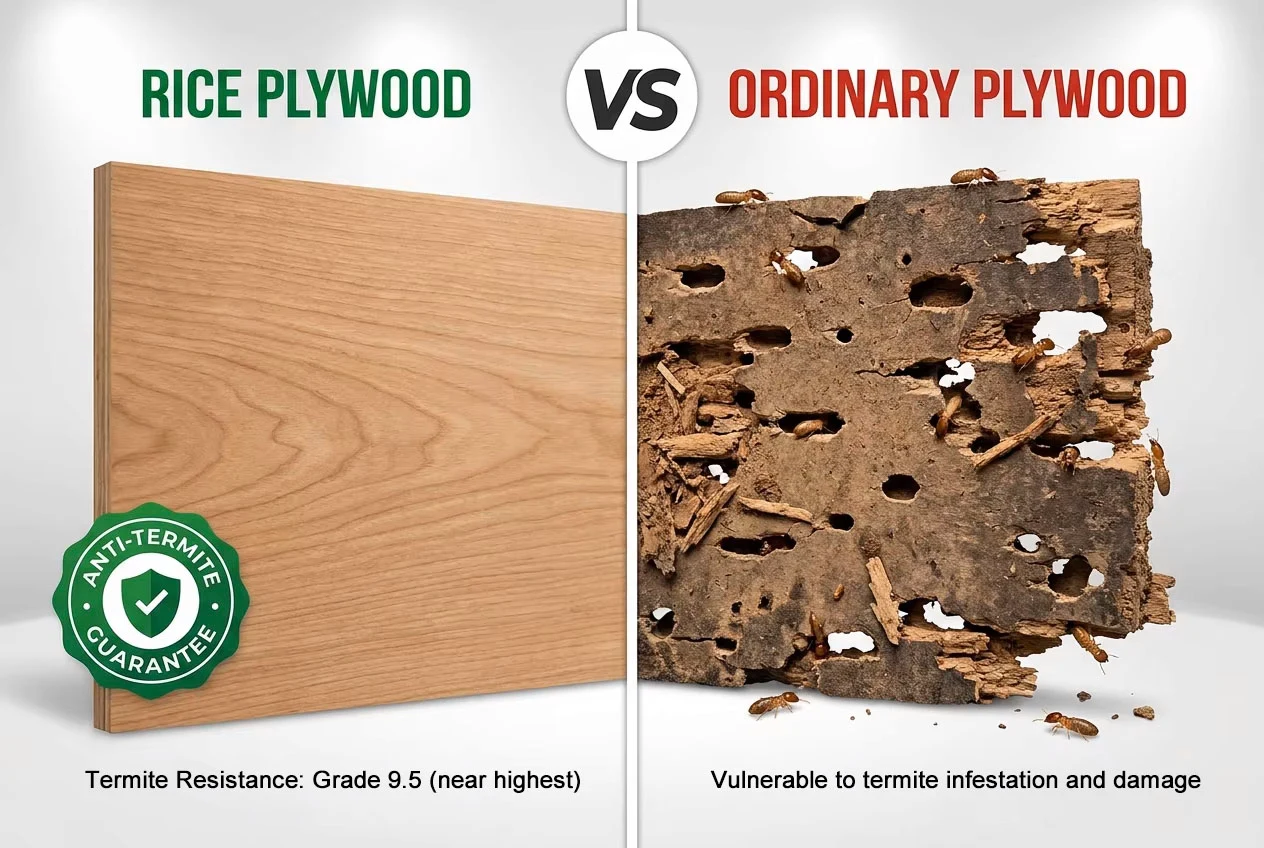
Termite-Resistant Plywood Checklist for Resort Contractors
A resort guest room might appear perfectly finished. However, hidden spots like wardrobes, vanity units, and decorative wood wall paneling remain highly prone to termite damage. Finding this issue after handover leads to the expensive removal of fitted furniture. It also requires repairs to nearby finishes. Meanwhile, interruptions to room turnover can directly hurt operating revenue. For general contractors and procurement teams working on tropical or coastal resort properties, termite-resistant plywood requires careful scrutiny at the sample-approval stage. It includes verification of reliable test evidence and on-site installation conditions, to reduce future risks. How Hidden Termite Damage Creates Costly Resort Fit-Out Problems High-Risk Areas in Guest Rooms and Built-In Furniture You should check wardrobes placed against outside walls. Also, inspect vanity units located near plumbing. Look closely at minibar cabinets and timber-lined service zones. These closed spaces can hide termite action for a long time. A neat laminate face does not show what is going on at a cut edge. It also hides issues at a screw hole or an exposed plywood core. Poolside bungalows might face constant moisture contact. At the same time, ground-level villas often have more connection points near plants and dirt. How Termites Turn Small Defects Into Project Costs Replacing a ruined cabinet side usually demands taking off custom cabinet doors. You also have to remove countertops, hinges, and nearby finishing trim. Suppose plywood from the same batch is installed across many guest rooms. In that case, a termite complaint in just one room might cause the temporary shutdown of an entire building for inspection. Contractors could then face drastically higher labor costs. They might deal with contractual claims for project delays. Disputes over supplier responsibility can also arise. Prevention begins by picking termite-resistant panels. These panels must be backed by compliant test reports early in the project. Why Ordinary Plywood May Fail in Termite-Prone Interiors Wood Fibers and Concealed Entry Routes Termites eat the cellulose found in wood. They can access hidden furniture spaces through tiny cracks in concrete. They also enter via openings around electrical conduits. Standard edge-banding strips offer only physical coverage. They cannot stop termites from attacking the inner veneers. Even a beautiful decorative surface leaves the wood fibers open to attack if the core lacks termite protection. Therefore, edge sealing needs to work together with the plywood’s own termite resistance. It should also be paired with a building-wide pest-management program. Why Marine and Melamine Plywood Need Separate Checks Is laminated marine plywood termite resistant? Not automatically. Marine-grade bonding is designed to endure specific moisture exposure. It is not, on its own, proof of insect resistance. Similarly, a melamine surface enhances looks and makes cleaning easier. However, it does not certify the inner core against termites. When you compare water and termite resistant plywood, make sure to ask for distinct results for each feature. Termite-Resistant Plywood Checklist Before Resort Procurement Verify the Test Report and Match It to the Order Do not accept a basic “termite proof plywood” claim. You must check the test method, report date, and sample description. Also, verify the thickness and rating. Match those specific details against the planned purchase. Keep the approved sample to compare it with the delivered sheets. Before you release a large order, write down the exact panel construction in the purchase specification. A similar-looking decorative finish placed on a different core should never count as an approved substitute. Project check What to confirm Test evidence Termite rating and the actual test conditions Product identity Core species, adhesive system, thickness, finish Delivery control Sample match, batch markings, packaging condition Installation Cut edges, penetrations, wall clearance, pest treatment Inspect the Core and Site Conditions Request a cross-section sample. Look closely for gaps between veneers. Check for uneven construction and damaged edges. For bathroom vanities, confirm exactly how splashes and pipe penetrations will be handled. For wardrobes set against external walls, review the building’s pest-management plan. A solid procurement checklist evaluates both the panel itself and the locations where it will be installed. How QIANGYI PLYWOOD Addresses Termite Risk Lingmei Glutinous Rice Glue and Tested Resistance Our glutinous rice glue plywood utilizes Lingmei adhesive. This glue is made with glutinous rice starch, magnesium chloride, magnesium oxide, and water. The cured adhesive creates an alkaline environment. This is a key part of our strategy for termite resistance. Instead of just trusting the glue description, contractors can review the finished board’s actual test results. For a specific choice, check out our 18mm termite-resistant eucalyptus-core plywood. Eucalyptus Core and Fully Connected Veneers Our furniture-grade plywood uses 100% high-density eucalyptus veneers. It features a fully core-connected, seamless layup. This design is meant to remove internal voids and overlapping veneer flaws. The dense core boosts screw-holding strength. It also improves flatness during secondary processing. Furthermore, it decreases internal gaps. It avoid termites could use those gaps to enter the panel and build nests. Explore our 100% eucalyptus-core glutinous rice glue plywood. What Grade 9.5 Means for Resort Project Approval Read the Termite Test Result, Not Just the Rating A test report GIZ/TR-2024-0301-0186 shows Grade 9.5 for Glutinous Rice Glue Multi-functional Plywood based on GB/T 18260-2015. The four-week laboratory test utilized 18mm plywood. Inspectors observed minor damage. This included one or two termite tunnels or traces. That serves as helpful evidence of resistance under those specific test conditions. However, it is not a guarantee that every installed panel will stay completely untouched forever. A Mauritius Customer Case and the Next Procurement Step QIANGYI PLYWOOD has been delivering 100% eucalyptus core multi-layer boards in large volumes to furniture makers in Mauritius. We also supply other Indian Ocean island markets extensively. Multiple full cabinet deliveries have already been completed. The island climate features severe salt spray, intense humidity, and strong heat. This harsh environment has proven the structural stability of our plates. They perform well during stable processing. They also hold up in moisture-proof packaging for shipping and throughout long-term service. This provides a very dependable reference for batch material selection in coastal resort projects. For direct specification discussions, please visit QIANGYI PLYWOOD at THE 2026 GUANGXI INTERNATIONAL FOREST PRODUCTS AND WOOD PRODUCTS EXHIBITION. Find us at Booth D5T-06, Nanning International Convention & Exhibition Center, from November 21 to 23, 2026. Bring your project drawings and target panel specifications. We can then discuss proper samples and relevant test evidence. FAQ Q: Is glutinous rice glue plywood suitable for humid coastal resorts? A: Yes. Our glutinous rice plywood passed the Class II waterproof test report. Therefore, it can be applied to humid/wet condition furniture. It’s marine grade plywood perfect for kitchen/ bathroom cabinet. Q: How should contractors judge plywood quality before installation? A: Evaluate the flatness and the exposed core. Check the thickness consistency and edge finishing. Also, review the matching test report. Always keep an approved sample on site. Q: Is marine plywood automatically termite resistant? A: No. Moisture-resistant bonding and termite resistance are entirely different properties. You must request evidence for both. Q: Does Grade 9.5 mean a resort will never need pest treatment? A: No. The grade only applies to the tested specimen. Termite monitoring remains important. Proper sealing and regular building maintenance still matter greatly. Are you planning a resort fit-out? Send us your room applications, needed thickness, quantities, and final destination. We can talk about a proper panel specification. We will also provide the supporting test report before you approve the order.
Fireproof Plywood Comparison for Hotel Interior Procurement
Three suppliers quote fireproof plywood for a hotel renovation. Their samples look similar, but one says “B1,” another mentions surface treatment, and the third lacks a finished-panel report. Which can the contractor submit for approval? That uncertainty matters more than a small price difference. Rejected panels can hold up cabinetry, wall finishes, and guest-room handover. Compare actual panels rather than quotation labels. Here, “fireproof plywood” means flame-retardant plywood, not noncombustible wood. When Fireproof Plywood Selection Holds Up Hotel Interior Approval Similar Plywood Samples, Different Fire-Performance Claims Consider panels for guest-room headboards, for built-in wardrobes and for reception joinery. A woodgrain finish may be satisfactory to the designer, but to the reviewer it is necessary to provide evidence of the specified reaction-to-fire performance. A claim of B1 flame retardancy needs to be supported by a description of the test method and of specimens tested. Approval requirements for a guest-room wardrobe, corridor wall finishes, and joinery off a restaurant would typically differ. The material schedule must reflect these differences and not allocate one grade to the entire space. An unfinished-panel report cannot automatically verify a laminated part of different completion status. Is this configuration even relevant? Material Rejection, Rework, and Delayed Handover Mismatches found after cutting can mean reworking of edge banding and machining. Even earlier resubmission of samples can delay purchasing. Check the fire performance data of alternative materials at the quotation stage. What may appear to be a cheaper sheet through the purchase process could end up costing more after consideration of the necessary labor, the cost of an alternative veneer, and additional approval time required by the workshop and site. This will only cause additional delay to both parties. Why Fireproof Plywood Options Cannot Be Compared by Label Alone The Role of Wood, Adhesives, and Flame-Retardant Treatments Wood veneer is a combustible material. The properties of the adhesives, treatments, and panel construction can greatly affect the behavior of the finished product. Some products are treated on the surface, whereas others include mineral components in the bonding agent. Neither of these approaches constitutes a specific classification name. The specific fire test matters because heating may involve flame spread, energy release, smoke production, or droplets. A short promotional flame demonstration cannot replace these measured outcomes, especially when people will sleep in the rooms where the materials are installed. Note that reaction-to-fire classification of panels differs from the fire resistance of complete doors or partitions. Why Thickness, Finishes, and Installation Details Matter Factors such as PET facing, melamine, coatings, and thickness variations need to be taken into account when determining test applicability. Cutting and edge finishing must be executed within approved parameters. You have dozens of wardrobe fronts to match. Make sure to clarify all these details prior to approving the sample. No one wants to spend hours of work cutting panels that were based on an 18 mm melamine-faced board when the report said it was some other specimen. It’s better to clear up any confusion before the panels are nested for cutting on the CNC. How to Compare Fireproof Plywood for Hotel Interiors Compare Three Supply Options Against the Same Project Requirements When purchasing fire-retardant plywood, compare all quotes on an ‘equal basis’ against identical specification requirements and do not just go for the lowest price offer. Panel option What to compare Potential procurement gap Standard decorative plywood Finished-panel test evidence Appearance does not confirm flame retardancy Surface-treated plywood Treatment system and tested finish Unverified substitutions during fabrication Mineral-adhesive plywood Panel construction and fire-test results Adhesive claims without matching panel evidence These are not performance rankings. For example, a surface-treated panel that has been tested may be preferred over an untested mineral-adhesive panel, or vice versa. Set Acceptance Criteria Before Comparing Prices Check the classification, applicable standard, room of use, and panel configuration. Compare the development of fire, the amount of heat produced by the fire, the amount and type of smoke produced by the fire, and the burning droplets produced by the fire, wherever applicable. After that, please check the dimensions, surface finish, machining, and sample availability of the mentioned product. In the RFQ, have each supplier list out the proposed panels by code and list out any substitutions with a separate answer. This allows purchasing, fabrication, and site to use the estimator’s work for comparison purposes. How QIANGYI PLYWOOD Addresses the Fire-Performance Requirement The Magnesium-Based Ingredients in Lingmei Glutinous Rice Glue Glutinous rice glue plywood is made with Lingmei adhesive composed of glutinous rice flour, magnesium chloride, magnesium oxide, and water. The plywood is flame-retardant due to the content of magnesium oxide. However, classification of plywood has to be done by means of testing the finished product. Our eucalyptus core plywood is offered with full eucalyptus veneers as opposed to a combi core; this helps to define repeat orders. The Cured Adhesive Structure Within the Plywood Panel Our veneers are made up in a full core connected formation, with adhesive applied layer by layer. This type of construction allows for a complete and closely fitted cabinet or decorative joinery item, unlike the partially connected core found in some constructions. The machining of long headboards benefits from core continuity. Fire testing is the only way to determine the behavior of finished panels under exposure. What the Flame-Retardant Test Report Means for Hotel Procurement Read Report WT245100363 and Its Tested Limits Report WT245100363 describes the test results for the burning behavior of tested items and compares them against the B1 (B) requirements with qualified results. The test was conducted according to GB/T 20284-2006 and GB/T 8626-2007. Test item Measured result What it tells a buyer Fire growth rate index, FIGRA 79.8 W/s Below the stated 120 W/s limit Total heat release, THR600s 3.9 MJ Below the stated 7.5 MJ limit Smoke classification s2 A defined smoke category, not smoke-free Burning droplets/particles d0 No burning droplets/particles under the specified test conditions The lateral flame spread was also in compliance with the test requirements. Note that the test results are specific to the tested specimen and may not reflect results for other thicknesses or finishes. See the complete report for details. Match the Tested Product to the Approved Sample and Purchase Order Before releasing a hotel order, follow a simple sequence: 1. Verify local project standards and locations where classification is required. 2. Verify that the information in the report corresponds with the requested thickness, eucalyptus core, and decorative face. 3. Approve the physical sample and note the exact configuration in the corresponding purchase order. 4. Check delivered panels against the approved sample prior to cutting. This helps avoid changes after fabrication. Ready to finalize your hotel interior plywood specification? Send QIANGYI PLYWOOD your panel schedule, required thickness, decorative finish, and applicable fire-performance criteria. Request matching samples, finished-panel test documentation for the proposed configuration, and a project quotation before placing your order. We look forward to meeting you at THE 2026 GUANGXI INTERNATIONAL FOREST PRODUCTS AND WOOD PRODUCTS EXHIBITION, to be held on November 21–23, 2026, at Nanning International Convention & Exhibition Center, Booth D5T-06. Please bring the relevant project drawings and panel requirements. FAQ Q: Is fireproof plywood completely noncombustible? A: No. Fireproof plywood achieves its flame-retardant effect through incomplete combustion. The wood chars only on the surface and does not produce an open flame. However, this does not mean the plywood is completely noncombustible. Q: How does fire-retardant plywood compare with standard plywood for hotel interiors? A: Compare finished panels against the required classification. Standard plywood without matching evidence cannot be assumed to meet the same requirement as a tested flame-retardant panel. Q: Is this full eucalyptus core or a combi core? A: Our glutinous rice glue plywood uses a full eucalyptus core with fully core-connected veneer assembly. Q: Can flame-retardant plywood be laminated or cut without affecting its classification? A: Yes. The original fire-performance classification remains valid after lamination or cutting. The test and classification scope covers laminated plywood, so lamination does not invalidate its flame-retardant performance. Q: Do you have test reports for the fire-retardant performance? A: Yes. The burning-behavior report includes B1-related results such as FIGRA, heat release, smoke classification, and burning droplets.
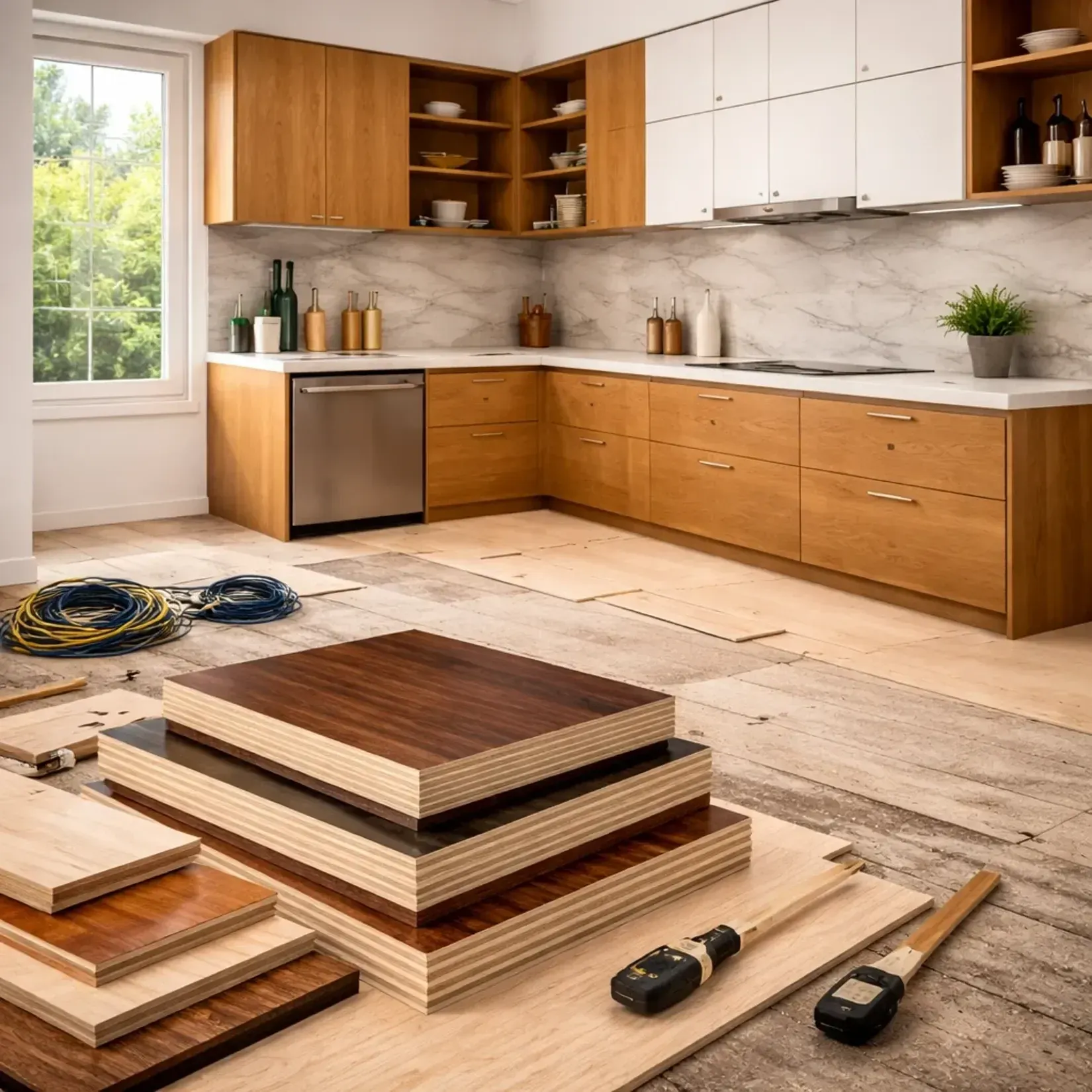
دليل مصادر الخشب الرقائقي المقاوم للرطوبة لخزائن الأحواض
قد تخرج خزانة حوض المطبخ من المصنع بمظهر مثالي، لكنها قد تُصبح مشكلة ضمان بعد بضعة أشهر فقط. فتسرب بسيط في السباكة أو التنظيف الرطب المتكرر قد يتسبب في انتفاخ الجزء السفلي، مما يؤدي إلى تقشر الحواف. عندها، يضطر الفني إلى التعامل مع عملية إصلاح معقدة. يحتاج مصنّعو خزائن المطابخ إلى حماية منتجاتهم النهائية، كما يرغبون في تجنب زيارات الصيانة المكلفة. لذلك، فإن اختيار الخشب الرقائقي المقاوم للرطوبة لا يقتصر على مجرد إيجاد لوح عليه ملصق مقاوم للماء، بل يتعلق بالأداء الحقيقي للمادة. لماذا يُسبب انتفاخ خزائن الأحواض مشاكل مكلفة للمصنعين؟ أسفل حوض المطبخ، تتعرض المنطقة لمستوى رطوبة مختلف عن رفوف المطبخ. قد تتسبب التسريبات من الأنابيب، وتكثف الماء عليها، والتنظيف بقطع قماش مبللة في انتفاخ الألواح، مما يؤدي إلى مظهر غير جذاب للخزائن وأجزاء غير متناسقة تحتاج إلى إعادة تركيب، بالإضافة إلى مطالبات ما بعد البيع. بدلاً من الاعتماد على عبارة "مقاوم للماء"، عند اختيار المواد للمشاريع، يجب اختبار كيفية تفاعل ترابط اللوح وقلبه مع الانتفاخ الناتج عن الرطوبة. غالبًا ما تبدأ مشاكل الخزائن من أماكن لا يمكن رؤيتها. أين يظهر تلف الرطوبة لأول مرة في خزائن الأحواض؟ تخيّل وحدة سكنية مستأجرة حيث يتساقط الماء من مصرف غير مُحكم على اللوح السفلي. تختبئ البرك خلف زجاجات التنظيف الطويلة، وتبقى هناك دون أن يلاحظها أحد لأسابيع عديدة. وفي منزل آخر، يتراكم العرق على أنبوب ماء بارد، وسرعان ما يتسرب هذا العرق إلى ثقب مكشوف غير مُحكم الإغلاق. عادةً ما تكون أضعف نقاط الأرضية هي الجزء السفلي، وفتحات الأنابيب، والزوايا الخلفية، والوصلات عند قاعدة الأرضية. بمجرد أن يزداد سمك جانب القطع بفعل الماء، تبدأ المشاكل بالظهور. حتى الطبقة السطحية السليمة تمامًا لن تبقى مستوية. كيف تؤدي الألواح المتورمة إلى إعادة العمل ومطالبات الضمان إصلاح قاعدة السرير المنتفخة ليس بالأمر السهل في أغلب الأحيان. قد يضطر عامل الصيانة إلى فصل الأنابيب أولاً، كما يحتاج إلى إزالة الأرفف وقص الأجزاء المجاورة. هذا يعني التخطيط لزيارة جديدة للمنزل. في المطابخ المصممة حسب الطلب، تعيق الخزائن المغلقة وأسطح العمل الثقيلة سهولة الوصول. يتحمل المصنع في النهاية تكاليف العمالة الإضافية والسفر والوقت. في المقابل، لا يرى صاحب المنزل سوى منتج رديء الصنع. قطعة خشب واحدة معيبة كفيلة بتحويل صفقة ناجحة إلى نزاع معقد حول الضمان. لماذا تنتفخ ألواح خزائن أحواض المطبخ العادية رغم حماية سطحها؟ قد تمنع الطبقة العلوية اللامعة تناثر الماء العادي. مع ذلك، فإن هذا السطح ليس سوى جزء واحد من لوح الخزانة بأكمله، إذ لا يزال بإمكان الماء التسلل إلى داخل الخشب. يدخل الماء من خلال الحواف المقطوعة وفتحات السباكة يجب على العمال إحداث ثقوب في الصفيحة الخشبية لتمرير أنبوب تصريف الحوض. هذا الجزء المكشوف حديثًا من الخشب الداخلي لا يحتوي على طبقة الطلاء الأصلية من المصنع. إذا بقيت الثقوب مكشوفة، فسيتسرب الماء مباشرةً إلى ألياف الخشب، مما يؤدي إلى انتفاخ الصفيحة وزيادة سمكها. تُسبب الحواف غير المُحكمة، وفتحات المسامير غير المُغطاة جيدًا، وتجمع الماء في الجزء السفلي من الأرضية مشاكل مماثلة. يُساعد وضع صينية بلاستيكية لتجميع الماء وسدّ جميع الفجوات بشكل كبير. مع ذلك، لا تُغني هذه الخطوات عن استخدام مادة لاصقة رديئة داخل اللوح نفسه. لماذا يستجيب الخشب الرقائقي العادي والخشب الليفي متوسط الكثافة (MDF) بشكل مختلف للرطوبة؟ يُصنع خشب MDF من غبار الخشب المضغوط بإحكام، مما يمنحه سطحًا أملسًا جدًا عند طلائه. مع ذلك، قد تنتفخ جوانبه المكشوفة بشكل ملحوظ عند تعرضها للرطوبة. أما الخشب الرقائقي، فيُصنع من طبقات من الخشب الطبيعي المُلصقة. وتعتمد استجابته للماء بشكل كبير على نوع الخشب، ونوع الغراء المستخدم، وطريقة ضغطه معًا. تُعدّ هذه الحقيقة بالغة الأهمية عند مقارنة الخشب الرقائقي البحري بالخشب الرقائقي العادي. فالاسم وحده لا يكفي لتحديد كيفية تفاعل لوح معين مع الماء. لذا، ينبغي على المشترين الاطلاع على نتائج الاختبارات الفعلية وطريقة التصنيع. ولا ينبغي لهم أبدًا افتراض أن جميع منتجات الخشب الرقائقي أو ألواح MDF ستؤدي نفس الوظيفة. كيفية اختيار الخشب الرقائقي المقاوم للرطوبة لخزائن الأحواض يجب أن يراعي تصميم قاعدة الحوض الجيد الجانب الداخلي للوحة. كما يجب أن يحمي القطع الجديدة التي تم إجراؤها أثناء عملية البناء. إعطاء الأولوية للترابط المقاوم للماء وسلامة اللب اسأل البائعين دائمًا عن نوع الغراء المستخدم في طبقات الخشب. تأكد من خلو الجزء الأوسط من أي أجزاء متداخلة أو ثقوب فارغة أو وصلات ضعيفة. فاللب الصلب الأملس يجعل عملية القطع والربط أكثر موثوقية. يكشف اختبار التقشير بالغمر ما إذا كان اللاصق يصمد في ظروف رطبة محددة. في الوقت نفسه، يتحقق اختبار انتفاخ السماكة من عامل مختلف تمامًا. بالنسبة لمشروع مطبخ ضخم، جرب استخدام طريقة فحص أساسية: *انظر عن كثب إلى الجوانب المقطوعة لاكتشاف أي فجوات فارغة في اللب. *تأكد من أن تقرير التقشير بالغمر يطابق تمامًا اللوح الذي تشتريه. *قم بإجراء اختبار سريع لإحكام إغلاق الحواف حول فتحات الأنابيب. تحقق من السماكة وحماية الحواف ومواصفات الشراء يبحث الأشخاص الذين يرغبون في الحصول على ألواح خشبية بسماكة 18 مم للخزائن عادةً. ومع ذلك، فإن الحجم الأمثل يعتمد في الواقع على شكل الخزانة ووزنها الإجمالي ونوع المفصلات المعدنية. يجب اختيار سمك الخشب الرقائقي لخزائن المطبخ بالتزامن مع اختيار نوع اللب، وترتيب الطبقات، ولون السطح، وشريط الحواف. من الضروري استخدام مادة مانعة لتسرب الماء حول فجوات الأنابيب.الحدود السفلية، وأي قطع جديدة. فكّر في المنازل القريبة من البحر أو الأرضيات التي تُمسح يوميًا. في هذه الأماكن، يجب عليك أيضًا فحص تدفق الهواء وطرق الوصول إلى التسريبات بسهولة. لا يمكن لأي ألواح سميكة أن تحل محل التصاميم الذكية للمباني. كيف تساعد ألواح الخشب الرقائقي من شركة تشيانغي في تقليل انتفاخ خزانة الحوض؟ في شركة تشيانغي للخشب الرقائقي، نتصدى لمخاطر تسرب المياه باستخدام مزيج لاصق نظيف مانع لتسرب الماء. كما نستخدم تصميمًا داخليًا كاملًا من خشب الأوكالبتوس. هذا التصميم المميز يمنع تكون الفراغات داخل الخشب. ولا نكتفي بمجرد لون جميل للسطح الخارجي للحماية. غراء الأرز اللزج يدعم الترابط المقاوم للرطوبة تعتمد ألواح الخشب الرقائقي المصنوعة من غراء الأرز الدبق لدينا على لاصق لينغمي. يتكون هذا الغراء الفريد من مزيج من نشا الأرز الدبق، وكلوريد المغنيسيوم، وأكسيد المغنيسيوم، والماء النقي. يتغلغل الغراء الرطب بعمق في المسام الدقيقة لألياف الخشب. وبمجرد أن يجف، يُشكّل شبكة ربط متينة وقوية للغاية. صُممت طبقة الخشب الرقائقي النهائية لتصل إلى مستوى انبعاثات الفورمالديهايد المنخفضة للغاية (ENF). وفي الوقت نفسه، تحافظ على رابطة قوية ومقاومة للماء. نوزع الغراء بسلاسة على كل طبقة. بعد ذلك، نضغط عليها على البارد لمدة 24 ساعة في درجة حرارة الغرفة العادية. نجففها بعناية للوصول إلى مستوى الرطوبة المناسب. وأخيرًا، نتركها ترتاح وتستقر تمامًا. تضمن هذه العملية الدقيقة ثبات جودة المادة اللاصقة في جميع مراحل الإنتاج. كما أنها تمنع التورم الناتج عن الانسكابات العرضية أو رطوبة الهواء. وتقلل بشكل كبير من احتمالية تقشر طبقات الخشب بسبب تلف الماء. يعمل لب الأوكالبتوس والبنية المتصلة بالكامل باللب على تحسين استقرار اللوحة يُعدّ اختيار الخشب المناسب للطبقة الوسطى أمرًا بالغ الأهمية. نستخدم لبًّا كاملًا من خشب الأوكالبتوس لهذا النوع الخاص من الخشب الرقائقي المصنوع من الأرز اللزج. ولا نستخدم أبدًا لبًّا من أنواع خشبية مختلطة عشوائية. تُصمم الألواح الداخلية باستخدام تقنية الربط الكامل بين اللب والقلب. وهذا يعني أن القطع الوسطى تتلاءم بإحكام مع بعضها البعض للحفاظ على صلابتها، مما يمنع وجود فجوات غير مرغوب فيها داخل اللوح. تُعدّ هذه التفاصيل بالغة الأهمية عند قيام العمال بثقب الأنابيب أو تثبيت جدران الخزانة معًا. فالنقاط الضعيفة الخفية قد تُؤدي بسهولة إلى كسر الخزانة. لذا، فإن استخدام خشب الأوكالبتوس القوي وطبقات الغراء الناعمة يضمن منتجًا متينًا وثابتًا. حتى مع هذا البناء القوي، لا يزال يتعين عليك إحكام إغلاق الحواف المقطوعة. أدلة الاختبار وقيمة الشراء لمصنعي خزائن الأحواض يحتاج المشترون الأذكياء إلى دليل حقيقي على قوة المادة اللاصقة، وقدرتها على مقاومة التورم، ودعم المصنع الجيد. نتائج اختبار مقاومة الماء من الفئة الثانية واختبار التقشير بالغمر يُظهر تقرير اختبار التقشير بالغمر الرسمي، رقم SZF-WT-25101715-03، ست قطع تم اختبارها. ويؤكد التقرير نسبة نجاح مثالية بلغت 100% وحصولها على درجة مطابقة كاملة. تتطلب قواعد اختبار الفئة الثانية نقع الخشب في ماء ساخن عند درجة حرارة 63 درجة مئوية ± 3 درجات مئوية. هذه النتيجة الممتازة تثبت قدرته على تحمل الظروف الرطبة. مع ذلك، فهو ليس مصممًا للبقاء مغمورًا بالماء إلى الأبد. نقدم أيضًا التزامًا بضمان مقاومة الماء والتورم. تغطي هذه الوثيقة مشاكل تورم الحواف وفشل المادة اللاصقة بعد التركيب. يجب على المشترين دائمًا مراجعة هذه الشروط للتأكد من مطابقتها لطلباتهم وخططهم. نتائج ساعات التدريب المكثف وقيمة التوريد في العالم الحقيقي أُجري اختبار نقع آخر لمدة 72 ساعة على ثلاث ألواح مختلفة جنبًا إلى جنب. وكانت تغيرات السماكة المسجلة كما يلي: مادة قبل النقع بعد 72 ساعة يزيد خشب رقائقي مصنوع من غراء الأرز اللزج 18.20 ملم 18.35 ملم 0.15 مم الخشب الرقائقي العادي 18.13 ملم 19.05 ملم 0.92 مم MDF 18.30 ملم 20.66 ملم 2.36 مم يُظهر التغيير الطفيف في الحجم القيمة الحقيقية للوحة المتينة. فالحواف المنتفخة تجعل إصلاح الخزائن صعبًا للغاية. بالطبع، لا يُغني هذا الاختبار الأساسي عن فحوصات الدفعات الرسمية. في سوق الفلبين الرطبة، جرّب أحد بائعي ألواح الخشب لونًا واحدًا من خشبنا الرقائقي المصنوع من غراء الأرز اللزج. أعجبهم المنتج، فاشتروا كميات أكبر، وأضافوا ألوانًا جديدة لاحقًا. تُظهر هذه القصة اهتمامًا كبيرًا من المشترين، لكنها لا تُحدد بدقة عمر خزائن الأحواض. قبل طلب كمية كبيرة، تحقق دائمًا من العينات والقواعد الدقيقة وأوراق الاختبار وسياسات الإرجاع. يمكننا مناقشة كل هذه الحقائق في معرض قوانغشي الدولي لمنتجات الغابات والأخشاب 2026. تجدوننا في الجناح D5T-06، مركز نانينغ الدولي للمؤتمرات والمعارض، من 21 إلى 23 نوفمبر 2026. التعليمات س: هل الخشب الرقائقي الخاص بكم مصنوع من لب كامل من خشب الأوكالبتوس أم من لب مركب؟ ج: يعتمد خشبنا الرقائقي المصنوع من غراء الأرز اللزج على لب كامل من خشب الكينا. ويتميز ببنية قشرة متصلة بالكامل باللب. ينبغي على صانعي الخزائن التحقق جيدًا من تفاصيل اللب عند طلب عينات أو قوائم أسعار. س: لماذا يتمدد الخشب الرقائقي حول فتحات السباكة في حوض المطبخ؟ ج: يؤدي حفر ثقوب الأنابيب إلى تقطيع ألياف الخشب، وإزالة الطبقة الخارجية الواقية. يمكن لقطرات الماء الصغيرة، أو حتى قطرات الماء البارد، أن تتسرب بسهولة إلى الجدران المكشوفة. عندما يمتص الخشب هذا الماء، تنتفخ الحواف، مما يضغط على شريط الحواف وقد يُفسد الطبقة الخارجية الجميلة. س: هل الخشب الرقائقي المصنوع من غراء الأرز اللزج مقاوم للماء أو مناسب للاستخدام البحري؟ ج: لقد اجتازت ألواحنا اختبارات مقاومة الماء من الفئة الثانية وفقًا للوائح الوطنية الصارمة. وهي مصممة للاستخدام في الغرف الداخلية شديدة الرطوبة، بما في ذلك خزائن أحواض المطابخ ووحدات الحمامات.والمنازل المطلة على الشاطئ. فهو يقاوم رذاذ الماء اليومي والتورم الناتج عن الرطوبة بشكل ممتاز. مع ذلك، يجب عدم تركه مغموراً بالماء لفترات طويلة. س: كيف يمكن لمصنعي الخزائن التحقق من أداء مقاومة التورم قبل الشراء بالجملة؟ ج: عليك معاينة عينة حقيقية. تحقق من نتائج اختبار التقشير بالغمر ومقاومة التمدد. راجع تصميم اللب الداخلي وقواعد الفحص المعتمدة. يجب أن تتطابق أوراق الاختبار تمامًا مع نوع الخشب الذي تشتريه. س: هل لا يزال الخشب الرقائقي المقاوم للرطوبة يتطلب إحكام إغلاق الحواف في خزائن الأحواض؟ ج: نعم، بالتأكيد. يجب سدّ جميع الفتحات الجديدة، وفجوات الأنابيب، والوصلات الضعيفة. كما يجب إصلاح أي تسريبات مياه فورًا. استخدام غراء قوي واتباع أساليب بناء سليمة يُكمّل بعضهما البعض بشكل مثالي، ويمنع حدوث أعطال غير متوقعة في الخزائن.
قائمة التحقق من الخشب الرقائقي المقاوم للعفن لمشتري أثاث الفنادق
نادراً ما يبدأ العفن في أثاث الفنادق بتسرب مفاجئ. في أغلب الأحيان، يبدأ خلف خزانة الملابس، أو تحت طاولة الزينة، أو بجانب جدار بارد، أو على طول حافة لوح مكشوفة تبقى رطبة. قد يبدو اللوح سليماً عند التسليم، بينما تظهر العيوب المرتبطة بالرطوبة بعد أشهر. لذا، يجب أن تتجاوز قائمة التحقق المفيدة للخشب الرقائقي المقاوم للعفن مجرد تصنيف واحد. يحتاج المشترون إلى تقييم البيئة، والبنية الأساسية، ونظام الربط، والتحكم في الرطوبة، ونتائج الاختبارات قبل الموافقة على طلبية بالجملة. من أين تبدأ مشاكل العفن في مشاريع أثاث الفنادق؟ مناطق الرطوبة الخفية في أثاث غرف الضيوف تُهيئ غرف الفنادق ظروف رطوبة متعددة في مساحة صغيرة واحدة. فخزانة الملابس المثبتة على جدار خارجي قد لا تحصل على تهوية كافية. أما حوض الحمام فيتعرض للرذاذ والبخار والتنظيف المتكرر. وقد توضع خزانة الثلاجة الصغيرة بالقرب من أسطح باردة حيث يتشكل التكثيف. وفي الفنادق الاستوائية أو الساحلية، قد تبقى الغرف المغلقة بين النزلاء رطبة لفترات طويلة. يمكن أن تمتص حواف الألواح والثقوب المحفورة والظهر والوصلات والطبقات الداخلية الرطوبة قبل أن يظهر على الوجه الزخرفي تلف واضح. لماذا يمكن أن تتحول بقعة صغيرة من العفن إلى تكلفة المشروع في الفنادق، قد تتكرر مواصفات المواد نفسها في عشرات أو مئات الغرف. لذا، قد يؤدي عيب محلي إلى توقف تشغيل الغرفة، واستبدال الأثاث، وزيارة تركيب أخرى، وتأخير التسليم، ومطالبات الضمان، وشكاوى من المشغل. لا يقتصر أداء مقاومة العفن على كونه مسألة تتعلق بالمظهر فحسب، بل هو بالنسبة لمشتري أثاث الفنادق جزء من إدارة مخاطر المشروع. لماذا يتعرض الخشب الرقائقي للعفن والتلف الناتج عن الرطوبة؟ الرطوبة والتكثيف وبطء الجفاف تشكل عوامل الخطر يحتاج العفن إلى ظروف رطوبة مناسبة. يصبح الأثاث أكثر عرضة للتلف عندما تبقى الرطوبة عالية، أو عندما يتسرب الماء من خلال الحواف غير المطلية، أو عندما يبلل التكثف سطحًا باردًا بشكل متكرر. غالباً ما تتراكم المشكلة. تمتص الألواح بعض الرطوبة، ثم تجف ببطء، ثم تتكرر الدورة. وقد يؤدي ضعف تدفق الهواء خلف قطع الأثاث الثابتة إلى تفاقم الوضع. لا يمكن للمواد المضادة للعفن أن تحل محل إصلاح التسريبات أو التهوية أو التحكم في الرطوبة، ولكنها توفر حماية أفضل لتركيب الأثاث في مواجهة هذه الظروف. يمكن أن تؤدي الرطوبة أيضاً إلى التورم والتشوه. يمكن للرطوبة أيضًا أن تُجهد خط اللصق، وتُسبب انتفاخ ألياف الخشب، وتُضعف مناطق التثبيت، أو تُغير استواء الألواح. لذلك، تحتاج الألواح المستخدمة في صناعة الخزائن، ووحدات الزينة، وألواح الرأس، أو الخزائن المدمجة إلى لبٍّ ثابت وترابط قوي. حتى عندما يبحث المشترون عن سمك الخشب الرقائقي للخزائن، فإن السمك وحده لا يمكن أن يعوض عن الفجوات الداخلية أو القشرة الضعيفة أو الهيكل الحساس للرطوبة. ما الذي يجب على مشتري الفنادق التحقق منه قبل الموافقة على استخدام الخشب الرقائقي المقاوم للعفن؟ ينبغي أن يكون المورد قادراً على شرح كيفية تصنيع اللوح وكيفية أدائه. عبارة "خشب رقائقي مقاوم للماء" غير كافية، وكذلك الادعاء العام "مقاوم للعفن". شيك المشتري لماذا يهم ذلك دليل على مقاومة العفن أو الفطريات يؤكد ذلك الادعاء بمقاومة العفن الأداء المضاد للبكتيريا يضيف أدلة متعلقة بالنظافة الأنواع الأساسية والدرجة يؤثر على الثبات والتثبيت بنية أساسية متصلة بالكامل يقلل من نقاط الضعف الداخلية محتوى الرطوبة في الألواح يتم فحص مستوى الرطوبة قبل الشحن اختبار مقاومة الماء والالتصاق يفحص سلامة خط اللصق بعد التعرض للرطوبة خطة إحكام إغلاق الحواف يساعد على الحد من دخول الرطوبة بعد التصنيع تحقق من البنية، وليس السطح فقط بالنسبة لأثاث الفنادق، يُنصح بالتحقق من استخدام ألواح خشب الأوكالبتوس في صناعة الأثاث، وذلك من خلال فحص الحواف الظاهرة أو عينة معتمدة. يتحمل لب الخشب الصلب عمليات التثبيت المتكررة والاستخدام اليومي، ولكن اسم النوع وحده لا يكفي. ينبغي على المشترين الاستفسار عما إذا كان اللب متصلاً، وما إذا كانت هناك فجوات أو تداخلات أو طبقات حشو. يجب تقييم الخشب الرقائقي المستخدم في صناعة الخزائن كهيكل متكامل، وليس فقط من خلال مظهره الخارجي. قم بمطابقة اللوحة مع موقع الأثاث يختلف مستوى المخاطر باختلاف التطبيق. فخزانة الملابس المثبتة على جدار داخلي جاف لا تكون مكشوفة مثل خزانة الحمام بجوار منطقة الاستحمام. كما أن باب الخزانة الطويل يُولي أهمية أكبر للاستواء والتحكم في التشوه. بالنسبة لمشاريع الفنادق الكبيرة، يتم الموافقة على اللوحة حسب الطلب: خزانة ملابس، طاولة زينة، ثلاجة صغيرة، لوحة حائط، أو أثاث مدمج آخر. كيف تستهدف شركة QIANGYI PLYWOOD مخاطر العفن الناتج عن الرطوبة؟ في شركة QIANGYI PLYWOOD، نتعامل مع المشكلة من خلال اللب ونظام اللصق وعملية التحكم في الرطوبة بدلاً من الاعتماد على ادعاء السطح وحده. بناء كامل من لب الأوكالبتوس وبنية لب متصلة بالكامل نستخدم خيارات لب خشب الأوكالبتوس الكامل، المصنوعة من قشرة خشب الأوكالبتوس المتصلة. في هذا التصميم، يعني اللب المتصل بالكامل أن القشرة الداخلية مرتبة دون فراغات أو تداخلات أو وصلات غير فعالة. والهدف هو الحصول على لوح أكثر تجانسًا مع نقاط ضعف داخلية أقل. نستخدم حلول لب خشب الأوكالبتوس بنسبة 100% لتطبيقات الخزائن والأثاث. بالنسبة لخزائن الفنادق وألواح الخزائن الطويلة، يُعد هذا الأمر مهمًا لأن استمرارية النواة تدعم عمليات تصنيع وتثبيت أكثر اتساقًا، بالإضافة إلى استقرار الأبعاد. كما أنها توفر للمشترين شيئًا عمليًا لفحصه على سطح مستوٍ.الحافة قبل الموافقة النهائية. يساعد غراء الأرز اللزج على خلق ظروف أقل ملاءمة لنمو العفن يستخدم غراء الأرز الدبق من لينغمي دقيق الأرز الدبق، وكلوريد المغنيسيوم، والماء، وأكسيد المغنيسيوم. تتفاعل مكونات المغنيسيوم لتكوين بيئة قلوية. والأهم بالنسبة لمشتري أثاث الفنادق، فقد أظهر اختبار مضاد للبكتيريا والعفن، أُجري وفقًا للمعيار JC/T 2039-2010 على لوح متعدد الوظائف مصنوع من غراء الأرز الدبق بسماكة 18 مم، معدلًا مضادًا للبكتيريا يزيد عن 99%، وتصنيفًا من الدرجة 0 لمقاومة العفن. ووفقًا لمعايير تصنيف الاختبار، تعني الدرجة 0 عدم ملاحظة أي نمو للعفن. بالنسبة للمشترين، يوفر هذا دليلاً مباشراً على الاختبار لتقييم مقاومة العفن والبكتيريا بدلاً من الاعتماد فقط على ادعاء عام بمقاومة العفن. يعمل نظام اللصق، والتحكم في الرطوبة، والمقاومة المختبرة معاً للحد من مخاطر العفن في الأثاث المعرض للرطوبة. يحافظ التجفيف المتحكم به على رطوبة الألواح في نطاق 8-12% نستخدم عملية تجفيف مضبوطة الحرارة لمدة 60 ساعة، ونتحكم في نسبة رطوبة الألواح ضمن نطاق 8-12%. هذا يقلل من الرطوبة الزائدة قبل إنتاج الأثاث، ويدعم استخدامًا أكثر استقرارًا في الظروف الرطبة. بالنسبة للمشاريع التي تتضمن تخزينًا رطبًا، أو طرق شحن طويلة، أو غرف ضيوف مكيفة، فإن البدء برطوبة الألواح المتحكم بها أكثر عملية من تصحيح الألواح غير المستقرة بعد التصنيع. ما هي الأدلة التي يجب على مشتري الفنادق وضعها في ملف الموافقة؟ ينبغي أن تدعم الاختبارات قرار الشراء، لا سيما عندما يكون أداء مقاومة العفن جزءًا من مواصفات أثاث الفنادق. يغطي التقرير رقم HJ-RD-26150 اختبارات مقاومة البكتيريا والعفن للوح متعدد الوظائف مصنوع من غراء الأرز اللزج بسماكة 18 مم، وفقًا للمعيار JC/T 2039-2010. حققت العينة المختبرة معدل مقاومة للبكتيريا يزيد عن 99%، وحصلت على تصنيف مقاومة للعفن من الدرجة 0. يُعرّف التقرير الدرجة صفر بأنها عدم نمو العفن. استخدم اختبار مقاومة البكتيريا بكتيريا الإشريكية القولونية AS1.90، بينما شمل تقييم مقاومة العفن الفطري أنواعًا متعددة من الفطريات. بالنسبة لمشتري أثاث الفنادق، يُقدّم هذا دليلًا مباشرًا يتعلق بالمخاطر الفعلية التي يتم تقييمها: ما إذا كان اللوح قادرًا على مقاومة نمو البكتيريا وتكوّن العفن في ظل ظروف الاختبار المحددة. بالنسبة لمشروع فندق، يجب أن يتضمن ملف الموافقة ما يلي: الأنواع الأساسية وتأكيد الاتصال الكامل بين الأنواع الأساسية. نتائج اختبارات مقاومة البكتيريا والعفن. معيار الاختبار المطبق ومواصفات اللوحة المختبرة. مواصفات رطوبة الألواح ومعلومات مقاومة الرطوبة. السماكة المعتمدة، والتشطيب السطحي، ومعالجة الحواف. عينة إنتاج مطابقة للطلب بالجملة. تُسهّل هذه الفحوصات مناقشات الجودة اللاحقة لأن اللجنة المعتمدة لديها هيكل محدد وأساس للأداء. دراسة حالة عملية: مصادر الخشب الرقائقي لسوق الفلبين الرطب في أوائل عام 2026، تواصل معنا موزع فلبيني متخصص في ألواح الديكور ومواد الأثاث، وذلك أثناء بحثه عن موردين لسوق حار ورطب. كان المشتري مهتمًا بشكل خاص بالأداء البيئي، ومقاومة الرطوبة، والمتانة. بعد معاينة خشبنا الرقائقي المصنوع من غراء الأرز الدبق، طلب الموزع عينة تجريبية في أبريل بلون واحد. لاقت الشحنة الأولى استحسانًا كبيرًا في السوق لجودتها العالية (ENF)، وملمس سطحها، ومقاومتها للماء والنمل الأبيض. سرعان ما توسع الطلب ليشمل ألوانًا أخرى، فقمنا بتصميم كتيب عينات ألوان مخصص للمشتري. لاحقًا، طرح الموزع المزيد من التشطيبات في صالة عرضه، وسوّق خشب الأرز الدبق كمنتج فاخر. بالنسبة لمشتري الفنادق والأثاث، توضح هذه الحالة أهمية مراعاة الأداء المتعلق بالرطوبة، والاستقرار الهيكلي، وتناسق عرض المنتج عند اختيار الموردين في السوق الرطب. نلتقي بكم في معرض قوانغشي الدولي لمنتجات الغابات والمنتجات الخشبية للمشترين الذين يبحثون حاليًا عن خشب معاكس لأثاث الفنادق أو المشاريع التجارية الأخرى، سنشارك في معرض قوانغشي الدولي لمنتجات الغابات والمنتجات الخشبية لعام 2026 في الفترة من 21 إلى 23 نوفمبر 2026. يمكن للزوار مقابلة فريقنا في الجناح D5T-06 في مركز نانينغ الدولي للمؤتمرات والمعارض لمناقشة الخشب المعاكس المقاوم للعفن، ولب الأوكالبتوس، وبناء اللب المتصل بالكامل، ومتطلبات الألواح الخاصة بالمشروع. التعليمات س: ما هو الخشب الرقائقي المقاوم للعفن المستخدم في أثاث الفنادق؟ ج: إنه خشب رقائقي مُختار لتقليل مخاطر العفن في الأثاث الداخلي الرطب. ينبغي على المشترين التحقق من مقاومة العفن إلى جانب التحكم في الرطوبة، وجودة الترابط، واستمرارية اللب، وثبات الأبعاد، بدلاً من الاعتماد على ملصق واحد فقط لمقاومة العفن. س: هل الخشب الرقائقي المقاوم للعفن هو نفسه الخشب الرقائقي المقاوم للماء؟ ج: لا. تركز مقاومة الماء على التعرض للرطوبة، والالتصاق، والتورم. أما مقاومة العفن فتركز على مقاومة نمو الفطريات. تدعم هاتان الخاصيتان بعضهما البعض، لكنهما ليستا نفس الاختبار. س: لماذا يعتبر استخدام لب كامل من خشب الأوكالبتوس مهماً لخزائن الفنادق؟ ج: يوفر لب الخشب الصلب الكامل المصنوع من خشب الأوكالبتوس قاعدة كثيفة ومتماسكة للاستخدام في صناعة الأثاث. وعند دمجه مع هيكل لب متصل بالكامل، فإنه يقلل أيضًا من المخاوف بشأنالفراغات الداخلية، والتداخلات، والوصلات الضعيفة. س: أين ينبغي إعطاء الأولوية للخشب الرقائقي المقاوم للعفن في الفندق؟ ج: تشمل المواقع عالية الخطورة خزائن الحمام، وخزائن الملابس الموجودة على الجدران الخارجية، وخزائن الميني بار، وألواح الخزائن السفلية، والأثاث الموجود في الغرف الاستوائية أو الساحلية أو سيئة التهوية. س: ما الذي يجب على المشترين طلبه قبل تقديم طلب شراء كميات كبيرة من الخشب الرقائقي المقاوم للعفن؟ أ: اطلب الهيكل الأساسي المعتمد، ونطاق رطوبة اللوحة، ونتائج اختبار مقاومة البكتيريا والعفن، ومعيار الاختبار المطبق، ومواصفات اللوحة المختبرة، ومتطلبات السماكة والسطح، وعينة إنتاج تتطابق مع الطلب النهائي.
دليل استخدام الخشب الرقائقي المقاوم للنمل الأبيض لتقليل مطالبات الضمان
نادراً ما تبقى مشكلة النمل الأبيض في خزانة جاهزة مجرد مشكلة بسيطة في المواد. فبمجرد تركيب خزانة الملابس أو خزانة المطبخ أو الوحدة المدمجة، قد يؤدي التلف إلى عمليات تفتيش للموقع، واستبدال الألواح، وتكاليف العمالة والنقل، ونزاعات الضمان. لذا، ينبغي تقييم الخشب الرقائقي المقاوم للنمل الأبيض قبل البدء في تقطيعه. بالنسبة لمصنعي الخزائن، لا يكمن السؤال الحقيقي في وجود علامة مقاومة للنمل الأبيض على اللوح، بل في ما إذا كان اللب ونظام اللصق وبنية الألواح ونتائج الاختبارات تدعم استراتيجية ضمان أقل مخاطرة. لماذا يتحول تلف النمل الأبيض إلى مطالبات ضمان مكلفة للخزائن؟ غالباً ما تظهر الأضرار الخفية بعد التركيب. يمكن للنمل الأبيض أن يدخل عبر مسارات التربة، وشقوق الجدران، والأنابيب، أو من خلال الخشب والتغليف المصاب. في مشاريع الخزائن، تشمل المناطق التي يصعب رؤيتها الألواح الخلفية القريبة من الجدران، وقواعد الخزائن، وقواعد الملابس، وخزائن الأحواض. قد يبدو الخشب الرقائقي طبيعيًا أثناء التصنيع. لكن التلف قد لا يظهر إلا بعد تركيب الأثاث، حينها قد يحتاج المصنّع إلى معاينة الموقع، وتفكيك الخزائن، وإعادة إنتاج الألواح، وشحن قطع غيار، وترتيب إعادة التركيب. وقد تتجاوز التكلفة بسهولة تكلفة لوح واحد تالف. في المطابخ ذات الرطوبة العالية، قد يكون من الشائع تركيب خزانة أرضية بالقرب من أنابيب المياه. فإذا وصل النمل الأبيض الخفي إلى الطبقة السفلية، فقد يتطلب استبدال أحد الألواح الداخلية إزالة بعض الأجزاء المعدنية، أو الأبواب، أو أسطح العمل، أو الوحدات المجاورة. أما في الخزائن، فقد يبقى التلف خلف اللوح الخلفي الثابت غير ملحوظ حتى يلاحظ العميل وجود غبار، أو فراغات، أو أجزاء متضررة. تبدأ فترة الضمان باختيار المواد لا ينبغي الخلط بين السطح الزخرفي والحماية من النمل الأبيض. قد يوفر الخشب الرقائقي المغلف بالميلامين لمسة نهائية عملية، لكن السطح وحده لا يثبت أن الطبقة الأساسية مقاومة للنمل الأبيض. وينطبق الأمر نفسه على الخشب الرقائقي البحري المصفح أو الألواح البحرية. أما مقاومة الرطوبة ومقاومة النمل الأبيض فهما مسألتان منفصلتان. ومن الأسئلة الشائعة بين المشترين: "هل الخشب الرقائقي البحري المصفح مقاوم للنمل الأبيض؟" وتعتمد الإجابة على اللب ونظام اللصق ونتائج الاختبار، وليس على اسم المنتج. لماذا لا يزال الخشب الرقائقي عرضة لهجوم النمل الأبيض؟ يُصنع الخشب الرقائقي من قشرة الخشب، لذا يبقى السليلوز داخل اللوح. قد يحمي الغلاف الخارجي السطح أثناء الاستخدام اليومي، لكن الحواف المقطوعة والثقوب المحفورة ونقاط التثبيت والقشرة الداخلية تظل مهمة في البيئات المعرضة للنمل الأبيض. تُضيف ظروف المشروع طبقة أخرى من المخاطر. فقد تكون وحدات المطبخ قريبة من أنابيب المياه، بينما يمكن تثبيت الخزائن على الجدران لسنوات. في الأسواق الاستوائية أو الرطبة، قد يؤدي الوصول المخفي وفترات الخدمة الطويلة إلى تحويل مشكلة بسيطة إلى قضية مكلفة لما بعد البيع. لهذا السبب، لا ينبغي اعتبار عبارة "مقاومة النمل الأبيض" وعداً مطلقاً. بل ينبغي اتباع نهج أفضل يجمع بين اختيار الألواح المناسبة والتركيب السليم، والعزل، والفحص، وإجراءات مكافحة الآفات المحلية. ما الذي يجب أن يطلبه مصنّعو الخزائن من الخشب الرقائقي المقاوم للنمل الأبيض؟ قبل مقارنة الأسعار، يجب على المشترين التحقق مما يتم توريده فعلياً. شيك الشراء ما الذي يجب تأكيده؟ أدلة على وجود النمل الأبيض طريقة الاختبار، العينة، التاريخ، رقم التقرير، التقييم المادة الأساسية أنواع الخشب ودرجة القشرة البناء الأساسي قلب متصل بالكامل، وليس طبقة جزئية مفككة مواصفات الخزانة السماكة، السطح، معالجة الحواف، الاستخدام المقصود مسؤولية المورد إجراءات واضحة لما بعد البيع تستحق جودة اللب اهتماماً خاصاً. يُعد لب خشب الأوكالبتوس ذا قيمة عالية في صناعة الخزائن لأنه يوفر قاعدة متينة وثابتة من الخشب الصلب. ويُوصف خشب الأوكالبتوس ذو القطر الكبير بأنه مادة خام للخشب الرقائقي تُقدّر لقوته وجودته الثابتة. يُوفر اللب المتصل بالكامل، أو طبقات اللب الكاملة، بنية داخلية أكثر تحكمًا من اللب المتصل جزئيًا. في هذا النوع من البناء، تُرتب طبقات القشرة بشكل متواصل، بينما يُطبق اللاصق طبقة تلو الأخرى. لا ينبغي استخدام أي من هاتين النقطتين كبديل لاختبار النمل الأبيض. بل تساعدان المشترين على تحديد طبقة أساسية أكثر تجانسًا. كما يجب أن يتطابق سُمك الخشب الرقائقي المستخدم في الخزائن مع التصميم الفعلي. ولا ينبغي اعتبار لوح تم اختباره بسُمك 18 مم دليلًا قاطعًا على كل سُمك أو نوع بناء. كيف تستهدف شركة QIANGYI PLYWOOD مخاطر الألواح الخشبية المتعلقة بالنمل الأبيض؟ في شركة QIANGYI PLYWOOD، نعالج هذه المشكلة من خلال نظام اللصق، واختيار لب خشب الأوكالبتوس، وبناء اللب المتصل بالكامل بدلاً من الاعتماد على ادعاء السطح. يعمل غراء الأرز اللزج من لينغمي من خلال البنية المترابطة يستخدم خشبنا الرقائقي المصنوع من غراء الأرز الدبق غراء لينغمي المصنوع من دقيق الأرز الدبق، وكلوريد المغنيسيوم، وأكسيد المغنيسيوم، والماء. بعد التصلب، يُكوّن كلوريد المغنيسيوم وأكسيد المغنيسيوم بيئة لاصقة قلوية. وتتمثل تقنيتنا في تغيير التوازن الحمضي القاعدي داخل الخشب من خلال هذه البيئة اللاصقة القلوية، مما يخلق ظروفًا غير مواتية لنشاط النمل الأبيض. هذا الأمر مهم لأن صناعة الخزائن تتضمن القطع والحفر والتركيب ومعالجة الحواف.إن الإجراءات المرتبطة بنظام الربط الداخلي أكثر صلة بتلك العمليات من المطالبة القائمة فقط على السطح النهائي. يدعم لب الأوكالبتوس والطبقة الأساسية الكاملة الاتساق بالنسبة لتطبيقات صناعة الخزائن، نركز على استخدام لب من خشب الأوكالبتوس من الدرجة الأولى. يوفر الأوكالبتوس قاعدة هيكلية قوية، بينما تأتي مقاومة النمل الأبيض من نظام الألواح المختبر بالكامل، وليس من نوع الخشب وحده. تُرتب طبقات القشرة الخشبية أيضاً على شكل لب متصل بالكامل، وتُلصق طبقة تلو الأخرى. يتطلب هذا التصميم اختياراً أدق لللب، ويمنح اللوحة ترتيباً داخلياً أكثر تجانساً. ثم تستمر العملية بالضغط البارد المطوّل، والتجفيف المُتحكّم به، والمعالجة. تتضمن سلسلة الإنتاج ضغطًا باردًا ذاتي التسخين لمدة 24 ساعة، و60 ساعة من التجفيف، وأكثر من 15 يومًا من التكييف. بالنسبة لمصانع الخزائن، تكمن القيمة العملية في التناسق بين جوانب الخزائن، والأرفف، والأبواب، وخزائن الملابس، والمكونات الأخرى. دراسة حالة: الحد من مخاطر النمل الأبيض وخدمات ما بعد البيع في موريشيوس يواصل أحد عملائنا القدامى في موريشيوس، والمتخصص في صناعة الأثاث، طلب حاويات كاملة من الخشب الرقائقي عالي الجودة المصنوع من لب خشب الأوكالبتوس بنسبة 100%. يتميز مناخ الجزيرة المحلي بالرطوبة العالية والظروف القاسية، حيث قد تتعرض الألواح العادية للتقشر والتشوه وهجمات النمل الأبيض مع مرور الوقت. لهذا العميل، نوفر خشبًا رقائقيًا مصنوعًا من لب متصل بالكامل من خشب الأوكالبتوس بنسبة 100%، ومُعالج بغراء الأرز اللزج، بالإضافة إلى معالجة دقيقة لضمان ثبات أفضل للألواح. كما يوفر اختبار مقاومة النمل الأبيض من الدرجة 9.5 للمشتري دليلًا أوضح عند اختيار المواد اللازمة لصناعة الخزائن. ووفقًا للعميل، فإن استخدام خشبنا الرقائقي في صناعة الخزائن قد قلل من مخاوفه بشأن مشاكل ما بعد البيع. كما أن جودة الدفعات المتسقة تساعد المصنع على الحفاظ على أداء قطع مماثل، وثبات البراغي، وإعدادات إنتاج متماثلة في الطلبات المتكررة. ماذا يعني اختبار الدرجة 9.5 بالنسبة لمخاطر الشراء والضمان؟ يُدعم الادعاء المتعلق بمقاومة النمل الأبيض بتقرير الاختبار GIZ/TR-2024-0301-0186، الصادر عن معهد قوانغدونغ لعلم الحيوان، مركز التحليل والاختبار التابع للأكاديمية الصينية للعلوم. كانت العينة المختبرة عبارة عن خشب رقائقي متعدد الوظائف مصنوع من غراء الأرز اللزج، بأبعاد 1220 × 2440 × 18 مم، واستند الاختبار إلى معيار GB/T 18260-2015. كما تم تحديد رقم تقرير اختبار النمل الأبيض ذي الصلة في سجلات اختبار المنتج. خلال اختبار النمل الأبيض الداخلي الذي استمر أربعة أسابيع، سجل التقرير أضرارًا طفيفة، حيث لم يُلاحظ سوى نفق أو نفقين أو آثار إصابة. وحصلت العينة على تصنيف 9.5 في مقاومة النمل الأبيض. كما أُدرجت نتيجة مقاومة النمل الأبيض (9.5) ضمن معلومات أداء اللوحة. بالنسبة للمشترين، تكمن القيمة الأساسية في إمكانية التتبع لا في مجرد وعدٍ قاطع. إذ يمكن التحقق من رقم التقرير، وبنية العينة، وسماكتها، وطريقة الاختبار، ونتيجتها، ومقارنتها بالمواد المطلوبة. وهذا بدوره يُساعد المستوردين ومصانع الخزائن على تزويد العملاء النهائيين بأدلة محددة بدلاً من الاعتماد على وصف عام للمنتج. تتمثل عملية الشراء العملية فيما يلي: 1. تحديد ما إذا كان المشروع معرضاً بشكل كبير للنمل الأبيض. 2. قم بمطابقة سمك اللوحة وسطحها مع تصميم الخزانة. 3. تأكد من وجود لب من خشب الأوكالبتوس وبناء لب متصل بالكامل حيثما تم تحديد ذلك. 4. اطلب تقرير مقاومة النمل الأبيض للوحة المقابلة. 5. احتفظ بالتقرير ومواصفات الشراء مع سجلات جودة المشروع. بالنسبة للمشاريع التي تستخدم خشبنا الرقائقي المصنوع من الجيل الثاني من غراء الأرز اللزج، نلتزم أيضاً بضمانة ضد الحشرات والنمل الأبيض. في حال حدوث أي تلف ناتج عن النمل الأبيض أو الحشرات التي تتغذى على الخشب في ظل الظروف المطبقة، نتحمل مسؤولية استبدال المنتج بعد البيع. بالنسبة لمصنعي الخزائن، يوفر هذا ضماناً أوضح لإدارة المخاطر مقارنةً بشعار "مضاد للنمل الأبيض" المبهم. زورونا في معرض قوانغشي الدولي لمنتجات الغابات والمنتجات الخشبية لعام 2026 إذا كنتم تبحثون عن خشب رقائقي مقاوم للنمل الأبيض، أو خشب رقائقي ذي لب من خشب الكافور، أو ألواح ذات لب متصل بالكامل لمشاريع الخزائن والأثاث، يمكنكم مقابلة فريقنا في معرض قوانغشي الدولي لمنتجات الغابات والأخشاب 2026. نرحب بمصنّعي الخزائن، ومستوردي الخشب الرقائقي، والموزعين، ومشتري المشاريع لمناقشة مواصفات الألواح، ومتطلبات مقاومة النمل الأبيض، وبنية اللب، واحتياجات التوريد معنا شخصيًا. اسم الحدث: معرض قوانغشي الدولي لمنتجات الغابات والمنتجات الخشبية 2026 رقم الكشك: D5T-06 التاريخ: 21-23 نوفمبر 2026 الموقع: مركز نانينغ الدولي للمؤتمرات والمعارض التعليمات س: هل الخشب الرقائقي البحري المصفح مقاوم للنمل الأبيض؟ ج: ليس تلقائيًا. يجب فحص الأداء المتعلق بالرطوبة ومقاومة النمل الأبيض بشكل منفصل. تأكد من نوع الركيزة ونظام اللصق وتقرير اختبار النمل الأبيض. س: هل الخشب الرقائقي المغلف بالميلامين مقاوم للنمل الأبيض؟ ج: لا يجعل سطح الميلامين الركيزة مقاومة للنمل الأبيض بمفرده. لا يزال من الضروري تقييم اللب ونظام الترابط الداخلي. س: لماذا يتم استخدام لب الأوكالبتوس في الخشب الرقائقي المقاوم للنمل الأبيض المستخدم في صناعة الخزائن؟ أ: يوفر لب الأوكالبتوس قاعدة هيكلية قوية ومستقرةse. في نظام الألواح هذا، تأتي مقاومة النمل الأبيض من نظام البناء واللصق الكامل والمختبر. س: ماذا يعني النواة المتصلة بالكامل؟ ج: هذا يعني أن القشرة الداخلية تشكل لبًا متصلًا ومحكمًا بدلًا من طبقات متصلة جزئيًا. وهذا يدعم بنية داخلية أكثر اتساقًا لتصنيع الخزائن. س: هل يمكن للخشب الرقائقي المقاوم للنمل الأبيض من الدرجة 9.5 أن يلغي جميع مطالبات الضمان؟ ج: لا. يمكن أن تقلل أدلة اختبار الدرجة 9.5 من عدم اليقين في اختيار المواد، ولكن المواصفات الصحيحة والتركيب وإدارة الرطوبة والفحص ومكافحة النمل الأبيض في الموقع لا تزال مهمة.

If you interested in our product, please leave you information here, we will send you more details
Please fill out the form below and we will get back to you as soon as possible.