
Mga Produkto
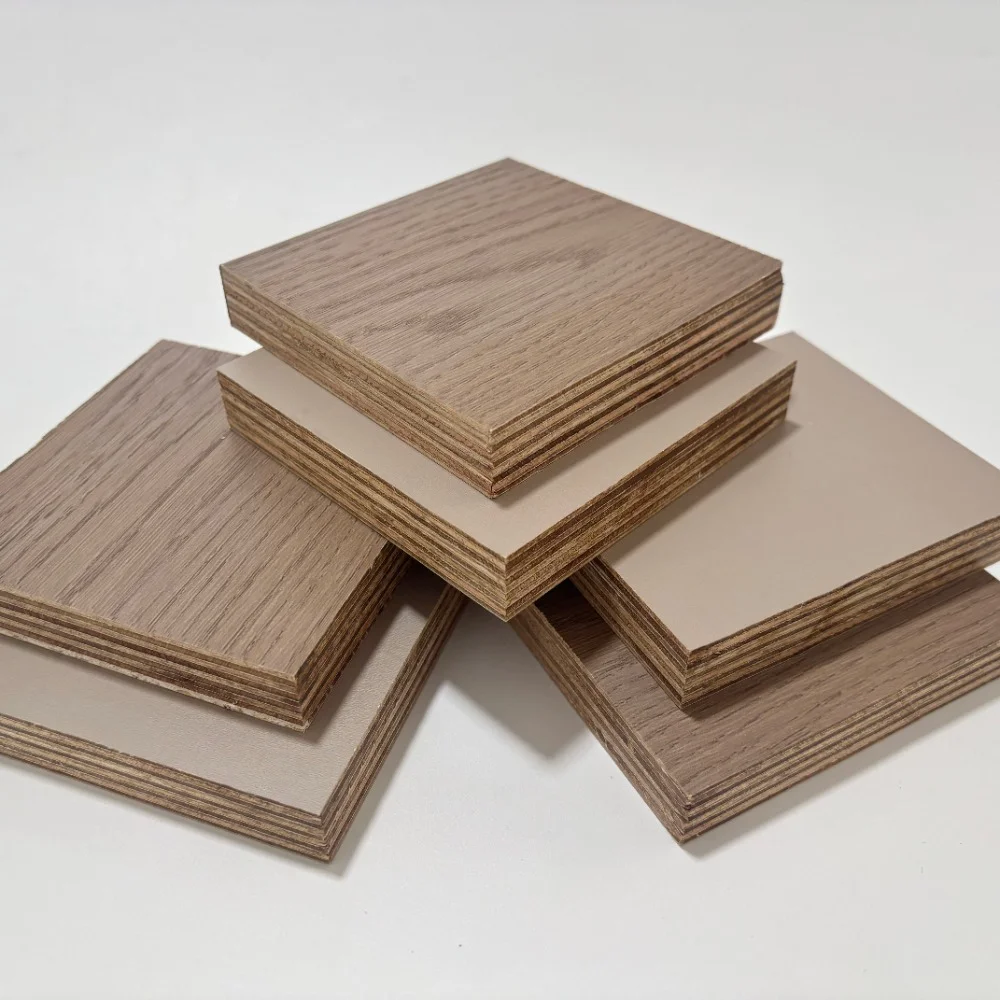

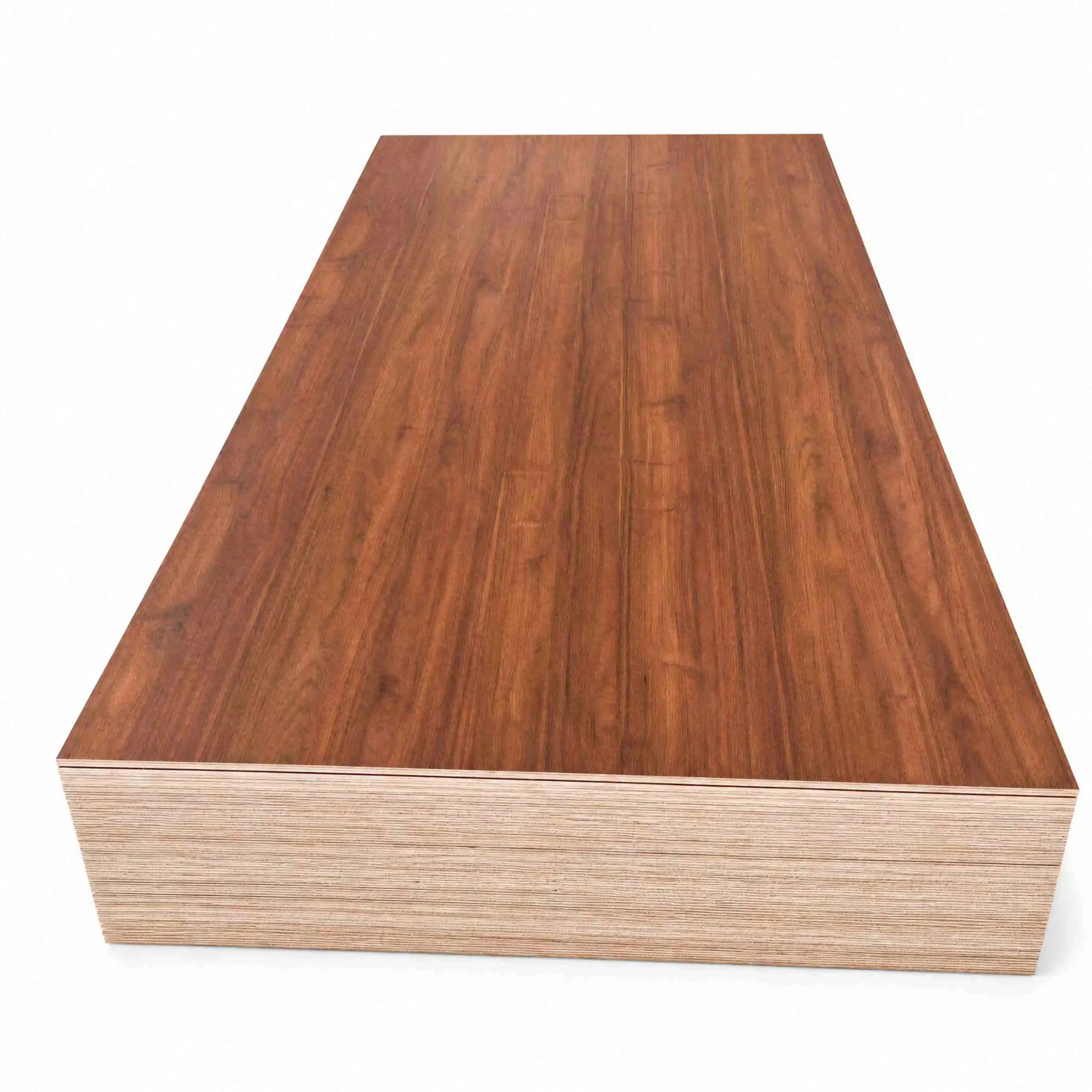
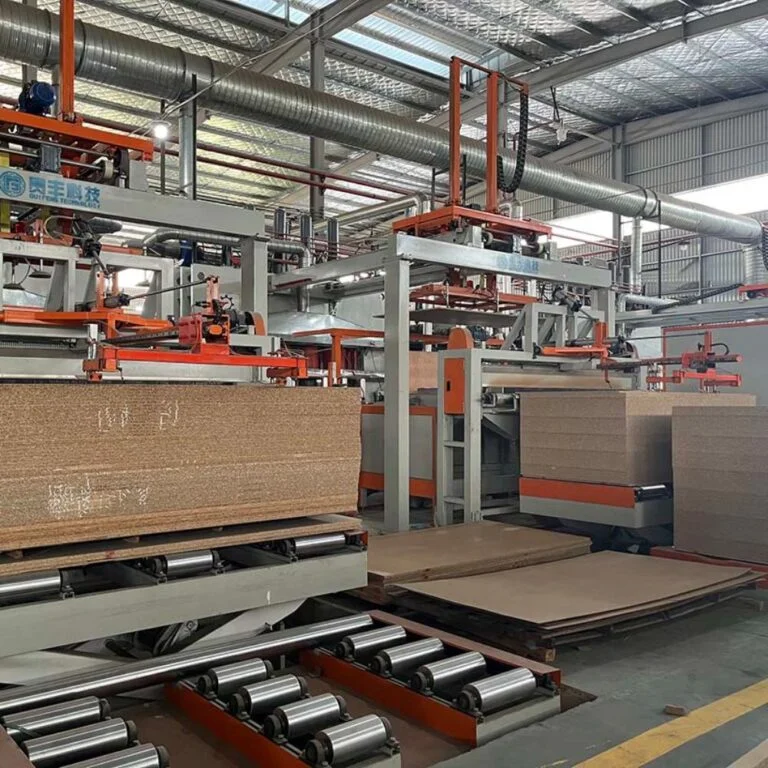
100% Eucalyptus Core Marine Grade Plywood 18mm Waterproof Plywood for Cabinet Doors & Kitchen Cabinets
Full Eucalyptus Core Marine Board Suitable for Modular Cabinet Making
Ship one container of cabinets to Manila, and you’ll hear the same complaint within 18 months. Doors have started to bow. Edge banding is peeling back at the bottom of the kitchen cabinet. Open the wardrobe and there’s that damp, sweet smell — the one every furniture guy knows means mold got into the core. Somebody in Cebu already texted us a photo last month of a particleboard wardrobe eaten through by termites; you can see the mud tubes running up the side of the unit.
We’ve been making plywood in Guangxi since 2004. We’re not traders. We run four factories up in Guigang. Over the years we’ve shipped to the Middle East, to Africa, to India, and more and more to the Philippines. The question we get asked most often now isn’t “how much” — it’s “what board won’t come back.”
This is that board. It’s an 18mm marine-grade plywood, full eucalyptus core, glued with what we call glutinous rice glue instead of urea resin. Below is what it actually does on a cabinet job, with the lab numbers to back it up.
Why “marine grade” on a cabinet, anyway?
Walk into any lumber yard in Manila and the plywood stacked there is urea-formaldehyde resin. It’s been the industry standard for over a century. Cheap, presses in half an hour, looks fine coming off the line. The catch is urea glue breaks down in heat and humidity. Put an E0-rated board in a Cebu condo in April with the AC off during work hours, and the formaldehyde numbers climb. The bond goes brittle, the veneer drinks water, and in 12 to 24 months the seams start popping.
We took urea glue out of this product line entirely. What’s in there instead is Lingmei glutinous rice glue — rice flour, magnesium chloride, magnesium oxide, water. Nothing else. No formaldehyde, no benzene. The press cycle is 24 hours cold press, not half an hour hot press, then 60 hours in the kiln, then a minimum 15-day rest in our conditioning yard before it ships. Most competitors skip the rest period because it ties up warehouse space. We don’t, because that’s what keeps the door flat.
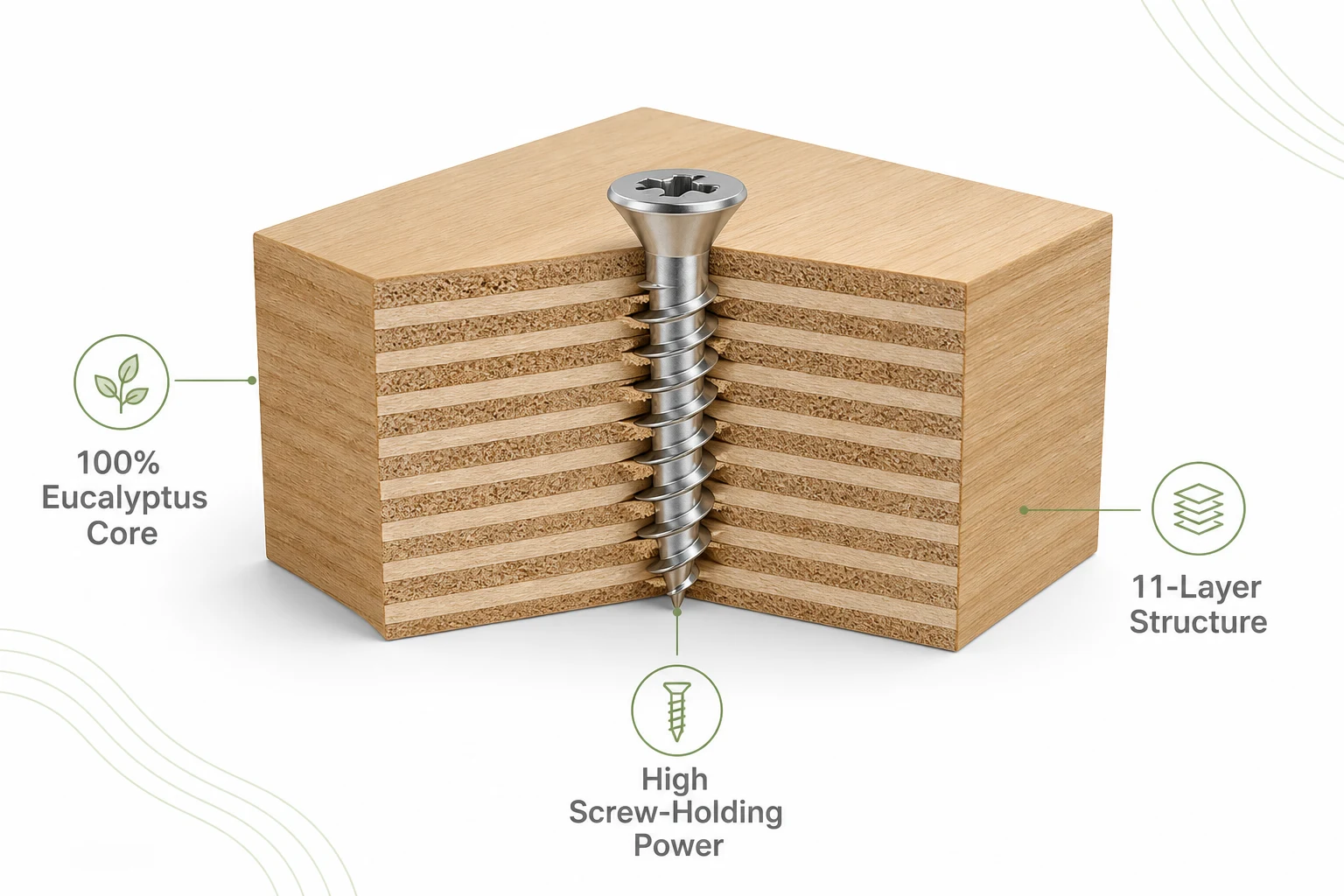
Every veneer in the stack here is first-grade eucalyptus, cross-laid, with glue between every single layer. No filler strips. No short-core patches. No back-grade veneer hidden under the face. Eucalyptus takes screws cleanly, doesn’t seasonally move the way rubberwood does, and it’s the wood Southeast Asian cabinet shops already know how to machine.
What it does on a real cabinet job
Water: 2.4% swelling after 24 hours in the sink
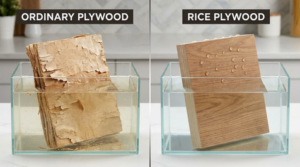
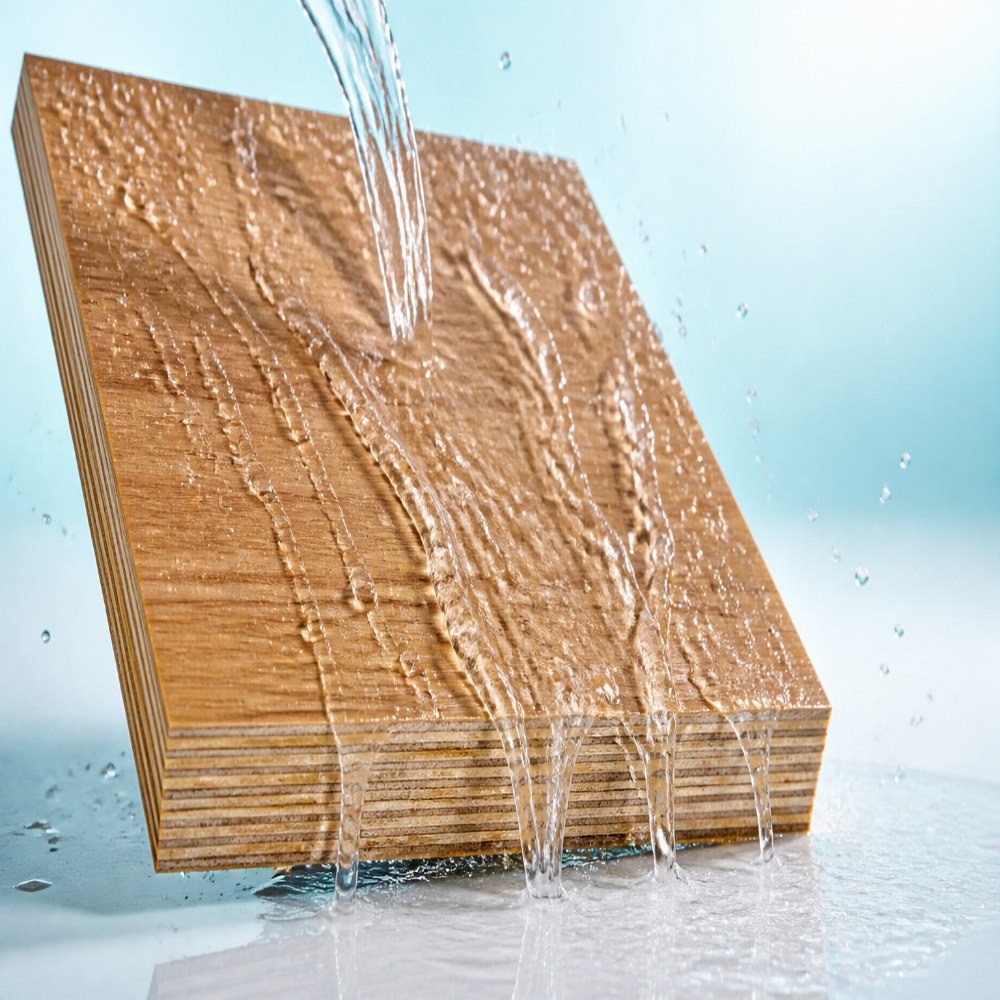
This board hits Class II water resistance — cold water immersion, plus short dips in 63°C hot water. The industry cutoff for acceptable swelling is 8%. Particleboard runs closer to 12%. When we soaked our own samples in the lab for 24 hours, thickness swelling came in at 2.4%.
That number matters when you’re cutting the board on site and edging it with local banding. End grain is never sealed perfectly; there’s always a sliver gap at the saw cut. When the monsoon rolls in, water walks right through that gap. Ordinary plywood absorbs it, swells, and the edge band lifts. We’ve had buyers drop test pieces into buckets for weeks — the edges stayed tight, no swelling at the band line.
Termites: grade 9.5 out of 10
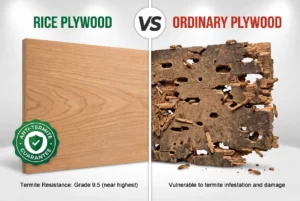
You don’t need us to tell you termites are a real problem in the Philippines. We tested this board through the Guangdong Academy of Sciences over a 4-week live termite trial. Result: grade 9.5. On that scale, 10 is no attack at all, and 0 means the block is gone. We saw 1 to 2 tiny feeding traces on the surface — that’s it.
Urea resin cures near neutral pH, which is exactly the environment termites and mold thrive in. Our rice glue comes out alkaline once cured — pH above 9. A termite that chews through a veneer ingests some of the glue along the way, the gut bacteria it needs to digest wood die off, and the insect dies. No surface dip, no chemical treatment that sands off or washes away. The protection is mixed into the glue, so it stays there for the life of the board.
Doors: stays flat even on 2.4m tall units
This is where we lose most competitors. Particleboard bows on tall doors. Ordinary urea plywood bows too, because the core is inconsistent and the glue bond is brittle. Walk into any furniture mall in Manila and you’ll see the telltale gap at the bottom of a 2-door wardrobe — that’s a warped door.
Our MOR (modulus of rupture) reads over 60 MPa on the lab report. The Chinese national standard asks for 30. We’re double that. MOE is 5000 MPa parallel, 4000 MPa perpendicular. Combined with the full first-grade core and the 15-day conditioning, we’ve had cabinet makers run this on handle-less, floor-to-ceiling doors for years without callbacks. We don’t get warped-door complaints back on this line. That’s not marketing — that’s what a 15-year structural warranty actually means.
Indoor air: formaldehyde not detected
CMA lab report says formaldehyde emission is “not detected” — under 0.025 mg/m³, which is the super-ENF threshold. Benzene, toluene, xylene: all not detected. TVOC came in at 11 µg/m³.
Here’s what most suppliers don’t put in their spec sheet. Urea-formaldehyde boards don’t release formaldehyde at a steady rate. The number goes up as the room heats up. At 35°C and 70% relative humidity, that release can jump several times — sometimes tenfold. A board that passed in a Shenzhen lab can behave very differently once it’s installed in a tropical kitchen. Our board’s emission barely moves with temperature. That’s what “good for Philippine climate” actually means in practice.
Bonus stuff
Mold testing came back grade 0, the top level on that scale. E. coli and Staphylococcus aureus kill rate is over 99%. In a bathroom cabinet during the wet season, you won’t see black spots creeping along the edges. Fire rating is B1, difficult to burn; the magnesium oxide in the glue means the board chars rather than catches flame, and smoke density stays low. Acoustically it measures around 35 dB sound reduction, which is why some buyers run it as wall paneling between bedrooms.
What we actually stock
We don’t hand you a spec sheet to memorize. Here’s what’s in the warehouse right now:
The workhorse is 18mm. Calipers read 17.7 to 18.0mm — not 17.0, which is what some suppliers quietly call “18mm.” We also stock 3, 5, 9, 12, 15, and 25mm, which covers the 1/4″, 3/8″, 1/2″, and 3/4″ sizes the Philippine retail market regularly asks for. Standard sheet size is 1220 × 2440mm, the familiar 4×8. If you send us a cutting list in advance, we shear the sheets for you at the factory rather than you doing it on the floor.
The core is first-grade eucalyptus all the way through, glued with Lingmei rice glue and zero added formaldehyde. Water resistance is Class II, 24-hour swelling under 2.4%, termite rating 9.5, fire rating B1. Bare veneer is the standard face, but if you need melamine, film-faced, or PET high-gloss to match your existing door program, we run those too — send the color code.
Straight talk about the factory
We’re not a trading company with a nice website. Qiangyi Wood has been around since 2004. We run four plants in Guigang — Qiangyi, Zhonghe, Maosheng, Jundao — around 100,000 m² of workshop combined. There’s a 16,000 m² warehouse in Gangnan district holding 100,000+ sheets ready to ship. Since 2019 we’ve run a joint lab with the Guangxi Product Quality Inspection Research Institute; every batch gets pulled and tested before the container gets sealed.
When something goes wrong on a job — and sometimes it does — you talk to us, not to some middleman. We back this board with written warranties: formaldehyde over the limit and we refund 3×; odor, warping, edge swelling, or termite damage and we replace. Structural issues covered for 15 years. That’s the kind of promise you only make when you’re running the line yourself.
Questions we actually get from importers
“Is this the same marine plywood I buy from Indonesia?”
Indonesian marine ply is usually phenolic glue, usually hardwood core, built for boat building or concrete forms. Ours is a different animal. We’re not selling it for docks. We’re selling it because in a tropical cabinet, you need water resistance at resistensya sa anay at door stability at clean air — one board, not three different ones.
“Can you do 3/4, 1/2, 1/4 for the local market?”
Yes. 18mm (3/4″) goes into doors and boxes. 12mm (1/2″) goes onto shelves and partitions. 6–9mm is backs and drawer bottoms. All three are in regular production, no lead-time penalty.
“Will you provide English reports?”
CMA reports on formaldehyde, TVOC, water soak, termites, fire, and strength. Plus CIQ, FORM E, packing list, commercial invoice — whatever your Manila forwarder asks for.
“MOQ?”
One 20ft container is the standard. For samples, we cut A4 pieces or 300×300mm squares; you cover the international courier, and the sample charge gets credited back against your first container.
“Which port?”
FOB Qinzhou. The factory sits about two hours’ trucking from Qinzhou port in Guangxi. Manila North and South Harbor run 7–10 days on the water. Cebu adds another day or two.
Working with us
If you’re tired of boards that come back after one monsoon season, send us a message on WhatsApp. Tell us what you’re making — kitchen cabinets, wardrobes, vanity units, whatever — and which Philippine port you usually clear. We’ll send over the current price list for the thicknesses you need, and cut you a sample pack so your shop can edge it, screw it, and soak a corner in a bucket for a week before you commit to anything.
WhatsApp / WeChat: +86 19321509580
Web: www.qiangyiwood.com
Factory: Jiangnan Industrial Park, Gangnan, Guigang, Guangxi, China
Main products: Marine plywood, Melamine plywood, Melamine blockboard, Melamine Chipboard, Melamine MDF board, Film face plywood, Edge banding, Furniture accessories
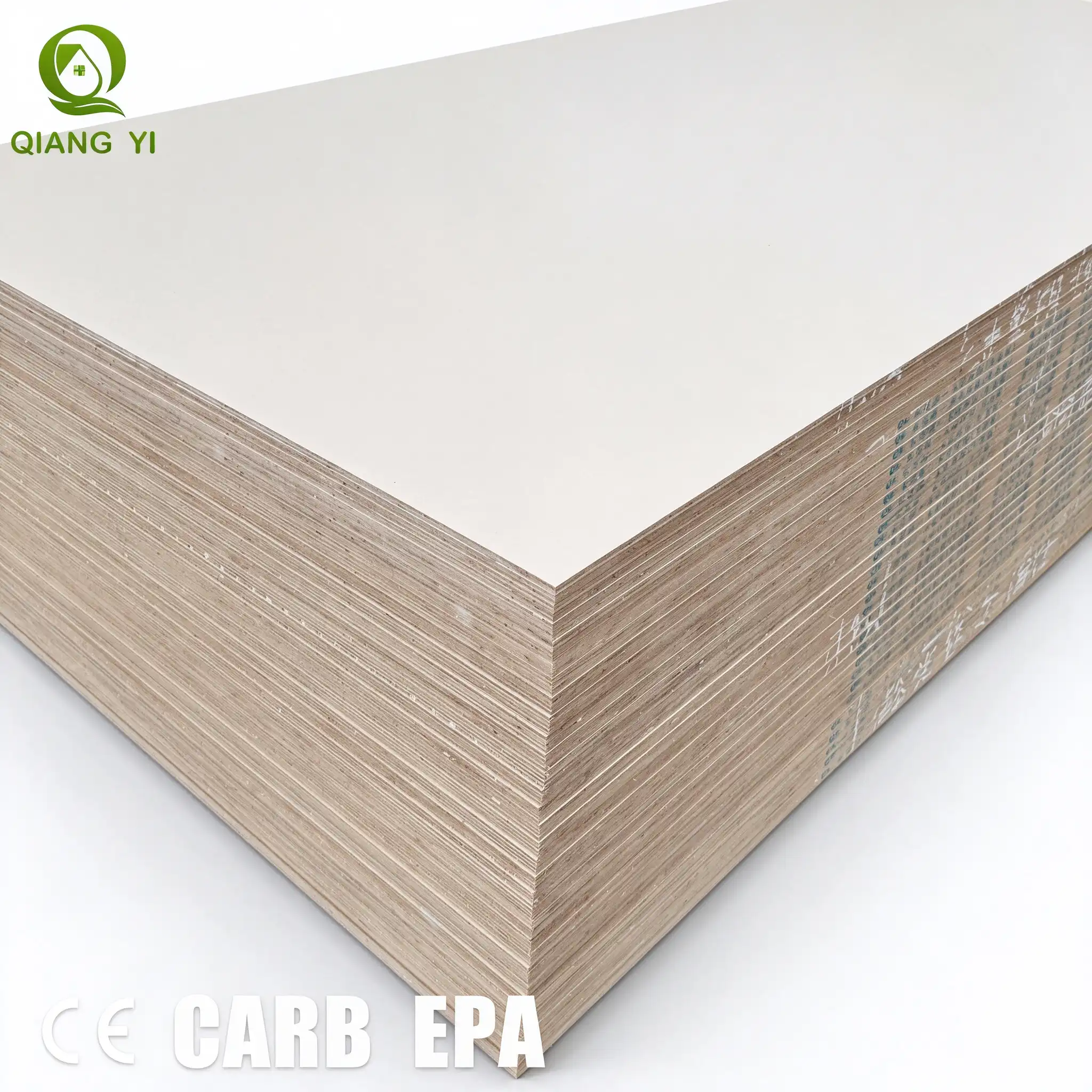
Qiangyi Glutinous Rice Glue Multifunctional Plywood with 9-in-1 Protection
Discover Qiangyi Multifunctional Plywood, a Glutinous Rice Glue Multi Purpose Board designed for moisture resistance, anti-mold performance, dimensional stability, fire resistance, and comfortable interiors.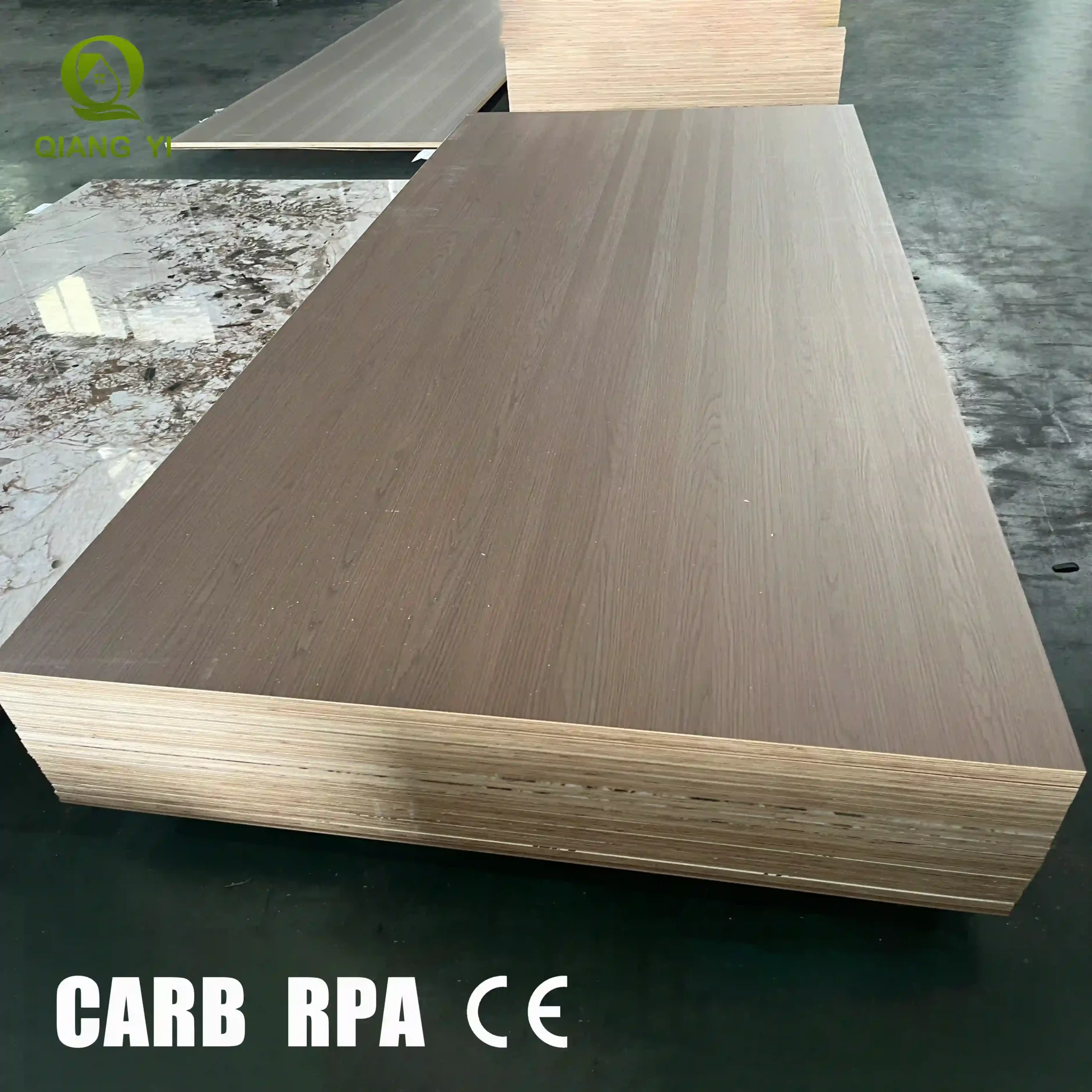
18mm All-Weather Plywood for Kitchen Cabinets Ultra-ENF Grade 0 Mold Level 9.5 Anti-Termite Class B1 Fire
An 18mm eucalyptus-core panel built for wet kitchen interiors: 24-hour thickness swelling of 2.4% or less, zero-added formaldehyde to Ultra-ENF, Grade 0 mold resistance, Level 9.5 termite defense and a Class B1 fire rating — all in one sheet. Thickness is held at 17.7–18.0mm so CNC bits and edge-banders run without offset resets, backed by SGS/Intertek reports and written warranty terms on delamination, warping and termite damage.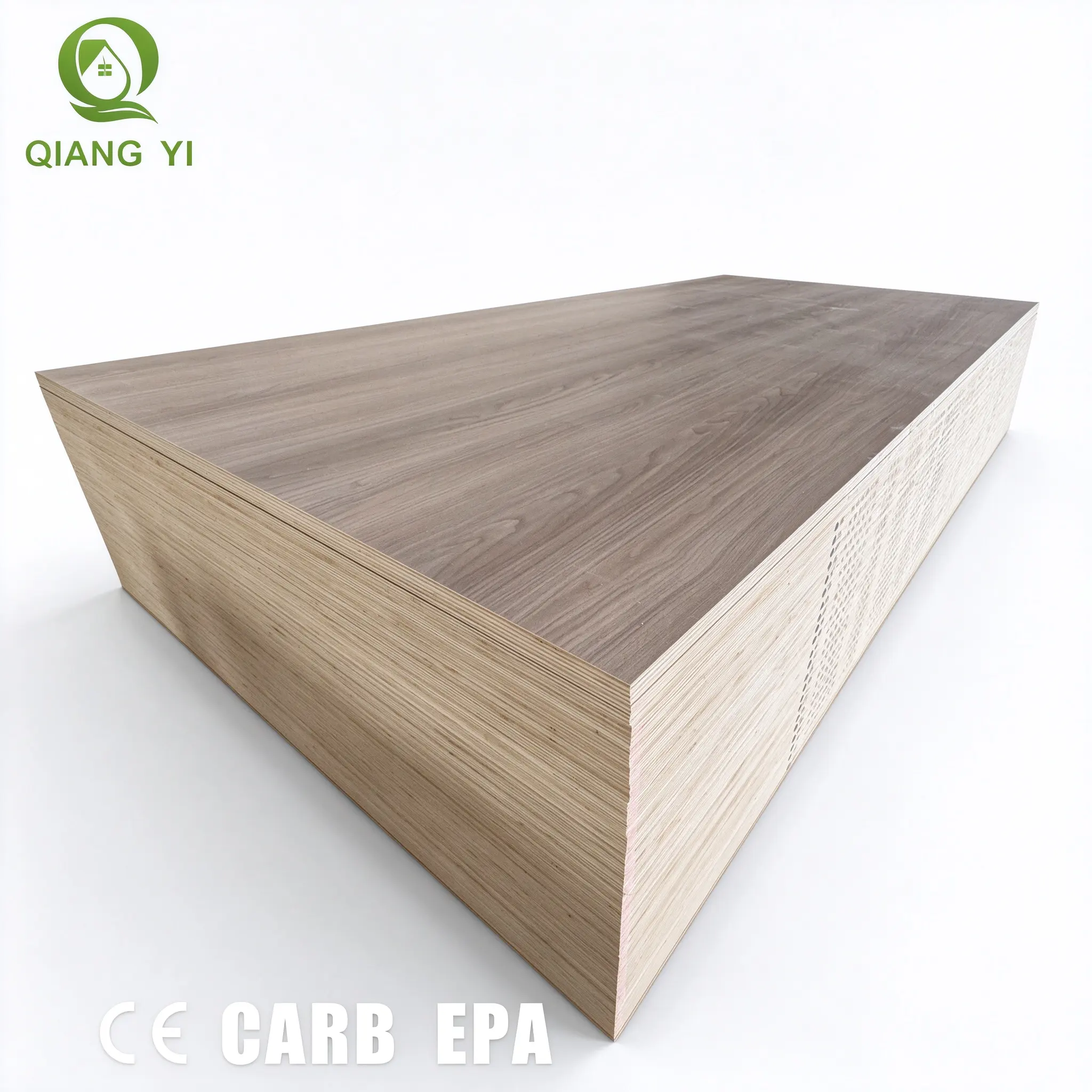
Eco-Friendly Eucalyptus Multi Purpose Board Waterproof Fire-Resistant Termite Mold & Warp Resistant
Explore how qiangyi glutinous rice glue Multi Purpose Board balances environmental protection, moisture resistance, and deformation resistance requirements. Understand the manufacturing process, size specifications, and applications of wardrobes, cabinets, wall panels, etc., and choose the appropriate plywood solution for customized home furnishings.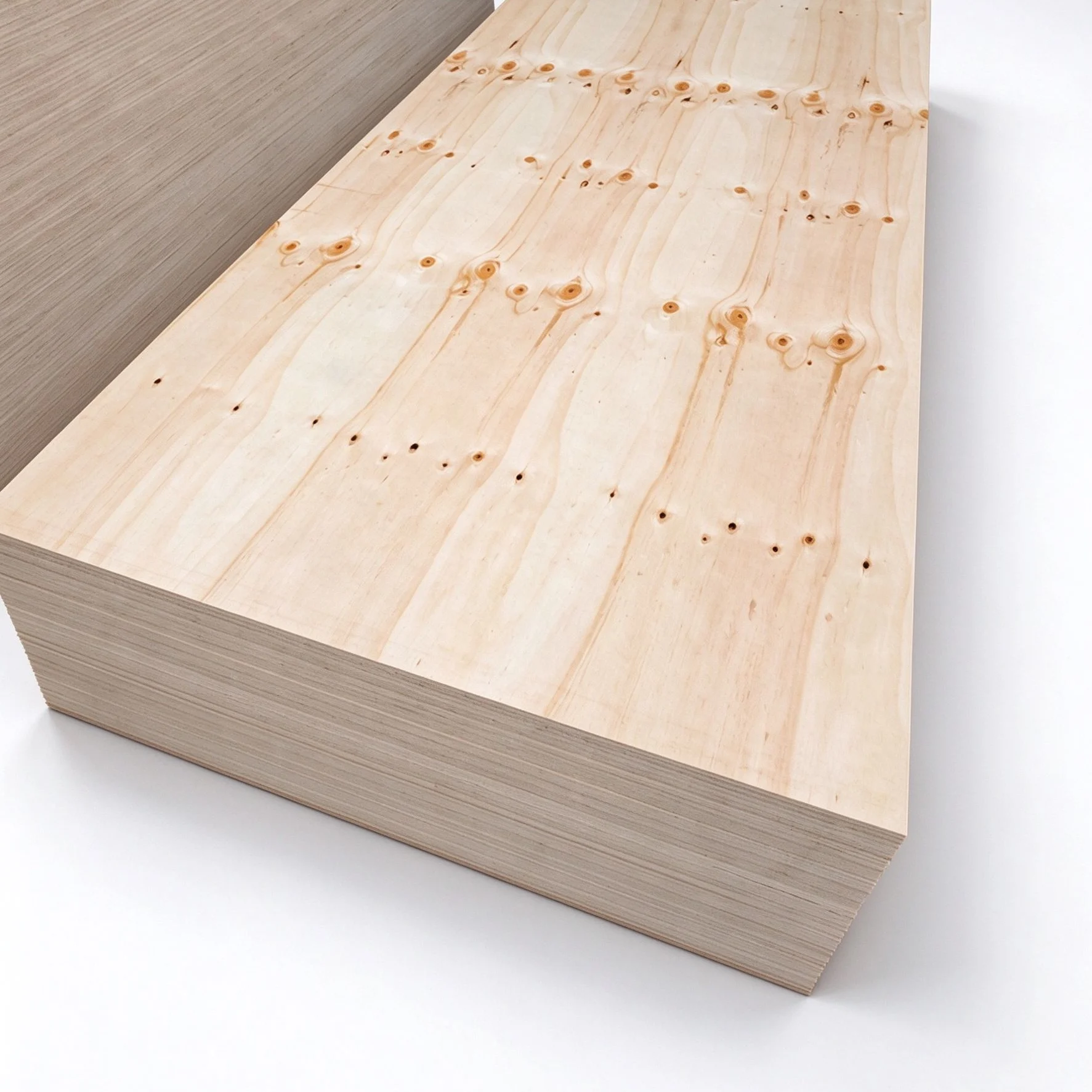
CDX plywood eucalyptus core for high-strength structures
Ultra high strength and environmentally friendly CDX plywood? Qiangyiplywood adopts a 100% eucalyptus core material and glutinous rice glue bonding system, which has ultra-high deformation resistance and load-bearing capacity. It is suitable for use in structures such as wardrobes, cabinets, and customized indoor furniture, and is a safe choice for indoor decoration applications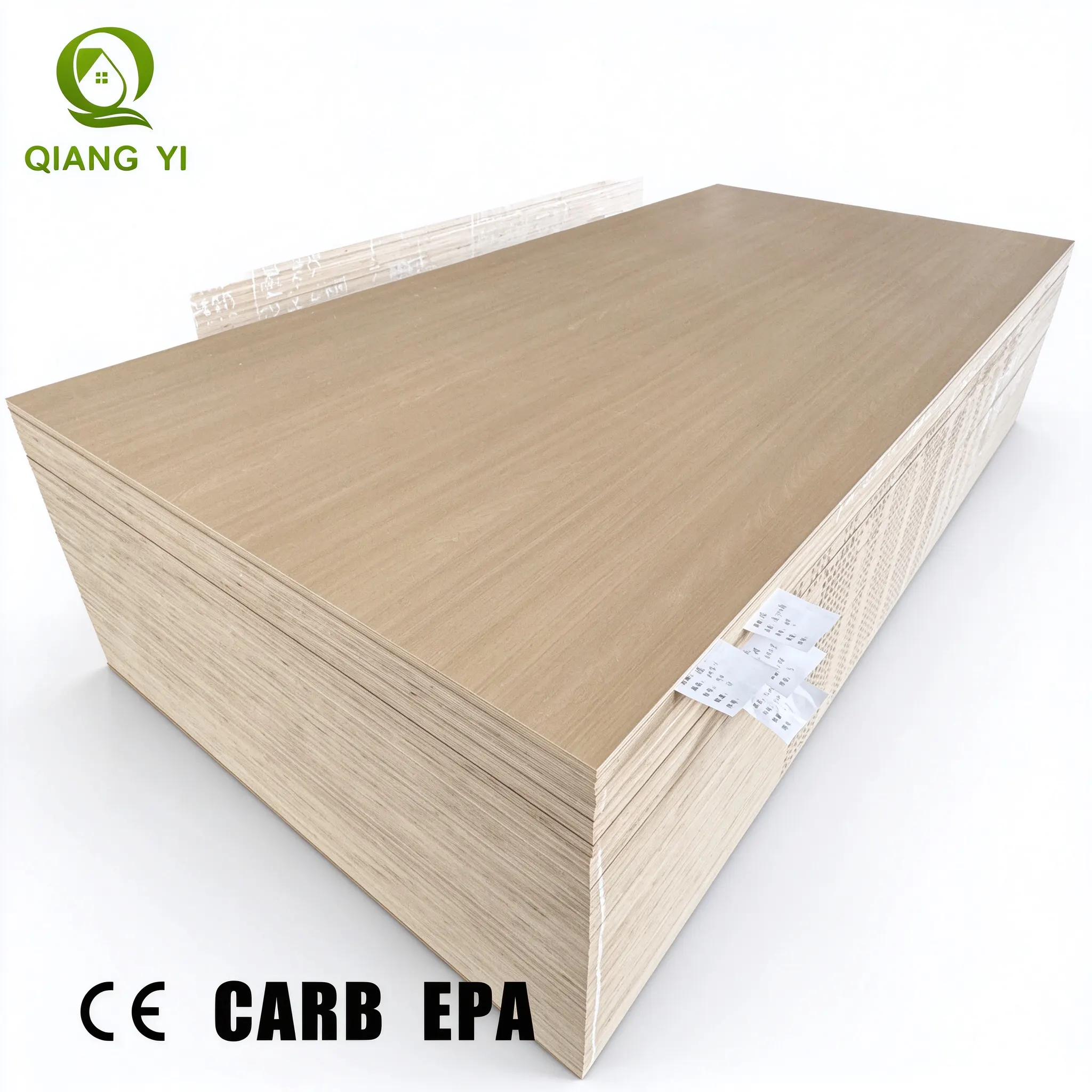
100% buong eucalyptus melamine na mukha ng kahoy na tela na laminate plywood para sa gabinete
Ano ang plywood na gawa sa eucalyptus? Ang Eucalyptus ay isang matigas na kahoy na nailalarawan sa pamamagitan ng mataas na densidad at mahusay na katatagan. Nag-aalok ito ng higit na mahusay na lakas sa paghawak ng pako at kapasidad sa pagdadala ng bigat kumpara sa poplar, at mayroon itong natural na resistensya sa anay at kahalumigmigan. Ito ay angkop para sa paggamit sa parehong panloob na mga muwebles at panlabas na mga aplikasyon sa konstruksyon. Karaniwang makukuha sa mga sukat na 1220x2440mm at 1220x2800mm, maaari itong gawin sa iba't ibang kapal, kabilang ang mga pasadyang detalye. Anuman ang kabuuang kapal, ang plywood ay ginawa gamit ang kakaibang bilang ng mga patong ng veneer; ang disenyo na ito ay nagpapahusay sa integridad ng istruktura at pangkalahatang katatagan ng materyal.
Hindi tinatablan ng tubig na pandikit na bigas. Marine plywood 100% eucalyptus core na angkop para sa mga aparador at kabinet.
Paano nalulutas ng plywood na "glutinous rice glue" ang mga isyu sa anay habang nakakabawas ng gastos sa proyekto ng 30%? Mag-click dito para malaman ang tungkol sa mga teknikal na pagkakaiba sa pagitan ng plywood na gawa sa glutinous rice glue at marine-grade plywood.Get more information about the plywood
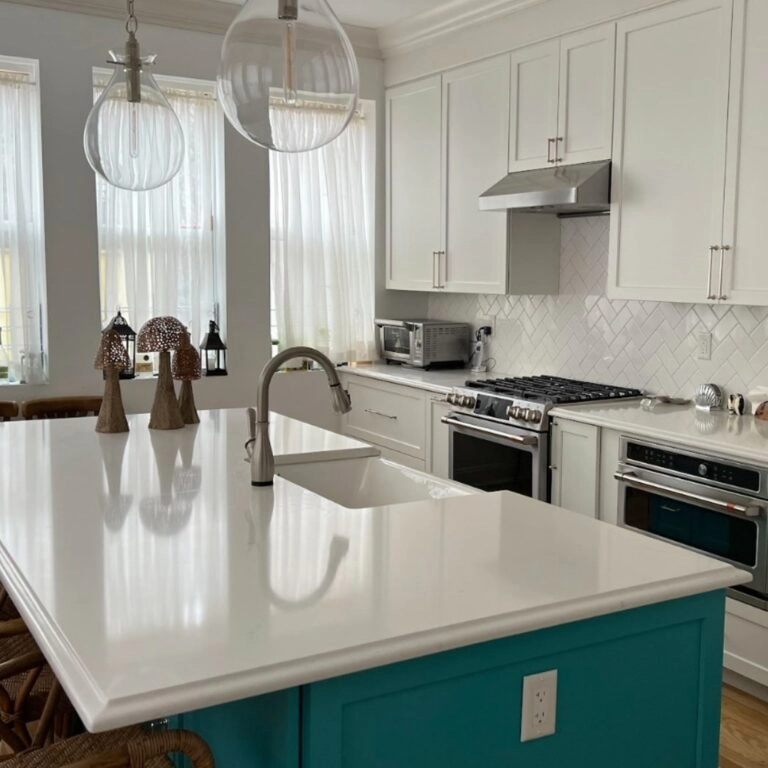
Mold-Resistant Plywood Sourcing Guide for Cabinet Manufacturing in Humid and Coastal Regions
1. Where Cabinet Manufacturers Face Mold-Related Board Problems Kitchens, bathrooms, and coastal interiors Tropical and coastal areas often have warm air and poor airflow. Wet cleaning routines, plumbing leaks, and daily condensation easily make cabinets damp. Sink units and bathroom vanities face high moisture risks. Laundry storage and base cabinets are also highly vulnerable. Wardrobes placed against poorly ventilated walls face similar threats. A panel might look perfect when it leaves the factory. However, it can still develop dark spots and musty odors after installation. Swollen edges are another common issue. Back panels and cut edges remain particularly vulnerable. These areas usually lack the strong protection found on the decorative face. The cost is higher than a stained panel Moisture damage often forces builders to replace cabinet sides and doors. This means repeating the installation process. It also requires paying for extra transport and labor. Such delays can seriously disrupt project handovers. Consequently, homeowners, developers, and distributors will likely complain. The real business risk involves heavy warranty costs and lost production time. Damaged client referrals hurt much more than just a ruined appearance. 2. Why Mold Develops in Plywood in Humid Markets Moisture reaches exposed edges and the core Wood fibers naturally absorb moisture from humid indoor air. They also take in water from direct contact. If a panel remains damp, mold will likely grow. Swelling can easily open up joints. It might also weaken the internal layer bonds. This allows trapped moisture to stay inside the wood. The overall risk depends heavily on the chosen adhesive and core quality. Moisture conditions, edge sealing, proper installation, and regular maintenance also play vital roles. Surface protection cannot compensate for weak construction Melamine facing only offers surface-level water resistance. It cannot stop moisture from entering through edge-banding gaps. Hardware mounting holes and cut surfaces on back panels are also weak points. You might compare marine board, laminated marine plywood, and ordinary plywood. Always check the waterproof classification carefully. You should also demand independent anti-mold evidence. Standard marine-board testing focuses mostly on bond strength during boiling-water exposure. These tests do not automatically require specific anti-mold or antibacterial treatments. Surface mold can still grow quickly in stagnant, highly humid rooms. Never assume that the word “marine” guarantees a mold-proof product. 3. What to Look for in Mold-Resistant Plywood Check core quality and continuity Cabinet carcasses, shelves, and doors require careful inspection. Check if the core uses a single wood species or a mixed blend. You must also see if the veneers are tightly arranged. A full eucalyptus core offers good strength and density. However, the wood species alone does not guarantee mold resistance. Always inspect the panel cross-section. Look closely for hidden gaps, empty voids, and weak bonding. Evaluate adhesive, moisture resistance, and test evidence Before buying, you should confirm these details: The specific core material and the exact construction method. Actual waterproof or moisture-resistance test results for your intended use. A separate anti-mold test report, which must include the sample description and performance grade. Consistent board thickness, overall flatness, and stable moisture content. Clear guidance for properly sealing edges, joints, and installation penetrations. The term “waterproof plywood for kitchen” does not represent a single universal grade. Class II waterproof performance often suits humid furniture applications well. However, this rating does not mean a cabinet can sit in standing water. It also cannot survive indefinite immersion. 4. How QIANGYI PLYWOOD Addresses the Risk Full eucalyptus core and fully interlocked construction Our glutinous rice glue plywood features a 100% full eucalyptus core. We do not use a cheaper poplar-eucalyptus combi core. Our factory selects premium Grade A material for production. We apply a fully interlocked core construction method. This involves a continuous cold- and hot-pressing process. As a result, the core contains no empty voids or overlapping gaps. Its cross-section remains tightly packed, much like solid wood. This solid structure creates a very flat substrate. It offers excellent resistance against edge chipping during CNC carving, grooving, and drilling. It also performs exceptionally well for PUR edge banding. Glutinous rice adhesive and controlled processing Our process uses Lingmei glutinous rice adhesive. This material is made from glutinous rice flour, magnesium chloride, magnesium oxide, and water. Once it cures, the glue builds a thick shield around the wood fibers. This step blocks the tiny channels where water normally enters. The magnesium-based parts set up an alkaline setting. Also, the deep soaking of the glue manages dampness very well. These actions work together to stop mold from growing easily. The standard moisture-content specification for this item sits at 8%–14%. Please check and confirm the exact needs for your specific order. Please see our AA wood-core waterproof melamine-faced plywood for furniture to explore a specific product option and view detailed finish choices. 5. Evidence and Purchasing Value for Humid-Market Projects What the test report says A testing document examines an 18 mm glutinous rice glue plywood sample. QIANGYI PLYWOOD provided this specific material. The evaluation followed the JC/T 2039-2010 standard. According to the results, the board achieved an anti-mildew rating of Grade 0. Furthermore, it showed an antibacterial rate of more than 99%. The document clearly explains that Grade 0 means there is no mildew present. For the antibacterial part of the test, the researchers used Escherichia coli and Staphylococcus aureus. At the same time, the anti-mildew assessment involved several types of fungi. This group specifically included Aspergillus niger. You can ask us to verify the test report for your specific product choice. Kitchen and bathroom projects require extra attention. Therefore, you should also review the Class II waterproof test results. Pay close attention to the reported 24-hour water absorption data. The official thickness-swelling rate sits at no more than 2.4%. A Philippine distributor’s market experience A Philippine distributor first contacted our team online in early 2026. This client later visited our official booth at the Canton Fair in March. After reviewing our physical samples, the buyer placed an initial order in April. That first shipment featured a single color design. Following the successful delivery, the ENF grade and smooth surface finish really stood out. The impressive waterproof and termite-resistance features also quickly attracted local cabinet and furniture customers. You might need to compare marine plywood vs. ordinary plywood for a project. Always match the core type and adhesive quality to your needs. You must also align the moisture resistance and anti-mold evidence with the finished furniture’s actual environment. Make sure to confirm the exact application and board thickness. Check the face design, edge treatment plans, and laboratory reports carefully before ordering. Meet QIANGYI PLYWOOD at THE 2026 GUANGXI INTERNATIONAL FOREST PRODUCTS AND WOOD PRODUCTS EXHIBITION. You will find us at Booth D5T-06. The event takes place at the Nanning International Convention & Exhibition Center from November 21–23, 2026. 6. FAQ Q: Will QIANGYI PLYWOOD Glutinous Rice Glue Functional Laminate Plywood get moldy? A: The panel successfully prevents mold growth under normal indoor conditions. This includes the high humidity and slight condensation typically found inside kitchens and bathrooms. This protection comes from its Grade 0 anti-mildew performance and the dense, mildly alkaline adhesive layer. However, extreme conditions can still damage any wood-based panel. Severe, persistent plumbing leaks pose a massive threat. Prolonged immersion in standing water without proper airflow will also cause harm. You must ensure proper ventilation and thorough edge sealing to guarantee long-term durability. Q: Is it suitable for the humid environment of the South? A: Yes, it works very well. The board features a reliable Class II waterproof performance. It also boasts a reported 24-hour water absorption and thickness-swelling rate of no more than 2.4%. The material perfectly suits properly designed kitchen and bathroom cabinets. However, it cannot handle permanent water immersion. Q: Is marine plywood automatically mold-resistant? A: No, that is not necessarily true. Marine plywood standards, such as BS 1088, primarily evaluate structural bonding strength. They test this under highly demanding wet conditions. This often includes boiling-water exposure, which experts commonly discuss regarding WBP performance. These tests focus heavily on preventing layer delamination. However, this process does not establish any chemical or physical resistance against indoor fungi. Aspergillus niger is a prime example of such a threat. For modern cabinet applications, you should always request a dedicated anti-mildew report. Make sure it covers indoor fungi testing, such as an evaluation based strictly on JC/T 2039-2010. Q: Does a melamine face prevent mold inside plywood? A: No surface finish can completely protect every exposed edge or open joint. You must specify a highly suitable core and a reliable adhesive. Furthermore, installers must properly seal all cut edges, screw holes, and installation penetrations. Q: What should cabinet manufacturers confirm before buying mold-resistant plywood? A: Buyers must confirm the exact core species and verify the fully interlocked construction. You should also check the thickness consistency and moisture tolerances. Always review the waterproof classification, the official anti-mold report, and the surface finish quality. Finally, discuss the factory’s batch inspection arrangements. You need to request a physical sample. Then, check that all technical documents perfectly match the quoted product. You can easily reduce your sourcing risk today. Simply send us details about your target market and specific cabinet application. Please include your required size, board thickness, core choice, and surface preferences. Do not forget to mention your estimated order quantity. Our team can help match you with the perfect panel. We will provide all relevant test documents and quickly arrange physical samples. You can also meet us directly at Booth D5T-06 in Nanning from November 21–23, 2026.
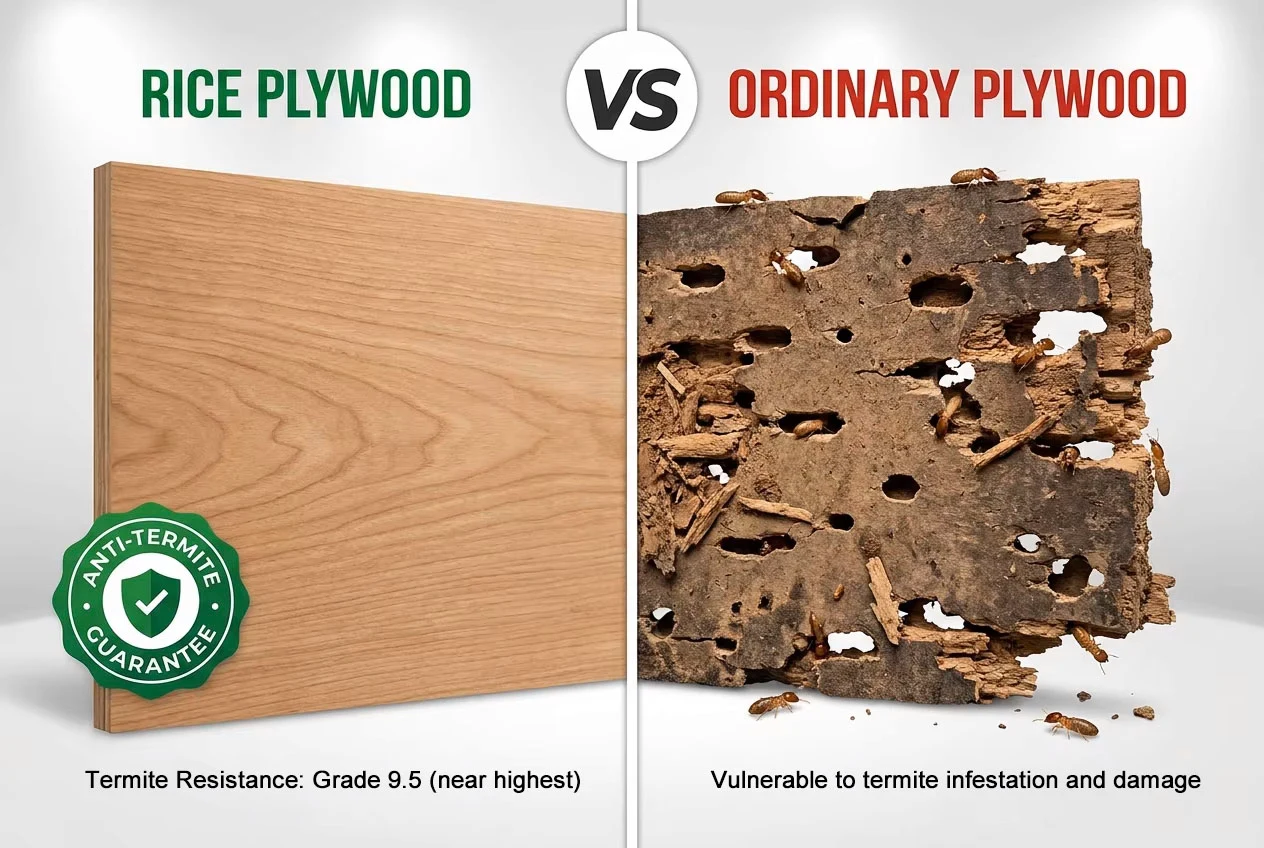
Termite-Resistant Plywood Checklist for Resort Contractors
A resort guest room might appear perfectly finished. However, hidden spots like wardrobes, vanity units, and decorative wood wall paneling remain highly prone to termite damage. Finding this issue after handover leads to the expensive removal of fitted furniture. It also requires repairs to nearby finishes. Meanwhile, interruptions to room turnover can directly hurt operating revenue. For general contractors and procurement teams working on tropical or coastal resort properties, termite-resistant plywood requires careful scrutiny at the sample-approval stage. It includes verification of reliable test evidence and on-site installation conditions, to reduce future risks. How Hidden Termite Damage Creates Costly Resort Fit-Out Problems High-Risk Areas in Guest Rooms and Built-In Furniture You should check wardrobes placed against outside walls. Also, inspect vanity units located near plumbing. Look closely at minibar cabinets and timber-lined service zones. These closed spaces can hide termite action for a long time. A neat laminate face does not show what is going on at a cut edge. It also hides issues at a screw hole or an exposed plywood core. Poolside bungalows might face constant moisture contact. At the same time, ground-level villas often have more connection points near plants and dirt. How Termites Turn Small Defects Into Project Costs Replacing a ruined cabinet side usually demands taking off custom cabinet doors. You also have to remove countertops, hinges, and nearby finishing trim. Suppose plywood from the same batch is installed across many guest rooms. In that case, a termite complaint in just one room might cause the temporary shutdown of an entire building for inspection. Contractors could then face drastically higher labor costs. They might deal with contractual claims for project delays. Disputes over supplier responsibility can also arise. Prevention begins by picking termite-resistant panels. These panels must be backed by compliant test reports early in the project. Why Ordinary Plywood May Fail in Termite-Prone Interiors Wood Fibers and Concealed Entry Routes Termites eat the cellulose found in wood. They can access hidden furniture spaces through tiny cracks in concrete. They also enter via openings around electrical conduits. Standard edge-banding strips offer only physical coverage. They cannot stop termites from attacking the inner veneers. Even a beautiful decorative surface leaves the wood fibers open to attack if the core lacks termite protection. Therefore, edge sealing needs to work together with the plywood’s own termite resistance. It should also be paired with a building-wide pest-management program. Why Marine and Melamine Plywood Need Separate Checks Is laminated marine plywood termite resistant? Not automatically. Marine-grade bonding is designed to endure specific moisture exposure. It is not, on its own, proof of insect resistance. Similarly, a melamine surface enhances looks and makes cleaning easier. However, it does not certify the inner core against termites. When you compare water and termite resistant plywood, make sure to ask for distinct results for each feature. Termite-Resistant Plywood Checklist Before Resort Procurement Verify the Test Report and Match It to the Order Do not accept a basic “termite proof plywood” claim. You must check the test method, report date, and sample description. Also, verify the thickness and rating. Match those specific details against the planned purchase. Keep the approved sample to compare it with the delivered sheets. Before you release a large order, write down the exact panel construction in the purchase specification. A similar-looking decorative finish placed on a different core should never count as an approved substitute. Project check What to confirm Test evidence Termite rating and the actual test conditions Product identity Core species, adhesive system, thickness, finish Delivery control Sample match, batch markings, packaging condition Installation Cut edges, penetrations, wall clearance, pest treatment Inspect the Core and Site Conditions Request a cross-section sample. Look closely for gaps between veneers. Check for uneven construction and damaged edges. For bathroom vanities, confirm exactly how splashes and pipe penetrations will be handled. For wardrobes set against external walls, review the building’s pest-management plan. A solid procurement checklist evaluates both the panel itself and the locations where it will be installed. How QIANGYI PLYWOOD Addresses Termite Risk Lingmei Glutinous Rice Glue and Tested Resistance Our glutinous rice glue plywood utilizes Lingmei adhesive. This glue is made with glutinous rice starch, magnesium chloride, magnesium oxide, and water. The cured adhesive creates an alkaline environment. This is a key part of our strategy for termite resistance. Instead of just trusting the glue description, contractors can review the finished board’s actual test results. For a specific choice, check out our 18mm termite-resistant eucalyptus-core plywood. Eucalyptus Core and Fully Connected Veneers Our furniture-grade plywood uses 100% high-density eucalyptus veneers. It features a fully core-connected, seamless layup. This design is meant to remove internal voids and overlapping veneer flaws. The dense core boosts screw-holding strength. It also improves flatness during secondary processing. Furthermore, it decreases internal gaps. It avoid termites could use those gaps to enter the panel and build nests. Explore our 100% eucalyptus-core glutinous rice glue plywood. What Grade 9.5 Means for Resort Project Approval Read the Termite Test Result, Not Just the Rating A test report GIZ/TR-2024-0301-0186 shows Grade 9.5 for Glutinous Rice Glue Multi-functional Plywood based on GB/T 18260-2015. The four-week laboratory test utilized 18mm plywood. Inspectors observed minor damage. This included one or two termite tunnels or traces. That serves as helpful evidence of resistance under those specific test conditions. However, it is not a guarantee that every installed panel will stay completely untouched forever. A Mauritius Customer Case and the Next Procurement Step QIANGYI PLYWOOD has been delivering 100% eucalyptus core multi-layer boards in large volumes to furniture makers in Mauritius. We also supply other Indian Ocean island markets extensively. Multiple full cabinet deliveries have already been completed. The island climate features severe salt spray, intense humidity, and strong heat. This harsh environment has proven the structural stability of our plates. They perform well during stable processing. They also hold up in moisture-proof packaging for shipping and throughout long-term service. This provides a very dependable reference for batch material selection in coastal resort projects. For direct specification discussions, please visit QIANGYI PLYWOOD at THE 2026 GUANGXI INTERNATIONAL FOREST PRODUCTS AND WOOD PRODUCTS EXHIBITION. Find us at Booth D5T-06, Nanning International Convention & Exhibition Center, from November 21 to 23, 2026. Bring your project drawings and target panel specifications. We can then discuss proper samples and relevant test evidence. FAQ Q: Is glutinous rice glue plywood suitable for humid coastal resorts? A: Yes. Our glutinous rice plywood passed the Class II waterproof test report. Therefore, it can be applied to humid/wet condition furniture. It’s marine grade plywood perfect for kitchen/ bathroom cabinet. Q: How should contractors judge plywood quality before installation? A: Evaluate the flatness and the exposed core. Check the thickness consistency and edge finishing. Also, review the matching test report. Always keep an approved sample on site. Q: Is marine plywood automatically termite resistant? A: No. Moisture-resistant bonding and termite resistance are entirely different properties. You must request evidence for both. Q: Does Grade 9.5 mean a resort will never need pest treatment? A: No. The grade only applies to the tested specimen. Termite monitoring remains important. Proper sealing and regular building maintenance still matter greatly. Are you planning a resort fit-out? Send us your room applications, needed thickness, quantities, and final destination. We can talk about a proper panel specification. We will also provide the supporting test report before you approve the order.
Fireproof Plywood Comparison for Hotel Interior Procurement
Three suppliers quote fireproof plywood for a hotel renovation. Their samples look similar, but one says “B1,” another mentions surface treatment, and the third lacks a finished-panel report. Which can the contractor submit for approval? That uncertainty matters more than a small price difference. Rejected panels can hold up cabinetry, wall finishes, and guest-room handover. Compare actual panels rather than quotation labels. Here, “fireproof plywood” means flame-retardant plywood, not noncombustible wood. When Fireproof Plywood Selection Holds Up Hotel Interior Approval Similar Plywood Samples, Different Fire-Performance Claims Consider panels for guest-room headboards, for built-in wardrobes and for reception joinery. A woodgrain finish may be satisfactory to the designer, but to the reviewer it is necessary to provide evidence of the specified reaction-to-fire performance. A claim of B1 flame retardancy needs to be supported by a description of the test method and of specimens tested. Approval requirements for a guest-room wardrobe, corridor wall finishes, and joinery off a restaurant would typically differ. The material schedule must reflect these differences and not allocate one grade to the entire space. An unfinished-panel report cannot automatically verify a laminated part of different completion status. Is this configuration even relevant? Material Rejection, Rework, and Delayed Handover Mismatches found after cutting can mean reworking of edge banding and machining. Even earlier resubmission of samples can delay purchasing. Check the fire performance data of alternative materials at the quotation stage. What may appear to be a cheaper sheet through the purchase process could end up costing more after consideration of the necessary labor, the cost of an alternative veneer, and additional approval time required by the workshop and site. This will only cause additional delay to both parties. Why Fireproof Plywood Options Cannot Be Compared by Label Alone The Role of Wood, Adhesives, and Flame-Retardant Treatments Wood veneer is a combustible material. The properties of the adhesives, treatments, and panel construction can greatly affect the behavior of the finished product. Some products are treated on the surface, whereas others include mineral components in the bonding agent. Neither of these approaches constitutes a specific classification name. The specific fire test matters because heating may involve flame spread, energy release, smoke production, or droplets. A short promotional flame demonstration cannot replace these measured outcomes, especially when people will sleep in the rooms where the materials are installed. Note that reaction-to-fire classification of panels differs from the fire resistance of complete doors or partitions. Why Thickness, Finishes, and Installation Details Matter Factors such as PET facing, melamine, coatings, and thickness variations need to be taken into account when determining test applicability. Cutting and edge finishing must be executed within approved parameters. You have dozens of wardrobe fronts to match. Make sure to clarify all these details prior to approving the sample. No one wants to spend hours of work cutting panels that were based on an 18 mm melamine-faced board when the report said it was some other specimen. It’s better to clear up any confusion before the panels are nested for cutting on the CNC. How to Compare Fireproof Plywood for Hotel Interiors Compare Three Supply Options Against the Same Project Requirements When purchasing fire-retardant plywood, compare all quotes on an ‘equal basis’ against identical specification requirements and do not just go for the lowest price offer. Panel option What to compare Potential procurement gap Standard decorative plywood Finished-panel test evidence Appearance does not confirm flame retardancy Surface-treated plywood Treatment system and tested finish Unverified substitutions during fabrication Mineral-adhesive plywood Panel construction and fire-test results Adhesive claims without matching panel evidence These are not performance rankings. For example, a surface-treated panel that has been tested may be preferred over an untested mineral-adhesive panel, or vice versa. Set Acceptance Criteria Before Comparing Prices Check the classification, applicable standard, room of use, and panel configuration. Compare the development of fire, the amount of heat produced by the fire, the amount and type of smoke produced by the fire, and the burning droplets produced by the fire, wherever applicable. After that, please check the dimensions, surface finish, machining, and sample availability of the mentioned product. In the RFQ, have each supplier list out the proposed panels by code and list out any substitutions with a separate answer. This allows purchasing, fabrication, and site to use the estimator’s work for comparison purposes. How QIANGYI PLYWOOD Addresses the Fire-Performance Requirement The Magnesium-Based Ingredients in Lingmei Glutinous Rice Glue Glutinous rice glue plywood is made with Lingmei adhesive composed of glutinous rice flour, magnesium chloride, magnesium oxide, and water. The plywood is flame-retardant due to the content of magnesium oxide. However, classification of plywood has to be done by means of testing the finished product. Our eucalyptus core plywood is offered with full eucalyptus veneers as opposed to a combi core; this helps to define repeat orders. The Cured Adhesive Structure Within the Plywood Panel Our veneers are made up in a full core connected formation, with adhesive applied layer by layer. This type of construction allows for a complete and closely fitted cabinet or decorative joinery item, unlike the partially connected core found in some constructions. The machining of long headboards benefits from core continuity. Fire testing is the only way to determine the behavior of finished panels under exposure. What the Flame-Retardant Test Report Means for Hotel Procurement Read Report WT245100363 and Its Tested Limits Report WT245100363 describes the test results for the burning behavior of tested items and compares them against the B1 (B) requirements with qualified results. The test was conducted according to GB/T 20284-2006 and GB/T 8626-2007. Test item Measured result What it tells a buyer Fire growth rate index, FIGRA 79.8 W/s Below the stated 120 W/s limit Total heat release, THR600s 3.9 MJ Below the stated 7.5 MJ limit Smoke classification s2 A defined smoke category, not smoke-free Burning droplets/particles d0 No burning droplets/particles under the specified test conditions The lateral flame spread was also in compliance with the test requirements. Note that the test results are specific to the tested specimen and may not reflect results for other thicknesses or finishes. See the complete report for details. Match the Tested Product to the Approved Sample and Purchase Order Before releasing a hotel order, follow a simple sequence: 1. Verify local project standards and locations where classification is required. 2. Verify that the information in the report corresponds with the requested thickness, eucalyptus core, and decorative face. 3. Approve the physical sample and note the exact configuration in the corresponding purchase order. 4. Check delivered panels against the approved sample prior to cutting. This helps avoid changes after fabrication. Ready to finalize your hotel interior plywood specification? Send QIANGYI PLYWOOD your panel schedule, required thickness, decorative finish, and applicable fire-performance criteria. Request matching samples, finished-panel test documentation for the proposed configuration, and a project quotation before placing your order. We look forward to meeting you at THE 2026 GUANGXI INTERNATIONAL FOREST PRODUCTS AND WOOD PRODUCTS EXHIBITION, to be held on November 21–23, 2026, at Nanning International Convention & Exhibition Center, Booth D5T-06. Please bring the relevant project drawings and panel requirements. FAQ Q: Is fireproof plywood completely noncombustible? A: No. Fireproof plywood achieves its flame-retardant effect through incomplete combustion. The wood chars only on the surface and does not produce an open flame. However, this does not mean the plywood is completely noncombustible. Q: How does fire-retardant plywood compare with standard plywood for hotel interiors? A: Compare finished panels against the required classification. Standard plywood without matching evidence cannot be assumed to meet the same requirement as a tested flame-retardant panel. Q: Is this full eucalyptus core or a combi core? A: Our glutinous rice glue plywood uses a full eucalyptus core with fully core-connected veneer assembly. Q: Can flame-retardant plywood be laminated or cut without affecting its classification? A: Yes. The original fire-performance classification remains valid after lamination or cutting. The test and classification scope covers laminated plywood, so lamination does not invalidate its flame-retardant performance. Q: Do you have test reports for the fire-retardant performance? A: Yes. The burning-behavior report includes B1-related results such as FIGRA, heat release, smoke classification, and burning droplets.
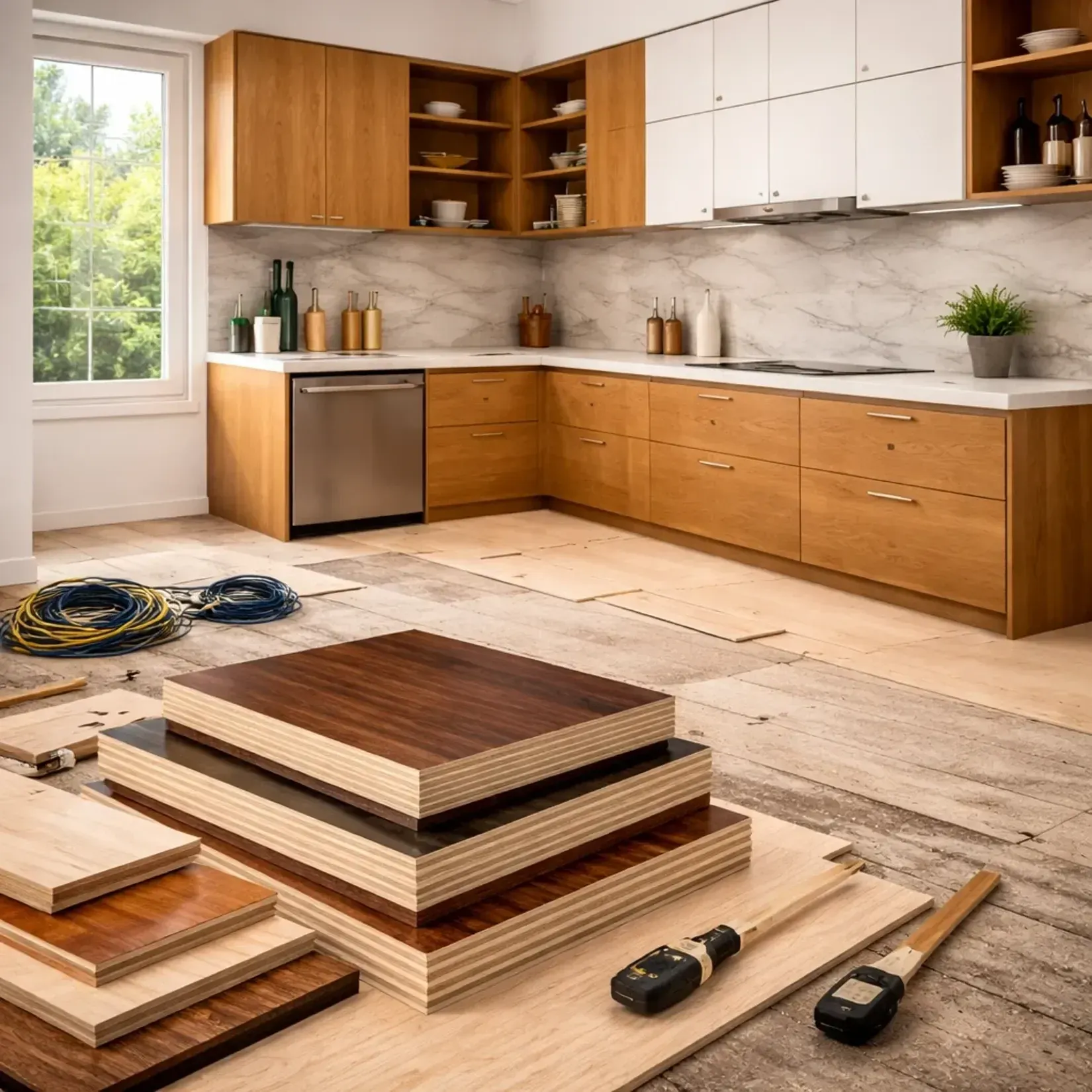
Gabay sa Pagkuha ng Plywood na Lumalaban sa Kahalumigmigan para sa mga Kabinet ng Lababo
Maaaring magmukhang perpekto ang isang kabinet sa lababo. Gayunpaman, maaari itong maging isyu sa warranty pagkalipas lamang ng ilang buwan. Ang isang maliit na tagas ng tubo o madalas na paglilinis gamit ang basang tubig ay maaaring magpalaki sa ilalim. Ito ay nagiging sanhi ng pagtuklap ng mga gilid. Pagkatapos, ang installer ay kailangang harapin ang isang mahirap na trabaho sa pagkukumpuni. Kailangang protektahan ng mga tagagawa ng kabinet sa kusina ang kanilang mga natapos na produkto. Gusto rin nilang iwasan ang mga magastos na pagbisita muli. Samakatuwid, ang pagpili ng moisture-resistant plywood ay hindi lamang tungkol sa paghahanap ng board na may waterproof sticker. Ito ay tungkol sa tunay na pagganap ng materyal. Bakit Lumilikha ng Magastos na Problema para sa mga Tagagawa ang Pamamaga ng Kabinet ng Lababo Sa ilalim ng lababo, ang lugar ay nakalantad sa ibang antas ng halumigmig kumpara sa istante ng kusina. Ang mga tagas mula sa mga tubo, kondensasyon sa mga tubo, at paglilinis gamit ang mga basang tela ay maaaring maging sanhi ng pamamaga ng mga panel, na nagreresulta sa mga hindi magandang tingnan na kabinet at mga bahaging hindi maayos ang pagkakasya na kailangang ayusin at magkaroon ng mga after-sales claim. Sa halip na umasa sa isang "waterproof" na label, kapag pumipili ka ng mga materyales para sa mga proyekto, dapat mong subukan kung paano tutugon ang bonding at core ng isang panel sa pamamaga na may kaugnayan sa halumigmig. Ang mga problema sa mga kabinet ay kadalasang nagsisimula sa mga lugar na hindi mo nakikita. Kung saan Unang Lumilitaw ang Pinsala ng Kahalumigmigan sa mga Kabinet ng Lababo Isipin ang isang paupahang yunit kung saan ang isang maluwag na alulod ay tumutulo ng tubig sa ilalim na tabla. Ang mga puddle ay nagtatago sa likod ng matataas na bote ng paglilinis. Nanatili sila roon nang hindi napapansin nang maraming linggo. Sa ibang bahay, naipon ang pawis sa isang malamig na tubo ng tubig. Ang kahalumigmigan na iyon ay agad na tumutulo pababa sa isang hubad at hindi nakasarang butas. Ang pinakamahinang bahagi ay karaniwang ang ilalim na sahig, ang mga ginupit na tubo, ang mga sulok sa likod, at ang mga dugtong sa tabi ng base ng sahig. Kapag ang gilid na ginupit ay lumapot dahil sa tubig, may mga problemang nangyayari. Kahit ang isang perpektong pinong patong ng ibabaw ay hindi na mananatiling patag. Paano Humahantong ang mga Namamagang Panel sa Pagbabago ng Trabaho at mga Paghahabol sa Garantiya Ang pag-aayos ng namamagang ilalim na tabla ay bihirang maging madaling palitan. Maaaring kailanganin munang tanggalin ng tagapag-ayos ang mga tubo. Kailangan din nilang bunutin ang mga istante at putulin ang mga kalapit na bahagi. Nangangahulugan ito ng pagpaplano ng isang bagong pagbisita sa bahay. Sa mga pasadyang kusina, ang mga masikip na kabinet at mabibigat na countertop ay humaharang sa madaling pag-access. Ang pabrika ang nagbabayad para sa karagdagang trabaho, paglalakbay, at oras. Samantala, ang nakikita lamang ng may-ari ng bahay ay isang produktong hindi maganda ang pagkakagawa. Isang sirang piraso ng kahoy lamang ang maaaring magpabago sa isang magandang benta tungo sa isang magulong laban sa warranty. Bakit Lumalaki ang mga Panel ng Ordinaryong Gabinete ng Lababo sa Kabila ng Proteksyon sa Ibabaw Maaaring harangan ng makintab na pang-itaas na patong ang normal na mga tilamsik ng tubig. Gayunpaman, ang ibabaw na iyon ay isa lamang piraso ng buong tabla ng kabinet. Maaari pa ring makahanap ng daanan ang tubig sa loob ng kahoy. Pumapasok ang Tubig sa mga Gilid na Pinutol at mga Bukal ng Tubero Kailangang magbutas ang mga manggagawa sa sheet para sa tubo ng dumi sa lababo. Ang bagong labas na panloob na kahoy na iyon ay walang orihinal na patong mula sa pabrika. Kung ang butas ay mananatiling walang laman, ang tubig ay direktang tatagos sa mga hibla ng kahoy. Ito ang magpapalaki at magpapakapal sa board. Ang mga maluwag na piraso ng gilid, mga butas ng turnilyo na hindi maayos ang pagkakatakip, at ang nakulong na tubig sa ilalim na sahig ay lumilikha ng katulad na problema. Malaki ang maitutulong ng pagdaragdag ng plastik na drip pan at pagtatakip sa bawat puwang. Gayunpaman, hindi mapapalitan ng mga hakbang na iyon ang sirang pandikit sa loob ng mismong board. Bakit Magkaiba ang Tugon ng Ordinaryong Plywood at MDF sa Halumigmig Ang MDF ay gawa sa alikabok ng kahoy na mahigpit na piniga. Nagbibigay ito ng napakakinis na pintura. Gayunpaman, ang mga bukas na gilid ay maaaring pumutok nang husto kapag nabasa. Ang plywood ay gumagamit ng mga nakadikit na patong ng totoong kahoy. Ang reaksyon nito sa tubig ay higit na nakasalalay sa uri ng kahoy, sa napiling pandikit, at kung paano ito pinagdikit. Mahalaga ang katotohanang ito kapag inihambing mo ang marine plywood kumpara sa ordinaryong plywood. Hindi mapapatunayan ng simpleng name tag kung paano gagana ang isang partikular na panel pagkatapos mabasa. Kailangang tingnan ng mga mamimili ang aktwal na mga katotohanan sa pagsubok at ang paraan ng paggawa. Hindi nila dapat hulaan na ang bawat plywood o MDF item ay gagana nang pareho. Paano Pumili ng Moisture-Resistant Plywood para sa mga Cabinets sa Lababo Ang isang mahusay na plano para sa lababo ay dapat tingnan ang loob ng tabla. Kailangan din nitong protektahan ang mga bagong hiwa na ginawa habang ginagawa ito. Unahin ang Water-Resistant Bonding at Core Integrity Palaging tanungin ang iyong mga nagtitinda tungkol sa pandikit na ginagamit sa mga patong ng kahoy. Alamin kung ang gitnang bahagi ay may magkakapatong na mga piraso, mga butas na walang laman, o mga mahinang dugtungan. Ang isang matibay at makinis na core ay ginagawang mas maaasahan ang pagputol at pag-screw. Ipinapakita ng immersion-peeling test kung tatagal ang pandikit sa ilalim ng mga partikular na basang sitwasyon. Samantala, sinusuri naman ng thickness-swelling test ang ibang salik. Para sa isang napakalaking proyekto sa kusina, subukang gumamit ng isang pangunahing paraan ng pagsusuri: *Tingnang mabuti ang mga gilid na pinutol upang makita ang anumang bakanteng puwang sa loob. *Siguraduhing ang ulat ng pagbabalat ng tubig ay tumutugma sa eksaktong board na iyong binibili. *Magsagawa ng mabilis na pagsubok upang isara ang mga gilid sa paligid ng mga butas ng tubo. Suriin ang Kapal, Proteksyon sa Gilid, at mga Espesipikasyon ng Pagbili Ang mga taong naghahanap ng kapal ng plywood para sa mga kabinet ay karaniwang nagnanais ng mga tabla na 18 mm. Gayunpaman, ang pinakamagandang sukat ay talagang nakadepende sa hugis ng kabinet, sa kabuuang bigat, at sa mga bisagra na metal. Ang kapal ng plywood ng kabinet sa kusina ay dapat piliin kasama ng istilo ng core, pagkakaayos ng layer, kulay ng ibabaw, at edge tape. Malinaw na kailangan ang waterproof sealant sa paligid ng mga puwang sa tubo, angmga gilid sa ibaba, at anumang mga sariwang hiwa. Isipin ang mga bahay na malapit sa dagat o mga sahig na araw-araw na nililinis. Para sa mga lugar na ito, dapat mo ring suriin ang daloy ng hangin at mga paraan upang madaling maabot ang mga tagas. Walang makapal na tabla ang makakapalit sa mga matalinong disenyo ng gusali. Paano Nakakatulong ang QIANGYI PLYWOOD na Bawasan ang Pamamaga ng Kabinet sa Lababo Sa QIANGYI PLYWOOD, tinutugunan namin ang mga banta ng tubig gamit ang malinis at humaharang sa tubig na pandikit. Gumagamit din kami ng full-eucalyptus core layout. Pinipigilan ng espesyal na disenyong ito ang mga bakanteng bulsa sa loob ng kahoy. Hindi lang kami umaasa sa magandang kulay ng pang-itaas para sa proteksyon. Sinusuportahan ng Glutinous Rice Glue ang Moisture-Resistant Bonding Ang aming plywood na gawa sa glutinous rice glue ay gumagamit ng Lingmei adhesive. Ang kakaibang pandikit na ito ay hinaluan ng glutinous rice starch, magnesium chloride, magnesium oxide, at purong tubig. Ang basang pandikit ay bumabaon nang malalim sa maliliit na butas ng mga hibla ng kahoy. Kapag natuyo na ito, bumubuo ito ng isang masikip at napakalakas na sapot na pangdugtong. Ang huling plywood ay ginawa upang maabot ang ENF-grade ultra-low formaldehyde emissions. Kasabay nito, pinapanatili nito ang matibay at hindi tinatablan ng tubig na pagkakadikit. Maayos naming ikinakalat ang pandikit sa bawat patong. Susunod, naglalagay kami ng 24 na oras na cold pressing sa normal na temperatura ng silid. Maingat namin itong pinatutuyo upang maabot ang tamang antas ng kahalumigmigan. Panghuli, hinahayaan namin itong magpahinga at tumigas nang maayos. Ang maingat na rutinang ito ay nagpapanatili sa kalidad ng pandikit na hindi nagbabago sa lahat ng proseso ng paggawa sa pabrika. Nilalabanan nito ang pamamaga mula sa mga biglaang natapon o mamasa-masang hangin sa silid. Malaki rin ang nababawasan nito sa posibilidad na matuklap ang mga patong ng kahoy dahil sa pinsala ng tubig. Pinapabuti ng Eucalyptus Core at Ganap na Core-Connected Construction ang Katatagan ng Panel Ang pagpili ng tamang gitnang kahoy ay kasinghalaga rin. Gumagamit kami ng buong eucalyptus core para sa espesyal na glutinous rice plywood na ito. Hindi kami gumagamit ng anumang uri ng mixed-wood core. Ang mga panloob na sheet ay inilatag gamit ang ganap na konstruksyon na konektado sa core. Nangangahulugan ito na ang mga gitnang piraso ay magkakasya nang mahigpit upang manatiling matibay. Pinipigilan nito ang mga kakaibang puwang sa loob ng board. Napakalaki ng detalyeng ito kapag ang mga manggagawa ay nagbubutas ng mga tubo o pinagsasama-sama ang mga dingding ng kabinet. Ang mga nakatagong mahinang bahagi ay madaling makabasag ng kabinet. Ang paggamit ng matibay na kahoy na eucalyptus at makinis na patong ng pandikit ay nagsisiguro ng isang matatag at matibay na produkto. Kahit na matibay ang pagkakagawa nito, kailangan mo pa ring takpan ang mga gilid na pinutol. Ebidensya sa Pagsubok at Halaga ng Pagbili para sa mga Tagagawa ng Kabinet ng Lababo Ang matatalinong mamimili ay nangangailangan ng tunay na patunay ng matibay na pandikit, kakayahang kontra-pamamaga, at mahusay na suporta mula sa pabrika. Mga Resulta ng Pagsubok sa Paglaban sa Tubig at Pagbabalat gamit ang Immersion sa Klase II Ang opisyal na ulat ng immersion-peeling test, Blg. SZF-WT-25101715-03, ay nagpapakita ng anim na piraso na sinubukan. Kinukumpirma nito ang perpektong 100% pass rate at isang ganap na sumusunod na marka. Hinihiling ng mga tuntunin sa pagsusulit na Class II ang pagbababad ng kahoy sa mainit na tubig sa temperaturang 63°C ± 3°C. Pinatutunayan ng magandang iskor na ito na mahusay nitong kayang tiisin ang mga basang kondisyon. Gayunpaman, hindi ito nilayong manatili sa ilalim ng tubig magpakailanman. Nagbibigay din kami ng Pangako sa Responsibilidad na Hindi Tinatablan ng Tubig at Laban sa Pamamaga. Sinasaklaw ng papel na ito ang mga wastong problema sa pamamaga ng gilid at pagkasira ng pandikit pagkatapos magawa ang pag-setup. Dapat palaging suriin ng mga mamimili ang mga patakarang ito upang tumugma sa kanilang mga partikular na order at plano. Mga Resulta ng Paglulubog sa Oras at Halaga ng Paghahanap ng Impormasyon sa Tunay na Mundo Isang kakaibang 72-oras na pagsubok sa pagbababad ang tumitingin sa tatlong magkakaibang tabla nang magkatabi. Ang mga naitalang pagbabago sa kapal ay: Materyal Bago ibabad Pagkatapos ng 72 oras Pagtaas Plywood na pandikit na bigas 18.20 milimetro 18.35 milimetro 0.15 milimetro Ordinaryong playwud 18.13 milimetro 19.05 milimetro 0.92 milimetro MDF 18.30 milimetro 20.66 milimetro 2.36 milimetro Ang maliit na pagbabago sa laki ay nagpapakita ng tunay na halaga ng isang matatag na tabla. Ang mga nakaumbok na gilid ay nagpapahirap sa pag-aayos ng mga kabinet. Siyempre, ang pangunahing pagsubok na ito ay hindi pumapalit sa mga opisyal na pagsusuri sa batch. Sa napaka-maasim na pamilihan ng Pilipinas, sinubukan muna ng isang nagtitinda ng wood panel ang isang kulay ng aming glutinous rice glue plywood. Nagustuhan nila ito, bumili pa ng mas marami, at nagdagdag ng mga bagong kulay kalaunan. Ang kuwentong ito ay nagpapakita ng matinding interes ng mga mamimili. Gayunpaman, hindi nito sinusukat ang eksaktong tagal ng buhay ng lababo at kabinet. Bago ka umorder ng malaking batch, palaging suriin ang mga sample, eksaktong mga patakaran, mga test paper, at mga patakaran sa pagbabalik. Maaari nating pag-usapan ang lahat ng mga katotohanang ito sa 2026 GUANGXI INTERNATIONAL FOREST PRODUCTS AND WOOD PRODUCTS EXHIBITION. Hanapin kami sa Booth D5T-06, Nanning International Convention & Exhibition Center, mula Nobyembre 21–23, 2026. Mga Madalas Itanong T: Ang plywood ba ninyo ay gawa sa full eucalyptus core o combi core? A: Ang aming plywood na gawa sa glutinous rice glue ay nakabatay sa isang buong eucalyptus core. Nagtatampok ito ng ganap na core-connected veneer construction. Dapat suriin muli ng mga gumagawa ng kabinet ang eksaktong mga detalye ng core kapag humihingi ng mga sample o listahan ng presyo. T: Bakit namamaga ang plywood sa paligid ng mga ginupit na tubo ng lababo sa kusina? A: Ang mga butas sa tubo ay pinuputol ang mga hibla ng kahoy. Tinatanggal nito ang ligtas na panlabas na patong. Ang maliliit na patak ng tubo, o ang malamig na pawis ng tubig ay madaling makapasok sa mga hindi pa nabubutas na dingding. Kapag ininom ng kahoy ang tubig na iyon, ang mga gilid ay namumukol. Itinutulak nito ang tape sa gilid at maaaring masira ang magandang panlabas na tapusin. T: Ang plywood ba ninyo na glutinous rice glue ay waterproof o marine grade? A: Ang aming lupon ay nakapasa sa mga pagsusulit na may Class II water-resistance sa ilalim ng mahigpit na pambansang mga patakaran. Ito ay ginawa para sa mga silid na may sobrang basang temperatura. Kabilang dito ang mga cabinet sa lababo sa kusina, mga yunit ng banyo,at mga bahay sa tabing-dagat. Mahusay nitong nilalabanan ang pang-araw-araw na pagtalsik at pamamaga ng basang tubig. Gayunpaman, hindi mo ito dapat iwanang nakalubog sa tubig nang matagal. T: Paano mabeberipika ng mga tagagawa ng kabinet ang performance na panlaban sa pamamaga bago bumili nang maramihan? A: Dapat mong tingnan ang isang totoong sample. Suriin ang mga marka ng pagbabalat sa ilalim ng lupa at ang thickness-swelling proof. Suriin ang istilo ng panloob na core at ang ipinangakong mga tuntunin sa inspeksyon. Ang mga papel sa pagsusulit ay dapat na malinaw na tumutugma sa eksaktong kahoy na iyong binibili. T: Kailangan pa rin bang lagyan ng edge sealing ang mga cabinet sa lababo dahil sa moisture-resistant plywood? A: Oo, talagang kailangan. Dapat mong selyohan ang lahat ng bagong hiwa, mga puwang sa tubo, at mga mahihinang dugtungan. Gayundin, ayusin agad ang anumang tagas ng tubig. Ang matibay na pandikit at matalinong mga gawi sa pagtatayo ay perpektong nagtutulungan. Pinipigilan nila ang mga walang kabuluhang pagkasira ng kabinet.
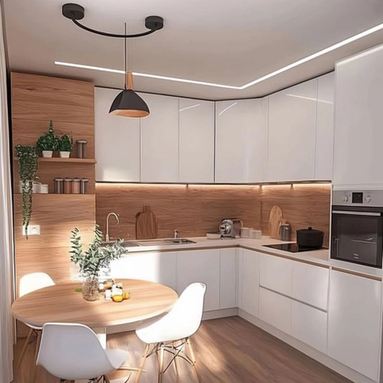
Checklist ng Anti-Mold Plywood para sa mga Mamimili ng Muwebles sa Hotel
Bihirang magsimula ang amag sa mga muwebles ng hotel bilang isang malaking tagas. Mas madalas, nagsisimula ito sa likod ng isang aparador, sa ilalim ng vanity, sa tabi ng malamig na dingding, o sa gilid ng isang nakalantad na panel na nananatiling mamasa-masa. Ang board ay maaaring magmukhang maayos sa paghahatid, habang ang mga depekto na may kaugnayan sa kahalumigmigan ay lumilitaw pagkalipas ng ilang buwan. Samakatuwid, ang isang kapaki-pakinabang na checklist para sa plywood na kontra-amag ay kailangang tumingin nang higit pa sa isang etiketa. Kailangang suriin ng mga mamimili ang kapaligiran, pangunahing istruktura, sistema ng pagbubuklod, pagkontrol ng kahalumigmigan, at subukan ang ebidensya bago aprubahan ang isang maramihang order. Saan Nagsisimula ang mga Problema sa Amag sa mga Proyekto ng Muwebles sa Hotel? Mga Nakatagong Moisture Zone sa Muwebles sa Guestroom Ang mga kwarto ng hotel ay lumilikha ng ilang kondisyon ng kahalumigmigan sa isang maliit na espasyo. Ang isang aparador na nakakabit sa isang panlabas na dingding ay maaaring makatanggap ng kaunting daloy ng hangin. Ang vanity ng banyo ay nakakatanggap ng mga tilamsik, singaw, at paulit-ulit na paglilinis. Ang isang kabinet ng minibar ay maaaring mailagay malapit sa malamig na mga ibabaw kung saan nabubuo ang condensation. Sa mga hotel na nasa tropiko o baybayin, ang mga kwartong nakasara sa pagitan ng mga bisita ay maaari ring manatiling mamasa-masa sa mahabang panahon. Ang mga gilid ng panel, mga butas na binutas, likod, mga dugtungan, at mga panloob na patong ay maaaring sumipsip ng kahalumigmigan bago pa man magpakita ng malinaw na pinsala ang pandekorasyon na bahagi. Bakit Ang Isang Maliit na Mantsa ng Amag ay Maaaring Maging Gastos ng Proyekto Sa isang hotel, ang isang detalye ng materyal ay maaaring paulit-ulit sa dose-dosenang o daan-daang silid. Samakatuwid, ang isang lokal na depekto ay maaaring maging downtime ng silid, kapalit na muwebles, isa pang pagbisita sa pag-install, naantalang paglilipat, mga paghahabol sa warranty, at mga reklamo mula sa operator. Ang pagganap laban sa amag ay hindi lamang isyu sa hitsura. Para sa isang mamimili ng muwebles sa hotel, ito ay bahagi ng pagkontrol sa panganib ng proyekto. Bakit Nagkakaroon ng Amag at Pinsala na Kaugnay ng Kahalumigmigan ang Plywood? Ang Halumigmig, Kondensasyon, at Mabagal na Pagpapatuyo ang Lumilikha ng Panganib Kailangan ng amag ang mga kanais-nais na kondisyon ng kahalumigmigan. Mas nagiging mahina ang mga muwebles kapag nananatiling mataas ang halumigmig, pumapasok ang tubig sa mga hindi natapos na gilid, o paulit-ulit na nababasa ng kondensasyon ang malamig na ibabaw. Ang problema ay kadalasang naipon. Ang isang panel ay sumisipsip ng kaunting halumigmig, dahan-dahang natutuyo, pagkatapos ay inuulit ang siklo. Ang mahinang daloy ng hangin sa likod ng mga nakapirming muwebles ay maaaring magpalala nito. Ang materyal na panlaban sa amag ay hindi maaaring pumalit sa pagkukumpuni ng tagas, bentilasyon, o pagkontrol ng halumigmig, ngunit maaari nitong bigyan ang muwebles ng mas mahusay na kalamangan laban sa mga kondisyong ito. Maaari ring humantong ang kahalumigmigan sa pamamaga at deformasyon Maaari ring idiin ng kahalumigmigan ang linya ng pandikit, palakihin ang mga hibla ng kahoy, paluwagin ang mga bahaging nakakabit, o baguhin ang kapal ng panel. Samakatuwid, ang isang tabla na ginagamit para sa mga aparador, vanity unit, headboard, o built-in na mga kabinet ay nangangailangan ng matatag na core at maaasahang pagkakabit. Kahit na naghahanap ang mga mamimili ng kapal ng plywood para sa mga kabinet, ang kapal lamang ay hindi kayang punan ang mga panloob na puwang, mahinang mga veneer, o isang istrukturang sensitibo sa kahalumigmigan. Ano ang Dapat Suriin ng mga Mamimili ng Hotel Bago Aprubahan ang Anti-Mold Plywood? Dapat maipaliwanag ng supplier kung paano ginagawa ang panel at kung paano ito gumagana. Hindi sapat ang pariralang waterproof plywood, at hindi rin sapat ang pangkalahatang pahayag na "lumalaban sa amag". Pagsusuri ng Mamimili Bakit Ito Mahalaga Ebidensya ng resistensya sa amag o mildew Kinukumpirma ang pahayag laban sa amag Pagganap na antibacterial Nagdaragdag ng ebidensya na may kaugnayan sa kalinisan Mga pangunahing uri at grado Nakakaapekto sa katatagan at pangkabit Ganap na konektadong istrukturang core Binabawasan ang mga panloob na kahinaan Nilalaman ng kahalumigmigan ng panel Sinusuri ang kontrol ng kahalumigmigan bago ipadala Pagsubok sa resistensya ng tubig at bono Sinusuri ang integridad ng linya ng pandikit pagkatapos malantad sa kahalumigmigan Plano ng pagbubuklod ng gilid Tumutulong na limitahan ang pagpasok ng kahalumigmigan pagkatapos ng paggawa Suriin ang Istruktura, Hindi Lamang ang Ibabaw Para sa mga muwebles sa hotel, ang konstruksyon ng eucalyptus core board ay sulit na suriin sa nakalantad na gilid o aprubadong sample. Ang hardwood core ay kayang suportahan ang paulit-ulit na pagkakabit at pang-araw-araw na paggamit, ngunit ang pangalan lamang ng uri ay hindi sapat. Dapat itanong ng mga mamimili kung ang core ay tuloy-tuloy at kung mayroon bang mga puwang, magkakapatong, o mga filler veneer. Ang plywood na gawa sa cabinet ay dapat husgahan bilang isang kumpletong istraktura, hindi lamang batay sa hitsura ng mukha. Itugma ang Board sa Lokasyon ng Muwebles Nag-iiba ang antas ng panganib depende sa aplikasyon. Ang isang aparador sa isang panloob na tuyong dingding ay hindi nakalantad tulad ng isang vanity sa tabi ng shower area. Ang isang mataas na pinto ng kabinet ay nagbibigay din ng higit na diin sa pagiging patag at pagkontrol sa deformasyon. Para sa mga proyektong maramihan sa hotel, aprubahan ang panel ayon sa aplikasyon: aparador, vanity, minibar, wall panel, o iba pang built-in na muwebles. Paano Tinatarget ng QIANGYI PLYWOOD ang Panganib ng Amag na Dahil sa Halaga? Sa QIANGYI PLYWOOD, nilulutas namin ang problema sa pamamagitan ng core, adhesive system, at moisture-control process sa halip na umasa lamang sa isang surface claim. Konstruksyon ng Buong Eucalyptus Core at Ganap na Konektadong Core Gumagamit kami ng mga opsyon na full eucalyptus core na gawa sa mga continuous eucalyptus veneer. Sa istrukturang ito, ang full-connected core ay nangangahulugan na ang mga internal veneer ay nakaayos nang walang mga voids, overlaps, o dead joints. Ang layunin ay isang mas pare-parehong panel na may mas kaunting internal weak points. Gumagamit kami ng 100% eucalyptus core solutions para sa mga aplikasyon sa cabinet at muwebles. Para sa mga wardrobe ng hotel at mga panel ng matataas na kabinet, mahalaga ito dahil ang core continuity ay sumusuporta sa mas pare-parehong machining, fastening, at dimensional stability. Nagbibigay din ito sa mga mamimili ng praktikal na bagay na maaaring suriin sa isang cu.t gilid bago ang pag-apruba ng maramihan. Ang Glutinous Rice Glue ay Nakakatulong na Lumikha ng Hindi Kanais-nais na mga Kondisyon para sa Amag Ang aming Lingmei glutinous rice glue ay gumagamit ng glutinous rice flour, magnesium chloride, tubig, at magnesium oxide. Ang mga bahagi ng magnesium ay tumutugon upang lumikha ng isang alkaline na kapaligiran. Higit na mahalaga para sa mga mamimili ng muwebles sa hotel, isang pagsubok na hindi tinatablan ng bakterya at amag na isinagawa ayon sa JC/T 2039-2010 sa isang 18 mm na glutinous rice glue multifunctional board ang nakapagtala ng antibacterial rate na higit sa 99% at isang Grade 0 mildew-proof rating. Sa ilalim ng pamantayan ng rating ng pagsubok, ang Grade 0 ay nangangahulugang walang naobserbahang pagtubo ng amag. Para sa mga mamimili, nagbibigay ito ng direktang ebidensya sa pagsusuri para sa pagsusuri ng resistensya sa amag at bakterya sa halip na umasa lamang sa isang pangkalahatang pahayag laban sa amag. Ang sistema ng pandikit, pagkontrol ng kahalumigmigan, at nasubok na resistensya ay nagtutulungan upang mabawasan ang mga panganib na may kaugnayan sa amag sa mga muwebles na nakalantad sa mga mahalumigmig na kondisyon. Pinapanatili ng Kontroladong Pagpapatuyo ang Kahalumigmigan ng Panel sa Saklaw na 8–12% Gumagamit kami ng 60-oras na proseso ng pagpapatuyo na kontrolado ang temperatura at kinokontrol ang nilalaman ng kahalumigmigan ng board sa loob ng 8–12%. Binabawasan nito ang sobrang kahalumigmigan bago ang paggawa ng muwebles at sinusuportahan ang mas matatag na paggamit sa mga mahalumigmig na kondisyon. Para sa mga proyektong may kinalaman sa pag-iimbak ng mahalumigmig na tubig, mahahabang ruta ng pagpapadala, o mga kuwartong may aircon, mas praktikal na magsimula sa kahalumigmigan ng controlled panel kaysa sa pagwawasto ng mga hindi matatag na board pagkatapos ng machining. Anong mga Ebidensya ang Dapat Ilagay ng mga Mamimili ng Hotel sa Approval File? Dapat suportahan ng pagsusuri ang desisyon sa pagbili, lalo na kapag ang pagganap na kontra-amag ay bahagi ng ispesipikasyon ng mga muwebles sa hotel. Sinasaklaw ng Ulat Blg. HJ-RD-26150 ang pagsusuring hindi tinatablan ng bakterya at amag ng isang 18 mm na glutinous rice glue multifunctional board ayon sa JC/T 2039-2010. Ang nasubok na sample ay nakamit ang antibacterial rate na higit sa 99% at isang Grade 0 mildew-proof rating. Tinutukoy ng ulat ang Grade 0 bilang walang pagtubo ng amag. Ginamit ang antibacterial test na Escherichia coli AS1.90, habang ang ebalwasyon laban sa amag ay kinabibilangan ng maraming uri ng fungi. Para sa isang mamimili ng muwebles sa hotel, nagbibigay ito ng direktang ebidensya na may kaugnayan sa aktwal na panganib na sinusuri: kung kayang labanan ng panel ang paglaki ng bacteria at pag-unlad ng amag sa ilalim ng tinukoy na mga kondisyon ng pagsubok. Para sa isang proyekto sa hotel, dapat kasama sa file ng pag-apruba ang: Kumpirmasyon ng mga pangunahing uri at ganap na konektadong pangunahing. Mga resulta ng pagsusuring hindi tinatablan ng bakterya at amag. Ang naaangkop na pamantayan sa pagsubok at ispesipikasyon ng nasubok na panel. Impormasyon tungkol sa espesipikasyon ng kahalumigmigan ng panel at resistensya sa kahalumigmigan. Inaprubahang kapal, pagtatapos ng mukha, at paggamot sa gilid. Isang sample ng produksyon na tumutugma sa maramihang order. Pinapadali ng mga pagsusuring ito ang mga talakayan tungkol sa kalidad sa mga susunod na pagkakataon dahil ang inaprubahang panel ay may tinukoy na istruktura at batayan ng pagganap. Praktikal na Kaso: Pagkuha ng Plywood para sa Isang Maalinsangan na Pamilihan sa Pilipinas Noong unang bahagi ng 2026, isang distributor ng mga materyales para sa dekorasyon at muwebles sa Pilipinas ang nakipag-ugnayan sa amin habang pinagkukumpara ang mga supplier para sa isang mainit at mahalumigmig na merkado. Partikular na nag-aalala ang mamimili tungkol sa performance sa kapaligiran, resistensya sa kahalumigmigan, at tibay. Matapos makita mismo ang aming glutinous rice glue plywood, naglagay ang distributor ng trial order noong Abril na may isang kulay. Ang unang kargamento ay nakatanggap ng positibong feedback sa merkado para sa ENF grade, surface texture, waterproof performance, at resistensya sa anay. Hindi nagtagal ay lumawak ang demand nang higit pa sa orihinal na kulay, kaya bumuo kami ng customized na color sample book para sa mamimili. Kalaunan ay nagpakilala ang distributor ng mas maraming finishes sa pamamagitan ng offline showroom nito at inilagay ang glutinous rice glue plywood bilang isang premium na linya ng produkto. Para sa mga mamimili ng hotel at muwebles, ipinapakita ng kasong ito kung bakit dapat isaalang-alang ng humid-market sourcing ang performance na may kaugnayan sa kahalumigmigan, katatagan ng istruktura, at pare-parehong presentasyon ng produkto. Magkita-kita tayo sa Guangxi International Forest Products and Wood Products Exhibition Para sa mga mamimiling kasalukuyang kumukuha ng plywood para sa mga muwebles sa hotel o iba pang mga proyektong pangkomersyo, dadalo kami sa 2026 GUANGXI INTERNATIONAL FOREST PRODUCTS AND WOOD PRODUCTS EXHIBITION mula Nobyembre 21–23, 2026. Maaaring makipagkita ang mga bisita sa aming koponan sa Booth D5T-06 sa Nanning International Convention & Exhibition Center upang talakayin ang mga kinakailangan sa anti-mold plywood, eucalyptus core, full-connected core construction, at mga panel na partikular sa proyekto. Mga Madalas Itanong T: Ano ang anti-mold plywood para sa mga muwebles sa hotel? A: Pinipili ang plywood upang mabawasan ang panganib na may kaugnayan sa amag sa mga mahalumigmig na muwebles sa loob ng bahay. Dapat suriin ng mga mamimili ang resistensya sa amag kasama ang pagkontrol ng kahalumigmigan, kalidad ng pagkakadikit, tuluy-tuloy na pagkakadikit ng core, at katatagan ng dimensyon sa halip na umasa sa iisang label laban sa amag. T: Pareho ba ang anti-mold plywood at ang waterproof plywood? A: Hindi. Ang resistensya sa tubig ay nakatuon sa pagkakalantad sa kahalumigmigan, pagdikit, at pamamaga. Ang pagganap laban sa amag ay nakatuon sa resistensya sa paglaki ng fungi. Ang dalawang katangian ay sumusuporta sa isa't isa, ngunit hindi sila magkapareho ng pagsubok. T: Bakit mahalaga ang isang buong eucalyptus core para sa mga cabinet ng hotel? A: Ang isang buong eucalyptus hardwood core ay nagbibigay ng siksik at pare-parehong base para sa paggamit ng muwebles. Kapag isinama sa isang ganap na konektadong core structure, nababawasan din nito ang mga alalahanin tungkol samga panloob na puwang, mga pagsasanib, at mahihinang mga kasukasuan. T: Saan dapat unahin ang plywood na hindi tinatablan ng amag sa isang hotel? A: Kabilang sa mga lokasyong may mataas na panganib ang mga vanity sa banyo, mga aparador na nakadikit sa mga panlabas na dingding, mga cabinet sa minibar, mga panel ng lower cabinet, at mga muwebles sa mga tropikal, baybayin, o mga silid na hindi maganda ang bentilasyon. T: Ano ang dapat hilingin ng mga mamimili bago mag-order ng maramihang anti-mold plywood? A: Hilingin ang aprubadong istruktura ng core, saklaw ng kahalumigmigan ng panel, mga resulta ng pagsubok na hindi tinatablan ng antibacterial at amag, naaangkop na pamantayan ng pagsubok, nasubukang detalye ng panel, kapal at mga kinakailangan sa ibabaw, at isang sample ng produksyon na tumutugma sa pangwakas na order.
Gabay sa Plywood na Lumalaban sa Anay para Bawasan ang mga Claim sa Warranty
Ang problema sa anay sa isang tapos nang kabinet ay bihirang manatiling maliit na problema sa materyal. Kapag ang isang aparador, kabinet sa kusina, o built-in na yunit ay nai-install na, ang pinsala ay maaaring magdulot ng mga inspeksyon sa lugar, pagpapalit ng panel, paggawa, gastos sa transportasyon, at mga hindi pagkakaunawaan sa warranty. Kaya naman dapat suriin ang plywood na lumalaban sa anay bago simulan ang pagputol. Para sa mga tagagawa ng kabinet, ang tunay na tanong ay hindi kung ang isang sheet ay may label na anti-anay. Ito ay kung ang core, adhesive system, konstruksyon ng panel, at ebidensya ng pagsubok ay sumusuporta sa isang estratehiya sa warranty na may mas mababang panganib. Bakit Nauuwi sa Magastos na Paghahabol sa Garantiya ng Gabinete ang Pinsala ng Anay? Ang mga nakatagong pinsala ay madalas na lumilitaw pagkatapos ng pag-install Maaaring makapasok ang mga anay sa pamamagitan ng mga daanan ng lupa, mga bitak sa dingding, mga tubo, o mga kahoy at balot na may mga insekto. Sa mga proyekto ng kabinet, ang mga lugar na mahirap makita ay kinabibilangan ng mga panel sa likod malapit sa mga dingding, mga sipa sa paa, mga base ng aparador, at mga kabinet sa lababo. Maaaring magmukhang normal ang plywood habang ginagawa ang produksyon. Ang pinsala ay maaari lamang makita pagkatapos mailagay ang mga muwebles, kapag maaaring kailanganin ng tagagawa na siyasatin ang lugar, lansagin ang mga kabinet, paramihin ang mga panel, ipadala ang mga kapalit, at ayusin ang muling paglalagay. Ang gastos ay madaling umabot nang higit pa sa isang sirang sheet. Isang tipikal na senaryo sa kusina ang isang base cabinet na naka-install malapit sa mga tubo sa isang proyektong apartment na mahalumigmig. Kung ang nakatagong aktibidad ng anay ay umabot sa substrate, ang pagpapalit ng isang panloob na panel ay maaaring mangailangan ng pag-alis ng mga hardware, pinto, countertop, o mga katabing unit. Sa isang proyektong wardrobe, ang pinsala sa likod ng isang nakapirming panel sa likod ay maaaring manatiling hindi napapansin hanggang sa makakita ang customer ng alikabok, mga guwang na bahagi, o mga humihinang bahagi. Ang pagkakalantad sa warranty ay nagsisimula sa pagpili ng materyal Ang isang pandekorasyon na ibabaw ay hindi dapat ipagkamali sa proteksyon laban sa anay. Ang melamine plywood ay maaaring mag-alok ng praktikal na pagtatapos, ngunit ang ibabaw lamang ay hindi patunay na ang substrate ay lumalaban sa anay. Ganito rin ang naaangkop sa laminated marine plywood o marine board. Magkahiwalay na tanong ang tungkol sa moisture performance at ang resistensya sa anay. Ang isang karaniwang tanong ng mga mamimili ay “Resistant ba sa anay ang laminated marine plywood?” Ang sagot ay nakadepende sa core, adhesive system, at resulta ng pagsubok, hindi sa pangalan ng produkto. Bakit Maaari Pa Rin Maging Mahina sa Pag-atake ng Anay ang Plywood? Ang plywood ay gawa sa mga veneer na gawa sa kahoy, kaya nananatili ang cellulose sa loob ng panel. Ang isang pandekorasyon na bahagi ay maaaring protektahan ang ibabaw sa pang-araw-araw na paggamit, ngunit ang mga pinutol na gilid, mga butas na binutas, mga hardware point, at mga panloob na veneer ay mahalaga pa rin sa mga kapaligirang madaling kapitan ng anay. Ang mga kondisyon ng proyekto ay nagdaragdag ng isa pang patong ng panganib. Ang mga yunit ng kusina ay maaaring mailagay malapit sa mga tubo, habang ang mga aparador ay maaaring ikabit sa mga dingding nang maraming taon. Sa mga tropikal o mahalumigmig na pamilihan, ang nakatagong daanan at mahabang panahon ng serbisyo ay maaaring gawing magastos na kaso pagkatapos ng benta ang isang maliit na infestation. Dahil dito, ang "proteksyon laban sa anay" ay hindi dapat ituring na isang walang limitasyong pangako. Ang isang mas mahusay na pamamaraan ay pinagsasama ang angkop na pagpili ng panel na may wastong pag-install, pagbubuklod, inspeksyon, at mga lokal na hakbang sa pagkontrol ng peste. Ano ang Dapat Hingin ng mga Tagagawa ng Kabinet mula sa Plywood na Lumalaban sa Anay? Bago ihambing ang mga presyo, dapat munang tiyakin ng mga mamimili kung ano talaga ang ibinibigay. Tseke sa pagbili Ano ang dapat kumpirmahin Katibayan ng anay Paraan ng pagsubok, sample, petsa, numero ng ulat, rating Pangunahing materyal Mga uri ng kahoy at grado ng veneer Konstruksyon ng pangunahing bahagi Ganap na konektadong core, walang maluwag na bahagyang layup Espesipikasyon ng gabinete Kapal, ibabaw, paggamot sa gilid, nilalayong paggamit Responsibilidad ng tagapagtustos Malinaw na pamamaraan pagkatapos ng benta Ang kalidad ng core ay nararapat bigyan ng partikular na atensyon. Ang core ng eucalyptus ay mahalaga para sa paggawa ng kabinet dahil nagbibigay ito ng matibay at matatag na base ng hardwood. Ang malalaking diameter ng eucalyptus ay inilalarawan bilang isang hilaw na materyal na plywood na pinahahalagahan dahil sa tibay at matatag na kalidad. Ang isang ganap na konektadong core, o full-core layup, ay lumilikha rin ng mas kontroladong panloob na istruktura kaysa sa isang bahagyang konektadong core. Sa ganitong konstruksyon, ang mga core veneer ay nakaayos nang tuluy-tuloy, habang ang pandikit ay inilalapat nang patong-patong. Hindi dapat gamitin ang alinmang punto bilang pamalit sa pagsusuri ng anay. Sa halip, tinutulungan nito ang mga mamimili na tukuyin ang mas pare-parehong substrate. Ang kapal ng plywood para sa mga kabinet ay kailangan ding tumugma sa aktwal na disenyo. Ang isang 18 mm na nasubukang panel ay hindi dapat awtomatikong ituring na ebidensya para sa bawat kapal o konstruksyon. Paano Tinatarget ng QIANGYI PLYWOOD ang Panganib ng Anay na Panel? Sa QIANGYI PLYWOOD, tinutugunan namin ang isyung ito sa pamamagitan ng sistema ng pandikit, pagpili ng core ng eucalyptus, at ganap na konektadong konstruksyon ng core sa halip na umasa sa isang ibabaw lamang. Ang Lingmei Glutinous Rice Glue ay gumagana sa pamamagitan ng nakagapos na istraktura Ang aming Plywood na may Gluten Rice Glue ay gumagamit ng Lingmei Gluten Rice Glue na gawa sa glutinous rice flour, magnesium chloride, magnesium oxide, at tubig. Pagkatapos tumigas, ang magnesium chloride at magnesium oxide ay lumilikha ng alkaline adhesive environment. Ang aming teknikal na pamamaraan ay baguhin ang acid-base environment sa loob ng kahoy sa pamamagitan ng alkaline adhesive environment na ito, na lumilikha ng mga kondisyon na hindi kanais-nais para sa aktibidad ng anay. Mahalaga ito dahil ang paggawa ng kabinet ay kinabibilangan ng pagputol, pagbabarena, pag-bisagra, at pagproseso ng gilid.Ang aksyong nakaugnay sa internal bonding system ay mas may kaugnayan sa mga operasyong iyon kaysa sa isang pahayag na nakabatay lamang sa natapos na mukha. Ang eucalyptus core at full-core layup ay sumusuporta sa consistency Para sa mga aplikasyon na pang-kabinet, binibigyang-diin namin ang first-grade na eucalyptus core. Ang Eucalyptus ay nagbibigay ng matibay na estruktural na base, habang ang rating na lumalaban sa anay ay nagmumula sa kumpletong nasubukang panel system, hindi lamang sa uri ng kahoy. Ang mga veneer ay nakaayos din bilang isang ganap na konektadong core at nakadikit nang patong-patong. Ang konstruksyong ito ay nangangailangan ng mas malapit na pagpili ng core at nagbibigay sa panel ng mas pantay na panloob na layout. Ang proseso ay nagpapatuloy sa pamamagitan ng matagal na cold pressing, kontroladong pagpapatuyo, at pagtigas. Kasama sa pagkakasunod-sunod ng produksyon ang 24-oras na self-heating cold pressing, 60 oras na pagpapatuyo, at mahigit 15 araw na pagkondisyon. Para sa mga pabrika ng kabinet, ang praktikal na halaga ay ang pagkakapare-pareho sa mga gilid ng kabinet, mga istante, mga pinto, mga aparador, at iba pang mga bahagi. Kaso: Pagbabawas ng Panganib sa Anay at Pagkatapos ng Pagbebenta sa Mauritius Isang matagal nang kostumer sa paggawa ng muwebles sa Mauritius ang patuloy na nag-oorder ng mga buong lalagyan ng 100% eucalyptus core plywood na gawa sa muwebles. Ang klima sa lokal na isla ay mahalumigmig at mapilit, kung saan ang mga ordinaryong panel ay maaaring maharap sa pagbabalat, pagbabago ng hugis, at pag-atake ng anay sa paglipas ng panahon. Para sa kostumer na ito, nagsusuplay kami ng plywood na gawa sa 100% eucalyptus full connected core at glutinous rice glue, na sinamahan ng kontroladong pagproseso para sa mas mahusay na katatagan ng panel. Ang Grade 9.5 na pagsubok sa resistensya sa anay ay nagbibigay din sa mamimili ng mas malinaw na ebidensya kapag pumipili ng mga materyales para sa produksyon ng kabinet. Ayon sa kostumer, ang paggamit ng aming plywood para sa mga kabinet ay nakabawas sa pag-aalala tungkol sa mga problema pagkatapos ng benta. Ang pare-parehong kalidad ng batch ay nakakatulong din sa pabrika na mapanatili ang parehong pagganap sa pagputol, paghawak ng turnilyo, at mga setting ng produksyon sa mga paulit-ulit na order. Ano ang Kahulugan ng Pagsusulit na Grado 9.5 para sa Panganib sa Pagkuha at Garantiya? Ang pahayag tungkol sa anay ay sinusuportahan ng Test Report GIZ/TR-2024-0301-0186, na inilabas ng Guangdong Institute of Zoology, Chinese Academy of Sciences Analysis and Testing Center. Ang sinuring sample ay Glutinous Rice Glue Multi-functional Plywood, 1220 × 2440 × 18 mm, at ang batayan ng pagsubok ay GB/T 18260-2015. Ang katumbas na numero ng ulat ng pagsubok ng anay ay natukoy din sa mga talaan ng pagsubok ng produkto. Sa loob ng apat na linggong pagsusuri sa anay sa loob ng bahay, naitala sa ulat ang bahagyang pinsala ng anay, na may isa hanggang dalawang tunel o bakas lamang ng infestation ng anay. Ang ispesimen ay nakatanggap ng rating na Grade 9.5 dahil sa pinsala ng anay. Kasama rin sa impormasyon ng pagganap ng panel ang resulta ng Grade 9.5 laban sa anay. Para sa mga mamimili, ang pangunahing halaga ay ang pagsubaybay sa halip na isang ganap na pangako. Ang numero ng ulat, paggawa ng sample, kapal, paraan ng pagsubok, at resulta ay maaaring suriin laban sa materyal na inoorder. Nakakatulong din ito sa mga importer at pabrika ng kabinet na sagutin ang mga customer sa ibaba ng antas ng serbisyo gamit ang mga tiyak na ebidensya sa halip na umasa sa isang pangkalahatang paglalarawan ng produkto. Ang isang praktikal na pagkakasunud-sunod ng pagbili ay: 1. Tukuyin kung ang proyekto ay may makabuluhang pagkakalantad sa anay. 2. Itugma ang kapal at ibabaw ng panel sa disenyo ng kabinet. 3. Kumpirmahin ang konstruksyon ng eucalyptus core at ang ganap na konektadong core kung saan tinukoy. 4. Humingi ng ulat tungkol sa resistensya sa anay para sa kaukulang panel. 5. Itago ang ulat at ispesipikasyon ng pagbili kasama ng mga talaan ng kalidad ng proyekto. Para sa mga proyektong gumagamit ng aming pangalawang henerasyong glutinous rice glue plywood, nagbibigay din kami ng pangakong responsibilidad laban sa mga insekto at anay. Kung magkaroon ng pinsala mula sa anay o wood-boring insect sa ilalim ng naaangkop na mga kondisyon, kami ang mananagot sa pagpapalit pagkatapos ng benta. Para sa mga tagagawa ng kabinet, lumilikha ito ng mas malinaw na landas sa paghawak ng panganib kaysa sa isang malabong label na "anti-anay". Magkita-kita tayo sa 2026 Guangxi International Forest Products and Wood Products Exhibition Kung kumukuha ka ng plywood na lumalaban sa anay, eucalyptus core plywood, o mga fully connected core panel para sa mga cabinet at proyekto sa muwebles, maaari mong makilala ang aming team sa THE 2026 GUANGXI INTERNATIONAL FOREST PRODUCTS AND WOOD PRODUCTS EXHIBITION. Tinatanggap namin ang mga tagagawa ng cabinet, importer ng plywood, distributor, at mga mamimili ng proyekto upang personal na talakayin ang mga detalye ng panel, mga kinakailangan sa resistensya sa anay, konstruksyon ng core, at mga pangangailangan sa pagkuha ng mga produkto. Pangalan ng Kaganapan: ANG 2026 GUANGXI INTERNATIONAL FOREST PRODUKTO AT WOOD PRODUKTONG EKSHIBISYON Numero ng Booth: D5T-06 Petsa: Nobyembre 21-23, 2026 Lokasyon: Nanning International Convention & Exhibition Center Mga Madalas Itanong T: Lumalaban ba sa anay ang laminated marine plywood? A: Hindi awtomatiko. Ang pagganap na may kaugnayan sa kahalumigmigan at resistensya sa anay ay dapat suriin nang hiwalay. Kumpirmahin ang ulat ng substrate, sistema ng pandikit, at pagsusuri sa anay. T: Hindi ba tinatablan ng anay ang melamine plywood? A: Hindi nangangahulugang ang ibabaw na gawa sa melamine ang magiging dahilan para maging matibay ang substrate sa anay. Kailangan pa ring suriin ang core at internal bonding system nito. T: Bakit gagamit ng eucalyptus core sa plywood ng kabinet na lumalaban sa anay? A: Ang core ng eucalyptus ay nagbibigay ng matibay at matatag na istrukturang pundasyonse. Sa sistemang ito ng panel, ang resistensya sa anay ay nagmumula sa kumpleto at nasubukang sistema ng konstruksyon at pandikit. T: Ano ang ibig sabihin ng ganap na konektadong core? A: Nangangahulugan ito na ang mga panloob na veneer ay bumubuo ng isang tuluy-tuloy at magkadikit na core sa halip na isang bahagyang konektadong layup. Sinusuportahan nito ang isang mas pare-parehong panloob na istruktura para sa pagproseso ng kabinet. T: Maaalis ba ng Grade 9.5 anay-resistant plywood ang lahat ng warranty claims? A: Hindi. Ang ebidensya sa pagsubok na Grade 9.5 ay maaaring makabawas sa kawalan ng katiyakan sa pagpili ng materyal, ngunit mahalaga pa rin ang tamang espesipikasyon, pag-install, pamamahala ng kahalumigmigan, inspeksyon, at pagkontrol sa anay sa lugar.

If you interested in our product, please leave you information here, we will send you more details
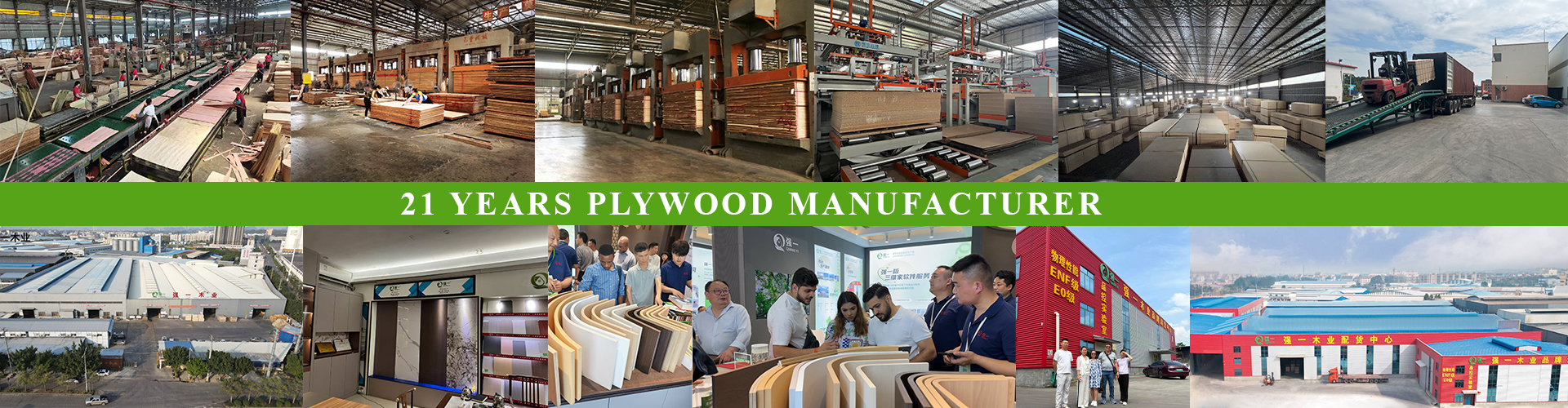
Please fill out the form below and we will get back to you as soon as possible.