
فيلم فيس بلايوود
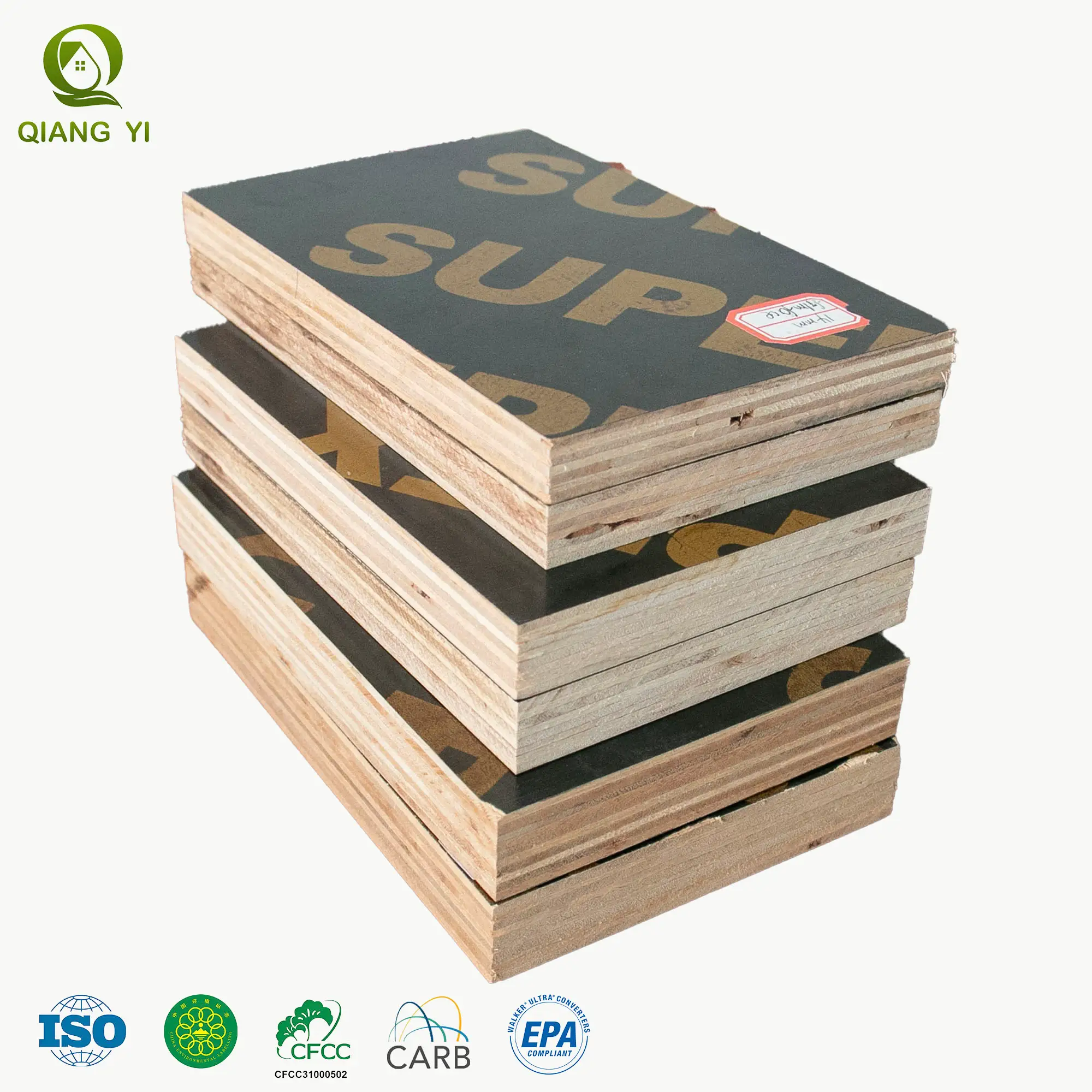
خشب رقائقي تجاري مقاوم للانزلاق بسماكة 18 مم، مناسب للمشاريع الخارجية - خشب رقائقي من شركة Qiangyi
يُعدّ الخشب الرقائقي المغطى بغشاء، والمعروف أيضاً باسم قوالب الخشب الرقائقي المطلية، من أكثر مواد القوالب المؤقتة استخداماً في الإنشاءات الخرسانية الحديثة. يتميز هذا النوع بسطحه الأملس المقاوم للماء والمغطى بغشاء فينولي، وصلابته الهيكلية العالية، ومقاومته للتآكل، وإمكانية إعادة استخدامه الممتازة، مما يجعله يتفوق على الخشب الرقائقي العادي غير المطلي من حيث تشطيب السطح واستقرار البناء.
خشب معاكس مطلي باللون الأحمر من غوانغشي مع لب من خشب الصنوبر الأوكالبتوس، للاستخدام في الإنشاءات الخارجية - خشب معاكس من تشيانغي
الخشب الرقائقي المطلي باللون الأحمر، والمعروف أيضاً باسم "خشب القوالب الأحمر" أو "اللوح الأحمر"، هو خشب رقائقي اقتصادي يُستخدم في البناء، وخاصةً كقوالب لصب الخرسانة. يُطلى كلا جانبيه بطلاء فينولي/راتنجي أحمر لامع مقاوم للماء.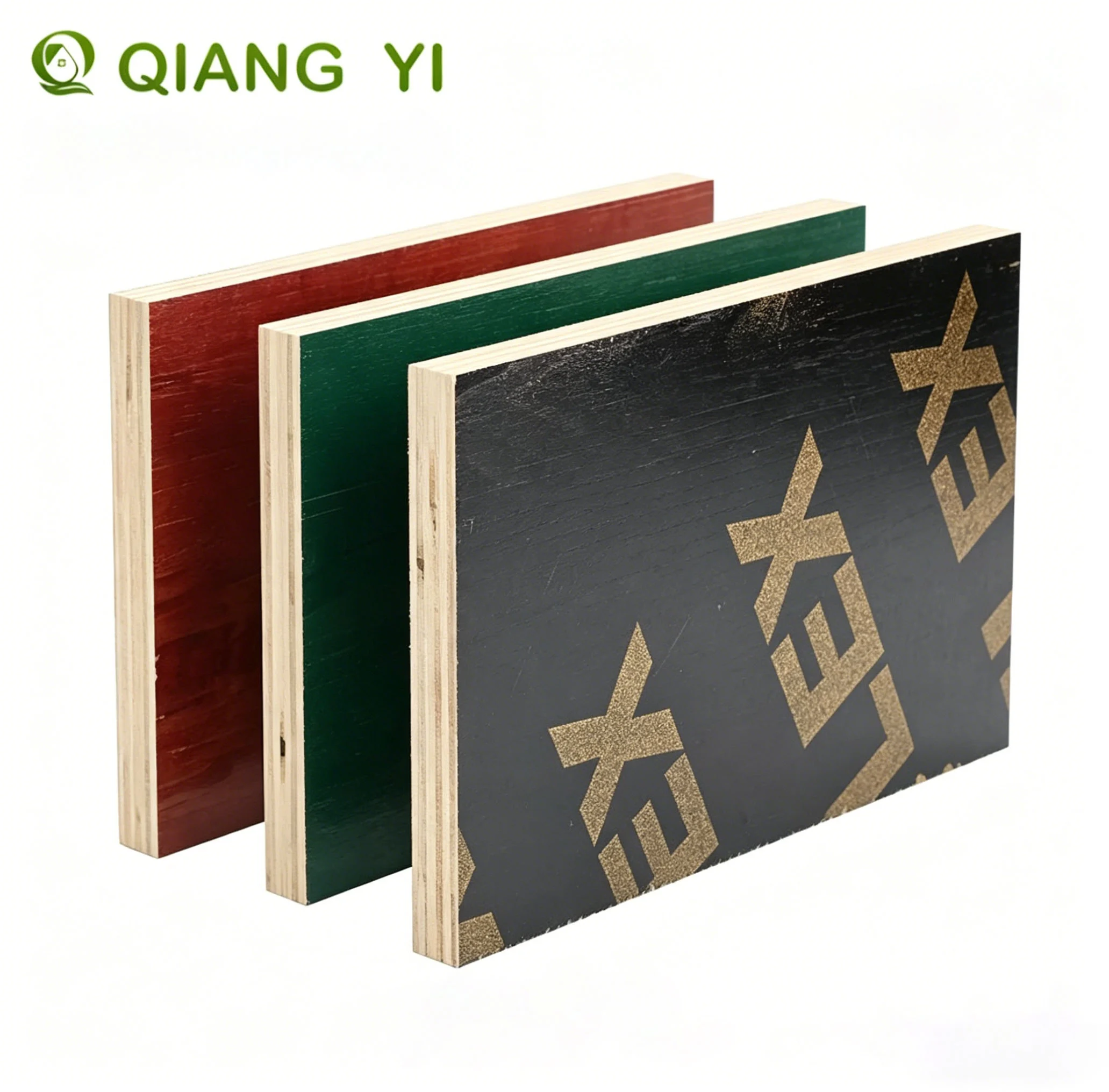
خشب معاكس بني اللون قياسي مغلف بغشاء بلاستيكي لقوالب الخرسانة
عزز كفاءة أعمال البناء لديك باستخدام خشب رقائقي عالي الجودة مغطى بغشاء رقيق من شركة تشيانغي. صُممت ألواح القوالب الخرسانية لدينا للاستخدام المتكرر، وتتميز بغراء فينولي مقاوم للماء وطبقة رقيقة متينة تضمن سطحًا أملسًا على الخرسانة. وبفضل معدل إعادة التدوير العالي، تُعد خيارًا اقتصاديًا مثاليًا لمشاريع البنية التحتية الحديثة.
خشب رقائقي مغطى بغشاء مقاوم للانزلاق والتآكل، يُستخدم في قوالب الخرسانة
يستخدم خشب رقائقي قوانغشي المغطى بغشاء رقيق خشب الكافور عالي الجودة كمادة أساسية، ويتم ضغط سطحه باستخدام عملية طلاء بغشاء مقاوم للماء. يتميز هذا الخشب الرقائقي بتماسك داخلي قوي ومحكم، مما ينتج عنه الخصائص التالية: مقاومة التشوه، وعدم وجود انفصال بين الطبقات، ومقاومة الماء والرطوبة، مما يجعله مناسبًا لأعمال صب الخرسانة في الموقع.
أفضل أنواع الخشب الرقائقي المقاوم للانزلاق والمطلي باللون الأحمر مبيعًا للمشاريع الخارجية منخفضة التكلفة - خشب رقائقي من شركة تشيانغ يي
يستخدم الخشب الرقائقي المطلي باللون الأحمر على نطاق واسع في المشاريع الخارجية قصيرة الأجل مثل المباني السكنية، والأقبية، والمنازل المبنية ذاتيًا، ومباني المصانع، والجسور، والمدارس، والمستشفيات، ومراكز التسوق. الأداء الرئيسي المادة الرئيسية: لب كامل من شجرة الكينا قوة اللصق: ≥0.70 ميجا باسكال (الدرجة العالية ≥0.80 ميجا باسكال)، لا يوجد انفصال بعد 8 ساعات من الغليان. قوة الانحناء: الطولي ≥30 ميجا باسكال، العرضي ≥20 ميجا باسكال، مقاومة التشوه. معدل تمدد الرطوبة: أقل من 6% بعد نقعها في الماء لمدة 24 ساعة. أوقات التسليم: من 8 إلى 12 مرة الحجم: 915×1830 مم / 1220×2440 مم السماكة: 10 مم - 25 مم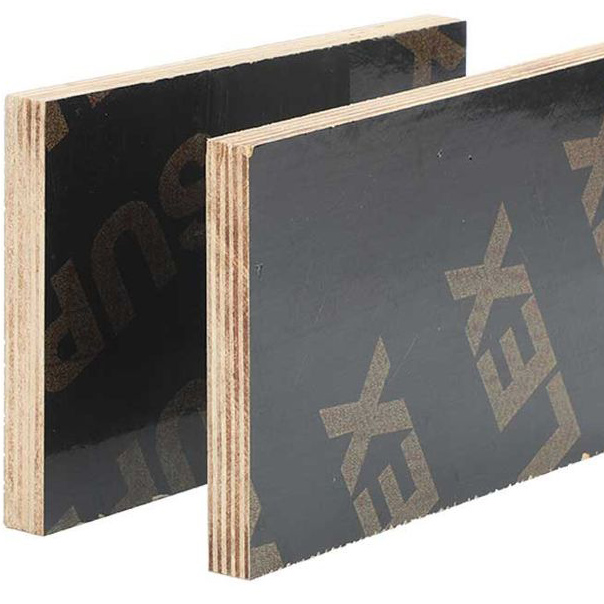
خشب رقائقي أسود اللون، ذو لب من خشب الأوكالبتوس بسمك 18 مم، يُستخدم في قوالب الخرسانة، سطح مطلي باللون الأحمر.
خشب رقائقي متين لقوالب البناء مع لب صلب من خشب الأوكالبتوس. مستقر، ومقاوم للماء، وقابل لإعادة الاستخدام بدرجة عالية لمشاريع البناء الثقيلة. تتوفر أسطح مصممة حسب الطلب.الخشب الرقائقي المغطى بطبقة رقيقة

If you interested in our product, please leave you information here, we will send you more details
Get more information about the plywood
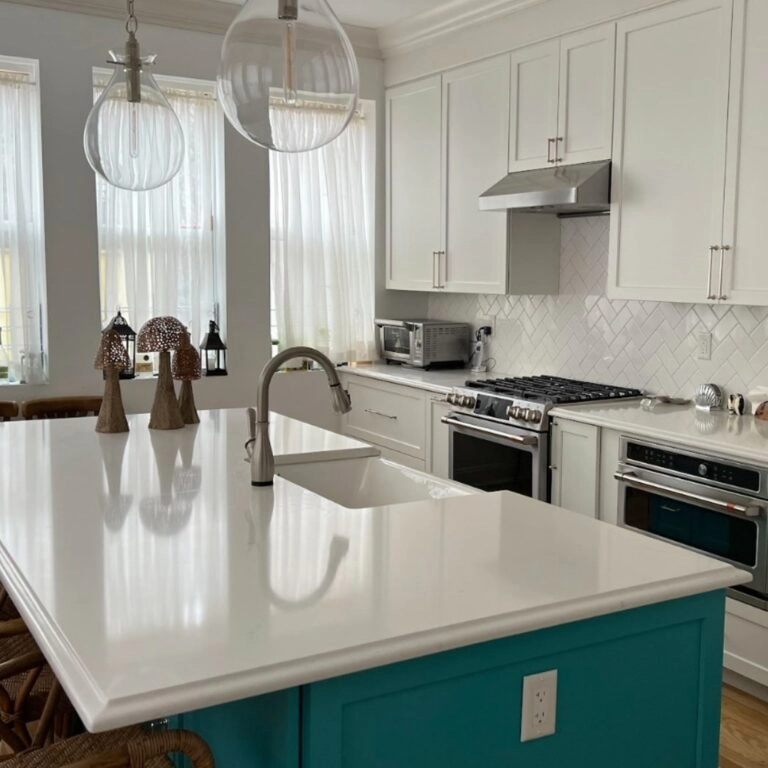
Mold-Resistant Plywood Sourcing Guide for Cabinet Manufacturing in Humid and Coastal Regions
1. Where Cabinet Manufacturers Face Mold-Related Board Problems Kitchens, bathrooms, and coastal interiors Tropical and coastal areas often have warm air and poor airflow. Wet cleaning routines, plumbing leaks, and daily condensation easily make cabinets damp. Sink units and bathroom vanities face high moisture risks. Laundry storage and base cabinets are also highly vulnerable. Wardrobes placed against poorly ventilated walls face similar threats. A panel might look perfect when it leaves the factory. However, it can still develop dark spots and musty odors after installation. Swollen edges are another common issue. Back panels and cut edges remain particularly vulnerable. These areas usually lack the strong protection found on the decorative face. The cost is higher than a stained panel Moisture damage often forces builders to replace cabinet sides and doors. This means repeating the installation process. It also requires paying for extra transport and labor. Such delays can seriously disrupt project handovers. Consequently, homeowners, developers, and distributors will likely complain. The real business risk involves heavy warranty costs and lost production time. Damaged client referrals hurt much more than just a ruined appearance. 2. Why Mold Develops in Plywood in Humid Markets Moisture reaches exposed edges and the core Wood fibers naturally absorb moisture from humid indoor air. They also take in water from direct contact. If a panel remains damp, mold will likely grow. Swelling can easily open up joints. It might also weaken the internal layer bonds. This allows trapped moisture to stay inside the wood. The overall risk depends heavily on the chosen adhesive and core quality. Moisture conditions, edge sealing, proper installation, and regular maintenance also play vital roles. Surface protection cannot compensate for weak construction Melamine facing only offers surface-level water resistance. It cannot stop moisture from entering through edge-banding gaps. Hardware mounting holes and cut surfaces on back panels are also weak points. You might compare marine board, laminated marine plywood, and ordinary plywood. Always check the waterproof classification carefully. You should also demand independent anti-mold evidence. Standard marine-board testing focuses mostly on bond strength during boiling-water exposure. These tests do not automatically require specific anti-mold or antibacterial treatments. Surface mold can still grow quickly in stagnant, highly humid rooms. Never assume that the word “marine” guarantees a mold-proof product. 3. What to Look for in Mold-Resistant Plywood Check core quality and continuity Cabinet carcasses, shelves, and doors require careful inspection. Check if the core uses a single wood species or a mixed blend. You must also see if the veneers are tightly arranged. A full eucalyptus core offers good strength and density. However, the wood species alone does not guarantee mold resistance. Always inspect the panel cross-section. Look closely for hidden gaps, empty voids, and weak bonding. Evaluate adhesive, moisture resistance, and test evidence Before buying, you should confirm these details: The specific core material and the exact construction method. Actual waterproof or moisture-resistance test results for your intended use. A separate anti-mold test report, which must include the sample description and performance grade. Consistent board thickness, overall flatness, and stable moisture content. Clear guidance for properly sealing edges, joints, and installation penetrations. The term “waterproof plywood for kitchen” does not represent a single universal grade. Class II waterproof performance often suits humid furniture applications well. However, this rating does not mean a cabinet can sit in standing water. It also cannot survive indefinite immersion. 4. How QIANGYI PLYWOOD Addresses the Risk Full eucalyptus core and fully interlocked construction Our glutinous rice glue plywood features a 100% full eucalyptus core. We do not use a cheaper poplar-eucalyptus combi core. Our factory selects premium Grade A material for production. We apply a fully interlocked core construction method. This involves a continuous cold- and hot-pressing process. As a result, the core contains no empty voids or overlapping gaps. Its cross-section remains tightly packed, much like solid wood. This solid structure creates a very flat substrate. It offers excellent resistance against edge chipping during CNC carving, grooving, and drilling. It also performs exceptionally well for PUR edge banding. Glutinous rice adhesive and controlled processing Our process uses Lingmei glutinous rice adhesive. This material is made from glutinous rice flour, magnesium chloride, magnesium oxide, and water. Once it cures, the glue builds a thick shield around the wood fibers. This step blocks the tiny channels where water normally enters. The magnesium-based parts set up an alkaline setting. Also, the deep soaking of the glue manages dampness very well. These actions work together to stop mold from growing easily. The standard moisture-content specification for this item sits at 8%–14%. Please check and confirm the exact needs for your specific order. Please see our AA wood-core waterproof melamine-faced plywood for furniture to explore a specific product option and view detailed finish choices. 5. Evidence and Purchasing Value for Humid-Market Projects What the test report says A testing document examines an 18 mm glutinous rice glue plywood sample. QIANGYI PLYWOOD provided this specific material. The evaluation followed the JC/T 2039-2010 standard. According to the results, the board achieved an anti-mildew rating of Grade 0. Furthermore, it showed an antibacterial rate of more than 99%. The document clearly explains that Grade 0 means there is no mildew present. For the antibacterial part of the test, the researchers used Escherichia coli and Staphylococcus aureus. At the same time, the anti-mildew assessment involved several types of fungi. This group specifically included Aspergillus niger. You can ask us to verify the test report for your specific product choice. Kitchen and bathroom projects require extra attention. Therefore, you should also review the Class II waterproof test results. Pay close attention to the reported 24-hour water absorption data. The official thickness-swelling rate sits at no more than 2.4%. A Philippine distributor’s market experience A Philippine distributor first contacted our team online in early 2026. This client later visited our official booth at the Canton Fair in March. After reviewing our physical samples, the buyer placed an initial order in April. That first shipment featured a single color design. Following the successful delivery, the ENF grade and smooth surface finish really stood out. The impressive waterproof and termite-resistance features also quickly attracted local cabinet and furniture customers. You might need to compare marine plywood vs. ordinary plywood for a project. Always match the core type and adhesive quality to your needs. You must also align the moisture resistance and anti-mold evidence with the finished furniture’s actual environment. Make sure to confirm the exact application and board thickness. Check the face design, edge treatment plans, and laboratory reports carefully before ordering. Meet QIANGYI PLYWOOD at THE 2026 GUANGXI INTERNATIONAL FOREST PRODUCTS AND WOOD PRODUCTS EXHIBITION. You will find us at Booth D5T-06. The event takes place at the Nanning International Convention & Exhibition Center from November 21–23, 2026. 6. FAQ Q: Will QIANGYI PLYWOOD Glutinous Rice Glue Functional Laminate Plywood get moldy? A: The panel successfully prevents mold growth under normal indoor conditions. This includes the high humidity and slight condensation typically found inside kitchens and bathrooms. This protection comes from its Grade 0 anti-mildew performance and the dense, mildly alkaline adhesive layer. However, extreme conditions can still damage any wood-based panel. Severe, persistent plumbing leaks pose a massive threat. Prolonged immersion in standing water without proper airflow will also cause harm. You must ensure proper ventilation and thorough edge sealing to guarantee long-term durability. Q: Is it suitable for the humid environment of the South? A: Yes, it works very well. The board features a reliable Class II waterproof performance. It also boasts a reported 24-hour water absorption and thickness-swelling rate of no more than 2.4%. The material perfectly suits properly designed kitchen and bathroom cabinets. However, it cannot handle permanent water immersion. Q: Is marine plywood automatically mold-resistant? A: No, that is not necessarily true. Marine plywood standards, such as BS 1088, primarily evaluate structural bonding strength. They test this under highly demanding wet conditions. This often includes boiling-water exposure, which experts commonly discuss regarding WBP performance. These tests focus heavily on preventing layer delamination. However, this process does not establish any chemical or physical resistance against indoor fungi. Aspergillus niger is a prime example of such a threat. For modern cabinet applications, you should always request a dedicated anti-mildew report. Make sure it covers indoor fungi testing, such as an evaluation based strictly on JC/T 2039-2010. Q: Does a melamine face prevent mold inside plywood? A: No surface finish can completely protect every exposed edge or open joint. You must specify a highly suitable core and a reliable adhesive. Furthermore, installers must properly seal all cut edges, screw holes, and installation penetrations. Q: What should cabinet manufacturers confirm before buying mold-resistant plywood? A: Buyers must confirm the exact core species and verify the fully interlocked construction. You should also check the thickness consistency and moisture tolerances. Always review the waterproof classification, the official anti-mold report, and the surface finish quality. Finally, discuss the factory’s batch inspection arrangements. You need to request a physical sample. Then, check that all technical documents perfectly match the quoted product. You can easily reduce your sourcing risk today. Simply send us details about your target market and specific cabinet application. Please include your required size, board thickness, core choice, and surface preferences. Do not forget to mention your estimated order quantity. Our team can help match you with the perfect panel. We will provide all relevant test documents and quickly arrange physical samples. You can also meet us directly at Booth D5T-06 in Nanning from November 21–23, 2026.
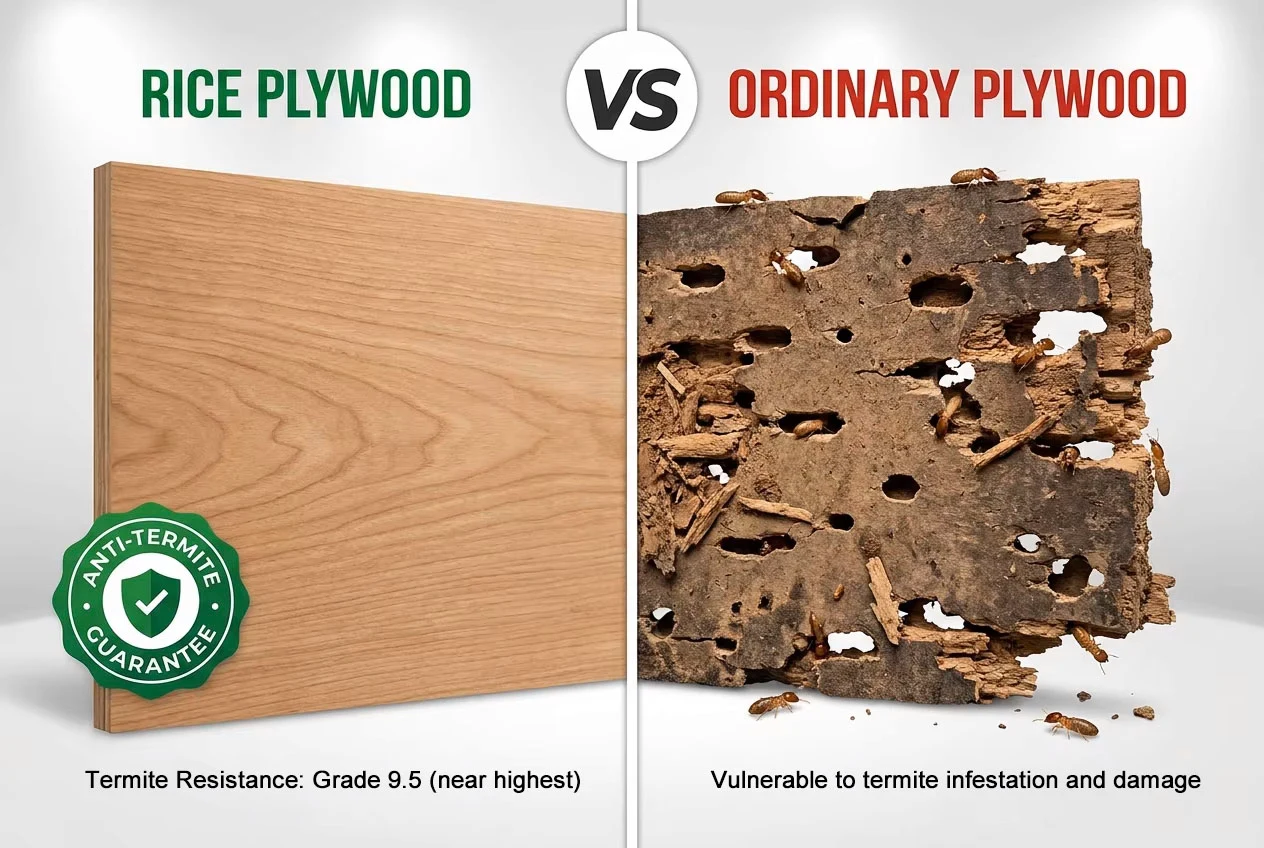
Termite-Resistant Plywood Checklist for Resort Contractors
A resort guest room might appear perfectly finished. However, hidden spots like wardrobes, vanity units, and decorative wood wall paneling remain highly prone to termite damage. Finding this issue after handover leads to the expensive removal of fitted furniture. It also requires repairs to nearby finishes. Meanwhile, interruptions to room turnover can directly hurt operating revenue. For general contractors and procurement teams working on tropical or coastal resort properties, termite-resistant plywood requires careful scrutiny at the sample-approval stage. It includes verification of reliable test evidence and on-site installation conditions, to reduce future risks. How Hidden Termite Damage Creates Costly Resort Fit-Out Problems High-Risk Areas in Guest Rooms and Built-In Furniture You should check wardrobes placed against outside walls. Also, inspect vanity units located near plumbing. Look closely at minibar cabinets and timber-lined service zones. These closed spaces can hide termite action for a long time. A neat laminate face does not show what is going on at a cut edge. It also hides issues at a screw hole or an exposed plywood core. Poolside bungalows might face constant moisture contact. At the same time, ground-level villas often have more connection points near plants and dirt. How Termites Turn Small Defects Into Project Costs Replacing a ruined cabinet side usually demands taking off custom cabinet doors. You also have to remove countertops, hinges, and nearby finishing trim. Suppose plywood from the same batch is installed across many guest rooms. In that case, a termite complaint in just one room might cause the temporary shutdown of an entire building for inspection. Contractors could then face drastically higher labor costs. They might deal with contractual claims for project delays. Disputes over supplier responsibility can also arise. Prevention begins by picking termite-resistant panels. These panels must be backed by compliant test reports early in the project. Why Ordinary Plywood May Fail in Termite-Prone Interiors Wood Fibers and Concealed Entry Routes Termites eat the cellulose found in wood. They can access hidden furniture spaces through tiny cracks in concrete. They also enter via openings around electrical conduits. Standard edge-banding strips offer only physical coverage. They cannot stop termites from attacking the inner veneers. Even a beautiful decorative surface leaves the wood fibers open to attack if the core lacks termite protection. Therefore, edge sealing needs to work together with the plywood’s own termite resistance. It should also be paired with a building-wide pest-management program. Why Marine and Melamine Plywood Need Separate Checks Is laminated marine plywood termite resistant? Not automatically. Marine-grade bonding is designed to endure specific moisture exposure. It is not, on its own, proof of insect resistance. Similarly, a melamine surface enhances looks and makes cleaning easier. However, it does not certify the inner core against termites. When you compare water and termite resistant plywood, make sure to ask for distinct results for each feature. Termite-Resistant Plywood Checklist Before Resort Procurement Verify the Test Report and Match It to the Order Do not accept a basic “termite proof plywood” claim. You must check the test method, report date, and sample description. Also, verify the thickness and rating. Match those specific details against the planned purchase. Keep the approved sample to compare it with the delivered sheets. Before you release a large order, write down the exact panel construction in the purchase specification. A similar-looking decorative finish placed on a different core should never count as an approved substitute. Project check What to confirm Test evidence Termite rating and the actual test conditions Product identity Core species, adhesive system, thickness, finish Delivery control Sample match, batch markings, packaging condition Installation Cut edges, penetrations, wall clearance, pest treatment Inspect the Core and Site Conditions Request a cross-section sample. Look closely for gaps between veneers. Check for uneven construction and damaged edges. For bathroom vanities, confirm exactly how splashes and pipe penetrations will be handled. For wardrobes set against external walls, review the building’s pest-management plan. A solid procurement checklist evaluates both the panel itself and the locations where it will be installed. How QIANGYI PLYWOOD Addresses Termite Risk Lingmei Glutinous Rice Glue and Tested Resistance Our glutinous rice glue plywood utilizes Lingmei adhesive. This glue is made with glutinous rice starch, magnesium chloride, magnesium oxide, and water. The cured adhesive creates an alkaline environment. This is a key part of our strategy for termite resistance. Instead of just trusting the glue description, contractors can review the finished board’s actual test results. For a specific choice, check out our 18mm termite-resistant eucalyptus-core plywood. Eucalyptus Core and Fully Connected Veneers Our furniture-grade plywood uses 100% high-density eucalyptus veneers. It features a fully core-connected, seamless layup. This design is meant to remove internal voids and overlapping veneer flaws. The dense core boosts screw-holding strength. It also improves flatness during secondary processing. Furthermore, it decreases internal gaps. It avoid termites could use those gaps to enter the panel and build nests. Explore our 100% eucalyptus-core glutinous rice glue plywood. What Grade 9.5 Means for Resort Project Approval Read the Termite Test Result, Not Just the Rating A test report GIZ/TR-2024-0301-0186 shows Grade 9.5 for Glutinous Rice Glue Multi-functional Plywood based on GB/T 18260-2015. The four-week laboratory test utilized 18mm plywood. Inspectors observed minor damage. This included one or two termite tunnels or traces. That serves as helpful evidence of resistance under those specific test conditions. However, it is not a guarantee that every installed panel will stay completely untouched forever. A Mauritius Customer Case and the Next Procurement Step QIANGYI PLYWOOD has been delivering 100% eucalyptus core multi-layer boards in large volumes to furniture makers in Mauritius. We also supply other Indian Ocean island markets extensively. Multiple full cabinet deliveries have already been completed. The island climate features severe salt spray, intense humidity, and strong heat. This harsh environment has proven the structural stability of our plates. They perform well during stable processing. They also hold up in moisture-proof packaging for shipping and throughout long-term service. This provides a very dependable reference for batch material selection in coastal resort projects. For direct specification discussions, please visit QIANGYI PLYWOOD at THE 2026 GUANGXI INTERNATIONAL FOREST PRODUCTS AND WOOD PRODUCTS EXHIBITION. Find us at Booth D5T-06, Nanning International Convention & Exhibition Center, from November 21 to 23, 2026. Bring your project drawings and target panel specifications. We can then discuss proper samples and relevant test evidence. FAQ Q: Is glutinous rice glue plywood suitable for humid coastal resorts? A: Yes. Our glutinous rice plywood passed the Class II waterproof test report. Therefore, it can be applied to humid/wet condition furniture. It’s marine grade plywood perfect for kitchen/ bathroom cabinet. Q: How should contractors judge plywood quality before installation? A: Evaluate the flatness and the exposed core. Check the thickness consistency and edge finishing. Also, review the matching test report. Always keep an approved sample on site. Q: Is marine plywood automatically termite resistant? A: No. Moisture-resistant bonding and termite resistance are entirely different properties. You must request evidence for both. Q: Does Grade 9.5 mean a resort will never need pest treatment? A: No. The grade only applies to the tested specimen. Termite monitoring remains important. Proper sealing and regular building maintenance still matter greatly. Are you planning a resort fit-out? Send us your room applications, needed thickness, quantities, and final destination. We can talk about a proper panel specification. We will also provide the supporting test report before you approve the order.

Fireproof Plywood Comparison for Hotel Interior Procurement
Three suppliers quote fireproof plywood for a hotel renovation. Their samples look similar, but one says “B1,” another mentions surface treatment, and the third lacks a finished-panel report. Which can the contractor submit for approval? That uncertainty matters more than a small price difference. Rejected panels can hold up cabinetry, wall finishes, and guest-room handover. Compare actual panels rather than quotation labels. Here, “fireproof plywood” means flame-retardant plywood, not noncombustible wood. When Fireproof Plywood Selection Holds Up Hotel Interior Approval Similar Plywood Samples, Different Fire-Performance Claims Consider panels for guest-room headboards, for built-in wardrobes and for reception joinery. A woodgrain finish may be satisfactory to the designer, but to the reviewer it is necessary to provide evidence of the specified reaction-to-fire performance. A claim of B1 flame retardancy needs to be supported by a description of the test method and of specimens tested. Approval requirements for a guest-room wardrobe, corridor wall finishes, and joinery off a restaurant would typically differ. The material schedule must reflect these differences and not allocate one grade to the entire space. An unfinished-panel report cannot automatically verify a laminated part of different completion status. Is this configuration even relevant? Material Rejection, Rework, and Delayed Handover Mismatches found after cutting can mean reworking of edge banding and machining. Even earlier resubmission of samples can delay purchasing. Check the fire performance data of alternative materials at the quotation stage. What may appear to be a cheaper sheet through the purchase process could end up costing more after consideration of the necessary labor, the cost of an alternative veneer, and additional approval time required by the workshop and site. This will only cause additional delay to both parties. Why Fireproof Plywood Options Cannot Be Compared by Label Alone The Role of Wood, Adhesives, and Flame-Retardant Treatments Wood veneer is a combustible material. The properties of the adhesives, treatments, and panel construction can greatly affect the behavior of the finished product. Some products are treated on the surface, whereas others include mineral components in the bonding agent. Neither of these approaches constitutes a specific classification name. The specific fire test matters because heating may involve flame spread, energy release, smoke production, or droplets. A short promotional flame demonstration cannot replace these measured outcomes, especially when people will sleep in the rooms where the materials are installed. Note that reaction-to-fire classification of panels differs from the fire resistance of complete doors or partitions. Why Thickness, Finishes, and Installation Details Matter Factors such as PET facing, melamine, coatings, and thickness variations need to be taken into account when determining test applicability. Cutting and edge finishing must be executed within approved parameters. You have dozens of wardrobe fronts to match. Make sure to clarify all these details prior to approving the sample. No one wants to spend hours of work cutting panels that were based on an 18 mm melamine-faced board when the report said it was some other specimen. It’s better to clear up any confusion before the panels are nested for cutting on the CNC. How to Compare Fireproof Plywood for Hotel Interiors Compare Three Supply Options Against the Same Project Requirements When purchasing fire-retardant plywood, compare all quotes on an ‘equal basis’ against identical specification requirements and do not just go for the lowest price offer. Panel option What to compare Potential procurement gap Standard decorative plywood Finished-panel test evidence Appearance does not confirm flame retardancy Surface-treated plywood Treatment system and tested finish Unverified substitutions during fabrication Mineral-adhesive plywood Panel construction and fire-test results Adhesive claims without matching panel evidence These are not performance rankings. For example, a surface-treated panel that has been tested may be preferred over an untested mineral-adhesive panel, or vice versa. Set Acceptance Criteria Before Comparing Prices Check the classification, applicable standard, room of use, and panel configuration. Compare the development of fire, the amount of heat produced by the fire, the amount and type of smoke produced by the fire, and the burning droplets produced by the fire, wherever applicable. After that, please check the dimensions, surface finish, machining, and sample availability of the mentioned product. In the RFQ, have each supplier list out the proposed panels by code and list out any substitutions with a separate answer. This allows purchasing, fabrication, and site to use the estimator’s work for comparison purposes. How QIANGYI PLYWOOD Addresses the Fire-Performance Requirement The Magnesium-Based Ingredients in Lingmei Glutinous Rice Glue Glutinous rice glue plywood is made with Lingmei adhesive composed of glutinous rice flour, magnesium chloride, magnesium oxide, and water. The plywood is flame-retardant due to the content of magnesium oxide. However, classification of plywood has to be done by means of testing the finished product. Our eucalyptus core plywood is offered with full eucalyptus veneers as opposed to a combi core; this helps to define repeat orders. The Cured Adhesive Structure Within the Plywood Panel Our veneers are made up in a full core connected formation, with adhesive applied layer by layer. This type of construction allows for a complete and closely fitted cabinet or decorative joinery item, unlike the partially connected core found in some constructions. The machining of long headboards benefits from core continuity. Fire testing is the only way to determine the behavior of finished panels under exposure. What the Flame-Retardant Test Report Means for Hotel Procurement Read Report WT245100363 and Its Tested Limits Report WT245100363 describes the test results for the burning behavior of tested items and compares them against the B1 (B) requirements with qualified results. The test was conducted according to GB/T 20284-2006 and GB/T 8626-2007. Test item Measured result What it tells a buyer Fire growth rate index, FIGRA 79.8 W/s Below the stated 120 W/s limit Total heat release, THR600s 3.9 MJ Below the stated 7.5 MJ limit Smoke classification s2 A defined smoke category, not smoke-free Burning droplets/particles d0 No burning droplets/particles under the specified test conditions The lateral flame spread was also in compliance with the test requirements. Note that the test results are specific to the tested specimen and may not reflect results for other thicknesses or finishes. See the complete report for details. Match the Tested Product to the Approved Sample and Purchase Order Before releasing a hotel order, follow a simple sequence: 1. Verify local project standards and locations where classification is required. 2. Verify that the information in the report corresponds with the requested thickness, eucalyptus core, and decorative face. 3. Approve the physical sample and note the exact configuration in the corresponding purchase order. 4. Check delivered panels against the approved sample prior to cutting. This helps avoid changes after fabrication. Ready to finalize your hotel interior plywood specification? Send QIANGYI PLYWOOD your panel schedule, required thickness, decorative finish, and applicable fire-performance criteria. Request matching samples, finished-panel test documentation for the proposed configuration, and a project quotation before placing your order. We look forward to meeting you at THE 2026 GUANGXI INTERNATIONAL FOREST PRODUCTS AND WOOD PRODUCTS EXHIBITION, to be held on November 21–23, 2026, at Nanning International Convention & Exhibition Center, Booth D5T-06. Please bring the relevant project drawings and panel requirements. FAQ Q: Is fireproof plywood completely noncombustible? A: No. Fireproof plywood achieves its flame-retardant effect through incomplete combustion. The wood chars only on the surface and does not produce an open flame. However, this does not mean the plywood is completely noncombustible. Q: How does fire-retardant plywood compare with standard plywood for hotel interiors? A: Compare finished panels against the required classification. Standard plywood without matching evidence cannot be assumed to meet the same requirement as a tested flame-retardant panel. Q: Is this full eucalyptus core or a combi core? A: Our glutinous rice glue plywood uses a full eucalyptus core with fully core-connected veneer assembly. Q: Can flame-retardant plywood be laminated or cut without affecting its classification? A: Yes. The original fire-performance classification remains valid after lamination or cutting. The test and classification scope covers laminated plywood, so lamination does not invalidate its flame-retardant performance. Q: Do you have test reports for the fire-retardant performance? A: Yes. The burning-behavior report includes B1-related results such as FIGRA, heat release, smoke classification, and burning droplets.
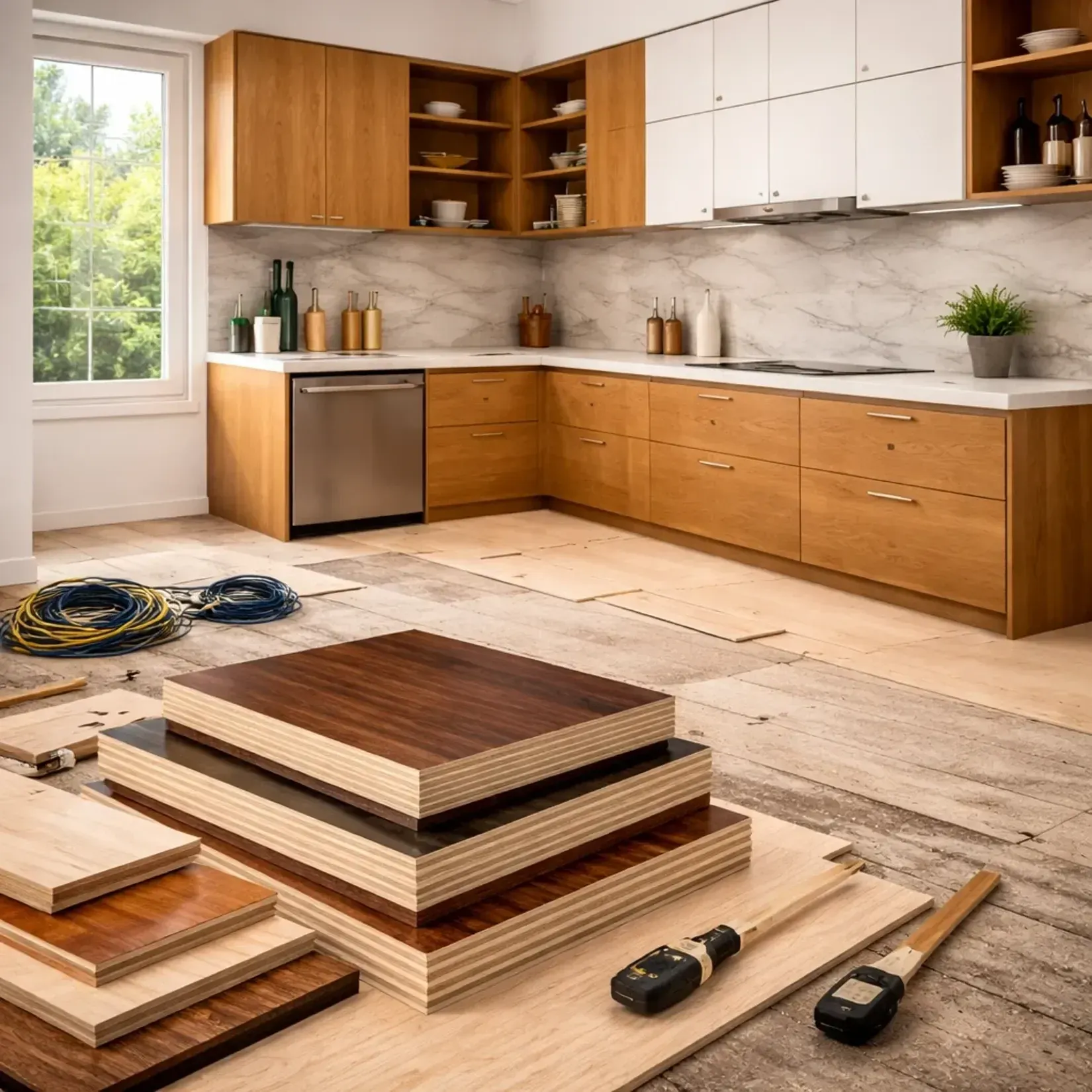
دليل مصادر الخشب الرقائقي المقاوم للرطوبة لخزائن الأحواض
قد تخرج خزانة حوض المطبخ من المصنع بمظهر مثالي، لكنها قد تُصبح مشكلة ضمان بعد بضعة أشهر فقط. فتسرب بسيط في السباكة أو التنظيف الرطب المتكرر قد يتسبب في انتفاخ الجزء السفلي، مما يؤدي إلى تقشر الحواف. عندها، يضطر الفني إلى التعامل مع عملية إصلاح معقدة. يحتاج مصنّعو خزائن المطابخ إلى حماية منتجاتهم النهائية، كما يرغبون في تجنب زيارات الصيانة المكلفة. لذلك، فإن اختيار الخشب الرقائقي المقاوم للرطوبة لا يقتصر على مجرد إيجاد لوح عليه ملصق مقاوم للماء، بل يتعلق بالأداء الحقيقي للمادة. لماذا يُسبب انتفاخ خزائن الأحواض مشاكل مكلفة للمصنعين؟ أسفل حوض المطبخ، تتعرض المنطقة لمستوى رطوبة مختلف عن رفوف المطبخ. قد تتسبب التسريبات من الأنابيب، وتكثف الماء عليها، والتنظيف بقطع قماش مبللة في انتفاخ الألواح، مما يؤدي إلى مظهر غير جذاب للخزائن وأجزاء غير متناسقة تحتاج إلى إعادة تركيب، بالإضافة إلى مطالبات ما بعد البيع. بدلاً من الاعتماد على عبارة "مقاوم للماء"، عند اختيار المواد للمشاريع، يجب اختبار كيفية تفاعل ترابط اللوح وقلبه مع الانتفاخ الناتج عن الرطوبة. غالبًا ما تبدأ مشاكل الخزائن من أماكن لا يمكن رؤيتها. أين يظهر تلف الرطوبة لأول مرة في خزائن الأحواض؟ تخيّل وحدة سكنية مستأجرة حيث يتساقط الماء من مصرف غير مُحكم على اللوح السفلي. تختبئ البرك خلف زجاجات التنظيف الطويلة، وتبقى هناك دون أن يلاحظها أحد لأسابيع عديدة. وفي منزل آخر، يتراكم العرق على أنبوب ماء بارد، وسرعان ما يتسرب هذا العرق إلى ثقب مكشوف غير مُحكم الإغلاق. عادةً ما تكون أضعف نقاط الأرضية هي الجزء السفلي، وفتحات الأنابيب، والزوايا الخلفية، والوصلات عند قاعدة الأرضية. بمجرد أن يزداد سمك جانب القطع بفعل الماء، تبدأ المشاكل بالظهور. حتى الطبقة السطحية السليمة تمامًا لن تبقى مستوية. كيف تؤدي الألواح المتورمة إلى إعادة العمل ومطالبات الضمان إصلاح قاعدة السرير المنتفخة ليس بالأمر السهل في أغلب الأحيان. قد يضطر عامل الصيانة إلى فصل الأنابيب أولاً، كما يحتاج إلى إزالة الأرفف وقص الأجزاء المجاورة. هذا يعني التخطيط لزيارة جديدة للمنزل. في المطابخ المصممة حسب الطلب، تعيق الخزائن المغلقة وأسطح العمل الثقيلة سهولة الوصول. يتحمل المصنع في النهاية تكاليف العمالة الإضافية والسفر والوقت. في المقابل، لا يرى صاحب المنزل سوى منتج رديء الصنع. قطعة خشب واحدة معيبة كفيلة بتحويل صفقة ناجحة إلى نزاع معقد حول الضمان. لماذا تنتفخ ألواح خزائن أحواض المطبخ العادية رغم حماية سطحها؟ قد تمنع الطبقة العلوية اللامعة تناثر الماء العادي. مع ذلك، فإن هذا السطح ليس سوى جزء واحد من لوح الخزانة بأكمله، إذ لا يزال بإمكان الماء التسلل إلى داخل الخشب. يدخل الماء من خلال الحواف المقطوعة وفتحات السباكة يجب على العمال إحداث ثقوب في الصفيحة الخشبية لتمرير أنبوب تصريف الحوض. هذا الجزء المكشوف حديثًا من الخشب الداخلي لا يحتوي على طبقة الطلاء الأصلية من المصنع. إذا بقيت الثقوب مكشوفة، فسيتسرب الماء مباشرةً إلى ألياف الخشب، مما يؤدي إلى انتفاخ الصفيحة وزيادة سمكها. تُسبب الحواف غير المُحكمة، وفتحات المسامير غير المُغطاة جيدًا، وتجمع الماء في الجزء السفلي من الأرضية مشاكل مماثلة. يُساعد وضع صينية بلاستيكية لتجميع الماء وسدّ جميع الفجوات بشكل كبير. مع ذلك، لا تُغني هذه الخطوات عن استخدام مادة لاصقة رديئة داخل اللوح نفسه. لماذا يستجيب الخشب الرقائقي العادي والخشب الليفي متوسط الكثافة (MDF) بشكل مختلف للرطوبة؟ يُصنع خشب MDF من غبار الخشب المضغوط بإحكام، مما يمنحه سطحًا أملسًا جدًا عند طلائه. مع ذلك، قد تنتفخ جوانبه المكشوفة بشكل ملحوظ عند تعرضها للرطوبة. أما الخشب الرقائقي، فيُصنع من طبقات من الخشب الطبيعي المُلصقة. وتعتمد استجابته للماء بشكل كبير على نوع الخشب، ونوع الغراء المستخدم، وطريقة ضغطه معًا. تُعدّ هذه الحقيقة بالغة الأهمية عند مقارنة الخشب الرقائقي البحري بالخشب الرقائقي العادي. فالاسم وحده لا يكفي لتحديد كيفية تفاعل لوح معين مع الماء. لذا، ينبغي على المشترين الاطلاع على نتائج الاختبارات الفعلية وطريقة التصنيع. ولا ينبغي لهم أبدًا افتراض أن جميع منتجات الخشب الرقائقي أو ألواح MDF ستؤدي نفس الوظيفة. كيفية اختيار الخشب الرقائقي المقاوم للرطوبة لخزائن الأحواض يجب أن يراعي تصميم قاعدة الحوض الجيد الجانب الداخلي للوحة. كما يجب أن يحمي القطع الجديدة التي تم إجراؤها أثناء عملية البناء. إعطاء الأولوية للترابط المقاوم للماء وسلامة اللب اسأل البائعين دائمًا عن نوع الغراء المستخدم في طبقات الخشب. تأكد من خلو الجزء الأوسط من أي أجزاء متداخلة أو ثقوب فارغة أو وصلات ضعيفة. فاللب الصلب الأملس يجعل عملية القطع والربط أكثر موثوقية. يكشف اختبار التقشير بالغمر ما إذا كان اللاصق يصمد في ظروف رطبة محددة. في الوقت نفسه، يتحقق اختبار انتفاخ السماكة من عامل مختلف تمامًا. بالنسبة لمشروع مطبخ ضخم، جرب استخدام طريقة فحص أساسية: *انظر عن كثب إلى الجوانب المقطوعة لاكتشاف أي فجوات فارغة في اللب. *تأكد من أن تقرير التقشير بالغمر يطابق تمامًا اللوح الذي تشتريه. *قم بإجراء اختبار سريع لإحكام إغلاق الحواف حول فتحات الأنابيب. تحقق من السماكة وحماية الحواف ومواصفات الشراء يبحث الأشخاص الذين يرغبون في الحصول على ألواح خشبية بسماكة 18 مم للخزائن عادةً. ومع ذلك، فإن الحجم الأمثل يعتمد في الواقع على شكل الخزانة ووزنها الإجمالي ونوع المفصلات المعدنية. يجب اختيار سمك الخشب الرقائقي لخزائن المطبخ بالتزامن مع اختيار نوع اللب، وترتيب الطبقات، ولون السطح، وشريط الحواف. من الضروري استخدام مادة مانعة لتسرب الماء حول فجوات الأنابيب.الحدود السفلية، وأي قطع جديدة. فكّر في المنازل القريبة من البحر أو الأرضيات التي تُمسح يوميًا. في هذه الأماكن، يجب عليك أيضًا فحص تدفق الهواء وطرق الوصول إلى التسريبات بسهولة. لا يمكن لأي ألواح سميكة أن تحل محل التصاميم الذكية للمباني. كيف تساعد ألواح الخشب الرقائقي من شركة تشيانغي في تقليل انتفاخ خزانة الحوض؟ في شركة تشيانغي للخشب الرقائقي، نتصدى لمخاطر تسرب المياه باستخدام مزيج لاصق نظيف مانع لتسرب الماء. كما نستخدم تصميمًا داخليًا كاملًا من خشب الأوكالبتوس. هذا التصميم المميز يمنع تكون الفراغات داخل الخشب. ولا نكتفي بمجرد لون جميل للسطح الخارجي للحماية. غراء الأرز اللزج يدعم الترابط المقاوم للرطوبة تعتمد ألواح الخشب الرقائقي المصنوعة من غراء الأرز الدبق لدينا على لاصق لينغمي. يتكون هذا الغراء الفريد من مزيج من نشا الأرز الدبق، وكلوريد المغنيسيوم، وأكسيد المغنيسيوم، والماء النقي. يتغلغل الغراء الرطب بعمق في المسام الدقيقة لألياف الخشب. وبمجرد أن يجف، يُشكّل شبكة ربط متينة وقوية للغاية. صُممت طبقة الخشب الرقائقي النهائية لتصل إلى مستوى انبعاثات الفورمالديهايد المنخفضة للغاية (ENF). وفي الوقت نفسه، تحافظ على رابطة قوية ومقاومة للماء. نوزع الغراء بسلاسة على كل طبقة. بعد ذلك، نضغط عليها على البارد لمدة 24 ساعة في درجة حرارة الغرفة العادية. نجففها بعناية للوصول إلى مستوى الرطوبة المناسب. وأخيرًا، نتركها ترتاح وتستقر تمامًا. تضمن هذه العملية الدقيقة ثبات جودة المادة اللاصقة في جميع مراحل الإنتاج. كما أنها تمنع التورم الناتج عن الانسكابات العرضية أو رطوبة الهواء. وتقلل بشكل كبير من احتمالية تقشر طبقات الخشب بسبب تلف الماء. يعمل لب الأوكالبتوس والبنية المتصلة بالكامل باللب على تحسين استقرار اللوحة يُعدّ اختيار الخشب المناسب للطبقة الوسطى أمرًا بالغ الأهمية. نستخدم لبًّا كاملًا من خشب الأوكالبتوس لهذا النوع الخاص من الخشب الرقائقي المصنوع من الأرز اللزج. ولا نستخدم أبدًا لبًّا من أنواع خشبية مختلطة عشوائية. تُصمم الألواح الداخلية باستخدام تقنية الربط الكامل بين اللب والقلب. وهذا يعني أن القطع الوسطى تتلاءم بإحكام مع بعضها البعض للحفاظ على صلابتها، مما يمنع وجود فجوات غير مرغوب فيها داخل اللوح. تُعدّ هذه التفاصيل بالغة الأهمية عند قيام العمال بثقب الأنابيب أو تثبيت جدران الخزانة معًا. فالنقاط الضعيفة الخفية قد تُؤدي بسهولة إلى كسر الخزانة. لذا، فإن استخدام خشب الأوكالبتوس القوي وطبقات الغراء الناعمة يضمن منتجًا متينًا وثابتًا. حتى مع هذا البناء القوي، لا يزال يتعين عليك إحكام إغلاق الحواف المقطوعة. أدلة الاختبار وقيمة الشراء لمصنعي خزائن الأحواض يحتاج المشترون الأذكياء إلى دليل حقيقي على قوة المادة اللاصقة، وقدرتها على مقاومة التورم، ودعم المصنع الجيد. نتائج اختبار مقاومة الماء من الفئة الثانية واختبار التقشير بالغمر يُظهر تقرير اختبار التقشير بالغمر الرسمي، رقم SZF-WT-25101715-03، ست قطع تم اختبارها. ويؤكد التقرير نسبة نجاح مثالية بلغت 100% وحصولها على درجة مطابقة كاملة. تتطلب قواعد اختبار الفئة الثانية نقع الخشب في ماء ساخن عند درجة حرارة 63 درجة مئوية ± 3 درجات مئوية. هذه النتيجة الممتازة تثبت قدرته على تحمل الظروف الرطبة. مع ذلك، فهو ليس مصممًا للبقاء مغمورًا بالماء إلى الأبد. نقدم أيضًا التزامًا بضمان مقاومة الماء والتورم. تغطي هذه الوثيقة مشاكل تورم الحواف وفشل المادة اللاصقة بعد التركيب. يجب على المشترين دائمًا مراجعة هذه الشروط للتأكد من مطابقتها لطلباتهم وخططهم. نتائج ساعات التدريب المكثف وقيمة التوريد في العالم الحقيقي أُجري اختبار نقع آخر لمدة 72 ساعة على ثلاث ألواح مختلفة جنبًا إلى جنب. وكانت تغيرات السماكة المسجلة كما يلي: مادة قبل النقع بعد 72 ساعة يزيد خشب رقائقي مصنوع من غراء الأرز اللزج 18.20 ملم 18.35 ملم 0.15 مم الخشب الرقائقي العادي 18.13 ملم 19.05 ملم 0.92 مم MDF 18.30 ملم 20.66 ملم 2.36 مم يُظهر التغيير الطفيف في الحجم القيمة الحقيقية للوحة المتينة. فالحواف المنتفخة تجعل إصلاح الخزائن صعبًا للغاية. بالطبع، لا يُغني هذا الاختبار الأساسي عن فحوصات الدفعات الرسمية. في سوق الفلبين الرطبة، جرّب أحد بائعي ألواح الخشب لونًا واحدًا من خشبنا الرقائقي المصنوع من غراء الأرز اللزج. أعجبهم المنتج، فاشتروا كميات أكبر، وأضافوا ألوانًا جديدة لاحقًا. تُظهر هذه القصة اهتمامًا كبيرًا من المشترين، لكنها لا تُحدد بدقة عمر خزائن الأحواض. قبل طلب كمية كبيرة، تحقق دائمًا من العينات والقواعد الدقيقة وأوراق الاختبار وسياسات الإرجاع. يمكننا مناقشة كل هذه الحقائق في معرض قوانغشي الدولي لمنتجات الغابات والأخشاب 2026. تجدوننا في الجناح D5T-06، مركز نانينغ الدولي للمؤتمرات والمعارض، من 21 إلى 23 نوفمبر 2026. التعليمات س: هل الخشب الرقائقي الخاص بكم مصنوع من لب كامل من خشب الأوكالبتوس أم من لب مركب؟ ج: يعتمد خشبنا الرقائقي المصنوع من غراء الأرز اللزج على لب كامل من خشب الكينا. ويتميز ببنية قشرة متصلة بالكامل باللب. ينبغي على صانعي الخزائن التحقق جيدًا من تفاصيل اللب عند طلب عينات أو قوائم أسعار. س: لماذا يتمدد الخشب الرقائقي حول فتحات السباكة في حوض المطبخ؟ ج: يؤدي حفر ثقوب الأنابيب إلى تقطيع ألياف الخشب، وإزالة الطبقة الخارجية الواقية. يمكن لقطرات الماء الصغيرة، أو حتى قطرات الماء البارد، أن تتسرب بسهولة إلى الجدران المكشوفة. عندما يمتص الخشب هذا الماء، تنتفخ الحواف، مما يضغط على شريط الحواف وقد يُفسد الطبقة الخارجية الجميلة. س: هل الخشب الرقائقي المصنوع من غراء الأرز اللزج مقاوم للماء أو مناسب للاستخدام البحري؟ ج: لقد اجتازت ألواحنا اختبارات مقاومة الماء من الفئة الثانية وفقًا للوائح الوطنية الصارمة. وهي مصممة للاستخدام في الغرف الداخلية شديدة الرطوبة، بما في ذلك خزائن أحواض المطابخ ووحدات الحمامات.والمنازل المطلة على الشاطئ. فهو يقاوم رذاذ الماء اليومي والتورم الناتج عن الرطوبة بشكل ممتاز. مع ذلك، يجب عدم تركه مغموراً بالماء لفترات طويلة. س: كيف يمكن لمصنعي الخزائن التحقق من أداء مقاومة التورم قبل الشراء بالجملة؟ ج: عليك معاينة عينة حقيقية. تحقق من نتائج اختبار التقشير بالغمر ومقاومة التمدد. راجع تصميم اللب الداخلي وقواعد الفحص المعتمدة. يجب أن تتطابق أوراق الاختبار تمامًا مع نوع الخشب الذي تشتريه. س: هل لا يزال الخشب الرقائقي المقاوم للرطوبة يتطلب إحكام إغلاق الحواف في خزائن الأحواض؟ ج: نعم، بالتأكيد. يجب سدّ جميع الفتحات الجديدة، وفجوات الأنابيب، والوصلات الضعيفة. كما يجب إصلاح أي تسريبات مياه فورًا. استخدام غراء قوي واتباع أساليب بناء سليمة يُكمّل بعضهما البعض بشكل مثالي، ويمنع حدوث أعطال غير متوقعة في الخزائن.
Please fill out the form below and we will get back to you as soon as possible.