
Film Yüzeyli Kontrplak
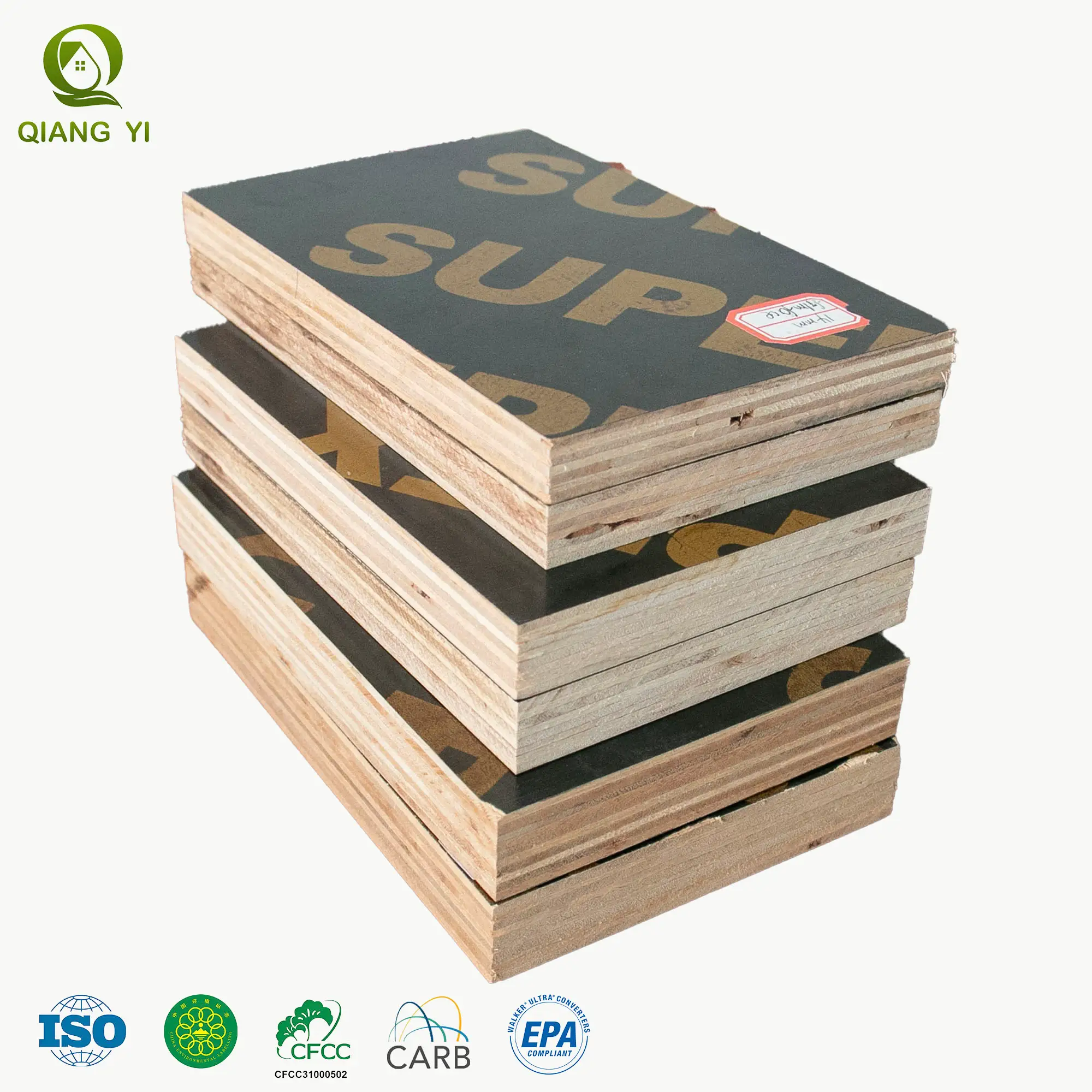
İnşaat Sektörü İçin Kaymaz Film Kaplamalı 18mm Kontrplak - Qiangyi Kontrplak
Kaplamalı kontrplak olarak da bilinen film kaplı kontrplak, modern betonarme yapılarda en yaygın kullanılan geçici kalıplama malzemelerinden biridir. Pürüzsüz, su geçirmez fenolik film yüzeyi, yüksek yapısal rijitliği, aşınma direnci ve mükemmel yeniden kullanılabilirliği ile yüzey işleme ve yapısal stabilite açısından sıradan çıplak kontrplaktan daha üstündür.
Guangxi Kırmızı Boyalı Kontrplak, Okaliptüs ve Çam Özlü, Dış Mekan İnşaat Kullanımı İçin - Qiangyi Kontrplak
Kırmızı boyalı kontrplak, yaygın olarak **kırmızı kalıp kontrplak / kırmızı levha** olarak da adlandırılır ve özellikle beton döküm kalıbı olarak kullanılan ekonomik bir inşaat kontrplakıdır. Çift taraflı olarak parlak kırmızı su geçirmez fenolik boya/reçine kaplama ile kaplanmıştır.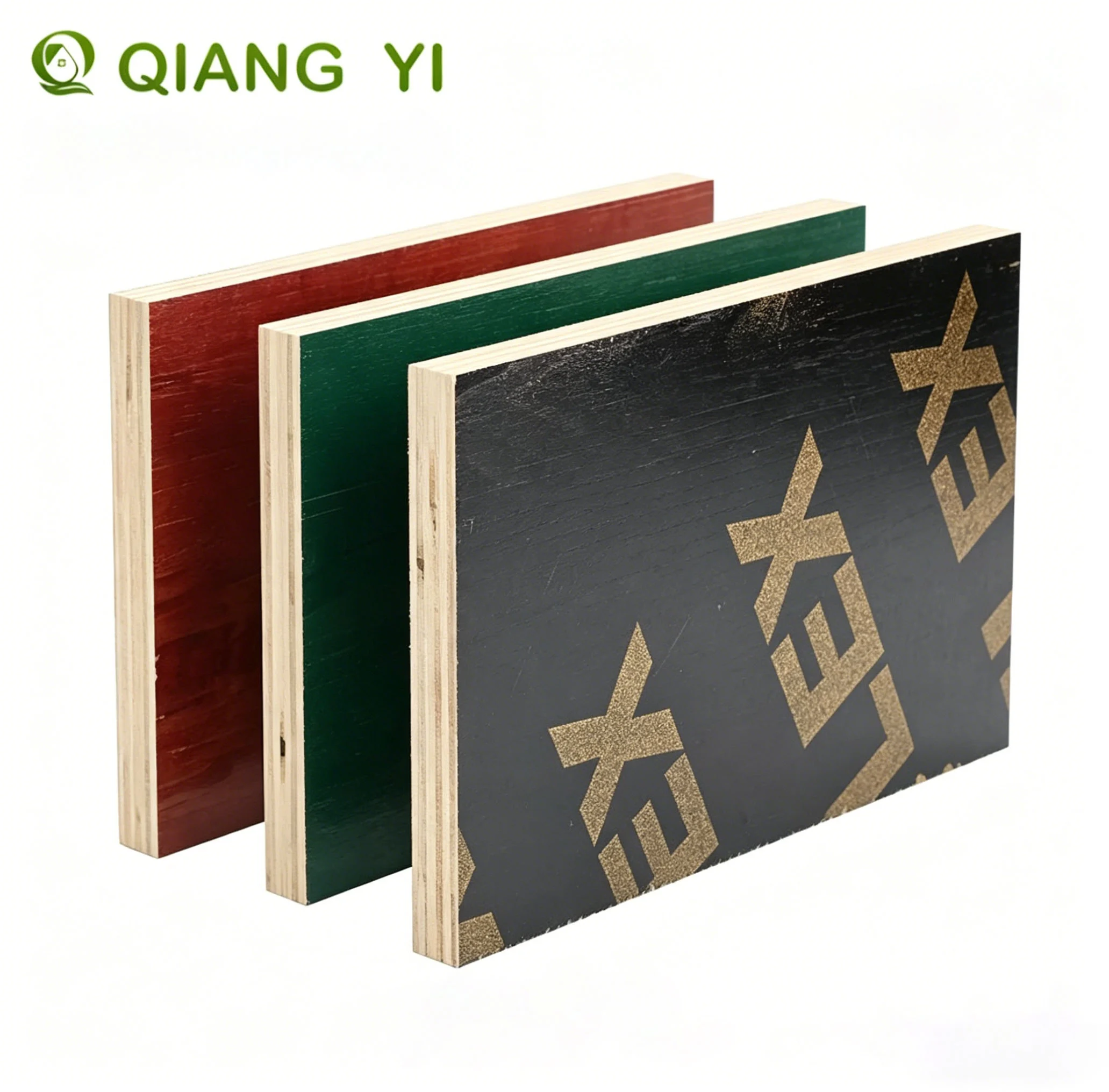
Beton Kalıpları İçin Standart Kahverengi Film Kaplı Kalıp Kontrplak
Qiangyi'nin yüksek kaliteli film kaplı kontrplaklarıyla inşaat verimliliğinizi artırın. Beton kalıplarında tekrar tekrar kullanılmak üzere tasarlanan kalıp levhalarımız, su geçirmez fenolik tutkal ve beton yüzeylerde pürüzsüz bir sonuç sağlayan dayanıklı bir film kaplamaya sahiptir. Yüksek geri dönüşüm oranıyla, modern altyapı projeleri için uygun maliyetli bir seçimdir.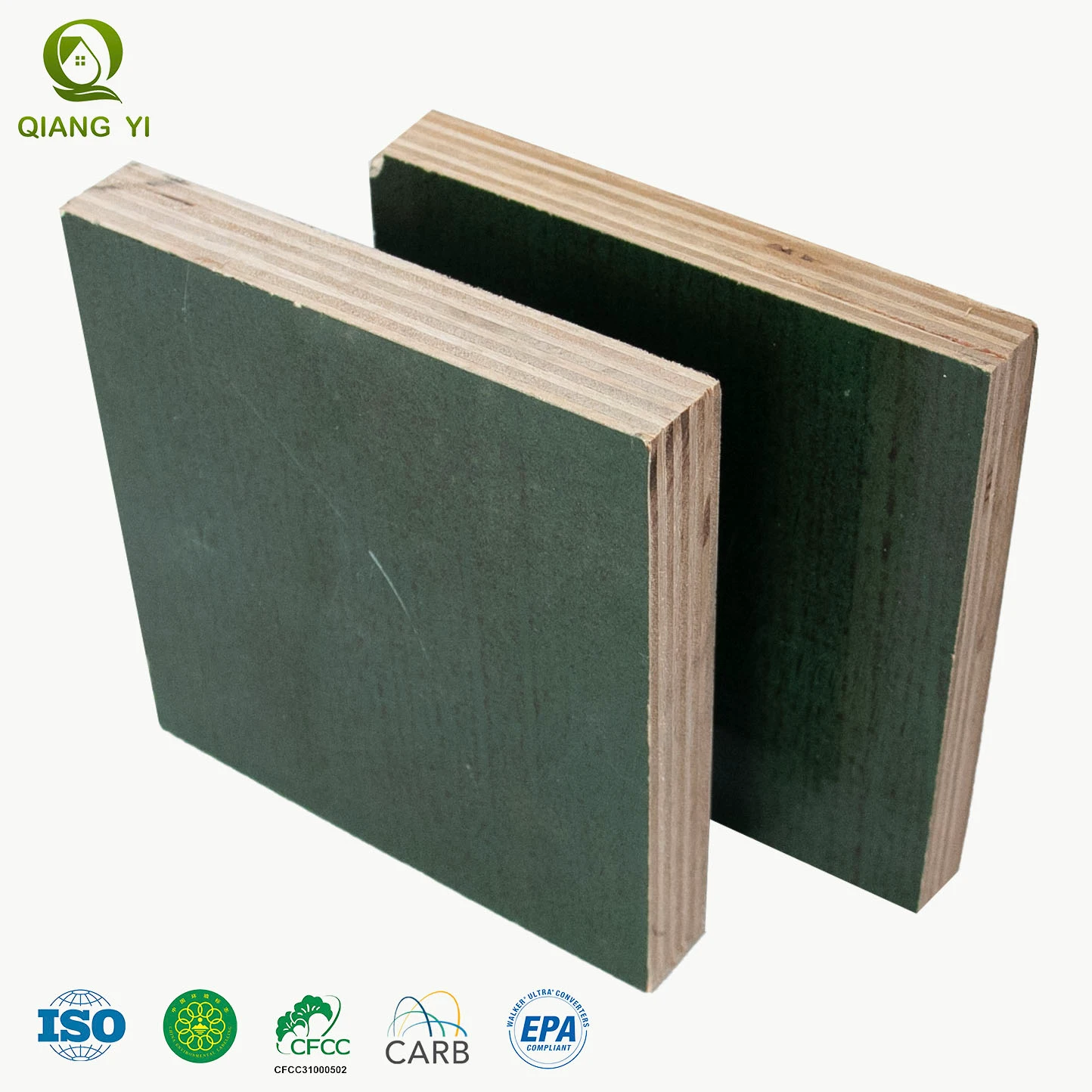
Kaymaz ve aşınmaya dayanıklı beton kalıp filmi kaplı kontrplak
Guangxi film kaplı kontrplak, çekirdek malzeme olarak yüksek kaliteli okaliptüs ağacı kullanır ve yüzeyi su geçirmez bir film kaplama işlemiyle preslenir. Kontrplak içten sıkı ve sağlam bir şekilde yapıştırılır, bu da şu özelliklere sahip olmasını sağlar: deformasyona karşı direnç, katman ayrılması olmaması, su geçirmez ve neme dayanıklı olması, bu da onu şantiyede beton dökümü inşaatı için uygun hale getirir.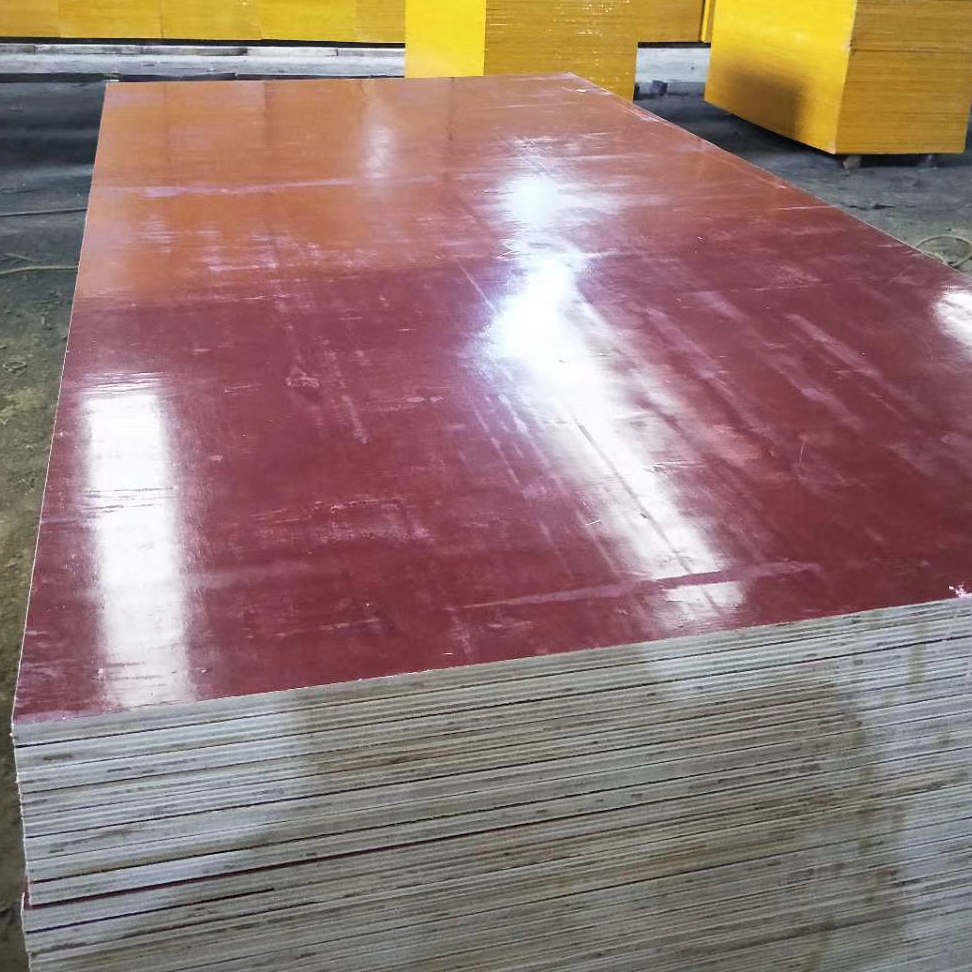
En Çok Satan Kaymaz Kırmızı Boyalı Kontrplak Dış Mekan Düşük Bütçeli Projeler - QIANGYI PLYWOOD
Kırmızı boyalı kontrplak, konut binaları, bodrum katları, müstakil evler, fabrika binaları, köprüler, okullar, hastaneler ve alışveriş merkezleri gibi kısa süreli dış mekan projelerinde yaygın olarak kullanılmaktadır. Temel Performans Ana malzeme: Tam okaliptüs özü Yapıştırma gücü: ≥0,70 MPa (yüksek kalite ≥0,80 MPa), 8 saat kaynatıldıktan sonra ayrılma yok. Eğilme dayanımı: Boyuna ≥30 MPa, Enine ≥20 MPa, deformasyona karşı dayanıklı. Nemle genleşme oranı: 24 saat suda bekletildikten sonra %6'dan az. Devir Süresi: Standart 8-12 kez Boyut: 915×1830 mm / 1220×2440 mm Kalınlık: 10 mm-25 mm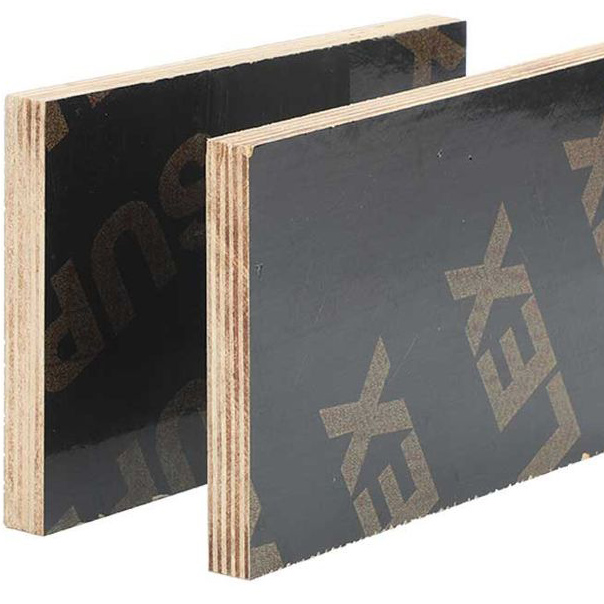
18 mm Okaliptüs Çekirdekli Beton Kalıp Kontrplak Siyah Film ve Kırmızı Boyalı Yüzey
Sağlam okaliptüs çekirdekli, dayanıklı yapı kalıp kontrplakı. Sağlam, su geçirmez ve ağır iş projeleri için yüksek tekrar kullanılabilirlik özelliğine sahip. İsteğe özel yüzey seçeneği mevcuttur.Film kaplı kontrplak

If you interested in our product, please leave you information here, we will send you more details
Get more information about the plywood
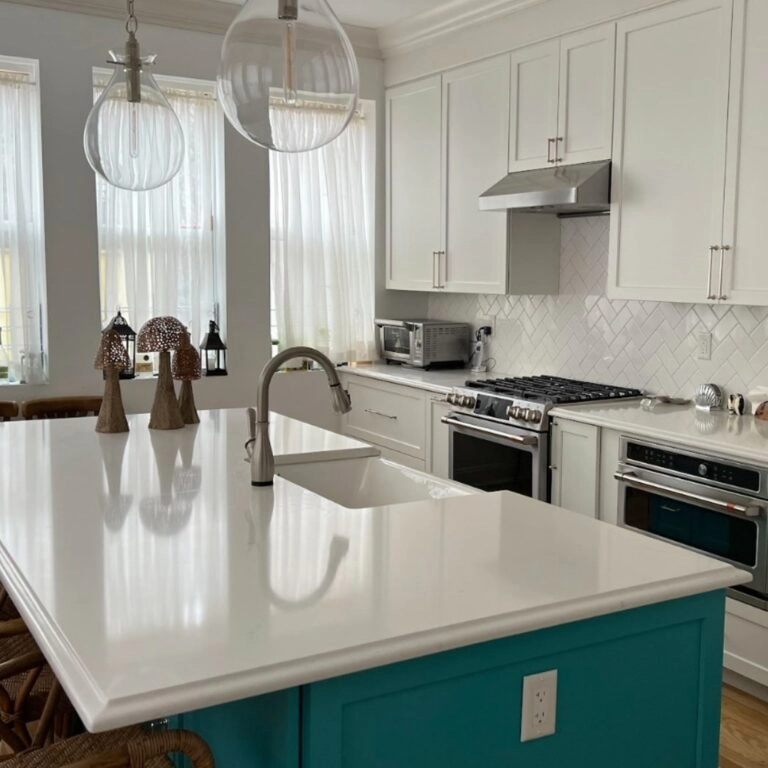
Mold-Resistant Plywood Sourcing Guide for Cabinet Manufacturing in Humid and Coastal Regions
1. Where Cabinet Manufacturers Face Mold-Related Board Problems Kitchens, bathrooms, and coastal interiors Tropical and coastal areas often have warm air and poor airflow. Wet cleaning routines, plumbing leaks, and daily condensation easily make cabinets damp. Sink units and bathroom vanities face high moisture risks. Laundry storage and base cabinets are also highly vulnerable. Wardrobes placed against poorly ventilated walls face similar threats. A panel might look perfect when it leaves the factory. However, it can still develop dark spots and musty odors after installation. Swollen edges are another common issue. Back panels and cut edges remain particularly vulnerable. These areas usually lack the strong protection found on the decorative face. The cost is higher than a stained panel Moisture damage often forces builders to replace cabinet sides and doors. This means repeating the installation process. It also requires paying for extra transport and labor. Such delays can seriously disrupt project handovers. Consequently, homeowners, developers, and distributors will likely complain. The real business risk involves heavy warranty costs and lost production time. Damaged client referrals hurt much more than just a ruined appearance. 2. Why Mold Develops in Plywood in Humid Markets Moisture reaches exposed edges and the core Wood fibers naturally absorb moisture from humid indoor air. They also take in water from direct contact. If a panel remains damp, mold will likely grow. Swelling can easily open up joints. It might also weaken the internal layer bonds. This allows trapped moisture to stay inside the wood. The overall risk depends heavily on the chosen adhesive and core quality. Moisture conditions, edge sealing, proper installation, and regular maintenance also play vital roles. Surface protection cannot compensate for weak construction Melamine facing only offers surface-level water resistance. It cannot stop moisture from entering through edge-banding gaps. Hardware mounting holes and cut surfaces on back panels are also weak points. You might compare marine board, laminated marine plywood, and ordinary plywood. Always check the waterproof classification carefully. You should also demand independent anti-mold evidence. Standard marine-board testing focuses mostly on bond strength during boiling-water exposure. These tests do not automatically require specific anti-mold or antibacterial treatments. Surface mold can still grow quickly in stagnant, highly humid rooms. Never assume that the word “marine” guarantees a mold-proof product. 3. What to Look for in Mold-Resistant Plywood Check core quality and continuity Cabinet carcasses, shelves, and doors require careful inspection. Check if the core uses a single wood species or a mixed blend. You must also see if the veneers are tightly arranged. A full eucalyptus core offers good strength and density. However, the wood species alone does not guarantee mold resistance. Always inspect the panel cross-section. Look closely for hidden gaps, empty voids, and weak bonding. Evaluate adhesive, moisture resistance, and test evidence Before buying, you should confirm these details: The specific core material and the exact construction method. Actual waterproof or moisture-resistance test results for your intended use. A separate anti-mold test report, which must include the sample description and performance grade. Consistent board thickness, overall flatness, and stable moisture content. Clear guidance for properly sealing edges, joints, and installation penetrations. The term “waterproof plywood for kitchen” does not represent a single universal grade. Class II waterproof performance often suits humid furniture applications well. However, this rating does not mean a cabinet can sit in standing water. It also cannot survive indefinite immersion. 4. How QIANGYI PLYWOOD Addresses the Risk Full eucalyptus core and fully interlocked construction Our glutinous rice glue plywood features a 100% full eucalyptus core. We do not use a cheaper poplar-eucalyptus combi core. Our factory selects premium Grade A material for production. We apply a fully interlocked core construction method. This involves a continuous cold- and hot-pressing process. As a result, the core contains no empty voids or overlapping gaps. Its cross-section remains tightly packed, much like solid wood. This solid structure creates a very flat substrate. It offers excellent resistance against edge chipping during CNC carving, grooving, and drilling. It also performs exceptionally well for PUR edge banding. Glutinous rice adhesive and controlled processing Our process uses Lingmei glutinous rice adhesive. This material is made from glutinous rice flour, magnesium chloride, magnesium oxide, and water. Once it cures, the glue builds a thick shield around the wood fibers. This step blocks the tiny channels where water normally enters. The magnesium-based parts set up an alkaline setting. Also, the deep soaking of the glue manages dampness very well. These actions work together to stop mold from growing easily. The standard moisture-content specification for this item sits at 8%–14%. Please check and confirm the exact needs for your specific order. Please see our AA wood-core waterproof melamine-faced plywood for furniture to explore a specific product option and view detailed finish choices. 5. Evidence and Purchasing Value for Humid-Market Projects What the test report says A testing document examines an 18 mm glutinous rice glue plywood sample. QIANGYI PLYWOOD provided this specific material. The evaluation followed the JC/T 2039-2010 standard. According to the results, the board achieved an anti-mildew rating of Grade 0. Furthermore, it showed an antibacterial rate of more than 99%. The document clearly explains that Grade 0 means there is no mildew present. For the antibacterial part of the test, the researchers used Escherichia coli and Staphylococcus aureus. At the same time, the anti-mildew assessment involved several types of fungi. This group specifically included Aspergillus niger. You can ask us to verify the test report for your specific product choice. Kitchen and bathroom projects require extra attention. Therefore, you should also review the Class II waterproof test results. Pay close attention to the reported 24-hour water absorption data. The official thickness-swelling rate sits at no more than 2.4%. A Philippine distributor’s market experience A Philippine distributor first contacted our team online in early 2026. This client later visited our official booth at the Canton Fair in March. After reviewing our physical samples, the buyer placed an initial order in April. That first shipment featured a single color design. Following the successful delivery, the ENF grade and smooth surface finish really stood out. The impressive waterproof and termite-resistance features also quickly attracted local cabinet and furniture customers. You might need to compare marine plywood vs. ordinary plywood for a project. Always match the core type and adhesive quality to your needs. You must also align the moisture resistance and anti-mold evidence with the finished furniture’s actual environment. Make sure to confirm the exact application and board thickness. Check the face design, edge treatment plans, and laboratory reports carefully before ordering. Meet QIANGYI PLYWOOD at THE 2026 GUANGXI INTERNATIONAL FOREST PRODUCTS AND WOOD PRODUCTS EXHIBITION. You will find us at Booth D5T-06. The event takes place at the Nanning International Convention & Exhibition Center from November 21–23, 2026. 6. FAQ Q: Will QIANGYI PLYWOOD Glutinous Rice Glue Functional Laminate Plywood get moldy? A: The panel successfully prevents mold growth under normal indoor conditions. This includes the high humidity and slight condensation typically found inside kitchens and bathrooms. This protection comes from its Grade 0 anti-mildew performance and the dense, mildly alkaline adhesive layer. However, extreme conditions can still damage any wood-based panel. Severe, persistent plumbing leaks pose a massive threat. Prolonged immersion in standing water without proper airflow will also cause harm. You must ensure proper ventilation and thorough edge sealing to guarantee long-term durability. Q: Is it suitable for the humid environment of the South? A: Yes, it works very well. The board features a reliable Class II waterproof performance. It also boasts a reported 24-hour water absorption and thickness-swelling rate of no more than 2.4%. The material perfectly suits properly designed kitchen and bathroom cabinets. However, it cannot handle permanent water immersion. Q: Is marine plywood automatically mold-resistant? A: No, that is not necessarily true. Marine plywood standards, such as BS 1088, primarily evaluate structural bonding strength. They test this under highly demanding wet conditions. This often includes boiling-water exposure, which experts commonly discuss regarding WBP performance. These tests focus heavily on preventing layer delamination. However, this process does not establish any chemical or physical resistance against indoor fungi. Aspergillus niger is a prime example of such a threat. For modern cabinet applications, you should always request a dedicated anti-mildew report. Make sure it covers indoor fungi testing, such as an evaluation based strictly on JC/T 2039-2010. Q: Does a melamine face prevent mold inside plywood? A: No surface finish can completely protect every exposed edge or open joint. You must specify a highly suitable core and a reliable adhesive. Furthermore, installers must properly seal all cut edges, screw holes, and installation penetrations. Q: What should cabinet manufacturers confirm before buying mold-resistant plywood? A: Buyers must confirm the exact core species and verify the fully interlocked construction. You should also check the thickness consistency and moisture tolerances. Always review the waterproof classification, the official anti-mold report, and the surface finish quality. Finally, discuss the factory’s batch inspection arrangements. You need to request a physical sample. Then, check that all technical documents perfectly match the quoted product. You can easily reduce your sourcing risk today. Simply send us details about your target market and specific cabinet application. Please include your required size, board thickness, core choice, and surface preferences. Do not forget to mention your estimated order quantity. Our team can help match you with the perfect panel. We will provide all relevant test documents and quickly arrange physical samples. You can also meet us directly at Booth D5T-06 in Nanning from November 21–23, 2026.
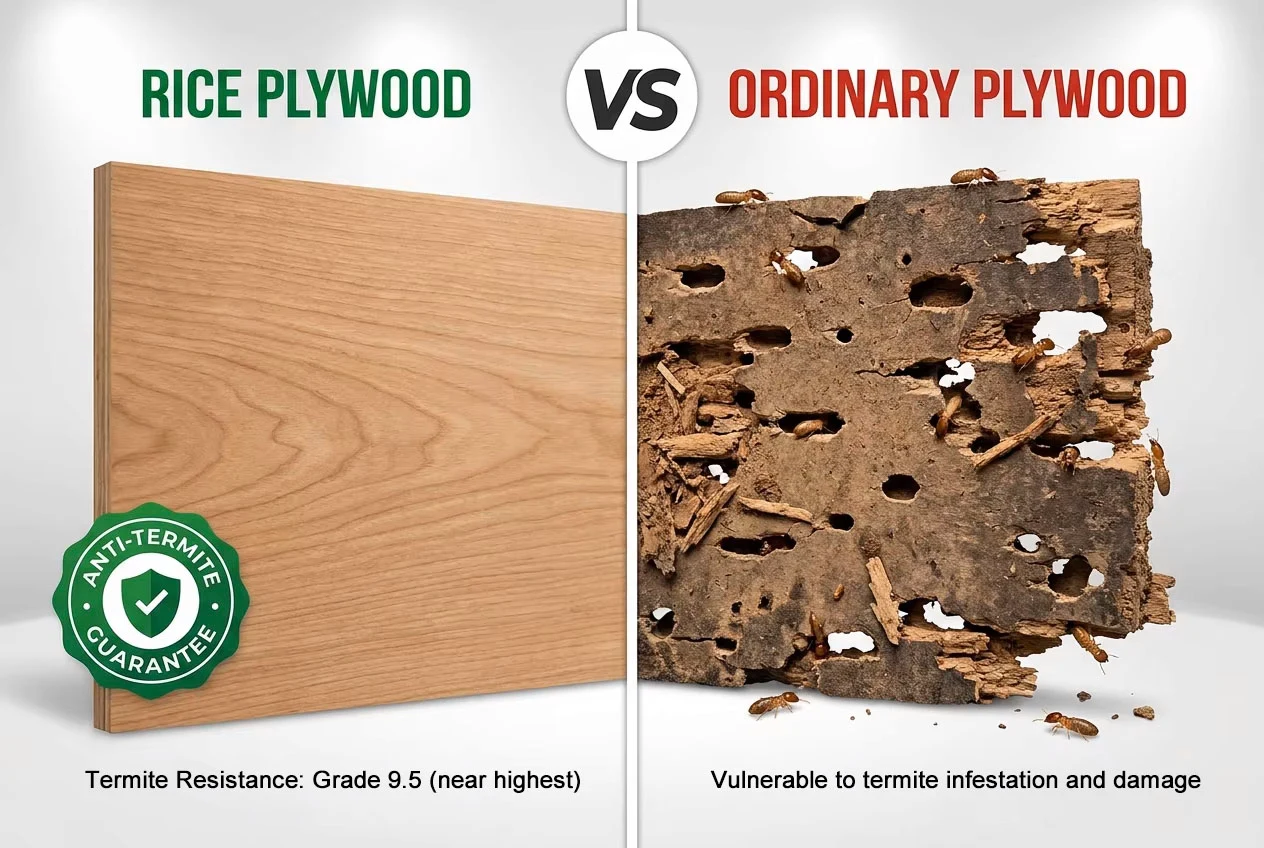
Termite-Resistant Plywood Checklist for Resort Contractors
A resort guest room might appear perfectly finished. However, hidden spots like wardrobes, vanity units, and decorative wood wall paneling remain highly prone to termite damage. Finding this issue after handover leads to the expensive removal of fitted furniture. It also requires repairs to nearby finishes. Meanwhile, interruptions to room turnover can directly hurt operating revenue. For general contractors and procurement teams working on tropical or coastal resort properties, termite-resistant plywood requires careful scrutiny at the sample-approval stage. It includes verification of reliable test evidence and on-site installation conditions, to reduce future risks. How Hidden Termite Damage Creates Costly Resort Fit-Out Problems High-Risk Areas in Guest Rooms and Built-In Furniture You should check wardrobes placed against outside walls. Also, inspect vanity units located near plumbing. Look closely at minibar cabinets and timber-lined service zones. These closed spaces can hide termite action for a long time. A neat laminate face does not show what is going on at a cut edge. It also hides issues at a screw hole or an exposed plywood core. Poolside bungalows might face constant moisture contact. At the same time, ground-level villas often have more connection points near plants and dirt. How Termites Turn Small Defects Into Project Costs Replacing a ruined cabinet side usually demands taking off custom cabinet doors. You also have to remove countertops, hinges, and nearby finishing trim. Suppose plywood from the same batch is installed across many guest rooms. In that case, a termite complaint in just one room might cause the temporary shutdown of an entire building for inspection. Contractors could then face drastically higher labor costs. They might deal with contractual claims for project delays. Disputes over supplier responsibility can also arise. Prevention begins by picking termite-resistant panels. These panels must be backed by compliant test reports early in the project. Why Ordinary Plywood May Fail in Termite-Prone Interiors Wood Fibers and Concealed Entry Routes Termites eat the cellulose found in wood. They can access hidden furniture spaces through tiny cracks in concrete. They also enter via openings around electrical conduits. Standard edge-banding strips offer only physical coverage. They cannot stop termites from attacking the inner veneers. Even a beautiful decorative surface leaves the wood fibers open to attack if the core lacks termite protection. Therefore, edge sealing needs to work together with the plywood’s own termite resistance. It should also be paired with a building-wide pest-management program. Why Marine and Melamine Plywood Need Separate Checks Is laminated marine plywood termite resistant? Not automatically. Marine-grade bonding is designed to endure specific moisture exposure. It is not, on its own, proof of insect resistance. Similarly, a melamine surface enhances looks and makes cleaning easier. However, it does not certify the inner core against termites. When you compare water and termite resistant plywood, make sure to ask for distinct results for each feature. Termite-Resistant Plywood Checklist Before Resort Procurement Verify the Test Report and Match It to the Order Do not accept a basic “termite proof plywood” claim. You must check the test method, report date, and sample description. Also, verify the thickness and rating. Match those specific details against the planned purchase. Keep the approved sample to compare it with the delivered sheets. Before you release a large order, write down the exact panel construction in the purchase specification. A similar-looking decorative finish placed on a different core should never count as an approved substitute. Project check What to confirm Test evidence Termite rating and the actual test conditions Product identity Core species, adhesive system, thickness, finish Delivery control Sample match, batch markings, packaging condition Installation Cut edges, penetrations, wall clearance, pest treatment Inspect the Core and Site Conditions Request a cross-section sample. Look closely for gaps between veneers. Check for uneven construction and damaged edges. For bathroom vanities, confirm exactly how splashes and pipe penetrations will be handled. For wardrobes set against external walls, review the building’s pest-management plan. A solid procurement checklist evaluates both the panel itself and the locations where it will be installed. How QIANGYI PLYWOOD Addresses Termite Risk Lingmei Glutinous Rice Glue and Tested Resistance Our glutinous rice glue plywood utilizes Lingmei adhesive. This glue is made with glutinous rice starch, magnesium chloride, magnesium oxide, and water. The cured adhesive creates an alkaline environment. This is a key part of our strategy for termite resistance. Instead of just trusting the glue description, contractors can review the finished board’s actual test results. For a specific choice, check out our 18mm termite-resistant eucalyptus-core plywood. Eucalyptus Core and Fully Connected Veneers Our furniture-grade plywood uses 100% high-density eucalyptus veneers. It features a fully core-connected, seamless layup. This design is meant to remove internal voids and overlapping veneer flaws. The dense core boosts screw-holding strength. It also improves flatness during secondary processing. Furthermore, it decreases internal gaps. It avoid termites could use those gaps to enter the panel and build nests. Explore our 100% eucalyptus-core glutinous rice glue plywood. What Grade 9.5 Means for Resort Project Approval Read the Termite Test Result, Not Just the Rating A test report GIZ/TR-2024-0301-0186 shows Grade 9.5 for Glutinous Rice Glue Multi-functional Plywood based on GB/T 18260-2015. The four-week laboratory test utilized 18mm plywood. Inspectors observed minor damage. This included one or two termite tunnels or traces. That serves as helpful evidence of resistance under those specific test conditions. However, it is not a guarantee that every installed panel will stay completely untouched forever. A Mauritius Customer Case and the Next Procurement Step QIANGYI PLYWOOD has been delivering 100% eucalyptus core multi-layer boards in large volumes to furniture makers in Mauritius. We also supply other Indian Ocean island markets extensively. Multiple full cabinet deliveries have already been completed. The island climate features severe salt spray, intense humidity, and strong heat. This harsh environment has proven the structural stability of our plates. They perform well during stable processing. They also hold up in moisture-proof packaging for shipping and throughout long-term service. This provides a very dependable reference for batch material selection in coastal resort projects. For direct specification discussions, please visit QIANGYI PLYWOOD at THE 2026 GUANGXI INTERNATIONAL FOREST PRODUCTS AND WOOD PRODUCTS EXHIBITION. Find us at Booth D5T-06, Nanning International Convention & Exhibition Center, from November 21 to 23, 2026. Bring your project drawings and target panel specifications. We can then discuss proper samples and relevant test evidence. FAQ Q: Is glutinous rice glue plywood suitable for humid coastal resorts? A: Yes. Our glutinous rice plywood passed the Class II waterproof test report. Therefore, it can be applied to humid/wet condition furniture. It’s marine grade plywood perfect for kitchen/ bathroom cabinet. Q: How should contractors judge plywood quality before installation? A: Evaluate the flatness and the exposed core. Check the thickness consistency and edge finishing. Also, review the matching test report. Always keep an approved sample on site. Q: Is marine plywood automatically termite resistant? A: No. Moisture-resistant bonding and termite resistance are entirely different properties. You must request evidence for both. Q: Does Grade 9.5 mean a resort will never need pest treatment? A: No. The grade only applies to the tested specimen. Termite monitoring remains important. Proper sealing and regular building maintenance still matter greatly. Are you planning a resort fit-out? Send us your room applications, needed thickness, quantities, and final destination. We can talk about a proper panel specification. We will also provide the supporting test report before you approve the order.
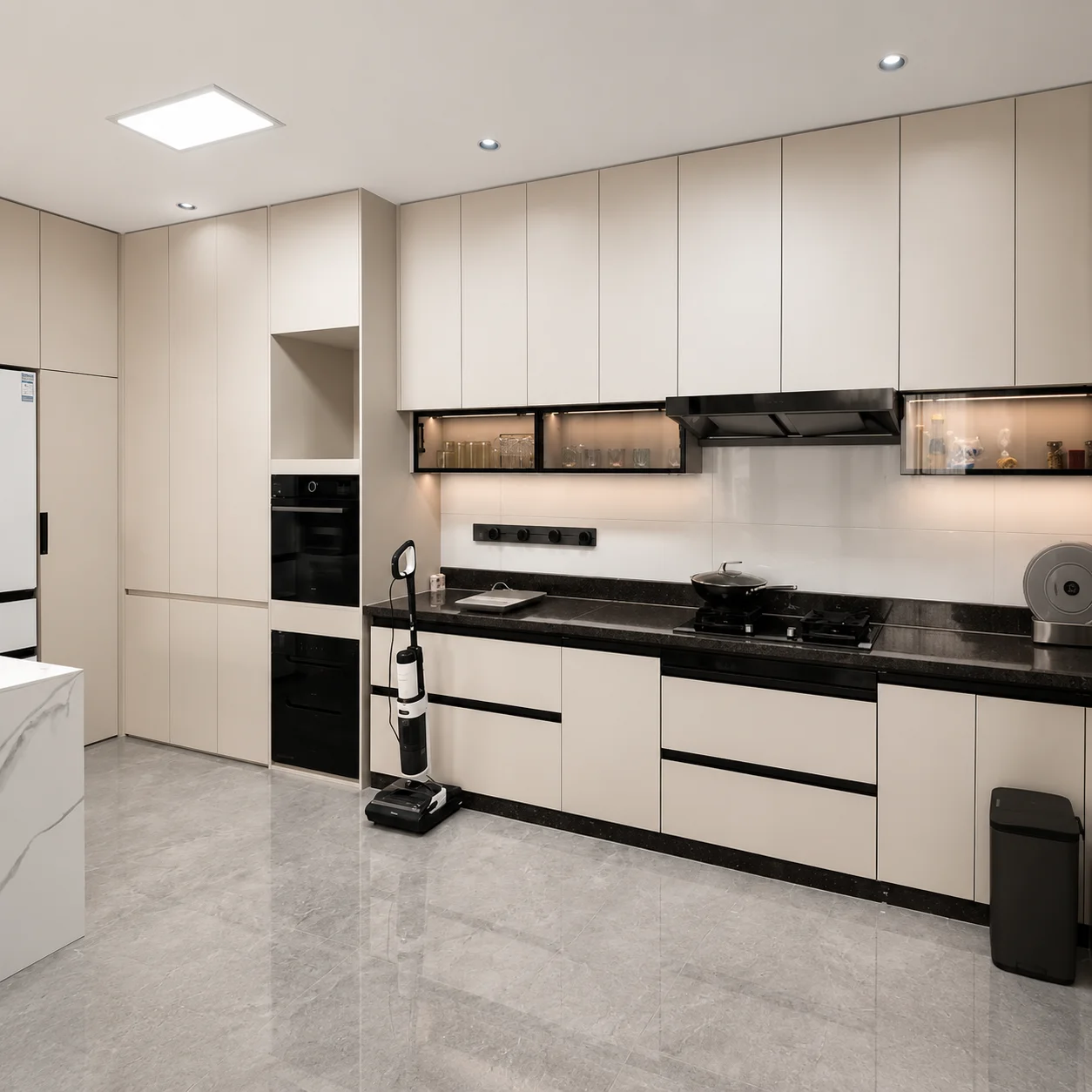
Fireproof Plywood Comparison for Hotel Interior Procurement
Three suppliers quote fireproof plywood for a hotel renovation. Their samples look similar, but one says “B1,” another mentions surface treatment, and the third lacks a finished-panel report. Which can the contractor submit for approval? That uncertainty matters more than a small price difference. Rejected panels can hold up cabinetry, wall finishes, and guest-room handover. Compare actual panels rather than quotation labels. Here, “fireproof plywood” means flame-retardant plywood, not noncombustible wood. When Fireproof Plywood Selection Holds Up Hotel Interior Approval Similar Plywood Samples, Different Fire-Performance Claims Consider panels for guest-room headboards, for built-in wardrobes and for reception joinery. A woodgrain finish may be satisfactory to the designer, but to the reviewer it is necessary to provide evidence of the specified reaction-to-fire performance. A claim of B1 flame retardancy needs to be supported by a description of the test method and of specimens tested. Approval requirements for a guest-room wardrobe, corridor wall finishes, and joinery off a restaurant would typically differ. The material schedule must reflect these differences and not allocate one grade to the entire space. An unfinished-panel report cannot automatically verify a laminated part of different completion status. Is this configuration even relevant? Material Rejection, Rework, and Delayed Handover Mismatches found after cutting can mean reworking of edge banding and machining. Even earlier resubmission of samples can delay purchasing. Check the fire performance data of alternative materials at the quotation stage. What may appear to be a cheaper sheet through the purchase process could end up costing more after consideration of the necessary labor, the cost of an alternative veneer, and additional approval time required by the workshop and site. This will only cause additional delay to both parties. Why Fireproof Plywood Options Cannot Be Compared by Label Alone The Role of Wood, Adhesives, and Flame-Retardant Treatments Wood veneer is a combustible material. The properties of the adhesives, treatments, and panel construction can greatly affect the behavior of the finished product. Some products are treated on the surface, whereas others include mineral components in the bonding agent. Neither of these approaches constitutes a specific classification name. The specific fire test matters because heating may involve flame spread, energy release, smoke production, or droplets. A short promotional flame demonstration cannot replace these measured outcomes, especially when people will sleep in the rooms where the materials are installed. Note that reaction-to-fire classification of panels differs from the fire resistance of complete doors or partitions. Why Thickness, Finishes, and Installation Details Matter Factors such as PET facing, melamine, coatings, and thickness variations need to be taken into account when determining test applicability. Cutting and edge finishing must be executed within approved parameters. You have dozens of wardrobe fronts to match. Make sure to clarify all these details prior to approving the sample. No one wants to spend hours of work cutting panels that were based on an 18 mm melamine-faced board when the report said it was some other specimen. It’s better to clear up any confusion before the panels are nested for cutting on the CNC. How to Compare Fireproof Plywood for Hotel Interiors Compare Three Supply Options Against the Same Project Requirements When purchasing fire-retardant plywood, compare all quotes on an ‘equal basis’ against identical specification requirements and do not just go for the lowest price offer. Panel option What to compare Potential procurement gap Standard decorative plywood Finished-panel test evidence Appearance does not confirm flame retardancy Surface-treated plywood Treatment system and tested finish Unverified substitutions during fabrication Mineral-adhesive plywood Panel construction and fire-test results Adhesive claims without matching panel evidence These are not performance rankings. For example, a surface-treated panel that has been tested may be preferred over an untested mineral-adhesive panel, or vice versa. Set Acceptance Criteria Before Comparing Prices Check the classification, applicable standard, room of use, and panel configuration. Compare the development of fire, the amount of heat produced by the fire, the amount and type of smoke produced by the fire, and the burning droplets produced by the fire, wherever applicable. After that, please check the dimensions, surface finish, machining, and sample availability of the mentioned product. In the RFQ, have each supplier list out the proposed panels by code and list out any substitutions with a separate answer. This allows purchasing, fabrication, and site to use the estimator’s work for comparison purposes. How QIANGYI PLYWOOD Addresses the Fire-Performance Requirement The Magnesium-Based Ingredients in Lingmei Glutinous Rice Glue Glutinous rice glue plywood is made with Lingmei adhesive composed of glutinous rice flour, magnesium chloride, magnesium oxide, and water. The plywood is flame-retardant due to the content of magnesium oxide. However, classification of plywood has to be done by means of testing the finished product. Our eucalyptus core plywood is offered with full eucalyptus veneers as opposed to a combi core; this helps to define repeat orders. The Cured Adhesive Structure Within the Plywood Panel Our veneers are made up in a full core connected formation, with adhesive applied layer by layer. This type of construction allows for a complete and closely fitted cabinet or decorative joinery item, unlike the partially connected core found in some constructions. The machining of long headboards benefits from core continuity. Fire testing is the only way to determine the behavior of finished panels under exposure. What the Flame-Retardant Test Report Means for Hotel Procurement Read Report WT245100363 and Its Tested Limits Report WT245100363 describes the test results for the burning behavior of tested items and compares them against the B1 (B) requirements with qualified results. The test was conducted according to GB/T 20284-2006 and GB/T 8626-2007. Test item Measured result What it tells a buyer Fire growth rate index, FIGRA 79.8 W/s Below the stated 120 W/s limit Total heat release, THR600s 3.9 MJ Below the stated 7.5 MJ limit Smoke classification s2 A defined smoke category, not smoke-free Burning droplets/particles d0 No burning droplets/particles under the specified test conditions The lateral flame spread was also in compliance with the test requirements. Note that the test results are specific to the tested specimen and may not reflect results for other thicknesses or finishes. See the complete report for details. Match the Tested Product to the Approved Sample and Purchase Order Before releasing a hotel order, follow a simple sequence: 1. Verify local project standards and locations where classification is required. 2. Verify that the information in the report corresponds with the requested thickness, eucalyptus core, and decorative face. 3. Approve the physical sample and note the exact configuration in the corresponding purchase order. 4. Check delivered panels against the approved sample prior to cutting. This helps avoid changes after fabrication. Ready to finalize your hotel interior plywood specification? Send QIANGYI PLYWOOD your panel schedule, required thickness, decorative finish, and applicable fire-performance criteria. Request matching samples, finished-panel test documentation for the proposed configuration, and a project quotation before placing your order. We look forward to meeting you at THE 2026 GUANGXI INTERNATIONAL FOREST PRODUCTS AND WOOD PRODUCTS EXHIBITION, to be held on November 21–23, 2026, at Nanning International Convention & Exhibition Center, Booth D5T-06. Please bring the relevant project drawings and panel requirements. FAQ Q: Is fireproof plywood completely noncombustible? A: No. Fireproof plywood achieves its flame-retardant effect through incomplete combustion. The wood chars only on the surface and does not produce an open flame. However, this does not mean the plywood is completely noncombustible. Q: How does fire-retardant plywood compare with standard plywood for hotel interiors? A: Compare finished panels against the required classification. Standard plywood without matching evidence cannot be assumed to meet the same requirement as a tested flame-retardant panel. Q: Is this full eucalyptus core or a combi core? A: Our glutinous rice glue plywood uses a full eucalyptus core with fully core-connected veneer assembly. Q: Can flame-retardant plywood be laminated or cut without affecting its classification? A: Yes. The original fire-performance classification remains valid after lamination or cutting. The test and classification scope covers laminated plywood, so lamination does not invalidate its flame-retardant performance. Q: Do you have test reports for the fire-retardant performance? A: Yes. The burning-behavior report includes B1-related results such as FIGRA, heat release, smoke classification, and burning droplets.
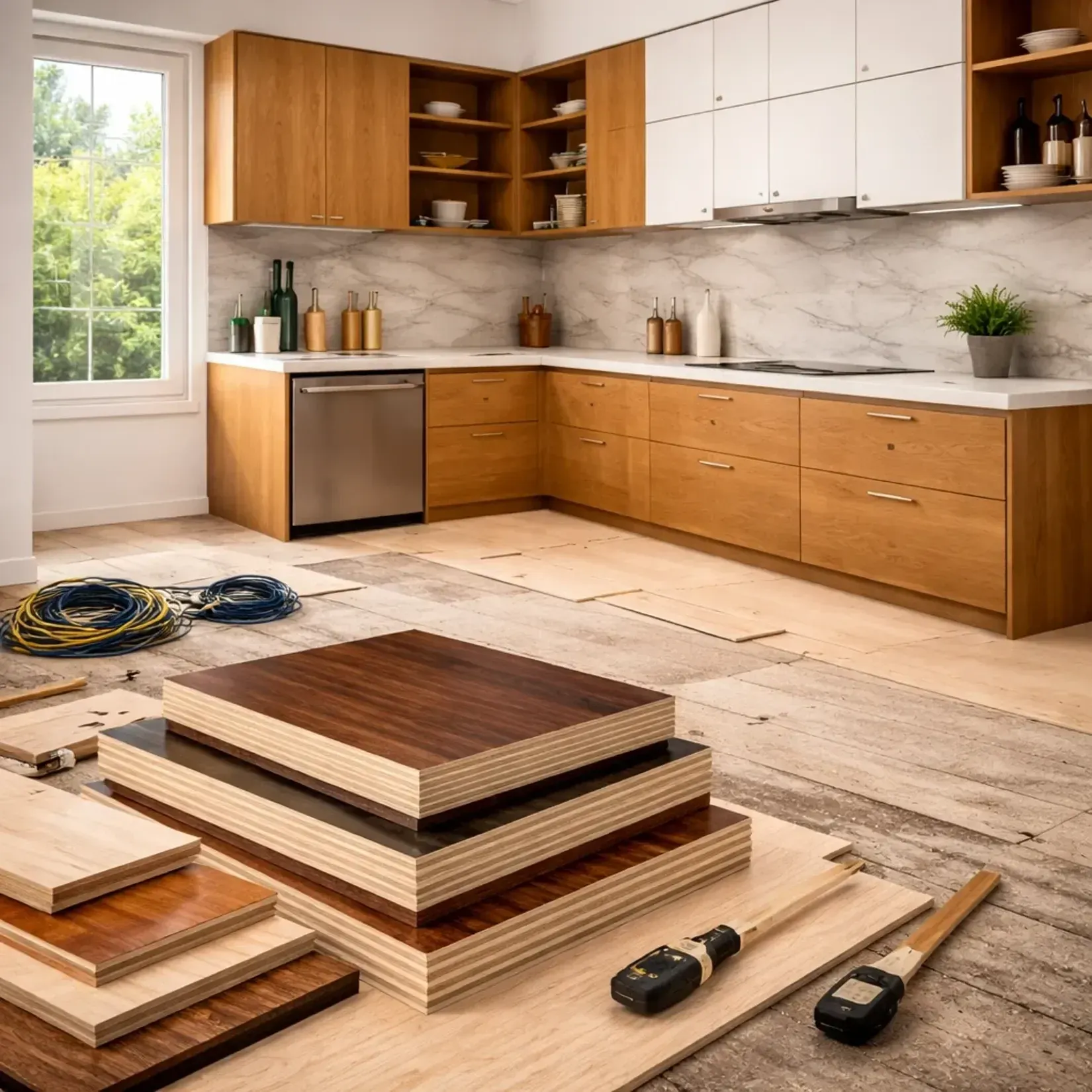
Lavabo Dolapları İçin Neme Dayanıklı Kontrplak Tedarik Rehberi
Bir mutfak dolabı fabrikadan kusursuz görünerek çıkabilir. Ancak, birkaç ay sonra garanti sorunu haline gelebilir. Küçük bir su kaçağı veya sık sık yapılan ıslak temizlik, alt kısmın şişmesine neden olabilir. Bu da kenar bantlarının soyulmasına yol açar. Ardından, montajcı zorlu bir onarım işiyle uğraşmak zorunda kalır. Mutfak dolabı üreticileri, bitmiş ürünlerini korumak zorundadır. Ayrıca pahalı tekrar ziyaretlerinden de kaçınmak isterler. Bu nedenle, neme dayanıklı kontrplak seçmek sadece su geçirmez etiketli bir levha bulmakla ilgili değildir. Gerçek malzeme performansıyla ilgilidir. Lavabo dolabının şişmesi üreticiler için neden maliyetli sorunlar yaratıyor? Lavabonun altı, mutfak rafına göre farklı bir nem seviyesine maruz kalır. Borulardan sızan su, borularda oluşan yoğuşma ve ıslak bezlerle temizlik, panellerin şişmesine neden olarak, çirkin görünümlü dolaplara ve yeniden işlenmesi gereken, kötü oturan parçalara ve satış sonrası şikayetlere yol açabilir. Projeleriniz için malzeme seçerken, "su geçirmez" etiketine güvenmek yerine, bir panelin yapıştırma ve çekirdeğinin nemle ilgili şişmeye nasıl tepki vereceğini test etmelisiniz. Dolaplarla ilgili sorunlar genellikle göremediğiniz yerlerden başlar. Lavabo dolaplarında nem hasarının ilk ortaya çıktığı yer Kiralık bir dairede, gevşek bir giderden damlayan suyun alt tahtaya aktığını hayal edin. Su birikintileri uzun temizlik şişelerinin arkasında gizlenir ve haftalarca fark edilmeden orada kalır. Başka bir evde ise, soğuk su borusunda ter birikir. Bu nem kısa süre sonra çıplak, sızdırmazlığı sağlanmamış bir delikten aşağıya sızar. En zayıf noktalar genellikle alt kat, boru kesim yerleri, arka köşeler ve zemin tabanının yanındaki derzlerdir. Kesik bir yüzey su nedeniyle kalınlaştığında sorunlar ortaya çıkar. Mükemmel derecede sağlam bir yüzey tabakası bile artık düz durmaz. Şişmiş Panellerin Yeniden İşleme ve Garanti Taleplerine Yol Açması Şişmiş bir alt tahtayı tamir etmek nadiren kolay bir işlemdir. Tamirci önce boruları sökmek zorunda kalabilir. Ayrıca rafları çıkarması ve yakındaki parçaları kesmesi gerekir. Bu da eve tamamen yeni bir ziyaret planlamak anlamına gelir. Özel tasarım mutfaklarda, kapalı dolaplar ve ağır tezgahlar kolay erişimi engeller. Fabrika, ekstra işçilik, seyahat ve zaman masraflarını karşılamak zorunda kalır. Bu sırada ev sahibi sadece kötü yapılmış bir ürün görür. Tek bir kötü ahşap parçası bile iyi bir satışı karmaşık bir garanti mücadelesine dönüştürebilir. Yüzey korumasına rağmen sıradan lavabo dolabı panelleri neden şişer? Parlak üst katman normal su sıçramalarını engelleyebilir. Ancak bu yüzey, dolap tahtasının sadece bir parçasıdır. Su yine de ahşabın içine girebilir. Su, kesik kenarlardan ve tesisat açıklıklarından içeri giriyor. İşçiler, lavabo atık borusu için sac levhada delikler açmak zorundadır. Yeni açığa çıkan iç kısımdaki ahşap, orijinal fabrika kaplamasına sahip değildir. Eğer delik açık kalırsa, su doğrudan ahşap liflerine nüfuz eder. Bu da levhanın şişmesine ve kalınlaşmasına neden olur. Gevşek kenar şeritleri, kötü kapatılmış vida delikleri ve alt katta biriken su benzer sorunlara yol açar. Plastik bir damlama tavası eklemek ve her boşluğu kapatmak çok yardımcı olur. Yine de, bu adımlar tahtanın içindeki kötü yapıştırıcının yarattığı sorunları telafi edemez. Sıradan kontrplak ve MDF'nin neme farklı tepki vermesinin nedenleri MDF, sıkıca preslenmiş ağaç tozundan yapılır. Çok pürüzsüz bir boyalı yüzey sağlar. Ancak, açık kenarları ıslandığında aşırı derecede kabarabilir. Kontrplak ise gerçek ahşabın yapıştırılmış katmanlarından oluşur. Suya karşı tepkisi büyük ölçüde ahşap türüne, seçilen yapıştırıcıya ve nasıl preslendiğine bağlıdır. Deniz kontrplakları ile sıradan kontrplak karşılaştırılırken bu gerçek hayati önem taşır. Basit bir etiket, belirli bir panelin ıslandıktan sonra nasıl davranacağını kanıtlayamaz. Alıcılar gerçek test verilerine ve üretim yöntemine bakmalıdır. Her kontrplak veya MDF ürününün aynı şekilde davranacağını asla tahmin etmemelidirler. Lavabo Dolapları İçin Neme Dayanıklı Kontrplak Nasıl Seçilir? İyi bir lavabo altı dolabı planı, tahtanın iç kısmını da dikkate almalıdır. Ayrıca, yapım sürecinde yapılan yeni kesimleri de korumalıdır. Suya dayanıklı yapıştırma ve çekirdek bütünlüğüne öncelik verin. Satıcılarınızdan ahşap katmanlarda kullanılan yapıştırıcı hakkında mutlaka bilgi alın. Orta kısımda üst üste binen parçalar, boş delikler veya zayıf bağlantılar olup olmadığını öğrenin. Sağlam ve pürüzsüz bir iç kısım, kesme ve vidalama işlemlerini çok daha güvenilir hale getirir. Daldırma-soyma testi, yapıştırıcının belirli ıslak koşullar altında dayanıklılığını ortaya koyar. Öte yandan, kalınlık-şişme testi tamamen farklı bir faktörü kontrol eder. Büyük bir mutfak projesi için, temel bir kontrol yöntemi kullanmayı deneyin: *Kesilen kenarlara yakından bakın ve herhangi bir boşluk olup olmadığını kontrol edin. *Daldırma soyma raporunun satın aldığınız kartla birebir aynı olduğundan emin olun. *Boru deliklerinin etrafındaki kenarları kapatmak için hızlı bir deneme çalışması yapın. Kalınlığı, Kenar Korumasını ve Satın Alma Özelliklerini Kontrol Edin Dolap yapımı için kontrplak arayan kişiler genellikle 18 mm kalınlığında levhalar tercih ederler. Ancak en uygun boyut, dolabın şekline, toplam ağırlığına ve metal menteşelerine bağlıdır. Mutfak dolabı kontrplak kalınlığı, gövde stili, katman düzeni, üst renk ve kenar bandıyla birlikte seçilmelidir. Boru aralıklarının etrafına mutlaka su geçirmez sızdırmazlık malzemesi uygulanmalıdır.Alt kenarlar ve yeni kesilmiş kısımlar. Denize yakın evleri veya her gün silinen zeminleri düşünün. Bu tür yerler için hava akışını ve sızıntılara kolayca ulaşmanın yollarını da kontrol etmelisiniz. Hiçbir kalın levha, akıllı bina tasarımlarının yerini tutamaz. QIANGYI Kontrplak, Lavabo Dolabının Şişmesini Azaltmaya Nasıl Yardımcı Olur? QIANGYI PLYWOOD'da, su tehditlerine karşı temiz, su geçirmez bir tutkal karışımı kullanıyoruz. Ayrıca tamamen okaliptüs ağacından yapılmış bir iç yapı kullanıyoruz. Bu özel tasarım, ahşabın içinde boşluk oluşmasını engelliyor. Koruma için sadece güzel bir üst renge güvenmiyoruz. Yapışkan pirinç tutkalı neme dayanıklı yapıştırmayı destekler. Yapışkan pirinç nişastası bazlı kontrplaklarımız Lingmei yapıştırıcısına dayanmaktadır. Bu eşsiz yapıştırıcı, yapışkan pirinç nişastası, magnezyum klorür, magnezyum oksit ve saf sudan karıştırılarak elde edilir. Islak tutkal, ahşap liflerinin minik deliklerine derinlemesine nüfuz eder. Kuruduktan sonra, sıkı ve son derece güçlü bir bağlantı ağı oluşturur. Son kontrplak, ENF sınıfı ultra düşük formaldehit emisyonuna ulaşacak şekilde üretilir. Aynı zamanda, sağlam ve suya dayanıklı bağını da korur. Tutkalı her katmana düzgün bir şekilde yayıyoruz. Ardından, normal oda sıcaklığında 24 saat soğuk presleme uyguluyoruz. Doğru nem seviyesine ulaşmak için dikkatlice kurutuyoruz. Son olarak, dinlenmeye ve iyice oturmaya bırakıyoruz. Bu özenli işlem, tüm fabrika üretimlerinde tutkal kalitesinin istikrarlı kalmasını sağlar. Rastgele dökülmelerden veya nemli oda havasından kaynaklanan şişmeyi önler. Ayrıca, su hasarından dolayı ahşap katmanlarının soyulma olasılığını da büyük ölçüde azaltır. Okaliptüs çekirdek ve tamamen çekirdeğe bağlı yapı, panel stabilitesini artırır. Doğru orta katman ağacını seçmek de aynı derecede önemlidir. Bu özel yapışkan pirinç kontrplak için tamamen okaliptüs ağacından oluşan bir iç katman kullanıyoruz. Rastgele karışık ağaçlardan oluşan bir iç katman asla kullanmıyoruz. İç katmanlar tamamen çekirdek bağlantılı yapı kullanılarak yerleştirilmiştir. Bu, orta parçaların sağlam kalması için birbirine sıkıca oturduğu anlamına gelir. Bu, tahtanın içinde anlamsız boşlukların oluşmasını önler. İşçiler boru delikleri açarken veya dolap duvarlarını vidalarken bu detay çok önemlidir. Gizli zayıf noktalar bir dolabı kolayca kırabilir. Güçlü okaliptüs ağacı ve pürüzsüz tutkal katmanları kullanmak, sağlam ve dayanıklı bir ürün sağlar. Bu kadar sağlam bir yapıya sahip olsanız bile, kesilen kenarları yine de kapatmanız gerekir. Lavabo Dolabı Üreticileri için Test Kanıtları ve Tedarik Değeri Akıllı alıcılar, güçlü yapıştırıcı, şişmeyi önleme gücü ve iyi fabrika desteği konusunda gerçek kanıt isterler. Sınıf II Suya Dayanıklılık ve Daldırma-Soyulma Testi Sonuçları Resmi daldırma soyma testi raporu (No. SZF-WT-25101715-03), test edilen altı parçayı göstermektedir. Bu rapor, 0'lük mükemmel bir başarı oranı ve tamamen uygun bir puan teyit etmektedir. Sınıf II test kuralları, ahşabın 63°C ± 3°C sıcaklıktaki suya batırılmasını gerektirir. Bu yüksek puan, ıslak koşullara iyi dayanabildiğini kanıtlar. Ancak, sonsuza kadar su altında kalması amaçlanmamıştır. Ayrıca Su Geçirmezlik ve Şişme Önleme Sorumluluk Taahhüdü de sunuyoruz. Bu belge, kurulum tamamlandıktan sonra ortaya çıkabilecek kenar şişmesi ve yapıştırıcı arızası sorunlarını kapsamaktadır. Alıcılar, sipariş ve planlarına uygunluğu sağlamak için bu kuralları her zaman kontrol etmelidir. Saatlik Yoğun Eğitim Sonuçları ve Gerçek Dünya Tedarik Değeri Farklı bir 72 saatlik ıslatma testinde, üç farklı levha yan yana inceleniyor. Kaydedilen kalınlık değişimleri şunlardır: Malzeme Islatmadan önce 72 saat sonra Arttırmak Yapışkan pirinç tutkalı kontrplak 18,20 mm 18,35 mm 0,15 mm Sıradan kontrplak 18,13 mm 19,05 mm 0,92 mm MDF 18,30 mm 20,66 mm 2,36 mm Bu küçük boyut değişikliği, sağlam bir tahtanın gerçek değerini gösteriyor. Kabarık kenarlar, dolapların montajını çok zorlaştırıyor. Elbette, bu temel test resmi parti kontrollerinin yerini tutmaz. Çok nemli Filipin pazarında, bir ahşap panel satıcısı önce yapışkan pirinç tutkalı ile üretilmiş kontrplaklarımızın bir rengini denedi. Çok beğendiler, çok daha fazla satın aldılar ve daha sonra yeni renkler eklediler. Bu hikaye, alıcıların güçlü ilgisini gösteriyor. Ancak bu, lavabo dolaplarının tam ömrünü ölçmüyor. Büyük miktarda sipariş vermeden önce, mutlaka örnekleri, kesin kuralları, test kağıtlarını ve iade politikalarını kontrol edin. Tüm bu konuları 2026 Guangxi Uluslararası Orman Ürünleri ve Ahşap Ürünleri Fuarı'nda konuşabiliriz. Bizi 21-23 Kasım 2026 tarihleri arasında Nanning Uluslararası Kongre ve Sergi Merkezi'nde D5T-06 numaralı standımızda bulabilirsiniz. SSS S: Kontrplaklarınız tamamen okaliptüs ağacından mı yoksa karma bir malzemeden mi üretiliyor? A: Yapışkan pirinç tutkalı ile üretilen kontrplaklarımız tamamen okaliptüs ağacından yapılmış bir çekirdeğe sahiptir. Tamamen çekirdeğe bağlı kaplama yapısına sahiptir. Mobilya üreticilerinin numune veya fiyat listesi isterken çekirdek detaylarını iki kez kontrol etmeleri gerekir. S: Mutfak lavabosunun tesisat borularının geçtiği yerlerde kontrplak neden şişer? A: Boru delikleri açmak ahşap liflerini parçalar. Güvenli dış katmanı soyar. Küçük boru damlaları veya soğuk su terlemesi, bu ham kesilmiş duvarlara kolayca nüfuz edebilir. Ahşap bu suyu emdiğinde, kenarlar şişer. Bu, kenar bandına baskı yapar ve güzel dış yüzeyi bozabilir. S: Yapışkan pirinç tutkalı ile ürettiğiniz kontrplak su geçirmez veya denizcilik sınıfına uygun mu? A: Ürünümüz, sıkı ulusal kurallar çerçevesinde II. Sınıf su geçirmezlik testlerinden geçmiştir. Çok nemli iç mekanlar için üretilmiştir. Buna mutfak lavabo dolapları, banyo üniteleri dahildir.ve sahil evleri için idealdir. Günlük sıçramalara ve nemden kaynaklanan şişmelere karşı mükemmel bir şekilde direnç gösterir. Yine de, uzun süre derin su altında bırakmamalısınız. S: Dolap üreticileri toplu alım yapmadan önce şişmeye karşı dayanıklılık performansını nasıl doğrulayabilirler? A: Gerçek bir örneğe bakmalısınız. Daldırma soyma test sonuçlarını ve kalınlık şişme testini kontrol edin. İç çekirdek yapısını ve vaat edilen denetim kurallarını inceleyin. Test belgeleri, satın aldığınız ahşapla tam olarak eşleşmelidir. S: Neme dayanıklı kontrplak, lavabo dolaplarında yine de kenar yalıtımı gerektirir mi? A: Evet, kesinlikle öyle. Tüm yeni kesimleri, boru boşluklarını ve zayıf bağlantıları mutlaka kapatmalısınız. Ayrıca, su sızıntılarını hemen onarın. Güçlü yapıştırıcı ve akıllı inşaat alışkanlıkları mükemmel bir şekilde bir araya gelir. Bu sayede gereksiz dolap arızalarının önüne geçilir.
Please fill out the form below and we will get back to you as soon as possible.