
Products
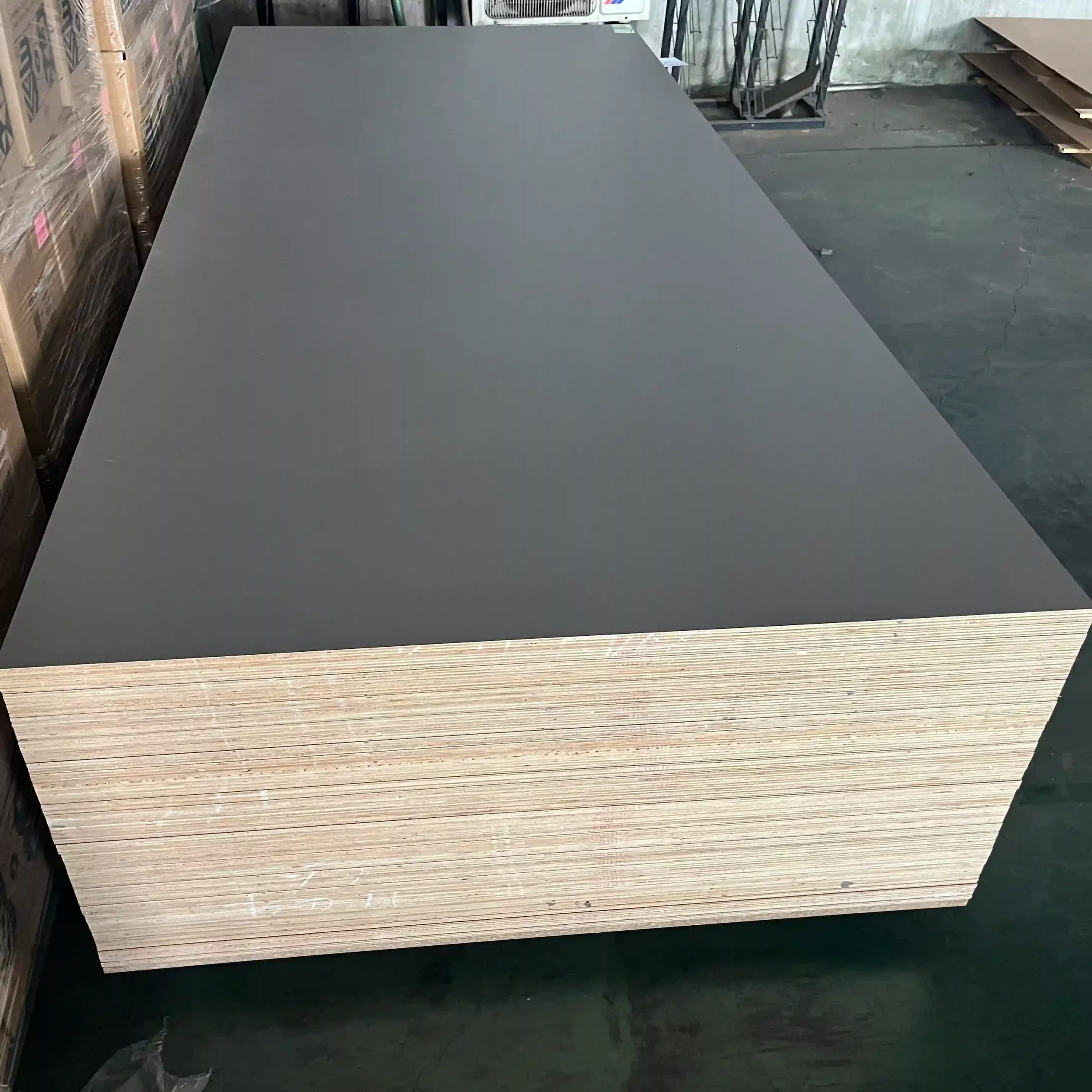
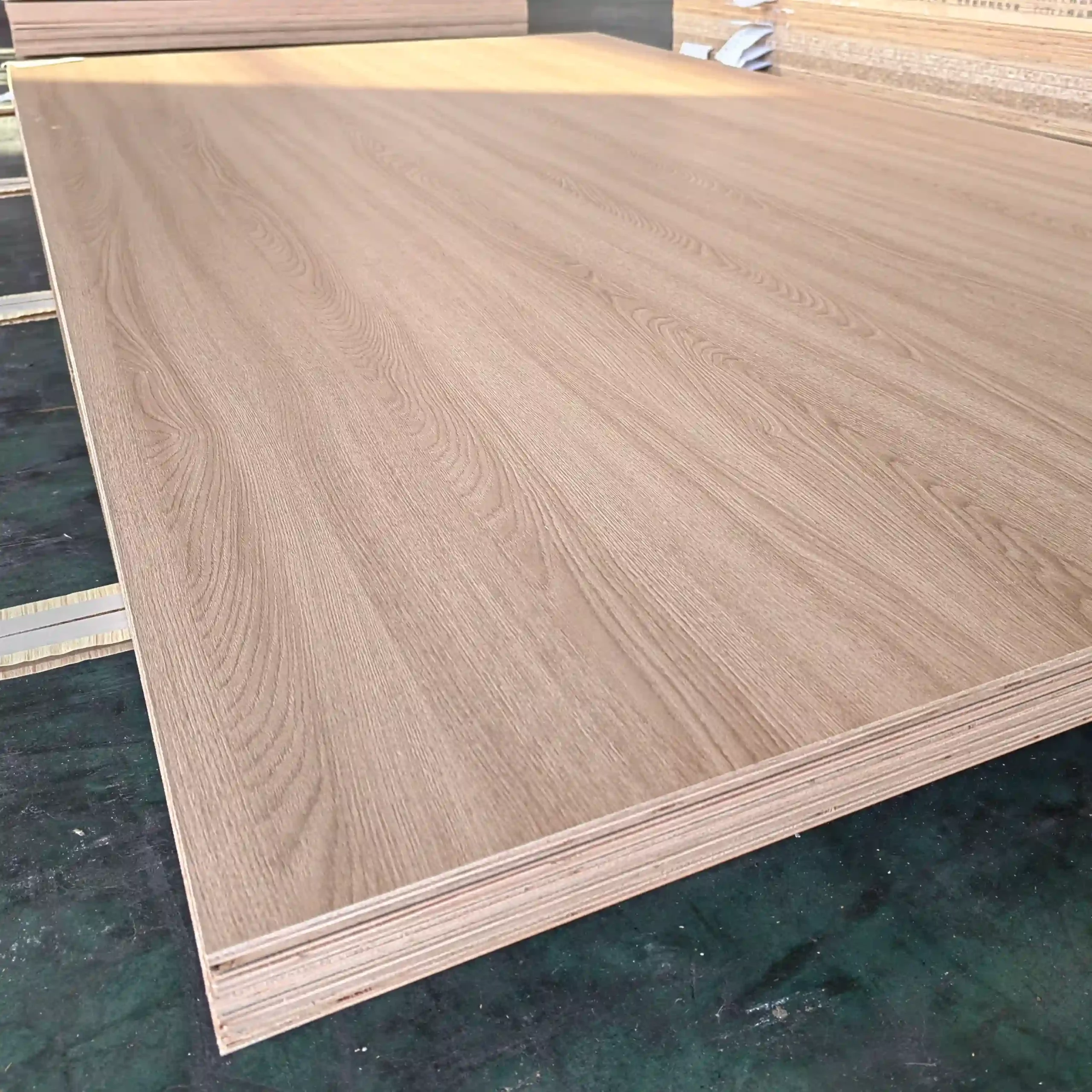
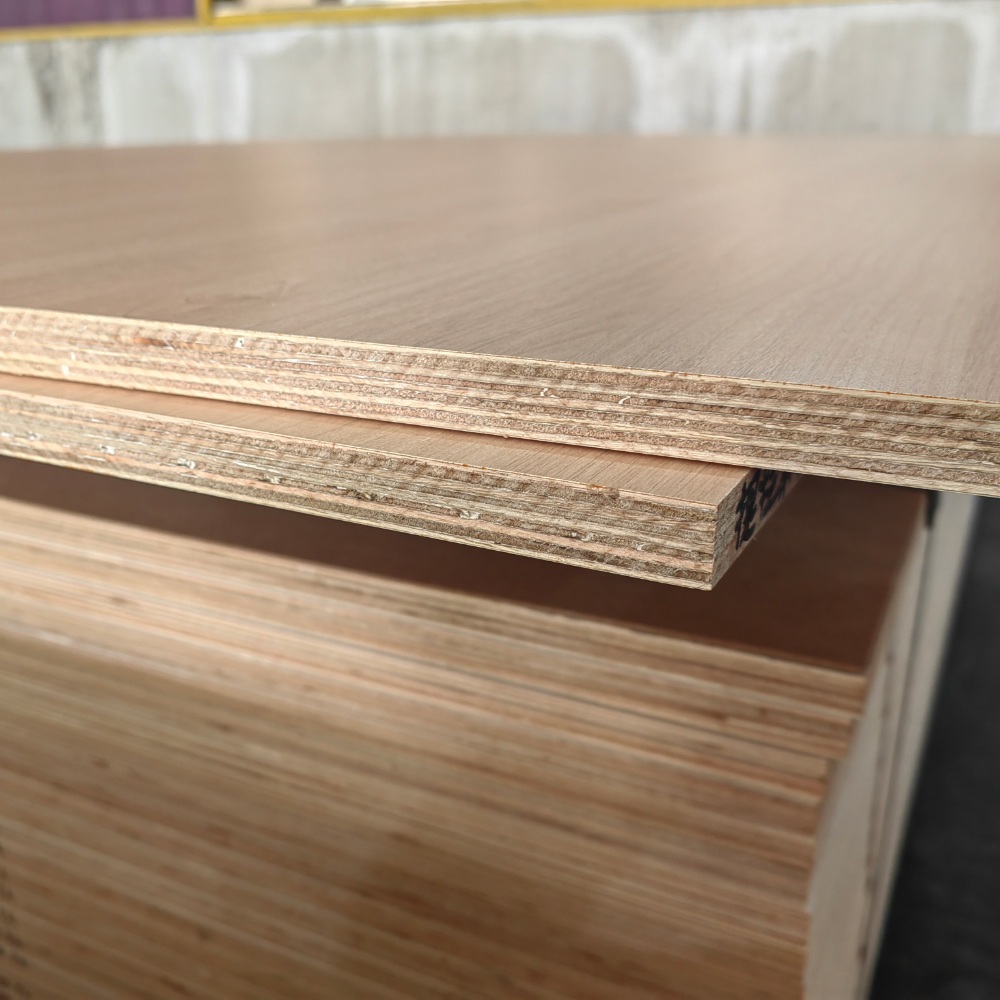
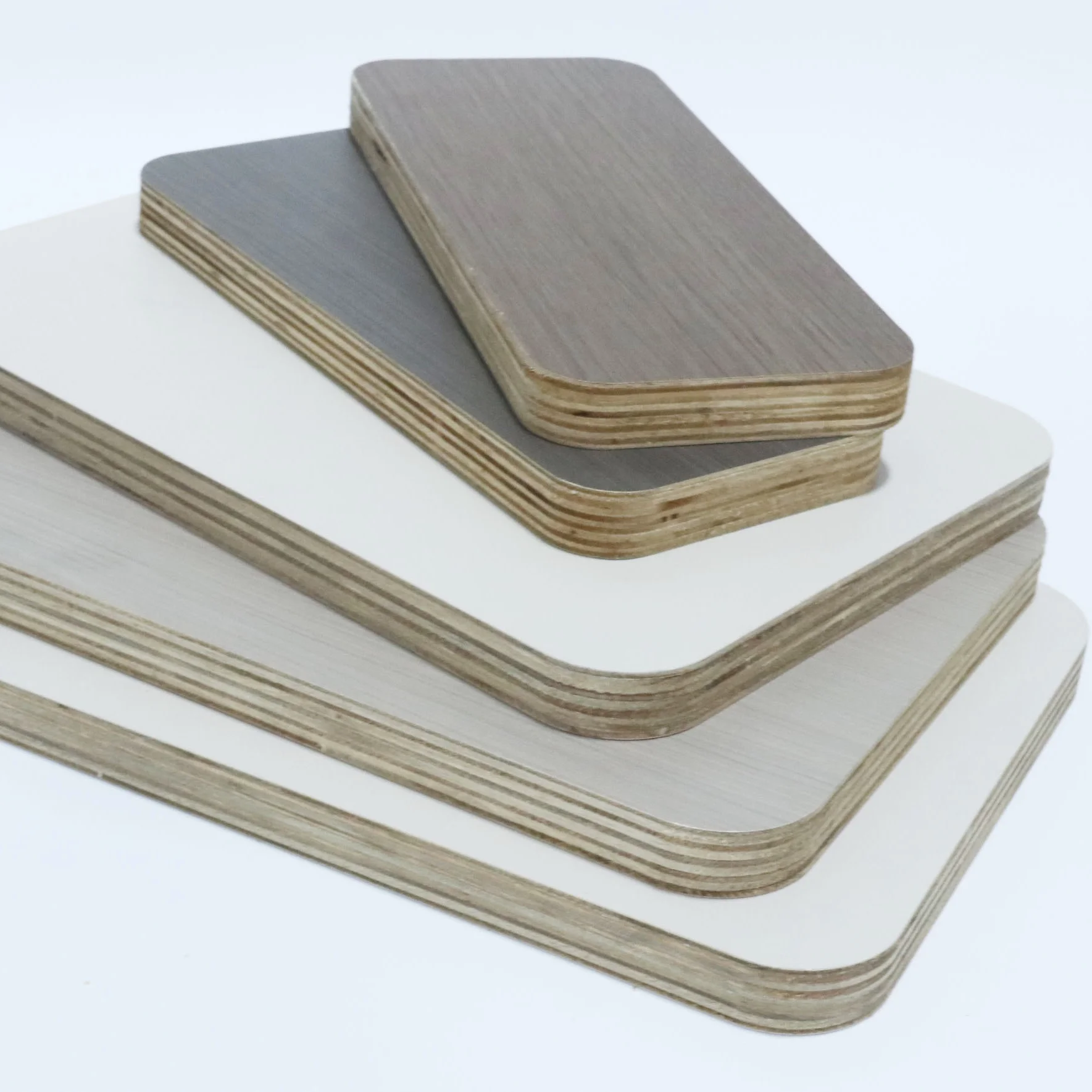
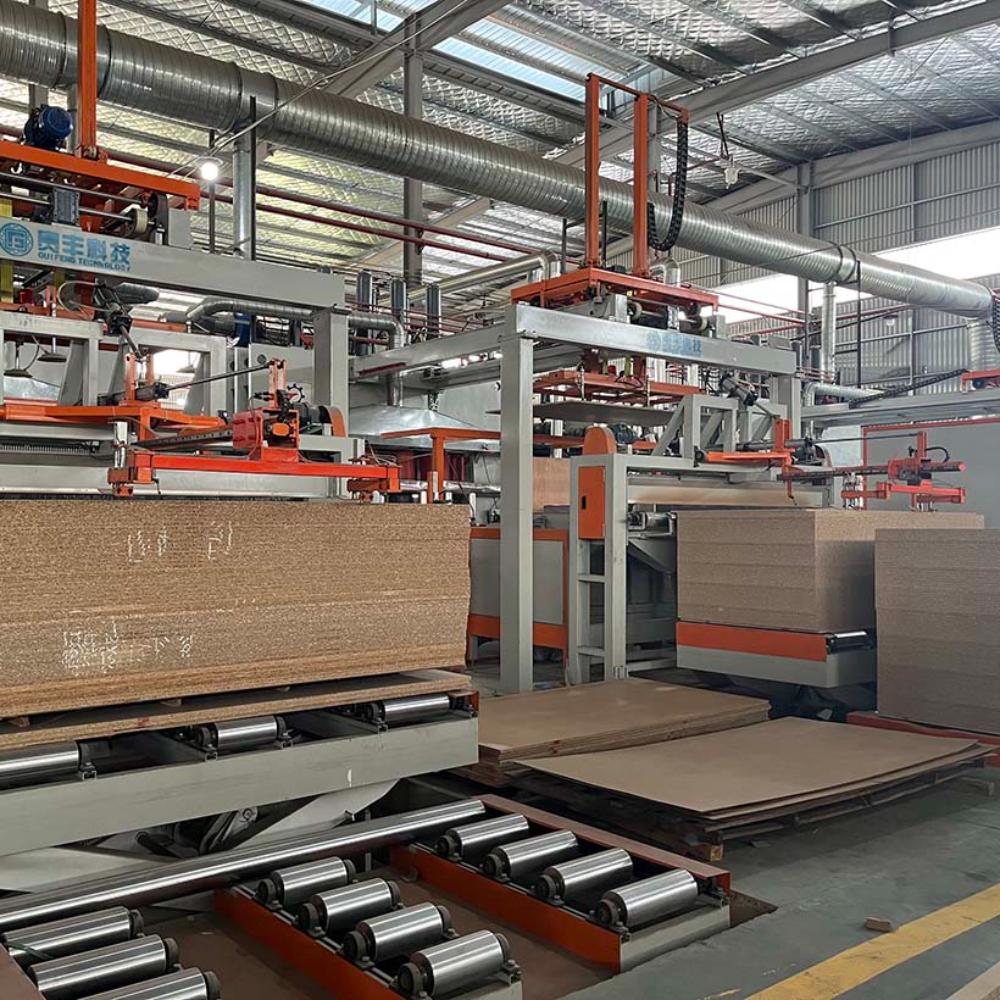
Durability and Easy Maintenance Laminated Plywood For Kitchen Cabinet-Qiangyi PLYWOOD
Resistance to Environmental Stressors: Melamine plywood avoids color changes from sun exposure and handles dampness and warmth without lifting or expanding.
Low Maintenance Requirements: Chemical resistance remains standard, and the material endures wear from typical substances like acids, bases, oils, and alcohol.
Product Details Description
| Size | 1220x2440mm/1220x2745mm |
| Thickness | 5mm/9mm/12mm/15mm/18mm/25mm |
| Core material | Eucalyptus/fir/rubber wood,etc. |
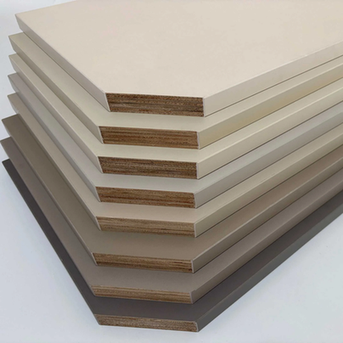
| Surface | Melamine paper/matt/glossy |
| Moisture | 8-12% |
| Certificates | CARB-P2/EPA/CE/FSC/ISO,etc. |
| Thickness tolerence | +0.2mm /-0.5mm |
| Layer | 5-ply/9ply/11-ply, etc. |
| Environmental grade | ENF/E0/E1 |
| Application | Home decoration/Cabinets/wardores/furniture,etc. |
Enhancing Everyday Furniture Functionality with Melamine Plywood
Use in Bedroom and Living Room Furniture
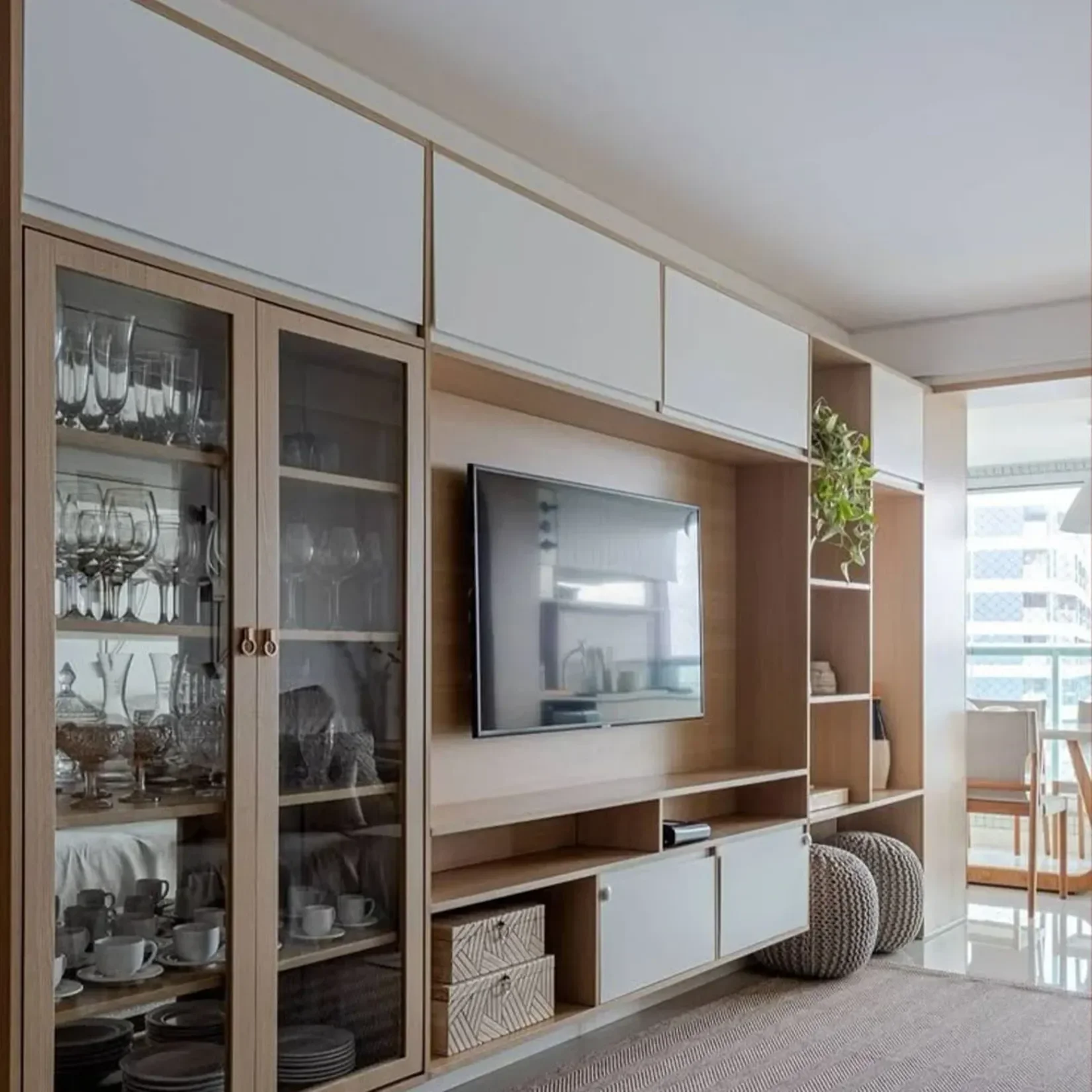
Wardrobes and media stands built with QIANGYI’s melamine plywood keep their form and shade through the years. The even finish aids current style elements such as push-open mechanisms or cabinets without handles. Color variations in one batch stay small, which boosts overall visual flow.
Integration into Office Desks and Shelving Systems
QIANGYI melamine plywood’s scratch-proof layer guards against harm from office tools. Options in basic shades like white oak or walnut grain patterns blend with workspaces while offering strong wear protection.
Application
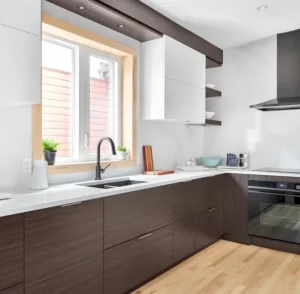
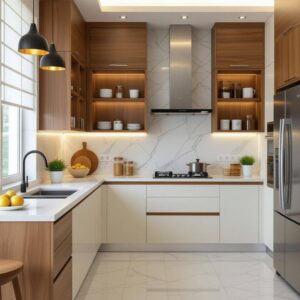
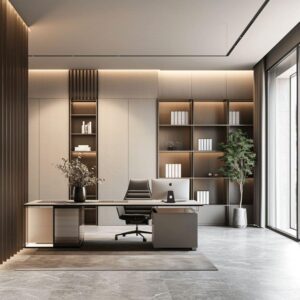
Main products: Marine plywood, Melamine plywood, Melamine blockboard, Melamine Chipboard, Melamine MDF board, Film face plywood, Edge banding, Furniture accessories
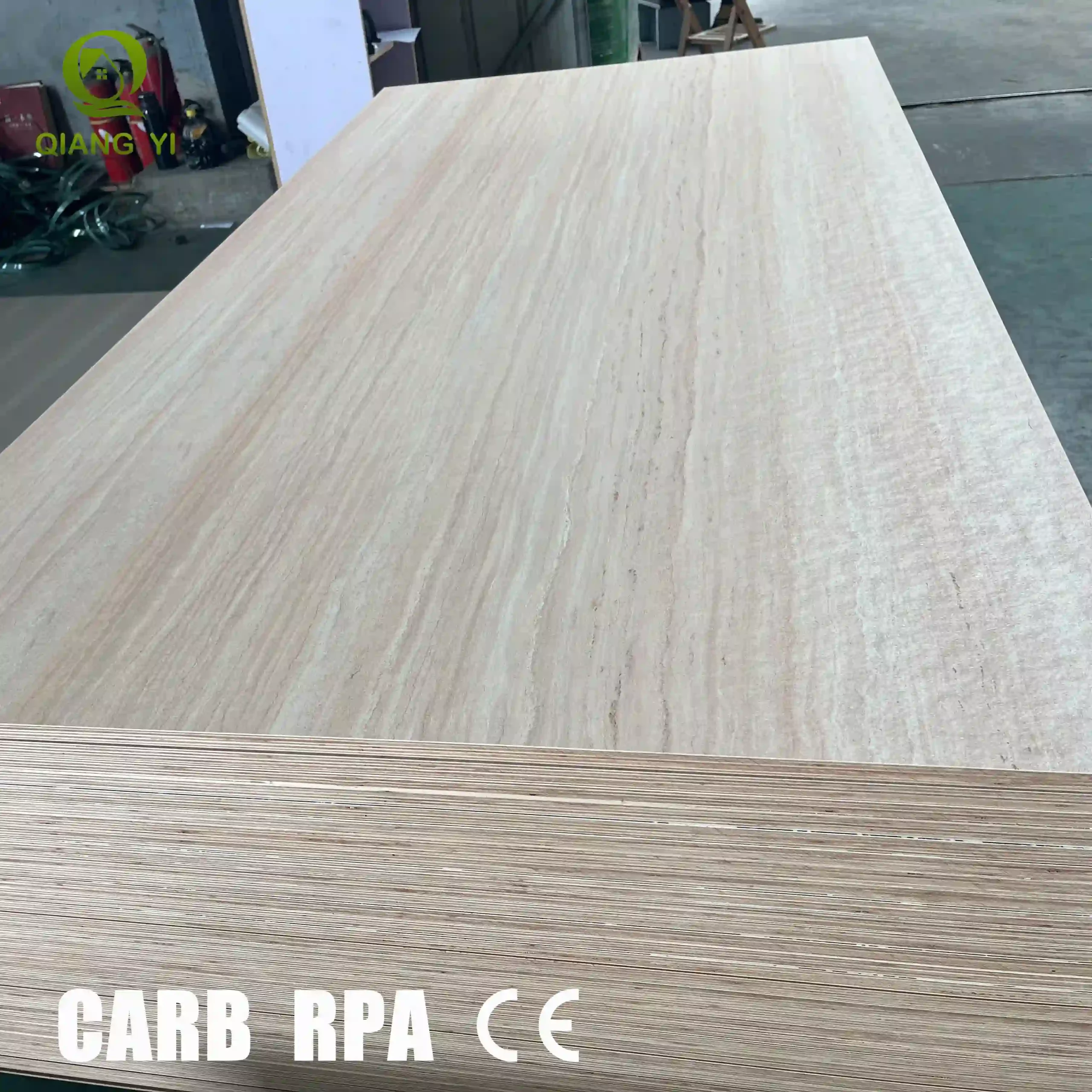
100% Eucalyptus Core Waterproof Plywood Marine Grade Termite Resistant Best Plywood for Tropical Furniture
A furniture-grade eucalyptus plywood that survives hot, humid climates. Solid 100% eucalyptus core, waterproof adhesive, built flat for cabinet doors — no voids, no warping, no surprises after the rainy season.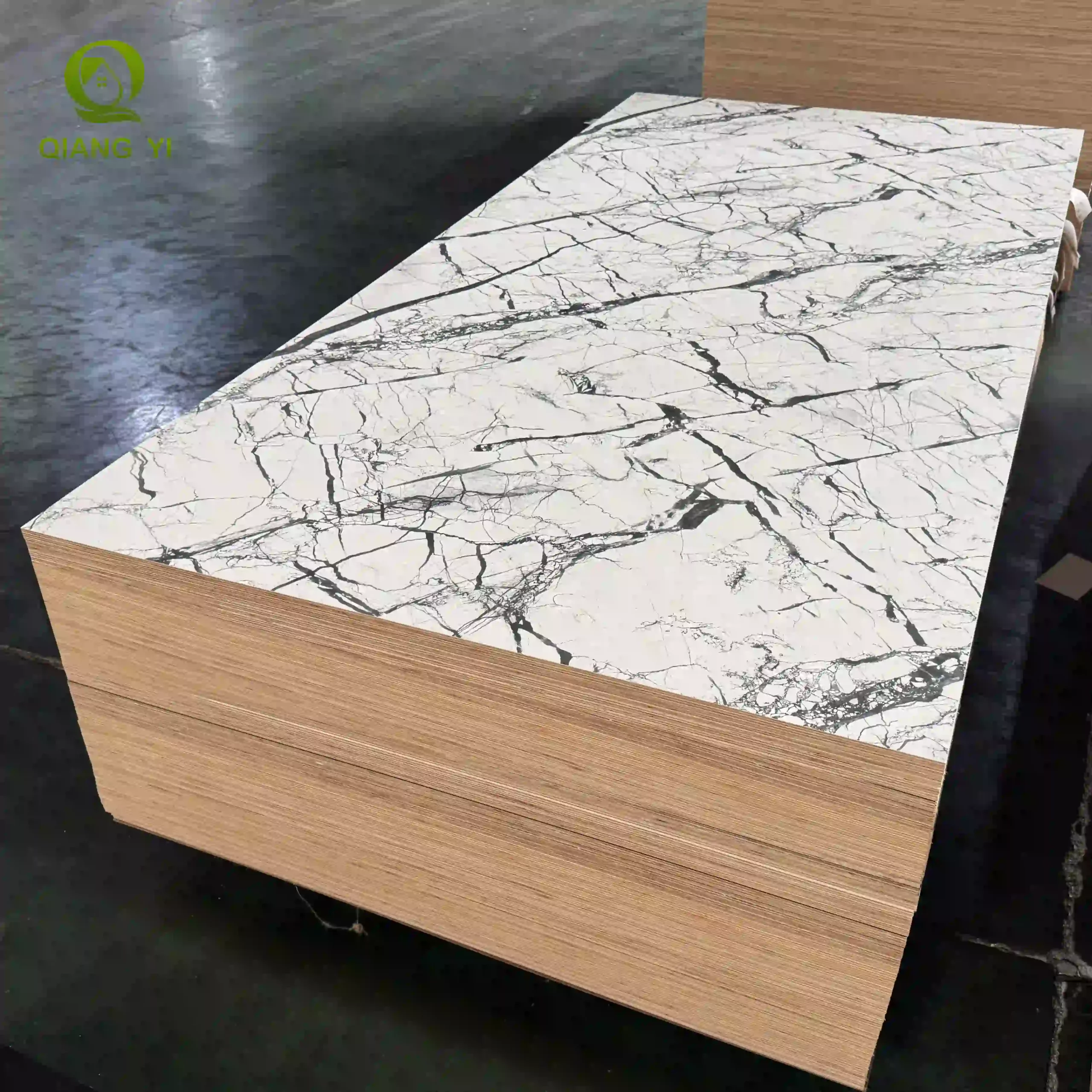
Qiangyi glutinous rice full eucalyptus core hardwood veneer melamine laminate plywood for cabinet
Qiangyi glutinous rice glue plywood is also known as second-generation plywood that represents a century of innovation. It has achieved No.1 in sales and a top reputation in China. Widely favored by renovation companies, cabinet manufacturers, and homeowners. Qiangyi glutinous rice plywood achieve the B1-grade fire retardant standard, strong nail-holding power, resistance to deformation, water resistance, moisture resistance, mildew resistance, antibacterial properties, and termite resistance.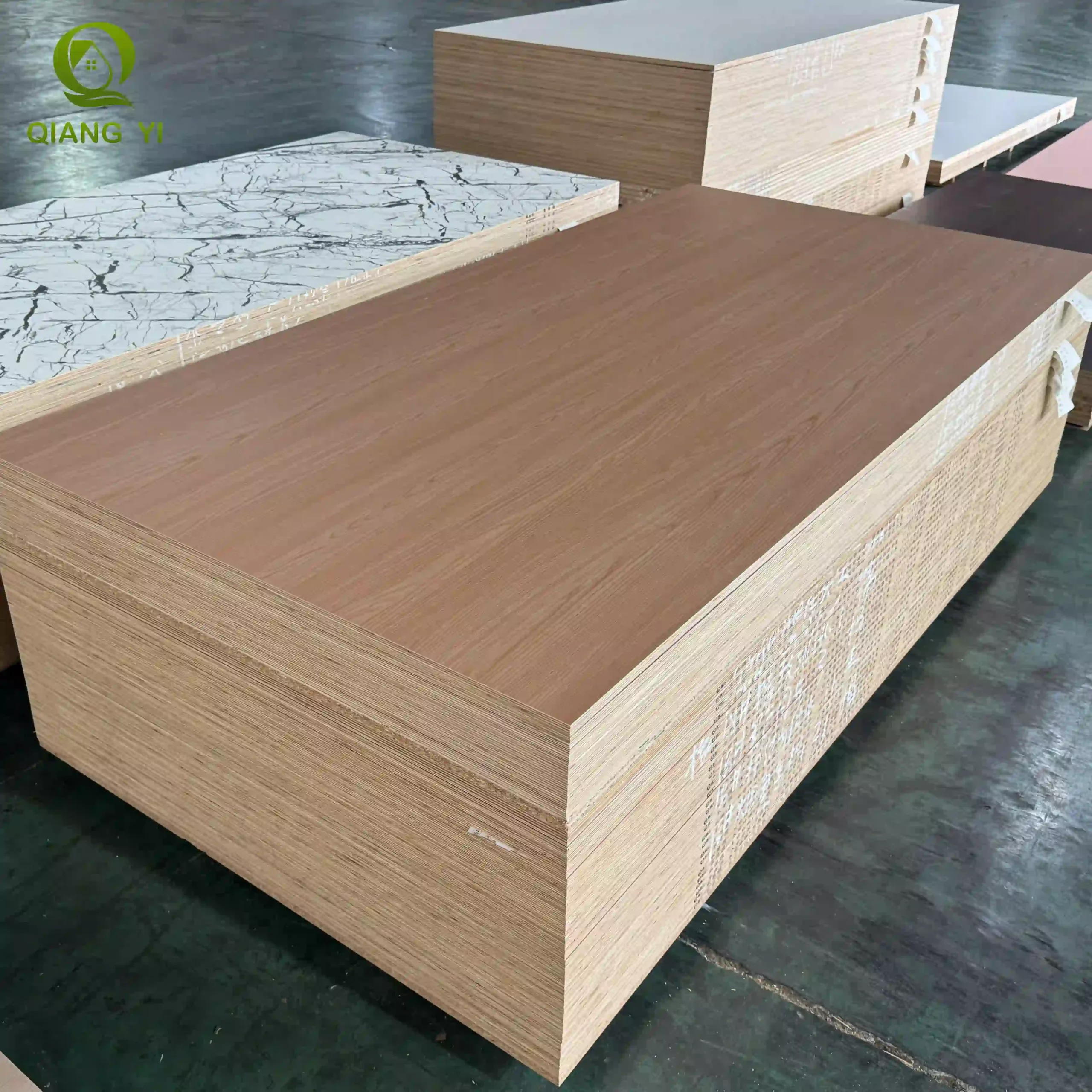
hardwood core 100% eucalyptus wood plywood ENF grade for modular cabinetry
Main Advantages for Modular Cabinetry 1. Structural Stability: High-density, high-hardness cross-laminated veneers offer excellent resistance to bending and warping, and control standard thickness tolerance for modular cabinet assembly. 2. Hardness and Wear Resistance: High-density eucalyptus hardwood provides superior load-bearing capacity, Good screw holding capacity, making it ideal for Modular Cabinetry. 3. Moisture Resistance: Offers better moisture resistance than standard particleboard or MDF and softwood like poplard and pine core plywood; suitable for humid environments like kitchen and bathroom, with a 24-hour thickness swelling rate of less than 2.4% (surpassing industry standards). 4. Ease of Processing: Excellent performance in cutting, drilling, and edge banding (PUR/PVC); ensures clean edges without fraying, peeling, or chipping—perfect for automated factory production lines. 5. Environmental Compliance: Available with CARB-P2, FSC, and CE certifications, meeting market entry requirements for Europe, North America, and Southeast Asia. 6. Cost-Effectiveness: More affordable than imported hardwood plywood, with a stable and reliable supply.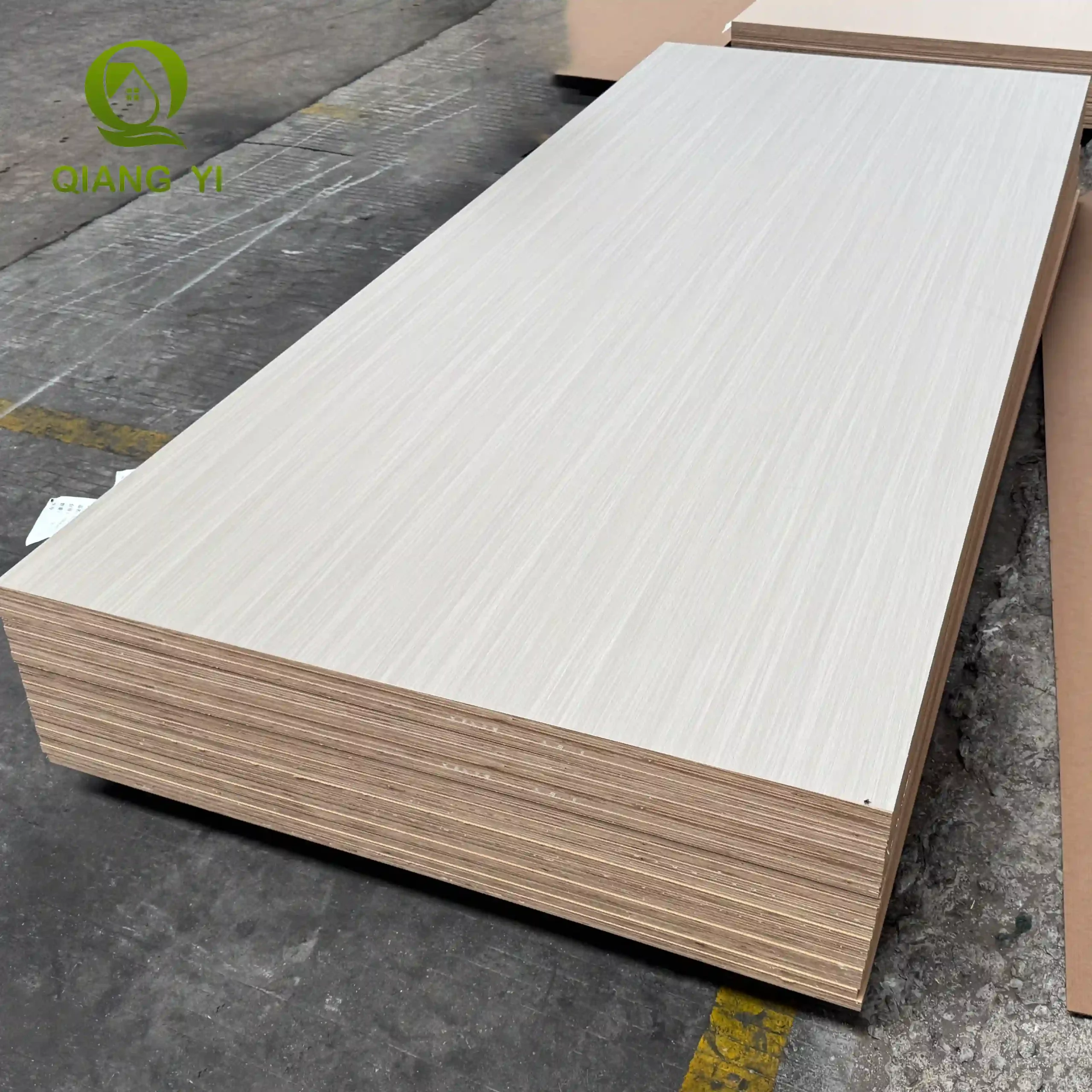
Qiangyi 18mm Glutinous Rice Glue Plywood ENF Waterproof Board for Kitchen Cabinets & Wardrobes
Qiangyi Glutinous Rice Glue Plywood 18mm waterproof laminated plywood is a second-generation multi-layer board bonded with food-grade Lingmei glutinous rice glue — zero formaldehyde, zero benzene, zero odor. Built for kitchen cabinets, wardrobes and interior furniture projects. Key features: • Beyond ENF grade — formaldehyde emission "not detected" (limit 0.025 mg/m³) • Anti-deformation: MOR ≥22 MPa, MOE ≥5000 MPa; ideal for tall cabinet doors • Class II waterproof: 24h thickness swelling only 2.4% • Termite resistant Grade 9.5, mold Grade 0, antibacterial ≥99% • B1 flame retardant, sound reduction ≥35 dB • 15-year factory warranty
CARB certified waterproof and anti termite marine plywood 18mm 100% eucalyptus hardwood plywood
Still troubled by plywood projects in humid areas? See how glutinous rice plywood can solve the pain points of furniture projects in humid climates, as well as the key points for plywood procurement.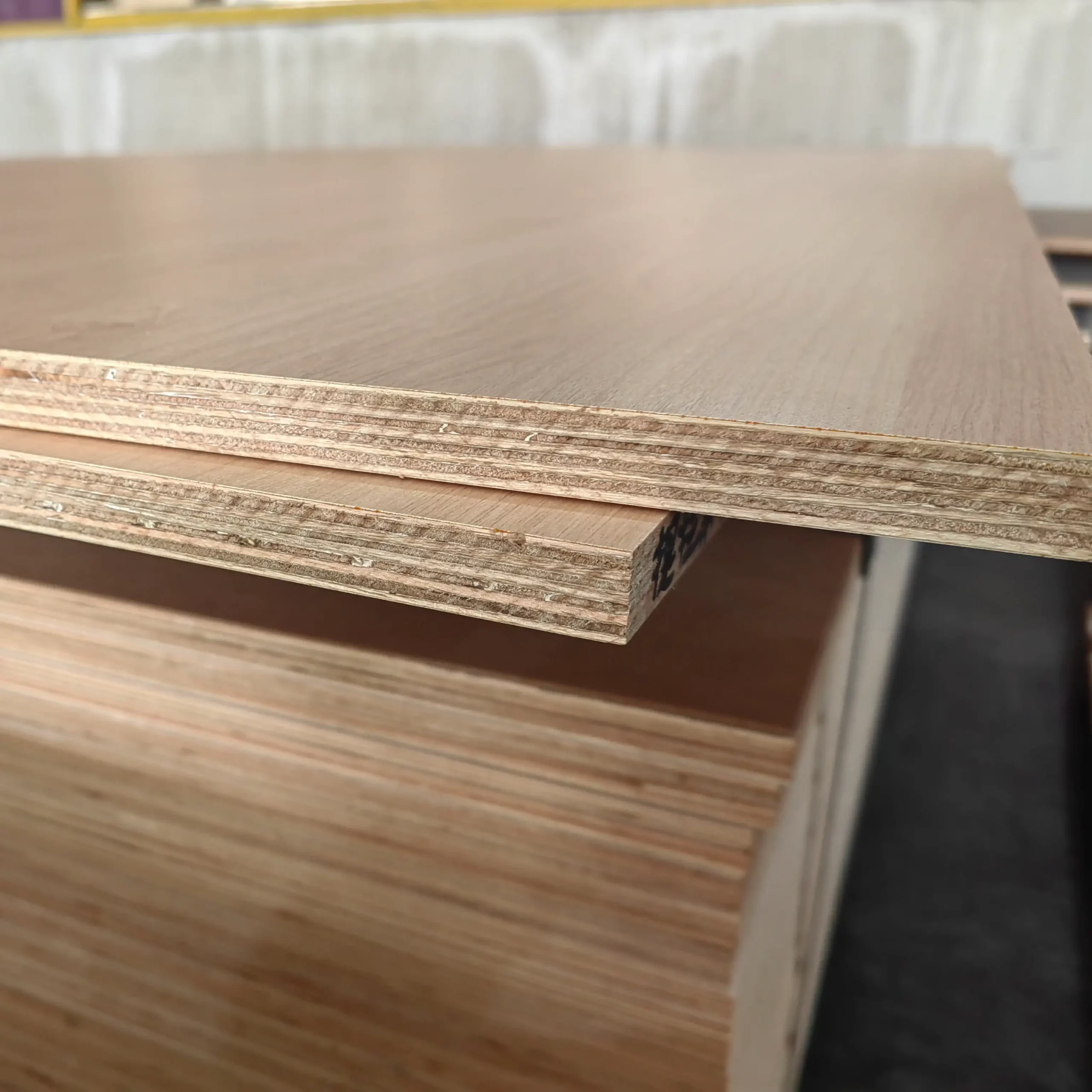
Professional Melamine Laminate Qiangyi Brand ENF Standard Hardwood Core Qiangyi Brand for Furniture
Glutinous rice plywood is second generation plywood with multi-functional. It performance super‑ENF eco‑friendly , free formaldehyde, ordor free, class II water proof, anti deformation, 5 grade anti cracking, 9.5 grade anti termite, B1 flame retardant, anti thermal and anti insulation. Glutinous rice plywood suitable for interior kitchen cabinet, bathroom cabinet, wardrobe, desk, wall panel. Versatile melamine face can be choose or plain color match country style melamine face.Get more information about the plywood
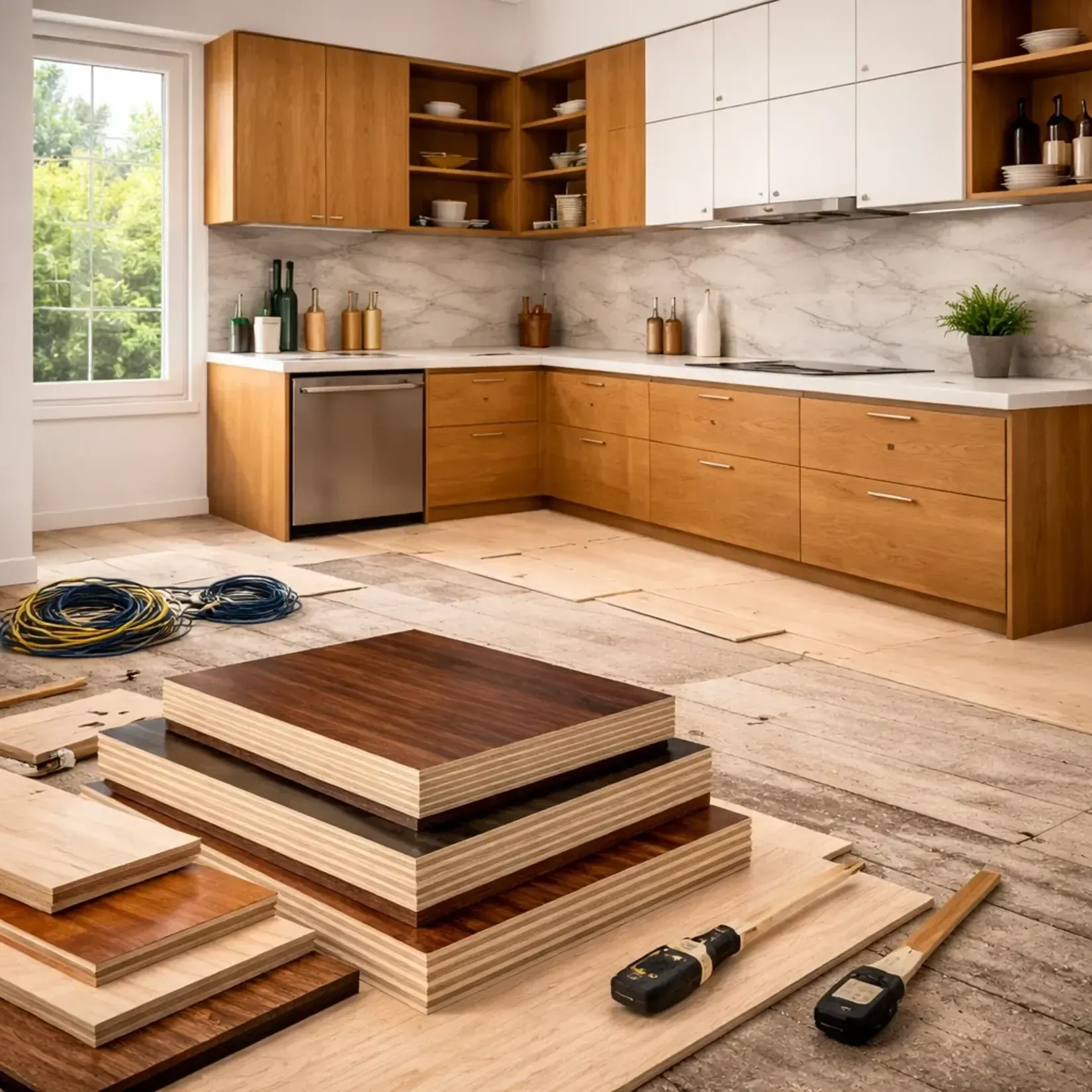
Moisture-Resistant Plywood Sourcing Guide for Sink Cabinets
A sink cabinet might leave the factory looking perfect. However, it can become a warranty issue just a few months later. A tiny plumbing leak or frequent wet cleaning can make the bottom swell. This causes the edge banding to peel up. Then, the installer has to deal with a difficult repair job. Kitchen cabinet manufacturers need to protect their finished products. They also want to avoid expensive return visits. Therefore, picking moisture-resistant plywood is not just about finding a board with a waterproof sticker. It is about true material performance. Why Sink Cabinet Swelling Creates Costly Problems for Manufacturers Below a sink, the area is exposed to a different level of moisture than a kitchen shelf. Leaks from pipes, condensation on pipes, and cleaning with wet cloths can cause panels to swell, resulting in unsightly cabinets and poorly fitting parts that need to be reworked and after-sales claims. Instead of relying on a “waterproof” label, when you select materials for projects, you should test how a panel’s bonding and core will react to moisture-related swelling. Problems with cabinets often start where you can’t see. Where Moisture Damage First Appears in Sink Cabinets Picture a rental unit where a loose drain drips water onto the bottom board. The puddles hide behind tall cleaning bottles. They stay there unnoticed for many weeks. In a different house, sweat builds up on a cold water pipe. That moisture soon trickles down into a bare, unsealed hole. The weakest spots are normally the bottom floor, the pipe cutouts, the back corners, and the seams by the floor base. Once a cut side gets thicker from water, problems happen. Even a perfectly fine surface layer will not sit flat anymore. How Swollen Panels Lead to Rework and Warranty Claims Fixing a puffed-up bottom board is rarely an easy swap. The repair worker might have to detach the pipes first. They also need to pull out shelves and cut down nearby parts. This means planning a whole new trip to the house. In custom kitchens, close cabinets and heavy countertops block easy access. The factory ends up paying for the extra labor, travel, and time. Meanwhile, the homeowner only sees a poorly made product. Just one bad piece of wood can change a good sale into a messy warranty fight. Why Ordinary Sink Cabinet Panels Swell Despite Surface Protection A shiny top layer can block normal water splashes. However, that surface is just one piece of the whole cabinet board. Water can still find a way inside the wood. Water Enters Through Cut Edges and Plumbing Openings Workers must cut holes in the sheet for a sink waste pipe. That newly exposed inner wood does not have the original factory coating. If the hole stays bare, water will soak right into the wood fibers. This makes the board swell up and get thicker. Loose edge strips, badly covered screw holes, and trapped water on the bottom floor create similar trouble. Adding a plastic drip pan and sealing every gap helps a lot. Still, those steps cannot make up for bad glue inside the actual board. Why Ordinary Plywood and MDF Respond Differently to Moisture MDF is made from tightly pressed wood dust. It gives a very smooth painted finish. However, the open sides can puff up terribly when they get wet. Plywood uses glued layers of real wood. Its reaction to water depends largely on the wood type, the chosen glue, and how it was pressed together. This fact is vital when you compare marine plywood vs ordinary plywood. The simple name tag cannot prove how a specific panel will act after getting wet. Buyers need to look at actual testing facts and the building method. They should never guess that every plywood or MDF item will perform the same way. How to Select Moisture-Resistant Plywood for Sink Cabinets A good sink-base plan must look at the inside of the board. It also needs to protect the fresh cuts made during the building process. Prioritize Water-Resistant Bonding and Core Integrity Always ask your sellers about the glue used on the wood layers. Find out if the middle part has overlapping bits, empty holes, or weak joints. A solid, smooth core makes cutting and screwing much more reliable. An immersion-peeling test reveals if the glue holds up under specific wet situations. Meanwhile, a thickness-swelling test checks a totally different factor. For a massive kitchen project, try using a basic checking method: *Look closely at the cut sides to spot any empty core gaps. *Make sure the immersion-peeling report matches the exact board you buy. *Do a quick test run to seal the edges around pipe holes. Check Thickness, Edge Protection, and Purchase Specifications People looking for plywood thickness for cabinets usually want 18 mm boards. Yet, the best size truly depends on the cabinet shape, the total weight, and the metal hinges. The kitchen cabinet plywood thickness must be chosen along with the core style, layer setup, top color, and edge tape. Clearly demand waterproof sealant around pipe gaps, the bottom borders, and any fresh cuts. Think about homes near the sea or floors that get mopped daily. For these spots, you must also check airflow and ways to reach leaks easily. No thick board can ever replace smart building designs. How QIANGYI PLYWOOD Helps Reduce Sink Cabinet Swelling At QIANGYI PLYWOOD, we tackle water threats using a clean, water-blocking glue mix. We also use a full-eucalyptus core layout. This special design stops empty pockets inside the wood. We do not just count on a pretty top color for protection. Glutinous Rice Glue Supports Moisture-Resistant Bonding Our glutinous rice glue plywood relies on Lingmei adhesive. This unique glue is mixed from glutinous rice starch, magnesium chloride, magnesium oxide, and pure water. The wet glue sinks deep into the tiny holes of the wood fibers. Once it dries, it builds a tight, super-strong connecting web. The final plywood is built to reach ENF-grade ultra-low formaldehyde emissions. At the same time, it keeps its tough, water-resistant bond. We spread the glue smoothly on every single layer. Next, we apply 24 hours of cold pressing at normal room temperature. We dry it carefully to hit the right moisture level. Finally, we let it rest and settle properly. This careful routine keeps the glue quality steady across all factory runs. It fights off swelling from random spills or damp room air. It also greatly lowers the chance of the wood layers peeling apart from water damage. Eucalyptus Core and Fully Core-Connected Construction Improve Panel Stability Picking the right middle wood is just as crucial. We use a full eucalyptus core for this special glutinous rice plywood. We never use a random mixed-wood core. The inner sheets are laid out using fully core-connected construction. This means the middle pieces fit tightly together to stay solid. It prevents silly gaps inside the board. This detail is huge when workers drill pipe holes or screw the cabinet walls together. Hidden weak spots can easily break a cabinet. Using strong eucalyptus wood and smooth glue layers ensures a steady, tough product. Even with this strong build, you still must seal the cut edges. Test Evidence and Procurement Value for Sink Cabinet Manufacturers Smart buyers require real proof of strong glue, anti-swelling power, and good factory support. Class II Water Resistance and Immersion-Peeling Test Results An official immersion-peeling test report, No. SZF-WT-25101715-03, shows six tested pieces. It confirms a perfect 100% pass rate and a fully compliant score. The Class II test rules demand soaking the wood in hot water at 63°C ± 3°C. This great score proves it handles wet conditions well. However, it is not meant to stay underwater forever. We also provide a Waterproof and Anti-Swelling Responsibility Commitment. This paper covers valid edge-swelling and glue-failure problems after the setup is done. Buyers should always check these rules to match their specific orders and plans. Hour Immersion Results and Real-World Sourcing Value A different 72-hour soaking test looks at three distinct boards side by side. The recorded thickness shifts are: Material Before soaking After 72 hours Increase Glutinous rice glue plywood 18.20 mm 18.35 mm 0.15 mm Ordinary plywood 18.13 mm 19.05 mm 0.92 mm MDF 18.30 mm 20.66 mm 2.36 mm The tiny size change shows the true worth of a stable board. Puffed-up edges make fixing cabinets very hard. Of course, this basic test does not replace official batch checks. In the very damp Philippine market, a wood panel seller first tried one color of our glutinous rice glue plywood. They loved it, bought much more, and added new colors later. This story shows strong buyer interest. It does not measure exact sink-cabinet lifespans, though. Before you order a massive batch, always check the samples, exact rules, test papers, and return policies. We can chat about all these facts at THE 2026 GUANGXI INTERNATIONAL FOREST PRODUCTS AND WOOD PRODUCTS EXHIBITION. Find us at Booth D5T-06, Nanning International Convention & Exhibition Center, from November 21–23, 2026. FAQ Q: Is your plywood made with a full eucalyptus core or a combi core? A: Our glutinous rice glue plywood relies on a full eucalyptus core. It features fully core-connected veneer construction. Cabinet makers should double-check the exact core details when asking for samples or price lists. Q: Why does plywood swell around kitchen sink plumbing cutouts? A: Drilling pipe holes chops up the wood fibers. It strips away the safe outer layer. Tiny pipe drips, or cold-water sweat can easily soak into those raw cut walls. When the wood drinks that water, the edges puff up. This pushes against the edge tape and can ruin the nice outer finish. Q: Is your glutinous rice glue plywood waterproof or marine grade? A: Our board has passed the Class II water-resistance tests under strict national rules. It is built for very damp indoor rooms. This includes kitchen sink cabinets, bathroom units, and beachside houses. It fights off daily splashes and damp swelling brilliantly. Still, you must never leave it sitting deep underwater for long periods. Q: How can cabinet manufacturers verify anti-swelling performance before bulk purchasing? A: You should look at a real sample. Check the immersion-peeling scores and the thickness-swelling proof. Review the inner core style and the promised inspection rules. The test papers must clearly match the exact wood you are buying. Q: Does moisture-resistant plywood still require edge sealing in sink cabinets? A: Yes, it absolutely does. You must seal all fresh cuts, pipe gaps, and weak joints. Also, fix any water leaks right away. Tough glue and smart building habits work perfectly together. They stop silly cabinet failures from happening.
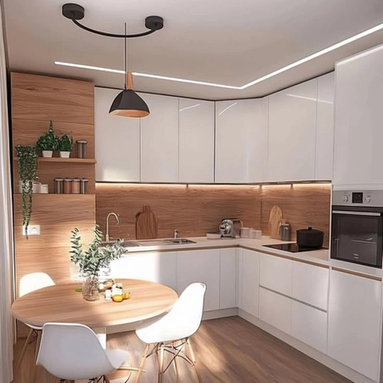
Anti-Mold Plywood Checklist for Hotel Furniture Buyers
Mold in hotel furniture rarely begins as a dramatic leak. More often, it starts behind a wardrobe, under a vanity, beside a cold wall, or along an exposed panel edge that stays damp. The board may look fine at delivery, while moisture-related defects appear months later. A useful anti-mold plywood checklist therefore has to look beyond one label. Buyers need to evaluate the environment, core structure, bonding system, moisture control, and test evidence before approving a bulk order. Where Do Mold Problems Start in Hotel Furniture Projects? Hidden Moisture Zones in Guestroom Furniture Hotel rooms create several moisture conditions in one small space. A wardrobe fixed against an exterior wall may receive little airflow. A bathroom vanity sees splashes, steam, and repeated cleaning. A minibar cabinet can sit near cool surfaces where condensation forms. In tropical or coastal hotels, rooms closed between guests may also stay humid for long periods. Panel edges, drilled holes, backs, joints, and internal layers can take in moisture before the decorative face shows obvious damage. Why a Small Mold Spot Can Become a Project Cost In a hotel, one material specification may be repeated across dozens or hundreds of rooms. A local defect can therefore become room downtime, replacement furniture, another installation visit, delayed handover, warranty claims, and complaints from the operator. Anti-mold performance is not only an appearance issue. For a hotel furniture buyer, it is part of project risk control. Why Does Plywood Develop Mold and Moisture-Related Damage? Humidity, Condensation, and Slow Drying Create the Risk Mold needs favorable moisture conditions. Furniture becomes more vulnerable when humidity remains high, water enters through unfinished edges, or condensation repeatedly wets a cold surface. The problem is often cumulative. A panel takes in some moisture, dries slowly, then repeats the cycle. Poor airflow behind fixed furniture can make this worse. Anti-mold material cannot replace leak repair, ventilation, or humidity control, but it can give the furniture assembly a better margin against these conditions. Moisture Can Also Lead to Swelling and Deformation Moisture can also stress the glue line, swell wood fibers, loosen fastening areas, or change panel flatness. A board used for wardrobes, vanity units, headboards, or built-in cabinets therefore needs a stable core and reliable bonding. Even when buyers search for plywood thickness for cabinets, thickness alone cannot compensate for internal gaps, weak veneers, or a moisture-sensitive structure. What Should Hotel Buyers Check Before Approving Anti-Mold Plywood? The supplier should be able to explain how the panel is built and how it performs. The phrase waterproof plywood is not enough, and neither is a general “mold resistant” claim. Buyer Check Why It Matters Mold or mildew resistance evidence Confirms the anti-mold claim Antibacterial performance Adds hygiene-related evidence Core species and grade Affects stability and fastening Full-connected core structure Reduces internal weak points Panel moisture content Checks moisture control before shipment Water-resistance and bond test Checks glue-line integrity after moisture exposure Edge sealing plan Helps limit moisture entry after fabrication Verify the Structure, Not Just the Surface For hotel furniture, eucalyptus core board construction is worth checking at the exposed edge or approved sample. A hardwood core can support repeated fastening and daily use, but the species name alone is not enough. Buyers should ask whether the core is continuous and whether gaps, overlaps, or filler veneers are present. Cabinet grade plywood should be judged as a complete structure, not only by face appearance. Match the Board to the Furniture Location The risk level differs by application. A wardrobe on an internal dry wall is not exposed like a vanity beside a shower area. A tall cabinet door also places more emphasis on flatness and deformation control. For bulk hotel projects, approve the panel by application: wardrobe, vanity, minibar, wall panel, or other built-in furniture. How Does QIANGYI PLYWOOD Target Moisture-Driven Mold Risk? At QIANGYI PLYWOOD, we approach the problem through the core, adhesive system, and moisture-control process rather than relying on a surface claim alone. Full Eucalyptus Core and Full-Connected Core Construction We use full eucalyptus core options built with continuous eucalyptus veneers. In this structure, full-connected core means the internal veneers are arranged without voids, overlaps, or dead joints. The aim is a more uniform panel with fewer internal weak points. We use 100% eucalyptus core solutions for cabinet and furniture applications. For hotel wardrobes and tall cabinet panels, this matters because core continuity supports more consistent machining, fastening, and dimensional stability. It also gives buyers something practical to inspect on a cut edge before bulk approval. Glutinous Rice Glue Helps Create Less Favorable Conditions for Mold Our Lingmei glutinous rice glue uses glutinous rice flour, magnesium chloride, water, and magnesium oxide. The magnesium components react to create an alkaline environment. More importantly for hotel furniture buyers, an antibacterial and mildew-proof test conducted according to JC/T 2039-2010 on an 18 mm glutinous rice glue multifunctional board recorded an antibacterial rate above 99% and a Grade 0 mildew-proof rating. Under the test rating criteria, Grade 0 means no mold growth was observed. For buyers, this provides direct test evidence for evaluating mold and bacterial resistance instead of relying only on a general anti-mold claim. The adhesive system, moisture control, and tested resistance work together to reduce mold-related risks in furniture exposed to humid conditions. Controlled Drying Keeps Panel Moisture in the 8–12% Range We use a 60-hour temperature-controlled drying process and control board moisture content within 8–12%. This reduces excess moisture before furniture production and supports more stable use in humid conditions. For projects involving humid storage, long shipping routes, or air-conditioned guest rooms, starting with controlled panel moisture is more practical than correcting unstable boards after machining. What Evidence Should Hotel Buyers Put in the Approval File? Testing should support the purchase decision, especially when anti-mold performance is part of the hotel furniture specification. Report No. HJ-RD-26150 covers antibacterial and mildew-proof testing of an 18 mm glutinous rice glue multifunctional board according to JC/T 2039-2010. The tested sample achieved an antibacterial rate above 99% and a Grade 0 mildew-proof rating. The report defines Grade 0 as no mold growth. The antibacterial test used Escherichia coli AS1.90, while the mildew-resistance evaluation included multiple fungal species. For a hotel furniture buyer, this provides direct evidence related to the actual risk being evaluated: whether the panel can resist bacterial growth and mold development under the specified test conditions. For a hotel project, the approval file should include: Core species and full-connected-core confirmation. Antibacterial and mildew-proof test results. The applicable test standard and tested panel specification. Panel moisture specification and moisture-resistance information. Approved thickness, face finish, and edge treatment. A production sample matching the bulk order. These checks make later quality discussions easier because the approved panel has a defined structure and performance basis. Practical Case: Plywood Sourcing for a Humid Philippine Market In early 2026, a Philippine decorative panel and furniture-material distributor contacted us while comparing suppliers for a hot, humid market. The buyer was particularly concerned about environmental performance, moisture resistance, and durability. After seeing our glutinous rice glue plywood in person, the distributor placed a trial order in April with one color. The first shipment received positive market feedback for its ENF grade, surface texture, waterproof performance, and termite resistance. Demand soon expanded beyond the original color, so we developed a customized color sample book for the buyer. The distributor later introduced more finishes through its offline showroom and positioned the glutinous rice glue plywood as a premium product line. For hotel and furniture buyers, this case shows why humid-market sourcing should consider moisture-related performance, structural stability, and consistent product presentation. Meet Us in Guangxi International Forest Products and Wood Products Exhibition For buyers currently sourcing plywood for hotel furniture or other commercial projects, we will attend THE 2026 GUANGXI INTERNATIONAL FOREST PRODUCTS AND WOOD PRODUCTS EXHIBITION from November 21–23, 2026. Visitors can meet our team at Booth D5T-06 at the Nanning International Convention & Exhibition Center to discuss anti-mold plywood, eucalyptus core, full-connected core construction, and project-specific panel requirements. FAQ Q: What is anti-mold plywood for hotel furniture? A: It is plywood selected to reduce mold-related risk in humid interior furniture. Buyers should check mold resistance together with moisture control, bond quality, core continuity, and dimensional stability rather than relying on one anti-mold label. Q: Is anti-mold plywood the same as waterproof plywood? A: No. Water resistance focuses on moisture exposure, bonding, and swelling. Anti-mold performance focuses on resistance to fungal growth. The two properties support each other, but they are not the same test. Q: Why is a full eucalyptus core important for hotel cabinets? A: A full eucalyptus hardwood core provides a dense, consistent base for furniture use. When combined with a full-connected core structure, it also reduces concerns about internal voids, overlaps, and weak joints. Q: Where should mold-resistant plywood be prioritized in a hotel? A: High-risk locations include bathroom vanities, wardrobes against exterior walls, minibar cabinets, lower cabinet panels, and furniture in tropical, coastal, or poorly ventilated rooms. Q: What should buyers request before placing a bulk anti-mold plywood order? A: Request the approved core structure, panel moisture range, antibacterial and mildew-proof test results, applicable test standard, tested panel specification, thickness and surface requirements, and a production sample that matches the final order.
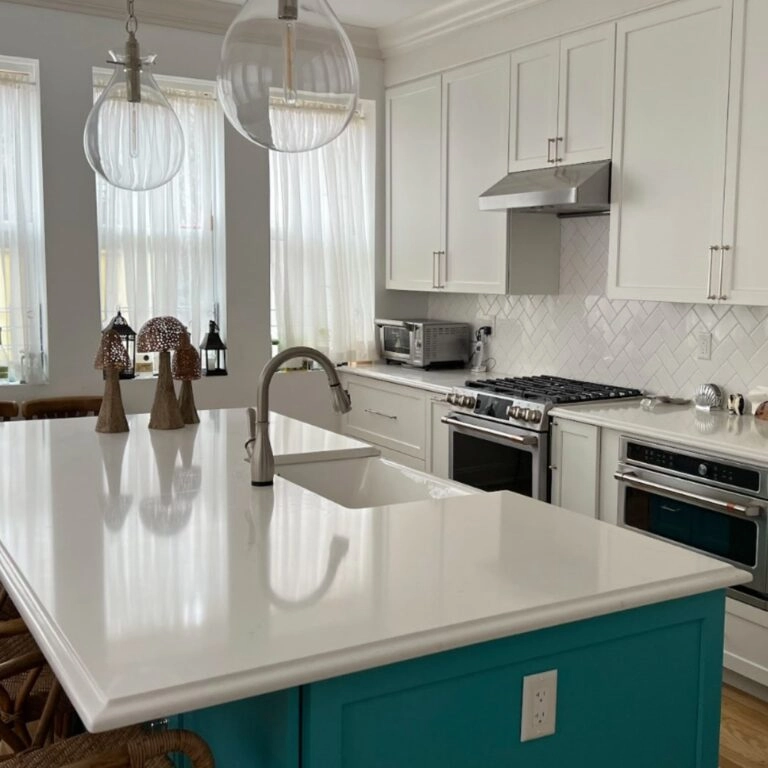
Termite-Resistant Plywood Guide to Reduce Warranty Claims
A termite problem in a finished cabinet rarely stays a small material problem. Once a wardrobe, kitchen cabinet, or built-in unit has been installed, damage can trigger site inspections, panel replacement, labor, transport costs, and warranty disputes. That is why termite-resistant plywood should be evaluated before cutting starts. For cabinet manufacturers, the real question is not whether a sheet carries an anti-termite label. It is whether the core, adhesive system, panel construction, and test evidence support a lower-risk warranty strategy. Why Does Termite Damage Turn Into Costly Cabinet Warranty Claims? Hidden damage often appears after installation Termites can enter through soil paths, wall cracks, pipes, or infested wood and packaging. In cabinet projects, difficult-to-see areas include back panels near walls, toe-kicks, wardrobe bases, and sink cabinets. The plywood may look normal during production. Damage may only become visible after the furniture is installed, when a manufacturer may need to inspect the site, dismantle cabinets, reproduce panels, ship replacements, and arrange reinstallation. The cost can easily extend far beyond one damaged sheet. A typical kitchen scenario is a base cabinet installed near plumbing in a humid apartment project. If hidden termite activity reaches the substrate, replacing one internal panel may require removing hardware, doors, countertops, or adjacent units. In a wardrobe project, damage behind a fixed back panel can remain unnoticed until the customer sees dust, hollow areas, or weakened sections. Warranty exposure starts with material selection A decorative surface should not be confused with termite protection. Melamine plywood may offer a practical finish, but the surface alone does not prove that the substrate resists termites. The same applies to laminated marine plywood or marine board. Moisture performance and termite resistance are separate questions. A common buyer question is “Is laminated marine plywood termite resistant?” The answer depends on the core, adhesive system, and test result, not the product name. Why Can Plywood Still Be Vulnerable to Termite Attack? Plywood is made from wood veneers, so cellulose remains inside the panel. A decorative face may protect the surface during daily use, but cut edges, drilled holes, hardware points, and inner veneers still matter in termite-prone environments. Project conditions add another layer of risk. Kitchen units may sit close to plumbing, while wardrobes can be fixed against walls for years. In tropical or humid markets, concealed access and long service periods can turn a small infestation into a costly after-sales case. For this reason, “termite proof” should not be treated as an unlimited promise. A better approach combines suitable panel selection with proper installation, sealing, inspection, and local pest-control measures. What Should Cabinet Manufacturers Require from Termite-Resistant Plywood? Before comparing prices, buyers should verify what is actually being supplied. Buying check What to confirm Termite evidence Test method, sample, date, report number, rating Core material Wood species and veneer grade Core construction Fully connected core, not a loose partial layup Cabinet specification Thickness, surface, edge treatment, intended use Supplier responsibility Clear after-sales procedure Core quality deserves particular attention. Eucalyptus core is valuable for cabinet work because it provides a strong and stable hardwood base. Large-diameter eucalyptus is described as a plywood raw material valued for strength and stable quality. A fully connected core, or full-core layup, also creates a more controlled internal structure than a partly connected core. In this construction, the core veneers are arranged continuously, while adhesive is applied layer by layer. Neither point should be used as a substitute for termite testing. Instead, they help buyers specify a more consistent substrate. Plywood thickness for cabinets also needs to match the actual design. An 18 mm tested panel should not automatically be treated as evidence for every thickness or construction. How Does QIANGYI PLYWOOD Target Termite-Related Panel Risk? At QIANGYI PLYWOOD, we address this issue through the adhesive system, eucalyptus core selection, and fully connected core construction rather than relying on a surface claim. Lingmei Glutinous Rice Glue works through the bonded structure Our Glutinous Rice Glue Plywood uses Lingmei Glutinous Rice Glue made from glutinous rice flour, magnesium chloride, magnesium oxide, and water. After curing, magnesium chloride and magnesium oxide create an alkaline adhesive environment. Our technical approach is to change the acid-base environment within the wood through this alkaline adhesive environment, creating conditions that are unfavorable to termite activity. This matters because cabinet production involves cutting, drilling, hinging, and edge processing. Protection linked to the internal bonding system is more relevant to those operations than a claim based only on the finished face. Eucalyptus core and full-core layup support consistency For cabinet-grade applications, we emphasize first-grade eucalyptus core. Eucalyptus provides a strong structural base, while the termite-resistance rating comes from the complete tested panel system, not from the wood species alone. The veneers are also arranged as a fully connected core and glued layer by layer. This construction requires closer core selection and gives the panel a more uniform internal layup. The process then continues with extended cold pressing, controlled drying, and curing. The production sequence includes 24-hour self-heating cold pressing, 60 hours of drying, and more than 15 days of conditioning. For cabinet factories, the practical value is consistency across cabinet sides, shelves, doors, wardrobes, and other components. Case: Reducing Termite and After Sales Risk in Mauritius A long-term furniture manufacturing customer in Mauritius has continued to reorder full containers of furniture-grade 100% eucalyptus core plywood. The local island climate is humid and demanding, where ordinary panels may face peeling, deformation, and termite attack over time. For this customer, we supply plywood made with 100% eucalyptus full connected core and glutinous rice glue, combined with controlled processing for better panel stability. The Grade 9.5 termite resistance test also gives the buyer clearer evidence when selecting materials for cabinet production. According to the customer, using our plywood for cabinets has reduced concern about after-sales problems. Consistent batch quality also helps the factory maintain similar cutting performance, screw holding behavior, and production settings across repeat orders. What Does the Grade 9.5 Test Mean for Procurement and Warranty Risk? The termite claim is supported by Test Report GIZ/TR-2024-0301-0186, issued by the Guangdong Institute of Zoology, Chinese Academy of Sciences Analysis and Testing Center. The tested sample was Glutinous Rice Glue Multi-functional Plywood, 1220 × 2440 × 18 mm, and the test basis was GB/T 18260-2015. The corresponding termite test report number is also identified in the product testing records. During the four-week indoor termite test, the report recorded slight termite damage, with only one to two termite tunnels or traces of infestation. The specimen received a termite-damage rating of Grade 9.5. The Grade 9.5 termite-resistance result is also included in the panel performance information. For buyers, the key value is traceability rather than an absolute promise. The report number, sample construction, thickness, test method, and result can be checked against the material being ordered. This also helps importers and cabinet factories answer downstream customers with specific evidence instead of relying on a general product description. A practical purchasing sequence is: 1.Identify whether the project has meaningful termite exposure. 2.Match panel thickness and surface to the cabinet design. 3.Confirm eucalyptus core and fully connected core construction where specified. 4.Request the termite-resistance report for the corresponding panel. 5.Keep the report and purchase specification with project quality records. For projects using our second-generation glutinous rice glue plywood, we also provide an anti-insect and anti-termite responsibility commitment. If termite or wood-boring insect damage occurs under the applicable conditions, we undertake after-sales replacement responsibility. For cabinet manufacturers, that creates a clearer risk-handling path than a vague “anti-termite” label. Meet Us at the 2026 Guangxi International Forest Products and Wood Products Exhibition If you are sourcing termite-resistant plywood, eucalyptus core plywood, or fully connected core panels for cabinets and furniture projects, you can meet our team at THE 2026 GUANGXI INTERNATIONAL FOREST PRODUCTS AND WOOD PRODUCTS EXHIBITION. We welcome cabinet manufacturers, plywood importers, distributors, and project buyers to discuss panel specifications, termite-resistance requirements, core construction, and sourcing needs with us in person. Event Name: THE 2026 GUANGXI INTERNATIONAL FOREST PRODUCTS AND WOOD PRODUCTS EXHIBITION Booth Number: D5T-06 Date: November 21-23, 2026 Location: Nanning International Convention & Exhibition Center FAQ Q: Is laminated marine plywood termite resistant? A: Not automatically. Moisture-related performance and termite resistance should be checked separately. Confirm the substrate, adhesive system, and termite test report. Q: Is melamine plywood termite-proof? A: A melamine surface does not make the substrate termite-resistant by itself. The core and internal bonding system still need to be evaluated. Q: Why use eucalyptus core in termite-resistant cabinet plywood? A: Eucalyptus core provides a strong, stable structural base. In this panel system, termite resistance comes from the complete, tested construction and adhesive system. Q: What does a fully connected core mean? A: It means the internal veneers form a continuous, closely fitted core rather than a partly connected layup. This supports a more consistent internal structure for cabinet processing. Q: Can Grade 9.5 termite-resistant plywood eliminate all warranty claims? A: No. Grade 9.5 test evidence can reduce material-selection uncertainty, but correct specification, installation, moisture management, inspection, and site termite control still matter.
B1 Flame-Retardant Plywood Guide to Reduce Risk
The High Cost of Fire Compliance Failures in Commercial Projects Securing approval for commercial spaces like hotels, public buildings, and large retail stores involves stringent safety regulations. Among the most critical of these regulations are building fire codes. When interior contractors or project buyers source materials for custom furniture, wall panels, or interior decorations, the hidden danger often lies in the core of the wood panels used. Failing a fire compliance audit due to non-compliant wood panels is a scenario that causes significant anxiety for project managers. Therefore, understanding the nuances of fire-resistant plywood is not just a technical necessity but a critical business survival strategy. Why Standard or Substandard Plywood Fails Under Fire Conditions The vulnerability of many construction panels during a fire incident stems directly from their internal composition and manufacturing processes. Standard wood panels or poorly manufactured flame resistant wood panels often harbor hidden structural weaknesses that become fatal under extreme heat. A main problem is the empty spaces or gaps inside the core layers of standard panels. High heat hits these tiny air pockets. Then, they give oxygen that speeds up burning. The material feeds the flames instead of fighting the heat. This lets the fire spread fast through the indoor structure. Also, the glues used in normal making processes cause big problems. Many older panels use urea-formaldehyde resins. These common glues do not have the chemical strength needed to survive high heat. When a fire starts, these glues break down fast. This ruins the structural strength of the panel. Then, the panel falls apart. Even worse, the melting of these normal resins creates very toxic smoke. This smoke is a bigger danger to people and firefighters than the actual flames. Essential Criteria for True B1 Flame-Retardant Plywood B2B buyers want to lower these big risks and pass project audits easily. To do this, they must set strict rules when picking indoor materials. A real fireproof panel is much more than just a surface coating. It needs a specially built core made for extreme conditions. The first rule is a high-density, smooth inner structure. The core must be totally solid. This removes the air pockets that feed a fire. This thick structure stops heat and flames from pushing in fast. Second, the glue system must be naturally heat-resistant and safe. The glue holding the layers together must keep its grip under very high heat. It must not break down into dangerous gases. Finally, the material must pass strict, clear tests to get a known safety grade, like the B1 rating. A B1 rating shows that the material is hard to light on fire. It slows down the fire spread. It also puts itself out when the heat source goes away. For commercial projects, asking for written proof of these facts is a must for managing risk. How QIANGYI PLYWOOD Reduces Fire Risks in Construction Addressing the critical need for reliable safety materials, QIANGYI PLYWOOD has engineered a solution that directly targets the structural vulnerabilities of conventional materials. By reinventing the manufacturing approach, this second-generation multi-layer board provides a robust defense against fire hazards, safeguarding both property and business continuity. Eucalyptus Core & Fully Core-Connected Structure for Structural Integrity The foundation of this defensive capability lies in the selection of materials and the assembly technique. This advanced plywood utilizes a premium eucalyptus core, a wood species renowned for its naturally high density and strength. To eliminate internal voids, a fully core-connected manufacturing process is employed. During this process, each layer of the high-grade eucalyptus veneer is meticulously aligned and bonded. This creates a solid, gap-free internal architecture. When subjected to intense heat, this seamless density acts as a physical barrier, starving the material of the oxygen necessary for rapid combustion. Consequently, the panel maintains its structural integrity for extended periods, preventing the sudden collapse of wall claddings or custom hotel furniture, thereby slowing the overall progression of a fire. B1 Flame Retardant Technology & Eco-Friendly Glutinous Rice Glue The physical barrier of the eucalyptus core is amplified by a revolutionary chemical defense system. Instead of relying on volatile synthetic resins, the manufacturing process utilizes a proprietary Lingmei glutinous rice glue. This innovative adhesive is formulated from natural glutinous rice starch combined with magnesium chloride and magnesium oxide. Magnesium oxide is a strong, natural heat blocker. It has a very high melting point. Mixing it into the glutinous rice glue gives deep heat resistance to the whole panel. Under extreme heat, the panel goes through a steady carbonization process. It does not actively burn. Instead, it acts a lot like burning charcoal. Also, the glue has zero added formaldehyde or benzene. Because of this, it does not let out toxic smoke when hot. This double action of physical carbonization and no toxic smoke ensures it meets the strictest safety and green rules. This greatly lowers legal risks for project contractors. Verified Evidence: Proven Safety for B2B Buyers For procurement managers and interior contractors, marketing claims must be substantiated by hard evidence. The true value of a safety product is demonstrated through its performance under rigorous testing and its validation by authoritative regulatory bodies. Direct Fire Exposure Test: Glutinous Rice Plywood vs. Ordinary Plywood Visual evidence offers compelling proof of material performance. In comparative direct fire exposure tests, the differences in behavior between ordinary plywood and glutinous rice plywood are stark. When exposed to a continuous open flame, ordinary plywood rapidly ignites, sustaining the fire and quickly degrading into ash. Conversely, when the second-generation glutinous rice panel faces the exact same direct flame, it exhibits remarkable resistance. The surface slowly chars, creating a protective carbonized layer, but it refuses to catch fire or support a sustained flame. Once the kindling inside burns out, any minimal smoldering self-extinguishes. This observable performance provides immediate reassurance of the material’s capability to contain fire hazards in real-world scenarios. Official Certification & Compliance for Seamless Project Audits To guarantee seamless building audits, documented compliance is essential. This product is backed by comprehensive testing from the Shenzhen Academy of Metrology & Quality Inspection (SMQ), a recognized testing authority. According to the official Test Report WT245100363, the product fully meets the rigorous B1 (B) classification requirements. The data from this report provides concrete assurance for B2B buyers. The Fire Growth Rate Index (FIGRA) was measured at an exceptionally low 79.8 W/s, well below the stringent ≤ 120 W/s limit. Furthermore, the Total Heat Release within 600 seconds (THR) was recorded at a mere 3.9 MJ, easily passing the ≤ 7.5 MJ requirement. The report also confirms excellent performance in additional safety classes, achieving an s2 rating for smoke production and a d0 rating, which signifies zero burning droplets or particles during the test. These certified metrics legally validate the commitment that the material only carbonizes without catching fire, providing contractors with the irrefutable documentation needed to pass strict commercial safety inspections and completely avoid the catastrophic costs of rework. Meet QIANGYI PLYWOOD at the 2026 Guangxi International Forest Products and Wood Products Exhibition For buyers, distributors, contractors, and project procurement teams looking for reliable plywood solutions, QIANGYI PLYWOOD welcomes visitors to meet us in person. At the exhibition, visitors can learn more about our plywood products, discuss project requirements, and communicate directly with our team about material selection and potential cooperation. Event Name: THE 2026 GUANGXI INTERNATIONAL FOREST PRODUCTS AND WOOD PRODUCTS EXHIBITION Booth Number: D5T-06 Location: Nanning International Convention & Exhibition Center Date: November 21–23, 2026 FAQ Q: What does B1 flame-retardant plywood mean for commercial projects? A: In the context of commercial construction, a B1 rating signifies a material that is difficult to ignite and is classified as non-flammable under standard conditions. For hotels, shopping malls, and public buildings, utilizing B1 certified materials is not optional; it is a mandatory requirement to comply with local building codes. Using materials that meet this standard is the primary method for contractors to ensure they pass safety audits, thereby mitigating legal liabilities and avoiding project delays. Q: How does fireproof plywood reduce project rework risks? A: Procuring genuinely certified fireproof wood panels at the beginning of a project is a strategic risk management decision. It guarantees that the interior installations will pass mandatory safety inspections on the first attempt. Failing these inspections due to non-compliant materials results in the disastrous scenario of tearing down completed work, purchasing new materials, and paying for secondary labor installation. The initial investment in compliant materials completely eliminates these massive rework expenses. Q: Why is a fully core-connected eucalyptus core important for fire resistance? A: The physical structure of the panel is critical for its performance under heat. A fully core-connected process eliminates the microscopic gaps and voids that naturally exist between layers of less refined materials. By removing these gaps, the pathways for oxygen to fuel a fire are cut off. Furthermore, eucalyptus is a naturally high-density wood. Q: Can B1 flame-retardant plywood be used for hotel custom furniture? A: Yes, it is an ideal material for such applications. Hotel wardrobes, custom cabinetry, and decorative wall claddings must adhere to strict public safety standards. This specific second-generation material not only fulfills the demanding B1 fire resistance requirements but also utilizes a unique glutinous rice adhesive. This ensures that the custom furniture remains completely free from formaldehyde emissions, satisfying both stringent safety regulations and high indoor air quality standards simultaneously. Q: How to choose the best plywood for fire risk reduction in public buildings? A: When selecting materials to minimize risk, commercial buyers should establish strict procurement criteria. First, demand verified official documentation, such as SMQ test reports, proving a B1 classification and excellent FIGRA scores. Second, inquire about the internal composition; prioritize materials featuring high-density species like eucalyptus and a seamless, fully connected core structure.
Moisture-Resistant Plywood Buying Tips for Bathroom Vanities
The Hidden Cost of Bathroom Vanity Delamination When manufacturing cabinets for wet environments, the commercial stakes are incredibly high. Bathrooms experience constant humidity, steam from daily showers, and frequent water splashes around the washbasin. If you supply vanities made from inadequate materials, moisture will inevitably penetrate the exposed edges. This intrusion leads directly to edge swelling, adhesive failure, and severe veneer delamination. For cabinet manufacturers and interior contractors, these material failures are not just minor inconveniences. They translate into expensive after-sales claims, free part replacements, and wasted manual labor hours. Furthermore, delivering failing products destroys your brand reputation, leading to negative reviews and drastically reduced profit margins. Finding a truly reliable waterproof material for kitchen cabinets and bathroom furniture is essential to eliminating these hidden financial drains, protecting your business, and keeping your end-user clients fully satisfied over the long term. Why Standard Plywood Fails in High-Humidity Bathrooms Many normal waterproof plywood choices sold today just cannot handle steady bathroom dampness. The main reason usually comes down to two basic things. These are the wood type and the adhesive structure. Most regular boards use softwood cores or medium-density fiberboard. Softwood has a low physical density. It also has wide, open cell pores. These pores pull in water drops from the damp air. After the water gets inside, the inner wood fibers swell fast. Also, normal moisture-resistant boards use standard urea-formaldehyde resin glue. This common chemical glue is not stable when it faces steady wetness and heat changes. It goes through bad chemical reactions. It breaks down over time and loses its main grip strength. This breakdown surely makes the surface layers peel off from the center. To fix this endless loop of failure, we must look past normal making methods. We must avoid weak material pairings. Key Criteria: How to Choose Plywood for Bathroom Furniture Selecting the best plywood for high humidity areas requires moving past basic marketing claims and focusing strictly on material science. A truly good board must have a high-density core. This core physically stops fast water entry before it begins. Also, it requires a highly stable, water-resistant adhesive that will not chemically break down under extreme moisture stress. You must also think about the full cost of ownership. Do not just look at the first buying price. High-quality anti-swelling plywood for cabinets might cost a bit more at the start. However, it strongly guards your long-term profits. It does this by wiping out warranty claims and repair visits. It also stops bad buyer feedback. How QIANGYI PLYWOOD Solves Vanity Swelling To completely resolve the commercial pain points of edge swelling and delamination, we completely reengineered our board structure from the inside out. We eliminated the conventional materials that cause typical industry failures and developed a targeted solution specifically tailored for high-humidity applications, that is glutinous rice glue plywood. Our approach combines a premium hardwood substrate with an innovative natural adhesive to deliver unmatched stability. 100% Eucalyptus Core for Superior Density The base of our moisture-resistant board is a full eucalyptus core. Eucalyptus is a fine hardwood. It acts very differently from the softwood that other brands use. Eucalyptus has a much higher physical density. Because of this, its inner cell layout has much fewer open spaces. This thick hardwood makeup builds a strong physical wall. This wall greatly slows down water entry. We use a 100% eucalyptus plywood build with Grade 1 core layers. Because of this, the glutinous rice glue plywood stops the fast water intake that usually ruins bathroom vanities. This keeps the shape very stable, even in the wettest rooms. It protects the physical strength of your finished cabinets. Glutinous Rice Glue for Waterproof Bonding To complement our dense hardwood core, we utilize an advanced glutinous rice glue. This specialized, formaldehyde-free adhesive is formulated from glutinous rice starch, magnesium chloride, water, and magnesium oxide. Unlike traditional adhesives that weaken when wet, our glutinous rice glue features strong penetration capabilities. We apply this glue layer by layer, allowing it to completely fill the microscopic gaps between the eucalyptus wood fibers. Once cured, it forms a dense, water-resistant crystalline network that physically blocks water molecules from touching the wood fibers. Compared to traditional urea-formaldehyde resin adhesives, the glutinous rice glue structure exhibits higher stability in humid environments, significantly reducing the risk of ungluing and delamination caused by moisture. Proven Evidence: Will It Survive the Bathroom Environment? B2B buyers need more than just promises; they need verifiable data to mitigate procurement risks. Class II Waterproof Certification & Boiling Test QIANGYI PLYWOOD’s manufacturing standards are validated by rigorous third-party evaluations. As detailed in our Test report, our glutinous rice glue plywood has officially achieved Class II waterproofing certification. This strict classification means the board is specially designed to endure damp conditions and short-term hot water immersion. During the mandatory immersion peeling tests, our samples were submerged in 63 degrees Celsius hot water. The test results demonstrated a flawless 100% pass rate with zero delamination. This official testing guarantees that our boards possess the structural integrity necessary to survive the harsh realities of a bathroom environment without compromising your finished product. 72-Hour Immersion Test vs. Ordinary Plywood Real-world testing visually demonstrates our board’s superiority. In a recent video test demonstrating our plywood’s true waterproof capabilities, we conducted a direct immersion comparison. We submerged our glutinous rice board alongside ordinary boards in water for an extended 72-hour period. The results were undeniable. While the standard materials exhibited significant, visible swelling, our board remained remarkably stable. The thickness of our plywood only changed microscopically, moving from 18.20mm to 18.39mm after 72 hours underwater. In stark contrast, the ordinary plywood swelled significantly from 18.13mm to 19.05mm, and the MDF board expanded even more drastically from 18.30mm to 20.66mm. The test results demonstrate that under the same immersion conditions, the thickness variation of our eucalyptus core glutinous rice glue plywood is significantly lower than that of ordinary plywood and MDF. For bathroom vanity manufacturers, this lower expansion risk helps reduce cabinet deformation, edge cracking, veneer delamination, and after-sales claims, thereby improving project delivery stability and long-term profit margins. Real-World Case Study: Success in the Humid Philippines A leading furniture materials distributor in the Philippines faced challenges with the country’s hot, humid climate. Seeking a durable solution, they partnered with us after discovering our Glutinous Rice Glue plywood. The results were exceptional. The plywood’s natural adhesive, ENF grade, and superior waterproof and termite-proof capabilities perfectly addressed local market needs. These features significantly reduced their clients’ maintenance and rework costs caused by moisture swelling and severe termite damage. Starting with a conservative single-color trial order, the overwhelming positive market response led the distributor to quickly expand their range. Today, they feature a fully customized color palette and successfully promote our glutinous rice plywood as their flagship premium series. Experience Our Waterproof Technology in Person If you are looking to completely resolve the commercial pain points of edge swelling and delamination, we invite you to inspect our premium moisture-resistant plywood firsthand. Come meet our experts and see the physical proof of our material stability. *Event Name:THE 2026 GUANGXI INTERNATIONAL FOREST PRODUCTS AND WOOD PRODUCTS EXHIBITION *Booth Number:D5T-06 *Location/Address:Nanning International Convention & Exhibition Center *Date:November 21-23, 2026 FAQ Q: What is the best waterproof plywood for bathroom cabinets? A: While no wood product is entirely impervious to water forever, the most reliable commercial solution is a combination of a dense hardwood core and a highly water-resistant adhesive. A full eucalyptus core combined with glutinous rice glue currently offers the absolute best defense against edge swelling and delamination in humid bathroom conditions, making it ideal for professional vanity manufacturing. Q: Does full eucalyptus core plywood prevent edge swelling? A: Yes, it significantly reduces the risk. Eucalyptus is a dense hardwood, which means its internal cellular structure is much tighter than that of typical softwood. This high density naturally minimizes the empty pores where water can accumulate, physically restricting moisture penetration and preventing the vanity edges from expanding when exposed to bathroom humidity. Q: Why should cabinet manufacturers choose glutinous rice plywood over standard moisture-resistant boards? A: Standard boards rely on conventional chemical adhesives that gradually degrade when exposed to continuous moisture. Our glutinous rice glue creates a stable crystalline structure that locks out water molecules and maintains its strong bond even after severe water exposure. This directly translates to fewer customer complaints, zero rework, and a heavily protected brand reputation. Q: How can I verify the waterproof performance of plywood before buying? A: You should always request official laboratory testing data from your supplier. Look for documents like our test report, which confirms a 100% pass rate in Class II hot water immersion peeling tests. Additionally, seek out visual proof, such as our 72-hour water submersion videos, to directly compare material expansion rates before committing to a purchase. Q: Will using moisture-resistant plywood increase my manufacturing costs? A: You must evaluate this through the precise lens of total cost of ownership. While a premium full eucalyptus board might have a marginally different upfront purchase price, it completely eliminates the hidden costs of vanity failures. By preventing expensive after-sales repairs, free replacement parts, and lost future business due to bad reviews, it ultimately increases your overall profitability and business growth.
Deformation-Resistant Plywood Guide for Humid Interiors
A cabinet door can leave the workshop flat and warp months later. In humid apartments, coastal hotels, kitchens, vanities, and wardrobes beside damp walls, plywood faces repeated moisture changes. For interior contractors, that can mean rework, delayed handover, and warranty calls. The key question is how to specify deformation-resistant plywood. Why Plywood Deformation Becomes a Costly Problem in Humid Interior Fit-Outs Where Humidity-Related Deformation Shows Up After Installation Deformation is common where panels are wide, frequently used, or exposed unevenly. Kitchen cabinet doors may bow, bathroom vanities can cup near damp walls, tall wardrobe doors may develop uneven gaps, and hotel casework near exterior walls can experience repeated moisture cycling. Early signs are small: an edge no longer sits flush, a drawer front twists, or edge banding lifts. Once fittings are affected, a visual defect becomes a functional one. From a Warped Panel to Rework, Delays and Warranty Callbacks A replacement panel may require another site visit, refinishing, hinge adjustment, and client coordination. On multi-room projects, costs multiply. Panel movement causes poor alignment; poor alignment creates correction work; correction work consumes labor, material, and schedule. Dimensional stability therefore belongs in the procurement specification. Why Plywood Warps, Cups or Delaminates in Humid Interiors Moisture Cycling Creates Uneven Swelling and Shrinkage Plywood is cross-laminated, which helps restrain wood movement, but its veneers still absorb and release moisture as humidity changes. Trouble begins when that movement is uneven. A cabinet door beside a sink may take up more moisture at its edges than on its decorative face. A wardrobe against a cool wall may face different conditions on the back and front. The resulting stress can appear as bowing, cupping, twisting, or local bond failure. Unbalanced Core Construction and Residual Stress Magnify the Problem Humidity is often the trigger, not the only cause. Core gaps, uneven veneer moisture, poor symmetry, or residual stress can make a panel more sensitive. A balanced lay-up distributes forces across the sheet. An irregular core can react unevenly, making hidden instability more obvious after cutting. Why Thicker Panels, Surface Laminates or Hardware Fixes Alone Are Not Enough Thickness improves stiffness but does not correct an unstable core. A surface laminate can slow moisture entry, yet cut edges, drilled holes, and unsealed backs remain exposed. More hinges can control movement mechanically, but they cannot repair weak bonding. These measures work best when the base panel already suits the environment. What Deformation-Resistant Plywood Should Prove Before You Specify It Look for Balanced Core Construction and Controlled Moisture Movement Before specifying plywood for a humid interior, check three fundamentals: 1.Core consistency: closely fitted veneers and balanced layers reduce local weak points. Regarding core material selection, using hardwoods like large-diameter eucalyptus can significantly enhance the panel’s deformation resistance due to advantages such as being knot-free, having high strength, and maintaining stable quality. 2.Moisture control: internal moisture should be controlled before the panel leaves production. 3.Edge and surface strategy: finishing, drilling, sealing, and installation should limit uneven exposure after cutting. A suitable panel is not simply “waterproof.” Core structure, bonding, conditioning, and installation need to work together. Demand Bond Integrity, Stiffness Data and Application-Matched Test Evidence Buyers should ask what was tested, which requirement applied, and whether the tested construction matches the quoted panel. What to verify Why it matters Immersion peeling Checks glue-line integrity after moisture exposure Bending strength Indicates resistance to bending failure Modulus of elasticity Helps assess stiffness and deflection Core, thickness and face Confirms the evidence matches the order This matters for cabinet doors, long shelves, and vanities where modest movement becomes visible quickly. How QIANGYI PLYWOOD Targets Humidity-Driven Deformation At QIANGYI PLYWOOD, we address deformation by controlling the panel from the core outward rather than relying on a surface claim alone. Balanced Multilayer Construction and Controlled Conditioning Reduce Internal Stress Our glutinous-rice glue plywood uses a full-core lay-up with layer-by-layer gluing. Production includes more than 24 hours of slow cold pressing, about 60 hours of drying, and over 15 days of curing and conditioning. The longer cycle is intended to improve bonding, equalize internal moisture, and allow residual stress to settle before fabrication. Deformation often appears after cutting and installation. More uniform moisture and a balanced structure help reduce stress concentration within the panel. Penetrating Glutinous-Rice Adhesive Helps Limit Moisture-Driven Swelling The adhesive system uses glutinous rice starch with magnesium chloride, magnesium oxide, and water. After curing, it is designed to penetrate the wood structure and form a dense bonded network. The glutinous-rice board range is controlled at 8–12% moisture content, while its Class II water-resistance positioning is intended for humid environments rather than long-term immersion. In kitchens, wardrobes, and vanities, the objective is to limit rapid moisture uptake and swelling. Anti-Mold and Antibacterial Performance Adds Secondary Protection in Humid Interiors Humidity can create biological problems even before visible warping occurs. All QIANGYI PLYWOOD glutinous-rice glue plywood is made from large-diameter eucalyptus, which possesses natural antibacterial properties. In our glutinous-rice board system, mildew resistance is Grade 0 and the antibacterial rate is above 99%. The process combines the adhesive system with 60-hour controlled drying and moisture control in the 8–12% range. These properties support dimensional stability; they do not replace it. They are useful in kitchens, bathroom furniture, cloakrooms, and coastal interiors where warm, damp conditions may persist. Test Evidence, the Mauritius Case and the Procurement Value of Dimensional Stability Test Report SZF-WT-25082006-02 provides evidence for bond integrity and structural performance. The report page shows six valid specimens for each item and a 100% pass rate. Test item Requirement shown Result Immersion peeling Specified peeling criteria 6/6 qualified Bending strength, parallel ≥22.0 MPa 6/6 qualified Bending strength, transverse ≥20.0 MPa 6/6 qualified Elastic modulus, parallel ≥5000 MPa 6/6 qualified Elastic modulus, transverse ≥4000 MPa 6/6 qualified Case Study: Why a Mauritius Furniture Factory Kept Reordering A long-term furniture manufacturing customer in Mauritius was receiving its third full-container replenishment of the year. The product was furniture-grade plywood with a 100% eucalyptus core. Mauritius has a hot, humid island climate, where ordinary panels may face peeling, deformation, and termite damage over time. For this customer, we supplied plywood using a full eucalyptus core, glutinous-rice adhesive, and temperature-controlled processing to improve stability under humid conditions. The product was also supported by a 9.5-grade termite-resistance test result. The customer commented that using our plywood for cabinets helped reduce concerns about after-sales problems. Repeat purchasing was also driven by consistency. Stable nail-holding performance and clean cutting edges helped the factory avoid frequent production adjustments and reduce material loss between batches. Long-distance delivery was another consideration. For sea freight, we reinforced pallet edges and used multiple layers of moisture-resistant wrapping. The customer reported that the pallets arrived intact and the plywood remained dry after unpacking. As a direct manufacturer, we can also respond quickly to requirements such as specific sizes or environmental grades, helping repeat buyers maintain a more predictable supply schedule. For contractors and furniture manufacturers, this case shows that plywood selection is not only about deformation resistance. Batch consistency, transport protection, and supply reliability also affect production loss, after-sales risk, and project delivery. Experience Our Deformation-Resistant Plywood in Person Curious to see the dimensional stability and core quality of our plywood firsthand? We invite you to connect with our team and discuss how our products can secure your next humid interior fit-out project. *Event Name:THE 2026 GUANGXI INTERNATIONAL FOREST PRODUCTS AND WOOD PRODUCTS EXHIBITION *Company Name:QIANGYI PLYWOOD *Booth Number:D5T-06 *Date:November 21-23, 2026 *Location/Address:Nanning International Convention & Exhibition Center FAQ Q: What causes plywood to deform in humid interiors? A: Uneven moisture movement is the main mechanism. Different faces, edges, or core areas absorb and release moisture at different rates. Core imbalance, residual stress, weak glue lines, and poor edge protection can make the movement worse. Q: What should contractors check when buying deformation-resistant plywood? A: You should always check the core quality and look for a balanced construction. Also, verify the moisture control, bond strength, bending performance, and stiffness. Finally, make sure the provided test documents truly match the actual thickness and structure of your order. Q: Which test results matter when evaluating deformation-resistant plywood? A: Immersion peeling helps assess glue-line integrity after moisture exposure. Bending strength indicates resistance to bending failure, while modulus of elasticity relates to stiffness and deflection. Results are most useful when the tested sample matches the specified product. Q: Does deformation-resistant plywood still need edge sealing and correct installation? A: Yes. Cut edges, drilled holes, uneven finishing, wet substrates, poor storage, and incorrect hardware layout can still create localized moisture entry or stress. A stable panel reduces risk, but fabrication and installation remain part of the solution.

If you interested in our product, please leave you information here, we will send you more details
Please fill out the form below and we will get back to you as soon as possible.