
Lem beras ketan untuk kayu lapis
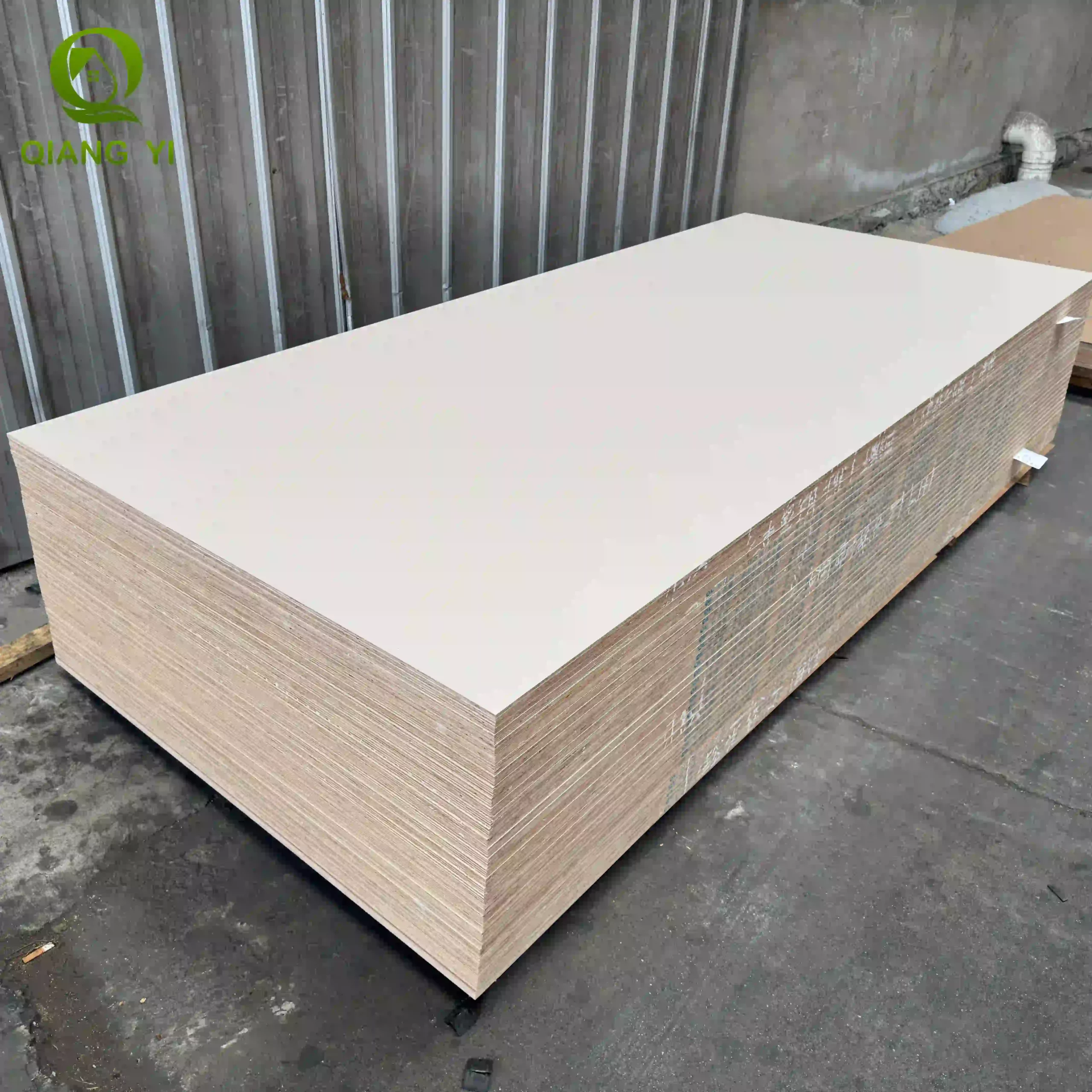
Lem beras ketan untuk kayu lapis multifungsi
Pati beras ketan memiliki viskositas yang kuat setelah gelatinisasi, magnesium klorida merupakan koagulan yang sangat baik, magnesium oksida merupakan penghambat api yang kuat. Karena itu disebut kayu lapis multifungsi.
Produk ini dibentuk melalui proses pengepresan panas suhu tinggi. Keunggulan terbesarnya adalah tahan rayap, tahan api, ramah lingkungan, tahan aus, tahan suhu tinggi, tahan korosi, tahan air, sederhana dan praktis, beragam pola dan warna, dll. Ini adalah pilihan utama untuk furnitur kustom dan dekorasi interior.
Laporan tahan api FR adalah kelas B1 ((B3: Bahan Mudah Terbakar, B2: Bahan Mudah Meledak), laporan uji formaldehida ≦0,025 mg/m³ (uji suhu 72 jam)

If you interested in our product, please leave you information here, we will send you more details
Get more information about the plywood
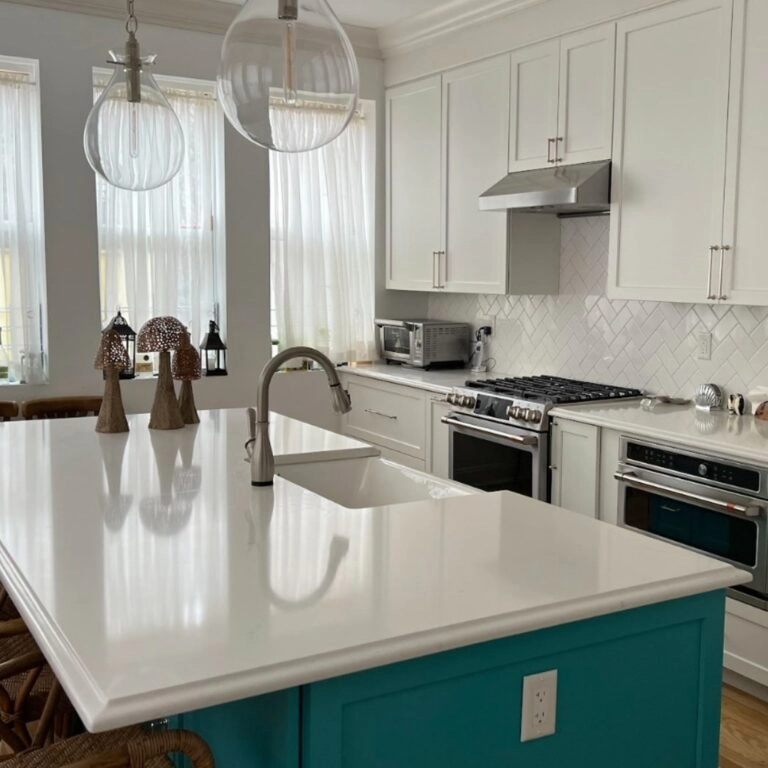
Mold-Resistant Plywood Sourcing Guide for Cabinet Manufacturing in Humid and Coastal Regions
1. Where Cabinet Manufacturers Face Mold-Related Board Problems Kitchens, bathrooms, and coastal interiors Tropical and coastal areas often have warm air and poor airflow. Wet cleaning routines, plumbing leaks, and daily condensation easily make cabinets damp. Sink units and bathroom vanities face high moisture risks. Laundry storage and base cabinets are also highly vulnerable. Wardrobes placed against poorly ventilated walls face similar threats. A panel might look perfect when it leaves the factory. However, it can still develop dark spots and musty odors after installation. Swollen edges are another common issue. Back panels and cut edges remain particularly vulnerable. These areas usually lack the strong protection found on the decorative face. The cost is higher than a stained panel Moisture damage often forces builders to replace cabinet sides and doors. This means repeating the installation process. It also requires paying for extra transport and labor. Such delays can seriously disrupt project handovers. Consequently, homeowners, developers, and distributors will likely complain. The real business risk involves heavy warranty costs and lost production time. Damaged client referrals hurt much more than just a ruined appearance. 2. Why Mold Develops in Plywood in Humid Markets Moisture reaches exposed edges and the core Wood fibers naturally absorb moisture from humid indoor air. They also take in water from direct contact. If a panel remains damp, mold will likely grow. Swelling can easily open up joints. It might also weaken the internal layer bonds. This allows trapped moisture to stay inside the wood. The overall risk depends heavily on the chosen adhesive and core quality. Moisture conditions, edge sealing, proper installation, and regular maintenance also play vital roles. Surface protection cannot compensate for weak construction Melamine facing only offers surface-level water resistance. It cannot stop moisture from entering through edge-banding gaps. Hardware mounting holes and cut surfaces on back panels are also weak points. You might compare marine board, laminated marine plywood, and ordinary plywood. Always check the waterproof classification carefully. You should also demand independent anti-mold evidence. Standard marine-board testing focuses mostly on bond strength during boiling-water exposure. These tests do not automatically require specific anti-mold or antibacterial treatments. Surface mold can still grow quickly in stagnant, highly humid rooms. Never assume that the word “marine” guarantees a mold-proof product. 3. What to Look for in Mold-Resistant Plywood Check core quality and continuity Cabinet carcasses, shelves, and doors require careful inspection. Check if the core uses a single wood species or a mixed blend. You must also see if the veneers are tightly arranged. A full eucalyptus core offers good strength and density. However, the wood species alone does not guarantee mold resistance. Always inspect the panel cross-section. Look closely for hidden gaps, empty voids, and weak bonding. Evaluate adhesive, moisture resistance, and test evidence Before buying, you should confirm these details: The specific core material and the exact construction method. Actual waterproof or moisture-resistance test results for your intended use. A separate anti-mold test report, which must include the sample description and performance grade. Consistent board thickness, overall flatness, and stable moisture content. Clear guidance for properly sealing edges, joints, and installation penetrations. The term “waterproof plywood for kitchen” does not represent a single universal grade. Class II waterproof performance often suits humid furniture applications well. However, this rating does not mean a cabinet can sit in standing water. It also cannot survive indefinite immersion. 4. How QIANGYI PLYWOOD Addresses the Risk Full eucalyptus core and fully interlocked construction Our glutinous rice glue plywood features a 100% full eucalyptus core. We do not use a cheaper poplar-eucalyptus combi core. Our factory selects premium Grade A material for production. We apply a fully interlocked core construction method. This involves a continuous cold- and hot-pressing process. As a result, the core contains no empty voids or overlapping gaps. Its cross-section remains tightly packed, much like solid wood. This solid structure creates a very flat substrate. It offers excellent resistance against edge chipping during CNC carving, grooving, and drilling. It also performs exceptionally well for PUR edge banding. Glutinous rice adhesive and controlled processing Our process uses Lingmei glutinous rice adhesive. This material is made from glutinous rice flour, magnesium chloride, magnesium oxide, and water. Once it cures, the glue builds a thick shield around the wood fibers. This step blocks the tiny channels where water normally enters. The magnesium-based parts set up an alkaline setting. Also, the deep soaking of the glue manages dampness very well. These actions work together to stop mold from growing easily. The standard moisture-content specification for this item sits at 8%–14%. Please check and confirm the exact needs for your specific order. Please see our AA wood-core waterproof melamine-faced plywood for furniture to explore a specific product option and view detailed finish choices. 5. Evidence and Purchasing Value for Humid-Market Projects What the test report says A testing document examines an 18 mm glutinous rice glue plywood sample. QIANGYI PLYWOOD provided this specific material. The evaluation followed the JC/T 2039-2010 standard. According to the results, the board achieved an anti-mildew rating of Grade 0. Furthermore, it showed an antibacterial rate of more than 99%. The document clearly explains that Grade 0 means there is no mildew present. For the antibacterial part of the test, the researchers used Escherichia coli and Staphylococcus aureus. At the same time, the anti-mildew assessment involved several types of fungi. This group specifically included Aspergillus niger. You can ask us to verify the test report for your specific product choice. Kitchen and bathroom projects require extra attention. Therefore, you should also review the Class II waterproof test results. Pay close attention to the reported 24-hour water absorption data. The official thickness-swelling rate sits at no more than 2.4%. A Philippine distributor’s market experience A Philippine distributor first contacted our team online in early 2026. This client later visited our official booth at the Canton Fair in March. After reviewing our physical samples, the buyer placed an initial order in April. That first shipment featured a single color design. Following the successful delivery, the ENF grade and smooth surface finish really stood out. The impressive waterproof and termite-resistance features also quickly attracted local cabinet and furniture customers. You might need to compare marine plywood vs. ordinary plywood for a project. Always match the core type and adhesive quality to your needs. You must also align the moisture resistance and anti-mold evidence with the finished furniture’s actual environment. Make sure to confirm the exact application and board thickness. Check the face design, edge treatment plans, and laboratory reports carefully before ordering. Meet QIANGYI PLYWOOD at THE 2026 GUANGXI INTERNATIONAL FOREST PRODUCTS AND WOOD PRODUCTS EXHIBITION. You will find us at Booth D5T-06. The event takes place at the Nanning International Convention & Exhibition Center from November 21–23, 2026. 6. FAQ Q: Will QIANGYI PLYWOOD Glutinous Rice Glue Functional Laminate Plywood get moldy? A: The panel successfully prevents mold growth under normal indoor conditions. This includes the high humidity and slight condensation typically found inside kitchens and bathrooms. This protection comes from its Grade 0 anti-mildew performance and the dense, mildly alkaline adhesive layer. However, extreme conditions can still damage any wood-based panel. Severe, persistent plumbing leaks pose a massive threat. Prolonged immersion in standing water without proper airflow will also cause harm. You must ensure proper ventilation and thorough edge sealing to guarantee long-term durability. Q: Is it suitable for the humid environment of the South? A: Yes, it works very well. The board features a reliable Class II waterproof performance. It also boasts a reported 24-hour water absorption and thickness-swelling rate of no more than 2.4%. The material perfectly suits properly designed kitchen and bathroom cabinets. However, it cannot handle permanent water immersion. Q: Is marine plywood automatically mold-resistant? A: No, that is not necessarily true. Marine plywood standards, such as BS 1088, primarily evaluate structural bonding strength. They test this under highly demanding wet conditions. This often includes boiling-water exposure, which experts commonly discuss regarding WBP performance. These tests focus heavily on preventing layer delamination. However, this process does not establish any chemical or physical resistance against indoor fungi. Aspergillus niger is a prime example of such a threat. For modern cabinet applications, you should always request a dedicated anti-mildew report. Make sure it covers indoor fungi testing, such as an evaluation based strictly on JC/T 2039-2010. Q: Does a melamine face prevent mold inside plywood? A: No surface finish can completely protect every exposed edge or open joint. You must specify a highly suitable core and a reliable adhesive. Furthermore, installers must properly seal all cut edges, screw holes, and installation penetrations. Q: What should cabinet manufacturers confirm before buying mold-resistant plywood? A: Buyers must confirm the exact core species and verify the fully interlocked construction. You should also check the thickness consistency and moisture tolerances. Always review the waterproof classification, the official anti-mold report, and the surface finish quality. Finally, discuss the factory’s batch inspection arrangements. You need to request a physical sample. Then, check that all technical documents perfectly match the quoted product. You can easily reduce your sourcing risk today. Simply send us details about your target market and specific cabinet application. Please include your required size, board thickness, core choice, and surface preferences. Do not forget to mention your estimated order quantity. Our team can help match you with the perfect panel. We will provide all relevant test documents and quickly arrange physical samples. You can also meet us directly at Booth D5T-06 in Nanning from November 21–23, 2026.
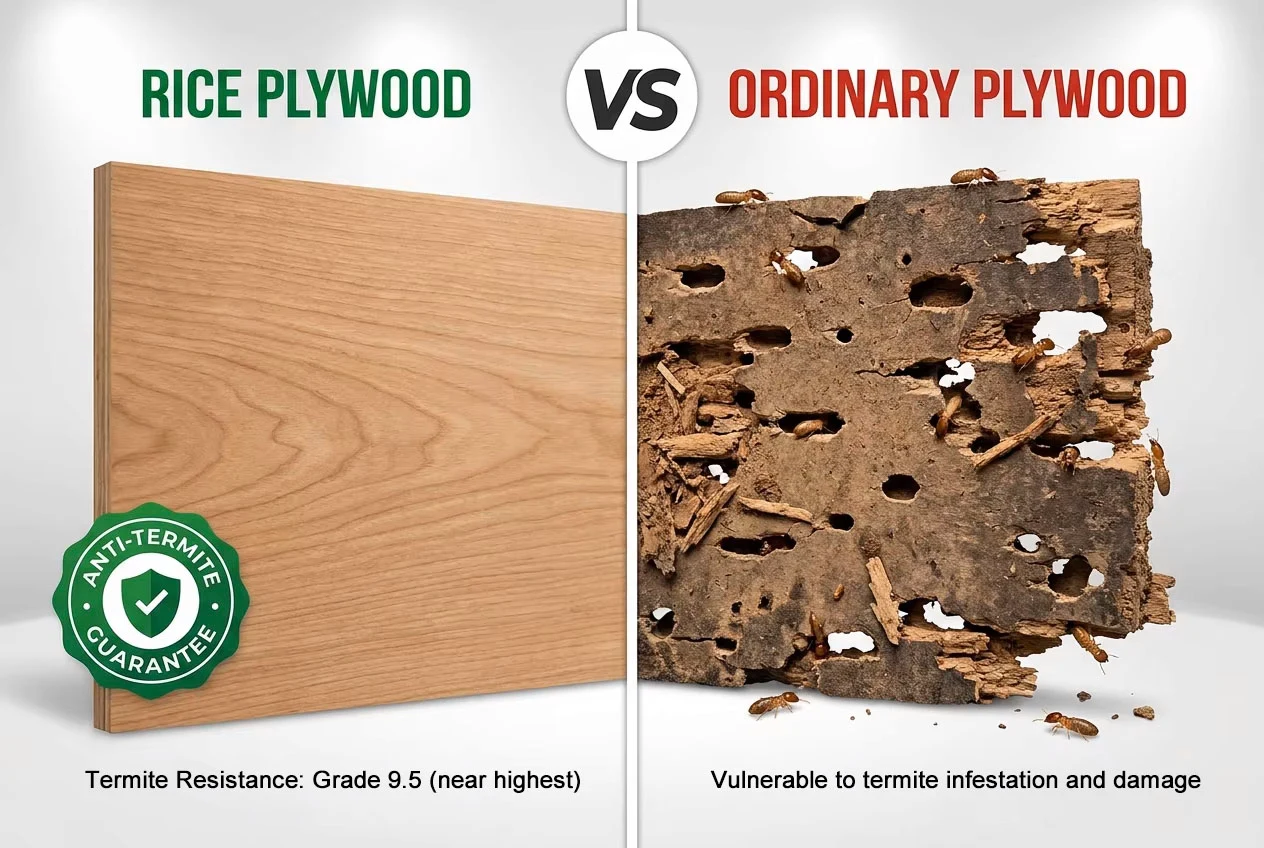
Termite-Resistant Plywood Checklist for Resort Contractors
A resort guest room might appear perfectly finished. However, hidden spots like wardrobes, vanity units, and decorative wood wall paneling remain highly prone to termite damage. Finding this issue after handover leads to the expensive removal of fitted furniture. It also requires repairs to nearby finishes. Meanwhile, interruptions to room turnover can directly hurt operating revenue. For general contractors and procurement teams working on tropical or coastal resort properties, termite-resistant plywood requires careful scrutiny at the sample-approval stage. It includes verification of reliable test evidence and on-site installation conditions, to reduce future risks. How Hidden Termite Damage Creates Costly Resort Fit-Out Problems High-Risk Areas in Guest Rooms and Built-In Furniture You should check wardrobes placed against outside walls. Also, inspect vanity units located near plumbing. Look closely at minibar cabinets and timber-lined service zones. These closed spaces can hide termite action for a long time. A neat laminate face does not show what is going on at a cut edge. It also hides issues at a screw hole or an exposed plywood core. Poolside bungalows might face constant moisture contact. At the same time, ground-level villas often have more connection points near plants and dirt. How Termites Turn Small Defects Into Project Costs Replacing a ruined cabinet side usually demands taking off custom cabinet doors. You also have to remove countertops, hinges, and nearby finishing trim. Suppose plywood from the same batch is installed across many guest rooms. In that case, a termite complaint in just one room might cause the temporary shutdown of an entire building for inspection. Contractors could then face drastically higher labor costs. They might deal with contractual claims for project delays. Disputes over supplier responsibility can also arise. Prevention begins by picking termite-resistant panels. These panels must be backed by compliant test reports early in the project. Why Ordinary Plywood May Fail in Termite-Prone Interiors Wood Fibers and Concealed Entry Routes Termites eat the cellulose found in wood. They can access hidden furniture spaces through tiny cracks in concrete. They also enter via openings around electrical conduits. Standard edge-banding strips offer only physical coverage. They cannot stop termites from attacking the inner veneers. Even a beautiful decorative surface leaves the wood fibers open to attack if the core lacks termite protection. Therefore, edge sealing needs to work together with the plywood’s own termite resistance. It should also be paired with a building-wide pest-management program. Why Marine and Melamine Plywood Need Separate Checks Is laminated marine plywood termite resistant? Not automatically. Marine-grade bonding is designed to endure specific moisture exposure. It is not, on its own, proof of insect resistance. Similarly, a melamine surface enhances looks and makes cleaning easier. However, it does not certify the inner core against termites. When you compare water and termite resistant plywood, make sure to ask for distinct results for each feature. Termite-Resistant Plywood Checklist Before Resort Procurement Verify the Test Report and Match It to the Order Do not accept a basic “termite proof plywood” claim. You must check the test method, report date, and sample description. Also, verify the thickness and rating. Match those specific details against the planned purchase. Keep the approved sample to compare it with the delivered sheets. Before you release a large order, write down the exact panel construction in the purchase specification. A similar-looking decorative finish placed on a different core should never count as an approved substitute. Project check What to confirm Test evidence Termite rating and the actual test conditions Product identity Core species, adhesive system, thickness, finish Delivery control Sample match, batch markings, packaging condition Installation Cut edges, penetrations, wall clearance, pest treatment Inspect the Core and Site Conditions Request a cross-section sample. Look closely for gaps between veneers. Check for uneven construction and damaged edges. For bathroom vanities, confirm exactly how splashes and pipe penetrations will be handled. For wardrobes set against external walls, review the building’s pest-management plan. A solid procurement checklist evaluates both the panel itself and the locations where it will be installed. How QIANGYI PLYWOOD Addresses Termite Risk Lingmei Glutinous Rice Glue and Tested Resistance Our glutinous rice glue plywood utilizes Lingmei adhesive. This glue is made with glutinous rice starch, magnesium chloride, magnesium oxide, and water. The cured adhesive creates an alkaline environment. This is a key part of our strategy for termite resistance. Instead of just trusting the glue description, contractors can review the finished board’s actual test results. For a specific choice, check out our 18mm termite-resistant eucalyptus-core plywood. Eucalyptus Core and Fully Connected Veneers Our furniture-grade plywood uses 100% high-density eucalyptus veneers. It features a fully core-connected, seamless layup. This design is meant to remove internal voids and overlapping veneer flaws. The dense core boosts screw-holding strength. It also improves flatness during secondary processing. Furthermore, it decreases internal gaps. It avoid termites could use those gaps to enter the panel and build nests. Explore our 100% eucalyptus-core glutinous rice glue plywood. What Grade 9.5 Means for Resort Project Approval Read the Termite Test Result, Not Just the Rating A test report GIZ/TR-2024-0301-0186 shows Grade 9.5 for Glutinous Rice Glue Multi-functional Plywood based on GB/T 18260-2015. The four-week laboratory test utilized 18mm plywood. Inspectors observed minor damage. This included one or two termite tunnels or traces. That serves as helpful evidence of resistance under those specific test conditions. However, it is not a guarantee that every installed panel will stay completely untouched forever. A Mauritius Customer Case and the Next Procurement Step QIANGYI PLYWOOD has been delivering 100% eucalyptus core multi-layer boards in large volumes to furniture makers in Mauritius. We also supply other Indian Ocean island markets extensively. Multiple full cabinet deliveries have already been completed. The island climate features severe salt spray, intense humidity, and strong heat. This harsh environment has proven the structural stability of our plates. They perform well during stable processing. They also hold up in moisture-proof packaging for shipping and throughout long-term service. This provides a very dependable reference for batch material selection in coastal resort projects. For direct specification discussions, please visit QIANGYI PLYWOOD at THE 2026 GUANGXI INTERNATIONAL FOREST PRODUCTS AND WOOD PRODUCTS EXHIBITION. Find us at Booth D5T-06, Nanning International Convention & Exhibition Center, from November 21 to 23, 2026. Bring your project drawings and target panel specifications. We can then discuss proper samples and relevant test evidence. FAQ Q: Is glutinous rice glue plywood suitable for humid coastal resorts? A: Yes. Our glutinous rice plywood passed the Class II waterproof test report. Therefore, it can be applied to humid/wet condition furniture. It’s marine grade plywood perfect for kitchen/ bathroom cabinet. Q: How should contractors judge plywood quality before installation? A: Evaluate the flatness and the exposed core. Check the thickness consistency and edge finishing. Also, review the matching test report. Always keep an approved sample on site. Q: Is marine plywood automatically termite resistant? A: No. Moisture-resistant bonding and termite resistance are entirely different properties. You must request evidence for both. Q: Does Grade 9.5 mean a resort will never need pest treatment? A: No. The grade only applies to the tested specimen. Termite monitoring remains important. Proper sealing and regular building maintenance still matter greatly. Are you planning a resort fit-out? Send us your room applications, needed thickness, quantities, and final destination. We can talk about a proper panel specification. We will also provide the supporting test report before you approve the order.
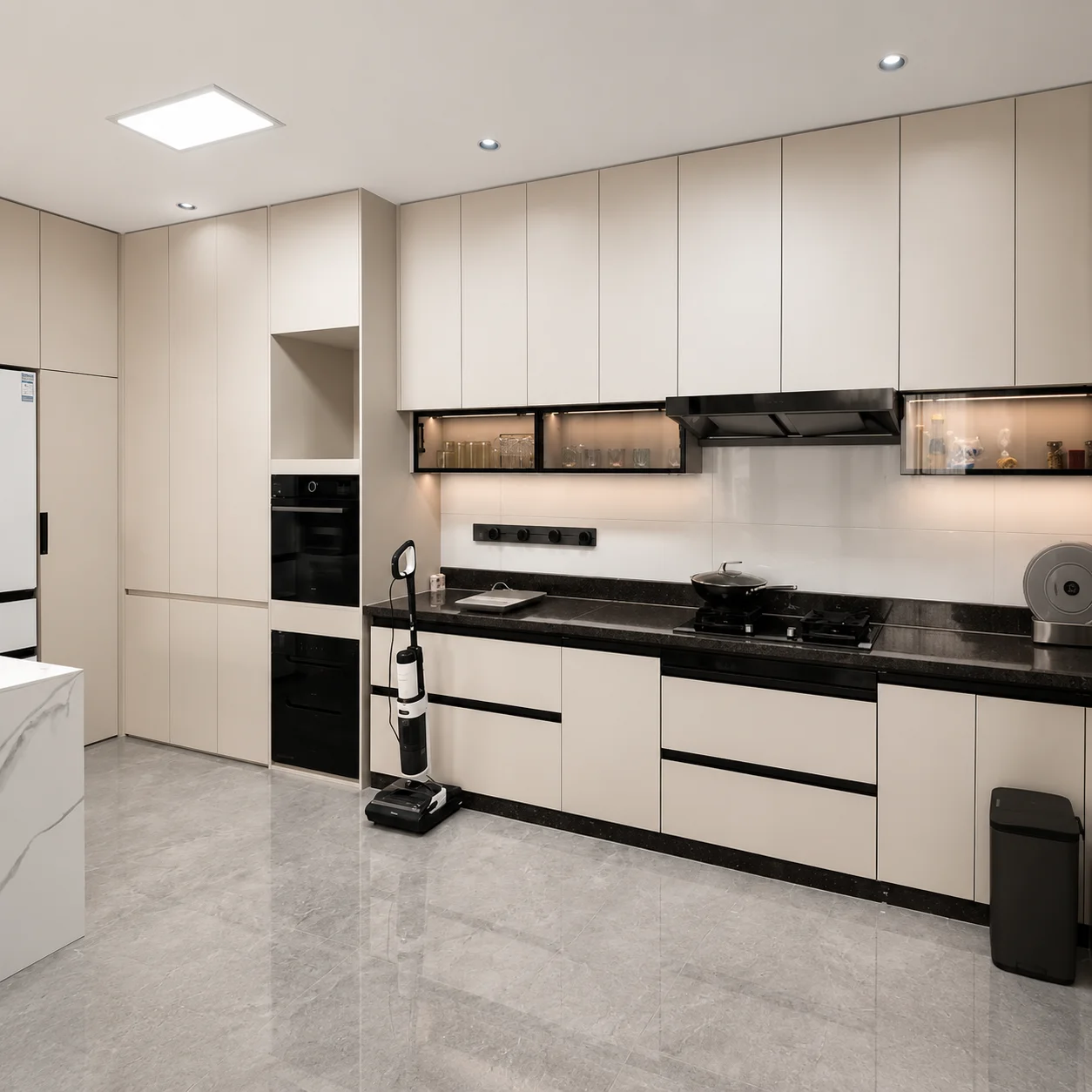
Fireproof Plywood Comparison for Hotel Interior Procurement
Three suppliers quote fireproof plywood for a hotel renovation. Their samples look similar, but one says “B1,” another mentions surface treatment, and the third lacks a finished-panel report. Which can the contractor submit for approval? That uncertainty matters more than a small price difference. Rejected panels can hold up cabinetry, wall finishes, and guest-room handover. Compare actual panels rather than quotation labels. Here, “fireproof plywood” means flame-retardant plywood, not noncombustible wood. When Fireproof Plywood Selection Holds Up Hotel Interior Approval Similar Plywood Samples, Different Fire-Performance Claims Consider panels for guest-room headboards, for built-in wardrobes and for reception joinery. A woodgrain finish may be satisfactory to the designer, but to the reviewer it is necessary to provide evidence of the specified reaction-to-fire performance. A claim of B1 flame retardancy needs to be supported by a description of the test method and of specimens tested. Approval requirements for a guest-room wardrobe, corridor wall finishes, and joinery off a restaurant would typically differ. The material schedule must reflect these differences and not allocate one grade to the entire space. An unfinished-panel report cannot automatically verify a laminated part of different completion status. Is this configuration even relevant? Material Rejection, Rework, and Delayed Handover Mismatches found after cutting can mean reworking of edge banding and machining. Even earlier resubmission of samples can delay purchasing. Check the fire performance data of alternative materials at the quotation stage. What may appear to be a cheaper sheet through the purchase process could end up costing more after consideration of the necessary labor, the cost of an alternative veneer, and additional approval time required by the workshop and site. This will only cause additional delay to both parties. Why Fireproof Plywood Options Cannot Be Compared by Label Alone The Role of Wood, Adhesives, and Flame-Retardant Treatments Wood veneer is a combustible material. The properties of the adhesives, treatments, and panel construction can greatly affect the behavior of the finished product. Some products are treated on the surface, whereas others include mineral components in the bonding agent. Neither of these approaches constitutes a specific classification name. The specific fire test matters because heating may involve flame spread, energy release, smoke production, or droplets. A short promotional flame demonstration cannot replace these measured outcomes, especially when people will sleep in the rooms where the materials are installed. Note that reaction-to-fire classification of panels differs from the fire resistance of complete doors or partitions. Why Thickness, Finishes, and Installation Details Matter Factors such as PET facing, melamine, coatings, and thickness variations need to be taken into account when determining test applicability. Cutting and edge finishing must be executed within approved parameters. You have dozens of wardrobe fronts to match. Make sure to clarify all these details prior to approving the sample. No one wants to spend hours of work cutting panels that were based on an 18 mm melamine-faced board when the report said it was some other specimen. It’s better to clear up any confusion before the panels are nested for cutting on the CNC. How to Compare Fireproof Plywood for Hotel Interiors Compare Three Supply Options Against the Same Project Requirements When purchasing fire-retardant plywood, compare all quotes on an ‘equal basis’ against identical specification requirements and do not just go for the lowest price offer. Panel option What to compare Potential procurement gap Standard decorative plywood Finished-panel test evidence Appearance does not confirm flame retardancy Surface-treated plywood Treatment system and tested finish Unverified substitutions during fabrication Mineral-adhesive plywood Panel construction and fire-test results Adhesive claims without matching panel evidence These are not performance rankings. For example, a surface-treated panel that has been tested may be preferred over an untested mineral-adhesive panel, or vice versa. Set Acceptance Criteria Before Comparing Prices Check the classification, applicable standard, room of use, and panel configuration. Compare the development of fire, the amount of heat produced by the fire, the amount and type of smoke produced by the fire, and the burning droplets produced by the fire, wherever applicable. After that, please check the dimensions, surface finish, machining, and sample availability of the mentioned product. In the RFQ, have each supplier list out the proposed panels by code and list out any substitutions with a separate answer. This allows purchasing, fabrication, and site to use the estimator’s work for comparison purposes. How QIANGYI PLYWOOD Addresses the Fire-Performance Requirement The Magnesium-Based Ingredients in Lingmei Glutinous Rice Glue Glutinous rice glue plywood is made with Lingmei adhesive composed of glutinous rice flour, magnesium chloride, magnesium oxide, and water. The plywood is flame-retardant due to the content of magnesium oxide. However, classification of plywood has to be done by means of testing the finished product. Our eucalyptus core plywood is offered with full eucalyptus veneers as opposed to a combi core; this helps to define repeat orders. The Cured Adhesive Structure Within the Plywood Panel Our veneers are made up in a full core connected formation, with adhesive applied layer by layer. This type of construction allows for a complete and closely fitted cabinet or decorative joinery item, unlike the partially connected core found in some constructions. The machining of long headboards benefits from core continuity. Fire testing is the only way to determine the behavior of finished panels under exposure. What the Flame-Retardant Test Report Means for Hotel Procurement Read Report WT245100363 and Its Tested Limits Report WT245100363 describes the test results for the burning behavior of tested items and compares them against the B1 (B) requirements with qualified results. The test was conducted according to GB/T 20284-2006 and GB/T 8626-2007. Test item Measured result What it tells a buyer Fire growth rate index, FIGRA 79.8 W/s Below the stated 120 W/s limit Total heat release, THR600s 3.9 MJ Below the stated 7.5 MJ limit Smoke classification s2 A defined smoke category, not smoke-free Burning droplets/particles d0 No burning droplets/particles under the specified test conditions The lateral flame spread was also in compliance with the test requirements. Note that the test results are specific to the tested specimen and may not reflect results for other thicknesses or finishes. See the complete report for details. Match the Tested Product to the Approved Sample and Purchase Order Before releasing a hotel order, follow a simple sequence: 1. Verify local project standards and locations where classification is required. 2. Verify that the information in the report corresponds with the requested thickness, eucalyptus core, and decorative face. 3. Approve the physical sample and note the exact configuration in the corresponding purchase order. 4. Check delivered panels against the approved sample prior to cutting. This helps avoid changes after fabrication. Ready to finalize your hotel interior plywood specification? Send QIANGYI PLYWOOD your panel schedule, required thickness, decorative finish, and applicable fire-performance criteria. Request matching samples, finished-panel test documentation for the proposed configuration, and a project quotation before placing your order. We look forward to meeting you at THE 2026 GUANGXI INTERNATIONAL FOREST PRODUCTS AND WOOD PRODUCTS EXHIBITION, to be held on November 21–23, 2026, at Nanning International Convention & Exhibition Center, Booth D5T-06. Please bring the relevant project drawings and panel requirements. FAQ Q: Is fireproof plywood completely noncombustible? A: No. Fireproof plywood achieves its flame-retardant effect through incomplete combustion. The wood chars only on the surface and does not produce an open flame. However, this does not mean the plywood is completely noncombustible. Q: How does fire-retardant plywood compare with standard plywood for hotel interiors? A: Compare finished panels against the required classification. Standard plywood without matching evidence cannot be assumed to meet the same requirement as a tested flame-retardant panel. Q: Is this full eucalyptus core or a combi core? A: Our glutinous rice glue plywood uses a full eucalyptus core with fully core-connected veneer assembly. Q: Can flame-retardant plywood be laminated or cut without affecting its classification? A: Yes. The original fire-performance classification remains valid after lamination or cutting. The test and classification scope covers laminated plywood, so lamination does not invalidate its flame-retardant performance. Q: Do you have test reports for the fire-retardant performance? A: Yes. The burning-behavior report includes B1-related results such as FIGRA, heat release, smoke classification, and burning droplets.
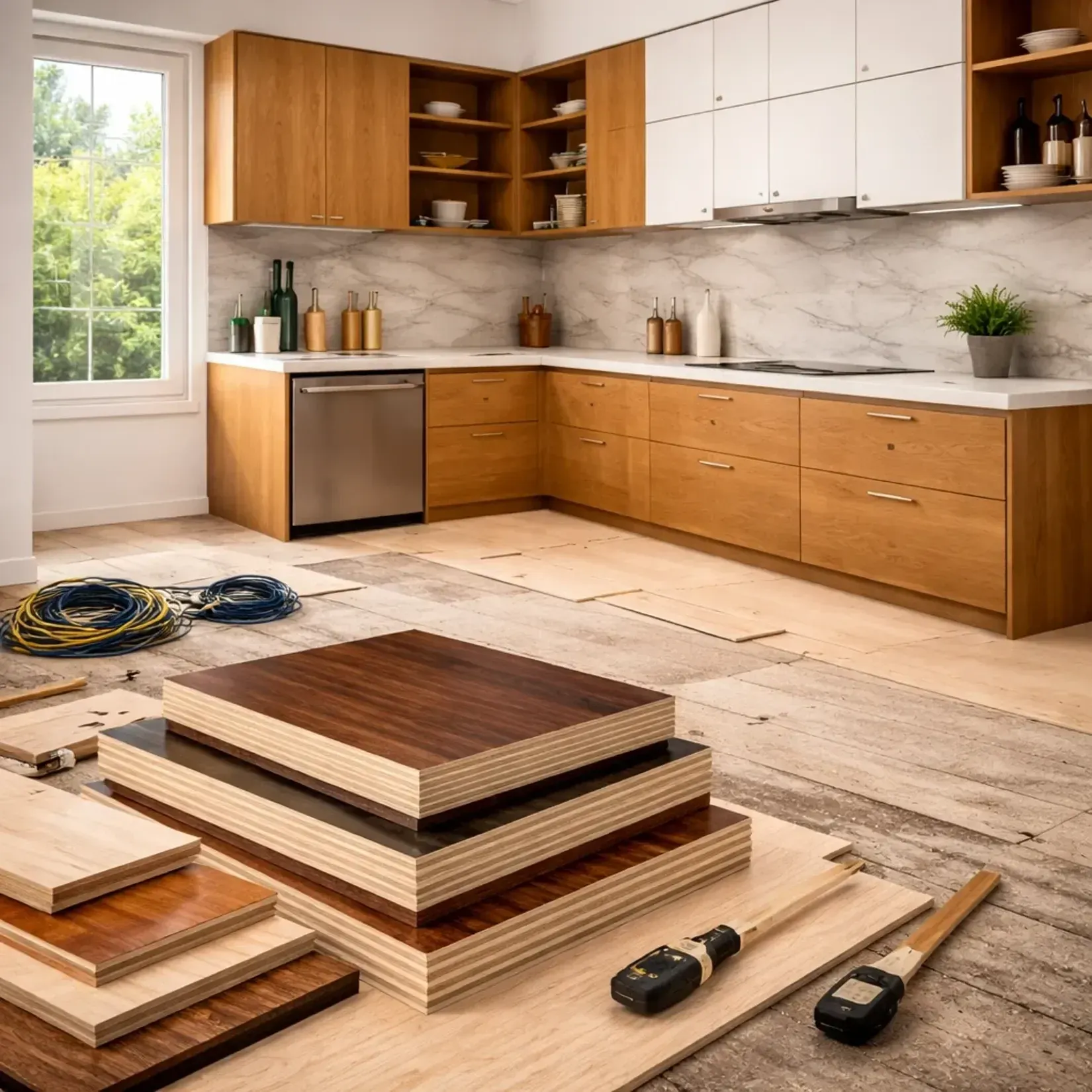
Panduan Pencarian Plywood Tahan Kelembaban untuk Kabinet Wastafel
Kabinet wastafel mungkin terlihat sempurna saat keluar dari pabrik. Namun, hanya beberapa bulan kemudian, masalah garansi bisa muncul. Kebocoran pipa kecil atau pembersihan basah yang sering dapat menyebabkan bagian bawahnya membengkak. Hal ini menyebabkan lapisan pinggiran terkelupas. Kemudian, pemasang harus menangani pekerjaan perbaikan yang sulit. Produsen kabinet dapur perlu melindungi produk jadi mereka. Mereka juga ingin menghindari kunjungan ulang yang mahal. Oleh karena itu, memilih kayu lapis tahan lembap bukan hanya tentang menemukan papan dengan stiker tahan air. Ini tentang kinerja material yang sebenarnya. Mengapa Pembengkakan Kabinet Wastafel Menimbulkan Masalah Mahal bagi Produsen? Di bawah wastafel, area tersebut terpapar tingkat kelembapan yang berbeda dibandingkan dengan rak dapur. Kebocoran pipa, kondensasi pada pipa, dan pembersihan dengan kain basah dapat menyebabkan panel membengkak, sehingga menghasilkan kabinet yang tidak sedap dipandang dan bagian-bagian yang tidak pas sehingga perlu diperbaiki dan menimbulkan klaim purna jual. Alih-alih mengandalkan label "tahan air", saat memilih material untuk proyek, Anda harus menguji bagaimana perekat dan inti panel akan bereaksi terhadap pembengkakan akibat kelembapan. Masalah pada kabinet seringkali dimulai dari tempat yang tidak terlihat. Di mana Kerusakan Akibat Kelembapan Pertama Kali Muncul di Kabinet Wastafel Bayangkan sebuah unit sewaan di mana saluran pembuangan yang longgar meneteskan air ke papan dasar. Genangan air tersebut tersembunyi di balik botol-botol pembersih yang tinggi. Genangan itu tetap di sana tanpa disadari selama berminggu-minggu. Di rumah lain, uap air menumpuk di pipa air dingin. Kelembapan itu segera menetes ke dalam lubang yang terbuka dan tidak tertutup rapat. Titik terlemah biasanya adalah lantai bawah, lubang pipa, sudut belakang, dan sambungan di dekat dasar lantai. Begitu sisi yang dipotong menebal karena air, masalah akan muncul. Bahkan lapisan permukaan yang sempurna pun tidak akan rata lagi. Bagaimana Panel yang Membengkak Menyebabkan Pengerjaan Ulang dan Klaim Garansi Memperbaiki papan dasar yang menggembung jarang sekali semudah mengganti yang lain. Tukang reparasi mungkin harus melepaskan pipa-pipanya terlebih dahulu. Mereka juga perlu mengeluarkan rak dan memotong bagian-bagian di dekatnya. Ini berarti harus merencanakan kunjungan baru ke rumah tersebut. Pada dapur pesanan khusus, lemari yang tertutup rapat dan meja dapur yang berat menghalangi akses mudah. Pabrik akhirnya menanggung biaya tambahan untuk tenaga kerja, perjalanan, dan waktu. Sementara itu, pemilik rumah hanya melihat produk yang dibuat dengan buruk. Hanya satu bagian kayu yang buruk dapat mengubah penjualan yang baik menjadi perselisihan garansi yang rumit. Mengapa Panel Kabinet Wastafel Biasa Mengembang Meskipun Permukaannya Dilindungi? Lapisan atas yang mengkilap dapat menghalangi cipratan air biasa. Namun, permukaan itu hanyalah satu bagian dari keseluruhan papan kabinet. Air masih dapat menemukan jalan masuk ke dalam kayu. Air Masuk Melalui Tepi yang Dipotong dan Lubang Pipa Para pekerja harus membuat lubang pada lembaran kayu untuk pipa pembuangan wastafel. Kayu bagian dalam yang baru terbuka itu tidak memiliki lapisan pelindung asli dari pabrik. Jika lubang dibiarkan terbuka, air akan langsung meresap ke dalam serat kayu. Hal ini menyebabkan papan mengembang dan menebal. Strip tepi yang longgar, lubang sekrup yang tertutup buruk, dan air yang terperangkap di lantai bawah menciptakan masalah serupa. Menambahkan wadah penampung tetesan plastik dan menutup setiap celah sangat membantu. Namun, langkah-langkah tersebut tidak dapat menutupi lem yang buruk di dalam papan itu sendiri. Mengapa Kayu Lapis Biasa dan MDF Bereaksi Berbeda terhadap Kelembapan? MDF terbuat dari serbuk kayu yang dipadatkan. Hasilnya berupa permukaan yang sangat halus setelah dicat. Namun, sisi-sisi yang terbuka dapat mengembang parah jika terkena air. Kayu lapis menggunakan lapisan kayu asli yang direkatkan. Reaksinya terhadap air sangat bergantung pada jenis kayu, lem yang dipilih, dan cara pemadatannya. Fakta ini sangat penting ketika Anda membandingkan kayu lapis laut dengan kayu lapis biasa. Label nama sederhana tidak dapat membuktikan bagaimana panel tertentu akan bereaksi setelah terkena air. Pembeli perlu melihat fakta pengujian aktual dan metode pembuatannya. Mereka tidak boleh berasumsi bahwa setiap produk kayu lapis atau MDF akan berkinerja dengan cara yang sama. Cara Memilih Plywood Tahan Kelembaban untuk Kabinet Wastafel Rencana pembuatan alas wastafel yang baik harus mempertimbangkan bagian dalam papan. Selain itu, rencana tersebut juga perlu melindungi potongan-potongan baru yang dibuat selama proses pembangunan. Prioritaskan Perekat Tahan Air dan Integritas Inti Selalu tanyakan kepada penjual tentang lem yang digunakan pada lapisan kayu. Cari tahu apakah bagian tengahnya memiliki bagian yang tumpang tindih, lubang kosong, atau sambungan yang lemah. Inti yang padat dan halus membuat pemotongan dan pemasangan sekrup jauh lebih andal. Uji pengelupasan dengan perendaman mengungkapkan apakah lem tersebut mampu bertahan dalam kondisi basah tertentu. Sementara itu, uji pembengkakan ketebalan memeriksa faktor yang sama sekali berbeda. Untuk proyek dapur berskala besar, cobalah menggunakan metode pengecekan dasar: *Perhatikan dengan saksama sisi yang dipotong untuk menemukan celah inti yang kosong. *Pastikan laporan pengelupasan dengan perendaman sesuai dengan papan yang Anda beli. *Lakukan uji coba singkat untuk menutup celah di sekitar lubang pipa. Periksa Ketebalan, Perlindungan Tepi, dan Spesifikasi Pembelian Orang yang mencari ketebalan kayu lapis untuk lemari biasanya menginginkan papan setebal 18 mm. Namun, ukuran terbaik sebenarnya bergantung pada bentuk lemari, berat total, dan engsel logam. Ketebalan kayu lapis untuk kabinet dapur harus dipilih bersamaan dengan gaya inti, susunan lapisan, warna atas, dan pita tepi. Pastikan menggunakan sealant kedap air di sekitar celah pipa.batas bawah, dan luka baru apa pun. Bayangkan rumah-rumah di dekat laut atau lantai yang dipel setiap hari. Untuk tempat-tempat ini, Anda juga harus memeriksa aliran udara dan cara untuk menjangkau kebocoran dengan mudah. Tidak ada papan tebal yang dapat menggantikan desain bangunan yang cerdas. Bagaimana Plywood QIANGYI Membantu Mengurangi Pembengkakan Kabinet Wastafel Di QIANGYI PLYWOOD, kami mengatasi ancaman air menggunakan campuran lem yang bersih dan kedap air. Kami juga menggunakan susunan inti kayu eukaliptus murni. Desain khusus ini mencegah terbentuknya rongga kosong di dalam kayu. Kami tidak hanya mengandalkan warna lapisan atas yang indah untuk perlindungan. Lem Beras Ketan Mendukung Perekat Tahan Kelembaban Plywood lem beras ketan kami menggunakan perekat Lingmei. Lem unik ini dicampur dari pati beras ketan, magnesium klorida, magnesium oksida, dan air murni. Lem basah meresap jauh ke dalam lubang-lubang kecil serat kayu. Setelah mengering, lem tersebut membentuk jaring penghubung yang rapat dan sangat kuat. Plywood akhir dibuat untuk mencapai emisi formaldehida ultra-rendah kelas ENF. Pada saat yang sama, plywood ini mempertahankan ikatan yang kuat dan tahan air. Kami meratakan lem secara merata pada setiap lapisan. Selanjutnya, kami melakukan pengepresan dingin selama 24 jam pada suhu ruangan normal. Kami mengeringkannya dengan hati-hati untuk mencapai tingkat kelembapan yang tepat. Terakhir, kami membiarkannya beristirahat dan mengendap dengan sempurna. Prosedur yang cermat ini menjaga kualitas lem tetap stabil di seluruh proses produksi pabrik. Ini mencegah pembengkakan akibat tumpahan yang tidak disengaja atau udara ruangan yang lembap. Selain itu, ini juga sangat mengurangi kemungkinan lapisan kayu terkelupas akibat kerusakan air. Inti Kayu Eukaliptus dan Konstruksi yang Terhubung Sepenuhnya ke Inti Meningkatkan Stabilitas Panel Memilih kayu tengah yang tepat sama pentingnya. Kami menggunakan inti kayu eukaliptus murni untuk kayu lapis beras ketan khusus ini. Kami tidak pernah menggunakan inti kayu campuran acak. Lembaran bagian dalam disusun menggunakan konstruksi yang terhubung sepenuhnya ke inti. Ini berarti potongan-potongan tengah saling menempel rapat agar tetap kokoh. Hal ini mencegah celah yang tidak perlu di dalam papan. Detail ini sangat penting ketika pekerja mengebor lubang pipa atau memasang dinding kabinet dengan sekrup. Titik lemah yang tersembunyi dapat dengan mudah merusak kabinet. Penggunaan kayu eucalyptus yang kuat dan lapisan lem yang halus memastikan produk yang stabil dan tahan lama. Sekalipun konstruksinya kuat, Anda tetap harus menutup tepi potongan tersebut. Bukti Pengujian dan Nilai Pengadaan untuk Produsen Kabinet Wastafel Pembeli cerdas membutuhkan bukti nyata akan daya rekat yang kuat, daya tahan terhadap pembengkakan, dan dukungan pabrik yang baik. Hasil Uji Ketahanan Air dan Pengelupasan dengan Perendaman Kelas II Laporan uji pengelupasan rendaman resmi, No. SZF-WT-25101715-03, menunjukkan enam sampel yang diuji. Laporan ini mengkonfirmasi tingkat kelulusan sempurna 100% dan skor yang sepenuhnya sesuai. Aturan uji Kelas II mengharuskan kayu direndam dalam air panas pada suhu 63°C ± 3°C. Skor yang bagus ini membuktikan bahwa kayu tersebut tahan terhadap kondisi basah. Namun, kayu ini tidak dimaksudkan untuk tetap terendam air selamanya. Kami juga menyediakan Komitmen Tanggung Jawab Tahan Air dan Anti-Pengembangan. Dokumen ini mencakup masalah pengembangan tepi dan kegagalan lem yang valid setelah pemasangan selesai. Pembeli harus selalu memeriksa aturan ini agar sesuai dengan pesanan dan rencana spesifik mereka. Hasil dari Pengalaman Mendalam Selama Satu Jam dan Nilai Pengadaan di Dunia Nyata Uji perendaman 72 jam yang berbeda mengamati tiga papan berbeda secara berdampingan. Pergeseran ketebalan yang tercatat adalah: Bahan Sebelum direndam Setelah 72 jam Meningkatkan Lem beras ketan untuk kayu lapis 18,20 mm 18,35 mm 0,15 mm Kayu lapis biasa 18,13 mm 19,05 mm 0,92 mm MDF 18,30 mm 20,66 mm 2,36 mm Perubahan ukuran yang sangat kecil menunjukkan nilai sebenarnya dari papan yang stabil. Tepi yang menggembung membuat pemasangan kabinet menjadi sangat sulit. Tentu saja, pengujian dasar ini tidak menggantikan pemeriksaan batch resmi. Di pasar Filipina yang sangat lembap, seorang penjual panel kayu pertama kali mencoba satu warna kayu lapis lem beras ketan kami. Mereka menyukainya, membeli lebih banyak, dan menambahkan warna baru kemudian. Kisah ini menunjukkan minat pembeli yang kuat. Namun, ini tidak mengukur masa pakai kabinet wastafel secara tepat. Sebelum memesan dalam jumlah besar, selalu periksa sampel, aturan pasti, contoh soal, dan kebijakan pengembalian. Kita bisa berdiskusi tentang semua fakta ini di PAMERAN PRODUK HUTAN DAN PRODUK KAYU INTERNASIONAL GUANGXI 2026. Temukan kami di Booth D5T-06, Pusat Konvensi & Pameran Internasional Nanning, dari tanggal 21–23 November 2026. Pertanyaan yang Sering Diajukan (FAQ) T: Apakah kayu lapis Anda terbuat dari inti kayu putih murni atau inti kombinasi? A: Plywood lem beras ketan kami menggunakan inti kayu eukaliptus utuh. Plywood ini memiliki konstruksi veneer yang terhubung sepenuhnya dengan inti. Pembuat kabinet harus memeriksa kembali detail inti yang tepat saat meminta sampel atau daftar harga. T: Mengapa kayu lapis mengembang di sekitar lubang pipa wastafel dapur? A: Pengeboran lubang pipa akan merusak serat kayu. Lapisan luar yang melindungi kayu akan terkelupas. Tetesan air kecil dari pipa, atau embun air dingin, dapat dengan mudah meresap ke dalam dinding kayu yang baru dipotong. Ketika kayu menyerap air tersebut, tepinya akan mengembang. Hal ini akan menekan pita perekat di tepi kayu dan dapat merusak lapisan luar yang bagus. T: Apakah plywood lem beras ketan Anda tahan air atau tahan terhadap kondisi laut? A: Papan kami telah lulus uji ketahanan air Kelas II di bawah peraturan nasional yang ketat. Papan ini dirancang untuk ruangan dalam ruangan yang sangat lembap. Ini termasuk lemari wastafel dapur, unit kamar mandi,dan rumah-rumah di tepi pantai. Bahan ini sangat efektif melawan cipratan air dan kelembapan yang berlebihan setiap hari. Namun, Anda tidak boleh membiarkannya terendam air dalam waktu lama. T: Bagaimana produsen kabinet dapat memverifikasi kinerja anti-pembengkakan sebelum pembelian dalam jumlah besar? A: Anda harus melihat sampel aslinya. Periksa skor pengelupasan rendaman dan bukti pembengkakan ketebalan. Tinjau gaya inti bagian dalam dan aturan inspeksi yang dijanjikan. Kertas uji harus benar-benar sesuai dengan kayu yang Anda beli. T: Apakah plywood tahan lembap masih memerlukan penyegelan tepi pada kabinet wastafel? A: Ya, tentu saja. Anda harus menutup semua potongan baru, celah pipa, dan sambungan yang lemah. Selain itu, perbaiki kebocoran air sesegera mungkin. Lem yang kuat dan kebiasaan membangun yang cerdas bekerja sempurna bersama-sama. Keduanya mencegah kerusakan kabinet yang tidak perlu terjadi.
Please fill out the form below and we will get back to you as soon as possible.