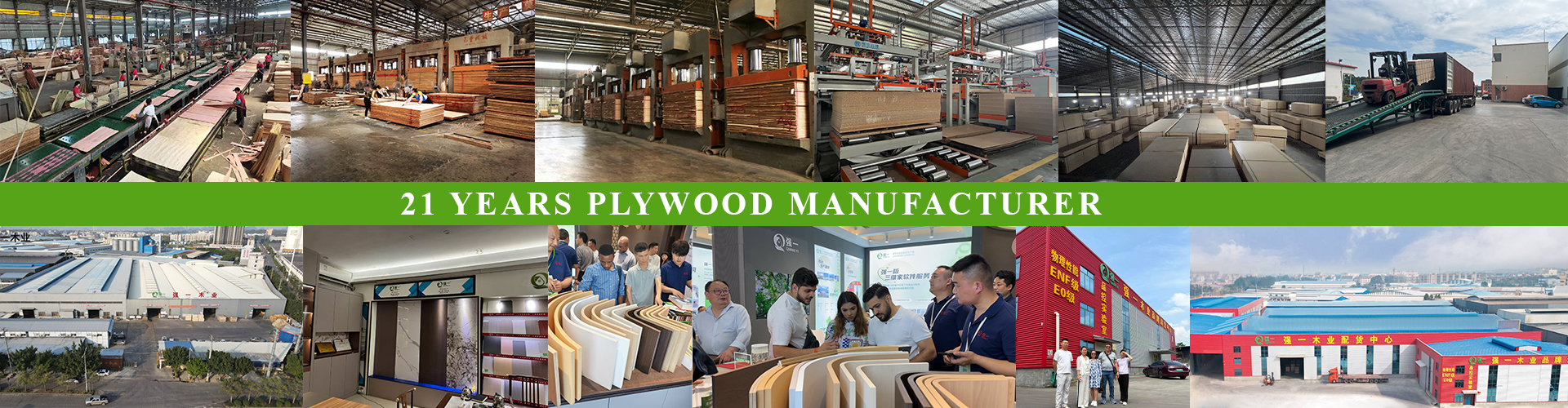
Yes ,We are manufacturer which locate in Guigang, Guangxi, also in Dongguang, Guangdong. Factory is started in the year of 2004 with more than 20 years experience for plywood production.

 Qiangyi
Two plywood sheets might appear nearly identical on the outside. However, the glues used inside them cause big differences. These differences affect gas release and moisture control. They also impact cutting stability and future project risks. Furniture makers, importers, and indoor builders must choose wisely. The best pick relies on how the wood is used. It also depends on local rules, the room climate, and the test reports provided with the board.
Natural adhesive plywood is often the top choice. It works best for jobs that need clean indoor air. It also offers a mild smell and lasts a long time. Urea formaldehyde plywood remains useful for dry rooms. It is a good fit for tight budgets. However, these panels must pass the required emission tests.
Natural adhesive plywood uses a bonding system derived partly or mainly from renewable or mineral-based materials. Depending on the formulation, this may include starch, plant protein, magnesium compounds, or other non-formaldehyde ingredients.
However, “natural glue” does not automatically prove that the finished panel is formaldehyde-free, waterproof, or structurally superior. Buyers should ask:
1.What is the measured emission from the finished plywood?
2.What is the panel’s creep performance after exposure to moisture and heat?
3.Can you provide relevant performance test reports?
A credible eco-friendly plywood adhesive should be supported by a resin declaration and panel-level test data.
Manufacturers create urea-formaldehyde resin by mixing urea with formaldehyde. This adhesive is still very popular today. It sets fast and leaves a pale glue line. Furthermore, it helps factories run more efficiently and costs less money.
Yet, this material does have a few drawbacks. Formaldehyde emissions can be an issue. Also, it struggles to resist moisture. These problems usually show up in tight rooms or damp areas. The real-world quality relies on a few key factors. These include the exact resin mix, factory oversight, and the specific panel grade. Customers must check the emission class before purchasing. They also need to look at the bonding grade, core setup, and final application. People should never buy these panels based solely on a low price.
A no-added-formaldehyde adhesive avoids introducing formaldehyde through the bonding resin, while UF resin contains formaldehyde by design. Finished-panel emissions must still be tested because wood and other components can contribute trace levels.
In addition to meeting mandatory standards such as U.S. EPA TSCA Title VI, commercial projects, including hotels and healthcare facilities, also pay closer attention to total volatile organic compound (TVOC) emissions. When large panel areas are installed, odor problems may trigger complaints and delay project handover and acceptance.
Moisture performance is determined by the complete panel system, not the glue name alone. Veneer quality, core gaps, moisture content, pressing, and edge sealing all affect stability.
For a bathroom vanity or sink cabinet, ask for immersion, bonding, and 24-hour thickness-swelling data. For a hotel wardrobe in an air-conditioned bedroom, emission control and flatness may matter more than high water resistance. For a coastal retail project, moisture-resistant bonding and sealed exposed edges should be specified together.
Natural-source adhesives are not inherently waterproof; only after modification and process optimization can they meet the requirements of humid environments.
Panel strength depends on core species, veneer arrangement, density, ply count, and manufacturing control. Adhesive selection is only one part of the structure.
|
Buying factor |
Natural adhesive plywood | Urea-formaldehyde plywood |
| Added formaldehyde in glue | Usually none, subject to formulation | Yes |
| Initial price | Commonly higher | Commonly lower |
| Moisture suitability | Must be verified by tests | Often best for dry interiors |
| Main value | Lower-emission positioning and lifecycle performance | Production efficiency and budget control |
| Key evidence | Emission, bonding, and swelling reports | Emission class, bonding grade, and QC records |
When handling B2B volume machining, purchasers need to check a few extra details. They must look at CNC tool wear and edge-banding adhesion. Thickness and quality consistency are often more important than a small price difference, because thickness variation affects CNC settings, edge banding, assembly accuracy, and appearance.
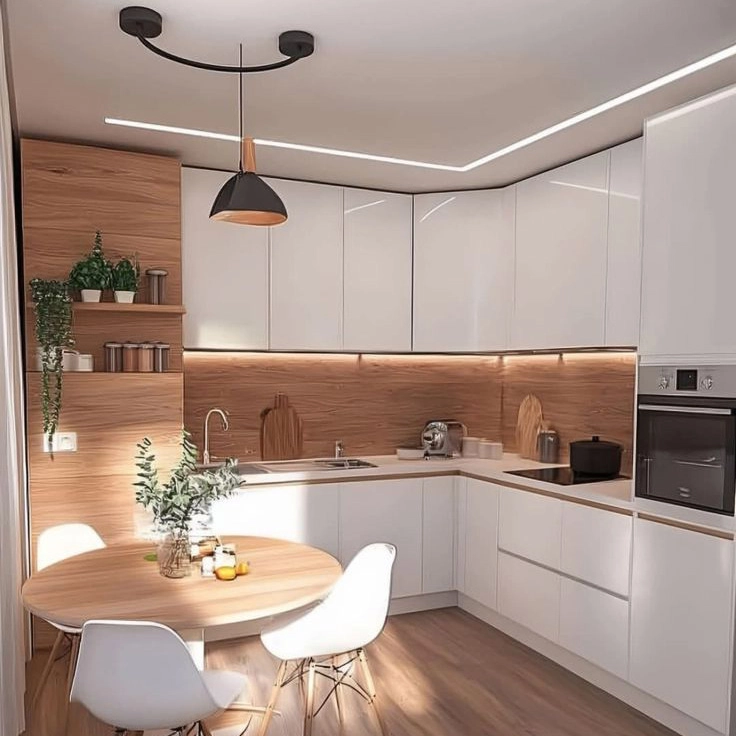
Kitchen base cabinets face leaks, cleaning water, and condensation, so moisture-resistant bond strength and edge protection should be prioritized. Bedroom wardrobes require low emissions, flatness, and reliable hardware holding. Tall doors also need balanced construction to reduce warping.
Formaldehyde-free plywood for furniture is most valuable when the supplier can match the adhesive claim with panel testing and controlled tolerances. Dry shelving or temporary furniture may not need the same specification as a sink cabinet.
Commercial projects benefit from zone-based specification:
*Hotel bedrooms: low odor, flatness, consistent decorative finish
*Bathroom cabinetry: moisture-resistant bond and protected edges
*Healthcare storage: complete supply-chain transparency documentation, emission records, cleanable surfaces, and traceable batches
*Retail counters: wear resistance and protection near sinks or beverage equipment
Using one panel grade throughout may create an unnecessary cost premium or leave wet zones under-specified. Match the board to actual exposure and maintenance conditions.
Compliant UF plywood can suit dry office storage, short-term exhibition furniture, shop displays, and other controlled interiors. Its lower initial cost may support competitive pricing.
The mistake is extending a dry-interior specification into humid areas. A panel that swells, delaminates, or causes odor complaints can create removal, remanufacturing, and installation costs far beyond the savings per sheet.
Before approving a supplier, request:
1.Finished-panel formaldehyde emission results
2.Adhesive or resin declaration
3.Bonding and water-resistance reports
4.Thickness-swelling and moisture-content data
5.Core species, ply structure, and tolerance range
6.Destination-market certificates and labels
7.Batch inspection and traceability records
Check the test method, sample description, date, unit, and issuing laboratory. “Eco-friendly,” “waterproof,” and “zero formaldehyde” are not substitutes for verifiable documents.
Consider a 200-room hotel refurbishment. Saving a small amount on each panel appears attractive, but repeated cabinet-door replacement, odor-related room delays, and site labor can erase the material saving.
Calculate total cost through panel price, machining waste, installation efficiency, callbacks, replacement parts, and warranty risk. Selecting a panel with a reasonable performance margin is the best strategy for avoiding long-term after-sales losses.
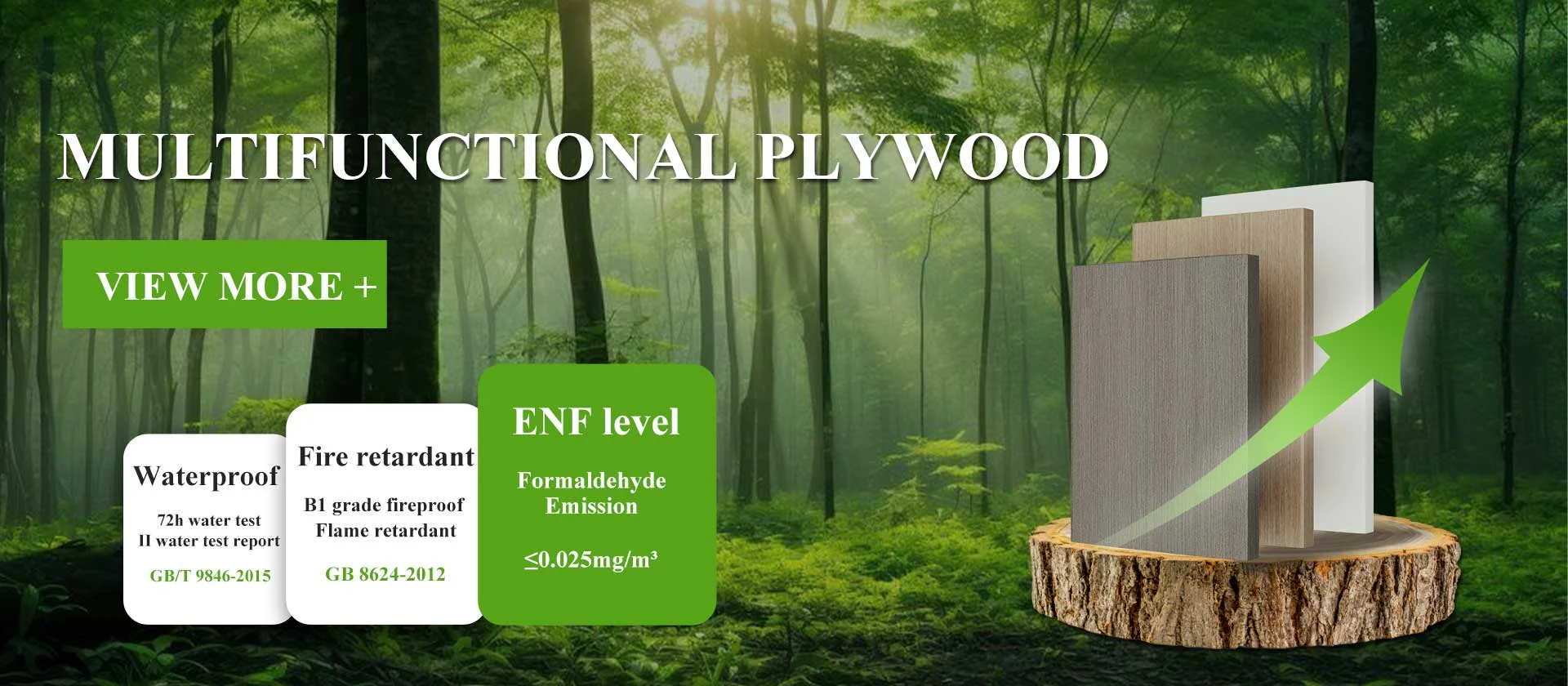
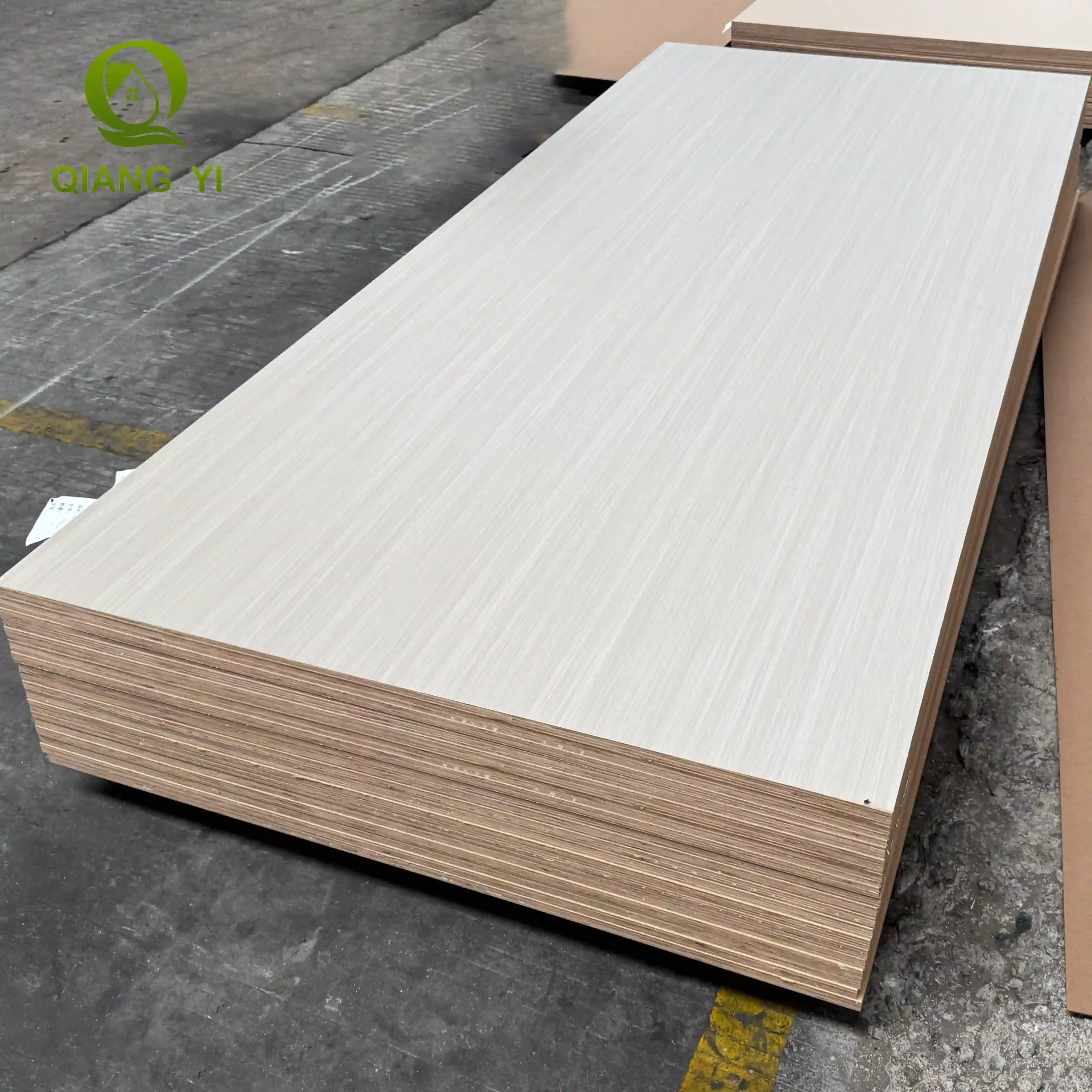
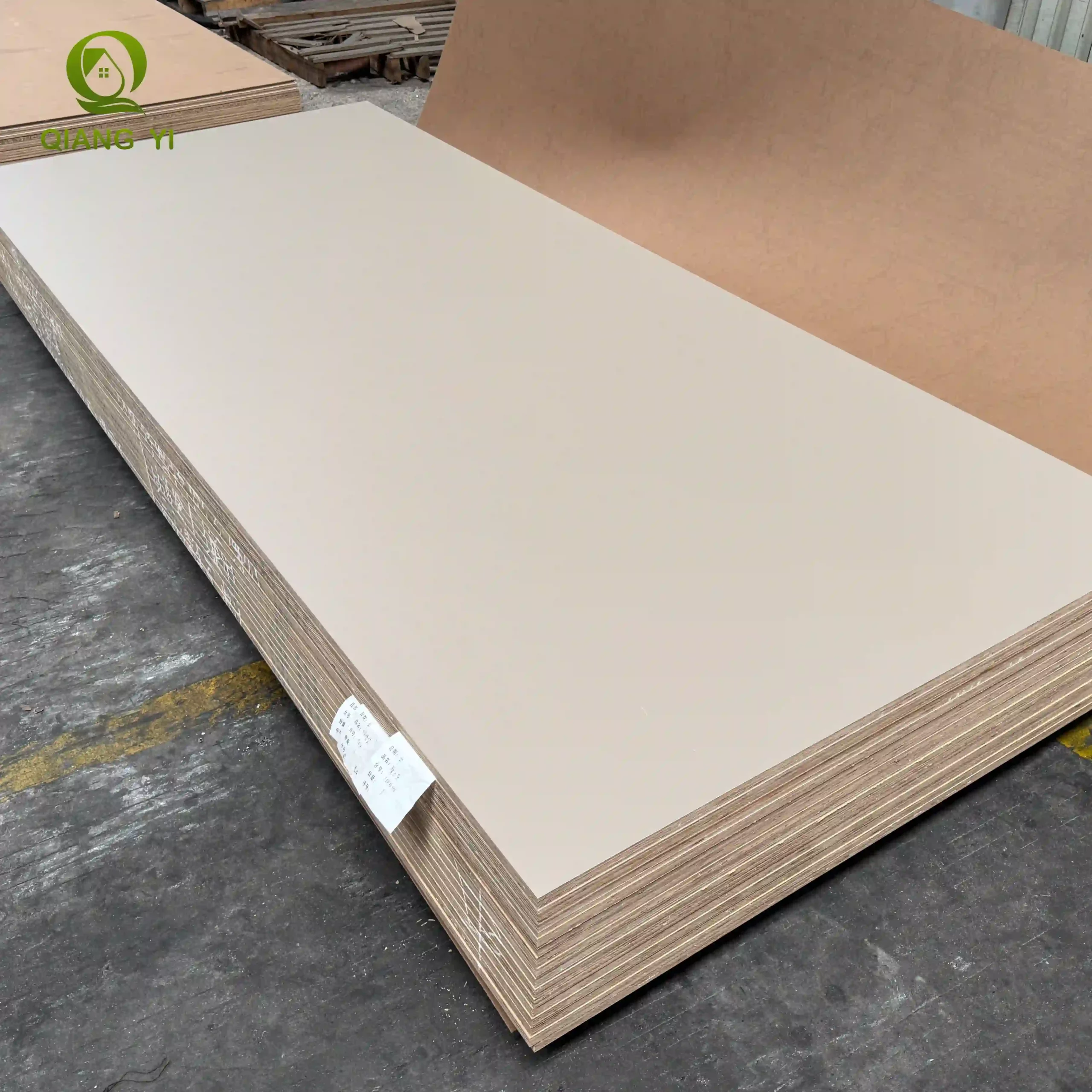
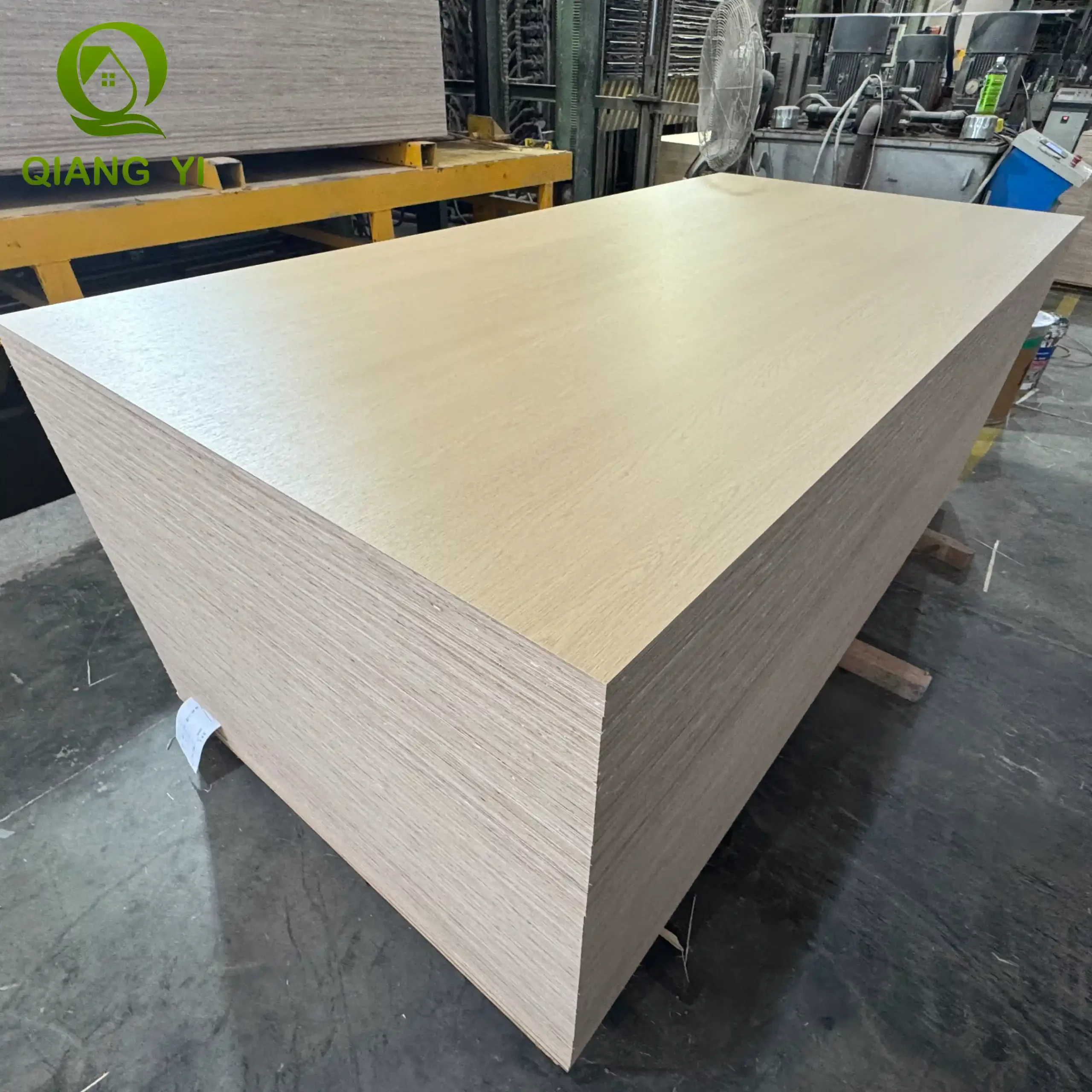
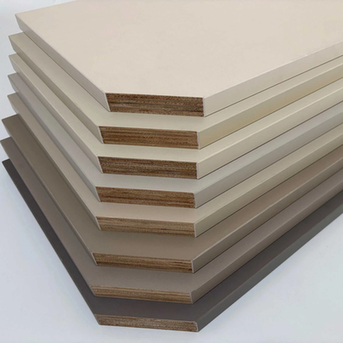
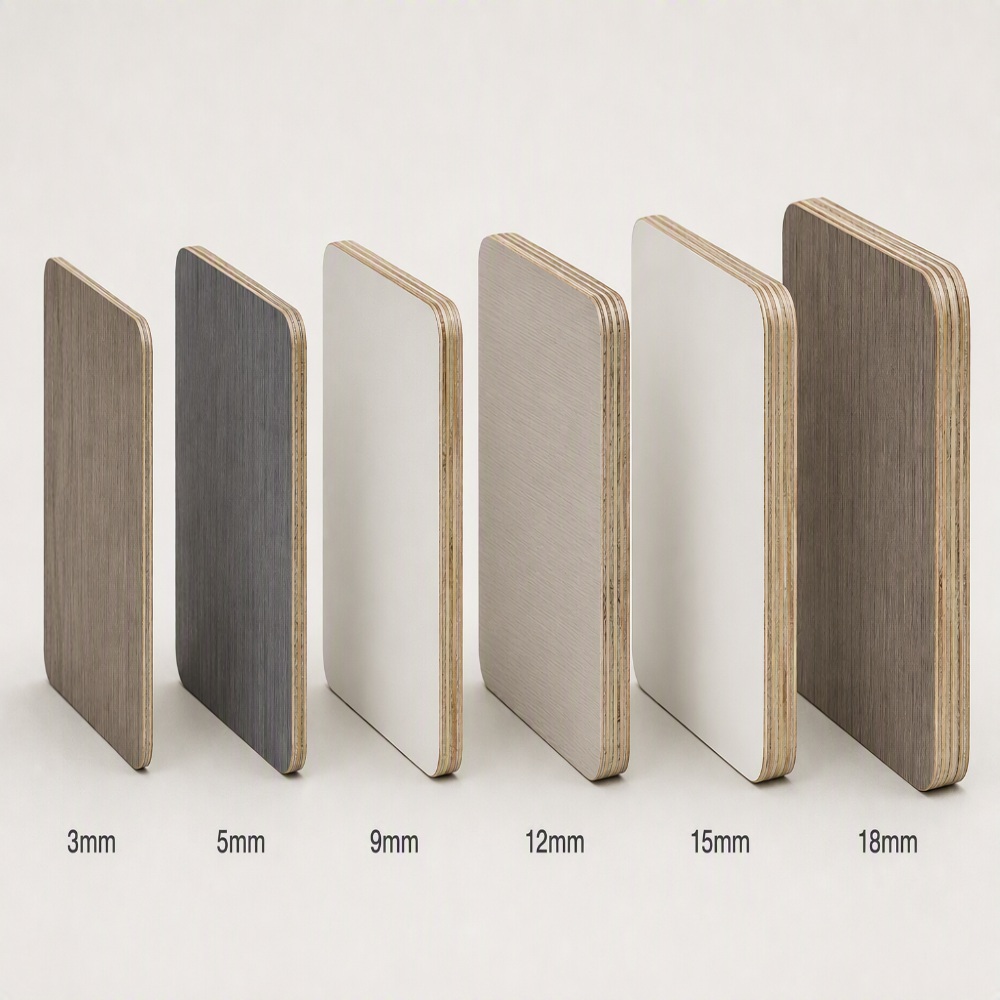
At QIANGYI PLYWOOD, we produce glutinous rice glue functional plywood using an adhesive formulation based on glutinous rice starch, magnesium chloride, magnesium oxide, and water. This creates a distinctive physical curing system in which inorganic materials encapsulate organic components. Available formats include 1220 × 2440 mm and 1220 × 2800 mm, with thicknesses from 5 to 25 mm, multiple ply options, and eucalyptus or similar cores. Surface choices include plain, melamine, PET, matte, and glossy finishes.
For humid-space evaluation, the product documentation includes Class II waterproof, formaldehyde-emission, and anti-deformation testing. Our process information also specifies extended cold pressing, controlled drying, and curing stages intended to improve moisture consistency and panel stability.
We recommend selecting specifications by application rather than using one board for every area. Share the destination market, thickness, surface, machining method, and moisture exposure with us so we can match the most cost-effective compliant technical solution.
A: It may use a no-added-formaldehyde adhesive, but buyers should still request a finished-panel emission report. Adhesive composition and measured panel emissions are related but not identical claims.
A: Not automatically. Strength also depends on veneer grade, core construction, ply arrangement, pressing quality, density, and thickness. Compare results for the actual panel specification.
A: Yes, when it also has verified moisture-resistant bonding, suitable swelling performance, stable core construction, and properly sealed edges. Low emissions alone do not prove water resistance.
A: Its main disadvantages are free-formaldehyde emissions and glue-line aging caused by hydrolysis under high-temperature, high-humidity conditions.
A: Request third-party finished-panel test reports covering formaldehyde emissions, bonding strength, and thickness swelling; factory ISO, FSC, and EPA certification documents; and batch-specific quality-control records (QC reports).
Please fill out the form below and we will get back to you as soon as possible.




Leave a Comments