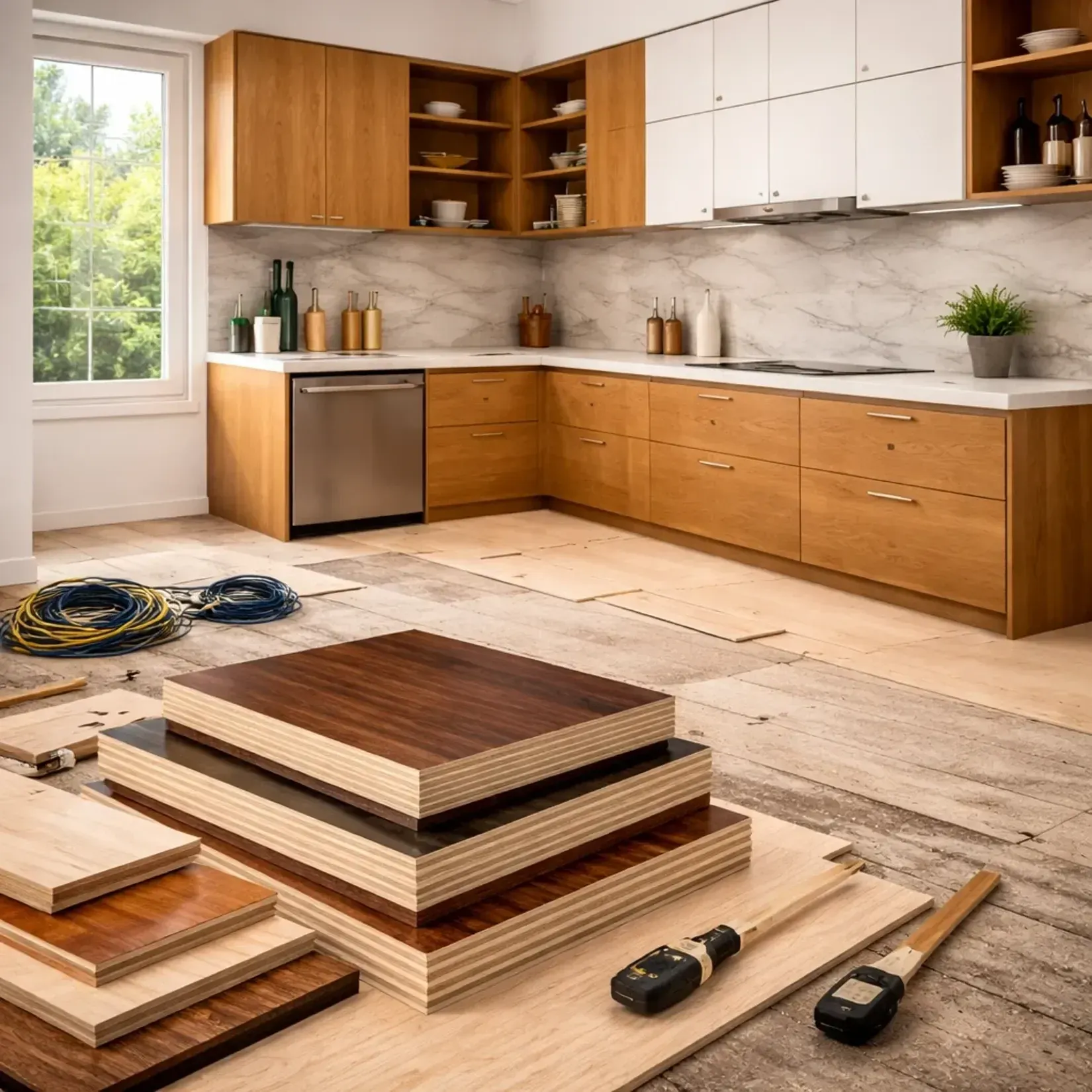
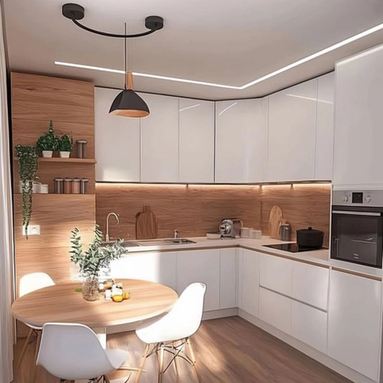
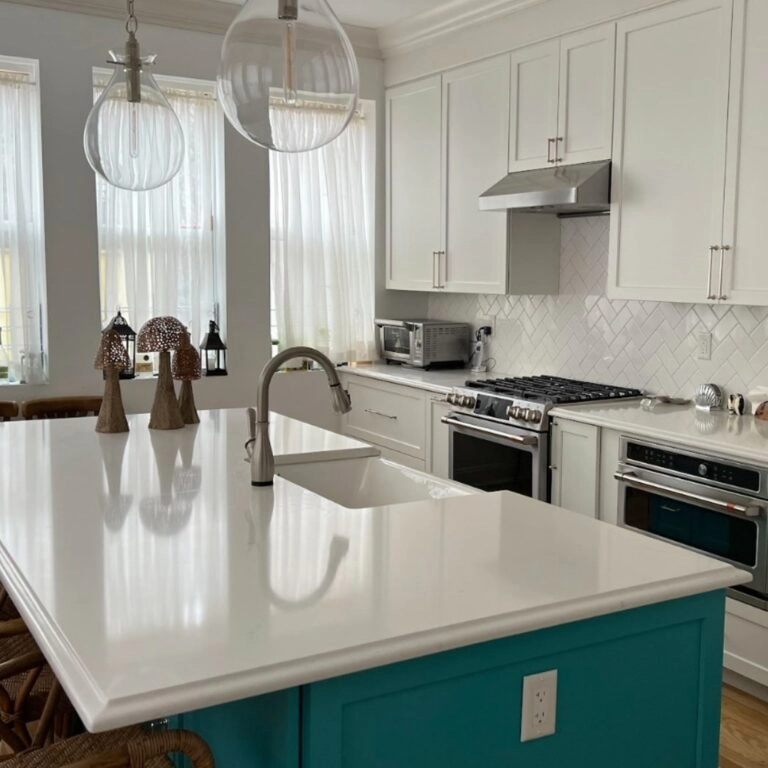
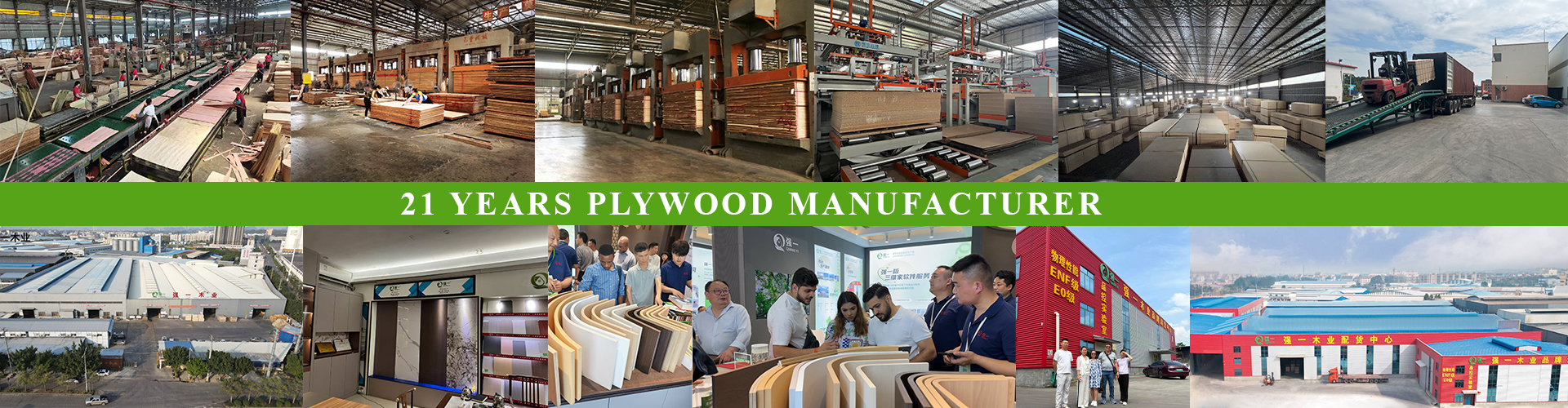
Yes ,We are manufacturer which locate in Guigang, Guangxi, also in Dongguang, Guangdong. Factory is started in the year of 2004 with more than 20 years experience for plywood production.

 Qiangyi
When sourcing building materials for demanding commercial projects, procurement managers often question the big cost difference between standard interior panels and highly rated exterior grades. The higher price of the latter comes from strict manufacturing standards and special raw materials designed to handle tough environmental conditions.
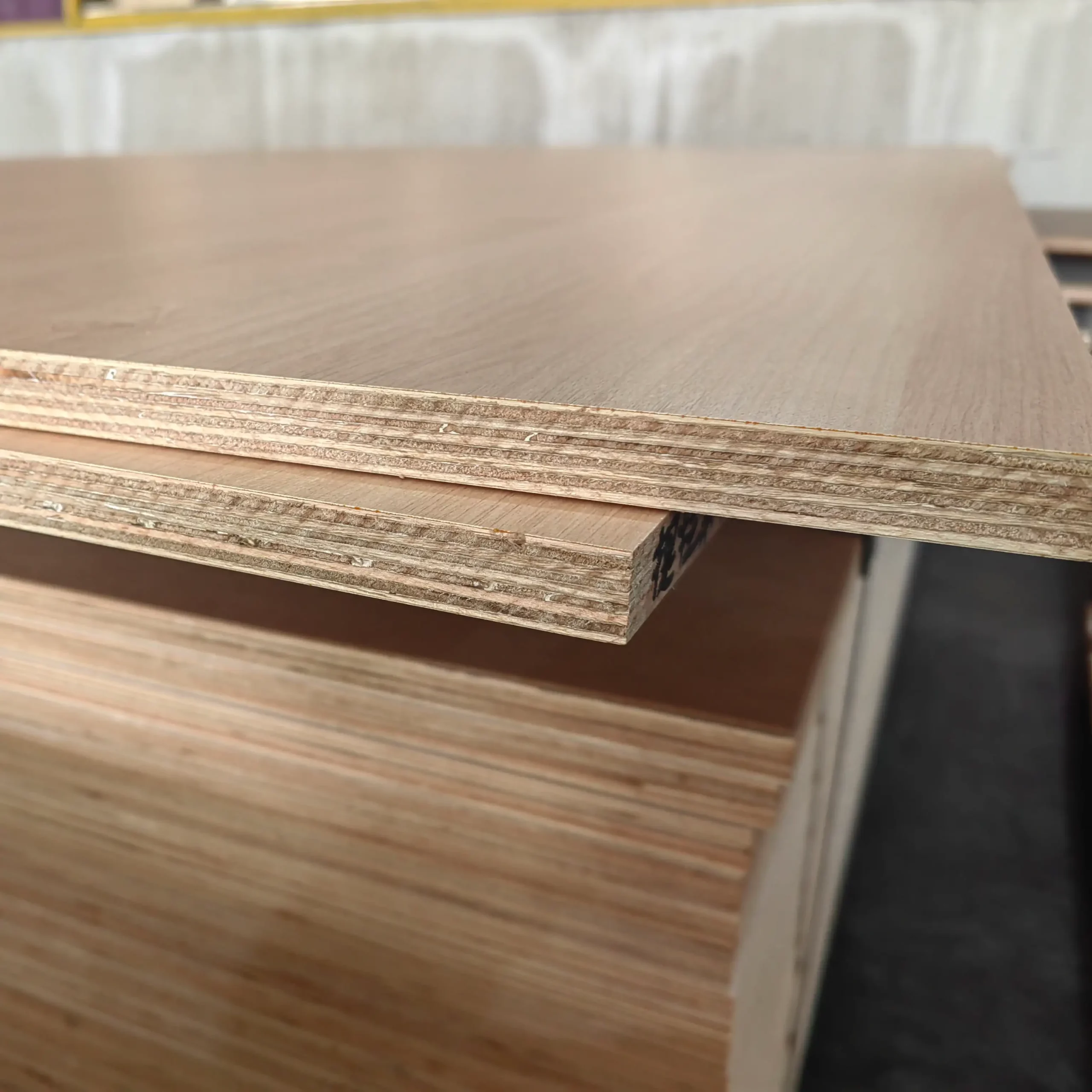
The main distinction lies in the adhesive and the core wood veneer. Standard interior panels typically use urea-formaldehyde resin adhesives. These offer limited water resistance. They become prone to glue layer delamination, board delamination, and mechanical strength loss when exposed to high-humidity environments for a long time. In contrast, premium water-resistant panels, often called marine-grade boards in various regions, rely on WBP high-performance waterproof adhesives. Furthermore, the core veneers used in these high-end panels undergo careful selection to ensure structural integrity. In some global markets such as Africa and West Asia, film-faced plywood is commonly referred to as marine plywood because its durable coating makes the material highly waterproof for heavy construction applications.
The primary advantages of using superior water-resistant boards include strong durability, resistance to mold decay, outstanding moisture resistance, and excellent dimensional stability under changes in temperature and humidity. These panels do not easily warp. They also feature a small water absorption expansion range when subjected to continuous dampness.
However, the disadvantages are mainly economic and environmental. The specialized adhesives and void-free veneers significantly increase production costs. This makes the panels an expensive choice for large-scale projects. Additionally, traditional phenolic or urea-formaldehyde resins used in many of these standard water-resistant boards can release volatile organic compounds over time. The release poses challenges for enclosed spaces that require strict indoor air quality certifications.
Selecting the correct substrate remains critical for commercial interiors. Structural failure in these areas can lead to massive replacement costs and brand damage.
Yachts present unique challenges because of constant vibration, fluctuating temperatures, and elevated humidity. Standard interior panels become highly prone to edge swelling and structural degradation under these conditions. In these enclosed and dynamic environments, panels must possess superior nail-holding power. This power helps the panels withstand movement. The panels also need excellent moisture resistance to combat condensation. While traditional water-resistant boards meet the structural requirements, their weight and potential chemical emissions often lead manufacturers to seek advanced composite alternatives. These alternatives balance stability with environmental safety.
For hotel engineering and commercial spaces, the material must withstand heavy daily use and frequent cleaning protocols. Bathroom vanities, wall paneling, and lobby fixtures require substrates that will not swell upon contact with water. While standard panels might seem budget-friendly at first, their high failure rate in damp hotel bathrooms leads to expensive maintenance cycles. Investing in higher-grade water-resistant panels for water-adjacent high-humidity zones such as bathrooms makes sense. At the same time, using standard plywood in dry corridors and guest room areas serves as a common cost control strategy. This approach balances early investment and long-term durability.
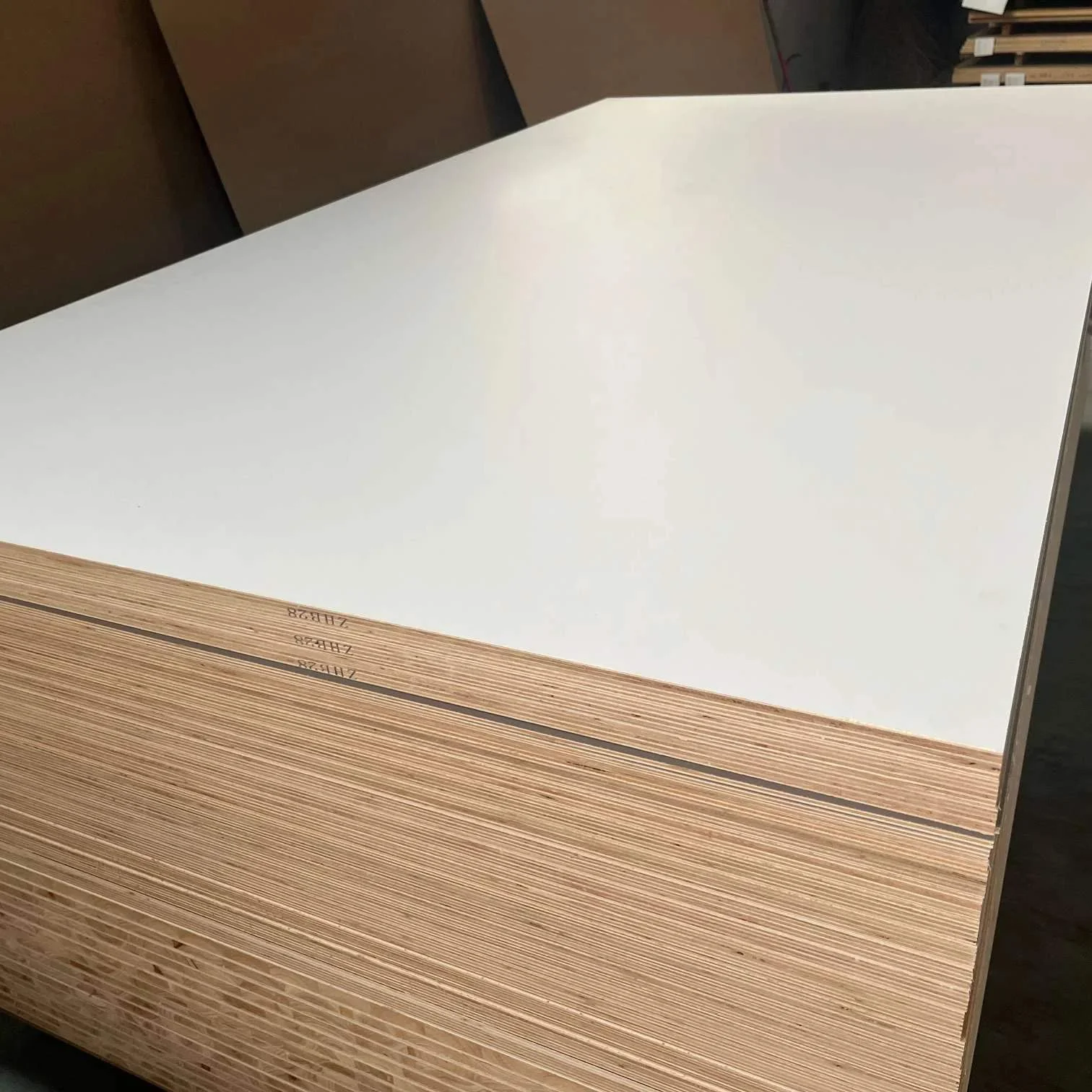
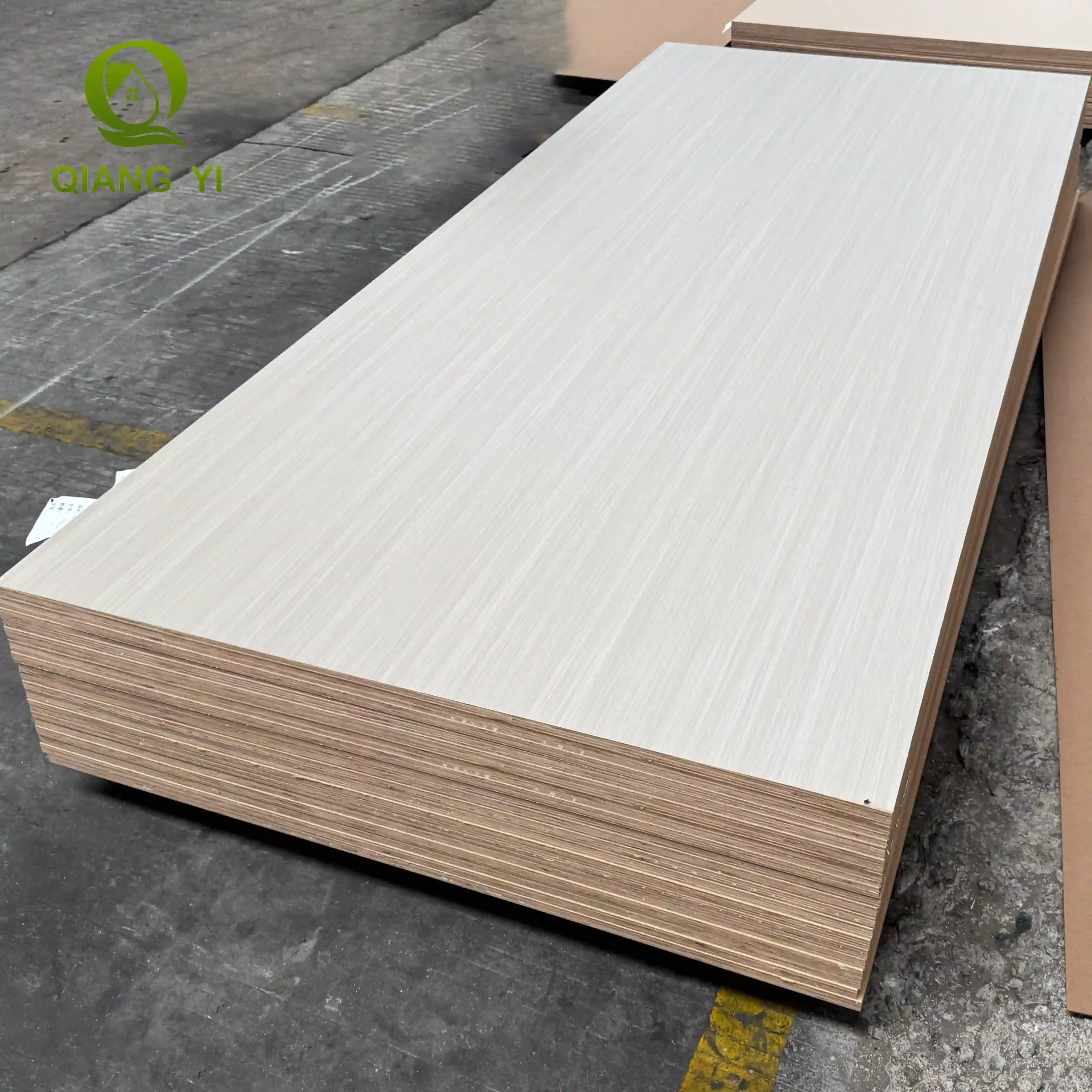
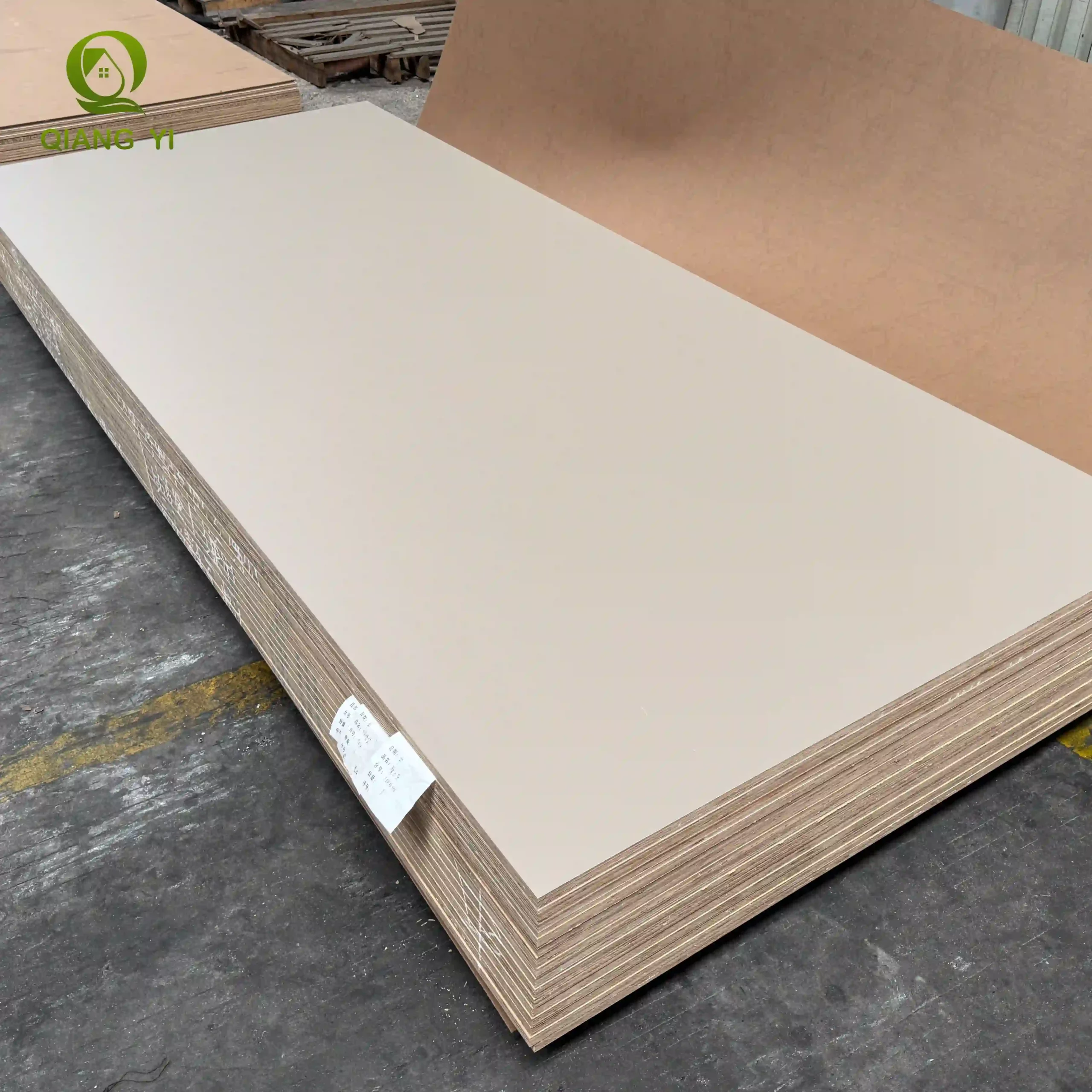
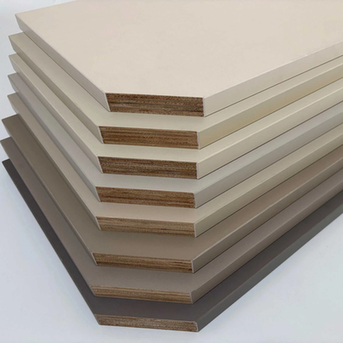
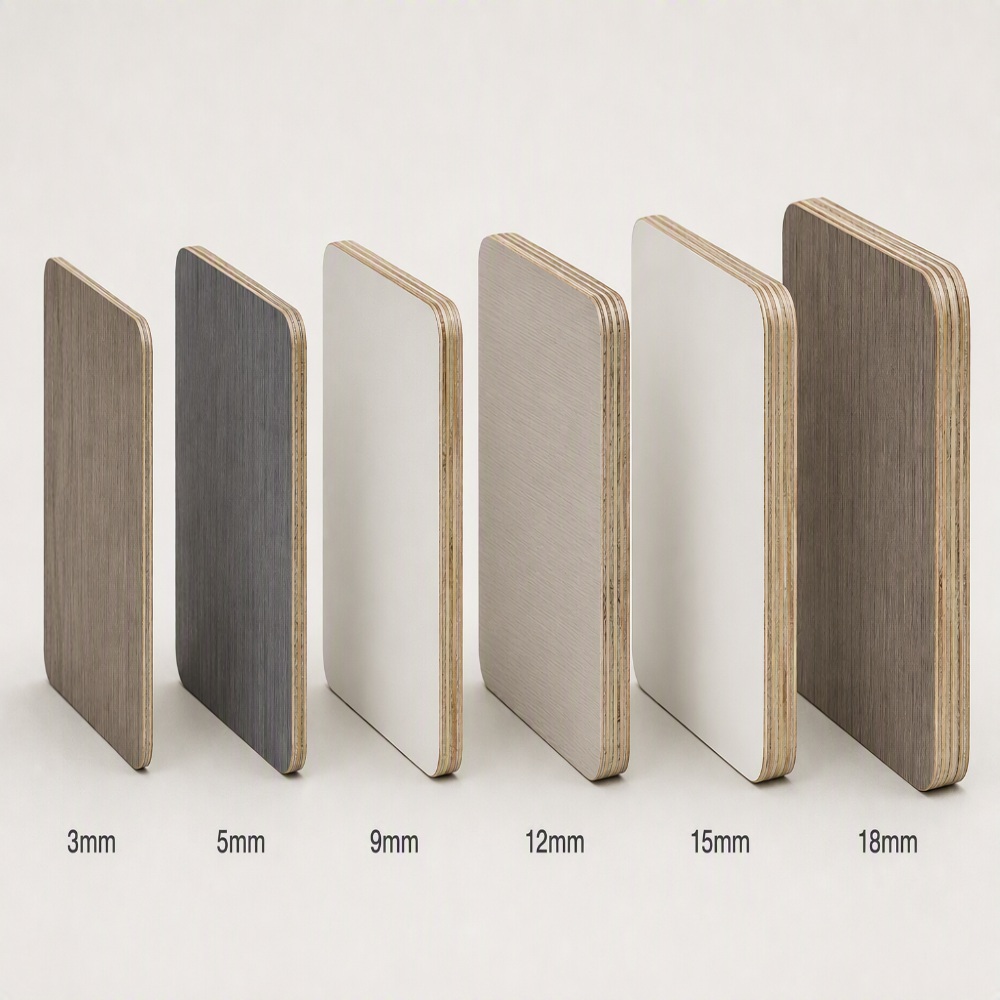
To optimize production efficiency, many B2B buyers compare raw water-resistant substrates against pre-finished options. Melamine-faced water-resistant panels combine the robust and moisture-proof core with a decorative and wear-resistant melamine paper surface. The surface forms through high-temperature hot pressing. This process eliminates the need for secondary painting or veneering processes at the furniture factory. As a result, the approach saves significant labor and time. The melamine surface offers high hardness, wear resistance, and good heat resistance. These qualities make the panels an excellent choice for customized furniture and indoor decoration.
As global environmental regulations tighten, the demand for sustainable and zero-formaldehyde building materials has grown. This growth has led to the development of second-generation multi-layer panels.
For enclosed spaces like RVs and hotel rooms, traditional boards often fail to meet stringent emission standards. QIANGYI PLYWOOD has developed a revolutionary glutinous rice glue plywood. The product addresses both structural and environmental concerns. This multifunctional board is made from glutinous rice starch, magnesium chloride, magnesium oxide, and water. Unlike traditional boards that use urea-formaldehyde, the glutinous rice glue involves no formaldehyde additives. The formula achieves a super ENF grade level of environmental protection.

When compared to standard water-resistant panels, the QIANGYI PLYWOOD glutinous rice board offers superior performance across multiple metrics. The board achieves a Class II strong waterproof function. After being soaked in water for 24 hours, its water absorption expansion rate stays strictly controlled at only 2.4 percent. Furthermore, the addition of magnesium oxide serves as a super flame retardant. The feature grants the panel a B1 flame-retardant rating. The panel will only carbonize and not burn even if exposed to fire. The alkaline nature of the cured adhesive also provides a termite resistance rating of 9.5. The environment becomes indigestible to pests. The manufacturing process ensures extreme stability. The process features a drying time of 60 hours and an extended curing period of 15 days. These comprehensive features make the board a superior and healthier alternative for high-end commercial interiors.
| Feature | Traditional Water-Resistant Board | QIANGYI PLYWOOD Glutinous Rice Board |
| Environmental Grade | ENF or lower | Super ENF zero formaldehyde added |
| Water Absorption Swelling | Up to 12 percent | 2.4 percent Class II waterproof |
| Flame Retardancy | Combustible | B1 flame retardant |
| Termite Resistance | Prone to infestation | 9.5 rating |
| Odors | Prone to chemical odor | Completely odorless |
Navigating the global supply chain requires balancing material quality, shipping logistics, and reliable production capacity.
Sourcing premium building materials from Chinese manufacturers offers significant scale advantages. Facilities with integrated production lines can maintain strict quality control from raw veneer selection to the final hot pressing stage. For example, QIANGYI PLYWOOD operates four production bases with a factory area exceeding 100,000 square meters and a large-scale distribution center. These elements ensure consistent supply and efficient distribution. From raw material procurement to finished product delivery, a total of 28 quality inspection processes take place. By sourcing directly from a manufacturer that manages everything from adhesive formulation to finished product delivery, B2B buyers can remove middleman markups. In addition, working with factories that own standardized laboratories makes sure every batch satisfies international certifications like CARB-P2, EPA, and CE.

A: While standard interior boards are significantly cheaper upon initial purchase, the boards remain highly susceptible to edge expansion and mold growth when exposed to the high humidity of hotel bathrooms. This susceptibility leads to rapid deterioration and the need for costly replacements. The issues completely negate the initial savings. Investing in high-quality moisture-resistant panels, such as those with a Class II waterproof rating, prevents water molecules from contacting the wood fibers. The panels ensure a much lower total cost of ownership through extended durability and zero maintenance replacements.
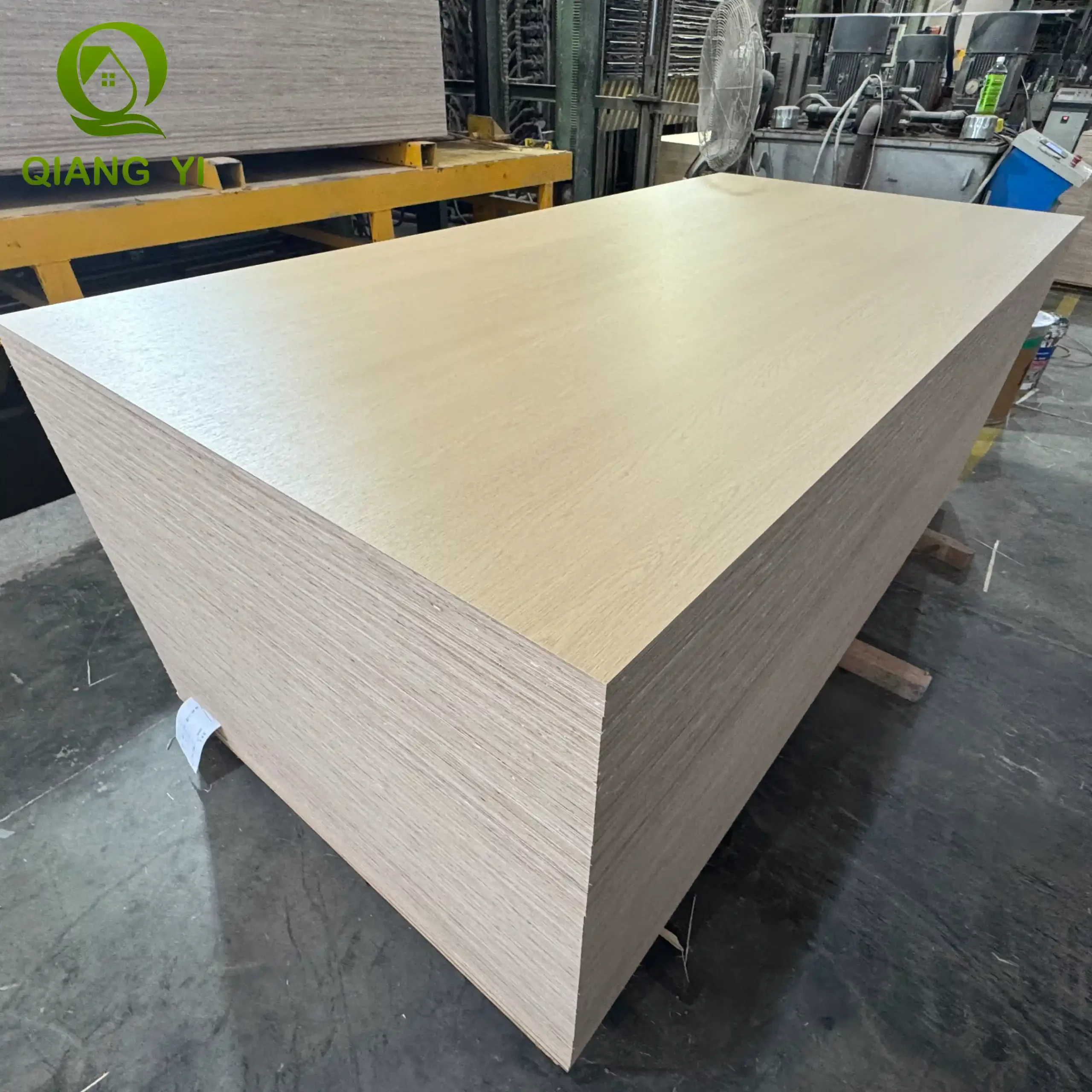
A: Procurement managers should focus on testing reports, factory scale, and the specific adhesives used. It remains vital to verify certifications such as CARB-P2, CE, and ISO. Managers must also check specific test reports for water absorption, formaldehyde emission, and bonding strength. A reliable manufacturer will have an in-house laboratory for batch testing. The manufacturer will control the entire supply chain from raw large-diameter eucalyptus wood selection to the final pressing. This control ensures consistent thickness tolerance and surface flatness. The thickness uniformity of a single sheet of QIANGYI PLYWOOD stays controlled at around 20 microns.
A: Traditional melamine-faced water-resistant boards can meet standard E0 or ENF requirements. However, the boards may still emit trace amounts of volatile organic compounds over an extended period. For projects demanding the highest indoor air quality, upgrading to a zero-formaldehyde substrate becomes highly recommended. QIANGYI PLYWOOD glutinous rice board utilizes a food-grade adhesive formula of glutinous rice flour and mineral extracts. The formula completely eliminates formaldehyde and benzene at the source. The material allows for immediate occupancy after installation. In addition to being odorless, this material comes with a 15-year warranty. The warranty provides long-term peace of mind for sustainable brands.
Please fill out the form below and we will get back to you as soon as possible.




Leave a Comments