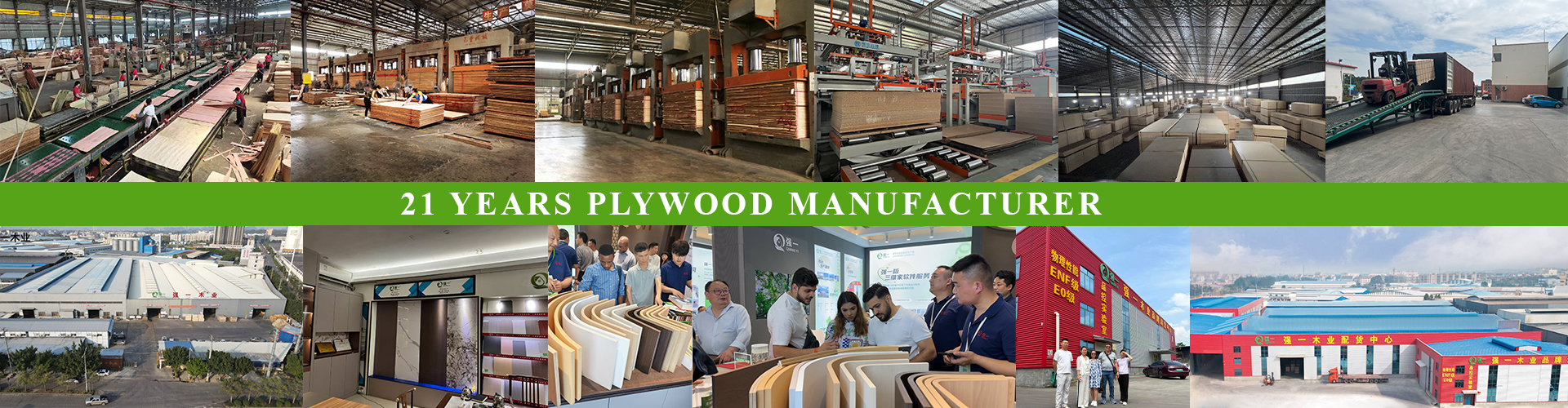
Sí, somos fabricantes ubicados en Guigang, Guangxi, y también en Dongguan, Guangdong. La fábrica se fundó en el año 2004 y cuenta con más de 20 años de experiencia en la producción de madera contrachapada.

 Qiangyi
Mold in hotel furniture rarely begins as a dramatic leak. More often, it starts behind a wardrobe, under a vanity, beside a cold wall, or along an exposed panel edge that stays damp. The board may look fine at delivery, while moisture-related defects appear months later.
A useful anti-mold plywood checklist therefore has to look beyond one label. Buyers need to evaluate the environment, core structure, bonding system, moisture control, and test evidence before approving a bulk order.
Hotel rooms create several moisture conditions in one small space. A wardrobe fixed against an exterior wall may receive little airflow. A bathroom vanity sees splashes, steam, and repeated cleaning. A minibar cabinet can sit near cool surfaces where condensation forms. In tropical or coastal hotels, rooms closed between guests may also stay humid for long periods.
Panel edges, drilled holes, backs, joints, and internal layers can take in moisture before the decorative face shows obvious damage.
In a hotel, one material specification may be repeated across dozens or hundreds of rooms. A local defect can therefore become room downtime, replacement furniture, another installation visit, delayed handover, warranty claims, and complaints from the operator.
Anti-mold performance is not only an appearance issue. For a hotel furniture buyer, it is part of project risk control.
Mold needs favorable moisture conditions. Furniture becomes more vulnerable when humidity remains high, water enters through unfinished edges, or condensation repeatedly wets a cold surface.
The problem is often cumulative. A panel takes in some moisture, dries slowly, then repeats the cycle. Poor airflow behind fixed furniture can make this worse. Anti-mold material cannot replace leak repair, ventilation, or humidity control, but it can give the furniture assembly a better margin against these conditions.
Moisture can also stress the glue line, swell wood fibers, loosen fastening areas, or change panel flatness. A board used for wardrobes, vanity units, headboards, or built-in cabinets therefore needs a stable core and reliable bonding.
Even when buyers search for plywood thickness for cabinets, thickness alone cannot compensate for internal gaps, weak veneers, or a moisture-sensitive structure.
The supplier should be able to explain how the panel is built and how it performs. The phrase waterproof plywood is not enough, and neither is a general “mold resistant” claim.
| Buyer Check | Why It Matters |
| Mold or mildew resistance evidence | Confirms the anti-mold claim |
| Antibacterial performance | Adds hygiene-related evidence |
| Core species and grade | Affects stability and fastening |
| Full-connected core structure | Reduces internal weak points |
| Panel moisture content | Checks moisture control before shipment |
| Water-resistance and bond test | Comprueba la integridad de la línea de pegamento después de la exposición a la humedad. |
| Edge sealing plan | Helps limit moisture entry after fabrication |
For hotel furniture, eucalyptus core board construction is worth checking at the exposed edge or approved sample. A hardwood core can support repeated fastening and daily use, but the species name alone is not enough.
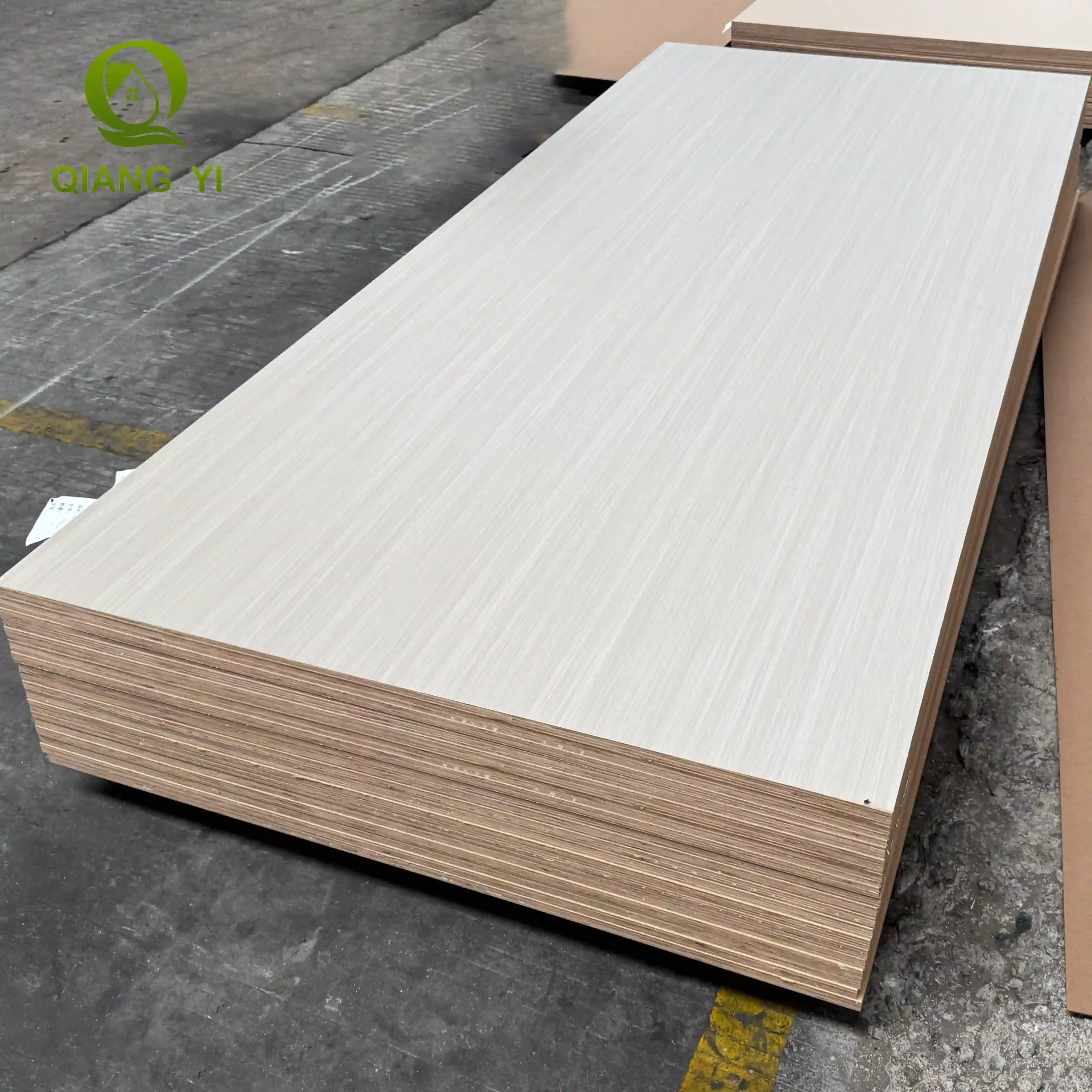
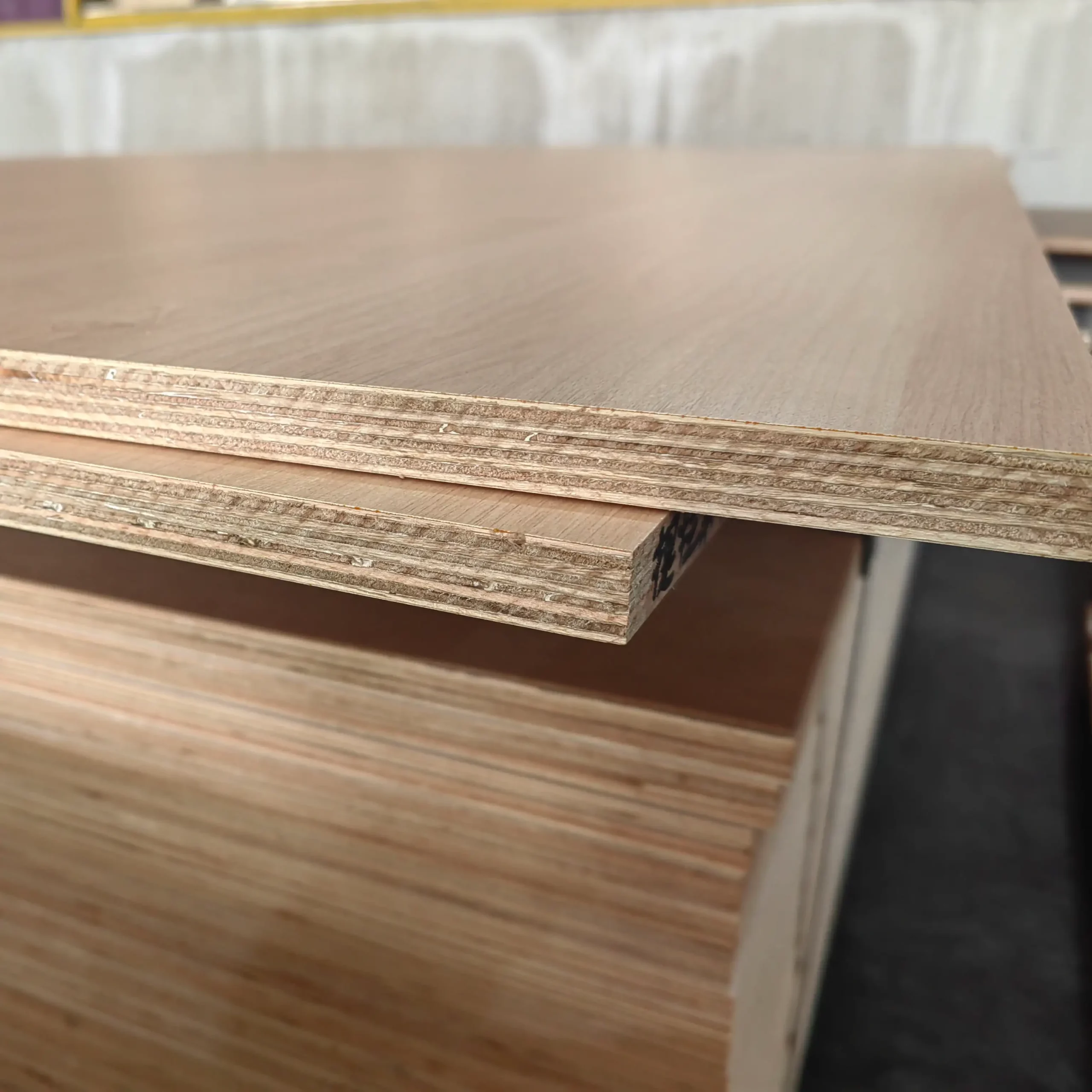
Buyers should ask whether the core is continuous and whether gaps, overlaps, or filler veneers are present. Cabinet grade plywood should be judged as a complete structure, not only by face appearance.
The risk level differs by application. A wardrobe on an internal dry wall is not exposed like a vanity beside a shower area. A tall cabinet door also places more emphasis on flatness and deformation control.
For bulk hotel projects, approve the panel by application: wardrobe, vanity, minibar, wall panel, or other built-in furniture.
En MADERA CONTRACHAPADA QIANGYI, we approach the problem through the core, adhesive system, and moisture-control process rather than relying on a surface claim alone.
We use full eucalyptus core options built with continuous eucalyptus veneers. In this structure, full-connected core means the internal veneers are arranged without voids, overlaps, or dead joints. The aim is a more uniform panel with fewer internal weak points. We use 100% eucalyptus core solutions for cabinet and furniture applications.
For hotel wardrobes and tall cabinet panels, this matters because core continuity supports more consistent machining, fastening, and dimensional stability. It also gives buyers something practical to inspect on a cut edge before bulk approval.
Our Lingmei glutinous rice glue uses glutinous rice flour, magnesium chloride, water, and magnesium oxide. The magnesium components react to create an alkaline environment. More importantly for hotel furniture buyers, an antibacterial and mildew-proof test conducted according to JC/T 2039-2010 on an 18 mm glutinous rice glue multifunctional board recorded an antibacterial rate above 99% and a Grade 0 mildew-proof rating. Under the test rating criteria, Grade 0 means no mold growth was observed.
For buyers, this provides direct test evidence for evaluating mold and bacterial resistance instead of relying only on a general anti-mold claim. The adhesive system, moisture control, and tested resistance work together to reduce mold-related risks in furniture exposed to humid conditions.
We use a 60-hour temperature-controlled drying process and control board moisture content within 8–12%. This reduces excess moisture before furniture production and supports more stable use in humid conditions.
For projects involving humid storage, long shipping routes, or air-conditioned guest rooms, starting with controlled panel moisture is more practical than correcting unstable boards after machining.
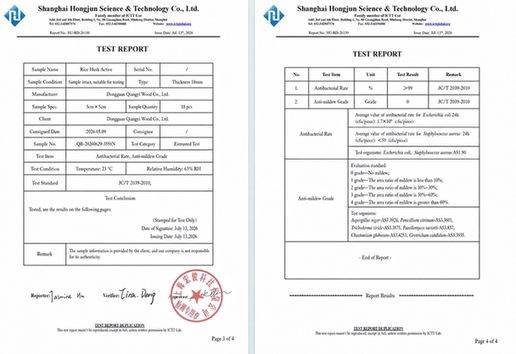
Testing should support the purchase decision, especially when anti-mold performance is part of the hotel furniture specification. Report No. HJ-RD-26150 covers antibacterial and mildew-proof testing of an 18 mm glutinous rice glue multifunctional board according to JC/T 2039-2010. The tested sample achieved an antibacterial rate above 99% and a Grade 0 mildew-proof rating.
The report defines Grade 0 as no mold growth. The antibacterial test used Escherichia coli AS1.90, while the mildew-resistance evaluation included multiple fungal species. For a hotel furniture buyer, this provides direct evidence related to the actual risk being evaluated: whether the panel can resist bacterial growth and mold development under the specified test conditions.
For a hotel project, the approval file should include:
Core species and full-connected-core confirmation.
Antibacterial and mildew-proof test results.
The applicable test standard and tested panel specification.
Panel moisture specification and moisture-resistance information.
Approved thickness, face finish, and edge treatment.
A production sample matching the bulk order.
These checks make later quality discussions easier because the approved panel has a defined structure and performance basis.
In early 2026, a Philippine decorative panel and furniture-material distributor contacted us while comparing suppliers for a hot, humid market. The buyer was particularly concerned about environmental performance, moisture resistance, and durability. After seeing our glutinous rice glue plywood in person, the distributor placed a trial order in April with one color. The first shipment received positive market feedback for its ENF grade, surface texture, waterproof performance, and termite resistance. Demand soon expanded beyond the original color, so we developed a customized color sample book for the buyer. The distributor later introduced more finishes through its offline showroom and positioned the glutinous rice glue plywood as a premium product line. For hotel and furniture buyers, this case shows why humid-market sourcing should consider moisture-related performance, structural stability, and consistent product presentation.
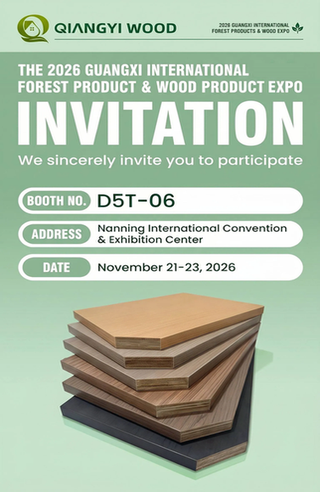
For buyers currently sourcing plywood for hotel furniture or other commercial projects, we will attend THE 2026 GUANGXI INTERNATIONAL FOREST PRODUCTS AND WOOD PRODUCTS EXHIBITION from November 21–23, 2026. Visitors can meet our team at Booth D5T-06 at the Nanning International Convention & Exhibition Center to discuss anti-mold plywood, eucalyptus core, full-connected core construction, and project-specific panel requirements.
A: It is plywood selected to reduce mold-related risk in humid interior furniture. Buyers should check mold resistance together with moisture control, bond quality, core continuity, and dimensional stability rather than relying on one anti-mold label.
A: No. Water resistance focuses on moisture exposure, bonding, and swelling. Anti-mold performance focuses on resistance to fungal growth. The two properties support each other, but they are not the same test.
A: A full eucalyptus hardwood core provides a dense, consistent base for furniture use. When combined with a full-connected core structure, it also reduces concerns about internal voids, overlaps, and weak joints.
A: High-risk locations include bathroom vanities, wardrobes against exterior walls, minibar cabinets, lower cabinet panels, and furniture in tropical, coastal, or poorly ventilated rooms.
A: Request the approved core structure, panel moisture range, antibacterial and mildew-proof test results, applicable test standard, tested panel specification, thickness and surface requirements, and a production sample that matches the final order.
Please fill out the form below and we will get back to you as soon as possible.




Deja un comentario