
Produkte
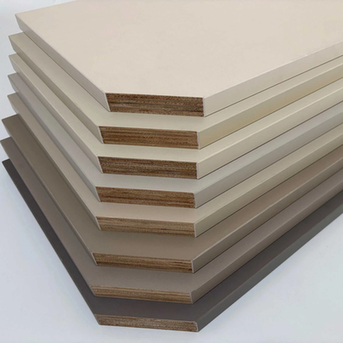
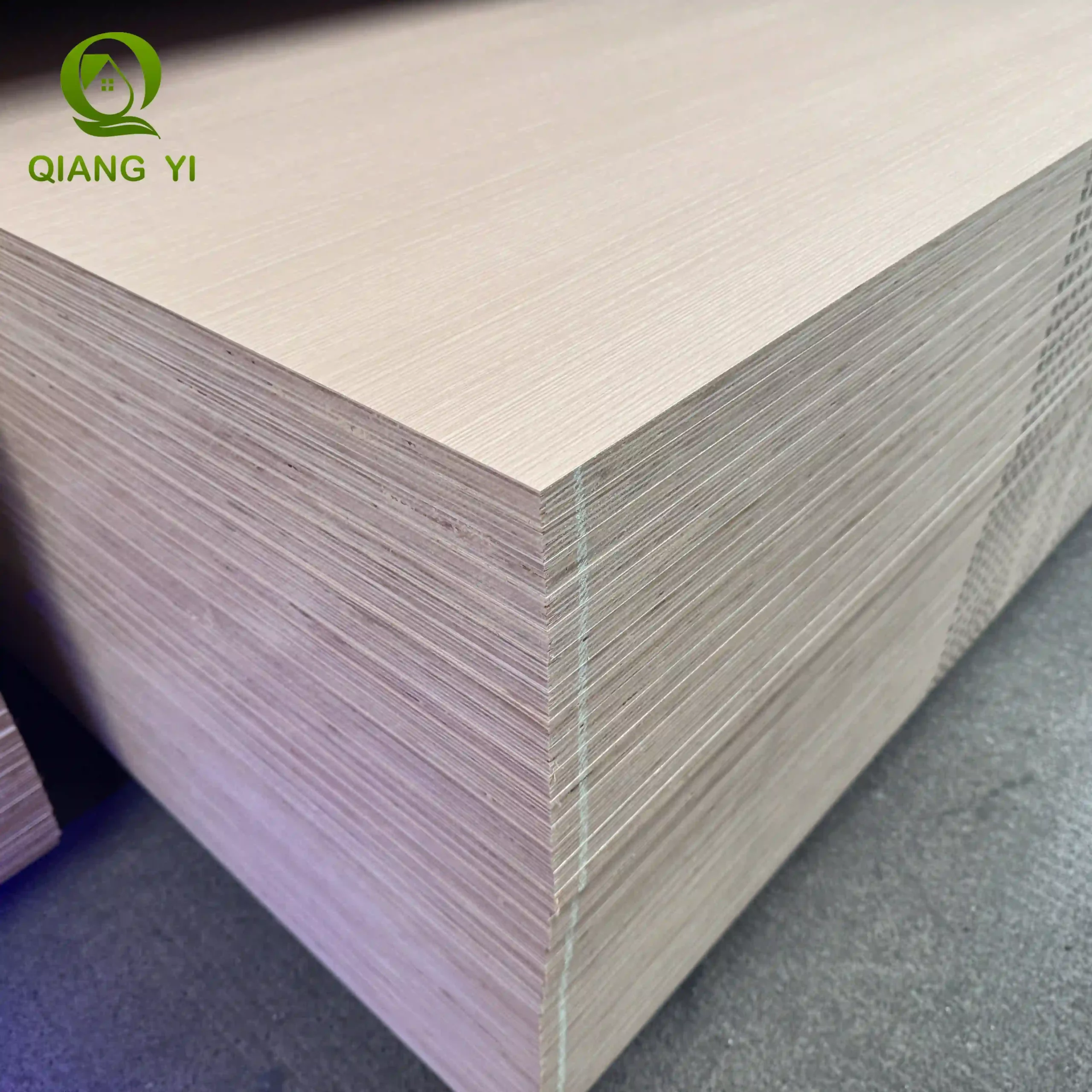
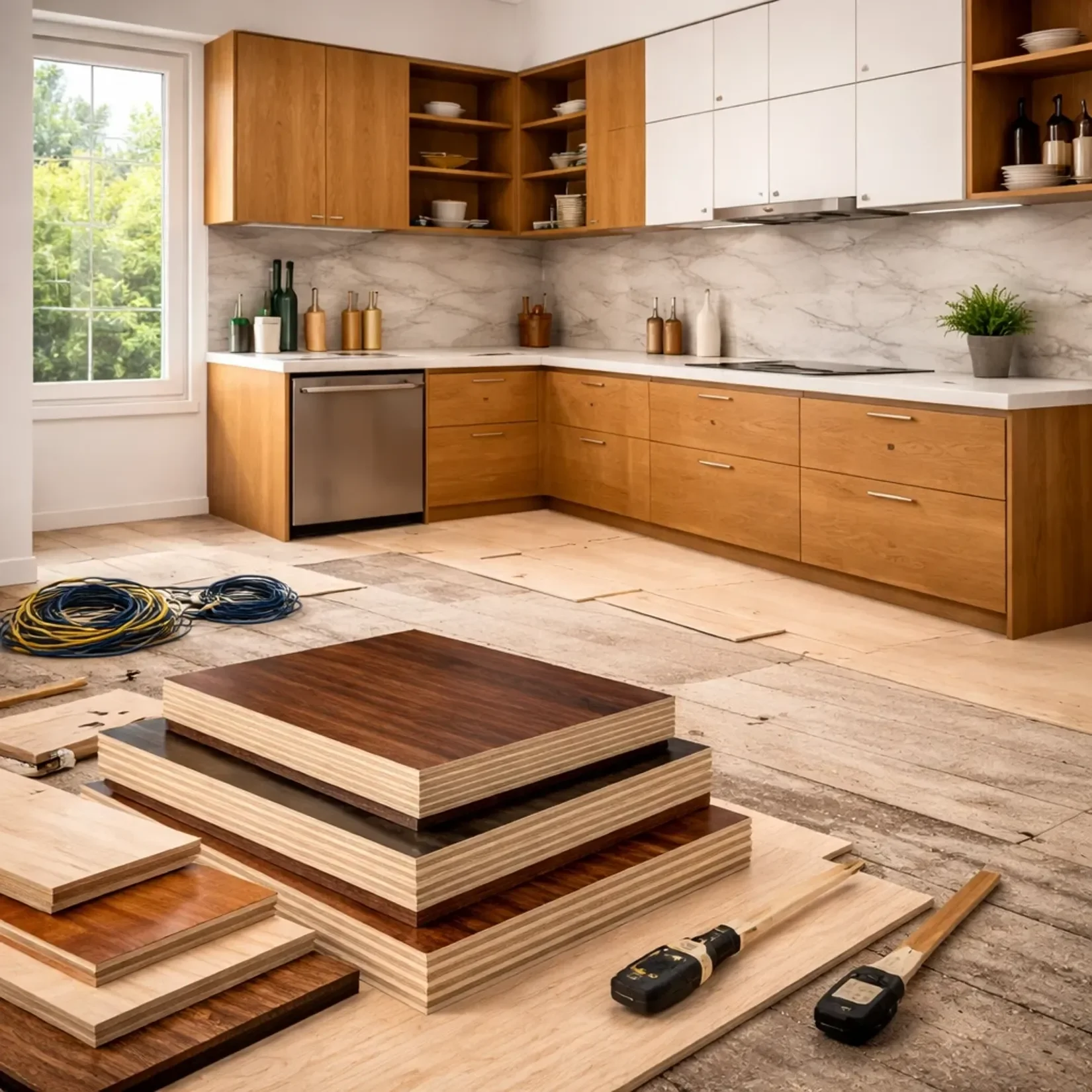
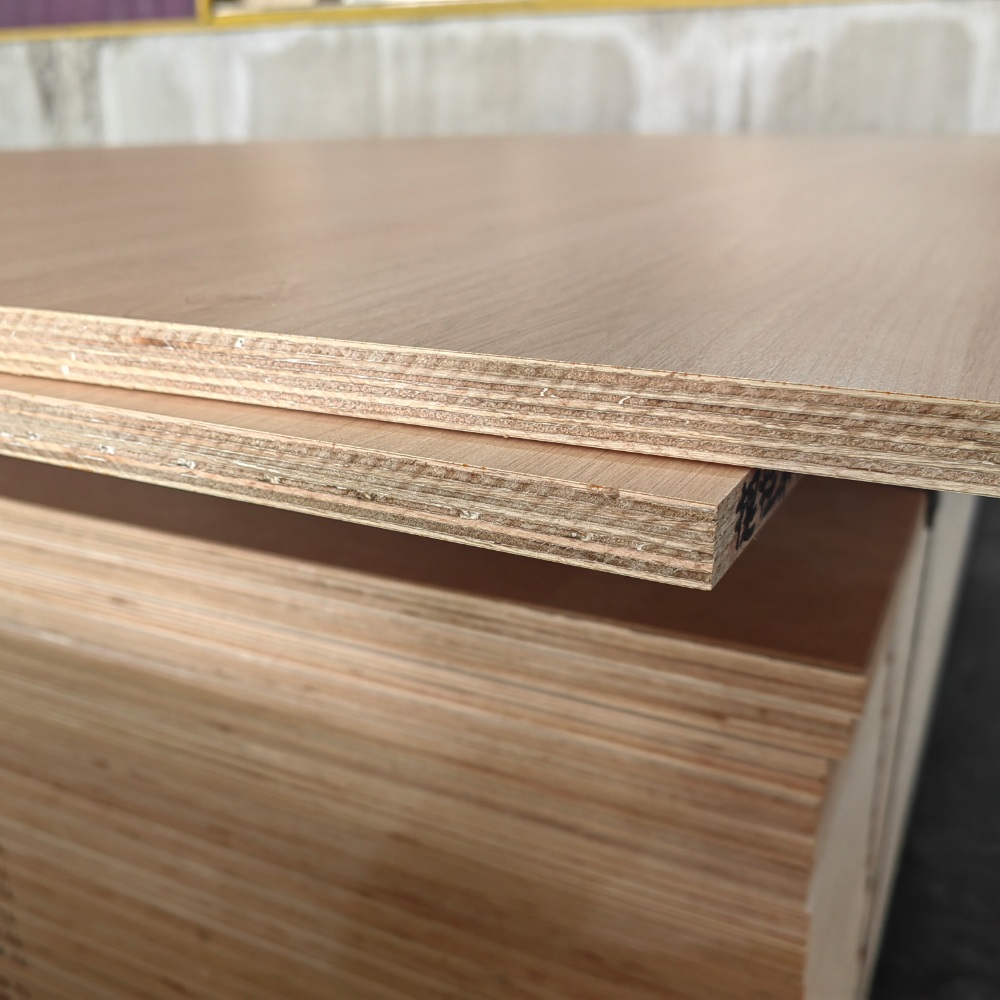
Qiangyi 18mm Glutinous Rice Glue Plywood ENF Waterproof Board for Kitchen Cabinets & Wardrobes
Hauptmerkmale:
• Beyond ENF grade — formaldehyde emission "not detected" (limit 0.025 mg/m³)
• Anti-deformation: MOR ≥22 MPa, MOE ≥5000 MPa; ideal for tall cabinet doors
• Class II waterproof: 24h thickness swelling only 2.4%
• Termite resistant Grade 9.5, mold Grade 0, antibacterial ≥99%
• B1 flame retardant, sound reduction ≥35 dB
• 15-year factory warranty
Qiangyi Starch Glue Plywood – Built for Cabinet, Wardrobe, and Interior Furniture Projects
Buying panels for a kitchen or a wardrobe is easy to get wrong. Most buyers look at the price first, and that habit tends to cost them later. Think about it this way: built-in furniture stays in the house for ten, twenty years. You install it once. Swapping the boards out after installation is not really on the table. So the panel you pick decides how long the furniture holds up, and how much risk the family lives with.
Walk into any panel store and you’ll see the usual suspects. Particle board is cheap, but it drinks moisture, swells at the edges and strips screws easily. First-generation multi-layer board is glued with urea-formaldehyde resin. That glue works, sure, but it slowly gives off formaldehyde for 15 years or more, and the release gets worse in hot, humid weather.
Qiangyi Starch Glue Plywood goes a different way. We bond the veneers with a food-grade starch glue instead of UF resin. No formaldehyde, no benzene, no smell coming from the glue itself. The finished panel also holds up against water, warping and termites, and it burns slowly rather than catching fire. For cabinet, wardrobe and interior furniture work, that adds up to a furniture grade plywood you can rely on.
What Is Starch Glue Plywood?
Plywood, or multi-layer board, starts with thin veneers. They’re glued together with the grain of each layer running crosswise to the layer below. That crosswise pattern is the whole trick, it’s why plywood stays straight and strong where solid wood tends to move.
Most multi-layer board still uses urea-formaldehyde resin glue, a recipe that’s been around for over a hundred years. It works fine at the start. The problem is what happens later. UF glue is chemically unstable, so when the temperature climbs or the air gets humid, it starts breaking down and letting out formaldehyde, sometimes several times more than usual. That release can drag on for 3 to 15 years.
Qiangyi Starch Glue Plywood skips UF glue completely. The layers are bonded with what we call Lingmei starch glue. The ingredients are simple: food-grade glutinous rice flour, magnesium chloride (the same mineral in tofu brine), magnesium oxide (a natural flame retardant, also approved as a food additive) and water. That’s the whole list. No formaldehyde, no benzene, nothing volatile in the mix.
Making this board takes longer than a typical plywood line, and that’s on purpose. Starch glue cures fast, so you can’t pause between steps. The cores have to be laid and glued layer by layer in one continuous run. Only first-grade cores pass the line. Each board then sits in a cold press for 24 hours, dries in a kiln for 60 hours, and rests for more than 15 days before it ships. All in, the cycle runs about 20 days. Slow, yes, but the payoff is a board with even moisture and little built-in stress, and that’s exactly what a cabinet door needs.
Why Qiangyi Starch Glue Plywood for Kitchen Cabinets and Wardrobes?
ENF-Grade and Odor-Free: Health First
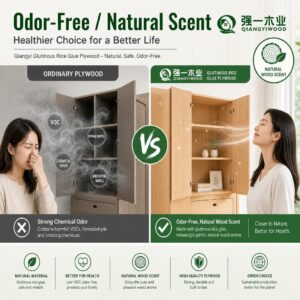
Qiangyi glutinous rice glue plywood: natural, safe and odor-free for a better life
Most buyers check the formaldehyde grade and call it a day. Fair enough, that’s where health starts. An independent lab tested our 18 mm board and got “not detected”, against the ENF limit of 0.025 mg/m³. The part we like even more: that number does not creep up when the room gets hot and sticky, the way it does with UF-glued boards.
Then there’s the smell. A wardrobe door stays closed for hours, so whatever odor is in the board just collects inside. We sent samples out and benzene, toluene and xylene all came back undetected; TVOC measured 11 µg/m³, against a national limit of 200. In real life that means the cabinet is ready to use the day it’s installed.
Mold and bacteria? The board handles those too. Mold testing came back Grade 0, which means nothing grew on it, and it kills more than 99% of E. coli and S. aureus. Through the humid season, cabinet faces stay dry and clean instead of spotting black.
Plywood for Tall Cabinet Doors: Anti-Deformation Built In
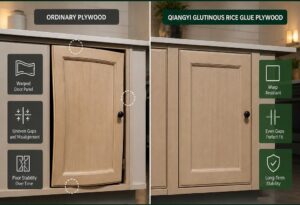
If you’ve built cabinet doors before, you know how this goes. Door goes in, looks great. Six months later it bows, the gaps run uneven, and the hinges start fighting you. Tall doors suffer most, long spans of particle board simply sag. That’s why most cabinet shops refuse to use particle board for doors at all.
Qiangyi Starch Glue Plywood is built for doors. Every core is first grade, every layer ties into the next in a full-connection layup, so the internal stress stays balanced from one side to the other. The starch glue soaks deep into the wood fibers and cures into a dense, crystal-like web that holds the layers far better than a paper-thin UF glue line. Put simply, the board is stiff, and a stiff board doesn’t bow. That’s the anti deformation plywood behaviour cabinet makers are after.
The numbers check out too (report SZF-WT-25082006-02). Immersion peel passed at 100%. Modulus of rupture runs ≥22 MPa along the grain and ≥20 MPa across. Modulus of elasticity, ≥5000 MPa and ≥4000 MPa. What that means for the workshop: screws bite hard and stay put, and tall cabinet doors keep their shape for years.
Waterproof Plywood for High-Moisture Areas
Water ruins panels faster than anything else. Think of a cabinet beside the kitchen sink, a bathroom vanity, a laundry cupboard. Sooner or later moisture gets in. Particle board swells within days once water sneaks past the edge banding. UF plywood lasts longer, but it still drinks water in over time.
Our board carries a Class II strong waterproof rating. It passed the 63 °C ± 3 °C hot-water immersion test (report SZF-WT-25101715-03), the standard for boards used in wet conditions. Soak a sample for 24 hours and thickness swelling stays at 2.4%. Ordinary multi-layer board sits around 5%; particle board runs about 12%.
We’ve also left samples soaking in water for over a year. They came out without swelling and without delamination, and the edge banding never let go. That’s the waterproof plywood a kitchen should be built from.
Built for Tropical Climates: Philippines, Southeast Asia and Beyond
A good share of our orders go to the Philippines, Southeast Asia and the Middle East. Heat and humidity are part of life there, and termites are the real enemy. They travel up from the soil, through wall gaps, along pipe lines. Once they reach a wardrobe, that cabinet is basically finished.
Regular plywood almost welcomes them. UF glue cures to a mildly acidic state, and that’s precisely the pH termites like. Our starch glue cures alkaline instead. Termites feed on the board, swallow the alkaline glue, and can’t digest it. They die. The Animal Research Institute of Guangdong Academy of Sciences graded the board 9.5 for termite resistance under GB/T 18260-2015, near the top of the scale.
The same chemistry keeps mold away, and the dense glue structure blocks moisture, so cabinets stay dry through the monsoon. Fire is another worry in a home. Magnesium oxide is a natural flame retardant, with an ignition point around 2850 °C. Put a flame against the board and it chars on the surface but doesn’t catch fire, and the smoke it gives off is about one-tenth as toxic as the national limit. For a bedroom wardrobe, that’s genuine peace of mind.
Insulation is a free bonus. The board measures above 35 dB weighted sound reduction, so a wardrobe standing against a bedroom wall takes the edge off noise from the next room, and it helps hold the room temperature steady through the day.
Side-by-Side Comparison: Starch Glue Plywood vs. Conventional Panels
| Property | Qiangyi Starch Glue Plywood (2nd Gen) | UF Multi-layer Board (1st Gen) | Spanplatte |
| Formaldehyde | Beyond ENF (zero-aldehyde glue; not detected) | Up to ENF in lab; still emits with heat & humidity | Mostly E0/E1; glue contains formaldehyde |
| Odor | Clean, odor-free | Prone to odor | Heavy odor source |
| Mold resistance | Grade 0 (no mold growth) | Not mold resistant | Prone to mold |
| Antibacterial rate | ≥99% | Keiner | Keiner |
| Deformation (doors) | Anti-deformation, ideal for tall doors | Easily warps; avoided for doors | Warps in changing humidity |
| Water resistance | Class II strong waterproof (63 °C hot-water test) | Not waterproof | Swells easily |
| 24h thickness swelling | 2.4% | 5% | 12% |
| Termite resistance | Grade 9.5 | Attracts termites | Attracts termites |
| Rissverhinderung | Grade 5 | Keiner | Cracks easily |
| Flame retardancy | B1 (chars, does not burn) | Flammable | Flammable |
| Sound & heat insulation | Ja | No | Poor |
Third-Party Certifications and Test Reports
Every claim on this page sits on a test report:
| Performance | Report No. | Key Result |
| Formaldehyde (ENF) | SZF-WT-25053004-03 | Not detected |
| Odor (TVOC) | SZF-WT-25082006-01 | TVOC 11 µg/m³; benzene/toluene/xylene not detected |
| Anti-Deformation | SZF-WT-25082006-02 | Immersion peel / MOR / MOE 100% pass |
| Waterproofing | SZF-WT-25101715-03 | Class II strong waterproof (63 °C hot-water test) |
| Termite resistance | GIZ/TR-2024-0301-0186 | Grade 9.5 |
| Flame retardancy | WT245100363 | B1; no burning droplets |
15-Year Warranty: Confidence You Can Trust
A lot of suppliers talk about quality. We put it in writing.
If the face veneer cracks or peels, or the core opens up or delaminates during normal use and processing, we replace or repair the board free of charge for 15 years. If a third-party test finds formaldehyde above the limit, we pay triple. Odor, swelling, warping, termite damage caused by the board — we take it back and replace it. Each promise is signed and stamped in our commitment letters, not just typed into a chat message.
We can back this up because we make the board ourselves. Qiangyi Wood has been in business 22 years, runs four production bases with over 100,000 m² under roof, and sells direct, no middleman. Every batch gets tested before it leaves the factory, and since 2019 we’ve run a shared environmental testing lab with the Guangxi Institute of Product Quality Inspection. The warranty rests on our own production line, and that line isn’t going anywhere.
Häufig gestellte Fragen
Q: Can I use 18 mm Qiangyi Starch Glue Plywood for cabinet doors?
A: Yes. It is one of the most common sizes we sell for doors, and the anti-deformation performance is exactly what tall doors and long panels need. Other thicknesses are available on request.
Q: Is it waterproof? What about kitchen cabinets?
A: It is rated Class II strong waterproof and passed the 63 °C hot-water immersion test. The 24-hour swelling rate is only 2.4%, so kitchens and other wet areas are fine.
Q: Will it hold up in the Philippines, with the heat, humidity and termites?
A: One of our biggest markets, actually. Grade 9.5 termite resistance, Grade 0 mold, over 99% antibacterial and B1 flame retardancy were built for that climate.
Q: How much formaldehyde does it release?
A: Third-party tests came back not detected against a detection limit of 0.005 mg/m³, which is better than the ENF standard. The number also stays low when temperature and humidity rise.
At the end of the day, a cabinet is only as good as the panel it’s built from. Cheap board saves you money once, then takes it back through repairs, smells and rework. Qiangyi Starch Glue Plywood is the board our name sits on, and every claim here is backed by a test report and a signed 15-year warranty.
Main products: Marine plywood, Melamine plywood, Melamine blockboard, Melamine Chipboard, Melamine MDF board, Film face plywood, Edge banding, Furniture accessories
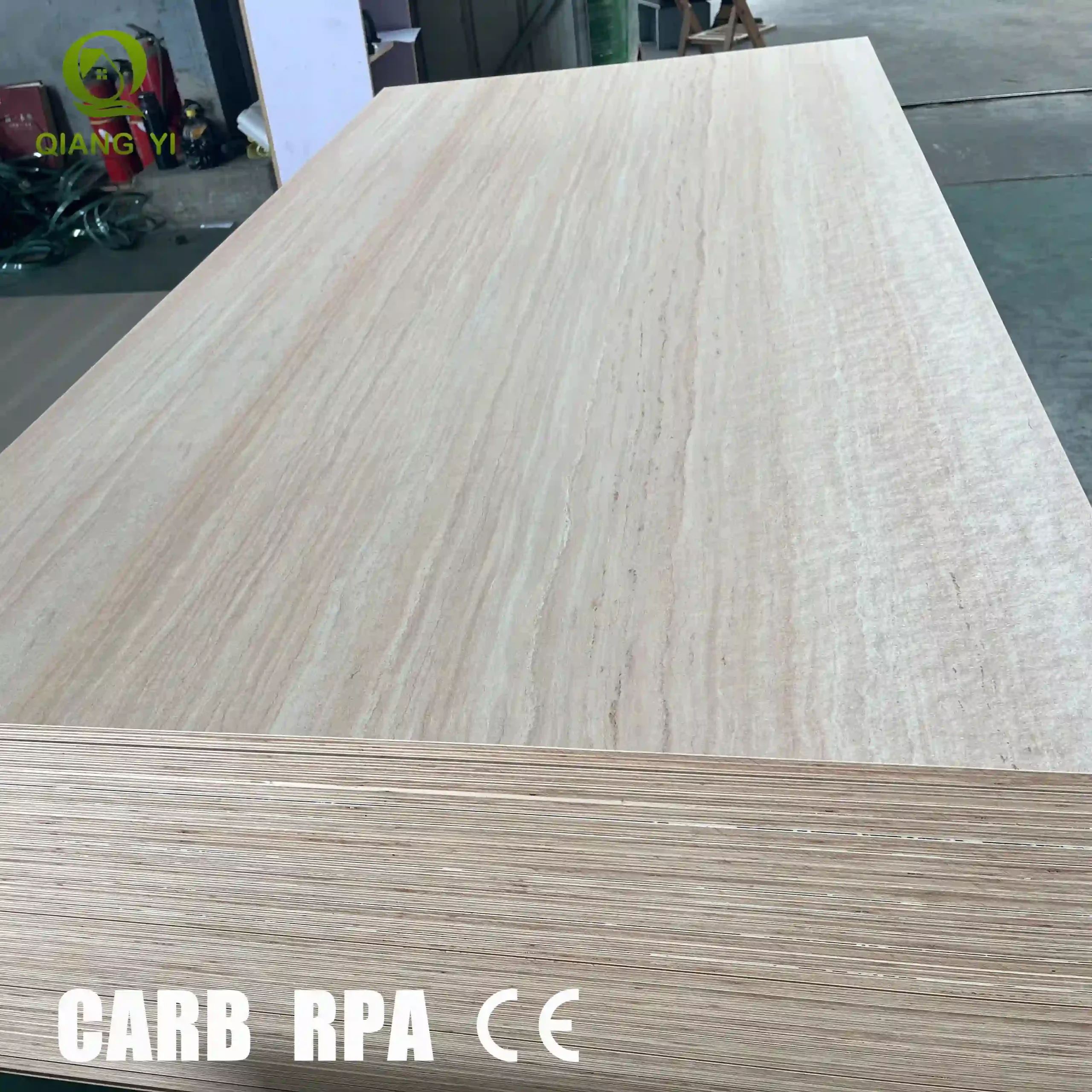
100% Eucalyptus Core Waterproof Plywood Marine Grade Termite Resistant Best Plywood for Tropical Furniture
A furniture-grade eucalyptus plywood that survives hot, humid climates. Solid 100% eucalyptus core, waterproof adhesive, built flat for cabinet doors — no voids, no warping, no surprises after the rainy season.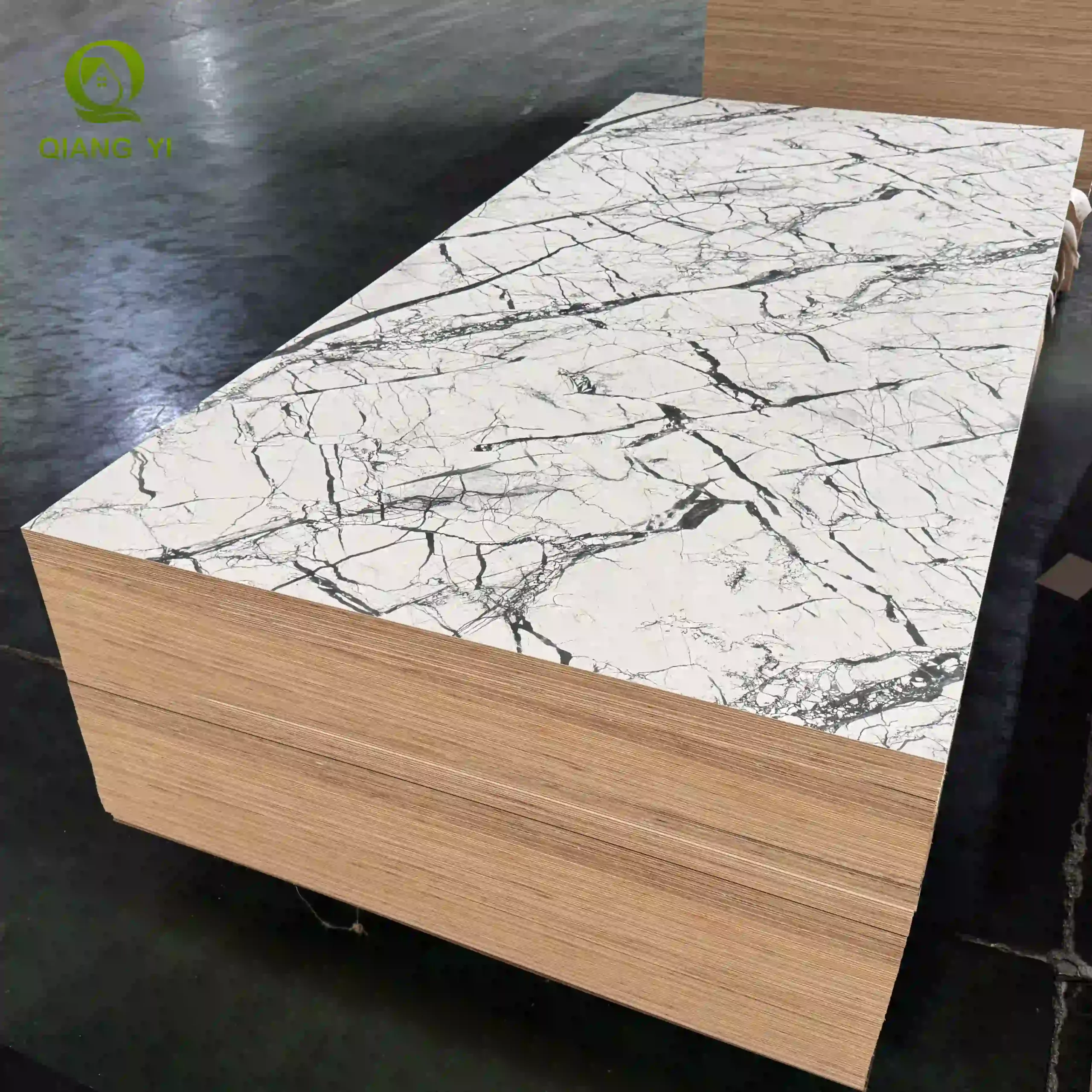
Qiangyi glutinous rice full eucalyptus core hardwood veneer melamine laminate plywood for cabinet
Qiangyi glutinous rice glue plywood is also known as second-generation plywood that represents a century of innovation. It has achieved No.1 in sales and a top reputation in China. Widely favored by renovation companies, cabinet manufacturers, and homeowners. Qiangyi glutinous rice plywood achieve the B1-grade fire retardant standard, strong nail-holding power, resistance to deformation, water resistance, moisture resistance, mildew resistance, antibacterial properties, and termite resistance.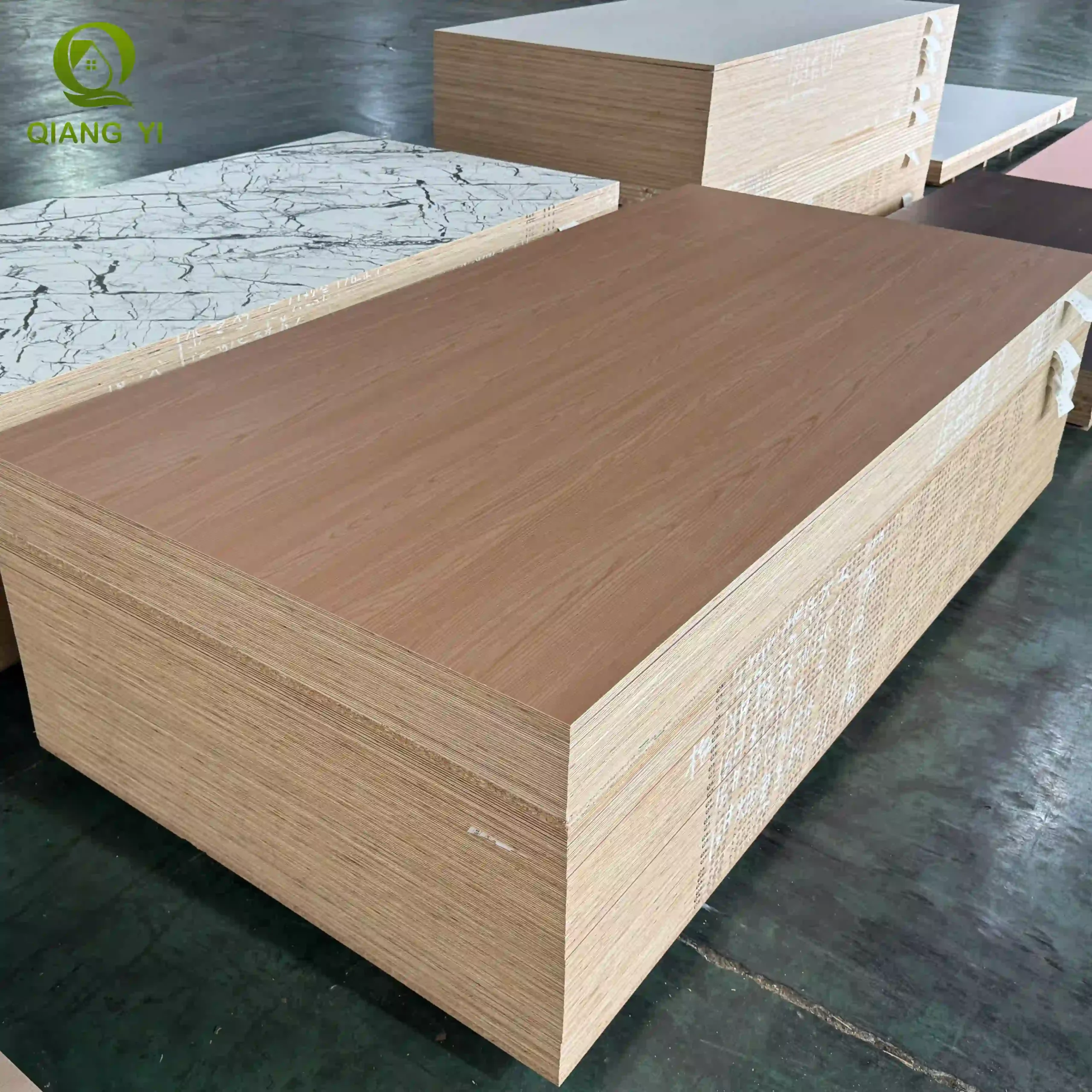
hardwood core 100% eucalyptus wood plywood ENF grade for modular cabinetry
Main Advantages for Modular Cabinetry 1. Structural Stability: High-density, high-hardness cross-laminated veneers offer excellent resistance to bending and warping, and control standard thickness tolerance for modular cabinet assembly. 2. Hardness and Wear Resistance: High-density eucalyptus hardwood provides superior load-bearing capacity, Good screw holding capacity, making it ideal for Modular Cabinetry. 3. Moisture Resistance: Offers better moisture resistance than standard particleboard or MDF and softwood like poplard and pine core plywood; suitable for humid environments like kitchen and bathroom, with a 24-hour thickness swelling rate of less than 2.4% (surpassing industry standards). 4. Ease of Processing: Excellent performance in cutting, drilling, and edge banding (PUR/PVC); ensures clean edges without fraying, peeling, or chipping—perfect for automated factory production lines. 5. Environmental Compliance: Available with CARB-P2, FSC, and CE certifications, meeting market entry requirements for Europe, North America, and Southeast Asia. 6. Cost-Effectiveness: More affordable than imported hardwood plywood, with a stable and reliable supply.
CARB certified waterproof and anti termite marine plywood 18mm 100% eucalyptus hardwood plywood
Still troubled by plywood projects in humid areas? See how glutinous rice plywood can solve the pain points of furniture projects in humid climates, as well as the key points for plywood procurement.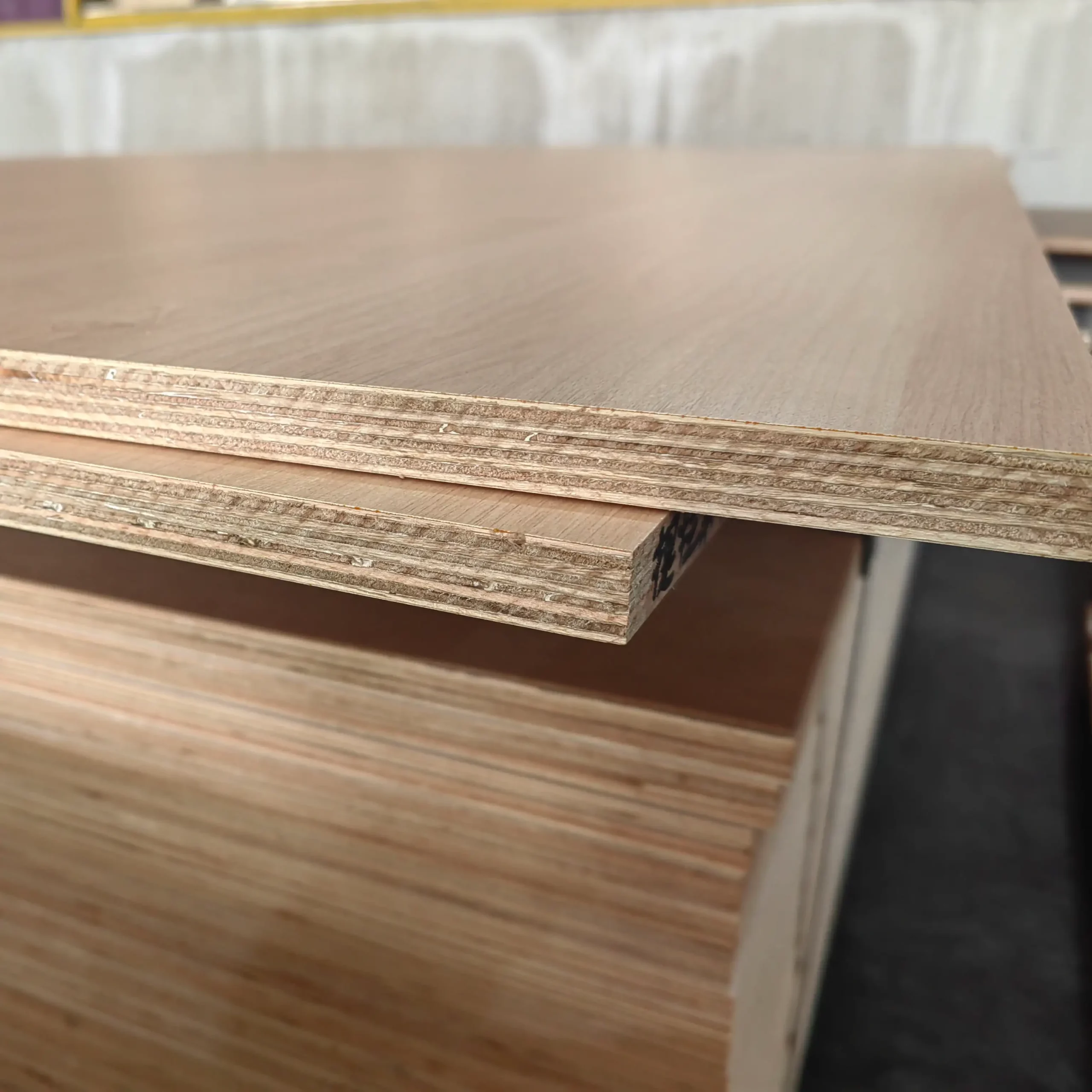
Professional Melamine Laminate Qiangyi Brand ENF Standard Hardwood Core Qiangyi Brand for Furniture
Glutinous rice plywood is second generation plywood with multi-functional. It performance super‑ENF eco‑friendly , free formaldehyde, ordor free, class II water proof, anti deformation, 5 grade anti cracking, 9.5 grade anti termite, B1 flame retardant, anti thermal and anti insulation. Glutinous rice plywood suitable for interior kitchen cabinet, bathroom cabinet, wardrobe, desk, wall panel. Versatile melamine face can be choose or plain color match country style melamine face.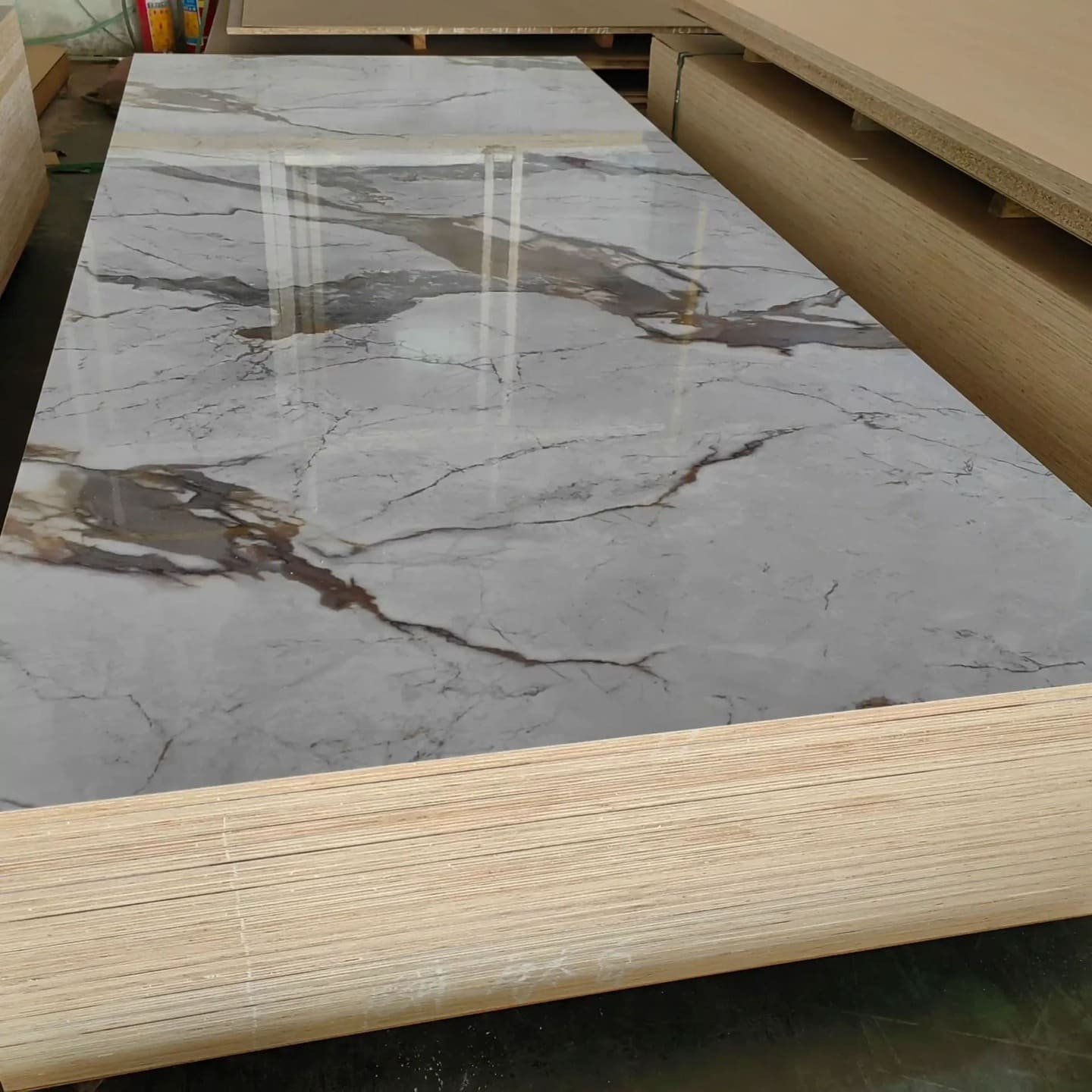
First-Class 3/4 plywood 4×8 Qiangyi Brand ENF Grade Hard Wood Core Waterproof for Bathroom Decoration-Qiangyi Plywood
Glutinous rice plywood is second generation plywood which is multi-functional plywood. The components adhesive are glutinous rice starch, magnesium chloride , magnesium oxide,water, no formaldehyde. Glutinous rice plywood has Class‑II waterproof; 2.4% thickness swelling (24h water immersion). It can used in humid environment like bathroom, kitchen, laundry, tropical or coastal country.Get more information about the plywood
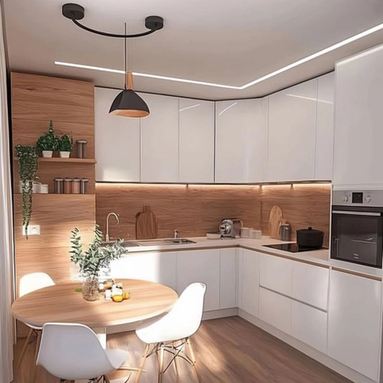
Anti-Mold Plywood Checklist for Hotel Furniture Buyers
Mold in hotel furniture rarely begins as a dramatic leak. More often, it starts behind a wardrobe, under a vanity, beside a cold wall, or along an exposed panel edge that stays damp. The board may look fine at delivery, while moisture-related defects appear months later. A useful anti-mold plywood checklist therefore has to look beyond one label. Buyers need to evaluate the environment, core structure, bonding system, moisture control, and test evidence before approving a bulk order. Where Do Mold Problems Start in Hotel Furniture Projects? Hidden Moisture Zones in Guestroom Furniture Hotel rooms create several moisture conditions in one small space. A wardrobe fixed against an exterior wall may receive little airflow. A bathroom vanity sees splashes, steam, and repeated cleaning. A minibar cabinet can sit near cool surfaces where condensation forms. In tropical or coastal hotels, rooms closed between guests may also stay humid for long periods. Panel edges, drilled holes, backs, joints, and internal layers can take in moisture before the decorative face shows obvious damage. Why a Small Mold Spot Can Become a Project Cost In a hotel, one material specification may be repeated across dozens or hundreds of rooms. A local defect can therefore become room downtime, replacement furniture, another installation visit, delayed handover, warranty claims, and complaints from the operator. Anti-mold performance is not only an appearance issue. For a hotel furniture buyer, it is part of project risk control. Why Does Plywood Develop Mold and Moisture-Related Damage? Humidity, Condensation, and Slow Drying Create the Risk Mold needs favorable moisture conditions. Furniture becomes more vulnerable when humidity remains high, water enters through unfinished edges, or condensation repeatedly wets a cold surface. The problem is often cumulative. A panel takes in some moisture, dries slowly, then repeats the cycle. Poor airflow behind fixed furniture can make this worse. Anti-mold material cannot replace leak repair, ventilation, or humidity control, but it can give the furniture assembly a better margin against these conditions. Moisture Can Also Lead to Swelling and Deformation Moisture can also stress the glue line, swell wood fibers, loosen fastening areas, or change panel flatness. A board used for wardrobes, vanity units, headboards, or built-in cabinets therefore needs a stable core and reliable bonding. Even when buyers search for plywood thickness for cabinets, thickness alone cannot compensate for internal gaps, weak veneers, or a moisture-sensitive structure. What Should Hotel Buyers Check Before Approving Anti-Mold Plywood? The supplier should be able to explain how the panel is built and how it performs. The phrase waterproof plywood is not enough, and neither is a general “mold resistant” claim. Buyer Check Why It Matters Mold or mildew resistance evidence Confirms the anti-mold claim Antibacterial performance Adds hygiene-related evidence Core species and grade Affects stability and fastening Full-connected core structure Reduces internal weak points Panel moisture content Checks moisture control before shipment Water-resistance and bond test Checks glue-line integrity after moisture exposure Edge sealing plan Helps limit moisture entry after fabrication Verify the Structure, Not Just the Surface For hotel furniture, eucalyptus core board construction is worth checking at the exposed edge or approved sample. A hardwood core can support repeated fastening and daily use, but the species name alone is not enough. Buyers should ask whether the core is continuous and whether gaps, overlaps, or filler veneers are present. Cabinet grade plywood should be judged as a complete structure, not only by face appearance. Match the Board to the Furniture Location The risk level differs by application. A wardrobe on an internal dry wall is not exposed like a vanity beside a shower area. A tall cabinet door also places more emphasis on flatness and deformation control. For bulk hotel projects, approve the panel by application: wardrobe, vanity, minibar, wall panel, or other built-in furniture. How Does QIANGYI PLYWOOD Target Moisture-Driven Mold Risk? At QIANGYI PLYWOOD, we approach the problem through the core, adhesive system, and moisture-control process rather than relying on a surface claim alone. Full Eucalyptus Core and Full-Connected Core Construction We use full eucalyptus core options built with continuous eucalyptus veneers. In this structure, full-connected core means the internal veneers are arranged without voids, overlaps, or dead joints. The aim is a more uniform panel with fewer internal weak points. We use 100% eucalyptus core solutions for cabinet and furniture applications. For hotel wardrobes and tall cabinet panels, this matters because core continuity supports more consistent machining, fastening, and dimensional stability. It also gives buyers something practical to inspect on a cut edge before bulk approval. Glutinous Rice Glue Helps Create Less Favorable Conditions for Mold Our Lingmei glutinous rice glue uses glutinous rice flour, magnesium chloride, water, and magnesium oxide. The magnesium components react to create an alkaline environment. More importantly for hotel furniture buyers, an antibacterial and mildew-proof test conducted according to JC/T 2039-2010 on an 18 mm glutinous rice glue multifunctional board recorded an antibacterial rate above 99% and a Grade 0 mildew-proof rating. Under the test rating criteria, Grade 0 means no mold growth was observed. For buyers, this provides direct test evidence for evaluating mold and bacterial resistance instead of relying only on a general anti-mold claim. The adhesive system, moisture control, and tested resistance work together to reduce mold-related risks in furniture exposed to humid conditions. Controlled Drying Keeps Panel Moisture in the 8–12% Range We use a 60-hour temperature-controlled drying process and control board moisture content within 8–12%. This reduces excess moisture before furniture production and supports more stable use in humid conditions. For projects involving humid storage, long shipping routes, or air-conditioned guest rooms, starting with controlled panel moisture is more practical than correcting unstable boards after machining. What Evidence Should Hotel Buyers Put in the Approval File? Testing should support the purchase decision, especially when anti-mold performance is part of the hotel furniture specification. Report No. HJ-RD-26150 covers antibacterial and mildew-proof testing of an 18 mm glutinous rice glue multifunctional board according to JC/T 2039-2010. The tested sample achieved an antibacterial rate above 99% and a Grade 0 mildew-proof rating. The report defines Grade 0 as no mold growth. The antibacterial test used Escherichia coli AS1.90, while the mildew-resistance evaluation included multiple fungal species. For a hotel furniture buyer, this provides direct evidence related to the actual risk being evaluated: whether the panel can resist bacterial growth and mold development under the specified test conditions. For a hotel project, the approval file should include: Core species and full-connected-core confirmation. Antibacterial and mildew-proof test results. The applicable test standard and tested panel specification. Panel moisture specification and moisture-resistance information. Approved thickness, face finish, and edge treatment. A production sample matching the bulk order. These checks make later quality discussions easier because the approved panel has a defined structure and performance basis. Practical Case: Plywood Sourcing for a Humid Philippine Market In early 2026, a Philippine decorative panel and furniture-material distributor contacted us while comparing suppliers for a hot, humid market. The buyer was particularly concerned about environmental performance, moisture resistance, and durability. After seeing our glutinous rice glue plywood in person, the distributor placed a trial order in April with one color. The first shipment received positive market feedback for its ENF grade, surface texture, waterproof performance, and termite resistance. Demand soon expanded beyond the original color, so we developed a customized color sample book for the buyer. The distributor later introduced more finishes through its offline showroom and positioned the glutinous rice glue plywood as a premium product line. For hotel and furniture buyers, this case shows why humid-market sourcing should consider moisture-related performance, structural stability, and consistent product presentation. Meet Us in Guangxi International Forest Products and Wood Products Exhibition For buyers currently sourcing plywood for hotel furniture or other commercial projects, we will attend THE 2026 GUANGXI INTERNATIONAL FOREST PRODUCTS AND WOOD PRODUCTS EXHIBITION from November 21–23, 2026. Visitors can meet our team at Booth D5T-06 at the Nanning International Convention & Exhibition Center to discuss anti-mold plywood, eucalyptus core, full-connected core construction, and project-specific panel requirements. FAQ Q: What is anti-mold plywood for hotel furniture? A: It is plywood selected to reduce mold-related risk in humid interior furniture. Buyers should check mold resistance together with moisture control, bond quality, core continuity, and dimensional stability rather than relying on one anti-mold label. Q: Is anti-mold plywood the same as waterproof plywood? A: No. Water resistance focuses on moisture exposure, bonding, and swelling. Anti-mold performance focuses on resistance to fungal growth. The two properties support each other, but they are not the same test. Q: Why is a full eucalyptus core important for hotel cabinets? A: A full eucalyptus hardwood core provides a dense, consistent base for furniture use. When combined with a full-connected core structure, it also reduces concerns about internal voids, overlaps, and weak joints. Q: Where should mold-resistant plywood be prioritized in a hotel? A: High-risk locations include bathroom vanities, wardrobes against exterior walls, minibar cabinets, lower cabinet panels, and furniture in tropical, coastal, or poorly ventilated rooms. Q: What should buyers request before placing a bulk anti-mold plywood order? A: Request the approved core structure, panel moisture range, antibacterial and mildew-proof test results, applicable test standard, tested panel specification, thickness and surface requirements, and a production sample that matches the final order.
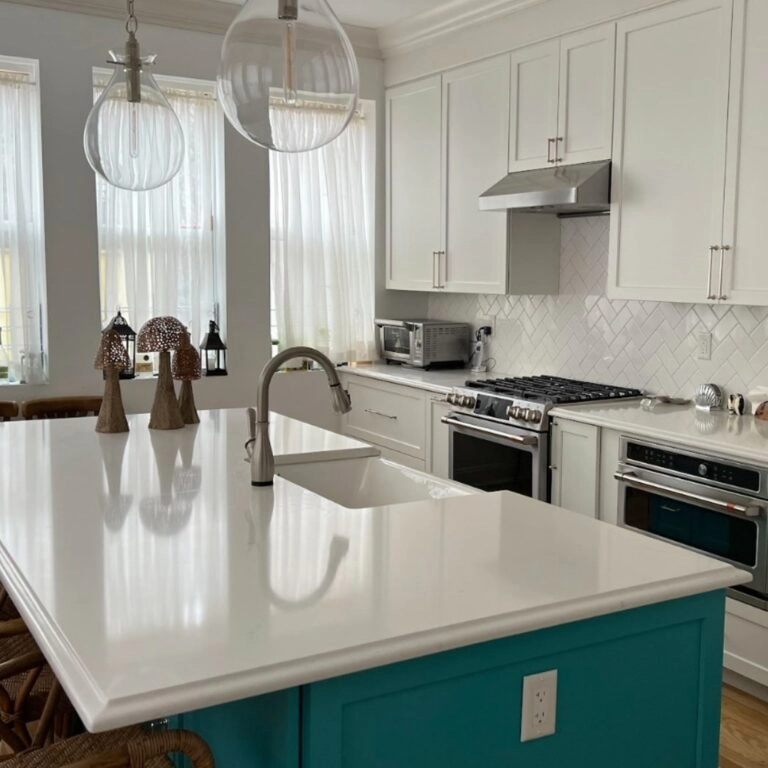
Leitfaden für termitenbeständiges Sperrholz zur Reduzierung von Gewährleistungsansprüchen
Ein Termitenbefall in einem fertigen Schrank bleibt selten nur ein geringfügiges Materialproblem. Sobald ein Kleiderschrank, ein Küchenschrank oder ein Einbaumöbel installiert ist, können Schäden zu Vor-Ort-Besichtigungen, dem Austausch von Platten, Arbeitskosten, Transportkosten und Gewährleistungsstreitigkeiten führen. Deshalb sollte termitenresistentes Sperrholz vor dem Zuschnitt geprüft werden. Für Küchenhersteller ist nicht entscheidend, ob eine Platte ein Anti-Termiten-Siegel trägt, sondern ob Kern, Klebesystem, Plattenaufbau und Prüfergebnisse eine risikoärmere Garantiestrategie ermöglichen. Warum führen Termitenschäden zu kostspieligen Gewährleistungsansprüchen für Küchenschränke? Versteckte Schäden treten oft erst nach der Installation auf. Termiten können über Erdwege, Mauerrisse, Rohre oder befallenes Holz und Verpackungen eindringen. Bei Küchen- und Badmöbelprojekten sind schwer einsehbare Stellen unter anderem Rückwände in Wandnähe, Sockelleisten, Schrankunterschränke und Spülenschränke. Das Sperrholz mag während der Produktion unbeschädigt aussehen. Schäden werden oft erst nach der Montage der Möbel sichtbar, wenn der Hersteller den Aufstellungsort begutachten, Schränke demontieren, Platten neu anfertigen, Ersatzteile liefern und die Neumontage organisieren muss. Die Kosten können leicht weit über eine einzelne beschädigte Platte hinausgehen. Ein typisches Beispiel für einen Küchenschaden ist ein Unterschrank in der Nähe der Wasserleitungen in einer Wohnung mit hoher Luftfeuchtigkeit. Wenn versteckter Termitenbefall bis zum Untergrund vordringt, kann der Austausch einer Innenwand den Ausbau von Beschlägen, Türen, Arbeitsplatten oder angrenzenden Schränken erforderlich machen. Bei einem Kleiderschrank kann der Schaden hinter einer festen Rückwand unbemerkt bleiben, bis der Kunde Staub, Hohlräume oder geschwächte Stellen entdeckt. Das Gewährleistungsrisiko beginnt mit der Materialauswahl. Eine dekorative Oberfläche ist kein Schutz vor Termiten. Melaminbeschichtetes Sperrholz mag zwar eine praktische Optik bieten, doch die Oberfläche allein beweist nicht, dass der Untergrund termitenresistent ist. Das Gleiche gilt für laminiertes Bootsbausperrholz. Feuchtigkeitsbeständigkeit und Termitenresistenz sind separate Aspekte. Eine häufige Frage von Käufern lautet: „Ist laminiertes Bootsbausperrholz termitenbeständig?“ Die Antwort hängt vom Kernmaterial, dem Klebstoffsystem und dem Testergebnis ab, nicht vom Produktnamen. Warum kann Sperrholz immer noch anfällig für Termitenbefall sein? Sperrholz besteht aus Holzfurnieren, daher bleibt die Zellulose im Inneren der Platte erhalten. Eine dekorative Oberfläche mag die Oberfläche im Alltag schützen, doch Schnittkanten, Bohrlöcher, Befestigungspunkte und die inneren Furniere spielen in termitengefährdeten Gebieten weiterhin eine Rolle. Die Projektbedingungen bergen ein zusätzliches Risiko. Küchenmöbel befinden sich möglicherweise in unmittelbarer Nähe von Wasserleitungen, während Kleiderschränke jahrelang an Wänden befestigt sind. In tropischen oder feuchten Regionen können verdeckte Zugänge und lange Nutzungsdauern einen kleinen Schädlingsbefall zu einem kostspieligen Kundendienstfall ausweiten. Aus diesem Grund sollte „termitesicher“ nicht als uneingeschränktes Versprechen verstanden werden. Ein besserer Ansatz kombiniert die Auswahl geeigneter Paneele mit fachgerechter Installation, Abdichtung, Inspektion und lokalen Schädlingsbekämpfungsmaßnahmen. Welche Anforderungen sollten Küchenmöbelhersteller an termitenbeständiges Sperrholz stellen? Vor dem Preisvergleich sollten Käufer prüfen, was tatsächlich geliefert wird. Kaufcheck Was zu bestätigen ist Termitenspuren Prüfverfahren, Probe, Datum, Prüfberichtnummer, Bewertung Kernmaterial Holzart und Furnierqualität Kernkonstruktion Vollständig verbundener Kern, keine lose, teilweise Laminierung Schrankspezifikation Dicke, Oberfläche, Kantenbearbeitung, Verwendungszweck Lieferantenverantwortung Klare Kundendienstabwicklung Die Qualität des Kernholzes verdient besondere Beachtung. Eukalyptuskernholz ist für den Möbelbau wertvoll, da es eine stabile und robuste Hartholzbasis bildet. Großkalibriges Eukalyptusholz gilt als Sperrholzrohstoff, der für seine Festigkeit und gleichbleibende Qualität geschätzt wird. Ein vollständig verbundener Kern, auch Vollkernaufbau genannt, ermöglicht eine kontrolliertere innere Struktur als ein teilweise verbundener Kern. Bei dieser Konstruktion sind die Kernfurniere durchgehend angeordnet, während der Klebstoff Schicht für Schicht aufgetragen wird. Keiner der beiden Punkte sollte als Ersatz für einen Termitentest herangezogen werden. Vielmehr helfen sie Käufern, ein einheitlicheres Trägermaterial auszuwählen. Die Sperrholzstärke für Schränke muss zudem dem jeweiligen Design entsprechen. Eine 18 mm dicke, geprüfte Platte sollte nicht automatisch als Beleg für jede beliebige Stärke oder Konstruktion gelten. Wie geht QIANGYI SPERRHOLZ gegen das Risiko durch Termitenbefall bei Plattenplatten vor? Bei QIANGYI PLYWOOD gehen wir dieses Problem durch das Klebstoffsystem, die Auswahl des Eukalyptuskerns und die vollständig verbundene Kernkonstruktion an, anstatt uns auf eine Oberflächenwirkung zu verlassen. Lingmei Klebreiskleber wirkt durch die gebundene Struktur Unser mit Klebreisleim hergestelltes Sperrholz verwendet Lingmei-Kleim aus Klebreismehl, Magnesiumchlorid, Magnesiumoxid und Wasser. Nach dem Aushärten erzeugen Magnesiumchlorid und Magnesiumoxid ein alkalisches Klebstoffmilieu. Unser technisches Verfahren besteht darin, durch dieses alkalische Klebstoffmilieu das Säure-Basen-Milieu im Holz zu verändern und so Bedingungen zu schaffen, die Termitenbefall erschweren. Dies ist wichtig, da die Schrankherstellung Schneiden, Bohren, Scharniere anbringen und Kantenbearbeitung umfasst.Für diese Vorgänge ist die mit dem internen Bindungssystem verbundene Handlung relevanter als eine Aussage, die sich ausschließlich auf die fertige Oberfläche stützt. Eukalyptuskern und Vollkern-Laminat unterstützen die Konsistenz Für Anwendungen im Möbelbereich legen wir Wert auf einen Kern aus erstklassigem Eukalyptusholz. Eukalyptus bietet eine stabile strukturelle Grundlage, während die Termitenresistenzbewertung vom gesamten geprüften Plattensystem und nicht allein von der Holzart abhängt. Die Furniere sind als vollständig verbundener Kern angeordnet und Schicht für Schicht verklebt. Diese Konstruktion erfordert eine sorgfältigere Kernauswahl und verleiht der Platte einen gleichmäßigeren inneren Faseraufbau. Anschließend folgen verlängertes Kaltpressen, kontrollierte Trocknung und Aushärtung. Der Produktionsablauf umfasst 24 Stunden selbsterhitzendes Kaltpressen, 60 Stunden Trocknung und mehr als 15 Tage Konditionierung. Für Möbelhersteller liegt der praktische Nutzen in der gleichbleibenden Qualität von Schrankseiten, Regalböden, Türen, Kleiderschränken und anderen Bauteilen. Fallbeispiel: Reduzierung von Termiten- und Kundendienstrisiken in Mauritius Ein langjähriger Kunde aus der Möbelherstellung in Mauritius bestellt regelmäßig volle Containerladungen mit hochwertigem Sperrholz aus 100 % Eukalyptusholzkern. Das Klima auf der Insel ist feucht und anspruchsvoll, sodass herkömmliche Platten mit der Zeit zu Abblättern, Verformungen und Termitenbefall neigen. Für diesen Kunden liefern wir Sperrholz mit 100 % Eukalyptusholzkern und Klebreisleim, kombiniert mit kontrollierter Verarbeitung für eine höhere Plattenstabilität. Der Termitenbeständigkeitstest der Klasse 9,5 liefert dem Kunden zudem wichtige Informationen für die Materialauswahl bei der Schrankproduktion. Laut Kundenangaben reduziert die Verwendung unseres Sperrholzes für Schränke die Sorgen um Probleme nach dem Kauf. Die gleichbleibende Qualität der Chargen ermöglicht es dem Werk außerdem, bei wiederholten Aufträgen eine vergleichbare Schnittleistung, Schraubenfestigkeit und Produktionseinstellungen zu gewährleisten. Was bedeutet die Bewertung 9,5 im Test für das Beschaffungs- und Gewährleistungsrisiko? Die Angaben zur Termitenbeständigkeit werden durch den Prüfbericht GIZ/TR-2024-0301-0186 des Guangdong Institute of Zoology, Chinesisches Institut für Analyse und Prüfung der Wissenschaften, belegt. Die geprüfte Probe war multifunktionales Sperrholz aus Klebreisleim (1220 × 2440 × 18 mm). Die Prüfgrundlage war GB/T 18260-2015. Die zugehörige Prüfberichtsnummer ist in den Produktprüfunterlagen vermerkt. Im Rahmen des vierwöchigen Tests zur Termitenbeständigkeit in Innenräumen wurden nur geringe Termitenschäden festgestellt, mit lediglich ein bis zwei Termitengängen oder Spuren eines Befalls. Die Probe erhielt eine Termitenbeständigkeitsbewertung von 9,5. Dieses Ergebnis (9,5) ist auch in den Leistungsdaten der Paneele enthalten. Für Käufer ist die Rückverfolgbarkeit wichtiger als ein absolutes Versprechen. Prüfberichtnummer, Probenaufbau, Dicke, Prüfmethode und Ergebnis lassen sich mit dem bestellten Material vergleichen. Dies hilft Importeuren und Küchenherstellern, ihren Kunden konkrete Nachweise zu liefern, anstatt sich auf eine allgemeine Produktbeschreibung zu verlassen. Eine praktische Kaufreihenfolge ist: 1. Ermitteln Sie, ob das Projekt einem relevanten Termitenbefall ausgesetzt ist. 2. Passen Sie die Plattenstärke und -oberfläche an das Schrankdesign an. 3. Bestätigen Sie die Verwendung eines Eukalyptuskerns und die vollständig verbundene Kernkonstruktion, sofern dies vorgeschrieben ist. 4. Fordern Sie den Termitenresistenzbericht für das entsprechende Panel an. 5. Bewahren Sie den Bericht und die Kaufspezifikation zusammen mit den Projektqualitätsaufzeichnungen auf. Für Projekte mit unserem Klebreis-Sperrholz der zweiten Generation bieten wir zudem eine Garantie gegen Insekten- und Termitenbefall. Sollte es unter den entsprechenden Bedingungen zu Schäden durch Termiten oder holzzerstörende Insekten kommen, übernehmen wir die Ersatzlieferung. Für Küchen- und Möbelhersteller bietet dies eine deutlichere Risikobewertung als ein vages „Termitenschutz“-Etikett. Besuchen Sie uns auf der Internationalen Forst- und Holzproduktemesse Guangxi 2026 Suchen Sie nach termitenbeständigem Sperrholz, Sperrholz mit Eukalyptuskern oder vollflächig verbundenen Kernplatten für Ihre Schrank- und Möbelprojekte? Dann besuchen Sie uns auf der Internationalen Messe für Forst- und Holzprodukte Guangxi 2026. Wir freuen uns, Schrankhersteller, Sperrholzimporteure, Händler und Projektkäufer persönlich mit uns über Plattenspezifikationen, Anforderungen an die Termitenbeständigkeit, Kernkonstruktion und Beschaffungsbedarf zu sprechen. Veranstaltungsname: DIE INTERNATIONALE FORST- UND HOLZPRODUKTAUSSTELLUNG GUANGXI 2026 Standnummer: D5T-06 Datum: 21.-23. November 2026 Veranstaltungsort: Internationales Kongress- und Ausstellungszentrum Nanning Häufig gestellte Fragen F: Ist laminiertes Marinesperrholz termitenbeständig? A: Nicht automatisch. Feuchtigkeitsbeständigkeit und Termitenresistenz müssen separat geprüft werden. Bestätigen Sie das Substrat, das Klebstoffsystem und den Termitenprüfbericht. F: Ist Melamin-Sperrholz termitenfest? A: Eine Melaminoberfläche allein macht das Substrat nicht termitenresistent. Der Kern und das innere Bindungssystem müssen noch untersucht werden. F: Warum wird Eukalyptusholz als Kernmaterial für termitenbeständiges Schranksperrholz verwendet? A: Der Eukalyptuskern bietet eine starke, stabile Struktur.Bei diesem Paneelsystem resultiert die Termitenbeständigkeit aus der kompletten, geprüften Konstruktion und dem Klebesystem. F: Was bedeutet ein vollständig vernetzter Kern? A: Das bedeutet, dass die inneren Furniere einen durchgehenden, eng anliegenden Kern bilden und nicht nur teilweise verbunden sind. Dies ermöglicht eine gleichmäßigere innere Struktur für die Gehäusefertigung. F: Kann termitenbeständiges Sperrholz der Güteklasse 9.5 alle Gewährleistungsansprüche ausschließen? A: Nein. Prüfergebnisse der Güteklasse 9.5 können die Unsicherheit bei der Materialauswahl verringern, aber die korrekte Spezifikation, Installation, Feuchtigkeitsmanagement, Inspektion und Termitenbekämpfung vor Ort sind weiterhin wichtig.
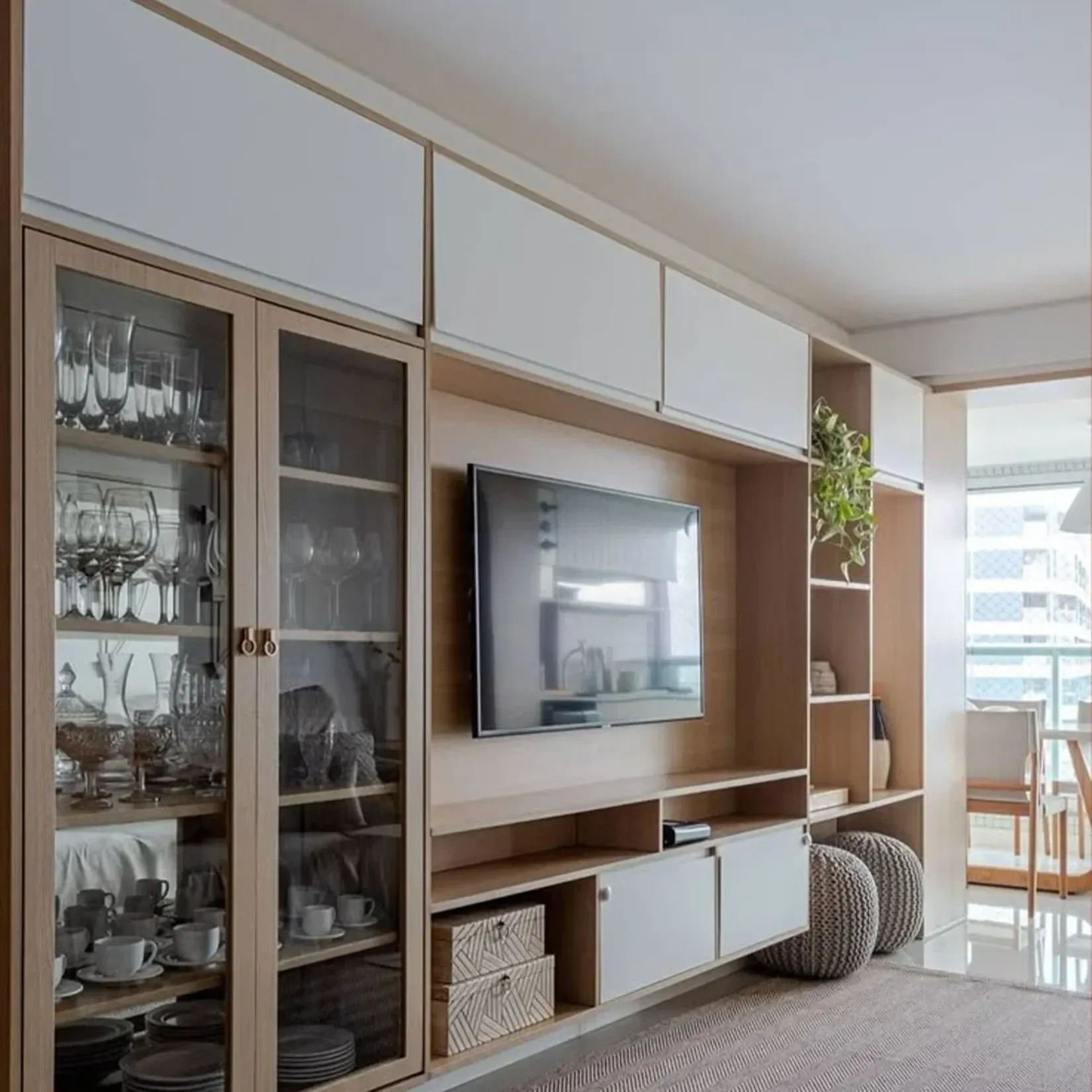
Leitfaden für schwer entflammbares Sperrholz der Klasse B1 zur Risikominderung
Die hohen Kosten von Verstößen gegen Brandschutzbestimmungen bei Gewerbeprojekten Die Genehmigung von Gewerbeflächen wie Hotels, öffentlichen Gebäuden und großen Einzelhandelsgeschäften ist an strenge Sicherheitsvorschriften geknüpft. Zu den wichtigsten dieser Vorschriften zählen die Brandschutzbestimmungen. Wenn Innenausbauer oder Projektkäufer Materialien für maßgefertigte Möbel, Wandpaneele oder Inneneinrichtungen beschaffen, liegt die versteckte Gefahr oft im Kern der verwendeten Holzplatten. Das Scheitern einer Brandschutzprüfung aufgrund nicht konformer Holzplatten ist ein Szenario, das Projektmanagern große Sorgen bereitet. Daher ist das Verständnis der Feinheiten von feuerfestem Sperrholz nicht nur eine technische Notwendigkeit, sondern eine entscheidende Strategie für den Geschäftserfolg. Warum Standard- oder minderwertiges Sperrholz unter Brandbedingungen versagt Die Anfälligkeit vieler Bauplatten im Brandfall ist direkt auf ihre innere Zusammensetzung und ihre Herstellungsprozesse zurückzuführen. Standard-Holzplatten oder schlecht gefertigte, feuerfeste Holzplatten weisen oft versteckte strukturelle Schwächen auf, die unter extremer Hitze fatale Folgen haben können. Ein Hauptproblem sind die Hohlräume oder Lücken in den Kernschichten herkömmlicher Paneele. Hohe Temperaturen treffen auf diese winzigen Lufteinschlüsse. Dadurch gelangt Sauerstoff in das Material, was die Verbrennung beschleunigt. Anstatt die Hitze zu bekämpfen, nährt das Material die Flammen. So kann sich das Feuer schnell in der Gebäudestruktur ausbreiten. Auch die in herkömmlichen Herstellungsverfahren verwendeten Klebstoffe bereiten große Probleme. Viele ältere Paneele verwenden Harnstoff-Formaldehyd-Harze. Diese gängigen Klebstoffe sind nicht hitzebeständig genug. Bei einem Brand zersetzen sie sich schnell, wodurch die Stabilität des Paneels beeinträchtigt wird und es schließlich zerfällt. Schlimmer noch: Das Schmelzen dieser Harze erzeugt hochgiftigen Rauch. Dieser Rauch stellt eine größere Gefahr für Menschen und Feuerwehrleute dar als die Flammen selbst. Wesentliche Kriterien für echtes B1-flammhemmendes Sperrholz B2B-Einkäufer möchten diese hohen Risiken minimieren und Projektaudits problemlos bestehen. Dazu müssen sie bei der Auswahl von Innenausbaumaterialien strenge Regeln festlegen. Eine echte Brandschutzplatte ist weit mehr als nur eine Oberflächenbeschichtung. Sie benötigt einen speziell entwickelten Kern, der für extreme Bedingungen ausgelegt ist. Die erste Regel ist eine hochdichte, glatte Innenstruktur. Der Kern muss vollkommen massiv sein. Dadurch werden Lufteinschlüsse vermieden, die ein Feuer nähren könnten. Diese dicke Struktur verhindert, dass Hitze und Flammen schnell eindringen. Zweitens muss das Klebesystem von Natur aus hitzebeständig und sicher sein. Der Klebstoff, der die Schichten zusammenhält, muss auch bei sehr hohen Temperaturen seine Haftung behalten. Er darf sich nicht in gefährliche Gase zersetzen. Schließlich muss das Material strenge und eindeutige Prüfungen bestehen, um eine anerkannte Sicherheitsklasse, wie beispielsweise die B1-Klassifizierung, zu erhalten. Eine B1-Klassifizierung belegt, dass das Material schwer entflammbar ist, die Brandausbreitung verlangsamt und selbstlöschend ist, sobald die Wärmequelle entfernt wird. Bei gewerblichen Projekten ist der schriftliche Nachweis dieser Eigenschaften für ein effektives Risikomanagement unerlässlich. Wie QIANGYI-Sperrholz das Brandrisiko im Bauwesen reduziert Angesichts des dringenden Bedarfs an zuverlässigen Sicherheitsmaterialien hat QIANGYI PLYWOOD eine Lösung entwickelt, die gezielt die strukturellen Schwachstellen herkömmlicher Materialien angeht. Durch die Neugestaltung des Herstellungsverfahrens bietet diese Mehrschichtplatte der zweiten Generation einen robusten Schutz vor Brandgefahren und sichert so sowohl Sachwerte als auch die Geschäftskontinuität. Eukalyptuskern und vollständig kernverbundene Struktur für strukturelle Integrität Die Grundlage dieser Schutzwirkung liegt in der Materialauswahl und der Montagetechnik. Dieses hochentwickelte Sperrholz verwendet einen hochwertigen Eukalyptuskern – eine Holzart, die für ihre hohe Dichte und Festigkeit bekannt ist. Um Hohlräume zu vermeiden, kommt ein vollständig kernverbundenes Herstellungsverfahren zum Einsatz. Bei diesem Verfahren wird jede einzelne Schicht des hochwertigen Eukalyptusfurniers präzise ausgerichtet und verklebt. Dadurch entsteht eine solide, lückenlose innere Struktur. Bei starker Hitzeeinwirkung wirkt diese nahtlose Dichte als physikalische Barriere und entzieht dem Material den für eine schnelle Verbrennung notwendigen Sauerstoff. Folglich behält die Platte ihre strukturelle Integrität über lange Zeiträume bei und verhindert so das plötzliche Einstürzen von Wandverkleidungen oder maßgefertigten Hotelmöbeln. Dadurch wird die Ausbreitung eines Brandes insgesamt verlangsamt. Flammschutztechnologie B1 & umweltfreundlicher Klebreiskleber Die physikalische Barriere des Eukalyptuskerns wird durch ein revolutionäres chemisches Abwehrsystem verstärkt. Anstelle flüchtiger Kunstharze verwendet das Herstellungsverfahren einen patentierten Klebreiskleber von Lingmei. Dieser innovative Klebstoff besteht aus natürlicher Klebreisstärke, Magnesiumchlorid und Magnesiumoxid. Magnesiumoxid ist ein starker, natürlicher Hitzeblocker. Es besitzt einen sehr hohen Schmelzpunkt. Durch die Beimischung zum Klebreisleim erhält das gesamte Paneel eine hohe Hitzebeständigkeit. Unter extremer Hitze durchläuft das Paneel einen stetigen Karbonisierungsprozess. Es verbrennt nicht aktiv, sondern verhält sich ähnlich wie brennende Holzkohle.Der Klebstoff enthält weder Formaldehyd noch Benzol. Daher entsteht beim Erhitzen kein giftiger Rauch. Durch diese doppelte Wirkung – physikalische Karbonisierung und Vermeidung giftiger Rauchentwicklung – erfüllt er strengste Sicherheits- und Umweltauflagen. Dies reduziert die rechtlichen Risiken für Bauunternehmen erheblich. Verifizierte Nachweise: Bewährte Sicherheit für B2B-Käufer Für Einkaufsmanager und Innenausbauer müssen Marketingaussagen durch fundierte Beweise untermauert werden. Der wahre Wert eines Sicherheitsprodukts zeigt sich in seiner Leistungsfähigkeit unter strengen Tests und seiner Validierung durch maßgebliche Aufsichtsbehörden. Direkter Brandbeanspruchungstest: Klebreissperrholz vs. normales Sperrholz Visuelle Beweise liefern überzeugende Belege für die Leistungsfähigkeit des Materials. In vergleichenden Tests unter direkter Brandeinwirkung zeigen sich deutliche Unterschiede im Verhalten zwischen herkömmlichem Sperrholz und Sperrholz aus Klebreis. Bei Einwirkung einer anhaltenden offenen Flamme entzündet sich herkömmliches Sperrholz schnell, hält das Feuer am Brennen und verbrennt rasch zu Asche. Im Gegensatz dazu zeigt die Klebreisplatte der zweiten Generation bei direkter Flammeneinwirkung eine bemerkenswerte Beständigkeit. Die Oberfläche verkohlt langsam und bildet eine schützende, kohlenstoffhaltige Schicht, entzündet sich aber nicht und kann keine anhaltende Flamme tragen. Sobald das Brennmaterial im Inneren verbrannt ist, erlischt auch der geringste Restglimmen von selbst. Dieses beobachtbare Verhalten bestätigt unmittelbar die Fähigkeit des Materials, Brandgefahren in realen Szenarien einzudämmen. Offizielle Zertifizierung und Konformität für reibungslose Projektaudits Für reibungslose Gebäudeprüfungen ist die dokumentierte Einhaltung der Vorschriften unerlässlich. Dieses Produkt wurde umfassend von der Shenzhen Academy of Metrology & Quality Inspection (SMQ), einer anerkannten Prüfstelle, getestet. Laut offiziellem Prüfbericht WT245100363 erfüllt das Produkt die strengen Anforderungen der B1(B)-Klassifizierung vollständig. Die Daten dieses Berichts bieten B2B-Käufern konkrete Sicherheit. Der Brandwachstumsindex (FIGRA) wurde mit außergewöhnlich niedrigen 79,8 W/s gemessen und liegt damit deutlich unter dem strengen Grenzwert von ≤ 120 W/s. Darüber hinaus wurde die Gesamtwärmefreisetzung innerhalb von 600 Sekunden (THR) mit lediglich 3,9 MJ erfasst und unterschreitet damit problemlos die Anforderung von ≤ 7,5 MJ. Der Bericht bestätigt zudem hervorragende Ergebnisse in weiteren Sicherheitsklassen: Das Produkt erreichte die Bewertung s2 für Rauchentwicklung und die Bewertung d0, was bedeutet, dass während des Tests keine brennenden Tropfen oder Partikel entstanden. Diese zertifizierten Messwerte bestätigen rechtlich die Zusage, dass das Material nur verkohlt, ohne Feuer zu fangen, und liefern Bauunternehmern die unwiderlegbare Dokumentation, die sie benötigen, um strenge Sicherheitsprüfungen zu bestehen und die katastrophalen Kosten von Nacharbeiten vollständig zu vermeiden. Besuchen Sie QIANGYI PLYWOOD auf der Internationalen Forst- und Holzprodukteausstellung Guangxi 2026 Für Käufer, Händler, Bauunternehmer und Projektbeschaffungsteams, die zuverlässige Sperrholzlösungen suchen, heißt QIANGYI PLYWOOD Besucher herzlich willkommen, uns persönlich kennenzulernen. Auf der Ausstellung können die Besucher mehr über unsere Sperrholzprodukte erfahren, Projektanforderungen besprechen und sich direkt mit unserem Team über Materialauswahl und mögliche Kooperationen austauschen. Veranstaltungsname: DIE INTERNATIONALE FORST- UND HOLZPRODUKTAUSSTELLUNG GUANGXI 2026 Standnummer: D5T-06 Veranstaltungsort: Internationales Kongress- und Ausstellungszentrum Nanning Datum: 21.–23. November 2026 Häufig gestellte Fragen F: Was bedeutet schwer entflammbares Sperrholz der Klasse B1 für gewerbliche Bauprojekte? A: Im gewerblichen Bauwesen bedeutet die B1-Klassifizierung, dass ein Material schwer entflammbar und unter Standardbedingungen als nicht brennbar eingestuft ist. Für Hotels, Einkaufszentren und öffentliche Gebäude ist die Verwendung von B1-zertifizierten Materialien nicht optional, sondern zwingend erforderlich, um die örtlichen Bauvorschriften einzuhalten. Die Verwendung von Materialien, die diesem Standard entsprechen, ist für Bauunternehmen die wichtigste Methode, um Sicherheitsprüfungen zu bestehen und dadurch Haftungsrisiken zu minimieren sowie Projektverzögerungen zu vermeiden. F: Wie verringert feuerfestes Sperrholz das Risiko von Nacharbeiten an Projekten? A: Die Beschaffung von zertifizierten, feuerfesten Holzpaneelen zu Beginn eines Projekts ist eine strategische Risikomanagemententscheidung. Sie garantiert, dass die Innenausbauten die obligatorischen Sicherheitsprüfungen beim ersten Mal bestehen. Ein Scheitern bei diesen Prüfungen aufgrund nicht konformer Materialien führt zu dem katastrophalen Szenario, bereits fertiggestellte Arbeiten wieder abzureißen, neue Materialien zu kaufen und Nacharbeiten bezahlen zu müssen. Die Investition in konforme Materialien von Anfang an vermeidet diese enormen Nacharbeitskosten vollständig. F: Warum ist ein vollständig mit dem Kern verbundener Eukalyptuskern wichtig für die Feuerbeständigkeit? A: Die physikalische Struktur der Platte ist entscheidend für ihr Verhalten unter Hitzeeinwirkung. Ein vollständig durchgängiges Kernverbindungsverfahren beseitigt die mikroskopischen Lücken und Hohlräume, die natürlicherweise zwischen den Schichten weniger verarbeiteter Materialien auftreten. Durch das Entfernen dieser Lücken wird die Sauerstoffzufuhr zum Brennen unterbrochen. Darüber hinaus ist Eukalyptusholz von Natur aus sehr dicht. F: Kann B1-FlammschutzmittelKann Sperrholz für maßgefertigte Hotelmöbel verwendet werden? A: Ja, es ist ein ideales Material für solche Anwendungen. Hotelschränke, maßgefertigte Einbauschränke und dekorative Wandverkleidungen müssen strengen Sicherheitsstandards entsprechen. Dieses spezielle Material der zweiten Generation erfüllt nicht nur die anspruchsvollen Anforderungen der Brandschutzklasse B1, sondern verwendet auch einen einzigartigen Klebreiskleber. Dadurch wird sichergestellt, dass die maßgefertigten Möbel vollständig frei von Formaldehydemissionen bleiben und somit sowohl strenge Sicherheitsvorschriften als auch hohe Standards für die Raumluftqualität gleichzeitig erfüllen. F: Wie wählt man das beste Sperrholz zur Reduzierung des Brandrisikos in öffentlichen Gebäuden aus? A: Um Risiken bei der Materialauswahl zu minimieren, sollten gewerbliche Einkäufer strenge Beschaffungskriterien festlegen. Erstens sollten sie verifizierte offizielle Dokumente, wie z. B. SMQ-Prüfberichte, verlangen, die eine B1-Klassifizierung und hervorragende FIGRA-Werte belegen. Zweitens sollten sie sich nach der inneren Zusammensetzung erkundigen und Materialien mit hochdichten Holzarten wie Eukalyptus und einer nahtlosen, vollständig verbundenen Kernstruktur bevorzugen.
Tipps zum Kauf von feuchtigkeitsbeständigem Sperrholz für Badezimmermöbel
The Hidden Cost of Bathroom Vanity Delamination When manufacturing cabinets for wet environments, the commercial stakes are incredibly high. Bathrooms experience constant humidity, steam from daily showers, and frequent water splashes around the washbasin. If you supply vanities made from inadequate materials, moisture will inevitably penetrate the exposed edges. This intrusion leads directly to edge swelling, adhesive failure, and severe veneer delamination. For cabinet manufacturers and interior contractors, these material failures are not just minor inconveniences. They translate into expensive after-sales claims, free part replacements, and wasted manual labor hours. Furthermore, delivering failing products destroys your brand reputation, leading to negative reviews and drastically reduced profit margins. Finding a truly reliable waterproof material for kitchen cabinets and bathroom furniture is essential to eliminating these hidden financial drains, protecting your business, and keeping your end-user clients fully satisfied over the long term. Why Standard Plywood Fails in High-Humidity Bathrooms Many normal waterproof plywood choices sold today just cannot handle steady bathroom dampness. The main reason usually comes down to two basic things. These are the wood type and the adhesive structure. Most regular boards use softwood cores or medium-density fiberboard. Softwood has a low physical density. It also has wide, open cell pores. These pores pull in water drops from the damp air. After the water gets inside, the inner wood fibers swell fast. Also, normal moisture-resistant boards use standard urea-formaldehyde resin glue. This common chemical glue is not stable when it faces steady wetness and heat changes. It goes through bad chemical reactions. It breaks down over time and loses its main grip strength. This breakdown surely makes the surface layers peel off from the center. To fix this endless loop of failure, we must look past normal making methods. We must avoid weak material pairings. Key Criteria: How to Choose Plywood for Bathroom Furniture Selecting the best plywood for high humidity areas requires moving past basic marketing claims and focusing strictly on material science. A truly good board must have a high-density core. This core physically stops fast water entry before it begins. Also, it requires a highly stable, water-resistant adhesive that will not chemically break down under extreme moisture stress. You must also think about the full cost of ownership. Do not just look at the first buying price. High-quality anti-swelling plywood for cabinets might cost a bit more at the start. However, it strongly guards your long-term profits. It does this by wiping out warranty claims and repair visits. It also stops bad buyer feedback. How QIANGYI PLYWOOD Solves Vanity Swelling To completely resolve the commercial pain points of edge swelling and delamination, we completely reengineered our board structure from the inside out. We eliminated the conventional materials that cause typical industry failures and developed a targeted solution specifically tailored for high-humidity applications, that is glutinous rice glue plywood. Our approach combines a premium hardwood substrate with an innovative natural adhesive to deliver unmatched stability. 100% Eucalyptus Core for Superior Density The base of our moisture-resistant board is a full eucalyptus core. Eucalyptus is a fine hardwood. It acts very differently from the softwood that other brands use. Eucalyptus has a much higher physical density. Because of this, its inner cell layout has much fewer open spaces. This thick hardwood makeup builds a strong physical wall. This wall greatly slows down water entry. We use a 100% eucalyptus plywood build with Grade 1 core layers. Because of this, the glutinous rice glue plywood stops the fast water intake that usually ruins bathroom vanities. This keeps the shape very stable, even in the wettest rooms. It protects the physical strength of your finished cabinets. Glutinous Rice Glue for Waterproof Bonding To complement our dense hardwood core, we utilize an advanced glutinous rice glue. This specialized, formaldehyde-free adhesive is formulated from glutinous rice starch, magnesium chloride, water, and magnesium oxide. Unlike traditional adhesives that weaken when wet, our glutinous rice glue features strong penetration capabilities. We apply this glue layer by layer, allowing it to completely fill the microscopic gaps between the eucalyptus wood fibers. Once cured, it forms a dense, water-resistant crystalline network that physically blocks water molecules from touching the wood fibers. Compared to traditional urea-formaldehyde resin adhesives, the glutinous rice glue structure exhibits higher stability in humid environments, significantly reducing the risk of ungluing and delamination caused by moisture. Proven Evidence: Will It Survive the Bathroom Environment? B2B buyers need more than just promises; they need verifiable data to mitigate procurement risks. Class II Waterproof Certification & Boiling Test QIANGYI PLYWOOD’s manufacturing standards are validated by rigorous third-party evaluations. As detailed in our Test report, our glutinous rice glue plywood has officially achieved Class II waterproofing certification. This strict classification means the board is specially designed to endure damp conditions and short-term hot water immersion. During the mandatory immersion peeling tests, our samples were submerged in 63 degrees Celsius hot water. The test results demonstrated a flawless 100% pass rate with zero delamination. This official testing guarantees that our boards possess the structural integrity necessary to survive the harsh realities of a bathroom environment without compromising your finished product. 72-Hour Immersion Test vs. Ordinary Plywood Real-world testing visually demonstrates our board’s superiority. In a recent video test demonstrating our plywood’s true waterproof capabilities, we conducted a direct immersion comparison. We submerged our glutinous rice board alongside ordinary boards in water for an extended 72-hour period. The results were undeniable. While the standard materials exhibited significant, visible swelling, our board remained remarkably stable. The thickness of our plywood only changed microscopically, moving from 18.20mm to 18.39mm after 72 hours underwater. In stark contrast, the ordinary plywood swelled significantly from 18.13mm to 19.05mm, and the MDF board expanded even more drastically from 18.30mm to 20.66mm. The test results demonstrate that under the same immersion conditions, the thickness variation of our eucalyptus core glutinous rice glue plywood is significantly lower than that of ordinary plywood and MDF. For bathroom vanity manufacturers, this lower expansion risk helps reduce cabinet deformation, edge cracking, veneer delamination, and after-sales claims, thereby improving project delivery stability and long-term profit margins. Real-World Case Study: Success in the Humid Philippines A leading furniture materials distributor in the Philippines faced challenges with the country’s hot, humid climate. Seeking a durable solution, they partnered with us after discovering our Glutinous Rice Glue plywood. The results were exceptional. The plywood’s natural adhesive, ENF grade, and superior waterproof and termite-proof capabilities perfectly addressed local market needs. These features significantly reduced their clients’ maintenance and rework costs caused by moisture swelling and severe termite damage. Starting with a conservative single-color trial order, the overwhelming positive market response led the distributor to quickly expand their range. Today, they feature a fully customized color palette and successfully promote our glutinous rice plywood as their flagship premium series. Experience Our Waterproof Technology in Person If you are looking to completely resolve the commercial pain points of edge swelling and delamination, we invite you to inspect our premium moisture-resistant plywood firsthand. Come meet our experts and see the physical proof of our material stability. *Event Name:THE 2026 GUANGXI INTERNATIONAL FOREST PRODUCTS AND WOOD PRODUCTS EXHIBITION *Booth Number:D5T-06 *Location/Address:Nanning International Convention & Exhibition Center *Date:November 21-23, 2026 FAQ Q: What is the best waterproof plywood for bathroom cabinets? A: While no wood product is entirely impervious to water forever, the most reliable commercial solution is a combination of a dense hardwood core and a highly water-resistant adhesive. A full eucalyptus core combined with glutinous rice glue currently offers the absolute best defense against edge swelling and delamination in humid bathroom conditions, making it ideal for professional vanity manufacturing. Q: Does full eucalyptus core plywood prevent edge swelling? A: Yes, it significantly reduces the risk. Eucalyptus is a dense hardwood, which means its internal cellular structure is much tighter than that of typical softwood. This high density naturally minimizes the empty pores where water can accumulate, physically restricting moisture penetration and preventing the vanity edges from expanding when exposed to bathroom humidity. Q: Why should cabinet manufacturers choose glutinous rice plywood over standard moisture-resistant boards? A: Standard boards rely on conventional chemical adhesives that gradually degrade when exposed to continuous moisture. Our glutinous rice glue creates a stable crystalline structure that locks out water molecules and maintains its strong bond even after severe water exposure. This directly translates to fewer customer complaints, zero rework, and a heavily protected brand reputation. Q: How can I verify the waterproof performance of plywood before buying? A: You should always request official laboratory testing data from your supplier. Look for documents like our test report, which confirms a 100% pass rate in Class II hot water immersion peeling tests. Additionally, seek out visual proof, such as our 72-hour water submersion videos, to directly compare material expansion rates before committing to a purchase. Q: Will using moisture-resistant plywood increase my manufacturing costs? A: You must evaluate this through the precise lens of total cost of ownership. While a premium full eucalyptus board might have a marginally different upfront purchase price, it completely eliminates the hidden costs of vanity failures. By preventing expensive after-sales repairs, free replacement parts, and lost future business due to bad reviews, it ultimately increases your overall profitability and business growth.
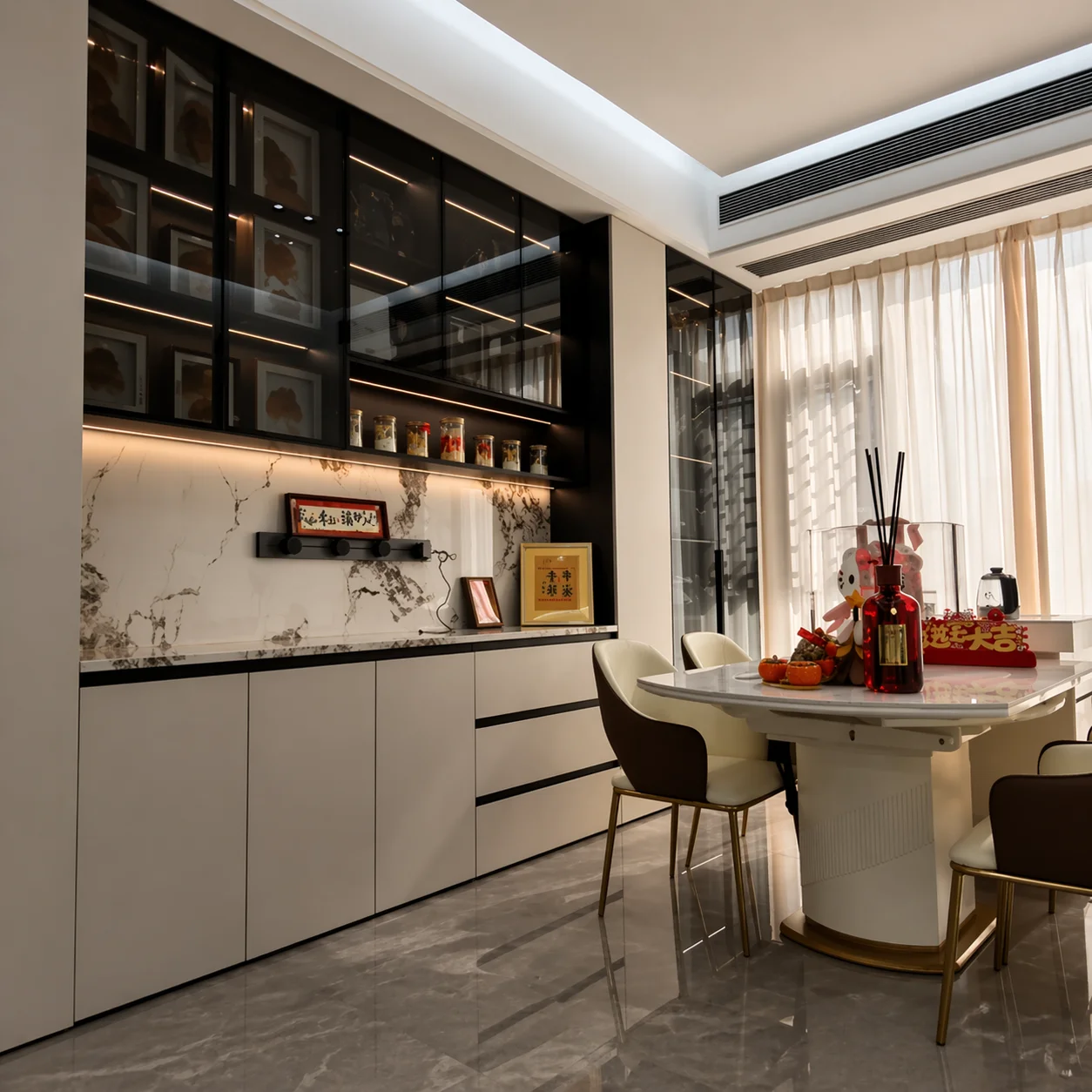
Leitfaden für verformungsbeständiges Sperrholz für feuchte Innenräume
Eine Schranktür kann die Werkstatt verziehen und sich Monate später verziehen. In feuchten Wohnungen, Hotels an der Küste, Küchen, Waschtischen und Kleiderschränken neben feuchten Wänden ist Sperrholz ständigen Feuchtigkeitsschwankungen ausgesetzt. Für Innenausbauer bedeutet das Nacharbeiten, verzögerte Übergabe und Gewährleistungsansprüche. Die entscheidende Frage ist: Wie spezifiziert man verformungsbeständiges Sperrholz? Warum die Verformung von Sperrholz in feuchten Innenausbauten zu einem kostspieligen Problem wird Wo feuchtigkeitsbedingte Verformungen nach der Installation auftreten Verformungen treten häufig bei breiten, häufig genutzten oder ungleichmäßig exponierten Paneelen auf. Küchenschranktüren können sich durchbiegen, Waschtische im Badezimmer können sich in der Nähe feuchter Wände wölben, hohe Kleiderschranktüren können ungleichmäßige Spalten entwickeln, und Hotelmöbel in der Nähe von Außenwänden können wiederholten Feuchtigkeitszyklen ausgesetzt sein. Die ersten Anzeichen sind geringfügig: Eine Kante liegt nicht mehr bündig an, eine Schubladenfront verdreht sich oder die Kantenverkleidung löst sich. Sind die Beschläge erst einmal betroffen, wird aus einem optischen Mangel ein funktionaler. Von verzogenen Paneelen bis hin zu Nacharbeiten, Verzögerungen und Garantierückrufen Für den Austausch einer Wandplatte sind unter Umständen ein weiterer Vor-Ort-Termin, eine Nachbearbeitung, die Justierung der Scharniere und die Abstimmung mit dem Kunden erforderlich. Bei Projekten mit mehreren Räumen vervielfachen sich die Kosten. Die Bewegung der Paneele führt zu einer fehlerhaften Ausrichtung; eine fehlerhafte Ausrichtung erfordert Nacharbeiten; Nacharbeiten kosten Arbeitskraft, Material und Zeit. Die Dimensionsstabilität muss daher in die Beschaffungsspezifikation aufgenommen werden. Warum sich Sperrholz in feuchten Innenräumen verzieht, wölbt oder delaminiert Feuchtigkeitszyklen führen zu ungleichmäßigem Quellen und Schrumpfen Sperrholz ist kreuzverleimt, was die Holzbewegung zwar einschränkt, die Furniere aber dennoch Feuchtigkeit aufnehmen und abgeben, je nach Luftfeuchtigkeit. Probleme entstehen, wenn diese Bewegung ungleichmäßig ist. Eine Schranktür neben einem Waschbecken kann an den Kanten mehr Feuchtigkeit aufnehmen als auf der Vorderseite. Ein Kleiderschrank an einer kühlen Wand kann an Vorder- und Rückseite unterschiedlichen Bedingungen ausgesetzt sein. Die daraus resultierenden Spannungen können sich in Form von Verformungen wie Wölbungen, Verdrehungen oder lokalen Haftungsablösungen äußern. Unausgewogene Kernkonstruktion und Eigenspannungen verstärken das Problem Feuchtigkeit ist oft der Auslöser, aber nicht die einzige Ursache. Kernlücken, ungleichmäßige Furnierfeuchtigkeit, mangelnde Symmetrie oder Eigenspannungen können ein Paneel empfindlicher machen. Ein gleichmäßiger Faseraufbau verteilt die Kräfte über das Blech. Ein unregelmäßiger Kern kann ungleichmäßig reagieren, wodurch verborgene Instabilitäten nach dem Zuschnitt deutlicher sichtbar werden. Warum dickere Paneele, Oberflächenlaminate oder Hardware-Reparaturen allein nicht ausreichen Eine größere Dicke erhöht zwar die Steifigkeit, kann aber einen instabilen Kern nicht ausgleichen. Eine Oberflächenlaminierung kann das Eindringen von Feuchtigkeit verlangsamen, Schnittkanten, Bohrlöcher und unversiegelte Rückseiten bleiben jedoch ungeschützt. Zusätzliche Scharniere können Bewegungen mechanisch einschränken, aber schwache Verbindungen nicht reparieren. Diese Maßnahmen sind am effektivsten, wenn die Grundplatte bereits für die Umgebungsbedingungen geeignet ist. Was verformungsbeständiges Sperrholz leisten sollte, bevor Sie es spezifizieren Achten Sie auf eine ausgewogene Kernkonstruktion und kontrollierte Feuchtigkeitsbewegung. Bevor Sie Sperrholz für einen feuchten Innenraum auswählen, sollten Sie drei grundlegende Punkte beachten: 1. Gleichmäßigkeit des Kernmaterials: Eng aneinanderliegende Furniere und ausgewogene Schichten reduzieren lokale Schwachstellen. Bei der Wahl des Kernmaterials kann die Verwendung von Harthölzern wie großkalibrigem Eukalyptus die Verformungsbeständigkeit der Platte aufgrund von Vorteilen wie Astfreiheit, hoher Festigkeit und gleichbleibender Qualität deutlich verbessern. 2. Feuchtigkeitskontrolle: Die interne Feuchtigkeit sollte kontrolliert werden, bevor das Panel die Produktion verlässt. 3. Kanten- und Oberflächenstrategie: Bei der Bearbeitung, dem Bohren, dem Versiegeln und der Montage sollte eine ungleichmäßige Freilegung nach dem Schneiden vermieden werden. Ein geeignetes Paneel ist nicht einfach nur „wasserdicht“. Kernstruktur, Verklebung, Konditionierung und Montage müssen zusammenwirken. Integritäts- und Steifigkeitsdaten sowie anwendungsbezogene Prüfnachweise für Bürgschaften Käufer sollten nachfragen, was geprüft wurde, welche Anforderungen galten und ob die geprüfte Konstruktion mit dem angebotenen Panel übereinstimmt. Was ist zu überprüfen? Warum es wichtig ist Tauchschälen Prüft die Unversehrtheit der Klebefuge nach Feuchtigkeitseinwirkung Biegefestigkeit Zeigt die Widerstandsfähigkeit gegen Biegeversagen an Elastizitätsmodul Hilft bei der Beurteilung von Steifigkeit und Durchbiegung Kern, Dicke und Oberfläche Bestätigt, dass die Beweise mit der Reihenfolge übereinstimmen. Dies ist wichtig für Schranktüren, lange Regale und Waschtische, wo selbst geringfügige Bewegungen schnell sichtbar werden. Wie QIANGYI-Sperrholz feuchtigkeitsbedingte Verformungen bekämpft Bei QIANGYI PLYWOOD gehen wir gegen Verformungen vor, indem wir die Platte vom Kern nach außen kontrollieren und uns nicht nur auf eine Oberflächenangabe verlassen. Ausgewogener Mehrschichtaufbau und kontrollierte Konditionierung reduzieren innere Spannungen Unser Sperrholz aus Klebreisleim wird im Vollkernverfahren mit schichtweiser Verleimung hergestellt. Die Produktion umfasst über 24 Stunden langsames Kaltpressen, etwa 60 Stunden Trocknung und über 15 Tage Aushärtung und Konditionierung. Der längere Prozess dient der Verbesserung der Verklebung, dem Ausgleich der inneren Feuchtigkeit und dem Abbau von Restspannungen vor der Weiterverarbeitung. Verformungen treten häufig nach dem Zuschnitt und der Montage auf. Eine gleichmäßigere Feuchtigkeitsverteilung und eine ausgewogene Struktur tragen dazu bei, Spannungsspitzen im Paneel zu reduzieren. Penetrierendes Klebreis-AdhEsive hilft, feuchtigkeitsbedingte Schwellungen zu begrenzen Das Klebstoffsystem basiert auf Klebreisstärke, Magnesiumchlorid, Magnesiumoxid und Wasser. Nach dem Aushärten dringt es in die Holzstruktur ein und bildet ein dichtes, festes Netzwerk. Die Klebreisplatten weisen einen Feuchtigkeitsgehalt von 8–12 % auf und sind aufgrund ihrer Wasserbeständigkeitsklasse II für feuchte Umgebungen, nicht aber für dauerhaftes Eintauchen geeignet. In Küchen, Kleiderschränken und Waschtischen besteht das Ziel darin, eine schnelle Feuchtigkeitsaufnahme und ein Aufquellen zu verhindern. Schimmel- und antibakterielle Wirkung bietet zusätzlichen Schutz in feuchten Innenräumen. Feuchtigkeit kann bereits vor sichtbarem Verziehen biologische Probleme verursachen. Alle mit Klebreis verleimten Sperrholzplatten von QIANGYI PLYWOOD werden aus großkalibrigem Eukalyptusholz hergestellt, das über natürliche antibakterielle Eigenschaften verfügt. Unser Klebreisplattensystem bietet Schimmelresistenz der Klasse 0 und eine antibakterielle Wirkung von über 99 %. Das Verfahren kombiniert das Klebesystem mit einer 60-stündigen kontrollierten Trocknung und einer Feuchtigkeitskontrolle im Bereich von 8–12 %. Diese Eigenschaften unterstützen die Dimensionsstabilität; sie ersetzen sie jedoch nicht. Sie sind nützlich in Küchen, Badezimmermöbeln, Garderoben und in Küstenbereichen, wo warme, feuchte Bedingungen anhalten können. Prüfnachweise, der Fall Mauritius und der Beschaffungswert der Dimensionsstabilität Der Prüfbericht SZF-WT-25082006-02 liefert Nachweise zur Haftung und zur strukturellen Leistungsfähigkeit. Die Berichtsseite weist sechs gültige Proben für jeden Prüfgegenstand und eine 100%ige Erfolgsquote aus. Testgegenstand Anforderung gezeigt Ergebnis Tauchschälen Spezifizierte Schälkriterien 6/6 qualifiziert Biegefestigkeit, parallel ≥22,0 MPa 6/6 qualifiziert Biegefestigkeit, quer ≥20,0 MPa 6/6 qualifiziert Elastizitätsmodul, parallel ≥5000 MPa 6/6 qualifiziert Elastizitätsmodul, quer ≥4000 MPa 6/6 qualifiziert Fallstudie: Warum eine Möbelfabrik auf Mauritius immer wieder nachbestellte Ein langjähriger Kunde eines Möbelherstellers in Mauritius erhielt seine dritte Containerlieferung in diesem Jahr. Es handelte sich um Möbelsperrholz mit einem Kern aus 100 % Eukalyptusholz. Mauritius hat ein heißes, feuchtes Inselklima, in dem herkömmliche Platten mit der Zeit abblättern, sich verformen und von Termiten befallen werden können. Für diesen Kunden lieferten wir Sperrholz mit einem Kern aus Eukalyptusholz, Klebreiskleber und temperaturkontrollierter Verarbeitung, um die Stabilität unter feuchten Bedingungen zu verbessern. Das Produkt wurde zudem mit der Note 9,5 im Termitenbeständigkeitstest ausgezeichnet. Der Kunde merkte an, dass die Verwendung unseres Sperrholzes für Schränke dazu beigetragen habe, Bedenken hinsichtlich möglicher Probleme nach dem Kauf zu minimieren. Die gleichbleibende Qualität trug ebenfalls zu den wiederholten Käufen bei. Dank der stabilen Nagelhalteleistung und der sauberen Schneidkanten konnte das Werk häufige Produktionsanpassungen vermeiden und Materialverluste zwischen den Chargen reduzieren. Auch die Lieferung über weite Strecken war ein wichtiger Faktor. Für den Seetransport verstärkten wir die Palettenkanten und verwendeten mehrere Lagen feuchtigkeitsbeständiger Folie. Der Kunde berichtete, dass die Paletten unbeschädigt ankamen und das Sperrholz nach dem Auspacken trocken blieb. Als direkter Hersteller können wir auch schnell auf Anforderungen wie spezifische Größen oder Umweltklassen reagieren und so Stammkunden eine besser planbare Lieferkette ermöglichen. Für Bauunternehmer und Möbelhersteller zeigt dieser Fall, dass es bei der Auswahl von Sperrholz nicht nur um die Verformungsbeständigkeit geht. Chargenkonsistenz, Transportschutz und Lieferzuverlässigkeit beeinflussen ebenfalls Produktionsausfälle, das Risiko nach dem Verkauf und die Projektabwicklung. Erleben Sie unser verformungsbeständiges Sperrholz persönlich Neugierig, die Dimensionsstabilität und Kernqualität unseres Sperrholzes selbst zu erleben? Wir laden Sie ein, sich mit unserem Team in Verbindung zu setzen und zu besprechen, wie unsere Produkte Ihr nächstes Projekt im Bereich des Innenausbaus in feuchten Räumen absichern können. *Veranstaltungsname: DIE INTERNATIONALE FORST- UND HOLZPRODUKTAUSSTELLUNG GUANGXI 2026 *Firmenname: QIANGYI PLYWOOD *Standnummer: D5T-06 *Datum: 21.–23. November 2026 *Ort/Adresse: Internationales Kongress- und Ausstellungszentrum Nanning Häufig gestellte Fragen F: Was verursacht die Verformung von Sperrholz in feuchten Innenräumen? A: Ungleichmäßige Feuchtigkeitsbewegung ist der Hauptmechanismus. Unterschiedliche Flächen, Kanten oder Kernbereiche nehmen Feuchtigkeit unterschiedlich schnell auf und geben sie unterschiedlich schnell wieder ab. Kernungleichgewicht, Restspannungen, schwache Klebefugen und mangelhafter Kantenschutz können die Bewegung verschlimmern. F: Worauf sollten Bauunternehmer beim Kauf von verformungsbeständigem Sperrholz achten? A: Sie sollten stets die Kernqualität prüfen und auf eine ausgewogene Konstruktion achten. Überprüfen Sie außerdem die Feuchtigkeitskontrolle, die Haftfestigkeit, die Biegefestigkeit und die Steifigkeit. Stellen Sie abschließend sicher, dass die bereitgestellten Prüfdokumente der tatsächlichen Dicke und Struktur Ihrer Bestellung entsprechen. F: Welche Testergebnisse sind bei der Bewertung von verformungsbeständigem Sperrholz relevant? A: Das Abziehen durch Eintauchen hilft, die Unversehrtheit der Klebefuge nach Feuchtigkeitseinwirkung zu beurteilen. Die Biegefestigkeit gibt den Widerstand gegen Biegeversagen an, während der Elastizitätsmodul Steifigkeit und Durchbiegung beschreibt. Die Ergebnisse sind am aussagekräftigsten, wenn die geprüfte Probe dem spezifizierten Produkt entspricht. F: Ist VerformungswiderstandMüssen Sperrholzplatten trotzdem noch die Kanten versiegelt und korrekt montiert werden? A: Ja. Schnittkanten, Bohrlöcher, unebene Oberflächen, feuchte Untergründe, unsachgemäße Lagerung und eine fehlerhafte Anordnung der Beschläge können weiterhin zu lokalem Feuchtigkeitseintritt oder Spannungen führen. Ein stabiles Paneel reduziert das Risiko, aber die Fertigung und Montage bleiben Teil der Lösung.
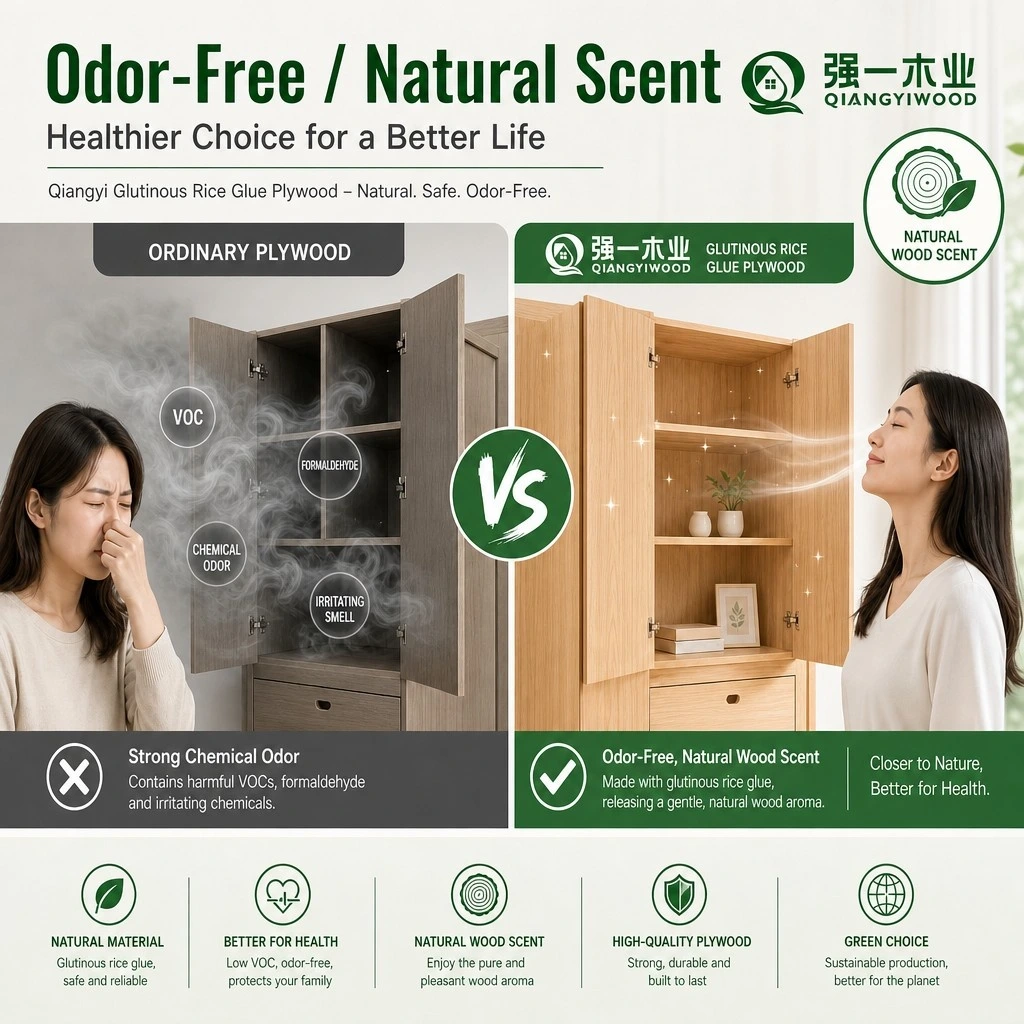
Leitfaden zur Beschaffung von geruchsarmem Sperrholz für eine schnelle Projektübergabe
Die versteckten Kosten von Sperrholzgerüchen im Innenausbau In geschlossenen Räumen und Projekten mit unzureichender Belüftung können Materialgerüche das Risiko von Kommunikationsproblemen bei der Abnahme und Nacharbeiten erhöhen und somit den Liefertermin beeinträchtigen. Die tatsächlichen Auswirkungen hängen von den verwendeten Materialien, den Bautechniken, den Belüftungsbedingungen und den Ergebnissen von Messungen vor Ort ab. Stellen Sie sich beispielsweise ein Boutique-Hotel oder ein exklusives Einzelhandelsgeschäft vor, das umfassend renoviert wird. Jeder Tag, den Sie mit dem Lüften eines geruchsbelasteten Raums verbringen, bedeutet für Ihren Kunden direkt entgangene Einnahmen. Darüber hinaus können Beschwerden über die Raumluftqualität nach der Installation Ihrem Ruf erheblich schaden. Der Umgang mit unzufriedenen Kunden kostet wertvolle Zeit und Ressourcen, führt zu verlorenen Empfehlungen und gefährdet zukünftige Bauaufträge. Warum gewöhnliches Sperrholz den „Sofortübergabe“-Test nicht besteht Um dieses Problem zu lösen, müssen wir die Ursache dieser hartnäckigen Gerüche verstehen. Hauptquelle für Gerüche in herkömmlichen Möbelplatten sind flüchtige organische Verbindungen. Diese Emissionen stammen vorwiegend von den traditionellen Klebstoffen, die bei der Herstellung verwendet werden, wie beispielsweise Harnstoff-Formaldehyd-Harz, sowie von den natürlichen Fäulnisgerüchen, die bei der Holzverarbeitung entstehen. Harnstoff-Formaldehyd-Harzklebstoffe sind von Natur aus instabil und flüchtig. Werden herkömmliche Mehrschichtplatten Temperaturschwankungen und Feuchtigkeitsschwankungen ausgesetzt, reagieren die chemischen Bindungen dieser Harze in umgekehrter Richtung, zersetzen sich und setzen über ein Jahrzehnt lang kontinuierlich eingeschlossene Gase in die Umgebung frei. Da die Durchlässigkeit herkömmlicher chemischer Klebstoffe begrenzt ist, verklebt er lediglich die Oberflächen zwischen den einzelnen Furnieren. Dadurch entstehen mikroskopisch kleine Lücken zwischen den Holzfasern, durch die sowohl die chemischen Ausgasungen als auch der natürliche Holzgeruch ungehindert in den frisch renovierten Raum entweichen können. Eine intensive Baustellenlüftung oder provisorische Oberflächenbehandlungen können diese strukturellen Ausgasungen nur vorübergehend kaschieren und erfüllen somit nicht die strenge Anforderung einer sofortigen und sicheren Übergabe. Wichtige Kriterien für die Auswahl von geruchsarmem Sperrholz Fachleute müssen ihre Beschaffungsstandards verbessern, um diese Risiken zu minimieren. Generische Umweltzeichen reichen für anspruchsvolle Projekte mit kurzen Lieferzeiten nicht mehr aus. Bei der Materialbeschaffung für Projekte mit kurzen Bearbeitungszeiten sollten Bauunternehmen Lieferanten anhand strenger, messbarer Kriterien bewerten, um langfristige Stabilität zu gewährleisten. Ein zuverlässiges Beschaffungsmodell sollte folgende Kernparameter umfassen: Zunächst sollte die Klebstoffzusammensetzung geprüft werden. Herkömmliche Platten verwenden Harnstoff-Formaldehyd-Harze, die kontinuierlich Chemikalien in die Umwelt freisetzen. Professionelle Platten müssen daher pflanzen- oder mineralbasierte, ungiftige Klebstoffe verwenden, um die Freisetzung von Chemikalien von vornherein zu vermeiden. Zweitens sollten die Emissionsgrenzwerte überprüft werden. Die Einhaltung der grundlegenden E1- oder E0-Grenzwerte ist für geschlossene Gewerberäume oft unzureichend. Bauunternehmen sollten Super-ENF-Sperrholz ohne Formaldehyd- und Benzolzusatz fordern, um die vollständige Sicherheit der Nutzer zu gewährleisten. Drittens sollte der Geruchskontrollmechanismus untersucht werden. Gängige Lösungen basieren hauptsächlich auf Oberflächenkantenverklebungen, die Gerüche nur vorübergehend blockieren. Ein wirklich wirksames Material zeichnet sich durch eine dichte, innere Kristallstruktur aus, die Gerüche unabhängig von der Oberflächenbehandlung dauerhaft einschließt. Verlangen Sie abschließend konkrete Lieferantengarantien. Mündliche Zusagen bieten Ihrem Unternehmen keinen Schutz. Die Einkaufsabteilung muss schriftliche Verantwortlichkeitszusagen für geruchsfreie Installationen verlangen, um das Risiko vom Installationsteam zu nehmen. Durch die strikte Einhaltung dieser hohen Standards können Projektmanager von der Hoffnung, dass ein Raum schnell gelüftet wird, zur mathematisch garantierten Gewährleistung einer sauberen Übergabe übergehen. Wie QIANGYI PLYWOOD Klebreis-Sperrholz einen geruchsfreien Raum garantiert QIANGYI PLYWOOD hat diese strengen Anforderungen verstanden und eine speziell für Bauunternehmen entwickelte Strukturlösung geschaffen, die keine Verzögerungen tolerieren. Wir haben herkömmliche chemische Harze vollständig ersetzt und so unser Mehrschicht-Sperrholz der zweiten Generation entwickelt, das eine Komplettlösung für die schnelle und sichere Fertigstellung von Projekten bietet. Pflanzliche Lingmei-Klebstofftechnologie Das Herzstück unserer geruchsneutralen Leistung ist unsere patentierte Klebstofftechnologie. Unser mit Klebreis verleimtes Sperrholz verwendet Lingmei-Kleim, der aus lebensmittelechter Klebreisstärke, Magnesiumchlorid, Magnesiumoxid und Wasser hergestellt wird. Diese reine pflanzliche und mineralische Zusammensetzung gewährleistet, dass der gesamte Herstellungsprozess frei von Formaldehydzusätzen bleibt. Durch den Verzicht auf Harnstoff-Formaldehyd beseitigen wir die Hauptursache für Umweltbelastungen und unangenehme Gerüche bei Renovierungen an der Wurzel. Erreichen des Standards „Bezugsfertig“ Unser einzigartiger Klebstoff entfernt nicht nur Chemikalien, sondern versiegelt das Substrat aktiv. Während des Hochdruck-Herstellungsprozesses wird unser Lingmei-Klebstoff verwendet.Zinnhaltiger Reisleim dringt schnell und tief in die Holzfasern ein. Nach dem Aushärten bildet er eine hochstabile, ineinandergreifende Kristallstruktur. Diese dichte Verkapselungsschicht schließt den natürlichen Duft des Holzes ein und verhindert, dass Fäulnisgerüche in die Luft gelangen. Für Innenausbauer bedeutet dies, dass maßgefertigte Kleiderschränke, Hotelwandpaneele und Ladeneinrichtungen sofort bezugsfertig sind und von Anfang an sichtbar und spürbar Frische ausstrahlen. Verifizierte Testdaten und die Verpflichtung zur Geruchsfreiheit Im B2B-Einkaufssektor müssen Ansprüche durch nachweisbare Belege untermauert werden. Wir liefern Ihnen die konkreten Daten und schriftlichen Zusicherungen, die Sie benötigen, um Ihre Gewinnmargen und Ihren professionellen Ruf zu schützen. TVOC-Emissionen weit unterhalb der Branchengrenzwerte Unsere Fertigungsstandards werden durch strenge, anerkannte Prüfverfahren validiert. Die visuellen Nachweise finden Sie im Prüfbericht SZF-WT-25082006-01. Laut Laborergebnissen wurden keine Schadstoffe wie Benzol, Toluol und Xylol nachgewiesen. Darüber hinaus wurde die Gesamtkonzentration flüchtiger organischer Verbindungen (VOC) mit außergewöhnlich niedrigen 11 μg/m³ gemessen. Dieses Ergebnis übertrifft die Normvorgabe von maximal 200 μg/m³ deutlich und beweist, dass unsere Platinen vom ersten Tag an für eine besonders saubere Luft sorgen. Die QIANGYI PLYWOOD Kundendienst-Ersatzgarantie Wir untermauern unsere wissenschaftlichen Daten mit einem überzeugenden Marktversprechen. Für unser Klebreis-Sperrholz der zweiten Generation bieten wir eine formelle Geruchsgarantie. Sollten nach der Montage von individuell gefertigten Möbeln mit unseren Platten Geruchsprobleme auftreten und sich herausstellen, dass diese durch unser Sperrholz verursacht werden, übernehmen wir die volle Verantwortung für den Austausch des Materials. Diese schriftliche Garantie entlastet Sie als Auftragnehmer vollständig vom Beschaffungsrisiko und stellt sicher, dass Sie die Kosten für Materialfehler nicht tragen müssen. Häufig gestellte Fragen zur Beschaffung von geruchsarmem Sperrholz F: Was ist die Hauptursache für starke Gerüche in neuen Sperrholzinstallationen? A: Die Hauptursache für unangenehme Gerüche in frischen Dielen sind flüchtige organische Verbindungen. Ältere Klebstoffe wie Harnstoff-Formaldehyd-Harz setzen diese Gase frei. Auch der Geruch von rohem, verrottetem Holz kann durch kleinste Löcher in der Holzmaserung entweichen. F: Wie verhält sich der Geruchsgehalt bei der Bewertung von Bootsbausperrholz im Vergleich zu normalem Sperrholz? A: Sowohl herkömmliches Bootsbausperrholz als auch normales Sperrholz werden üblicherweise mit chemischen Klebstoffen verleimt, die flüchtige organische Verbindungen (VOCs) freisetzen. Bootsbausperrholz bietet zwar eine hohe Wasserbeständigkeit, ist aber nicht von Natur aus geruchsneutral. Für Projekte mit sofortiger Übergabe sollten Bauunternehmer daher stets speziell entwickelte, geruchsarme Platten wählen. F: Worin unterscheidet sich mit Klebreisleim hergestelltes Sperrholz von herkömmlichen, formaldehydarmen Platten? A: Herkömmliche Platten werden weiterhin mit chemischen Harzen hergestellt. Man versucht lediglich, die Gasentwicklung zu reduzieren. Unsere Lösung hingegen verwendet Kleister aus Lingmei-Kleber. Dieser Klebstoff besteht aus reiner Stärke und Mineralien. Dadurch werden Formaldehyd und Benzol von vornherein vollständig vermieden. F: Kann geruchsarmes Sperrholz tatsächlich eine sofortige Projektübergabe ermöglichen? A: Ja, das ist möglich. Unser spezieller Klebstoff bildet ein dichtes Kristallnetz. Dieses Netz schließt den natürlichen Holzduft ein und verhindert die Ausgasung von Chemikalien. Der fertige Raum ist direkt nach Abschluss der Arbeiten bezugsfertig und sicher. F: Auf welche TVOC-Emissionswerte sollte ich beim Kauf von geruchsarmem Sperrholz achten? A: Käufer sollten verifizierbare Laborberichte verlangen, die TVOC-Werte deutlich unter dem Grenzwert von 200 μg/m³ belegen. Unsere getesteten Paneele erreichen eine außergewöhnlich niedrige Konzentration von nur 11 μg/m³. F: Erhält geruchloses Sperrholz die für den gewerblichen Innenausbau erforderliche strukturelle Festigkeit? A: Absolut. Unser mehrschichtiges Sperrholz der zweiten Generation verwendet ein vollständig verzahntes Primärkernfurnier und eine schichtweise Verleimung, was zu außergewöhnlicher Steifigkeit, starker Nagelhaltekraft und hoher Verformungsbeständigkeit für stark beanspruchte Anwendungen führt.

If you interested in our product, please leave you information here, we will send you more details
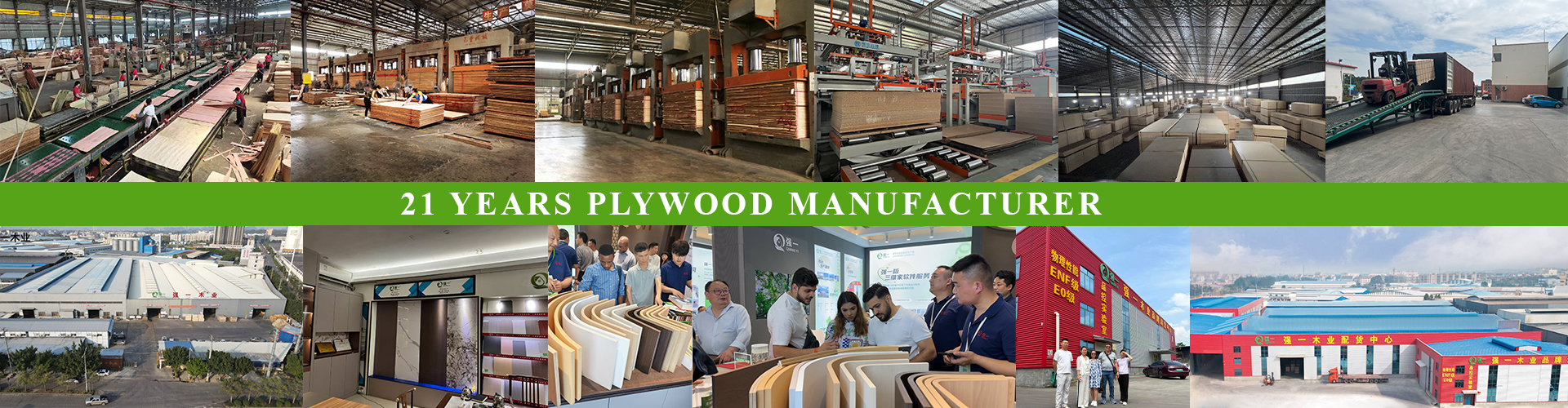
Please fill out the form below and we will get back to you as soon as possible.