
منتجات
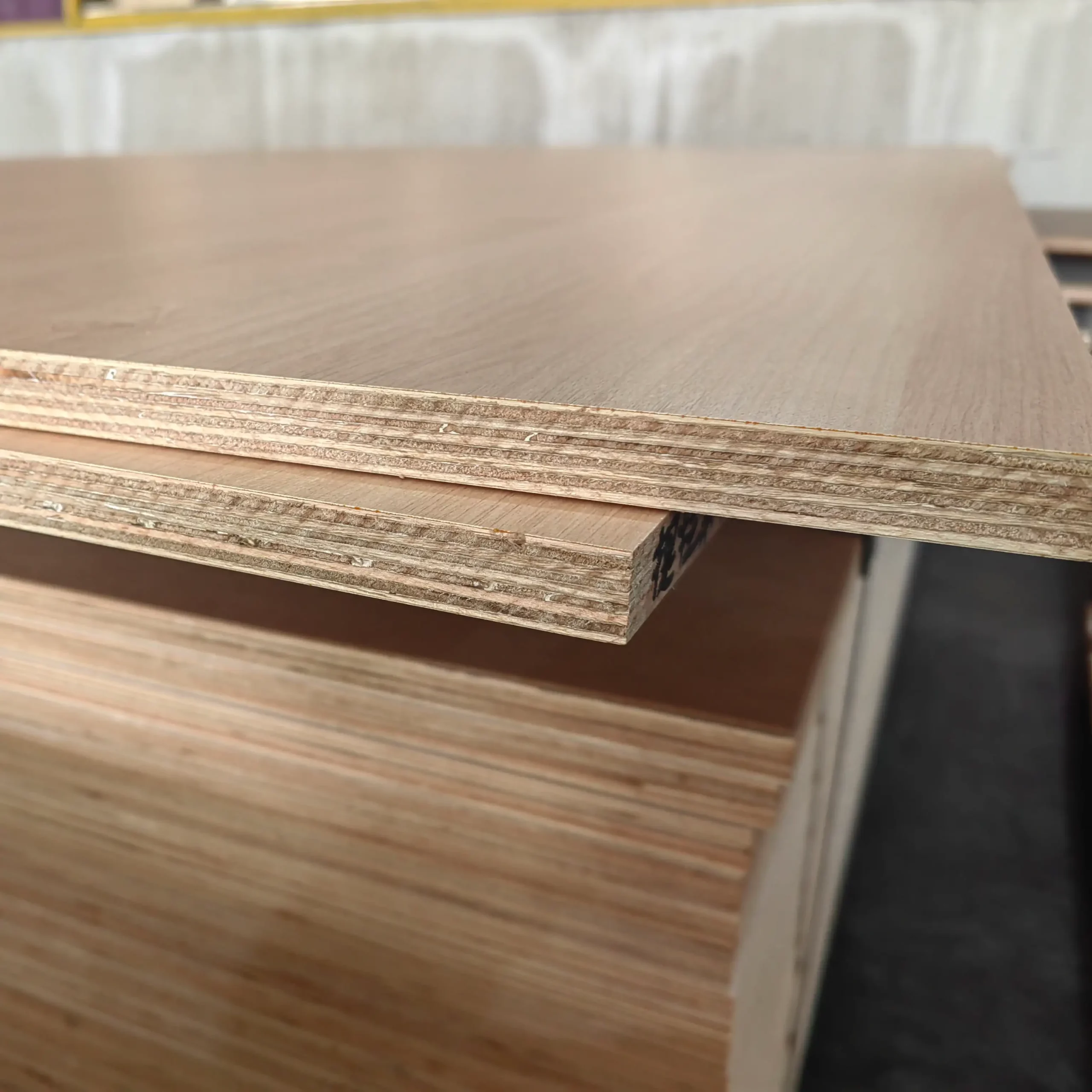

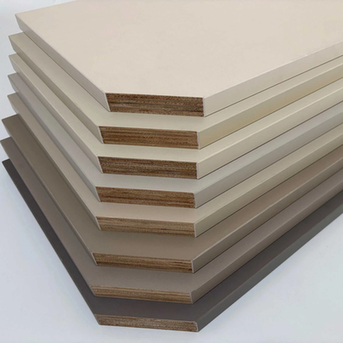
Professional Melamine Laminate Qiangyi Brand ENF Standard Hardwood Core Qiangyi Brand for Furniture
Melamine‑Faced Glutinous‑Rice Plywood for Cabinets and Interior Furniture
What Is Melamine‑Faced Glutinous‑Rice Plywood
Melamine‑faced glutinous‑rice plywood is a high‑performance decorative plywood engineered for cabinetry and interior furniture. It combines 100% eucalyptus hardwood core, patented inorganic glutinous‑rice‑based adhesive, and thermally fused melamine‑impregnated paper on one or both surfaces.
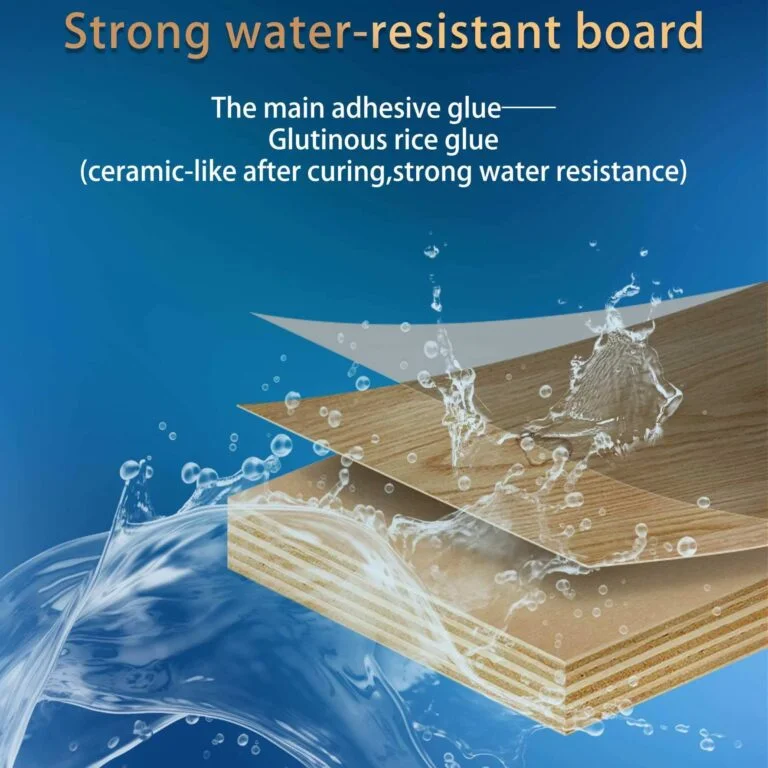
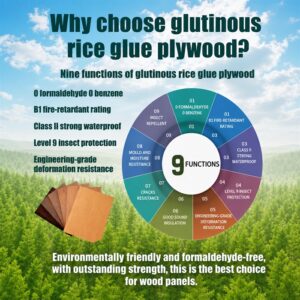
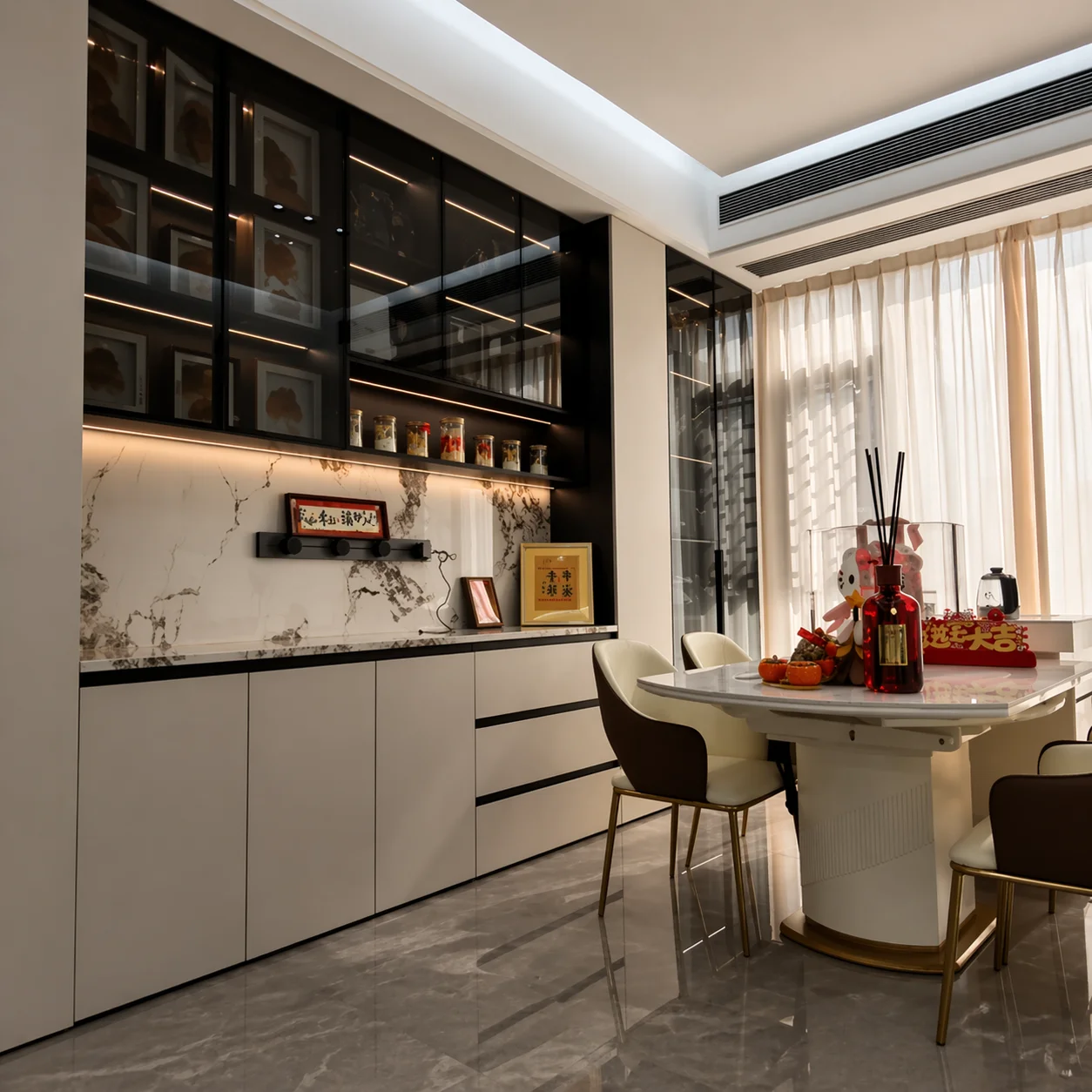
Unlike conventional plywood bonded with urea‑formaldehyde glue, its core strength comes from the modified glutinous‑rice glue system, which brings multi‑functional performance: zero added formaldehyde, class‑II water resistance, grade‑9.5 termite resistance, mildew‑proof and anti‑deformation properties. The melamine overlay delivers scratch‑proof, stain‑resistant decorative finish without extra painting, ready‑to‑use for kitchen cabinets, wardrobes, storage units and wall panels in residential, hospitality and commercial projects, especially for hot‑humid tropical and coastal markets.
Core Material & Production Technology
100% Full Eucalyptus Hardwood Veneer Core
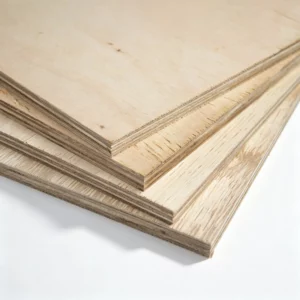
Every veneer layer uses plantation‑grown eucalyptus hardwood. High‑density eucalyptus core provides excellent screw‑holding power, bending strength and load‑bearing capacity, avoiding sagging for long cabinet panels or large wardrobe doors. Cross‑grain lamination structure greatly reduces warping and shrinking caused by seasonal humidity changes.
Glutinous‑Rice Inorganic Adhesive — The Core Differentiator
Traditional plywood relies on chemical resin adhesives, which release formaldehyde under heat and high humidity and degrade in moist environments. Glutinous‑rice glue plywood adopts upgraded rice‑magnesium inorganic‑organic composite adhesive:
- Made from modified glutinous‑rice raw material, no formaldehyde added, super‑ENF environmental level, near‑zero‑VOC, odor‑free right after production
- Forms stable alkaline micro‑environment inside the board, creating natural anti‑termite and anti‑mildew effect (Termite‑resistance Grade 9.5)
- After curing, glue layer seals wood fibers, achieves Class‑II waterproof performance, low 24‑h water‑swelling rate, resisting moisture erosion in humid climate
- Improves inter‑layer bonding strength, anti‑aging, anti‑cracking, extending furniture service life
Hot‑press Melamine Surface Lamination
Decorative melamine paper (solid colors, wood grain, synchronized texture, matte / gloss / embossed finish) is thermo‑compression bonded onto plywood substrate under high temperature and pressure. The surface is integrated tightly with base board, no peeling risk under normal interior usage, no need varnish or repainting, cutting post‑processing workload for cabinet factories.
Key Performance Advantages for Cabinet & Interior Furniture
Superior Eco‑Health Performance
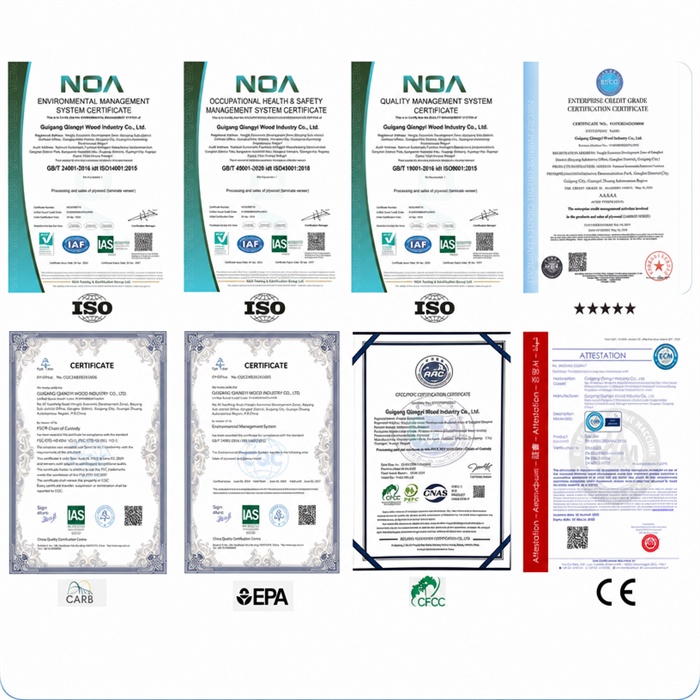
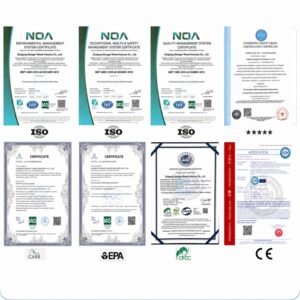
Zero‑added‑formaldehyde formula eliminates continuous formaldehyde emission issue from traditional boards. Finished cabinets can be put into use immediately without long‑time ventilation. Safe for bedrooms, children rooms, kitchen living integrated spaces, complying with CARB P2, CE and other international indoor furniture standards.
Moisture, Mildew & Termite Resistance for Humid / Coastal Zones
For tropical, coastal high‑humidity markets (Like جنوب شرق آسيا, Caribbean, South‑Asia):
- Class‑II waterproof: resists kitchen steam, bathroom ambient humidity, reduces panel swelling and edge bulging risks
- Grade‑9.5 termite resistance: alkaline glue matrix is indigestible for termites, prevents hidden termite damage inside cabinets and wardrobes, a critical pain‑solver for tropical building projects
- 0‑grade anti‑mildew performance, inhibits mold growth under damp indoor conditions
Outstanding Dimensional Stability & Mechanical Property
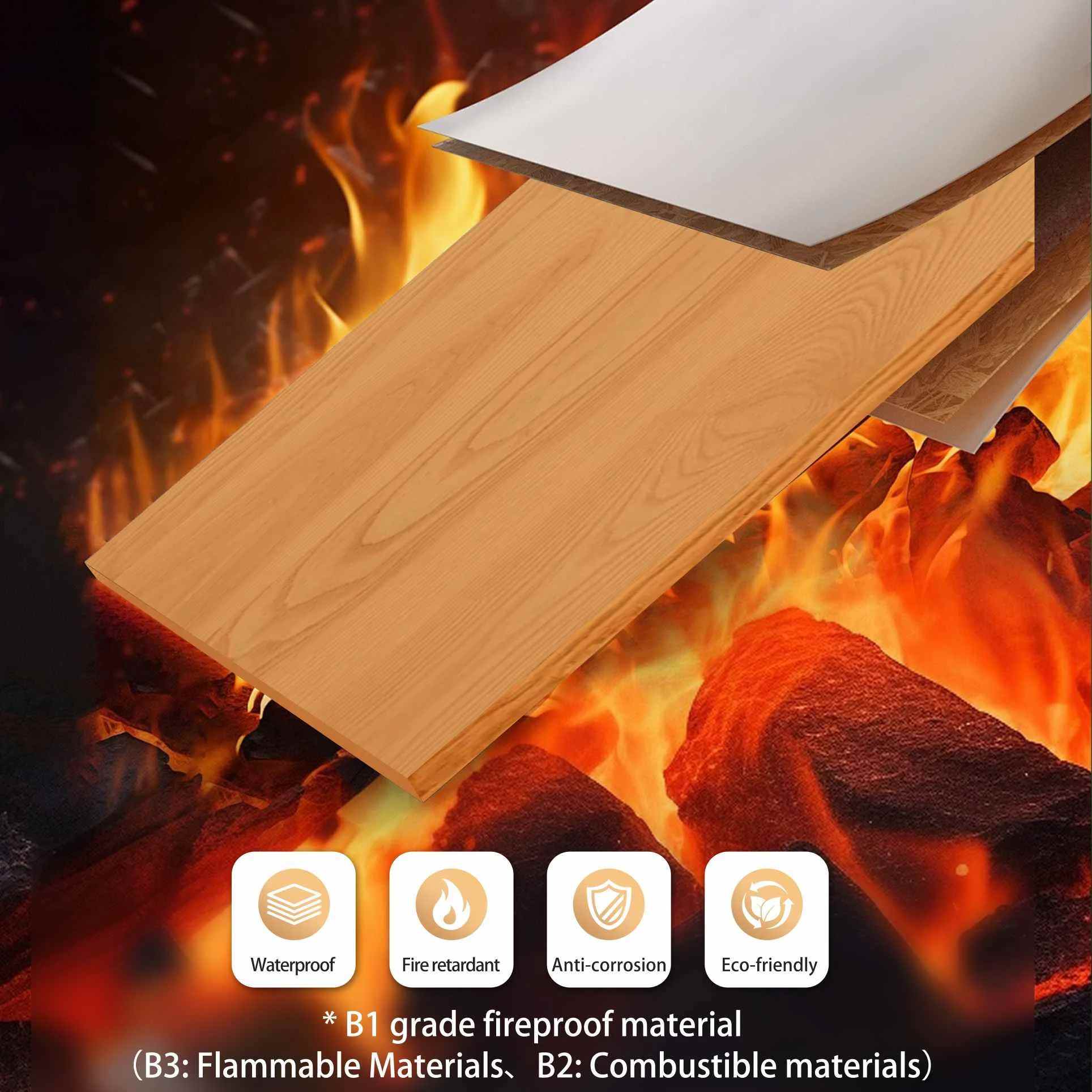
100% eucalyptus multi‑layer cross‑laminated structure plus glutinous‑rice glue system jointly deliver low deformation rate. Good screw‑holding strength: hinges, drawer slides and cabinet hardware stay firmly mounted, no loose after long‑term opening‑closing cycles. B1‑level flame retardant option is available for public‑area interior furniture requirements.
Typical Application Scenarios
- Kitchen cabinetry: cabinet carcass, cabinet doors, drawer panels, under‑sink cabinet boards — cope with kitchen steam and splashing water
- Bedroom storage: built‑in wardrobes, walk‑in closet, dressing cabinets, bed‑side storage panels, safe for sleeping environment
- Living & dining furniture: TV cabinets, sideboards, bookshelves, display cabinets
- Commercial interior: hotel guest‑room custom furniture, apartment fit‑out, office storage cabinets
- Interior decoration: decorative wall panels, partition panels, indoor display fixtures

FAQ for Furniture Manufacturers & Importers
Q1: What makes glutinous‑rice plywood different from regular moisture‑proof plywood?
A: Glutinous rice plywood selling rate in water 24 hours less than 2.4%, class II water proof. Glutinous‑rice plywood’s inorganic glue system provides both waterproof performance and native anti‑termite & anti‑mildew function together, while achieving zero‑added‑formaldehyde at the same time.
Q2: Is it suitable for bathroom vanity cabinets?
A: Suitable for indoor bathroom vanity (no direct long‑time water immersion). Class‑II water resistance handles bathroom high‑humidity environment well, greatly outperforming particle‑board or MDF vanity boards.
Q3: Which markets gain most value from this board?
A: Tropical and coastal regions with high humidity & termite problems, such as Philippines, Southeast Asia, South Asia, Caribbean coastal countries, where ordinary wood‑based boards have short service life for cabinet projects.
Main products: Marine plywood, Melamine plywood, Melamine blockboard, Melamine Chipboard, Melamine MDF board, Film face plywood, Edge banding, Furniture accessories
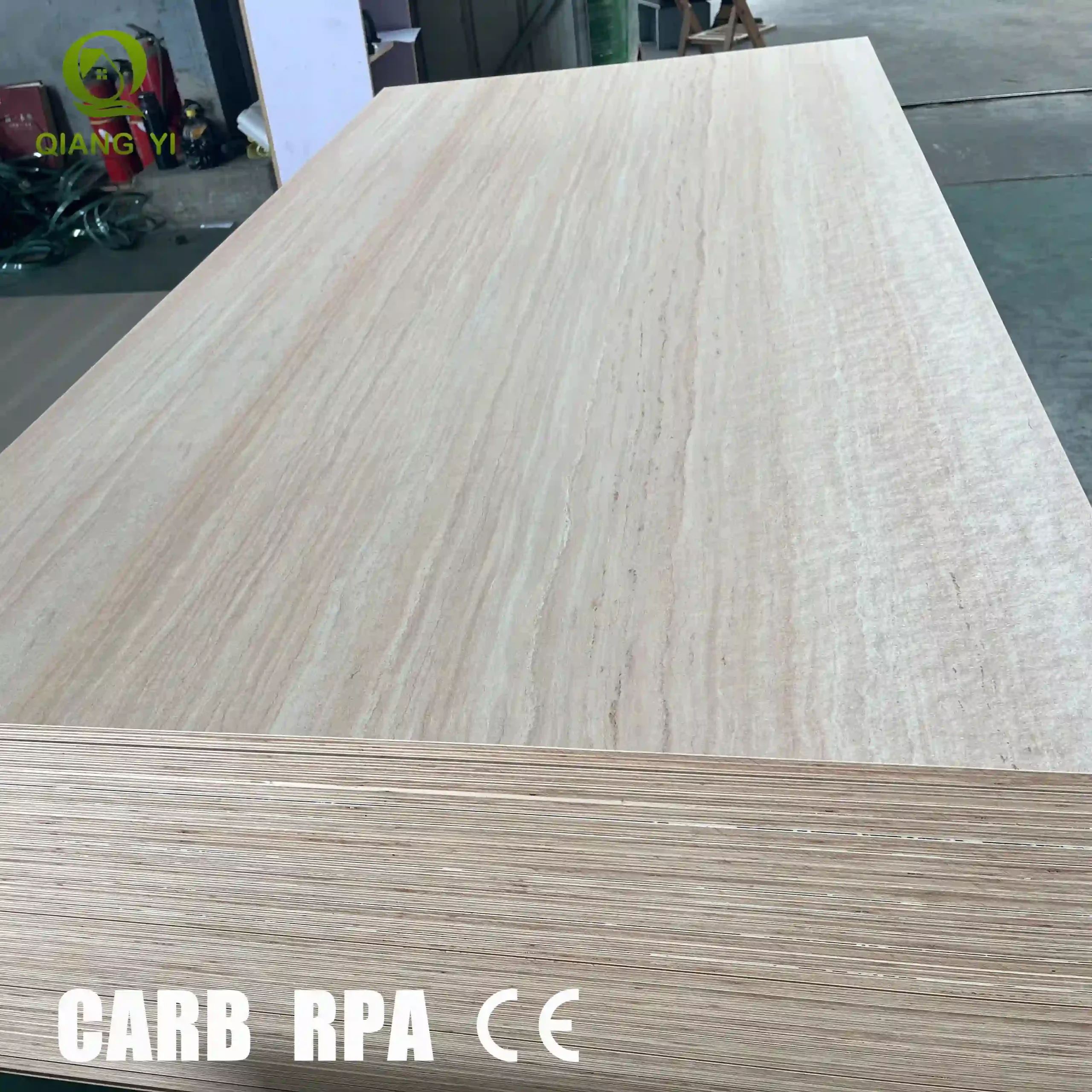
100% Eucalyptus Core Waterproof Plywood Marine Grade Termite Resistant Best Plywood for Tropical Furniture
A furniture-grade eucalyptus plywood that survives hot, humid climates. Solid 100% eucalyptus core, waterproof adhesive, built flat for cabinet doors — no voids, no warping, no surprises after the rainy season.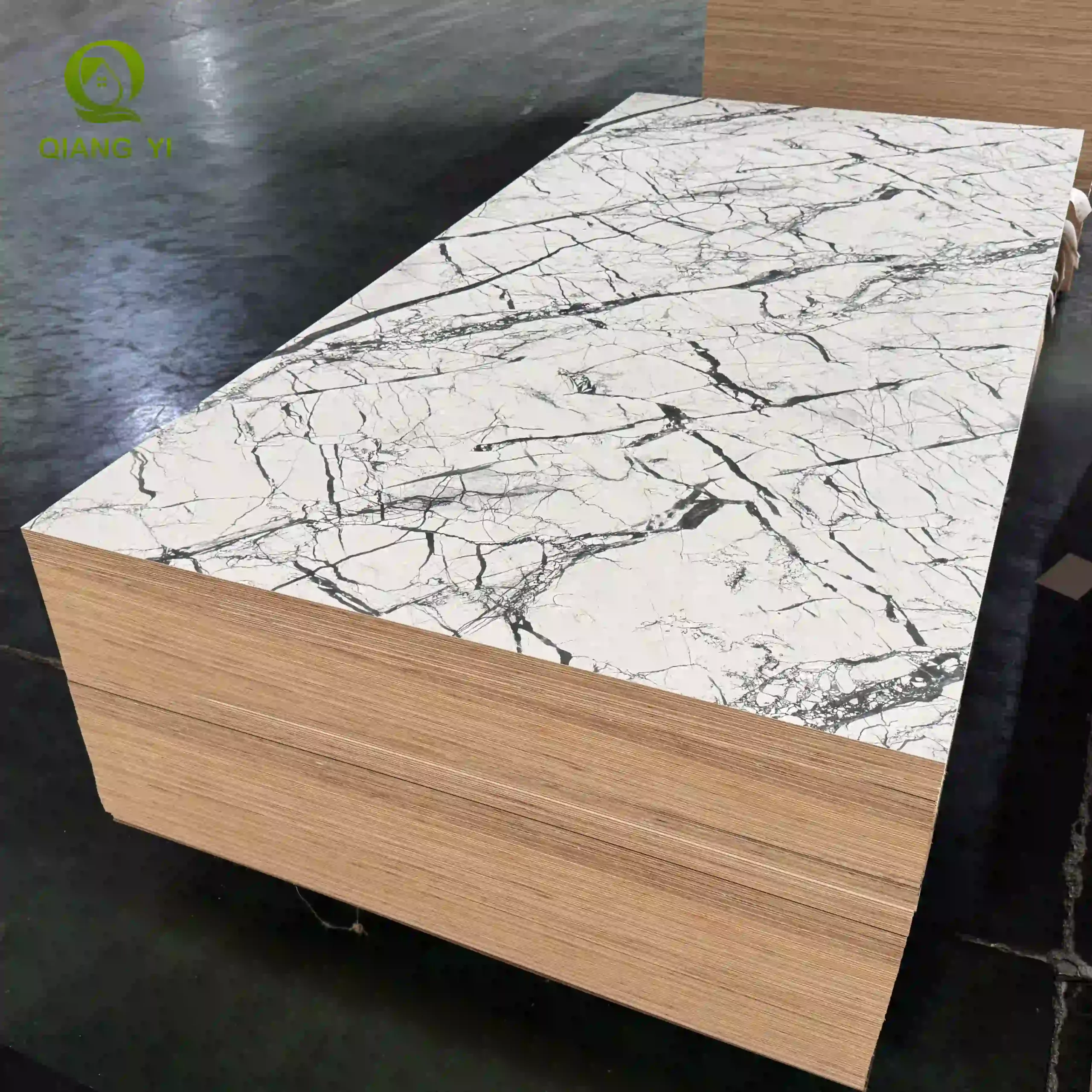
Qiangyi glutinous rice full eucalyptus core hardwood veneer melamine laminate plywood for cabinet
Qiangyi glutinous rice glue plywood is also known as second-generation plywood that represents a century of innovation. It has achieved No.1 in sales and a top reputation in China. Widely favored by renovation companies, cabinet manufacturers, and homeowners. Qiangyi glutinous rice plywood achieve the B1-grade fire retardant standard, strong nail-holding power, resistance to deformation, water resistance, moisture resistance, mildew resistance, antibacterial properties, and termite resistance.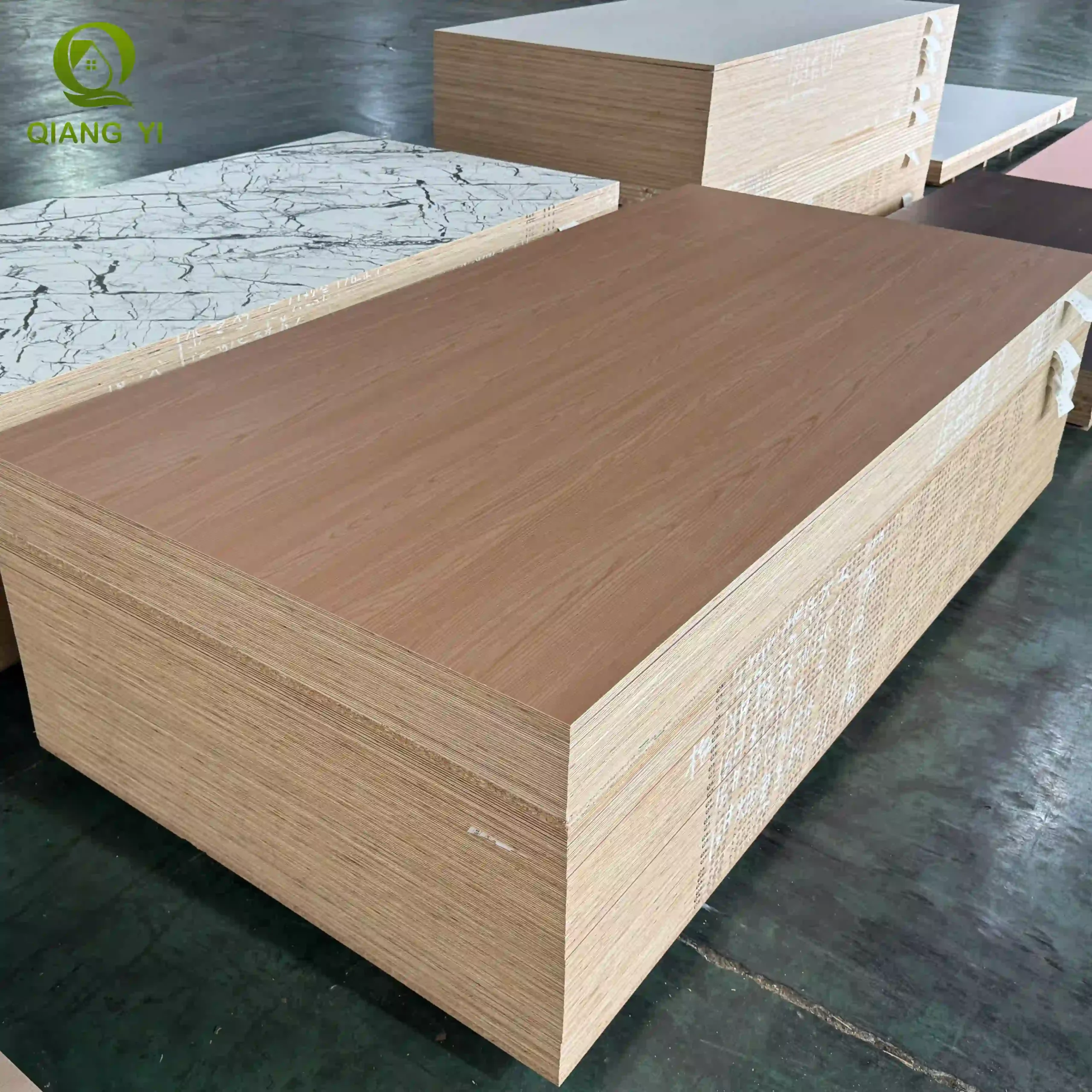
hardwood core 100% eucalyptus wood plywood ENF grade for modular cabinetry
Main Advantages for Modular Cabinetry 1. Structural Stability: High-density, high-hardness cross-laminated veneers offer excellent resistance to bending and warping, and control standard thickness tolerance for modular cabinet assembly. 2. Hardness and Wear Resistance: High-density eucalyptus hardwood provides superior load-bearing capacity, Good screw holding capacity, making it ideal for Modular Cabinetry. 3. Moisture Resistance: Offers better moisture resistance than standard particleboard or MDF and softwood like poplard and pine core plywood; suitable for humid environments like kitchen and bathroom, with a 24-hour thickness swelling rate of less than 2.4% (surpassing industry standards). 4. Ease of Processing: Excellent performance in cutting, drilling, and edge banding (PUR/PVC); ensures clean edges without fraying, peeling, or chipping—perfect for automated factory production lines. 5. Environmental Compliance: Available with CARB-P2, FSC, and CE certifications, meeting market entry requirements for Europe, North America, and Southeast Asia. 6. Cost-Effectiveness: More affordable than imported hardwood plywood, with a stable and reliable supply.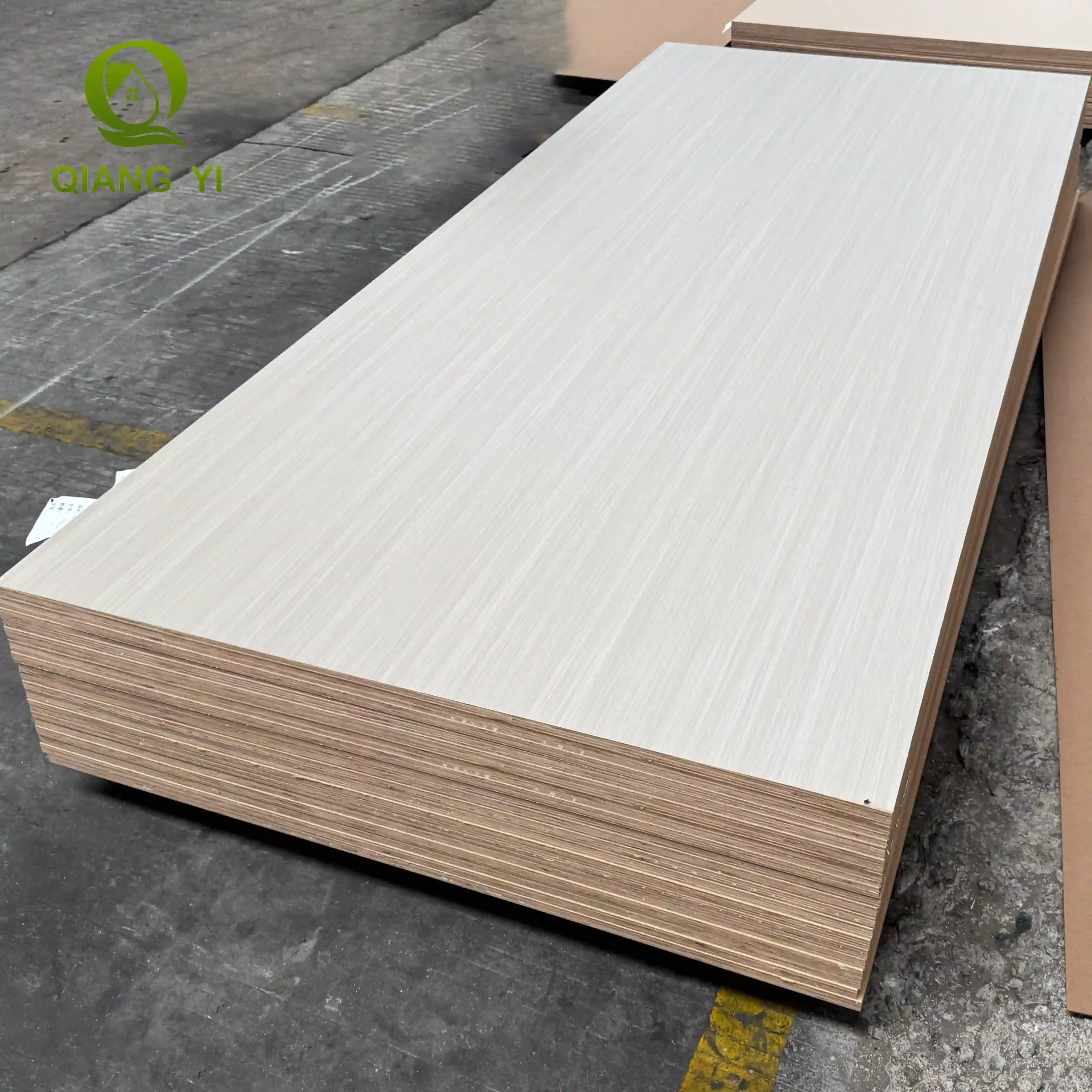
Qiangyi 18mm Glutinous Rice Glue Plywood ENF Waterproof Board for Kitchen Cabinets & Wardrobes
Qiangyi Glutinous Rice Glue Plywood 18mm waterproof laminated plywood is a second-generation multi-layer board bonded with food-grade Lingmei glutinous rice glue — zero formaldehyde, zero benzene, zero odor. Built for kitchen cabinets, wardrobes and interior furniture projects. Key features: • Beyond ENF grade — formaldehyde emission "not detected" (limit 0.025 mg/m³) • Anti-deformation: MOR ≥22 MPa, MOE ≥5000 MPa; ideal for tall cabinet doors • Class II waterproof: 24h thickness swelling only 2.4% • Termite resistant Grade 9.5, mold Grade 0, antibacterial ≥99% • B1 flame retardant, sound reduction ≥35 dB • 15-year factory warranty
CARB certified waterproof and anti termite marine plywood 18mm 100% eucalyptus hardwood plywood
Still troubled by plywood projects in humid areas? See how glutinous rice plywood can solve the pain points of furniture projects in humid climates, as well as the key points for plywood procurement.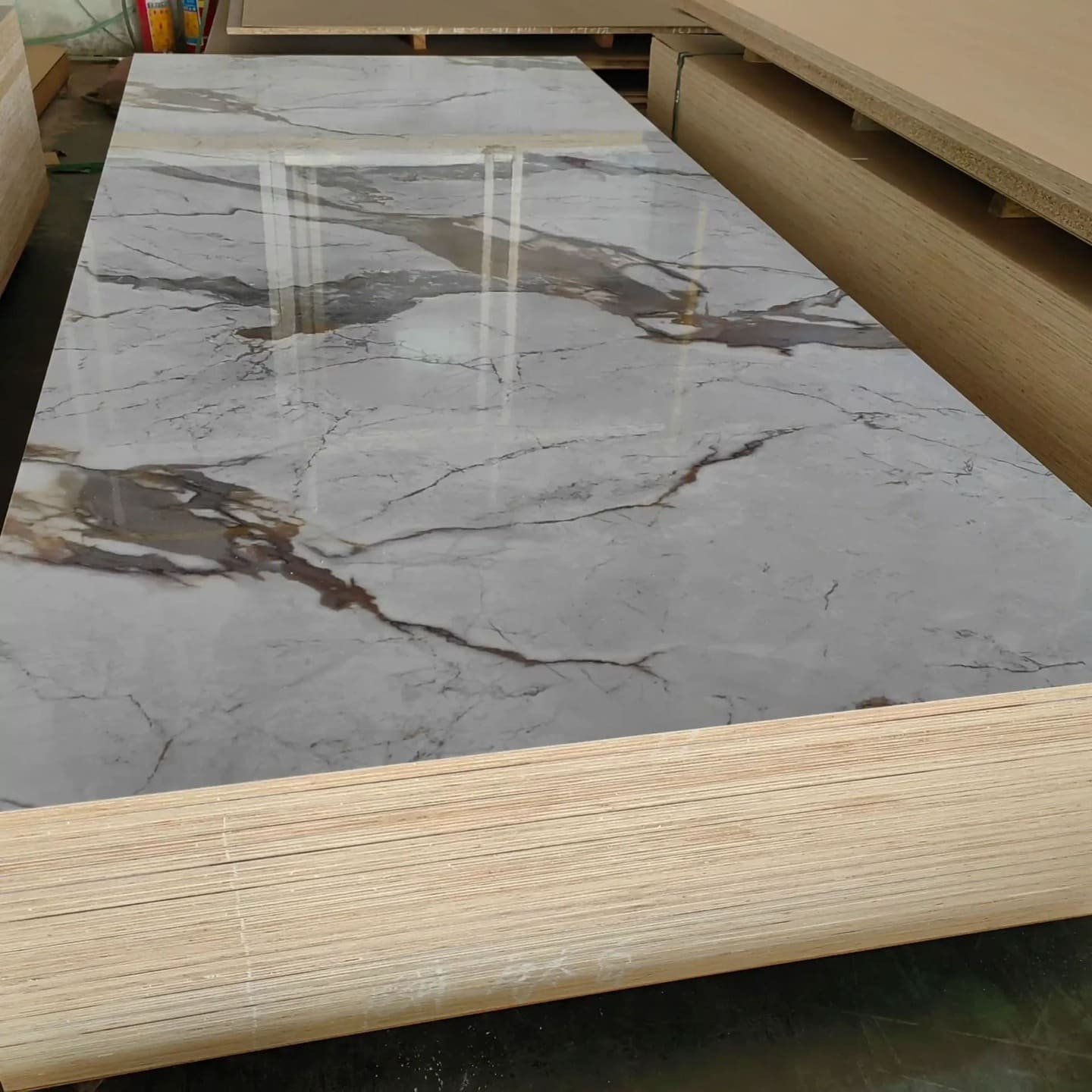
First-Class 3/4 plywood 4×8 Qiangyi Brand ENF Grade Hard Wood Core Waterproof for Bathroom Decoration-Qiangyi Plywood
Glutinous rice plywood is second generation plywood which is multi-functional plywood. The components adhesive are glutinous rice starch, magnesium chloride , magnesium oxide,water, no formaldehyde. Glutinous rice plywood has Class‑II waterproof; 2.4% thickness swelling (24h water immersion). It can used in humid environment like bathroom, kitchen, laundry, tropical or coastal country.Get more information about the plywood
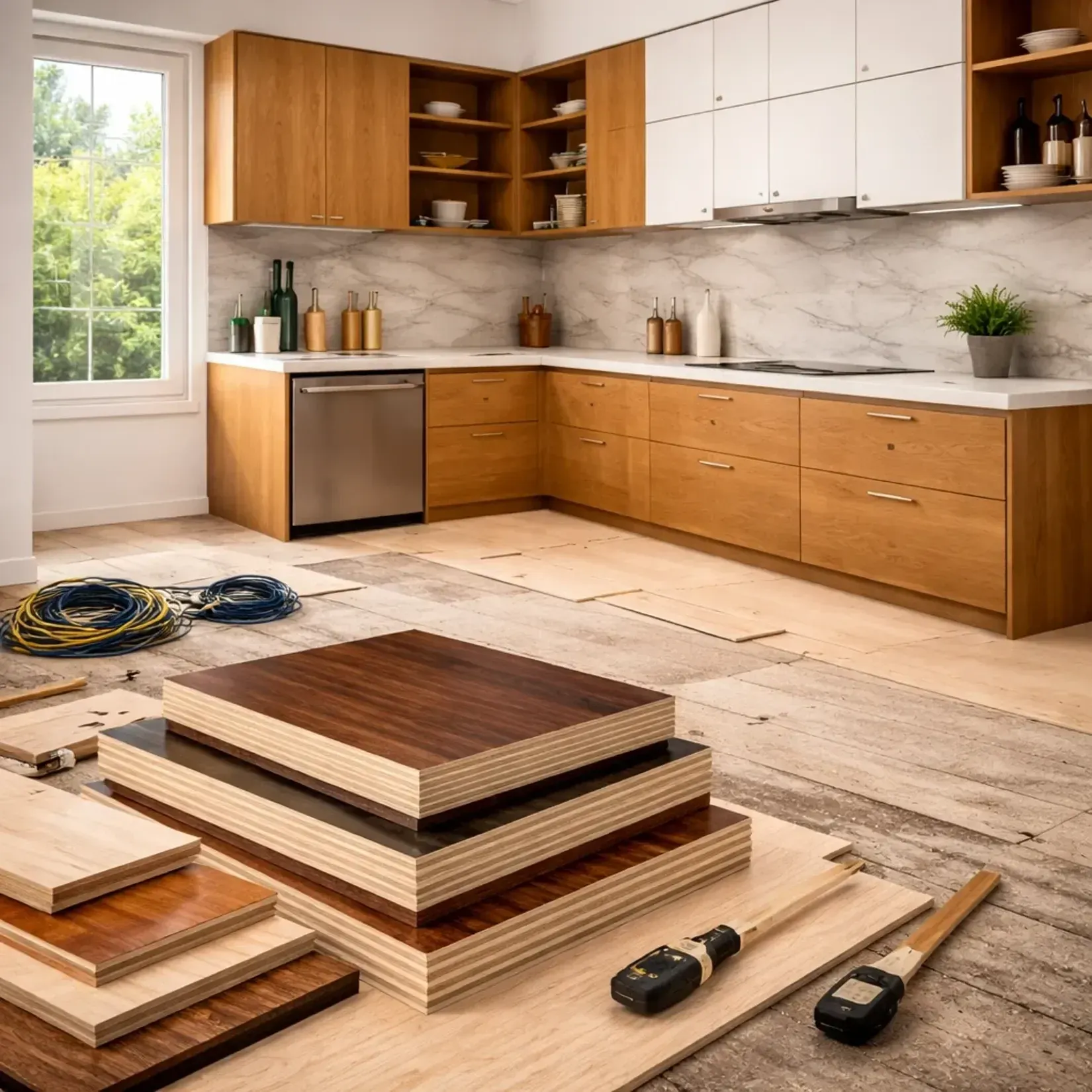
Moisture-Resistant Plywood Sourcing Guide for Sink Cabinets
A sink cabinet might leave the factory looking perfect. However, it can become a warranty issue just a few months later. A tiny plumbing leak or frequent wet cleaning can make the bottom swell. This causes the edge banding to peel up. Then, the installer has to deal with a difficult repair job. Kitchen cabinet manufacturers need to protect their finished products. They also want to avoid expensive return visits. Therefore, picking moisture-resistant plywood is not just about finding a board with a waterproof sticker. It is about true material performance. Why Sink Cabinet Swelling Creates Costly Problems for Manufacturers Below a sink, the area is exposed to a different level of moisture than a kitchen shelf. Leaks from pipes, condensation on pipes, and cleaning with wet cloths can cause panels to swell, resulting in unsightly cabinets and poorly fitting parts that need to be reworked and after-sales claims. Instead of relying on a “waterproof” label, when you select materials for projects, you should test how a panel’s bonding and core will react to moisture-related swelling. Problems with cabinets often start where you can’t see. Where Moisture Damage First Appears in Sink Cabinets Picture a rental unit where a loose drain drips water onto the bottom board. The puddles hide behind tall cleaning bottles. They stay there unnoticed for many weeks. In a different house, sweat builds up on a cold water pipe. That moisture soon trickles down into a bare, unsealed hole. The weakest spots are normally the bottom floor, the pipe cutouts, the back corners, and the seams by the floor base. Once a cut side gets thicker from water, problems happen. Even a perfectly fine surface layer will not sit flat anymore. How Swollen Panels Lead to Rework and Warranty Claims Fixing a puffed-up bottom board is rarely an easy swap. The repair worker might have to detach the pipes first. They also need to pull out shelves and cut down nearby parts. This means planning a whole new trip to the house. In custom kitchens, close cabinets and heavy countertops block easy access. The factory ends up paying for the extra labor, travel, and time. Meanwhile, the homeowner only sees a poorly made product. Just one bad piece of wood can change a good sale into a messy warranty fight. Why Ordinary Sink Cabinet Panels Swell Despite Surface Protection A shiny top layer can block normal water splashes. However, that surface is just one piece of the whole cabinet board. Water can still find a way inside the wood. Water Enters Through Cut Edges and Plumbing Openings Workers must cut holes in the sheet for a sink waste pipe. That newly exposed inner wood does not have the original factory coating. If the hole stays bare, water will soak right into the wood fibers. This makes the board swell up and get thicker. Loose edge strips, badly covered screw holes, and trapped water on the bottom floor create similar trouble. Adding a plastic drip pan and sealing every gap helps a lot. Still, those steps cannot make up for bad glue inside the actual board. Why Ordinary Plywood and MDF Respond Differently to Moisture MDF is made from tightly pressed wood dust. It gives a very smooth painted finish. However, the open sides can puff up terribly when they get wet. Plywood uses glued layers of real wood. Its reaction to water depends largely on the wood type, the chosen glue, and how it was pressed together. This fact is vital when you compare marine plywood vs ordinary plywood. The simple name tag cannot prove how a specific panel will act after getting wet. Buyers need to look at actual testing facts and the building method. They should never guess that every plywood or MDF item will perform the same way. How to Select Moisture-Resistant Plywood for Sink Cabinets A good sink-base plan must look at the inside of the board. It also needs to protect the fresh cuts made during the building process. Prioritize Water-Resistant Bonding and Core Integrity Always ask your sellers about the glue used on the wood layers. Find out if the middle part has overlapping bits, empty holes, or weak joints. A solid, smooth core makes cutting and screwing much more reliable. An immersion-peeling test reveals if the glue holds up under specific wet situations. Meanwhile, a thickness-swelling test checks a totally different factor. For a massive kitchen project, try using a basic checking method: *Look closely at the cut sides to spot any empty core gaps. *Make sure the immersion-peeling report matches the exact board you buy. *Do a quick test run to seal the edges around pipe holes. Check Thickness, Edge Protection, and Purchase Specifications People looking for plywood thickness for cabinets usually want 18 mm boards. Yet, the best size truly depends on the cabinet shape, the total weight, and the metal hinges. The kitchen cabinet plywood thickness must be chosen along with the core style, layer setup, top color, and edge tape. Clearly demand waterproof sealant around pipe gaps, the bottom borders, and any fresh cuts. Think about homes near the sea or floors that get mopped daily. For these spots, you must also check airflow and ways to reach leaks easily. No thick board can ever replace smart building designs. How QIANGYI PLYWOOD Helps Reduce Sink Cabinet Swelling At QIANGYI PLYWOOD, we tackle water threats using a clean, water-blocking glue mix. We also use a full-eucalyptus core layout. This special design stops empty pockets inside the wood. We do not just count on a pretty top color for protection. Glutinous Rice Glue Supports Moisture-Resistant Bonding Our glutinous rice glue plywood relies on Lingmei adhesive. This unique glue is mixed from glutinous rice starch, magnesium chloride, magnesium oxide, and pure water. The wet glue sinks deep into the tiny holes of the wood fibers. Once it dries, it builds a tight, super-strong connecting web. The final plywood is built to reach ENF-grade ultra-low formaldehyde emissions. At the same time, it keeps its tough, water-resistant bond. We spread the glue smoothly on every single layer. Next, we apply 24 hours of cold pressing at normal room temperature. We dry it carefully to hit the right moisture level. Finally, we let it rest and settle properly. This careful routine keeps the glue quality steady across all factory runs. It fights off swelling from random spills or damp room air. It also greatly lowers the chance of the wood layers peeling apart from water damage. Eucalyptus Core and Fully Core-Connected Construction Improve Panel Stability Picking the right middle wood is just as crucial. We use a full eucalyptus core for this special glutinous rice plywood. We never use a random mixed-wood core. The inner sheets are laid out using fully core-connected construction. This means the middle pieces fit tightly together to stay solid. It prevents silly gaps inside the board. This detail is huge when workers drill pipe holes or screw the cabinet walls together. Hidden weak spots can easily break a cabinet. Using strong eucalyptus wood and smooth glue layers ensures a steady, tough product. Even with this strong build, you still must seal the cut edges. Test Evidence and Procurement Value for Sink Cabinet Manufacturers Smart buyers require real proof of strong glue, anti-swelling power, and good factory support. Class II Water Resistance and Immersion-Peeling Test Results An official immersion-peeling test report, No. SZF-WT-25101715-03, shows six tested pieces. It confirms a perfect 100% pass rate and a fully compliant score. The Class II test rules demand soaking the wood in hot water at 63°C ± 3°C. This great score proves it handles wet conditions well. However, it is not meant to stay underwater forever. We also provide a Waterproof and Anti-Swelling Responsibility Commitment. This paper covers valid edge-swelling and glue-failure problems after the setup is done. Buyers should always check these rules to match their specific orders and plans. Hour Immersion Results and Real-World Sourcing Value A different 72-hour soaking test looks at three distinct boards side by side. The recorded thickness shifts are: Material Before soaking After 72 hours Increase Glutinous rice glue plywood 18.20 mm 18.35 mm 0.15 mm Ordinary plywood 18.13 mm 19.05 mm 0.92 mm MDF 18.30 mm 20.66 mm 2.36 mm The tiny size change shows the true worth of a stable board. Puffed-up edges make fixing cabinets very hard. Of course, this basic test does not replace official batch checks. In the very damp Philippine market, a wood panel seller first tried one color of our glutinous rice glue plywood. They loved it, bought much more, and added new colors later. This story shows strong buyer interest. It does not measure exact sink-cabinet lifespans, though. Before you order a massive batch, always check the samples, exact rules, test papers, and return policies. We can chat about all these facts at THE 2026 GUANGXI INTERNATIONAL FOREST PRODUCTS AND WOOD PRODUCTS EXHIBITION. Find us at Booth D5T-06, Nanning International Convention & Exhibition Center, from November 21–23, 2026. FAQ Q: Is your plywood made with a full eucalyptus core or a combi core? A: Our glutinous rice glue plywood relies on a full eucalyptus core. It features fully core-connected veneer construction. Cabinet makers should double-check the exact core details when asking for samples or price lists. Q: Why does plywood swell around kitchen sink plumbing cutouts? A: Drilling pipe holes chops up the wood fibers. It strips away the safe outer layer. Tiny pipe drips, or cold-water sweat can easily soak into those raw cut walls. When the wood drinks that water, the edges puff up. This pushes against the edge tape and can ruin the nice outer finish. Q: Is your glutinous rice glue plywood waterproof or marine grade? A: Our board has passed the Class II water-resistance tests under strict national rules. It is built for very damp indoor rooms. This includes kitchen sink cabinets, bathroom units, and beachside houses. It fights off daily splashes and damp swelling brilliantly. Still, you must never leave it sitting deep underwater for long periods. Q: How can cabinet manufacturers verify anti-swelling performance before bulk purchasing? A: You should look at a real sample. Check the immersion-peeling scores and the thickness-swelling proof. Review the inner core style and the promised inspection rules. The test papers must clearly match the exact wood you are buying. Q: Does moisture-resistant plywood still require edge sealing in sink cabinets? A: Yes, it absolutely does. You must seal all fresh cuts, pipe gaps, and weak joints. Also, fix any water leaks right away. Tough glue and smart building habits work perfectly together. They stop silly cabinet failures from happening.
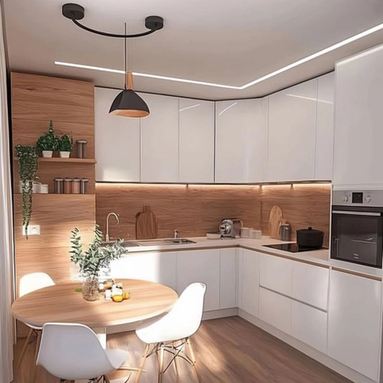
Anti-Mold Plywood Checklist for Hotel Furniture Buyers
Mold in hotel furniture rarely begins as a dramatic leak. More often, it starts behind a wardrobe, under a vanity, beside a cold wall, or along an exposed panel edge that stays damp. The board may look fine at delivery, while moisture-related defects appear months later. A useful anti-mold plywood checklist therefore has to look beyond one label. Buyers need to evaluate the environment, core structure, bonding system, moisture control, and test evidence before approving a bulk order. Where Do Mold Problems Start in Hotel Furniture Projects? Hidden Moisture Zones in Guestroom Furniture Hotel rooms create several moisture conditions in one small space. A wardrobe fixed against an exterior wall may receive little airflow. A bathroom vanity sees splashes, steam, and repeated cleaning. A minibar cabinet can sit near cool surfaces where condensation forms. In tropical or coastal hotels, rooms closed between guests may also stay humid for long periods. Panel edges, drilled holes, backs, joints, and internal layers can take in moisture before the decorative face shows obvious damage. Why a Small Mold Spot Can Become a Project Cost In a hotel, one material specification may be repeated across dozens or hundreds of rooms. A local defect can therefore become room downtime, replacement furniture, another installation visit, delayed handover, warranty claims, and complaints from the operator. Anti-mold performance is not only an appearance issue. For a hotel furniture buyer, it is part of project risk control. Why Does Plywood Develop Mold and Moisture-Related Damage? Humidity, Condensation, and Slow Drying Create the Risk Mold needs favorable moisture conditions. Furniture becomes more vulnerable when humidity remains high, water enters through unfinished edges, or condensation repeatedly wets a cold surface. The problem is often cumulative. A panel takes in some moisture, dries slowly, then repeats the cycle. Poor airflow behind fixed furniture can make this worse. Anti-mold material cannot replace leak repair, ventilation, or humidity control, but it can give the furniture assembly a better margin against these conditions. Moisture Can Also Lead to Swelling and Deformation Moisture can also stress the glue line, swell wood fibers, loosen fastening areas, or change panel flatness. A board used for wardrobes, vanity units, headboards, or built-in cabinets therefore needs a stable core and reliable bonding. Even when buyers search for plywood thickness for cabinets, thickness alone cannot compensate for internal gaps, weak veneers, or a moisture-sensitive structure. What Should Hotel Buyers Check Before Approving Anti-Mold Plywood? The supplier should be able to explain how the panel is built and how it performs. The phrase waterproof plywood is not enough, and neither is a general “mold resistant” claim. Buyer Check Why It Matters Mold or mildew resistance evidence Confirms the anti-mold claim Antibacterial performance Adds hygiene-related evidence Core species and grade Affects stability and fastening Full-connected core structure Reduces internal weak points Panel moisture content Checks moisture control before shipment Water-resistance and bond test Checks glue-line integrity after moisture exposure Edge sealing plan Helps limit moisture entry after fabrication Verify the Structure, Not Just the Surface For hotel furniture, eucalyptus core board construction is worth checking at the exposed edge or approved sample. A hardwood core can support repeated fastening and daily use, but the species name alone is not enough. Buyers should ask whether the core is continuous and whether gaps, overlaps, or filler veneers are present. Cabinet grade plywood should be judged as a complete structure, not only by face appearance. Match the Board to the Furniture Location The risk level differs by application. A wardrobe on an internal dry wall is not exposed like a vanity beside a shower area. A tall cabinet door also places more emphasis on flatness and deformation control. For bulk hotel projects, approve the panel by application: wardrobe, vanity, minibar, wall panel, or other built-in furniture. How Does QIANGYI PLYWOOD Target Moisture-Driven Mold Risk? At QIANGYI PLYWOOD, we approach the problem through the core, adhesive system, and moisture-control process rather than relying on a surface claim alone. Full Eucalyptus Core and Full-Connected Core Construction We use full eucalyptus core options built with continuous eucalyptus veneers. In this structure, full-connected core means the internal veneers are arranged without voids, overlaps, or dead joints. The aim is a more uniform panel with fewer internal weak points. We use 100% eucalyptus core solutions for cabinet and furniture applications. For hotel wardrobes and tall cabinet panels, this matters because core continuity supports more consistent machining, fastening, and dimensional stability. It also gives buyers something practical to inspect on a cut edge before bulk approval. Glutinous Rice Glue Helps Create Less Favorable Conditions for Mold Our Lingmei glutinous rice glue uses glutinous rice flour, magnesium chloride, water, and magnesium oxide. The magnesium components react to create an alkaline environment. More importantly for hotel furniture buyers, an antibacterial and mildew-proof test conducted according to JC/T 2039-2010 on an 18 mm glutinous rice glue multifunctional board recorded an antibacterial rate above 99% and a Grade 0 mildew-proof rating. Under the test rating criteria, Grade 0 means no mold growth was observed. For buyers, this provides direct test evidence for evaluating mold and bacterial resistance instead of relying only on a general anti-mold claim. The adhesive system, moisture control, and tested resistance work together to reduce mold-related risks in furniture exposed to humid conditions. Controlled Drying Keeps Panel Moisture in the 8–12% Range We use a 60-hour temperature-controlled drying process and control board moisture content within 8–12%. This reduces excess moisture before furniture production and supports more stable use in humid conditions. For projects involving humid storage, long shipping routes, or air-conditioned guest rooms, starting with controlled panel moisture is more practical than correcting unstable boards after machining. What Evidence Should Hotel Buyers Put in the Approval File? Testing should support the purchase decision, especially when anti-mold performance is part of the hotel furniture specification. Report No. HJ-RD-26150 covers antibacterial and mildew-proof testing of an 18 mm glutinous rice glue multifunctional board according to JC/T 2039-2010. The tested sample achieved an antibacterial rate above 99% and a Grade 0 mildew-proof rating. The report defines Grade 0 as no mold growth. The antibacterial test used Escherichia coli AS1.90, while the mildew-resistance evaluation included multiple fungal species. For a hotel furniture buyer, this provides direct evidence related to the actual risk being evaluated: whether the panel can resist bacterial growth and mold development under the specified test conditions. For a hotel project, the approval file should include: Core species and full-connected-core confirmation. Antibacterial and mildew-proof test results. The applicable test standard and tested panel specification. Panel moisture specification and moisture-resistance information. Approved thickness, face finish, and edge treatment. A production sample matching the bulk order. These checks make later quality discussions easier because the approved panel has a defined structure and performance basis. Practical Case: Plywood Sourcing for a Humid Philippine Market In early 2026, a Philippine decorative panel and furniture-material distributor contacted us while comparing suppliers for a hot, humid market. The buyer was particularly concerned about environmental performance, moisture resistance, and durability. After seeing our glutinous rice glue plywood in person, the distributor placed a trial order in April with one color. The first shipment received positive market feedback for its ENF grade, surface texture, waterproof performance, and termite resistance. Demand soon expanded beyond the original color, so we developed a customized color sample book for the buyer. The distributor later introduced more finishes through its offline showroom and positioned the glutinous rice glue plywood as a premium product line. For hotel and furniture buyers, this case shows why humid-market sourcing should consider moisture-related performance, structural stability, and consistent product presentation. Meet Us in Guangxi International Forest Products and Wood Products Exhibition For buyers currently sourcing plywood for hotel furniture or other commercial projects, we will attend THE 2026 GUANGXI INTERNATIONAL FOREST PRODUCTS AND WOOD PRODUCTS EXHIBITION from November 21–23, 2026. Visitors can meet our team at Booth D5T-06 at the Nanning International Convention & Exhibition Center to discuss anti-mold plywood, eucalyptus core, full-connected core construction, and project-specific panel requirements. FAQ Q: What is anti-mold plywood for hotel furniture? A: It is plywood selected to reduce mold-related risk in humid interior furniture. Buyers should check mold resistance together with moisture control, bond quality, core continuity, and dimensional stability rather than relying on one anti-mold label. Q: Is anti-mold plywood the same as waterproof plywood? A: No. Water resistance focuses on moisture exposure, bonding, and swelling. Anti-mold performance focuses on resistance to fungal growth. The two properties support each other, but they are not the same test. Q: Why is a full eucalyptus core important for hotel cabinets? A: A full eucalyptus hardwood core provides a dense, consistent base for furniture use. When combined with a full-connected core structure, it also reduces concerns about internal voids, overlaps, and weak joints. Q: Where should mold-resistant plywood be prioritized in a hotel? A: High-risk locations include bathroom vanities, wardrobes against exterior walls, minibar cabinets, lower cabinet panels, and furniture in tropical, coastal, or poorly ventilated rooms. Q: What should buyers request before placing a bulk anti-mold plywood order? A: Request the approved core structure, panel moisture range, antibacterial and mildew-proof test results, applicable test standard, tested panel specification, thickness and surface requirements, and a production sample that matches the final order.
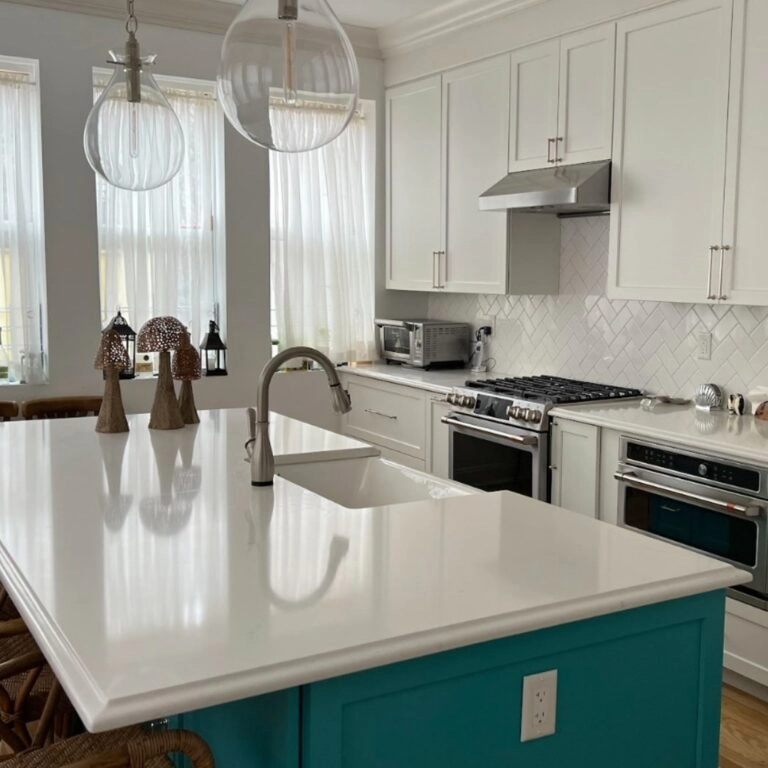
دليل استخدام الخشب الرقائقي المقاوم للنمل الأبيض لتقليل مطالبات الضمان
نادراً ما تبقى مشكلة النمل الأبيض في خزانة جاهزة مجرد مشكلة بسيطة في المواد. فبمجرد تركيب خزانة الملابس أو خزانة المطبخ أو الوحدة المدمجة، قد يؤدي التلف إلى عمليات تفتيش للموقع، واستبدال الألواح، وتكاليف العمالة والنقل، ونزاعات الضمان. لذا، ينبغي تقييم الخشب الرقائقي المقاوم للنمل الأبيض قبل البدء في تقطيعه. بالنسبة لمصنعي الخزائن، لا يكمن السؤال الحقيقي في وجود علامة مقاومة للنمل الأبيض على اللوح، بل في ما إذا كان اللب ونظام اللصق وبنية الألواح ونتائج الاختبارات تدعم استراتيجية ضمان أقل مخاطرة. لماذا يتحول تلف النمل الأبيض إلى مطالبات ضمان مكلفة للخزائن؟ غالباً ما تظهر الأضرار الخفية بعد التركيب. يمكن للنمل الأبيض أن يدخل عبر مسارات التربة، وشقوق الجدران، والأنابيب، أو من خلال الخشب والتغليف المصاب. في مشاريع الخزائن، تشمل المناطق التي يصعب رؤيتها الألواح الخلفية القريبة من الجدران، وقواعد الخزائن، وقواعد الملابس، وخزائن الأحواض. قد يبدو الخشب الرقائقي طبيعيًا أثناء التصنيع. لكن التلف قد لا يظهر إلا بعد تركيب الأثاث، حينها قد يحتاج المصنّع إلى معاينة الموقع، وتفكيك الخزائن، وإعادة إنتاج الألواح، وشحن قطع غيار، وترتيب إعادة التركيب. وقد تتجاوز التكلفة بسهولة تكلفة لوح واحد تالف. في المطابخ ذات الرطوبة العالية، قد يكون من الشائع تركيب خزانة أرضية بالقرب من أنابيب المياه. فإذا وصل النمل الأبيض الخفي إلى الطبقة السفلية، فقد يتطلب استبدال أحد الألواح الداخلية إزالة بعض الأجزاء المعدنية، أو الأبواب، أو أسطح العمل، أو الوحدات المجاورة. أما في الخزائن، فقد يبقى التلف خلف اللوح الخلفي الثابت غير ملحوظ حتى يلاحظ العميل وجود غبار، أو فراغات، أو أجزاء متضررة. تبدأ فترة الضمان باختيار المواد لا ينبغي الخلط بين السطح الزخرفي والحماية من النمل الأبيض. قد يوفر الخشب الرقائقي المغلف بالميلامين لمسة نهائية عملية، لكن السطح وحده لا يثبت أن الطبقة الأساسية مقاومة للنمل الأبيض. وينطبق الأمر نفسه على الخشب الرقائقي البحري المصفح أو الألواح البحرية. أما مقاومة الرطوبة ومقاومة النمل الأبيض فهما مسألتان منفصلتان. ومن الأسئلة الشائعة بين المشترين: "هل الخشب الرقائقي البحري المصفح مقاوم للنمل الأبيض؟" وتعتمد الإجابة على اللب ونظام اللصق ونتائج الاختبار، وليس على اسم المنتج. لماذا لا يزال الخشب الرقائقي عرضة لهجوم النمل الأبيض؟ يُصنع الخشب الرقائقي من قشرة الخشب، لذا يبقى السليلوز داخل اللوح. قد يحمي الغلاف الخارجي السطح أثناء الاستخدام اليومي، لكن الحواف المقطوعة والثقوب المحفورة ونقاط التثبيت والقشرة الداخلية تظل مهمة في البيئات المعرضة للنمل الأبيض. تُضيف ظروف المشروع طبقة أخرى من المخاطر. فقد تكون وحدات المطبخ قريبة من أنابيب المياه، بينما يمكن تثبيت الخزائن على الجدران لسنوات. في الأسواق الاستوائية أو الرطبة، قد يؤدي الوصول المخفي وفترات الخدمة الطويلة إلى تحويل مشكلة بسيطة إلى قضية مكلفة لما بعد البيع. لهذا السبب، لا ينبغي اعتبار عبارة "مقاومة النمل الأبيض" وعداً مطلقاً. بل ينبغي اتباع نهج أفضل يجمع بين اختيار الألواح المناسبة والتركيب السليم، والعزل، والفحص، وإجراءات مكافحة الآفات المحلية. ما الذي يجب أن يطلبه مصنّعو الخزائن من الخشب الرقائقي المقاوم للنمل الأبيض؟ قبل مقارنة الأسعار، يجب على المشترين التحقق مما يتم توريده فعلياً. شيك الشراء ما الذي يجب تأكيده؟ أدلة على وجود النمل الأبيض طريقة الاختبار، العينة، التاريخ، رقم التقرير، التقييم المادة الأساسية أنواع الخشب ودرجة القشرة البناء الأساسي قلب متصل بالكامل، وليس طبقة جزئية مفككة مواصفات الخزانة السماكة، السطح، معالجة الحواف، الاستخدام المقصود مسؤولية المورد إجراءات واضحة لما بعد البيع تستحق جودة اللب اهتماماً خاصاً. يُعد لب خشب الأوكالبتوس ذا قيمة عالية في صناعة الخزائن لأنه يوفر قاعدة متينة وثابتة من الخشب الصلب. ويُوصف خشب الأوكالبتوس ذو القطر الكبير بأنه مادة خام للخشب الرقائقي تُقدّر لقوته وجودته الثابتة. يُوفر اللب المتصل بالكامل، أو طبقات اللب الكاملة، بنية داخلية أكثر تحكمًا من اللب المتصل جزئيًا. في هذا النوع من البناء، تُرتب طبقات القشرة بشكل متواصل، بينما يُطبق اللاصق طبقة تلو الأخرى. لا ينبغي استخدام أي من هاتين النقطتين كبديل لاختبار النمل الأبيض. بل تساعدان المشترين على تحديد طبقة أساسية أكثر تجانسًا. كما يجب أن يتطابق سُمك الخشب الرقائقي المستخدم في الخزائن مع التصميم الفعلي. ولا ينبغي اعتبار لوح تم اختباره بسُمك 18 مم دليلًا قاطعًا على كل سُمك أو نوع بناء. كيف تستهدف شركة QIANGYI PLYWOOD مخاطر الألواح الخشبية المتعلقة بالنمل الأبيض؟ في شركة QIANGYI PLYWOOD، نعالج هذه المشكلة من خلال نظام اللصق، واختيار لب خشب الأوكالبتوس، وبناء اللب المتصل بالكامل بدلاً من الاعتماد على ادعاء السطح. يعمل غراء الأرز اللزج من لينغمي من خلال البنية المترابطة يستخدم خشبنا الرقائقي المصنوع من غراء الأرز الدبق غراء لينغمي المصنوع من دقيق الأرز الدبق، وكلوريد المغنيسيوم، وأكسيد المغنيسيوم، والماء. بعد التصلب، يُكوّن كلوريد المغنيسيوم وأكسيد المغنيسيوم بيئة لاصقة قلوية. وتتمثل تقنيتنا في تغيير التوازن الحمضي القاعدي داخل الخشب من خلال هذه البيئة اللاصقة القلوية، مما يخلق ظروفًا غير مواتية لنشاط النمل الأبيض. هذا الأمر مهم لأن صناعة الخزائن تتضمن القطع والحفر والتركيب ومعالجة الحواف.إن الإجراءات المرتبطة بنظام الربط الداخلي أكثر صلة بتلك العمليات من المطالبة القائمة فقط على السطح النهائي. يدعم لب الأوكالبتوس والطبقة الأساسية الكاملة الاتساق بالنسبة لتطبيقات صناعة الخزائن، نركز على استخدام لب من خشب الأوكالبتوس من الدرجة الأولى. يوفر الأوكالبتوس قاعدة هيكلية قوية، بينما تأتي مقاومة النمل الأبيض من نظام الألواح المختبر بالكامل، وليس من نوع الخشب وحده. تُرتب طبقات القشرة الخشبية أيضاً على شكل لب متصل بالكامل، وتُلصق طبقة تلو الأخرى. يتطلب هذا التصميم اختياراً أدق لللب، ويمنح اللوحة ترتيباً داخلياً أكثر تجانساً. ثم تستمر العملية بالضغط البارد المطوّل، والتجفيف المُتحكّم به، والمعالجة. تتضمن سلسلة الإنتاج ضغطًا باردًا ذاتي التسخين لمدة 24 ساعة، و60 ساعة من التجفيف، وأكثر من 15 يومًا من التكييف. بالنسبة لمصانع الخزائن، تكمن القيمة العملية في التناسق بين جوانب الخزائن، والأرفف، والأبواب، وخزائن الملابس، والمكونات الأخرى. دراسة حالة: الحد من مخاطر النمل الأبيض وخدمات ما بعد البيع في موريشيوس يواصل أحد عملائنا القدامى في موريشيوس، والمتخصص في صناعة الأثاث، طلب حاويات كاملة من الخشب الرقائقي عالي الجودة المصنوع من لب خشب الأوكالبتوس بنسبة 100%. يتميز مناخ الجزيرة المحلي بالرطوبة العالية والظروف القاسية، حيث قد تتعرض الألواح العادية للتقشر والتشوه وهجمات النمل الأبيض مع مرور الوقت. لهذا العميل، نوفر خشبًا رقائقيًا مصنوعًا من لب متصل بالكامل من خشب الأوكالبتوس بنسبة 100%، ومُعالج بغراء الأرز اللزج، بالإضافة إلى معالجة دقيقة لضمان ثبات أفضل للألواح. كما يوفر اختبار مقاومة النمل الأبيض من الدرجة 9.5 للمشتري دليلًا أوضح عند اختيار المواد اللازمة لصناعة الخزائن. ووفقًا للعميل، فإن استخدام خشبنا الرقائقي في صناعة الخزائن قد قلل من مخاوفه بشأن مشاكل ما بعد البيع. كما أن جودة الدفعات المتسقة تساعد المصنع على الحفاظ على أداء قطع مماثل، وثبات البراغي، وإعدادات إنتاج متماثلة في الطلبات المتكررة. ماذا يعني اختبار الدرجة 9.5 بالنسبة لمخاطر الشراء والضمان؟ يُدعم الادعاء المتعلق بمقاومة النمل الأبيض بتقرير الاختبار GIZ/TR-2024-0301-0186، الصادر عن معهد قوانغدونغ لعلم الحيوان، مركز التحليل والاختبار التابع للأكاديمية الصينية للعلوم. كانت العينة المختبرة عبارة عن خشب رقائقي متعدد الوظائف مصنوع من غراء الأرز اللزج، بأبعاد 1220 × 2440 × 18 مم، واستند الاختبار إلى معيار GB/T 18260-2015. كما تم تحديد رقم تقرير اختبار النمل الأبيض ذي الصلة في سجلات اختبار المنتج. خلال اختبار النمل الأبيض الداخلي الذي استمر أربعة أسابيع، سجل التقرير أضرارًا طفيفة، حيث لم يُلاحظ سوى نفق أو نفقين أو آثار إصابة. وحصلت العينة على تصنيف 9.5 في مقاومة النمل الأبيض. كما أُدرجت نتيجة مقاومة النمل الأبيض (9.5) ضمن معلومات أداء اللوحة. بالنسبة للمشترين، تكمن القيمة الأساسية في إمكانية التتبع لا في مجرد وعدٍ قاطع. إذ يمكن التحقق من رقم التقرير، وبنية العينة، وسماكتها، وطريقة الاختبار، ونتيجتها، ومقارنتها بالمواد المطلوبة. وهذا بدوره يُساعد المستوردين ومصانع الخزائن على تزويد العملاء النهائيين بأدلة محددة بدلاً من الاعتماد على وصف عام للمنتج. تتمثل عملية الشراء العملية فيما يلي: 1. تحديد ما إذا كان المشروع معرضاً بشكل كبير للنمل الأبيض. 2. قم بمطابقة سمك اللوحة وسطحها مع تصميم الخزانة. 3. تأكد من وجود لب من خشب الأوكالبتوس وبناء لب متصل بالكامل حيثما تم تحديد ذلك. 4. اطلب تقرير مقاومة النمل الأبيض للوحة المقابلة. 5. احتفظ بالتقرير ومواصفات الشراء مع سجلات جودة المشروع. بالنسبة للمشاريع التي تستخدم خشبنا الرقائقي المصنوع من الجيل الثاني من غراء الأرز اللزج، نلتزم أيضاً بضمانة ضد الحشرات والنمل الأبيض. في حال حدوث أي تلف ناتج عن النمل الأبيض أو الحشرات التي تتغذى على الخشب في ظل الظروف المطبقة، نتحمل مسؤولية استبدال المنتج بعد البيع. بالنسبة لمصنعي الخزائن، يوفر هذا ضماناً أوضح لإدارة المخاطر مقارنةً بشعار "مضاد للنمل الأبيض" المبهم. زورونا في معرض قوانغشي الدولي لمنتجات الغابات والمنتجات الخشبية لعام 2026 إذا كنتم تبحثون عن خشب رقائقي مقاوم للنمل الأبيض، أو خشب رقائقي ذي لب من خشب الكافور، أو ألواح ذات لب متصل بالكامل لمشاريع الخزائن والأثاث، يمكنكم مقابلة فريقنا في معرض قوانغشي الدولي لمنتجات الغابات والأخشاب 2026. نرحب بمصنّعي الخزائن، ومستوردي الخشب الرقائقي، والموزعين، ومشتري المشاريع لمناقشة مواصفات الألواح، ومتطلبات مقاومة النمل الأبيض، وبنية اللب، واحتياجات التوريد معنا شخصيًا. اسم الحدث: معرض قوانغشي الدولي لمنتجات الغابات والمنتجات الخشبية 2026 رقم الكشك: D5T-06 التاريخ: 21-23 نوفمبر 2026 الموقع: مركز نانينغ الدولي للمؤتمرات والمعارض التعليمات س: هل الخشب الرقائقي البحري المصفح مقاوم للنمل الأبيض؟ ج: ليس تلقائيًا. يجب فحص الأداء المتعلق بالرطوبة ومقاومة النمل الأبيض بشكل منفصل. تأكد من نوع الركيزة ونظام اللصق وتقرير اختبار النمل الأبيض. س: هل الخشب الرقائقي المغلف بالميلامين مقاوم للنمل الأبيض؟ ج: لا يجعل سطح الميلامين الركيزة مقاومة للنمل الأبيض بمفرده. لا يزال من الضروري تقييم اللب ونظام الترابط الداخلي. س: لماذا يتم استخدام لب الأوكالبتوس في الخشب الرقائقي المقاوم للنمل الأبيض المستخدم في صناعة الخزائن؟ أ: يوفر لب الأوكالبتوس قاعدة هيكلية قوية ومستقرةse. في نظام الألواح هذا، تأتي مقاومة النمل الأبيض من نظام البناء واللصق الكامل والمختبر. س: ماذا يعني النواة المتصلة بالكامل؟ ج: هذا يعني أن القشرة الداخلية تشكل لبًا متصلًا ومحكمًا بدلًا من طبقات متصلة جزئيًا. وهذا يدعم بنية داخلية أكثر اتساقًا لتصنيع الخزائن. س: هل يمكن للخشب الرقائقي المقاوم للنمل الأبيض من الدرجة 9.5 أن يلغي جميع مطالبات الضمان؟ ج: لا. يمكن أن تقلل أدلة اختبار الدرجة 9.5 من عدم اليقين في اختيار المواد، ولكن المواصفات الصحيحة والتركيب وإدارة الرطوبة والفحص ومكافحة النمل الأبيض في الموقع لا تزال مهمة.
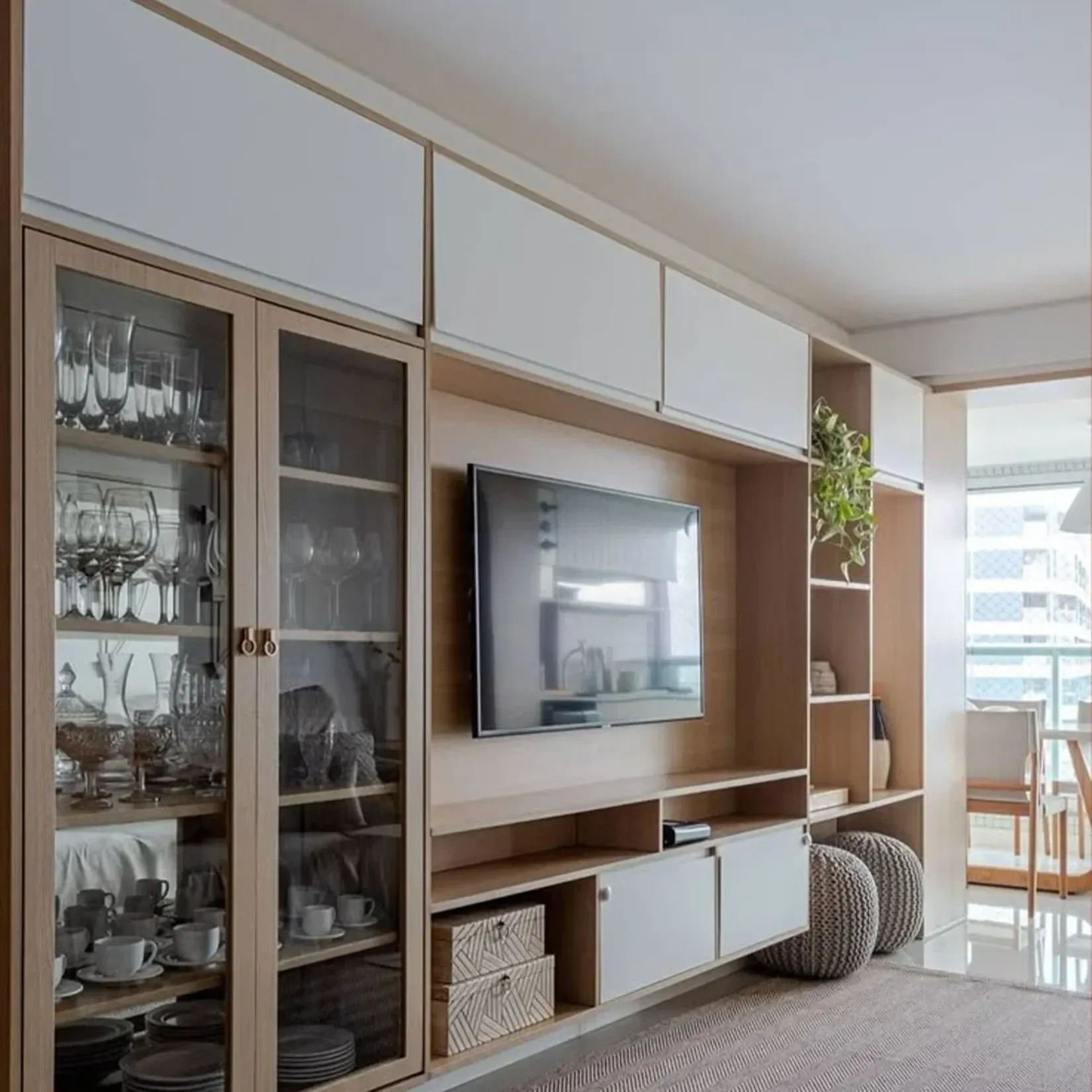
دليل الخشب الرقائقي المقاوم للهب من الفئة B1 لتقليل المخاطر
التكلفة الباهظة لعدم الالتزام بمعايير السلامة من الحرائق في المشاريع التجارية يتطلب الحصول على الموافقات اللازمة للمساحات التجارية، كالفنادق والمباني العامة والمتاجر الكبرى، الالتزام بلوائح سلامة صارمة. ومن أهم هذه اللوائح قوانين البناء المتعلقة بالحماية من الحرائق. فعندما يبحث مقاولو الديكور الداخلي أو مشتري المشاريع عن مواد للأثاث المصمم حسب الطلب، أو ألواح الجدران، أو الديكورات الداخلية، غالبًا ما يكمن الخطر الخفي في لبّ الألواح الخشبية المستخدمة. ويُعدّ عدم اجتياز تدقيق الامتثال لمعايير السلامة من الحرائق بسبب استخدام ألواح خشبية غير مطابقة للمواصفات أمرًا يُثير قلقًا بالغًا لدى مديري المشاريع. لذا، فإن فهم خصائص الخشب الرقائقي المقاوم للحريق ليس مجرد ضرورة فنية، بل هو استراتيجية أساسية لبقاء الشركات. لماذا يفشل الخشب الرقائقي القياسي أو دون المستوى المطلوب في ظروف الحريق؟ تنبع هشاشة العديد من ألواح البناء أثناء الحرائق من تركيبها الداخلي وعمليات تصنيعها. فغالباً ما تحتوي ألواح الخشب العادية أو ألواح الخشب المقاومة للهب رديئة الصنع على نقاط ضعف هيكلية خفية تصبح قاتلة تحت درجات الحرارة المرتفعة للغاية. تكمن المشكلة الرئيسية في الفراغات أو الفجوات الموجودة داخل الطبقات الأساسية للألواح القياسية. تتعرض هذه الجيوب الهوائية الصغيرة لحرارة عالية، فتُطلق الأكسجين الذي يُسرّع الاحتراق. تُغذي المادة اللهب بدلاً من مقاومته، مما يسمح للحريق بالانتشار بسرعة في جميع أنحاء الهيكل الداخلي. كما أن المواد اللاصقة المستخدمة في عمليات التصنيع العادية تُسبب مشاكل كبيرة. فالعديد من الألواح القديمة تستخدم راتنجات اليوريا فورمالدهيد. هذه المواد اللاصقة الشائعة لا تتمتع بالقوة الكيميائية اللازمة لتحمل درجات الحرارة العالية. فعند اندلاع حريق، تتحلل هذه المواد اللاصقة بسرعة، مما يُضعف البنية الهيكلية للوح، فينهار. والأسوأ من ذلك، أن انصهار هذه الراتنجات العادية يُنتج دخانًا سامًا للغاية، يُشكل خطرًا أكبر على الناس ورجال الإطفاء من اللهب نفسه. المعايير الأساسية للخشب الرقائقي المقاوم للهب من الفئة B1 الحقيقية يرغب مشترو الشركات في تقليل هذه المخاطر الكبيرة واجتياز عمليات تدقيق المشاريع بسهولة. ولتحقيق ذلك، يجب عليهم وضع قواعد صارمة عند اختيار مواد التشطيبات الداخلية. فاللوح المقاوم للحريق الحقيقي ليس مجرد طبقة سطحية، بل يحتاج إلى لب مصمم خصيصًا لتحمل الظروف القاسية. القاعدة الأولى هي بنية داخلية ناعمة وعالية الكثافة. يجب أن يكون اللب صلبًا تمامًا، مما يمنع تكون جيوب الهواء التي تغذي النار. هذه البنية السميكة تمنع الحرارة واللهب من التغلغل بسرعة. ثانيًا، يجب أن يكون نظام اللصق مقاومًا للحرارة بشكل طبيعي وآمنًا. يجب أن يحافظ اللاصق الذي يربط الطبقات معًا على تماسكه تحت درجات حرارة عالية جدًا، ويجب ألا يتحلل إلى غازات خطرة. أخيرًا، يجب أن تجتاز المادة اختبارات صارمة وواضحة للحصول على تصنيف أمان معروف، مثل تصنيف B1. يُشير تصنيف B1 إلى أن المادة يصعب اشتعالها، فهي تُبطئ انتشار الحريق، كما أنها تنطفئ تلقائيًا عند زوال مصدر الحرارة. بالنسبة للمشاريع التجارية، يُعد طلب إثبات كتابي لهذه الحقائق أمرًا ضروريًا لإدارة المخاطر. كيف يقلل خشب تشيانغي الرقائقي من مخاطر الحرائق في البناء استجابةً للحاجة المُلحة لمواد أمان موثوقة، ابتكرت شركة تشيانغ يي للخشب الرقائقي حلاً يستهدف بشكل مباشر نقاط الضعف الهيكلية للمواد التقليدية. ومن خلال إعادة ابتكار أسلوب التصنيع، يوفر هذا الجيل الثاني من الألواح متعددة الطبقات حماية قوية ضد مخاطر الحريق، مما يضمن سلامة الممتلكات واستمرارية الأعمال. لب من خشب الأوكالبتوس وهيكل متصل بالكامل باللب لضمان السلامة الهيكلية يكمن أساس هذه القدرة الدفاعية في اختيار المواد وتقنية التجميع. يستخدم هذا الخشب الرقائقي المتطور لبًا من خشب الأوكالبتوس الفاخر، وهو نوع من الأخشاب معروف بكثافته العالية وقوته الطبيعية. وللقضاء على الفراغات الداخلية، تُستخدم عملية تصنيع متصلة بالكامل باللب. خلال هذه العملية، تُحاذى كل طبقة من قشرة خشب الأوكالبتوس عالية الجودة بدقة وتُلصق ببعضها. ينتج عن ذلك بنية داخلية صلبة وخالية من الفجوات. عند تعرضها لحرارة شديدة، تعمل هذه الكثافة المتجانسة كحاجز مادي، يحرم المادة من الأكسجين اللازم للاحتراق السريع. ونتيجة لذلك، تحافظ اللوحة على سلامتها الهيكلية لفترات طويلة، مما يمنع الانهيار المفاجئ لتكسية الجدران أو أثاث الفنادق المصمم خصيصًا، وبالتالي يبطئ من انتشار الحريق. تقنية مقاومة اللهب B1 وغراء الأرز اللزج الصديق للبيئة يتم تعزيز الحاجز المادي لقلب شجرة الكينا بواسطة نظام دفاع كيميائي ثوري. فبدلاً من الاعتماد على الراتنجات الاصطناعية المتطايرة، تستخدم عملية التصنيع غراء أرز لينغمي الدبق الخاص بالشركة. يتكون هذا اللاصق المبتكر من نشا الأرز الدبق الطبيعي ممزوجًا بكلوريد المغنيسيوم وأكسيد المغنيسيوم. أكسيد المغنيسيوم عازل حراري طبيعي وقوي، يتميز بنقطة انصهار عالية جدًا. يضفي مزجه مع غراء الأرز اللزج مقاومة فائقة للحرارة على اللوح بأكمله. تحت درجات الحرارة المرتفعة، يخضع اللوح لعملية تفحم تدريجية، دون أن يحترق بشكل مباشر، بل يتصرف بشكل مشابه للفحم المحترق.كما أن هذا اللاصق خالٍ تمامًا من الفورمالديهايد والبنزين. ولذلك، فهو لا يُصدر دخانًا سامًا عند تسخينه. هذا التأثير المزدوج، المتمثل في التفحيم الفيزيائي وانعدام الدخان السام، يضمن استيفاءه لأعلى معايير السلامة والبيئة. وهذا بدوره يقلل بشكل كبير من المخاطر القانونية التي قد يواجهها مقاولو المشاريع. أدلة موثقة: أمان مثبت لمشتري الشركات بالنسبة لمديري المشتريات ومقاولي الديكور الداخلي، يجب أن تكون الادعاءات التسويقية مدعومة بأدلة قاطعة. وتتجلى القيمة الحقيقية لمنتج السلامة من خلال أدائه في ظل اختبارات صارمة واعتماده من قبل هيئات تنظيمية معتمدة. اختبار التعرض المباشر للحريق: خشب رقائقي مصنوع من الأرز اللزج مقابل الخشب الرقائقي العادي تُقدّم الأدلة المرئية برهاناً قاطعاً على أداء المواد. ففي اختبارات التعرض المباشر للهب، تظهر اختلافات واضحة في سلوك الخشب الرقائقي العادي والخشب الرقائقي المصنوع من الأرز الدبق. فعند تعريضه للهب مكشوف مستمر، يشتعل الخشب الرقائقي العادي بسرعة، مما يُطيل أمد الحريق ويؤدي إلى تحوله سريعاً إلى رماد. على النقيض من ذلك، عندما تتعرض ألواح الأرز الدبق من الجيل الثاني لنفس اللهب المباشر، فإنها تُظهر مقاومةً ملحوظة. يتفحم سطحها ببطء، مكونًا طبقةً كربونيةً واقية، لكنها لا تشتعل ولا تدعم لهبًا مستمرًا. وبمجرد احتراق المواد القابلة للاشتعال في الداخل، ينطفئ أي توهج ضئيل تلقائيًا. يوفر هذا الأداء الملحوظ طمأنينةً فوريةً بشأن قدرة المادة على احتواء مخاطر الحريق في سيناريوهات العالم الحقيقي. الاعتماد الرسمي والامتثال لعمليات تدقيق المشاريع السلسة لضمان سلاسة عمليات تدقيق المباني، يُعدّ توثيق الامتثال أمرًا بالغ الأهمية. هذا المنتج مدعوم باختبارات شاملة من أكاديمية شنتشن للمقاييس وفحص الجودة (SMQ)، وهي جهة اختبار معترف بها. ووفقًا لتقرير الاختبار الرسمي WT245100363، فإن المنتج يفي تمامًا بمتطلبات التصنيف B1 (B) الصارمة. تُقدّم البيانات الواردة في هذا التقرير ضمانات ملموسة لمشتري الشركات. فقد سُجّل مؤشر معدل نمو الحريق (FIGRA) عند مستوى منخفض للغاية بلغ 79.8 واط/ثانية، وهو أقل بكثير من الحدّ الصارم البالغ 120 واط/ثانية أو أقل. علاوة على ذلك، سُجّل إجمالي الحرارة المنبعثة خلال 600 ثانية (THR) عند 3.9 ميغا جول فقط، متجاوزًا بذلك بسهولة متطلبات الحدّ الأدنى البالغ 7.5 ميغا جول أو أقل. ويؤكد التقرير أيضًا الأداء الممتاز في فئات السلامة الإضافية، حيث حقق تصنيف s2 لإنتاج الدخان وتصنيف d0، ما يعني عدم وجود أي قطرات أو جزيئات مشتعلة أثناء الاختبار. تؤكد هذه المقاييس المعتمدة قانونيًا على الالتزام بأن المادة تتفحم فقط دون أن تشتعل، مما يوفر للمقاولين الوثائق التي لا جدال فيها اللازمة لاجتياز عمليات التفتيش الصارمة للسلامة التجارية وتجنب التكاليف الكارثية لإعادة العمل تمامًا. تعرّف على شركة تشيانغي للخشب الرقائقي في معرض قوانغشي الدولي لمنتجات الغابات والأخشاب لعام 2026 بالنسبة للمشترين والموزعين والمقاولين وفرق مشتريات المشاريع الذين يبحثون عن حلول موثوقة للخشب الرقائقي، ترحب شركة QIANGYI PLYWOOD بالزوار لمقابلتنا شخصيًا. في المعرض، يمكن للزوار معرفة المزيد عن منتجاتنا من الخشب الرقائقي، ومناقشة متطلبات المشروع، والتواصل مباشرة مع فريقنا بشأن اختيار المواد والتعاون المحتمل. اسم الحدث: معرض قوانغشي الدولي لمنتجات الغابات والمنتجات الخشبية 2026 رقم الكشك: D5T-06 الموقع: مركز نانينغ الدولي للمؤتمرات والمعارض التاريخ: 21-23 نوفمبر 2026 التعليمات س: ماذا يعني الخشب الرقائقي المقاوم للهب من الفئة B1 بالنسبة للمشاريع التجارية؟ ج: في سياق الإنشاءات التجارية، يشير تصنيف B1 إلى مادة يصعب اشتعالها وتُصنف على أنها غير قابلة للاشتعال في الظروف القياسية. بالنسبة للفنادق ومراكز التسوق والمباني العامة، فإن استخدام مواد معتمدة بتصنيف B1 ليس اختيارياً، بل هو شرط إلزامي للامتثال لقوانين البناء المحلية. يُعد استخدام المواد التي تستوفي هذا المعيار الطريقة الأساسية للمقاولين لضمان اجتيازهم عمليات التدقيق في السلامة، وبالتالي الحد من المسؤوليات القانونية وتجنب تأخير المشاريع. س: كيف يقلل الخشب الرقائقي المقاوم للحريق من مخاطر إعادة العمل في المشروع؟ أ: يُعدّ شراء ألواح خشبية مقاومة للحريق معتمدة رسميًا في بداية المشروع قرارًا استراتيجيًا لإدارة المخاطر. فهو يضمن اجتياز التركيبات الداخلية لفحوصات السلامة الإلزامية من المحاولة الأولى. أما الفشل في هذه الفحوصات بسبب استخدام مواد غير مطابقة للمواصفات فيؤدي إلى كارثة تتمثل في هدم العمل المنجز، وشراء مواد جديدة، ودفع تكاليف إعادة التركيب. ويُغني الاستثمار الأولي في مواد مطابقة للمواصفات تمامًا عن هذه النفقات الباهظة لإعادة العمل. س: لماذا يعتبر لب شجرة الكينا المتصل بالكامل مهمًا لمقاومة الحريق؟ ج: يُعدّ التركيب الفيزيائي للوحة عاملاً حاسماً في أدائها تحت تأثير الحرارة. تعمل عملية الربط الكامل للقلب على إزالة الفجوات والثقوب المجهرية الموجودة طبيعياً بين طبقات المواد الأقل دقة. وبإزالة هذه الفجوات، تُقطع مسارات الأكسجين اللازمة لتغذية النار. علاوة على ذلك، يتميز خشب الكافور بكثافته العالية بطبيعته. س: هل يمكن أن يكون B1 مثبطًا للهب؟هل يمكن استخدام الخشب الرقائقي في صناعة الأثاث الفندقي المصمم حسب الطلب؟ ج: نعم، إنها مادة مثالية لمثل هذه التطبيقات. يجب أن تلتزم خزائن الفنادق، والخزائن المصممة حسب الطلب، وتكسية الجدران الزخرفية بمعايير السلامة العامة الصارمة. لا تقتصر هذه المادة من الجيل الثاني على تلبية متطلبات مقاومة الحريق B1 الصارمة فحسب، بل تستخدم أيضًا مادة لاصقة فريدة من نوعها مصنوعة من الأرز اللزج. وهذا يضمن خلو الأثاث المصمم حسب الطلب تمامًا من انبعاثات الفورمالديهايد، ما يفي في الوقت نفسه بلوائح السلامة الصارمة ومعايير جودة الهواء الداخلي العالية. س: كيف نختار أفضل أنواع الخشب الرقائقي للحد من مخاطر الحريق في المباني العامة؟ أ: عند اختيار المواد لتقليل المخاطر، ينبغي على المشترين التجاريين وضع معايير شراء صارمة. أولًا، اطلب وثائق رسمية موثقة، مثل تقارير اختبار SMQ، التي تثبت تصنيف B1 ودرجات FIGRA الممتازة. ثانيًا، استفسر عن التركيب الداخلي؛ وأعطِ الأولوية للمواد التي تتميز بأنواع عالية الكثافة مثل الكافور وبنية أساسية متصلة بالكامل.
نصائح لشراء الخشب الرقائقي المقاوم للرطوبة لأحواض الحمامات
The Hidden Cost of Bathroom Vanity Delamination When manufacturing cabinets for wet environments, the commercial stakes are incredibly high. Bathrooms experience constant humidity, steam from daily showers, and frequent water splashes around the washbasin. If you supply vanities made from inadequate materials, moisture will inevitably penetrate the exposed edges. This intrusion leads directly to edge swelling, adhesive failure, and severe veneer delamination. For cabinet manufacturers and interior contractors, these material failures are not just minor inconveniences. They translate into expensive after-sales claims, free part replacements, and wasted manual labor hours. Furthermore, delivering failing products destroys your brand reputation, leading to negative reviews and drastically reduced profit margins. Finding a truly reliable waterproof material for kitchen cabinets and bathroom furniture is essential to eliminating these hidden financial drains, protecting your business, and keeping your end-user clients fully satisfied over the long term. Why Standard Plywood Fails in High-Humidity Bathrooms Many normal waterproof plywood choices sold today just cannot handle steady bathroom dampness. The main reason usually comes down to two basic things. These are the wood type and the adhesive structure. Most regular boards use softwood cores or medium-density fiberboard. Softwood has a low physical density. It also has wide, open cell pores. These pores pull in water drops from the damp air. After the water gets inside, the inner wood fibers swell fast. Also, normal moisture-resistant boards use standard urea-formaldehyde resin glue. This common chemical glue is not stable when it faces steady wetness and heat changes. It goes through bad chemical reactions. It breaks down over time and loses its main grip strength. This breakdown surely makes the surface layers peel off from the center. To fix this endless loop of failure, we must look past normal making methods. We must avoid weak material pairings. Key Criteria: How to Choose Plywood for Bathroom Furniture Selecting the best plywood for high humidity areas requires moving past basic marketing claims and focusing strictly on material science. A truly good board must have a high-density core. This core physically stops fast water entry before it begins. Also, it requires a highly stable, water-resistant adhesive that will not chemically break down under extreme moisture stress. You must also think about the full cost of ownership. Do not just look at the first buying price. High-quality anti-swelling plywood for cabinets might cost a bit more at the start. However, it strongly guards your long-term profits. It does this by wiping out warranty claims and repair visits. It also stops bad buyer feedback. How QIANGYI PLYWOOD Solves Vanity Swelling To completely resolve the commercial pain points of edge swelling and delamination, we completely reengineered our board structure from the inside out. We eliminated the conventional materials that cause typical industry failures and developed a targeted solution specifically tailored for high-humidity applications, that is glutinous rice glue plywood. Our approach combines a premium hardwood substrate with an innovative natural adhesive to deliver unmatched stability. 100% Eucalyptus Core for Superior Density The base of our moisture-resistant board is a full eucalyptus core. Eucalyptus is a fine hardwood. It acts very differently from the softwood that other brands use. Eucalyptus has a much higher physical density. Because of this, its inner cell layout has much fewer open spaces. This thick hardwood makeup builds a strong physical wall. This wall greatly slows down water entry. We use a 100% eucalyptus plywood build with Grade 1 core layers. Because of this, the glutinous rice glue plywood stops the fast water intake that usually ruins bathroom vanities. This keeps the shape very stable, even in the wettest rooms. It protects the physical strength of your finished cabinets. Glutinous Rice Glue for Waterproof Bonding To complement our dense hardwood core, we utilize an advanced glutinous rice glue. This specialized, formaldehyde-free adhesive is formulated from glutinous rice starch, magnesium chloride, water, and magnesium oxide. Unlike traditional adhesives that weaken when wet, our glutinous rice glue features strong penetration capabilities. We apply this glue layer by layer, allowing it to completely fill the microscopic gaps between the eucalyptus wood fibers. Once cured, it forms a dense, water-resistant crystalline network that physically blocks water molecules from touching the wood fibers. Compared to traditional urea-formaldehyde resin adhesives, the glutinous rice glue structure exhibits higher stability in humid environments, significantly reducing the risk of ungluing and delamination caused by moisture. Proven Evidence: Will It Survive the Bathroom Environment? B2B buyers need more than just promises; they need verifiable data to mitigate procurement risks. Class II Waterproof Certification & Boiling Test QIANGYI PLYWOOD’s manufacturing standards are validated by rigorous third-party evaluations. As detailed in our Test report, our glutinous rice glue plywood has officially achieved Class II waterproofing certification. This strict classification means the board is specially designed to endure damp conditions and short-term hot water immersion. During the mandatory immersion peeling tests, our samples were submerged in 63 degrees Celsius hot water. The test results demonstrated a flawless 100% pass rate with zero delamination. This official testing guarantees that our boards possess the structural integrity necessary to survive the harsh realities of a bathroom environment without compromising your finished product. 72-Hour Immersion Test vs. Ordinary Plywood Real-world testing visually demonstrates our board’s superiority. In a recent video test demonstrating our plywood’s true waterproof capabilities, we conducted a direct immersion comparison. We submerged our glutinous rice board alongside ordinary boards in water for an extended 72-hour period. The results were undeniable. While the standard materials exhibited significant, visible swelling, our board remained remarkably stable. The thickness of our plywood only changed microscopically, moving from 18.20mm to 18.39mm after 72 hours underwater. In stark contrast, the ordinary plywood swelled significantly from 18.13mm to 19.05mm, and the MDF board expanded even more drastically from 18.30mm to 20.66mm. The test results demonstrate that under the same immersion conditions, the thickness variation of our eucalyptus core glutinous rice glue plywood is significantly lower than that of ordinary plywood and MDF. For bathroom vanity manufacturers, this lower expansion risk helps reduce cabinet deformation, edge cracking, veneer delamination, and after-sales claims, thereby improving project delivery stability and long-term profit margins. Real-World Case Study: Success in the Humid Philippines A leading furniture materials distributor in the Philippines faced challenges with the country’s hot, humid climate. Seeking a durable solution, they partnered with us after discovering our Glutinous Rice Glue plywood. The results were exceptional. The plywood’s natural adhesive, ENF grade, and superior waterproof and termite-proof capabilities perfectly addressed local market needs. These features significantly reduced their clients’ maintenance and rework costs caused by moisture swelling and severe termite damage. Starting with a conservative single-color trial order, the overwhelming positive market response led the distributor to quickly expand their range. Today, they feature a fully customized color palette and successfully promote our glutinous rice plywood as their flagship premium series. Experience Our Waterproof Technology in Person If you are looking to completely resolve the commercial pain points of edge swelling and delamination, we invite you to inspect our premium moisture-resistant plywood firsthand. Come meet our experts and see the physical proof of our material stability. *Event Name:THE 2026 GUANGXI INTERNATIONAL FOREST PRODUCTS AND WOOD PRODUCTS EXHIBITION *Booth Number:D5T-06 *Location/Address:Nanning International Convention & Exhibition Center *Date:November 21-23, 2026 FAQ Q: What is the best waterproof plywood for bathroom cabinets? A: While no wood product is entirely impervious to water forever, the most reliable commercial solution is a combination of a dense hardwood core and a highly water-resistant adhesive. A full eucalyptus core combined with glutinous rice glue currently offers the absolute best defense against edge swelling and delamination in humid bathroom conditions, making it ideal for professional vanity manufacturing. Q: Does full eucalyptus core plywood prevent edge swelling? A: Yes, it significantly reduces the risk. Eucalyptus is a dense hardwood, which means its internal cellular structure is much tighter than that of typical softwood. This high density naturally minimizes the empty pores where water can accumulate, physically restricting moisture penetration and preventing the vanity edges from expanding when exposed to bathroom humidity. Q: Why should cabinet manufacturers choose glutinous rice plywood over standard moisture-resistant boards? A: Standard boards rely on conventional chemical adhesives that gradually degrade when exposed to continuous moisture. Our glutinous rice glue creates a stable crystalline structure that locks out water molecules and maintains its strong bond even after severe water exposure. This directly translates to fewer customer complaints, zero rework, and a heavily protected brand reputation. Q: How can I verify the waterproof performance of plywood before buying? A: You should always request official laboratory testing data from your supplier. Look for documents like our test report, which confirms a 100% pass rate in Class II hot water immersion peeling tests. Additionally, seek out visual proof, such as our 72-hour water submersion videos, to directly compare material expansion rates before committing to a purchase. Q: Will using moisture-resistant plywood increase my manufacturing costs? A: You must evaluate this through the precise lens of total cost of ownership. While a premium full eucalyptus board might have a marginally different upfront purchase price, it completely eliminates the hidden costs of vanity failures. By preventing expensive after-sales repairs, free replacement parts, and lost future business due to bad reviews, it ultimately increases your overall profitability and business growth.
دليل الخشب الرقائقي المقاوم للتشوه للأماكن الداخلية الرطبة
قد يخرج باب الخزانة من ورشة العمل مسطحًا ثم يتشوه بعد أشهر. في الشقق الرطبة، والفنادق الساحلية، والمطابخ، ووحدات الحمام، وخزائن الملابس المجاورة للجدران الرطبة، يتعرض الخشب الرقائقي لتغيرات متكررة في الرطوبة. بالنسبة لمقاولي الديكور الداخلي، قد يعني ذلك إعادة العمل، وتأخير التسليم، ومطالبات الضمان. السؤال الأساسي هو كيفية تحديد نوع الخشب الرقائقي المقاوم للتشوه. لماذا يُصبح تشوه الخشب الرقائقي مشكلة مكلفة في تجهيزات الديكور الداخلي الرطبة؟ أين يظهر التشوه الناتج عن الرطوبة بعد التركيب يُعدّ التشوه شائعاً في الأماكن التي تكون فيها الألواح عريضة، أو تُستخدم بكثرة، أو تتعرض للرطوبة بشكل غير متساوٍ. قد تنحني أبواب خزائن المطبخ، وقد تتقوس خزائن الحمام بالقرب من الجدران الرطبة، وقد تظهر فجوات غير متساوية في أبواب الخزائن الطويلة، وقد تتعرض خزائن الفنادق القريبة من الجدران الخارجية لدورات متكررة من الرطوبة. تكون العلامات المبكرة طفيفة: كأن لا تستقر الحافة بشكل مستوٍ، أو أن واجهة الدرج تنحرف، أو أن شريط الحواف يتقشر. وبمجرد تأثر التركيبات، يتحول العيب المرئي إلى عيب وظيفي. من لوحة معوجة إلى إعادة العمل، والتأخيرات، ومكالمات الضمان قد يتطلب استبدال اللوحة زيارة أخرى للموقع، وإعادة تشطيبها، وتعديل المفصلات، والتنسيق مع العميل. وفي المشاريع متعددة الغرف، تتضاعف التكاليف. يؤدي تحرك الألواح إلى عدم محاذاة جيدة، مما يستدعي أعمال تصحيح، وهذه الأعمال تستهلك العمالة والمواد والوقت. لذا، يجب تضمين ثبات الأبعاد في مواصفات الشراء. لماذا يتشوه الخشب الرقائقي أو يتقوس أو ينفصل في الأماكن الداخلية الرطبة؟ يؤدي تذبذب الرطوبة إلى تورم وانكماش غير متساويين الخشب الرقائقي مُصنّع بتقنية الترقق المتصالب، مما يساعد على الحد من حركة الخشب، لكن طبقاته الخارجية تمتص الرطوبة وتطلقها مع تغير مستويات الرطوبة. تبدأ المشكلة عندما تكون هذه الحركة غير منتظمة. قد يمتص باب الخزانة المجاور للحوض رطوبةً أكبر عند حوافه مقارنةً بسطحه المزخرف. وقد تتعرض خزانة الملابس الملاصقة لجدار بارد لظروف مختلفة من الأمام والخلف. ويمكن أن يظهر الإجهاد الناتج على شكل تقوس أو انحناء أو التواء أو ضعف موضعي في التماسك. يؤدي عدم توازن بنية القلب والإجهاد المتبقي إلى تفاقم المشكلة غالباً ما تكون الرطوبة هي العامل المحفز، وليست السبب الوحيد. يمكن أن تجعل الفجوات الداخلية، وعدم انتظام رطوبة القشرة، وضعف التناظر، أو الإجهاد المتبقي، اللوحة أكثر حساسية. يؤدي الترتيب المتوازن للطبقات إلى توزيع القوى على كامل سطح الصفيحة. أما اللب غير المنتظم فقد يتفاعل بشكل غير متساوٍ، مما يجعل عدم الاستقرار الخفي أكثر وضوحًا بعد القطع. لماذا لا تكفي الألواح السميكة أو الصفائح السطحية أو إصلاحات الأجهزة وحدها؟ يزيد السُمك من الصلابة، لكنه لا يُصلح عدم استقرار النواة. يمكن للطبقة السطحية أن تُبطئ دخول الرطوبة، إلا أن الحواف المقطوعة والثقوب المحفورة والظهر غير المُحكم الإغلاق تبقى مكشوفة. يمكن للمفصلات الإضافية التحكم في الحركة ميكانيكيًا، لكنها لا تُصلح ضعف الترابط. تُجدي هذه التدابير نفعًا أكبر عندما تكون اللوحة الأساسية مُلائمة للبيئة. ما الذي يجب أن يثبته الخشب الرقائقي المقاوم للتشوه قبل تحديده؟ ابحث عن بنية أساسية متوازنة وحركة رطوبة متحكم بها قبل تحديد نوع الخشب الرقائقي المناسب للأماكن الداخلية الرطبة، تحقق من ثلاثة أمور أساسية: 1. تماسك اللب: تعمل القشرة المتراصة بإحكام والطبقات المتوازنة على تقليل نقاط الضعف الموضعية. وفيما يتعلق باختيار مادة اللب، فإن استخدام الأخشاب الصلبة مثل خشب الكينا ذي القطر الكبير يمكن أن يعزز بشكل كبير مقاومة اللوح للتشوه نظرًا لمزايا مثل خلوه من العقد، وقوته العالية، والحفاظ على جودته الثابتة. 2. التحكم في الرطوبة: يجب التحكم في الرطوبة الداخلية قبل خروج اللوحة من خط الإنتاج. 3. استراتيجية الحواف والأسطح: يجب أن تحد عمليات التشطيب والحفر والإغلاق والتركيب من التعرض غير المتساوي بعد القطع. إن اللوحة المناسبة ليست مجرد "مقاومة للماء". يجب أن تعمل البنية الأساسية والربط والتكييف والتركيب معًا. بيانات سلامة وصلابة سندات الطلب وأدلة الاختبار المطابقة للتطبيق ينبغي على المشترين أن يسألوا عما تم اختباره، وما هو الشرط الذي تم تطبيقه، وما إذا كان البناء الذي تم اختباره يتطابق مع اللوحة المذكورة في العرض. ما الذي يجب التحقق منه؟ لماذا يُعد ذلك مهماً؟ التقشير بالغمر يفحص سلامة خط اللصق بعد التعرض للرطوبة قوة الانحناء يشير إلى مقاومة الانحناء معامل المرونة يساعد في تقييم الصلابة والانحراف اللب، والسماكة، والسطح يؤكد أن الأدلة تتطابق مع الأمر وهذا الأمر مهم بالنسبة لأبواب الخزائن والأرفف الطويلة ووحدات الحمام حيث تصبح الحركة الطفيفة مرئية بسرعة. كيف تستهدف شركة تشيانغي للخشب الرقائقي التشوه الناتج عن الرطوبة في شركة QIANGYI PLYWOOD، نعالج التشوه من خلال التحكم في اللوحة من الداخل إلى الخارج بدلاً من الاعتماد على ادعاء السطح وحده. يقلل التصميم المتوازن متعدد الطبقات والتكييف المتحكم فيه من الإجهاد الداخلي يستخدم خشبنا الرقائقي المصنوع من غراء الأرز الدبق تقنية التغليف الكامل للطبقة مع لصقها طبقةً تلو الأخرى. تتضمن عملية الإنتاج أكثر من 24 ساعة من الضغط البارد البطيء، وحوالي 60 ساعة من التجفيف، وأكثر من 15 يومًا من المعالجة والتكييف. تهدف هذه الدورة الأطول إلى تحسين الترابط، ومعادلة الرطوبة الداخلية، والسماح للإجهاد المتبقي بالاستقرار قبل التصنيع. غالباً ما يظهر التشوه بعد القطع والتركيب. يساعد التوزيع المتجانس للرطوبة والبنية المتوازنة على تقليل تركيز الإجهاد داخل اللوحة. لاصق الأرز الدبق المخترقيساعد على الحد من التورم الناتج عن الرطوبة يستخدم نظام اللصق نشا الأرز اللزج مع كلوريد المغنيسيوم وأكسيد المغنيسيوم والماء. بعد التصلب، يُصمم هذا النظام لاختراق بنية الخشب وتشكيل شبكة مترابطة كثيفة. يتم التحكم في نسبة الرطوبة في ألواح الأرز اللزج بين 8 و12%، بينما يُصنف تصنيف مقاومتها للماء من الفئة الثانية للاستخدام في البيئات الرطبة وليس للغمر لفترات طويلة. في المطابخ وخزائن الملابس ووحدات الزينة، يتمثل الهدف في الحد من امتصاص الرطوبة السريع والتورم. يوفر الأداء المضاد للعفن والبكتيريا حماية ثانوية في الأماكن الداخلية الرطبة. يمكن أن تُسبب الرطوبة مشاكل بيولوجية حتى قبل ظهور أي تشوه مرئي. جميع ألواح خشب الأرز اللزج من شركة QIANGYI PLYWOOD مصنوعة من خشب الكينا ذي القطر الكبير، والذي يتميز بخصائص طبيعية مضادة للبكتيريا. في نظام ألواح الأرز اللزج لدينا، تصل مقاومة العفن إلى الدرجة 0، وتتجاوز نسبة مقاومة البكتيريا 99%. تجمع هذه العملية بين نظام اللصق والتجفيف المُتحكم به لمدة 60 ساعة، مع ضبط نسبة الرطوبة بين 8 و12%. تدعم هذه الخصائص ثبات الأبعاد، ولا تحل محله. وهي مفيدة في المطابخ، وأثاث الحمامات، وغرف الملابس، والأماكن الداخلية الساحلية حيث قد تسود ظروف دافئة ورطبة. أدلة الاختبار، وحالة موريشيوس، وقيمة الثبات البُعدي في مجال المشتريات يُقدّم تقرير الاختبار SZF-WT-25082006-02 أدلةً على سلامة الترابط والأداء الهيكلي. تُظهر صفحة التقرير ست عينات صالحة لكل عنصر، ونسبة نجاح ١٠٠٪. بنود الاختبار المتطلبات الموضحة نتيجة التقشير بالغمر معايير التقشير المحددة مؤهل 6/6 قوة الانحناء، موازية ≥22.0 ميجا باسكال مؤهل 6/6 قوة الانحناء، عرضيًا ≥20.0 ميجا باسكال مؤهل 6/6 معامل المرونة، موازٍ ≥5000 ميجا باسكال مؤهل 6/6 معامل المرونة، عرضي ≥4000 ميجا باسكال مؤهل 6/6 دراسة حالة: لماذا استمر مصنع أثاث في موريشيوس في إعادة طلب المنتجات؟ استلم أحد عملائنا القدامى في مجال تصنيع الأثاث في موريشيوس شحنة التوريد الثالثة له هذا العام، والتي كانت عبارة عن حاوية كاملة. وكان المنتج عبارة عن خشب رقائقي عالي الجودة مُصنّع خصيصًا للأثاث، وله لبّ مصنوع من خشب الأوكالبتوس بنسبة 100%. تتمتع موريشيوس بمناخ جزيرة حار ورطب، حيث قد تتعرض الألواح العادية للتقشر والتشوه وتلف النمل الأبيض مع مرور الوقت. لهذا العميل، قمنا بتزويده بخشب معاكس مصنوع من لب كامل من خشب الكافور، ومُلصق من الأرز الدبق، ومُعالج بتقنية التحكم في درجة الحرارة لتحسين ثباته في الظروف الرطبة. كما حظي المنتج بشهادة اختبار مقاومة النمل الأبيض بدرجة 9.5. وأشار العميل إلى أن استخدام خشبنا المعاكس في صناعة الخزائن ساهم في تقليل مخاوفه بشأن مشاكل ما بعد البيع. كما ساهم الاتساق في زيادة عمليات الشراء المتكررة. فقد ساعد الأداء الثابت في تثبيت المسامير وحواف القطع النظيفة المصنع على تجنب التعديلات المتكررة في الإنتاج وتقليل فقدان المواد بين الدفعات. كان التوصيل لمسافات طويلة أحد الاعتبارات المهمة. بالنسبة للشحن البحري، قمنا بتعزيز حواف المنصات واستخدمنا طبقات متعددة من التغليف المقاوم للرطوبة. أفاد العميل بأن المنصات وصلت سليمة وأن الخشب الرقائقي ظل جافًا بعد فك التغليف. بصفتنا شركة تصنيع مباشرة، يمكننا أيضًا الاستجابة بسرعة لمتطلبات مثل الأحجام المحددة أو الدرجات البيئية، مما يساعد المشترين المتكررين على الحفاظ على جدول توريد أكثر قابلية للتنبؤ. بالنسبة للمقاولين ومصنعي الأثاث، تُظهر هذه الحالة أن اختيار الخشب الرقائقي لا يقتصر فقط على مقاومة التشوه. فجودة الدفعة، وحماية النقل، وموثوقية التوريد تؤثر أيضاً على خسائر الإنتاج، ومخاطر ما بعد البيع، وتسليم المشاريع. جرب بنفسك خشبنا الرقائقي المقاوم للتشوه هل ترغبون في رؤية ثبات أبعاد وجودة لب الخشب الرقائقي لدينا بأنفسكم؟ ندعوكم للتواصل مع فريقنا ومناقشة كيف يمكن لمنتجاتنا أن تضمن لكم مشروعكم القادم لتجهيز المساحات الداخلية في بيئة رطبة. *اسم الفعالية: معرض قوانغشي الدولي لمنتجات الغابات والمنتجات الخشبية 2026 *اسم الشركة: تشيانغي للخشب الرقائقي *رقم الجناح: D5T-06 *التاريخ: ٢١-٢٣ نوفمبر ٢٠٢٦ *الموقع/العنوان: مركز نانينغ الدولي للمؤتمرات والمعارض التعليمات س: ما الذي يسبب تشوه الخشب الرقائقي في الأماكن الداخلية الرطبة؟ ج: يُعدّ عدم انتظام حركة الرطوبة الآلية الرئيسية. تمتصّ الأسطح والحواف والمناطق الداخلية المختلفة الرطوبة وتطلقها بمعدلات متفاوتة. ويمكن أن يؤدي عدم توازن المناطق الداخلية، والإجهاد المتبقي، وضعف خطوط اللصق، وضعف حماية الحواف إلى تفاقم هذه الحركة. س: ما الذي يجب على المقاولين التحقق منه عند شراء الخشب الرقائقي المقاوم للتشوه؟ ج: يجب عليك دائمًا فحص جودة المادة الأساسية والبحث عن بنية متوازنة. كذلك، تحقق من التحكم في الرطوبة، وقوة الترابط، وأداء الانحناء، والصلابة. وأخيرًا، تأكد من أن وثائق الاختبار المقدمة تتطابق تمامًا مع السماكة والبنية الفعلية لطلبك. س: ما هي نتائج الاختبارات المهمة عند تقييم الخشب الرقائقي المقاوم للتشوه؟ أ: يساعد اختبار التقشير بالغمر على تقييم سلامة خط اللصق بعد تعرضه للرطوبة. تشير قوة الانحناء إلى مقاومة الانحناء للفشل، بينما يرتبط معامل المرونة بالصلابة والانحراف. وتكون النتائج أكثر فائدة عندما تتطابق العينة المختبرة مع المنتج المحدد. س: هل مقاومة التشوههل لا يزال الخشب الرقائقي بحاجة إلى إحكام إغلاق الحواف والتركيب الصحيح؟ ج: نعم. لا تزال الحواف المقطوعة، والثقوب المحفورة، والتشطيب غير المتساوي، والأسطح الرطبة، وسوء التخزين، والتخطيط غير الصحيح للأجهزة، عوامل قد تؤدي إلى دخول الرطوبة أو إجهاد موضعي. يقلل اللوح المستقر من المخاطر، لكن يبقى التصنيع والتركيب جزءًا من الحل.

If you interested in our product, please leave you information here, we will send you more details
Please fill out the form below and we will get back to you as soon as possible.