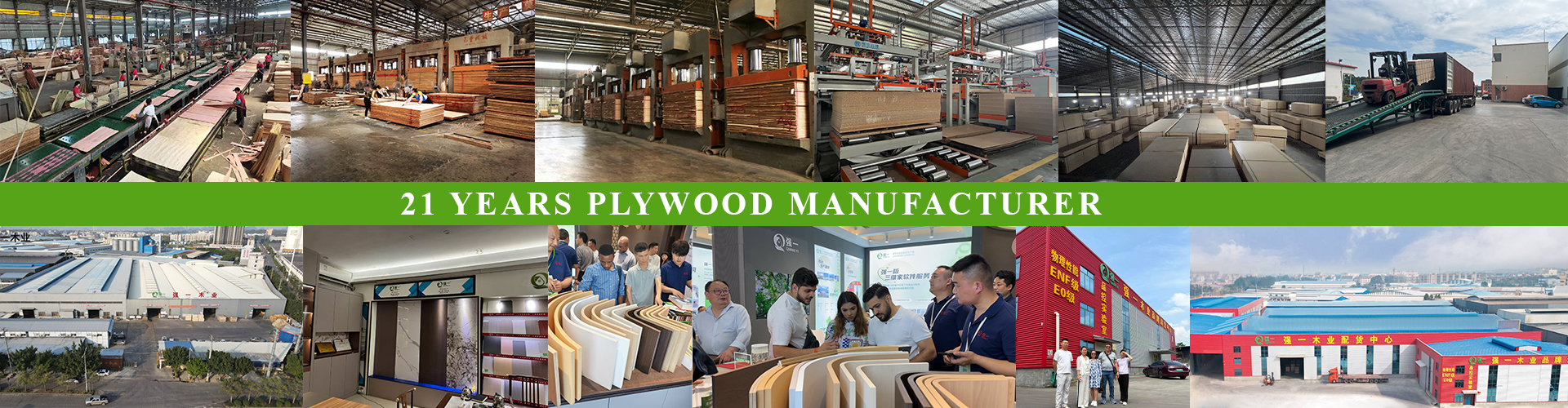
Yes ,We are manufacturer which locate in Guigang, Guangxi, also in Dongguang, Guangdong. Factory is started in the year of 2004 with more than 20 years experience for plywood production.

 Qiangyi
For cabinet manufacturers, low-emission sourcing is not only an environmental consideration. A panel may be described as ENF, E0, eco-friendly, or made with a no-added-formaldehyde adhesive, yet those phrases do not prove the same thing. Once material enters cutting, drilling, edge-banding, finishing, and assembly, discovering that it does not match a project requirement can mean rework, delay, and margin loss.
The practical question is simple: how do you verify that plywood for cabinetry is supported by finished-panel evidence, not only a supplier claim?
An emission grade is meaningful only when it is connected to a defined standard, test method, sample and report. A quotation that simply says “ENF plywood” does not by itself show which panel construction was tested or whether the offered material matches that sample.
The same principle applies to environmental language. “Eco-friendly” is a broad marketing term, while “no-added-formaldehyde adhesive” generally describes an adhesive formulation or manufacturing approach. Neither statement should replace testing of the finished panel.
Sourcing risk often appears before the panels reach production. A purchasing team may approve a purchase simply because “ENF grade” appears on the quotation, without actually reviewing the complete laboratory test report, creating a serious compliance risk. For custom projects such as kitchen cabinets, wardrobes, and whole-house cabinetry, the problem may not become apparent until a client acceptance check or quality inspection requires traceability evidence. By then, the material may already have entered production, resulting in substantial rework losses.
A failed verification can create a chain reaction:
1.Production pauses while the material is rechecked.
2.Processed components may need replacement.
3.Installation or handover moves.
4.After-sales and claim risk increases.
Procurement advice: A lower panel price does not necessarily mean a lower sourcing cost. Low-priced panels without reliable compliance test reports may fail client or project audits, and the resulting rework, delays, and after-sales losses can far exceed the initial material savings.
Adhesive selection matters because bonding systems are part of engineered-wood manufacturing. However, an adhesive statement and a finished-board result answer different questions.
“No added formaldehyde” describes what is intentionally introduced through a formulation. It should not automatically be interpreted as proof that a finished panel has zero measurable emissions.
The finished board combines wood, adhesive, face materials, manufacturing conditions, and moisture conditions. The safer procurement approach is therefore to evaluate the adhesive concept and then verify the actual finished panel.

Different emission grades and environmental claims require different forms of verification.
The E1 emission limit is ≤0.124 mg/m³, which represents the mandatory baseline for plywood. Finished cabinetry meeting only this level may still release considerable formaldehyde and other harmful gases that can affect human health. The E0 emission limit is ≤0.050 mg/m³, approximately 60% lower than E1, and E0 plywood can meet the requirements of some general furniture applications. The ENF emission limit is ≤0.025 mg/m³, a level approaching the natural background formaldehyde emission of wood itself.
Panels meeting ENF requirements are suitable for furniture used in mother-and-baby rooms, hospitals, and other environments with stringent indoor-air-quality requirements, helping minimize the impact of harmful gases on human health. “Eco-friendly” claims should be supported by specific numerical test evidence, while “no-added-formaldehyde adhesive” still requires finished-panel emission testing.
This distinction matters during supplier comparison. Two quotations may use similar environmental language while providing very different levels of technical verification
Start with the finished panel. Ask for the test standard, report number, sample identity, measured emission value, verdict, and test date.
A report showing an actual number is more useful than a “Pass” statement alone when comparing suppliers, preparing project submittals, or setting an incoming-quality benchmark.
For projects involving large cabinet quantities, this check should take place before bulk cutting begins. It is easier to resolve a specification mismatch at sample approval than after hundreds of cabinet components have entered production.
At QIANGYI PLYWOOD, we approach low-emission cabinetry from the adhesive system first. Our glutinous rice glue plywood uses Lingmei glutinous rice adhesive made from glutinous rice flour, magnesium chloride, water, and magnesium oxide. Because this adhesive system does not involve aldehyde chemical reactions, it addresses one potential source of formaldehyde introduction at the bonding stage.
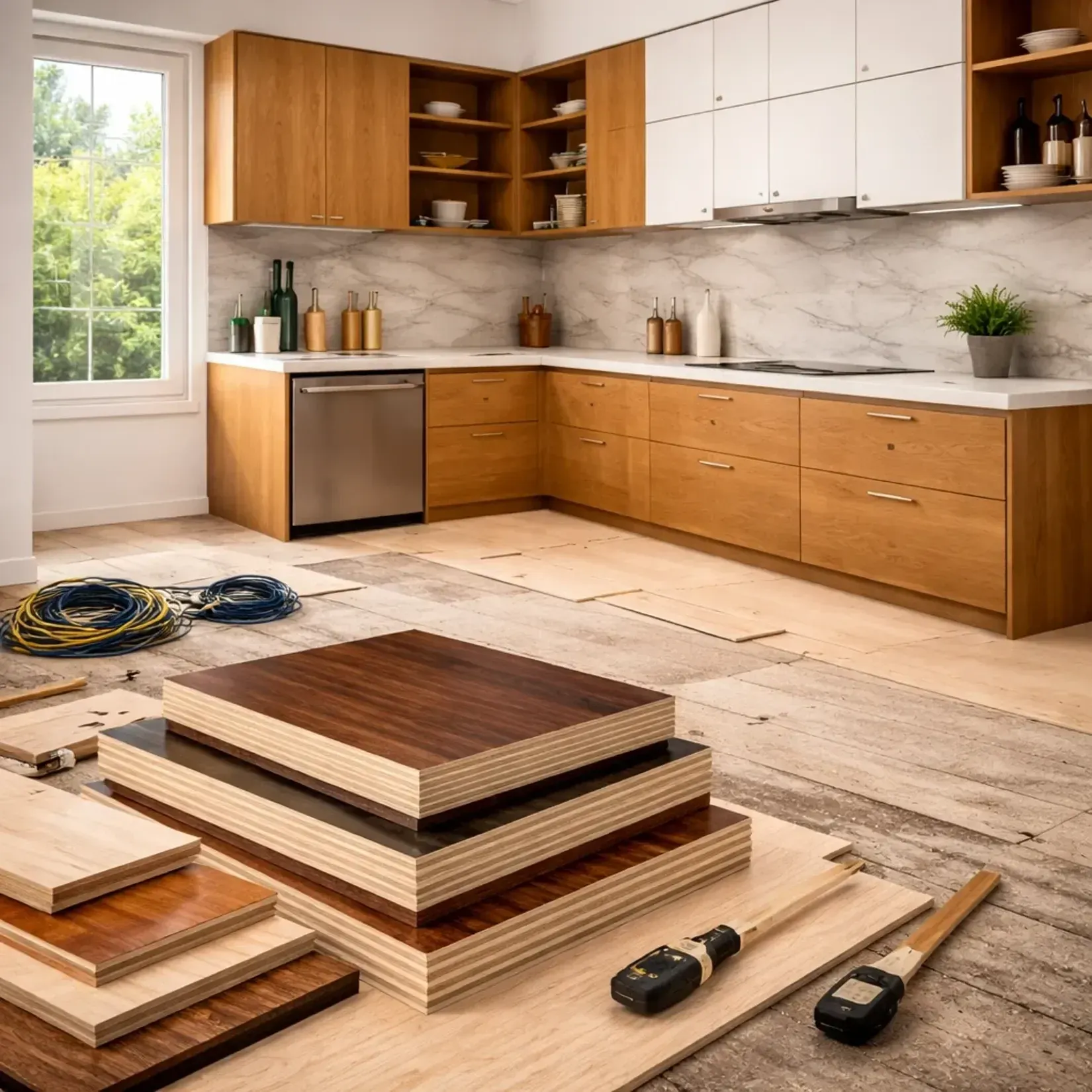
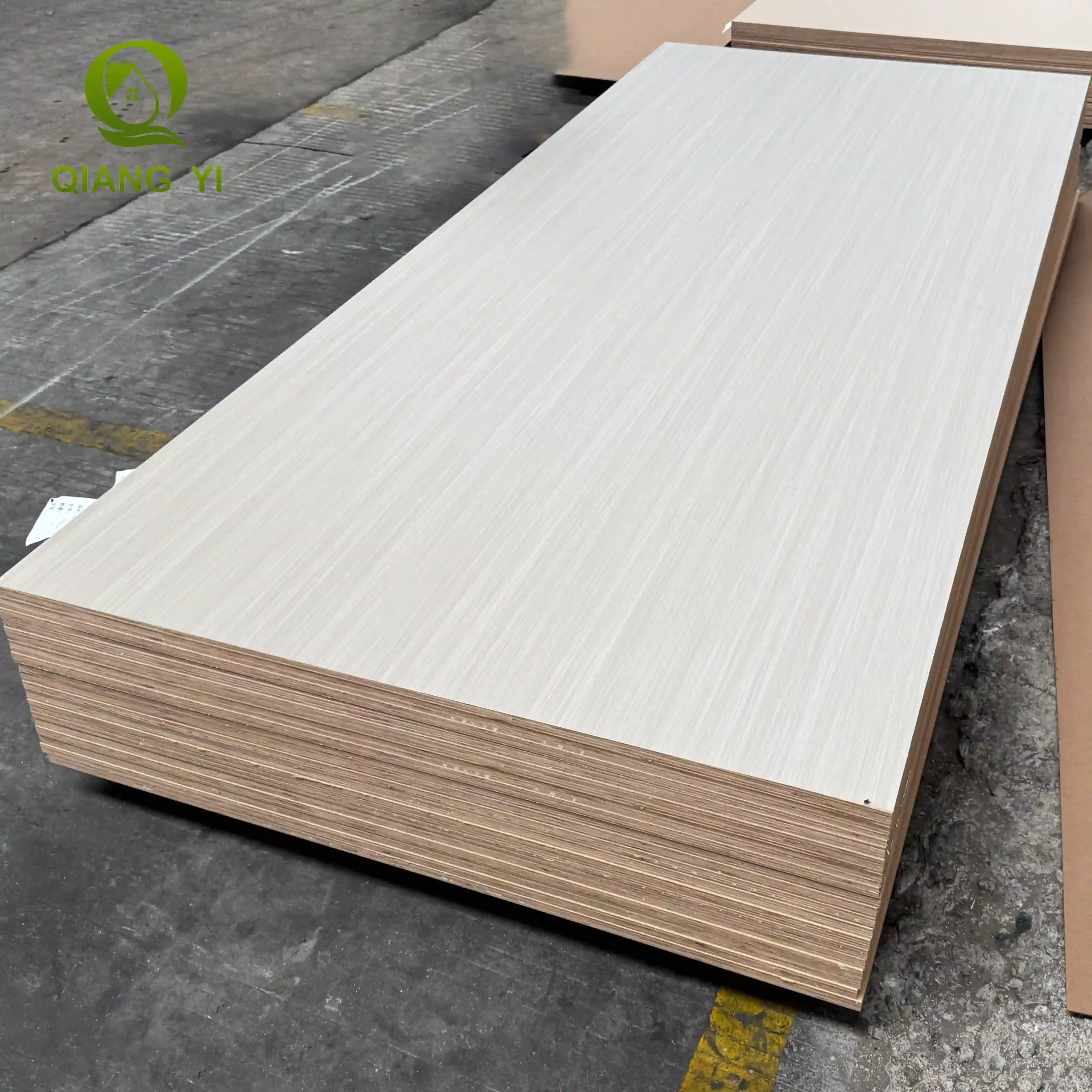
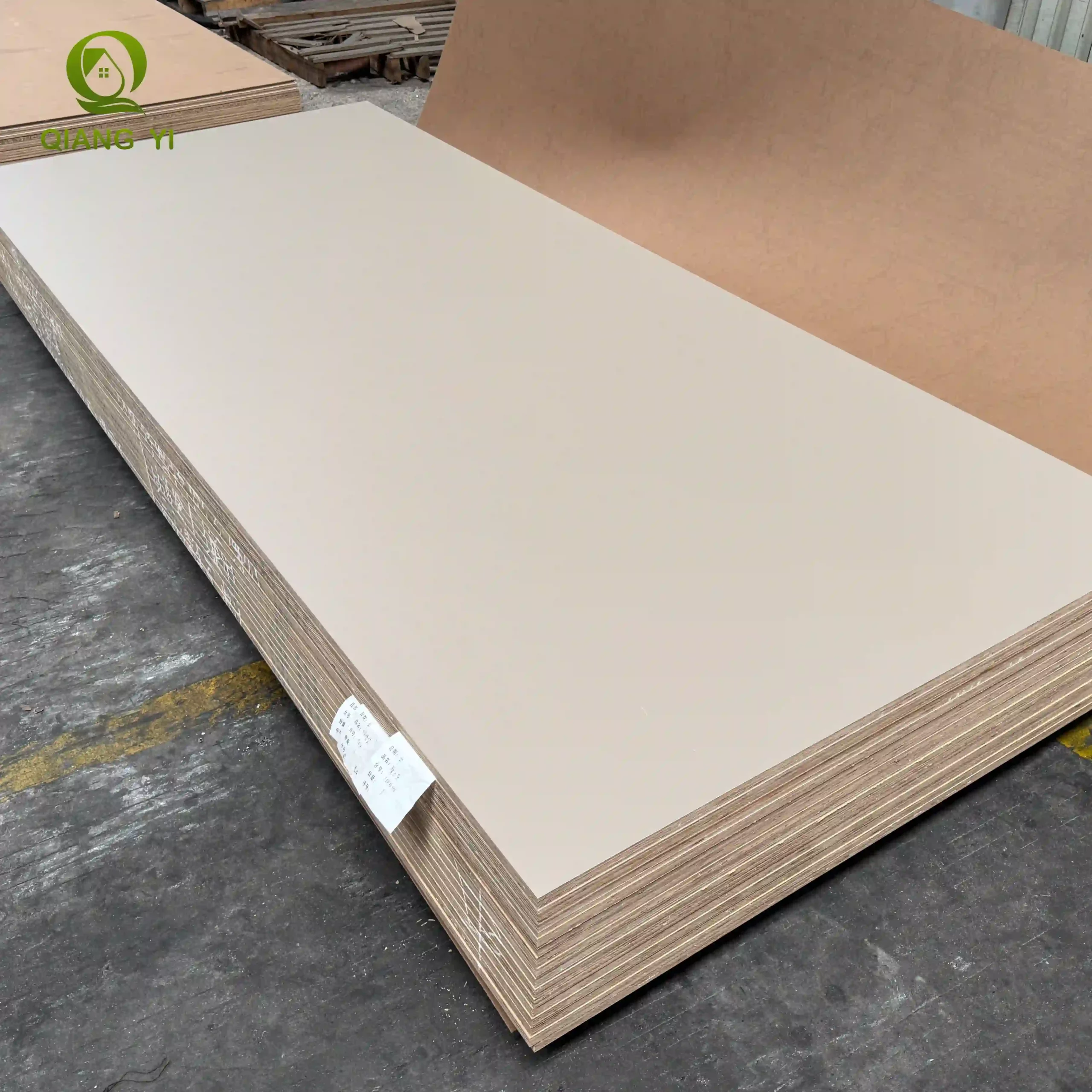
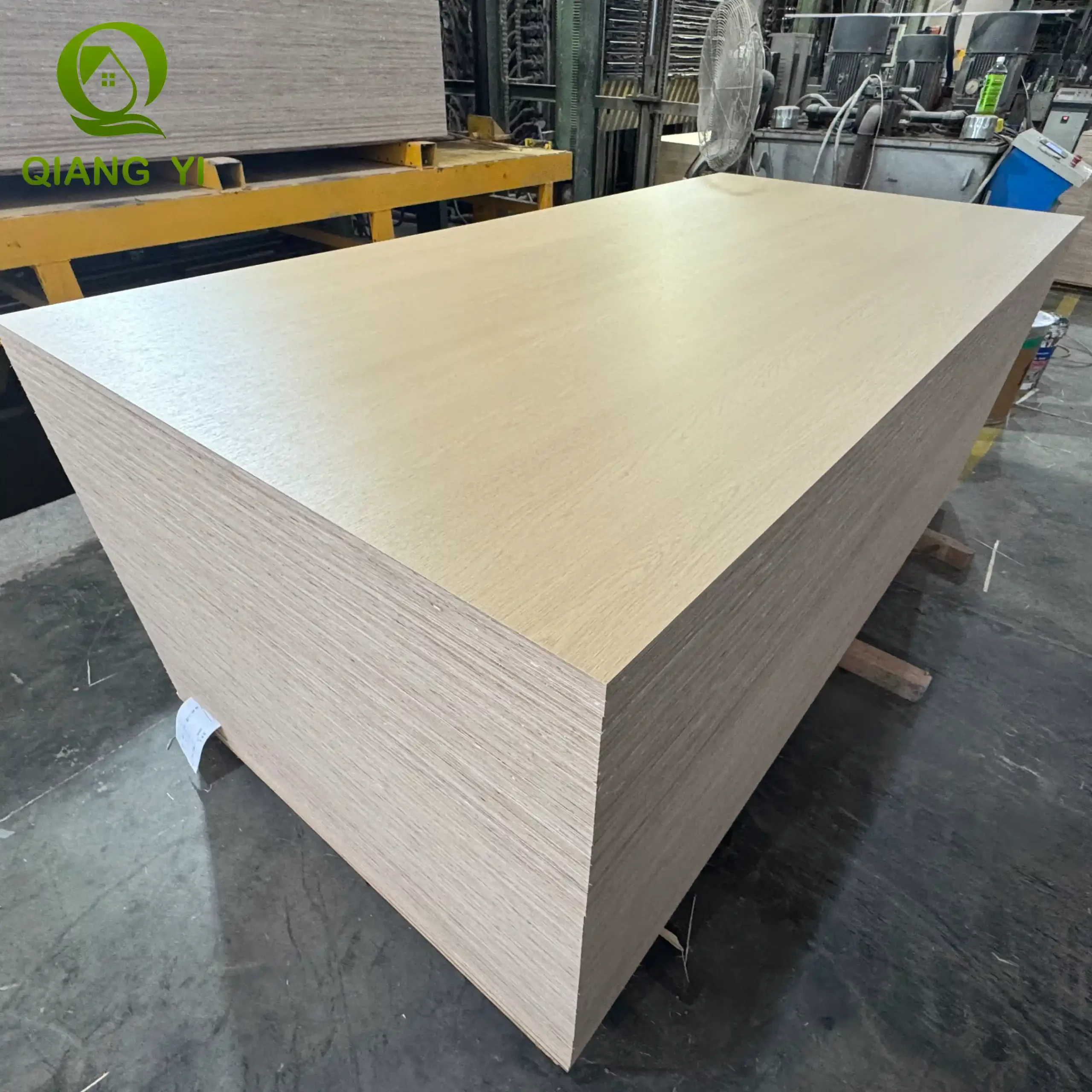
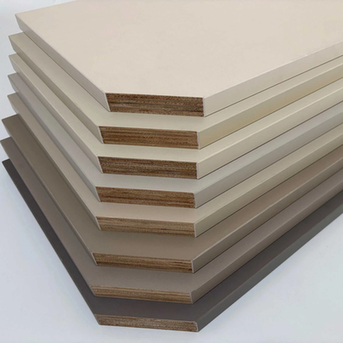
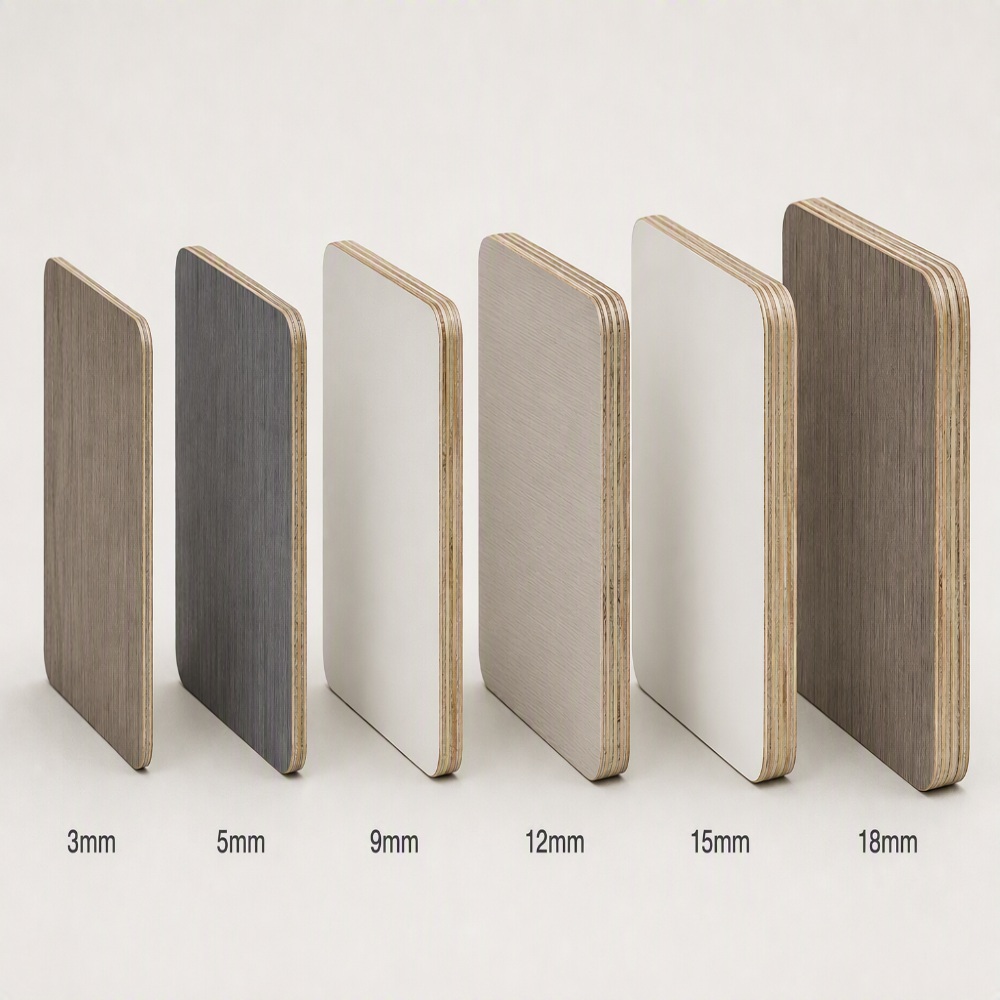
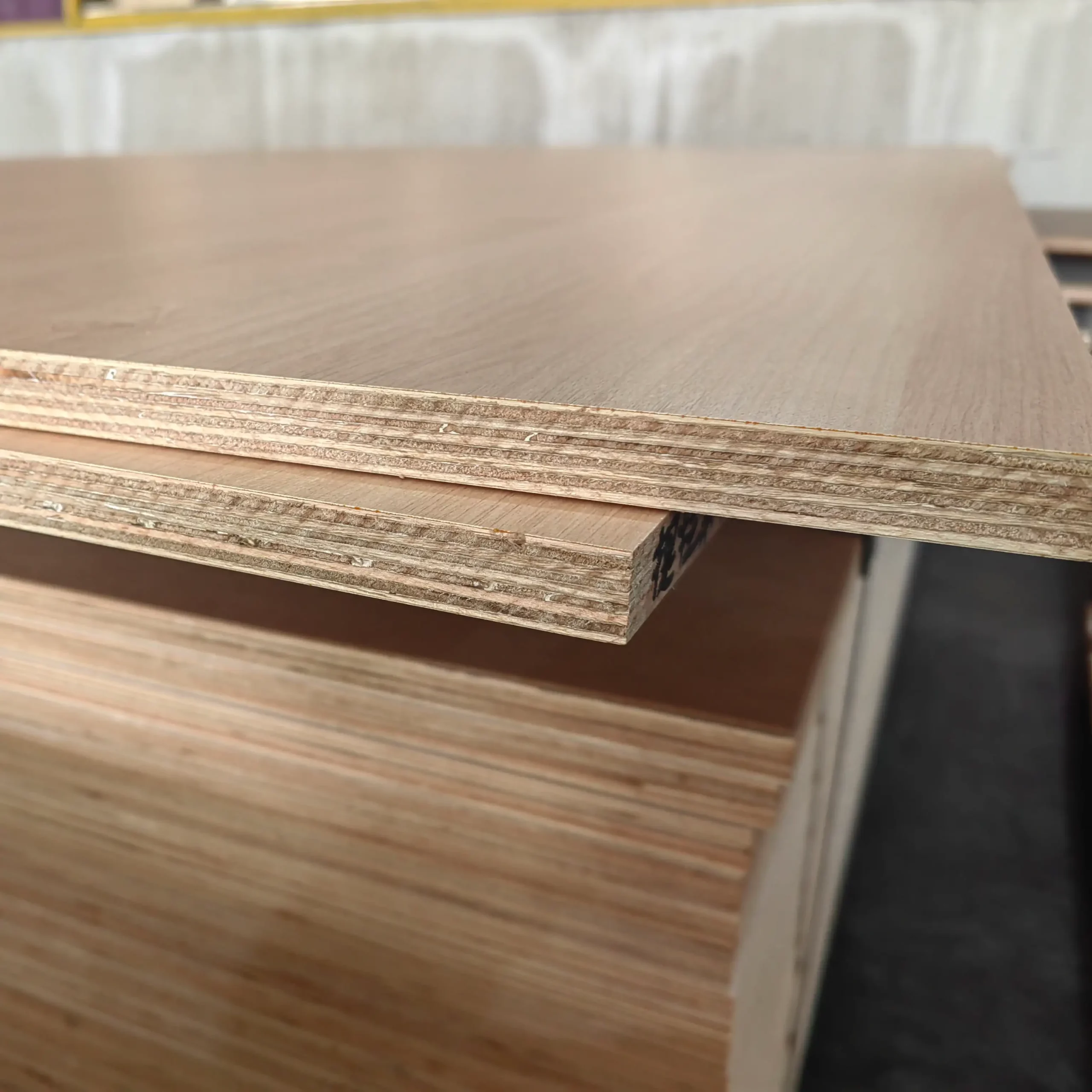
For cabinet programs, our glutinous rice glue plywood is available in functional laminated configurations for different cabinet specifications. These configurations can be supplied in 1220 × 2440 mm and 1220 × 2800 mm sizes, with thicknesses from 5 to 25 mm, as well as eucalyptus core and melamine or PET-faced surface options.
This allows cabinet manufacturers to consider emission performance together with the actual panel dimensions, core, finish, and processing requirements.
The purpose is not to create a stronger marketing phrase. It is to reduce reliance on a formaldehyde-containing adhesive route at the bonding stage and then build the finished panel through a controlled process.
Our production process includes layer-by-layer gluing, 24-hour slow cold pressing, approximately 60 hours of drying to improve internal moisture uniformity, and an extended curing period of more than 15 days.
These processing steps allow cabinet manufacturers to consider emission performance together with the panel’s actual dimensions, core, finish, and processing requirements.
The proof must ultimately return to the finished board.
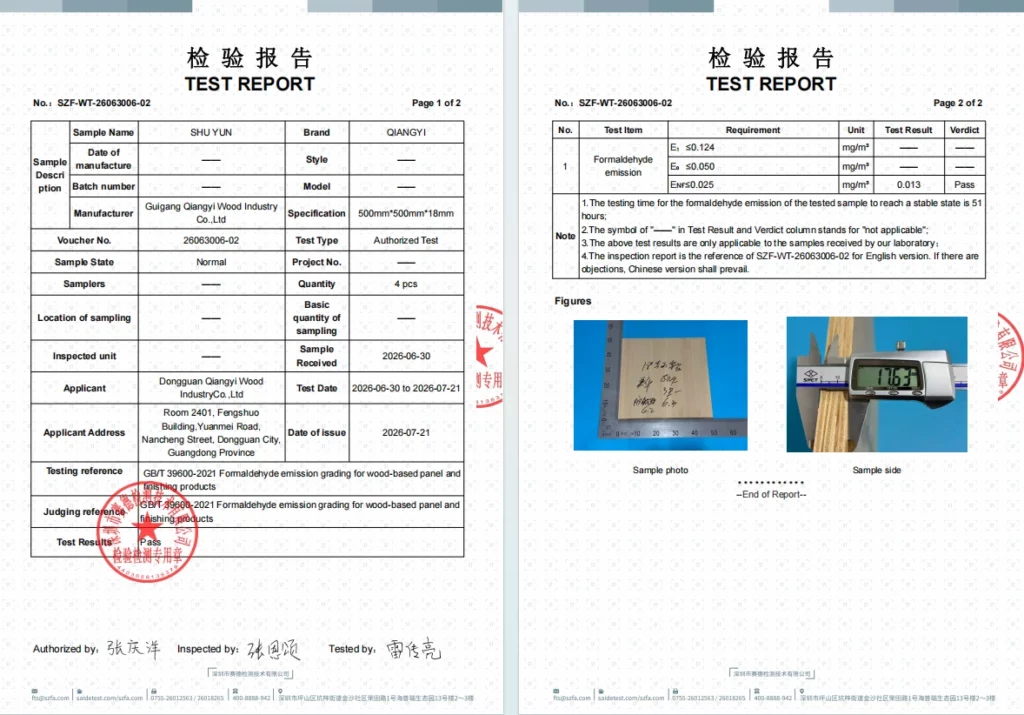
In the report of SZF-WT-26063006-02, the tested QIANGYI PLYWOOD sample recorded formaldehyde emission of 0.013 mg/m³ against the ENF limit of 0.025 mg/m³ and received a Pass verdict.
The measured result is approximately 48% below the ENF limit. For a cabinet manufacturer, this provides a numerical reference instead of relying only on terms such as “green” or “low formaldehyde.”
Before a bulk order, cabinet manufacturers can use a five-step verification process:
1.Confirm the cabinet application and required emission grade.
2.Match the proposed plywood construction to the tested sample.
3.Review the test standard and actual emission result.
4.Approve a representative sample when the project requires it.
5.Define how batch consistency will be checked before production or shipment.
QIANGYI PLYWOOD conducts inspections for each batch before products leave the factory. This becomes more useful to a B2B buyer when batch checks are combined with clear product specifications and traceable test evidence.
Consider an illustrative sourcing case. A kitchen cabinet factory receives two ENF quotations. Supplier A provides only a brochure claim. Supplier B provides an identifiable finished-panel report, an actual emission value, and a sample matching the intended 18 mm cabinet panel.
Both quotations may say “ENF,” but the second gives the purchasing team a stronger basis for internal approval, project submission, and risk control. That is the real purpose of ENF plywood sourcing verification: reducing uncertainty before material value is multiplied through machining, finishing, assembly, installation, and after-sales service.
A: In the referenced test report, the ENF requirement is ≤0.025 mg/m³. Buyers should also check the measured result, test method, sample identity, and report scope rather than relying on the grade name alone.
A: No. ENF refers to finished-panel formaldehyde emission under the applicable testing standard. No-added-formaldehyde usually describes an adhesive formulation or manufacturing approach. Plywood buyers should verify both separately.
A: Review the test standard, laboratory, report number, sample identification, panel thickness, test date, measured value, and verdict. Then confirm that the plywood being offered matches the tested construction.
A: Under the referenced grading limits, ENF has a lower formaldehyde-emission threshold than E0. The final sourcing decision should still follow the project specification, applicable test method, actual measured result, and intended cabinet application.
A: Request the complete product specification, finished-panel formaldehyde test report, representative sample, actual emission value, and confirmation that the ordered configuration corresponds to the tested material. For larger cabinet programs, also agree on batch-quality checks before production or shipment.
If you are evaluating low-emission plywood for kitchen cabinets, wardrobes or whole-home cabinetry, request the complete test report and a representative sample before bulk cutting. Share with us your required thickness, core material, face finish, dimensions and target market so the proposed panel can be checked against your project requirements.
Please fill out the form below and we will get back to you as soon as possible.




Leave a Comments